16 Iconic 1980s Men’s Hair Trends: That Defined an Era
The 1980s stand as one of the most influential decades in fashion history, and nowhere was this more evident than in the extraordinary hairstyles that dominated the era. Men’s hair during this period was characterized by bold statements, dramatic volume, and an unapologetic embrace of individuality. From the boardroom to the concert stage, hairstyles became powerful symbols of personal identity and cultural affiliation. The decade witnessed an explosion of creativity that broke free from the conservative restraints of previous years, giving rise to looks that ranged from polished and professional to wild and rebellious. Understanding these trends provides insight into a transformative period when hair became more than just grooming it became art, rebellion, and self-expression rolled into one.
The Cultural Revolution Behind 1980s Hair
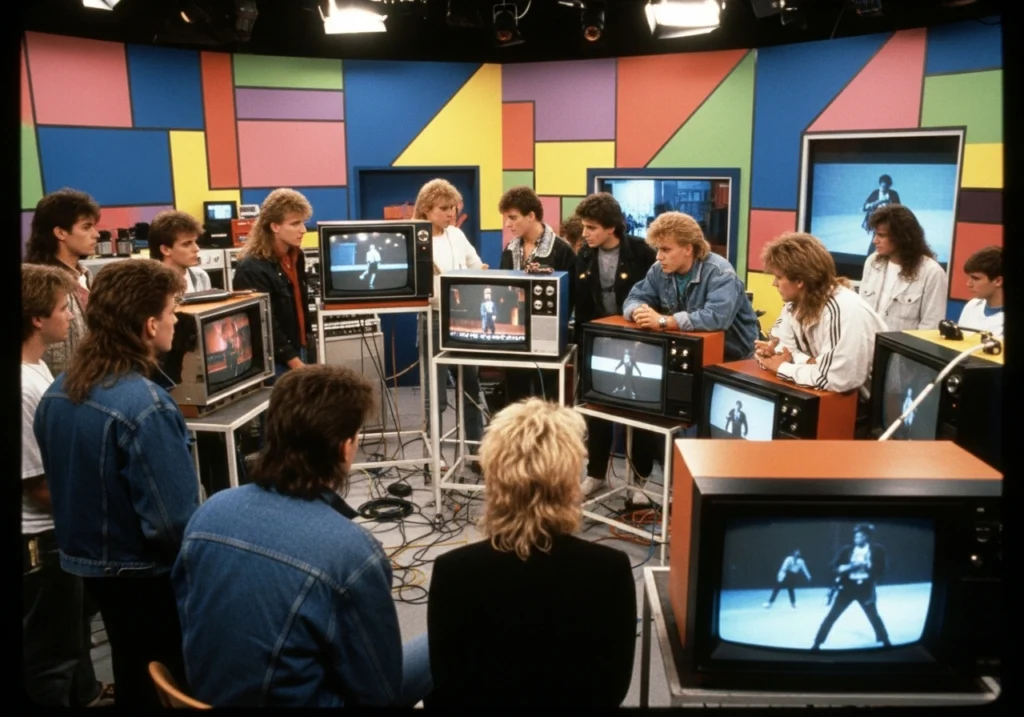
The hair trends of the 1980s did not emerge in a vacuum. They were shaped by profound cultural shifts that redefined masculinity and personal expression. The rise of MTV in 1981 transformed musicians into visual icons, making their hairstyles as important as their music. Suddenly, David Bowie’s slicked-back sophistication and Billy Idol’s platinum spikes were broadcast into millions of homes, turning hair into a powerful medium of communication.
Film and television played equally significant roles in popularizing these trends. Shows like Miami Vice introduced designer stubble and carefully styled looks that merged professionalism with edge. Meanwhile, action stars and teen heartthrobs showcased everything from voluminous feathered styles to dramatic mullets, creating a diverse landscape of acceptable masculine grooming.
The decade also witnessed the emergence of distinct subcultures, each with its own hair vocabulary. Punk rockers pushed boundaries with mohawks and liberty spikes, while hip-hop culture introduced the high top fade and jheri curls to mainstream consciousness. Corporate professionals maintained more conservative styles, yet even they embraced volume and careful styling that would have seemed excessive in previous decades.
1. The Mullet Revolution
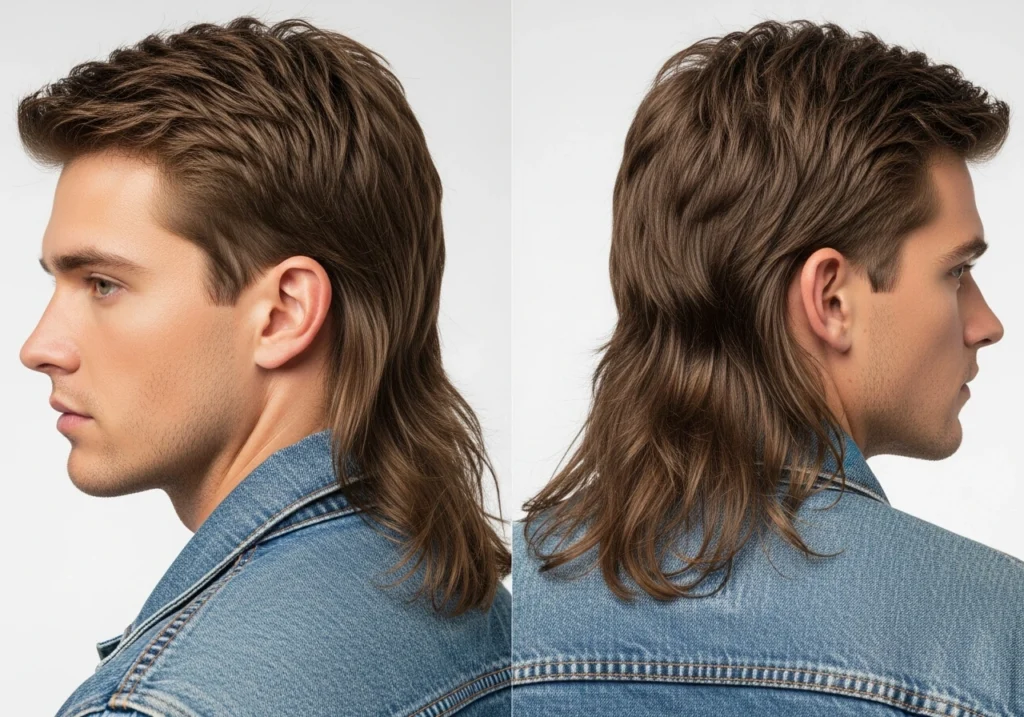
No discussion of 1980s men’s hair would be complete without addressing the mullet, arguably the most iconic hairstyle of the decade. This distinctive cut featured short hair at the front and sides while maintaining considerable length in the back, earning the memorable description of business in the front, party in the back. The mullet transcended social boundaries, appearing on everyone from working-class laborers to Hollywood celebrities like Patrick Swayze and Billy Ray Cyrus.
The appeal of the mullet lay in its versatility. It offered a professional appearance from the front while allowing for personal expression through the flowing locks in back. Men could style the front portion neatly for work environments while letting the back maintain a more relaxed, carefree aesthetic. This duality made it acceptable across various social contexts, contributing to its widespread adoption.
2. The Perm Phenomenon
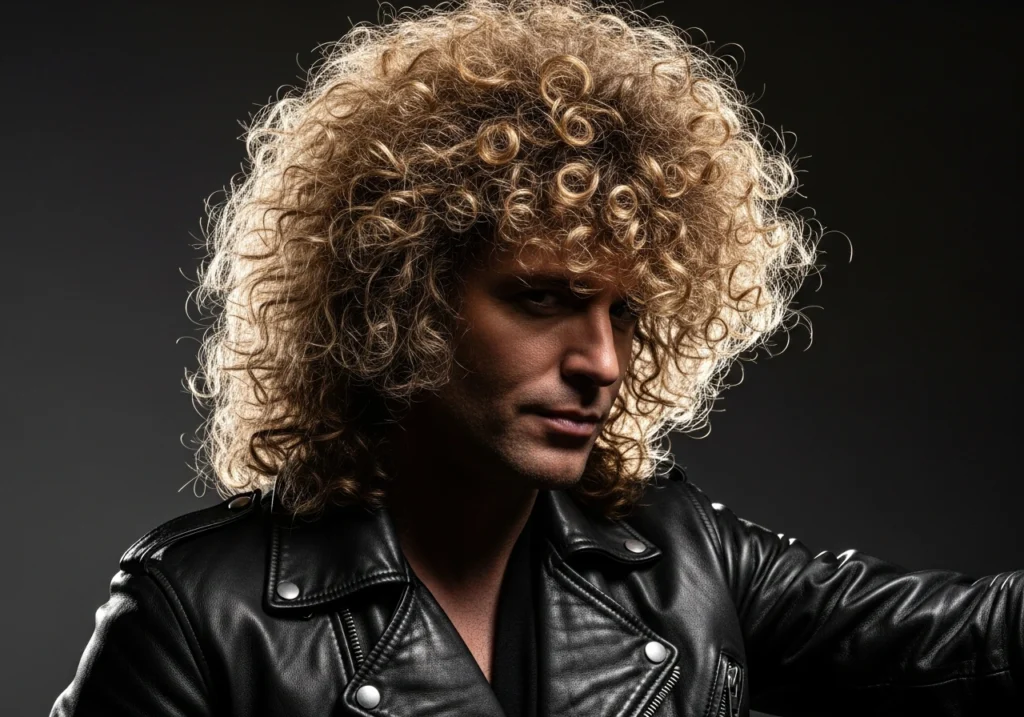
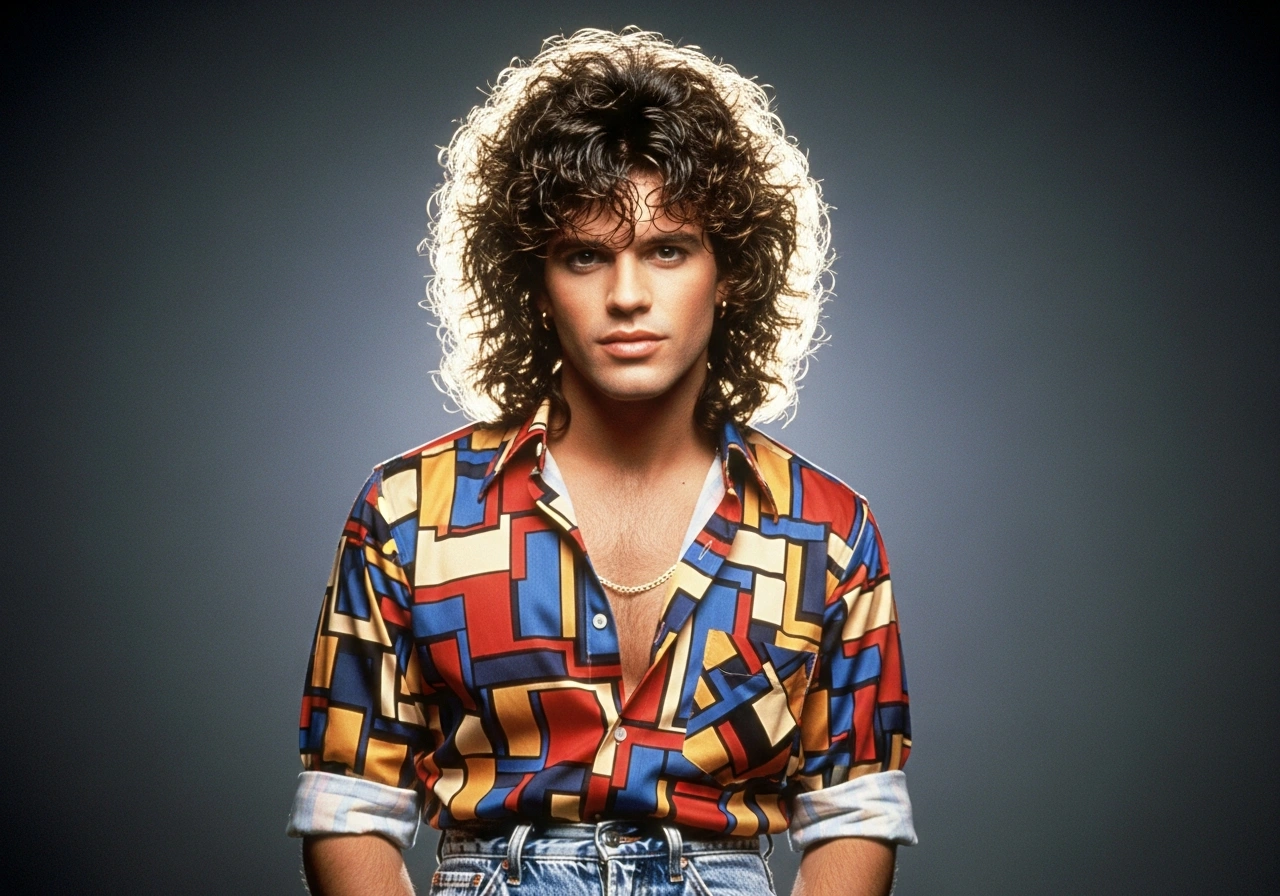
The permanent wave, or perm, represented another defining trend that swept through 1980s men’s grooming. This chemical process transformed straight hair into bouncing curls, creating texture and volume that epitomized the decade’s bigger-is-better philosophy. Rock stars like Jon Bon Jovi popularized tight, voluminous perms that became synonymous with the glam metal scene.
Perms offered various styling possibilities, from tight, compact curls to loose, flowing waves. The process required commitment, as the chemical treatment lasted for months, but men embraced this dedication to achieving the desired look. The perm became so ubiquitous that it crossed cultural and professional boundaries, appearing in boardrooms and on construction sites with equal frequency.
3. Feathered Perfection
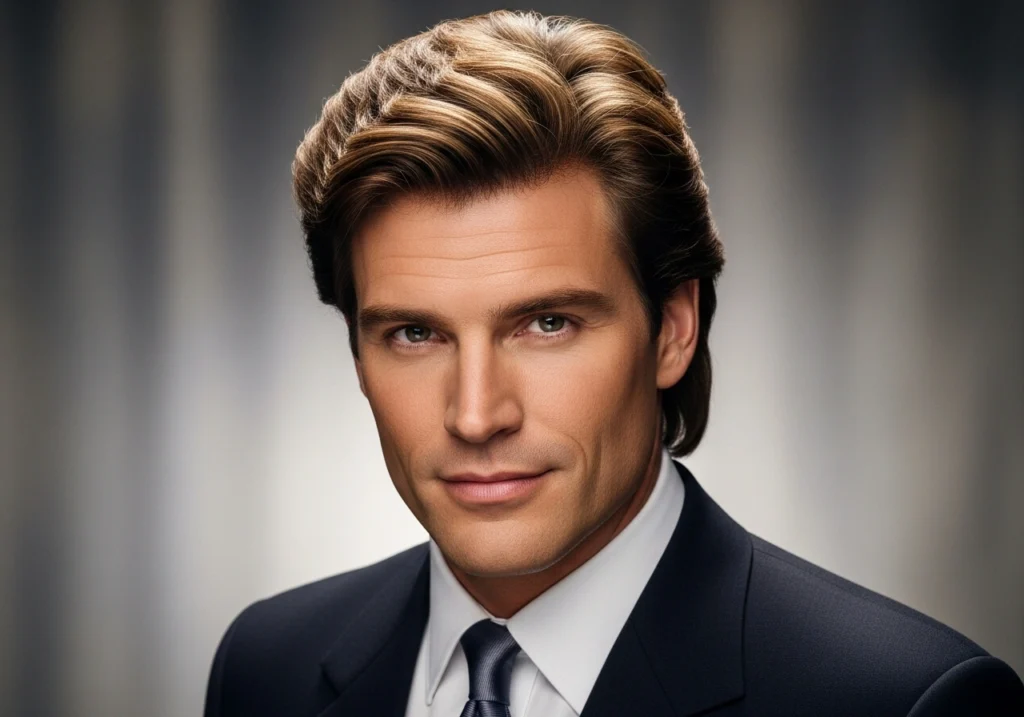
Feathered hair brought a softer, more refined aesthetic to 1980s men’s styling. This technique involved cutting hair into layers that swept back from the face, creating a feather-like appearance with movement and dimension. Celebrities like Mel Gibson and James Spader popularized this look, which offered sophistication without the extreme volume of other trends.
The feathered style required regular maintenance and skilled cutting to achieve the proper layering. Stylists would carefully graduate the lengths, ensuring each section flowed seamlessly into the next. Men would blow-dry their hair while brushing it back and away from the face, often using round brushes to enhance the curved, feathered effect.
4. Slicked-Back Sophistication
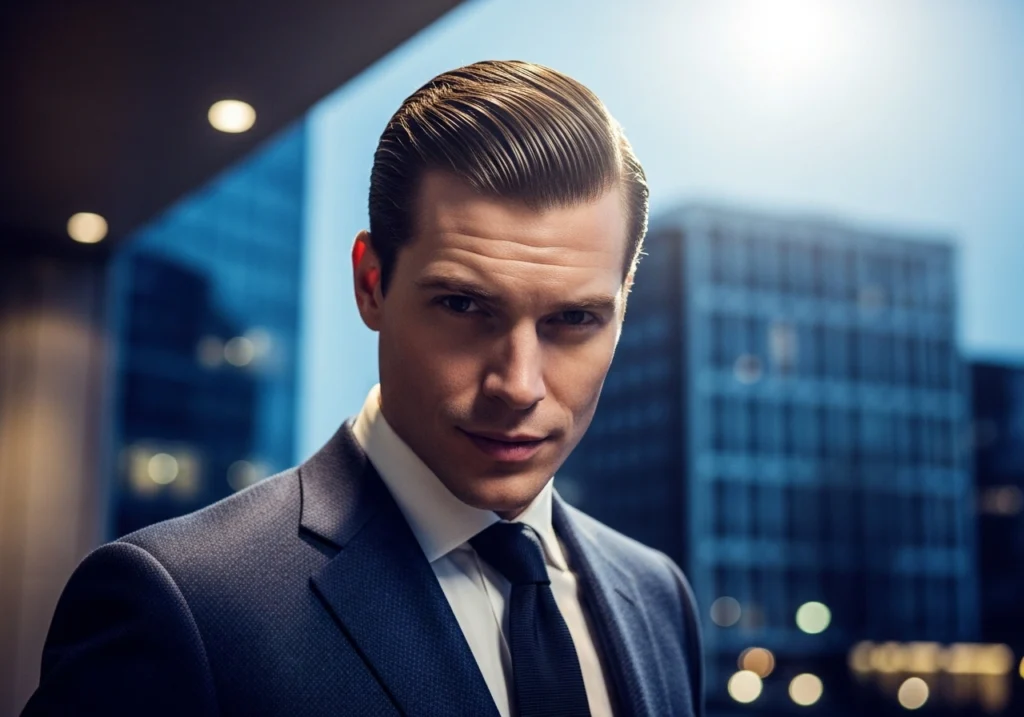
For men seeking a more polished, professional appearance, the slicked-back hairstyle provided an ideal solution. This look involved combing hair straight back from the forehead, typically with generous amounts of gel or pomade to achieve a sleek, glossy finish. David Bowie exemplified this style during his Let’s Dance era, demonstrating how it could convey both sophistication and edginess.
The slicked-back style worked particularly well for men with medium to long hair, as the added length created dramatic lines and emphasized facial features. The key to achieving this look lay in the styling products, which needed to provide both hold and shine. Men would apply product to damp hair and comb it firmly back, creating a smooth surface that reflected light.
5. The High Top Fade
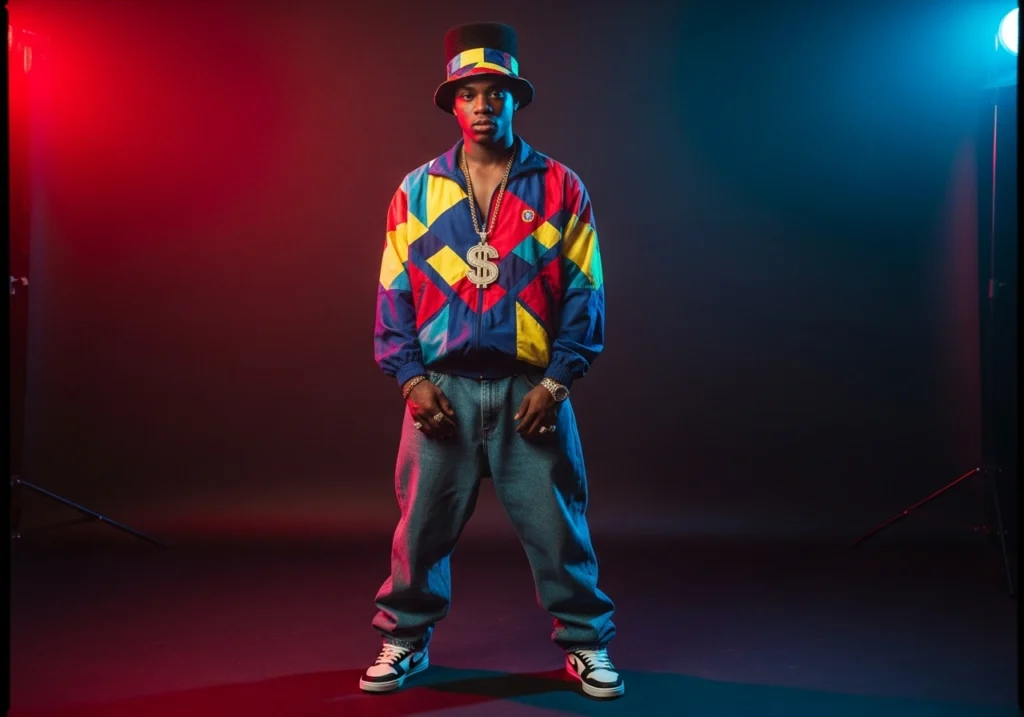
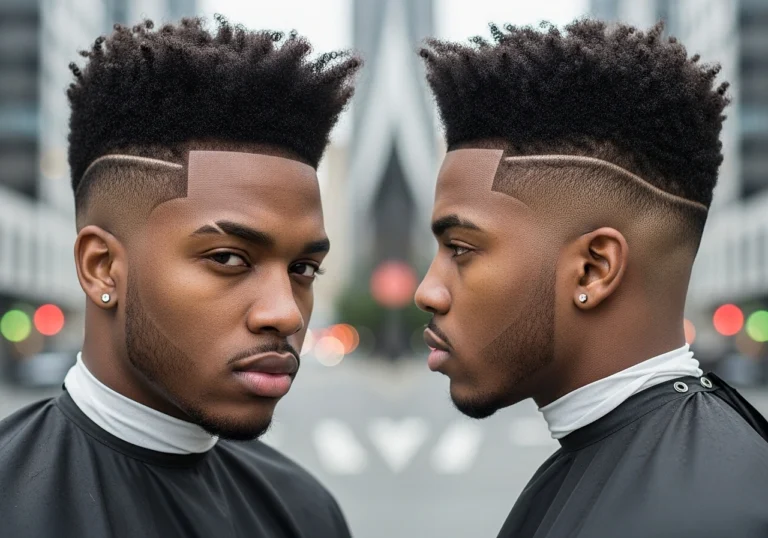
The high top fade emerged as a defining hairstyle within African American communities and hip-hop culture. This distinctive cut featured closely cropped or faded sides with a flat, elevated top that could reach impressive heights. Artists like Kid ‘n Play brought this style to mainstream attention, making it one of the most recognizable looks of the late 1980s.
Creating a high top fade required considerable skill from barbers, who needed to achieve perfectly even sides while maintaining the geometric precision of the flat top. The height of the top section varied based on personal preference, with some men opting for moderate elevation while others pushed the limits with dramatic vertical presence.
6. The Jheri Curl
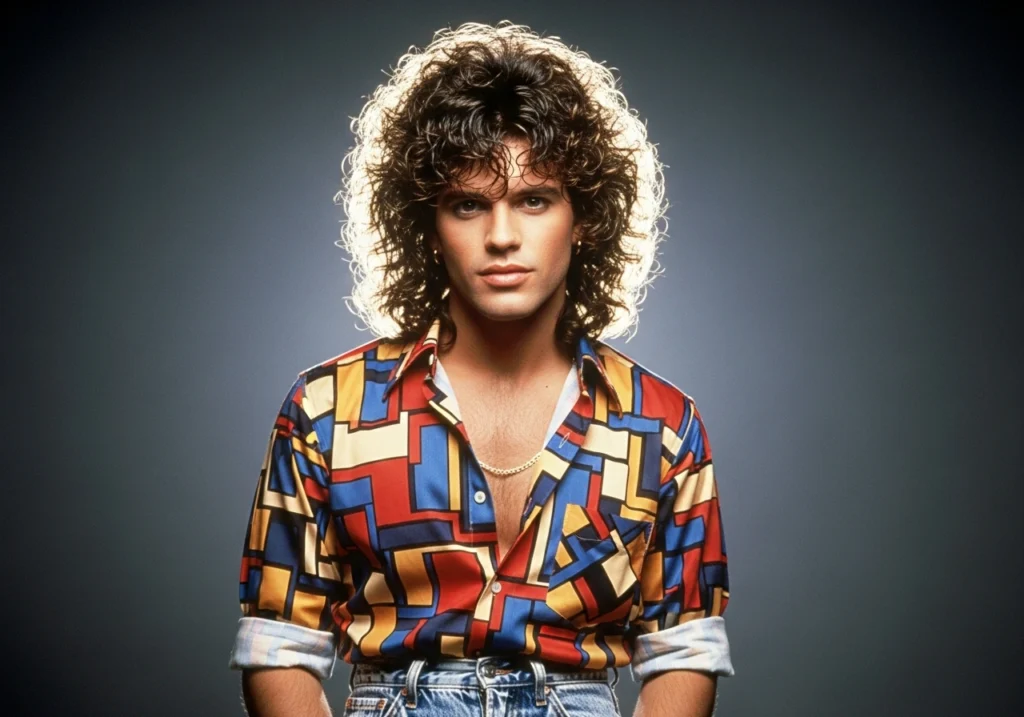
The jheri curl represented a significant trend, particularly within Black communities. This hairstyle involved a two-part chemical process that first loosened natural curl patterns, then set the hair into glossy, defined curls. Michael Jackson’s adoption of this style during the Thriller era catapulted it to international prominence.
The jheri curl required ongoing maintenance, including regular application of activator sprays to maintain the signature wet, glossy appearance. Despite the maintenance demands, the style remained popular throughout the early to mid-1980s, offering men a way to achieve manageable, stylish curls with distinctive shine.
7. Punk Rock Rebellion
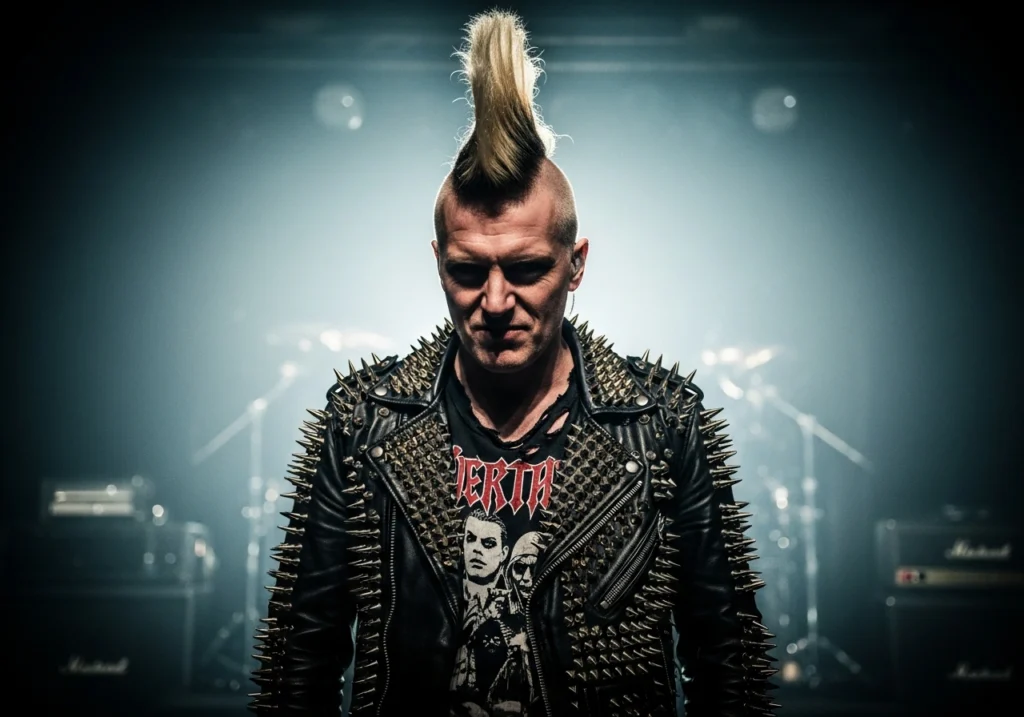
The punk movement brought aggressive, anti-establishment hairstyles that deliberately challenged social norms. Mohawks featuring shaved sides and a central strip of hair styled into dramatic spikes became visual manifestations of rebellion. Billy Idol’s platinum mohawk variations epitomized this aesthetic, combining shocking color with structural defiance.
Liberty spikes took punk styling even further, with hair formed into individual pointed spikes radiating in all directions. Achieving these looks required substantial amounts of strong-hold gel or even unconventional products like egg whites or soap. The labor-intensive styling process became part of the punk ethos, demonstrating commitment to the subculture.
8. The Pompadour
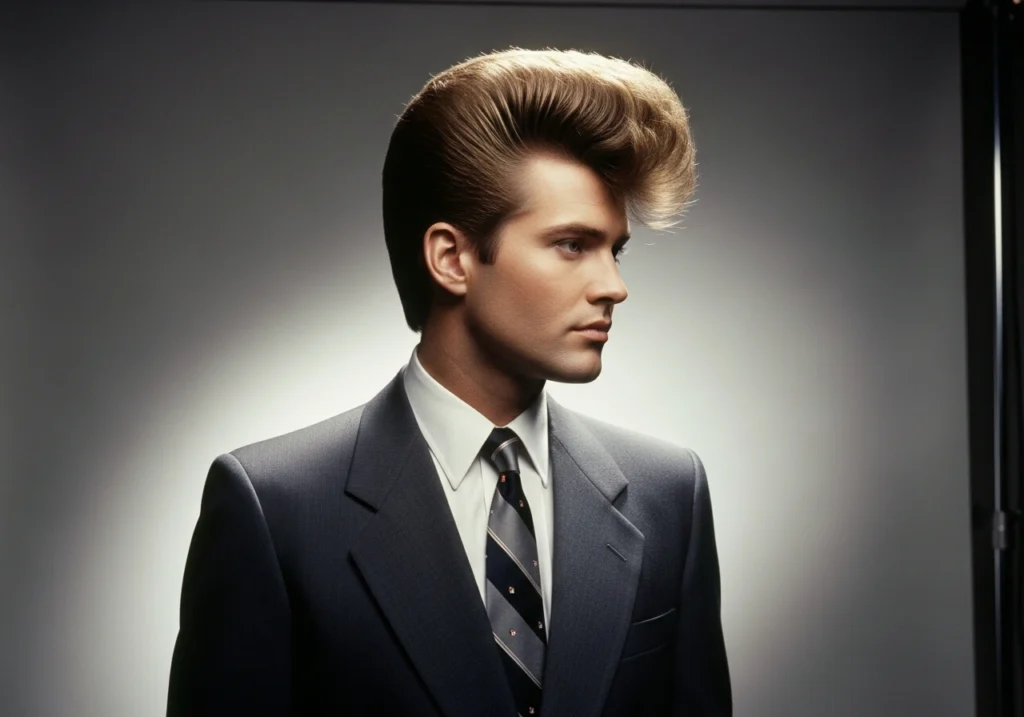
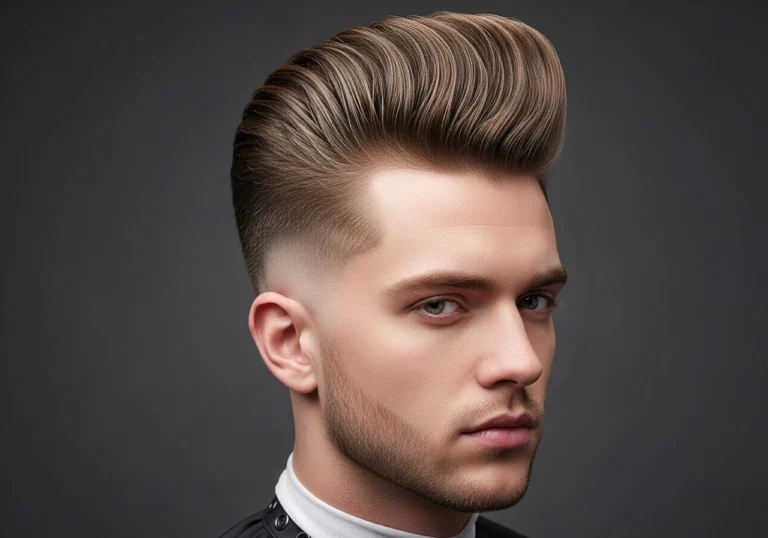
The pompadour enjoyed a revival during the 1980s, reinterpreted through the decade’s lens of volume and drama. This style featured hair swept upward from the forehead and styled back, creating substantial height and presence. Unlike its 1950s predecessor, the 1980s version emphasized even greater volume and often incorporated modern styling products.
Men achieving the pompadour would typically use mousse and hairspray to build and maintain the elevated front section. The style required hair of sufficient length on top, usually at least three to four inches, to create the characteristic sweep and height. Regular trimming of the sides kept the focus on the dramatic top section.
9. The Quiff
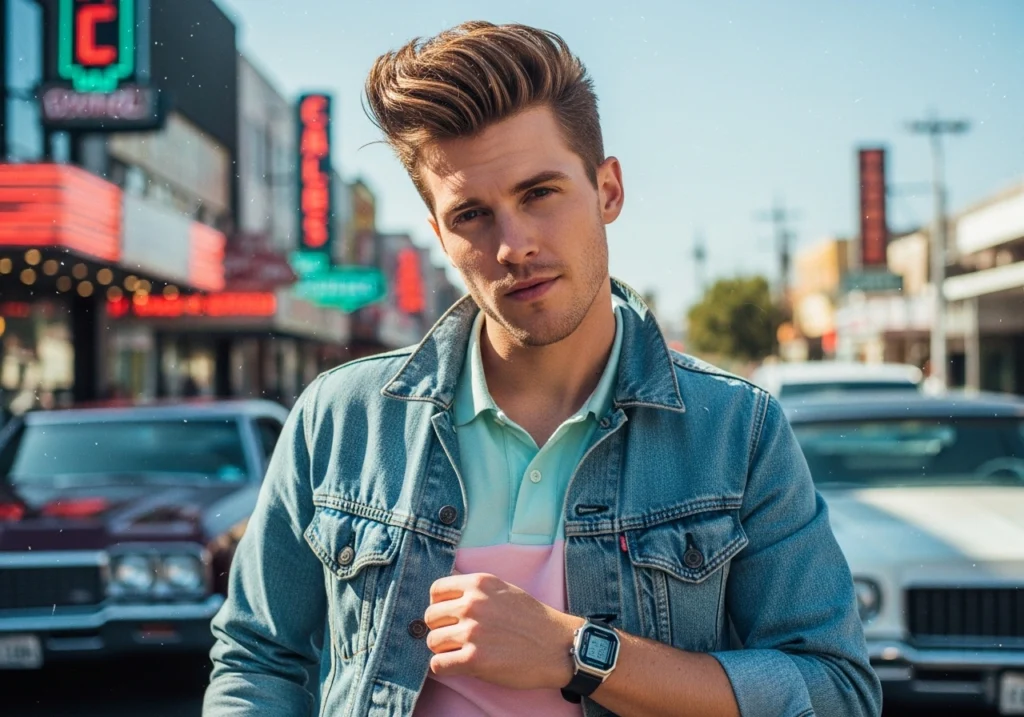
The quiff shared similarities with the pompadour but typically featured a more forward-facing angle and slightly less extreme height. George Michael popularized this look, demonstrating its versatility across different settings. The quiff offered men a way to embrace volume and style without the full commitment of more dramatic looks.
Styling a quiff involved blow-drying hair upward and slightly forward, using fingers or brushes to create texture and direction. Products ranging from mousse to gel helped maintain the shape throughout the day. The quiff’s adaptability made it suitable for both professional and casual environments.
10. Long Rocker Waves
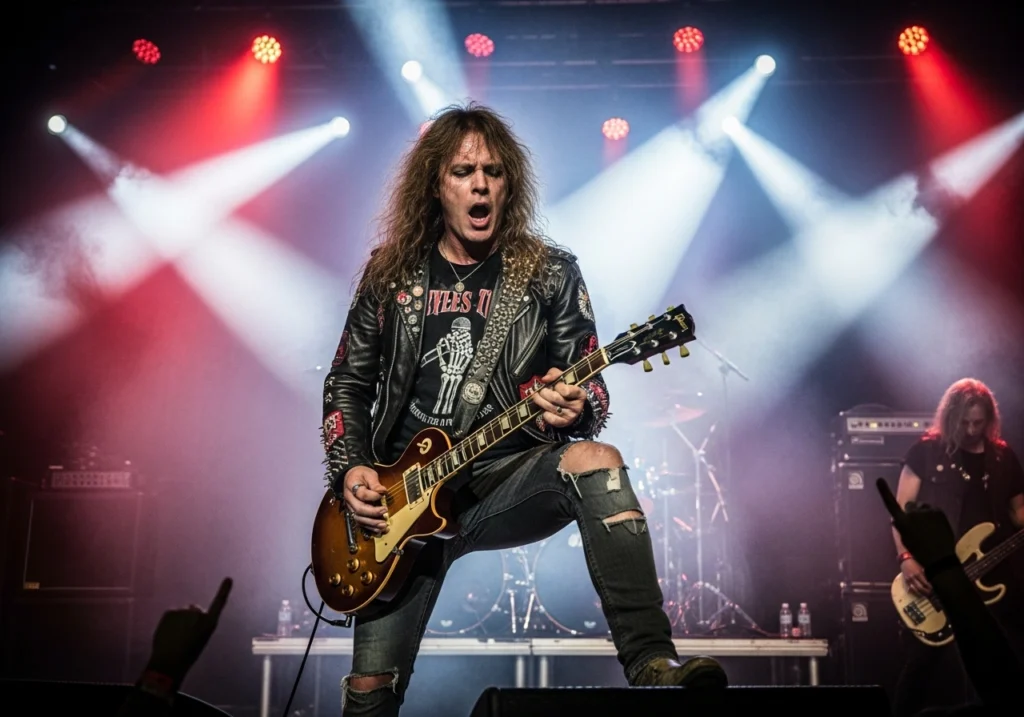
Heavy metal and glam rock bands championed long, flowing hair styled in voluminous waves. Musicians from groups like Mötley Crüe and Bon Jovi sported locks that cascaded past their shoulders, often teased at the crown for additional height. This look represented the ultimate expression of rock and roll freedom and rebellion against conservative grooming standards.
Achieving rocker waves required commitment to growing hair long and dedicating time to styling. Men would tease their hair at the roots to create volume, then use curling irons or hot rollers to add wave and movement. Substantial amounts of hairspray ensured the style lasted through energetic performances or nights out.
11. The Side Part with Volume
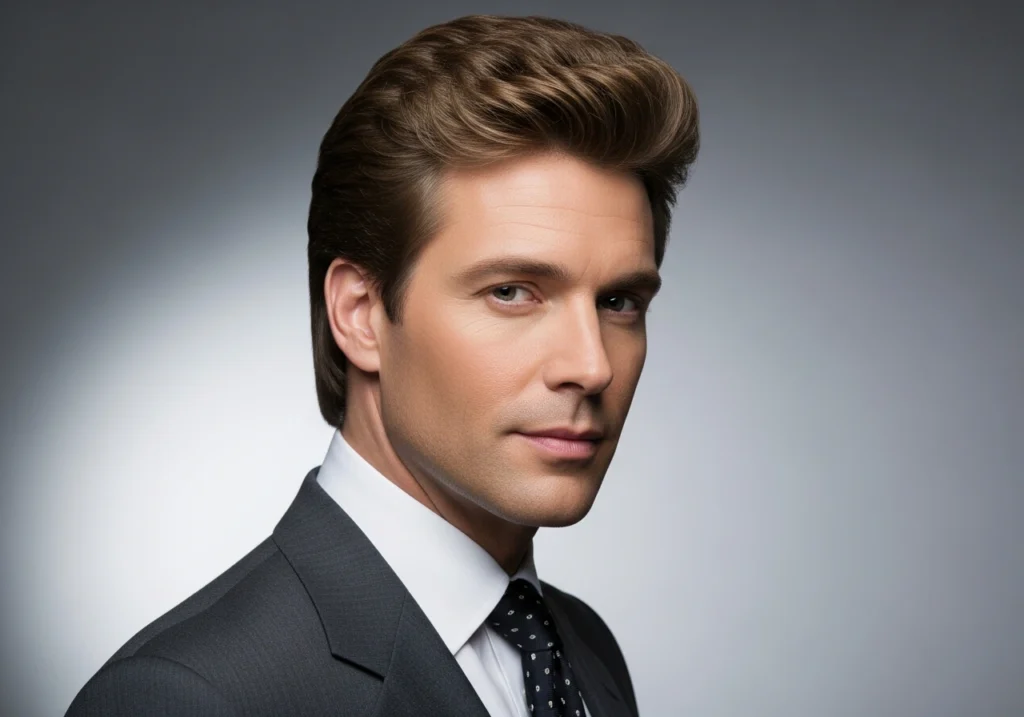
For men seeking a more conservative yet still distinctly 1980s aesthetic, the side part with volume offered an ideal compromise. This style maintained traditional grooming sensibilities while incorporating the decade’s emphasis on fullness and presence. The hair would be parted to one side and styled with enough volume to avoid looking flat or dated.
Creating this look involved blow-drying hair while directing it away from the part line, using brushes to build volume at the roots. Mousse applied to damp hair provided body and hold, while a finishing spray locked everything in place. This style proved particularly popular in professional settings where more extreme looks were inappropriate.
12. Spiky Statements
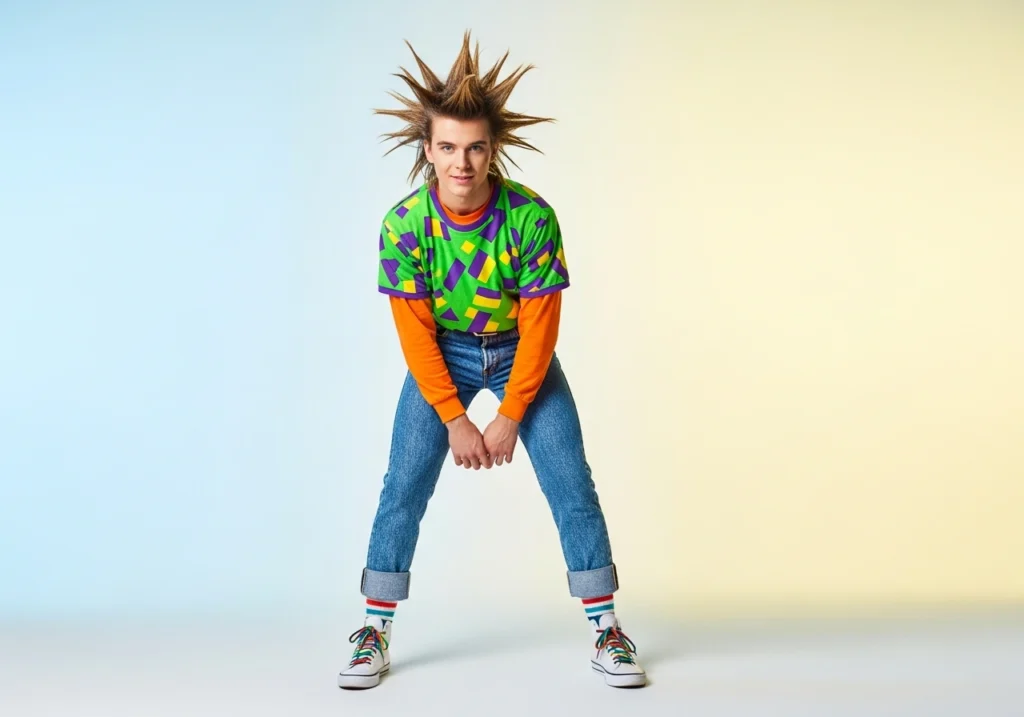
Spiky hair allowed men to embrace punk aesthetics without committing to a full mohawk. This style involved using strong-hold gel to create individual spikes or clusters of hair standing upright. The spikes could vary in length and density, offering considerable creative freedom.
The key to successful spiky hair lay in the styling products. Gels with maximum hold were essential for maintaining vertical orientation throughout the day. Men would work the product through damp hair, then use their fingers to shape individual spikes or create textured patterns. Some incorporated frosted tips or bold colors to enhance the dramatic effect.
13. The Wet Look
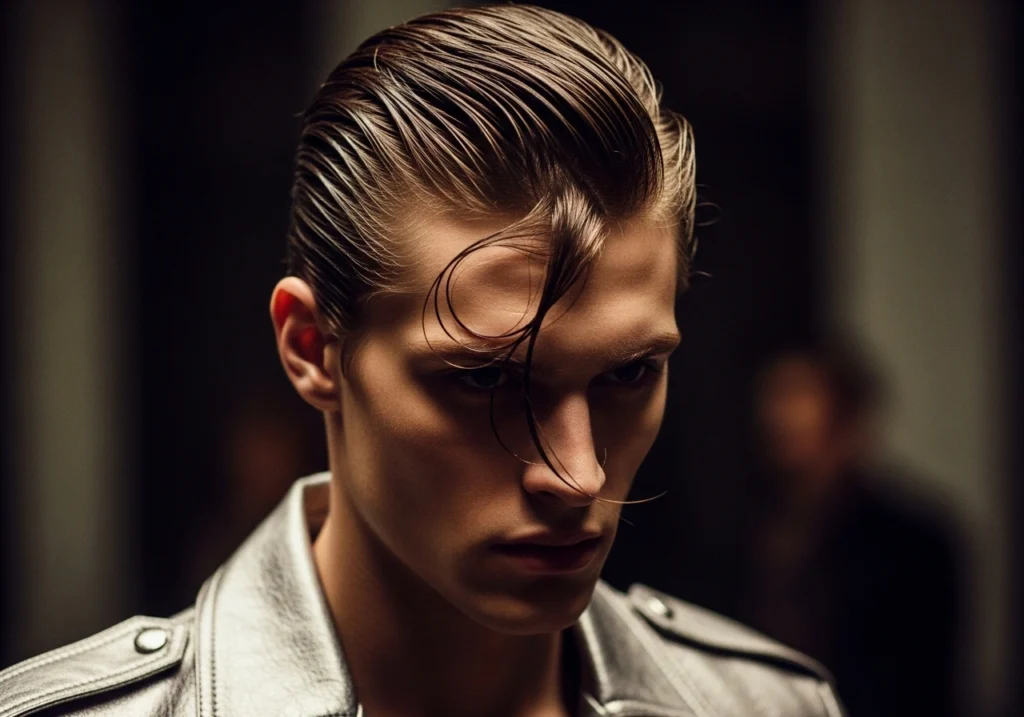
The wet look hairstyle created the appearance of perpetually damp, slicked-back hair through liberal application of gel or other styling products. This style offered high shine and a sleek, controlled appearance that worked well for both casual and semi-formal occasions. The wet look could be combined with various cutting styles, from short crops to medium lengths.
Achieving the wet look required generous amounts of gel applied to clean, damp hair. Men would comb the hair back smoothly, ensuring even product distribution for consistent shine. The style needed to appear intentionally wet rather than simply unwashed, requiring the right products and application techniques.
14. The Buzz Cut
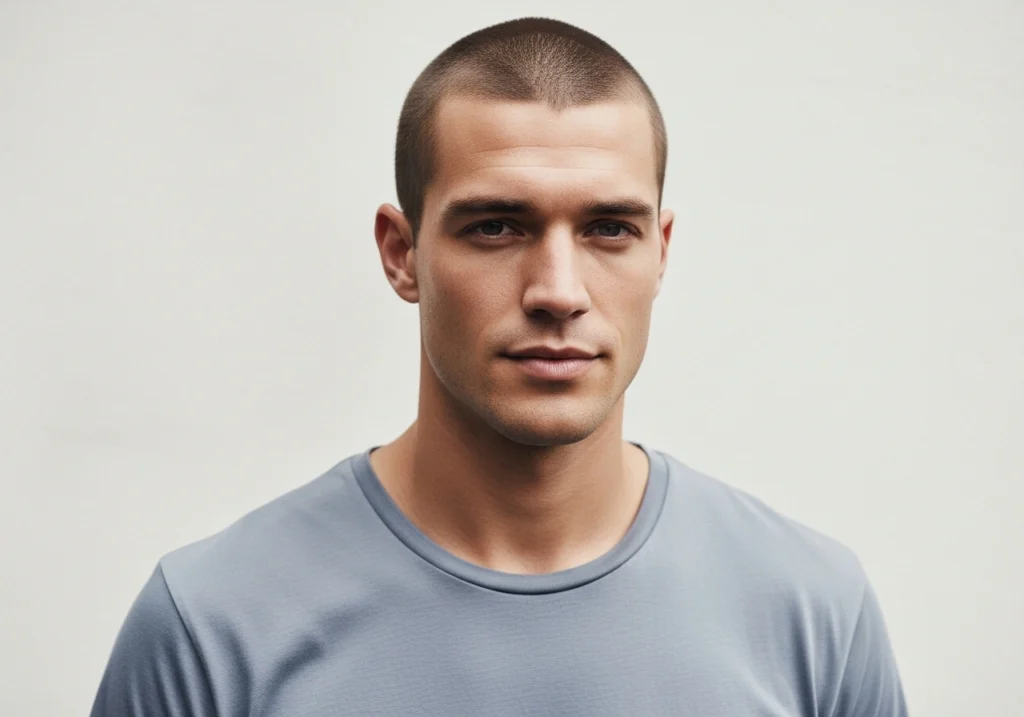
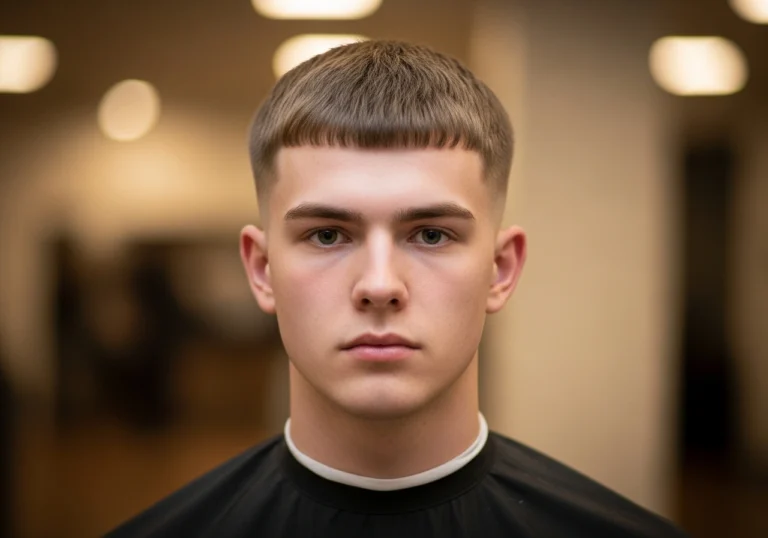
Despite the decade’s general embrace of volume and length, the buzz cut maintained its appeal as a low-maintenance, masculine option. This ultra-short style involved clipping hair to uniform length across the entire head, typically ranging from one-eighth to half an inch. The buzz cut offered practicality and a clean aesthetic that never went out of style.
Military personnel and athletes particularly favored this look, though it also appeared in civilian contexts. The buzz cut required minimal daily styling but needed regular maintenance cuts to keep the length consistent. Its simplicity stood in stark contrast to more elaborate 1980s styles, offering an alternative for men who preferred understated grooming.
15. The Bowl Cut
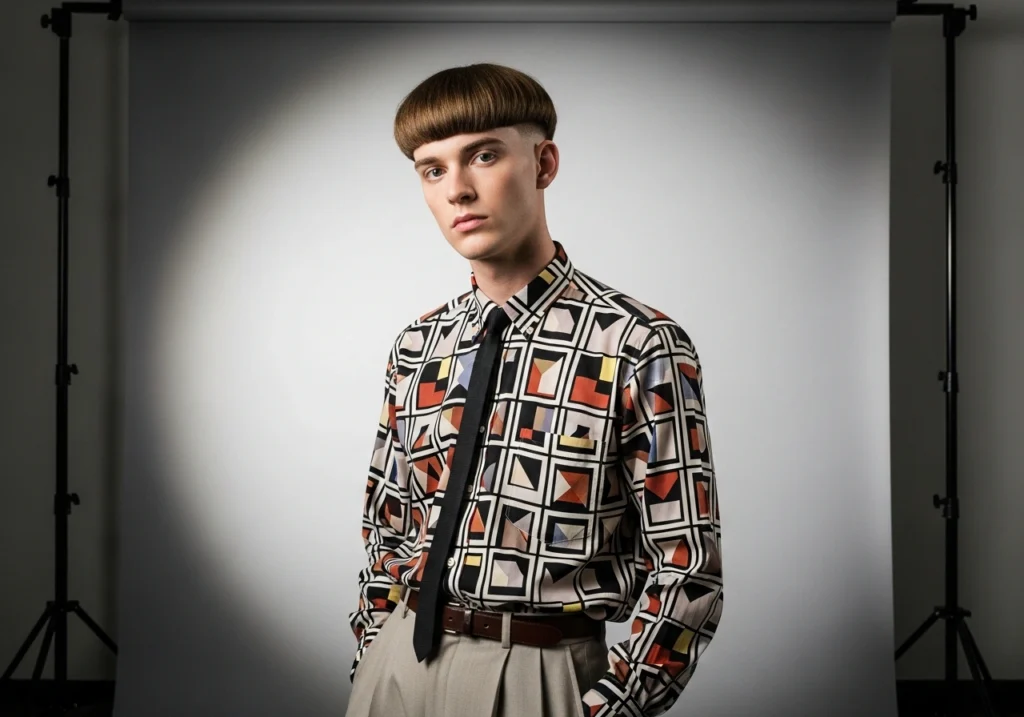
The mod revival and new wave music movements brought the bowl cut into 1980s consciousness. This geometric style featured hair cut in a straight line around the head, creating a mushroom-like shape. While less universally popular than other trends, the bowl cut found its niche among alternative music fans and those embracing mod aesthetics.
The bowl cut required precise cutting to achieve the characteristic even line around the perimeter. Stylists would often use an actual bowl as a cutting guide, though skilled professionals could achieve the look freehand. The style worked best with straight hair that could maintain the clean, geometric lines.
16. The Shag
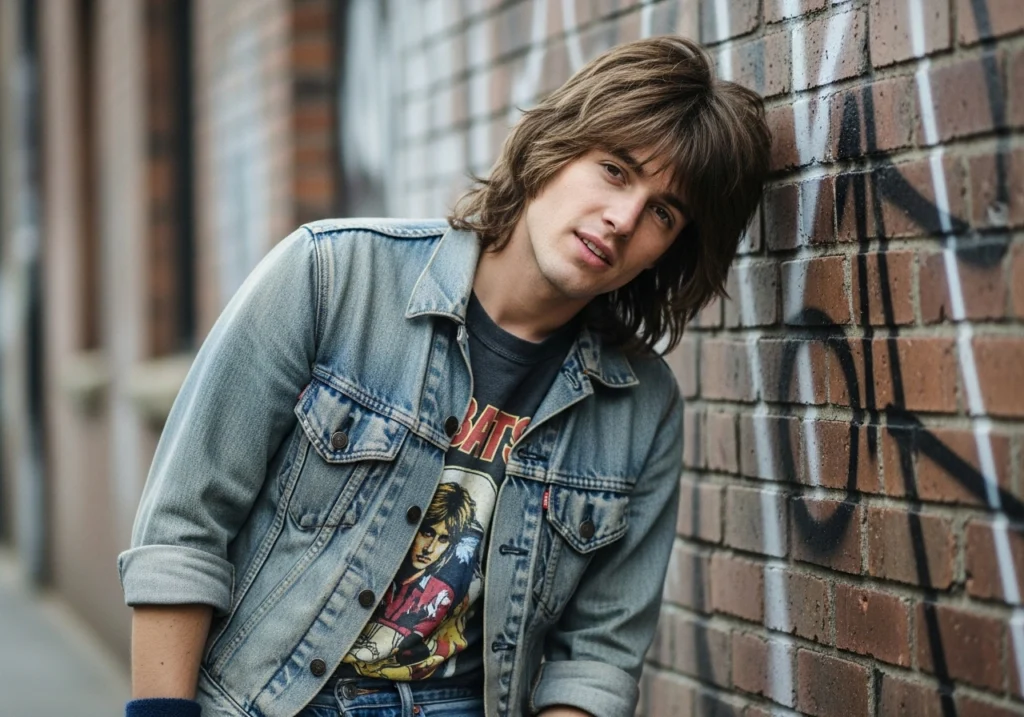
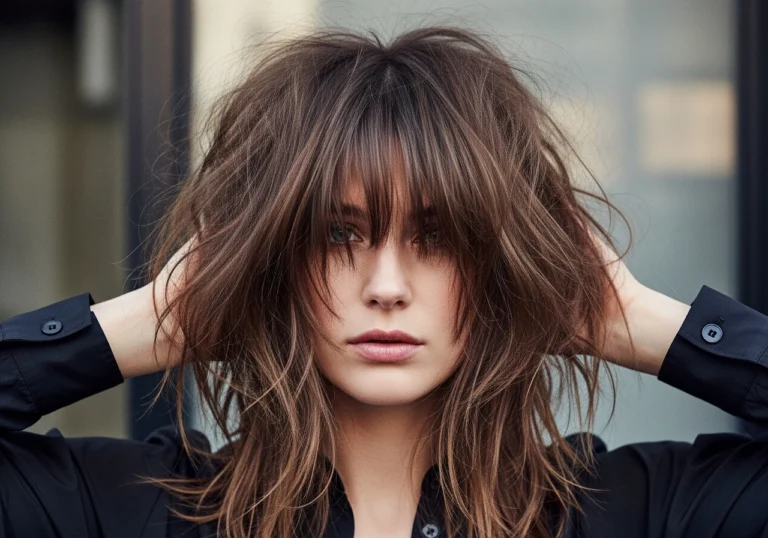
The shag offered a deliberately messy, layered alternative to more structured styles. This cut featured heavily layered hair of varying lengths, creating texture and movement throughout. The shag could be worn at different lengths, from relatively short to shoulder-length or longer, adapting to personal preferences.
Styling a shag involved enhancing the natural texture through products like mousse or texturizing sprays. The goal was controlled chaos, with layers falling in seemingly random but actually carefully crafted patterns. This style suited men seeking a more relaxed, effortless appearance while still embracing contemporary trends.
Styling Products and Techniques
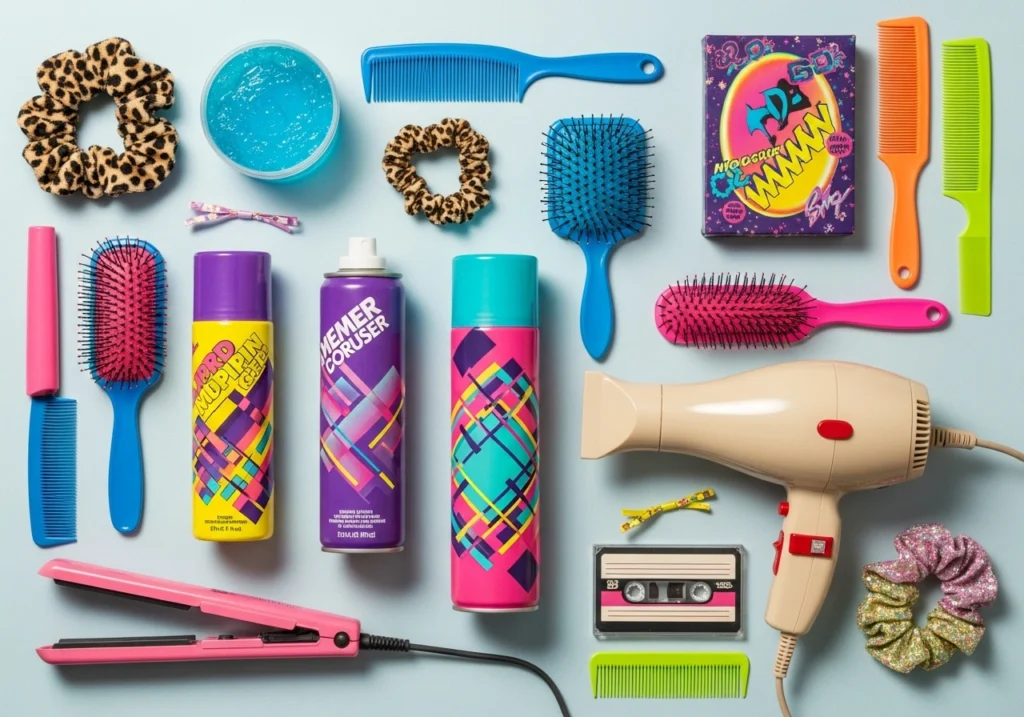
The dramatic hairstyles of the 1980s would have been impossible without the era’s arsenal of styling products. Hairspray reigned supreme, with brands like Aqua Net becoming household names. Men used these products in quantities that seem excessive by modern standards, but they were essential for maintaining the volume and structure that defined the decade.
Mousse emerged as another crucial product, offering a way to build volume from the roots while maintaining flexibility. Applied to damp hair before blow-drying, mousse provided body and hold that lasted throughout the day. Gels offered stronger hold for more structured styles, particularly spikes and slicked-back looks.
The blow dryer became an indispensable tool in men’s grooming routines. Proper blow-drying technique could mean the difference between achieving desired volume and falling flat. Men learned to direct airflow against the natural growth pattern, using brushes to shape and build fullness.
Conclusion
The sixteen iconic hairstyles that defined 1980s men’s grooming represent more than just fashion trends. They embody a cultural moment when boundaries were pushed, creativity flourished, and self-expression reached new heights. From the corporate-friendly side part to the rebellious mohawk, these styles offered men unprecedented opportunities to communicate their identities through their hair.
Understanding these trends provides valuable context for contemporary men’s fashion, as many current styles draw inspiration from this transformative decade. The 1980s proved that hair could be art, rebellion, and personal branding all at once. Whether embracing these looks for nostalgic purposes or discovering them for the first time, modern men can appreciate the boldness and creativity that defined an unforgettable era in grooming history. The legacy of 1980s men’s hair continues to influence how we think about masculine style, reminding us that sometimes the most memorable statements come from those willing to take risks with their appearance.
you may also like this:21 Iconic Bleached Hairstyles For Men
Frequently Asked Questions
What was the most popular men’s hairstyle in the 1980s?
The mullet was arguably the most popular and iconic hairstyle of the decade, appearing across all social classes and professions. Its distinctive short front and long back made it instantly recognizable and widely adopted by celebrities and everyday men alike.
How did men get so much volume in their hair during the 1980s?
Men achieved dramatic volume through a combination of techniques including blow-drying against the natural growth pattern, teasing or backcombing at the roots, using volumizing mousses and sprays, and applying generous amounts of hairspray to maintain the fullness throughout the day.
Were 1980s hairstyles difficult to maintain?
Many 1980s hairstyles required significant daily effort and maintenance. Styles like perms needed chemical treatments every few months, while looks like mohawks and spiky hair demanded extensive styling time each morning. Even simpler styles typically required more product and attention than modern equivalents.
Why did punk hairstyles become so popular in the 1980s?
Punk hairstyles gained popularity as visual expressions of rebellion against mainstream society and conservative norms. The rise of MTV and punk rock music videos brought these once-underground styles into public consciousness, making them accessible to wider audiences who appreciated their bold, anti-establishment message.
Are any 1980s men’s hairstyles still popular today?
Several 1980s styles have experienced modern revivals, particularly among younger generations. The mullet has seen significant resurgence, while elements of punk styling like undercuts and textured tops remain fashionable. Contemporary versions typically feature softer, more wearable interpretations of the original bold styles.