

Flow Haircut with Beard Combos That Always Work
The flow haircut has emerged as one of the most versatile and sought-after hairstyles for men who want to balance a relaxed aesthetic with genuine style sophistication. This medium to long hairstyle, characterized by hair that flows naturally backward and to the sides, creates an effortlessly cool appearance that works across various settings. When paired thoughtfully with the right beard style, the flow haircut transforms from a simple hairstyle into a complete look that communicates confidence and attention to detail.
Understanding how to execute and maintain this style at home has become increasingly valuable. With the right knowledge and approach, you can achieve professional-quality results without the recurring expense and time commitment of salon visits. The key lies in understanding the fundamental principles of the flow haircut, recognizing which beard combinations complement your specific features, and mastering the basic techniques needed to maintain both elements effectively.
Understanding the Flow Haircut Foundation
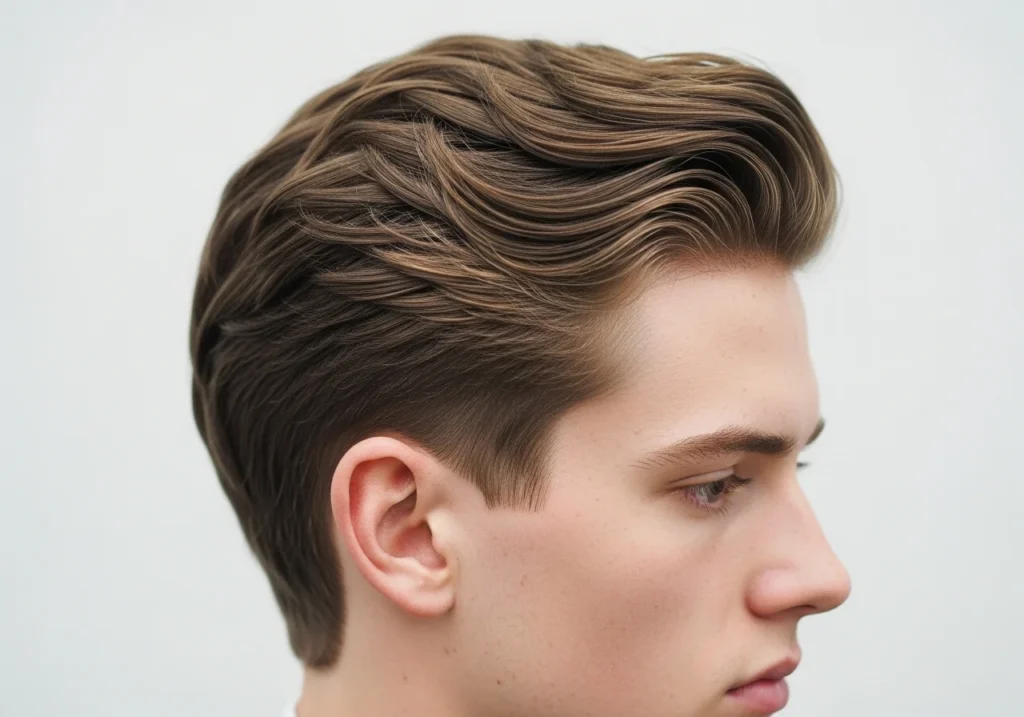
The flow haircut operates on a deceptively simple principle: allowing hair to grow to a medium or extended length while maintaining natural movement and texture. Unlike structured cuts that require precise shaping, the flow embraces organic patterns. The hair typically measures between three to six inches on top, with slightly shorter lengths on the sides that create a natural gradient rather than harsh lines.
This style works particularly well for men with naturally wavy or slightly curly hair, as these textures enhance the flowing movement. However, straight-haired individuals can absolutely achieve this look with proper cutting and styling techniques. The foundation requires healthy hair with minimal damage, as split ends and dryness compromise the smooth, flowing appearance that defines this cut.
When cutting a flow haircut at home, the primary objective involves creating layers that allow hair to move freely while maintaining enough length for backward styling. The top sections need the most length, while the sides and back gradually decrease to prevent the style from appearing boxy or heavy. This gradual transition creates the signature swept-back appearance that gives the flow haircut its name.
5 Classic Beard Pairings That Elevate Your Flow

The short stubble beard represents the most understated pairing option for the flow haircut. This combination works exceptionally well for men who want their hairstyle to remain the focal point while adding masculine definition to the jawline. The stubble length should stay between one and three millimeters, creating shadow and structure without competing with the hair’s prominence.
Maintaining this pairing at home requires a quality trimmer with adjustable guard settings. Trim the stubble every two to three days to prevent it from growing into a fuller beard. The contrast between the longer, flowing hair and closely cropped facial hair creates visual balance that works across professional and casual environments.
The medium full beard offers a more substantial counterpoint to the flow haircut’s movement. This beard style extends approximately half an inch to one inch from the face, providing enough volume to create presence while maintaining neat lines. The combination projects maturity and deliberate style choices.
When growing a medium full beard to pair with your flow haircut, focus on defining the cheek line and neck line clearly. These boundaries prevent the overall look from appearing unkempt. The beard should receive regular trimming every week to maintain consistent length, with particular attention to the mustache area to keep it from overwhelming the upper lip.
The Van Dyke style creates a sophisticated, almost artistic aesthetic when combined with the flow haircut. This beard configuration features a mustache and goatee without connecting sideburns, creating clean, defined facial hair that contrasts beautifully with loose, flowing hair. The Van Dyke works particularly well for men with oval or rectangular face shapes.
Achieving this style at home requires patience and precision. The mustache should extend slightly beyond the corners of the mouth, while the goatee tapers to a point or maintains a rounded shape depending on preference. Regular shaping every few days keeps the lines crisp and prevents stray hairs from blurring the defined edges that make this combination work.
The circle beard presents another compelling option that combines a rounded goatee with a connected mustache. This style frames the mouth area while keeping the cheeks clean, creating a focal point that balances the broader visual weight of the flow haircut. The circle beard suits most face shapes and offers easier maintenance than more complex beard styles.
When cutting a circle beard to complement your flow haircut, ensure the circle maintains proper proportions relative to your mouth size. The beard should extend roughly one finger width beyond the corners of your mouth on each side. Trim the edges every three to four days using a precision trimmer to maintain the circular shape and prevent the beard from spreading onto the cheeks.
The tapered beard style offers maximum versatility for the flow haircut pairing. This approach keeps facial hair shorter on the cheeks while allowing more length on the chin, creating a gradual taper that adds length to the face. The tapered beard works exceptionally well for men with rounder face shapes, as it creates the illusion of a more angular jawline.
Creating this taper at home involves using multiple guard lengths on your trimmer. Start with a longer setting on the chin area, then progressively decrease the guard length as you move toward the cheeks and sideburns. This gradual transition should appear smooth rather than stepped, requiring careful blending between each length zone.
Cutting Your Flow Haircut at Home
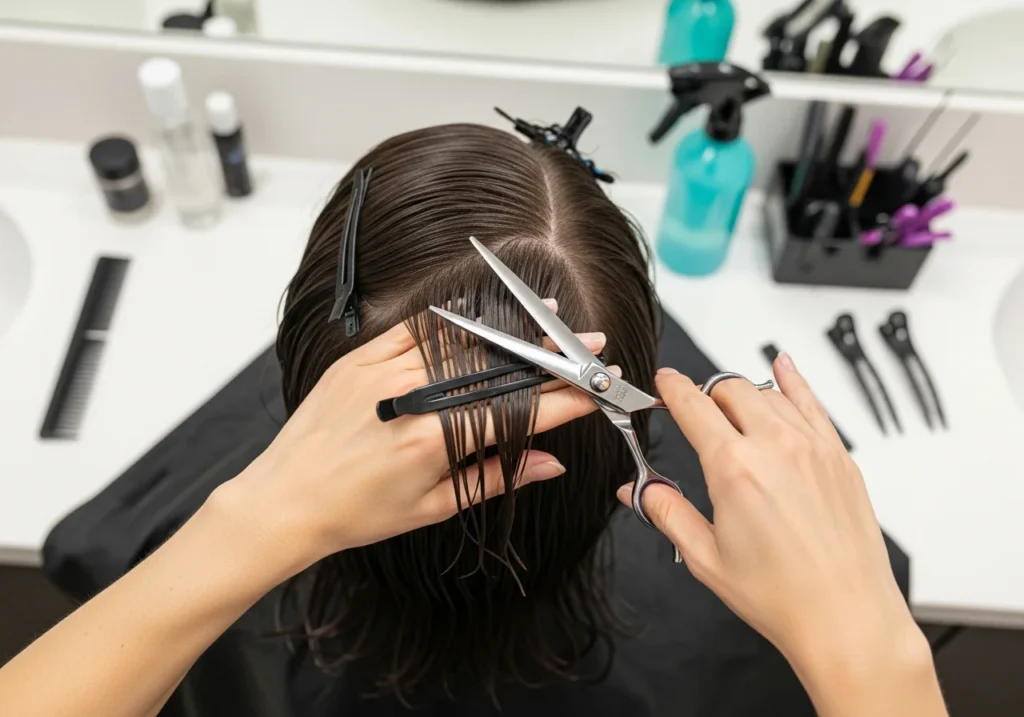
Beginning the cutting process for a flow haircut at home starts with clean, damp hair that has been thoroughly detangled. Wet hair cutting provides more control and precision, though hair should be damp rather than dripping. Section the hair into manageable portions using clips, separating the top, sides, and back into distinct zones.
The top section receives priority attention, as this area determines the overall length and flow pattern. Take a subsection of hair from the crown area and hold it perpendicular to the head. Cut to your desired length, understanding that damp hair will appear longer than dry hair. This first cut establishes your guide length for the entire top section.
Working methodically through the top, bring each new subsection to match the guide length you established. The cutting angle matters significantly. Holding sections straight up from the head and cutting straight across creates layers that support the flowing movement. Avoid cutting at severe angles, which can create disconnection rather than smooth transitions.
The side sections require a different approach to create the proper graduation. These areas should be shorter than the top but must blend seamlessly to avoid visible lines. Using the scissor-over-comb technique works well here. Hold the comb at a slight angle and cut the hair that extends above the comb, gradually working upward while decreasing the length as you move down toward the ears.
The back section follows similar principles to the sides, with particular attention to blending the transition zone where the longer top meets the shorter back. This area frequently causes problems in home cuts, appearing bulky or disconnected if not properly addressed. Take small sections and check your work frequently from multiple angles using a handheld mirror.
Point cutting adds texture and removes weight from the ends, essential for achieving the natural flow this style requires. After completing the basic cut, go back through the hair and use the tips of your scissors to cut into the ends at various depths. This technique prevents blunt lines and creates the soft, moveable texture that defines successful flow haircuts.
Beard Shaping Techniques for Home Grooming
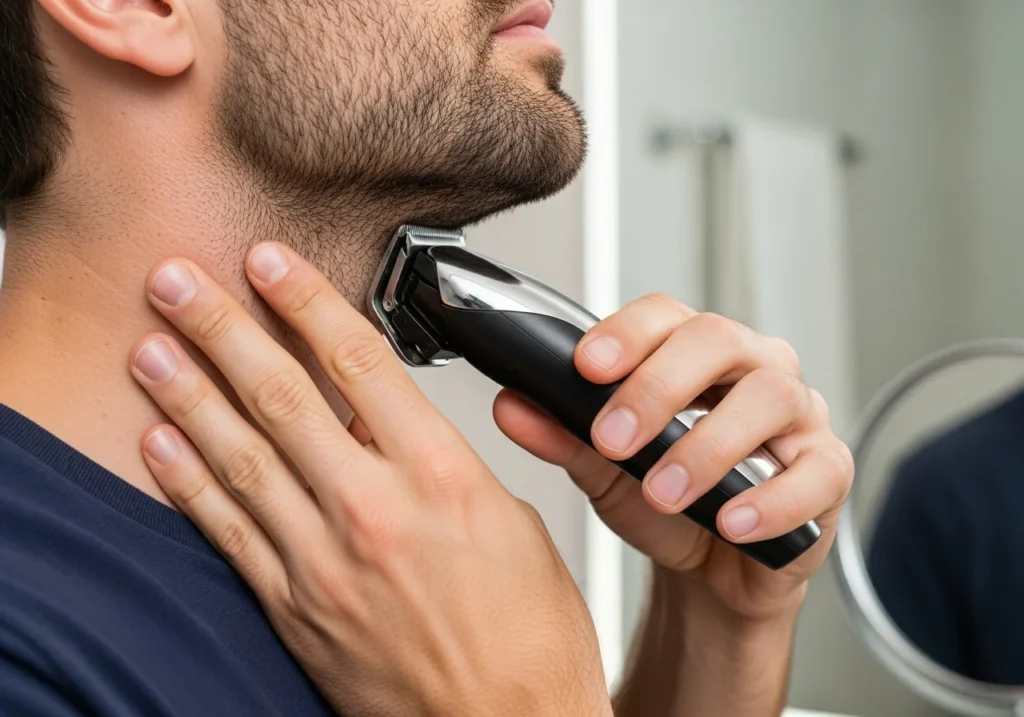
Shaping your beard at home begins with identifying your natural beard boundaries. The cheek line represents the upper limit of your beard and should follow a natural curve from the sideburn area toward the corner of your mustache. Avoid cutting this line too low, which creates an artificial appearance. A good rule involves imagining a line from the bottom of your nose to the top of your ear, with the cheek line falling slightly below this imaginary line.
The neck line defines the bottom boundary of your beard and critically impacts the overall appearance. Locate your Adam’s apple and place two fingers above it. The point where your top finger rests marks the appropriate position for your neck line. Create a curved line from this point to the area behind your jaw on each side. All hair below this line should be removed completely to maintain a clean, defined beard shape.
Trimming beard length requires a systematic approach. Always start with a longer guard setting than you think you need, as you can always remove more hair but cannot replace what you have cut too short. Work in the direction of hair growth, making multiple passes with the trimmer to ensure even cutting. For graduated beard styles, change guard lengths smoothly between zones, overlapping each section to prevent visible lines.
Detail work separates amateur beard grooming from professional results. Use a precision trimmer without a guard to define the exact edges of your cheek line and neck line. Work slowly and check your symmetry frequently. Small adjustments make significant differences in the final appearance. The mustache area requires particular attention, as overgrown hair here can undermine an otherwise well-groomed beard.
Maintaining proper beard shape requires regular attention. Most beard styles need trimming every three to seven days, depending on your hair growth rate and desired look. Quick touch-ups between full grooming sessions keep lines crisp and prevent your beard from losing its intentional shape.
Styling Products and Tools You Actually Need
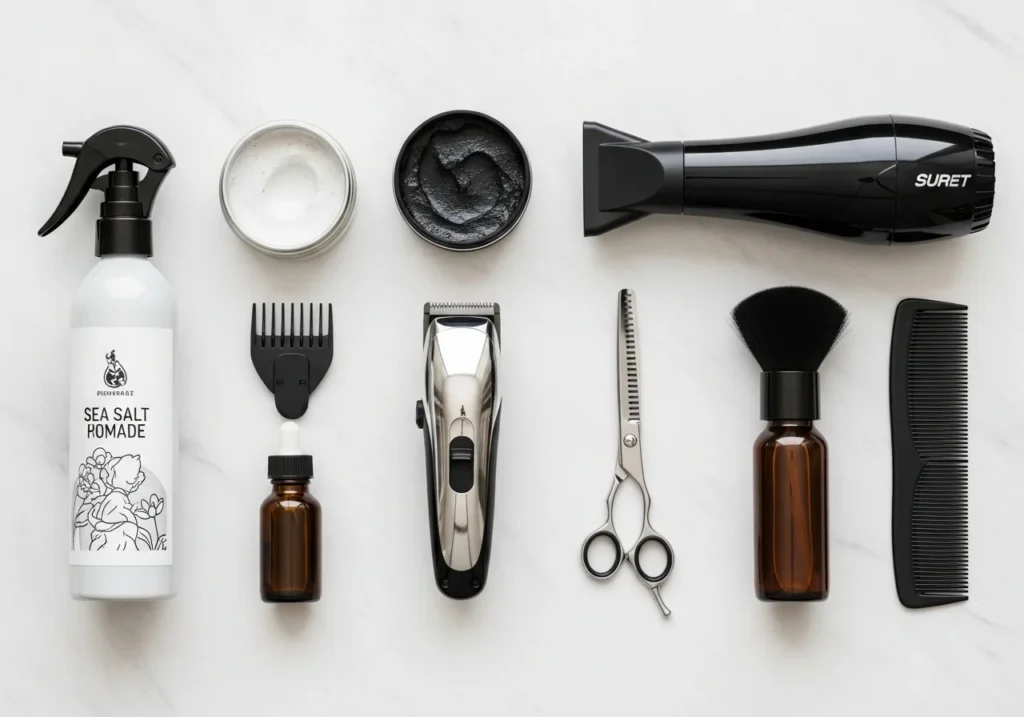
Selecting appropriate products for the flow haircut centers on achieving hold without stiffness. Sea salt spray works exceptionally well for this style, adding texture and enhancing natural waves while maintaining movement. Apply to damp hair before blow-drying, scrunching as you work the product through to encourage natural flow patterns.
Pomade with medium hold provides styling control without creating the rigid structure that contradicts the flow aesthetic. Water-based pomades offer the advantage of easy washing and restyling throughout the day. Apply to dry or slightly damp hair, working from the roots through to the ends with your fingers. Avoid heavy application that weighs hair down and prevents natural movement.
Hair clay presents another viable option, particularly for men with finer hair that needs more volume. Clay products add thickness and texture while maintaining a matte finish that appears natural. Use sparingly, warming a small amount between your palms before distributing through dry hair. Focus application on the roots and mid-lengths rather than the ends to prevent a heavy, product-laden appearance.
Quality tools make home grooming significantly easier and more effective. Sharp haircutting shears designed for home use cost more than basic scissors but deliver vastly better results. The cutting edge must be properly aligned and maintained to create clean cuts rather than crushing and fraying hair. Plan to sharpen or replace scissors annually with regular use.
A professional-grade beard trimmer with multiple guard lengths and a precision trimmer attachment represents the single most important tool investment for maintaining the flow haircut and beard combination. Adjustable guards allow for graduated cuts and versatile styling options. Cordless models with adequate battery life provide the flexibility needed for detailed work.
The blow dryer remains essential for styling the flow haircut properly. Select a model with multiple heat and speed settings, using medium heat and speed for most styling work. The concentrator nozzle attachment directs airflow precisely, helping to smooth hair and encourage backward flow. Always keep the dryer moving and maintain several inches of distance from your hair to prevent heat damage.
Face Shape Considerations and Adaptations
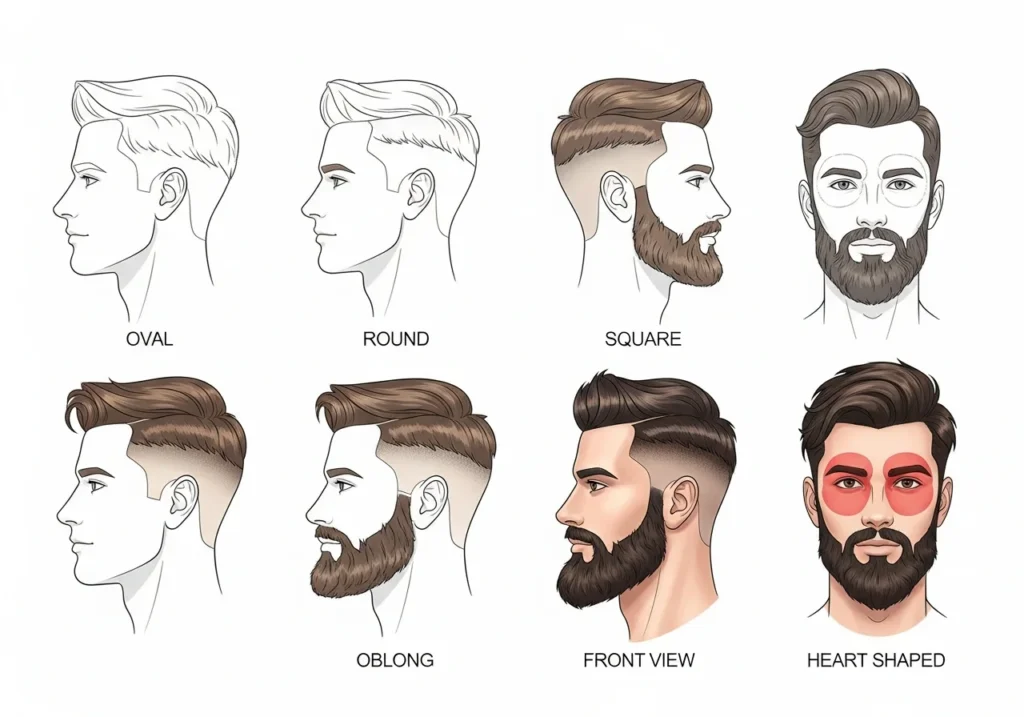
Oval face shapes enjoy the widest versatility with flow haircut and beard combinations. The balanced proportions of oval faces support nearly any pairing option without requiring significant modifications. Men with oval faces can experiment freely with different beard lengths and styles, adjusting based on personal preference rather than corrective necessity.
Round face shapes benefit from combinations that add length and reduce width. Pairing the flow haircut with a tapered beard or Van Dyke style creates vertical lines that elongate the face. Avoid full, rounded beards that emphasize the face’s circular qualities. The flow haircut itself should maintain enough length on top to add height, with sides kept relatively close to prevent widening the appearance.
Square face shapes feature strong, angular jawlines that the right beard can either emphasize or soften depending on desired effect. A medium full beard softens sharp angles while maintaining masculine definition. The flow haircut complements square faces naturally, as the soft, flowing lines provide pleasant contrast to angular features. Ensure the sides of the flow haircut do not add excessive width at the temples, which can make square faces appear boxy.
Oblong and rectangular face shapes need combinations that add width rather than length. Keep the flow haircut’s length moderate to avoid further elongating the face. Fuller beard styles that extend outward from the face work better than tapered options. The circle beard style works particularly well here, adding horizontal emphasis that balances vertical facial proportions.
Diamond and heart-shaped faces feature wider cheekbones or foreheads with narrower jaws. These face shapes benefit from fuller beards that add weight to the lower face, creating better balance. The flow haircut should avoid excessive volume on top, which would further emphasize the upper face width. Styling the flow to sweep back and slightly to the sides rather than straight back creates a more balanced silhouette.
Maintaining Your Look Between Cuts
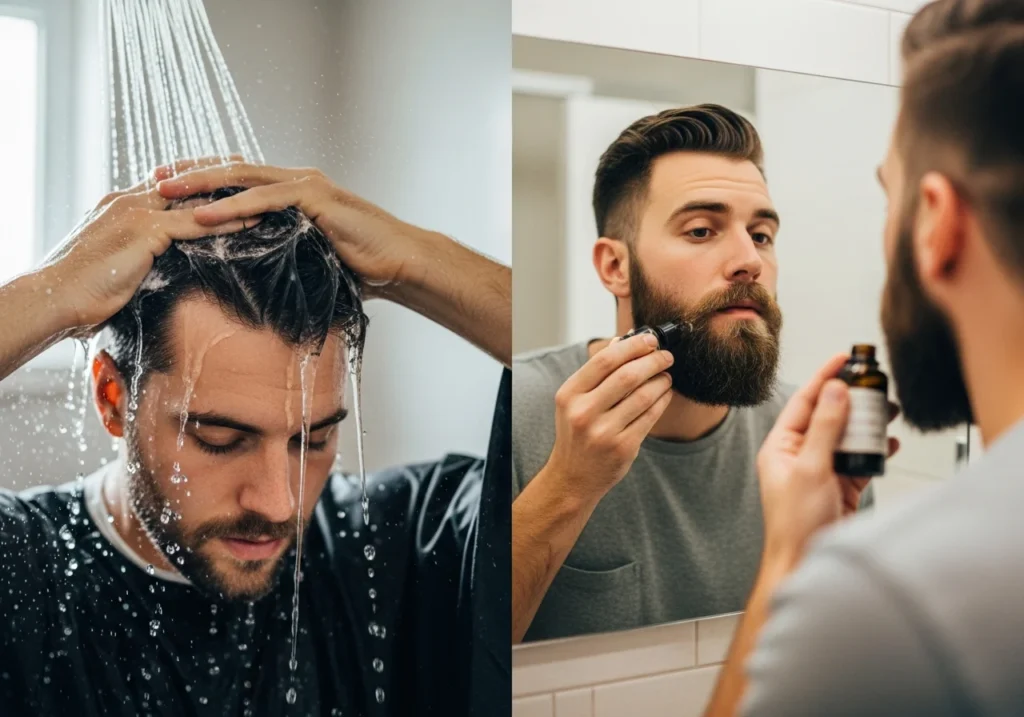
Washing frequency significantly impacts the flow haircut’s appearance and health. Most men achieve best results washing two to three times weekly rather than daily. Frequent washing strips natural oils that protect hair and provide the slight texture that enhances flow. On non-washing days, rinse with water alone or use a small amount of conditioner to refresh the style.
Conditioning represents a non-negotiable step for maintaining longer hair. Apply conditioner from the mid-lengths to the ends, avoiding the roots which can become heavy and greasy with conditioner application. Leave the product in for two to three minutes before rinsing thoroughly with cool water, which helps seal the hair cuticle and enhance shine.
Beard conditioning requires equal attention to maintain soft, manageable facial hair. Beard-specific conditioners or oils work better than head hair products, as they address the coarser texture of beard hair. Apply beard oil daily to damp facial hair, using three to six drops depending on beard length and thickness. Work the oil through completely, ensuring it reaches the skin beneath the beard.
Regular trims maintain the flow haircut’s shape between major cuts. Every three to four weeks, trim the ends to remove split ends and maintain the proper length. Focus on the areas that grow fastest, typically the sides and back, to prevent the style from losing its proportions. These maintenance trims can be minimal, removing only a quarter inch or so to preserve the overall length while keeping the cut fresh.
Beard maintenance follows a more frequent schedule than hair maintenance. Trim the beard every one to two weeks to maintain your chosen length and shape. Daily or every-other-day touch-ups keep the cheek and neck lines crisp. These quick sessions require only a few minutes but dramatically impact the overall polished appearance of your grooming.
Troubleshooting Common Flow and Beard Issues
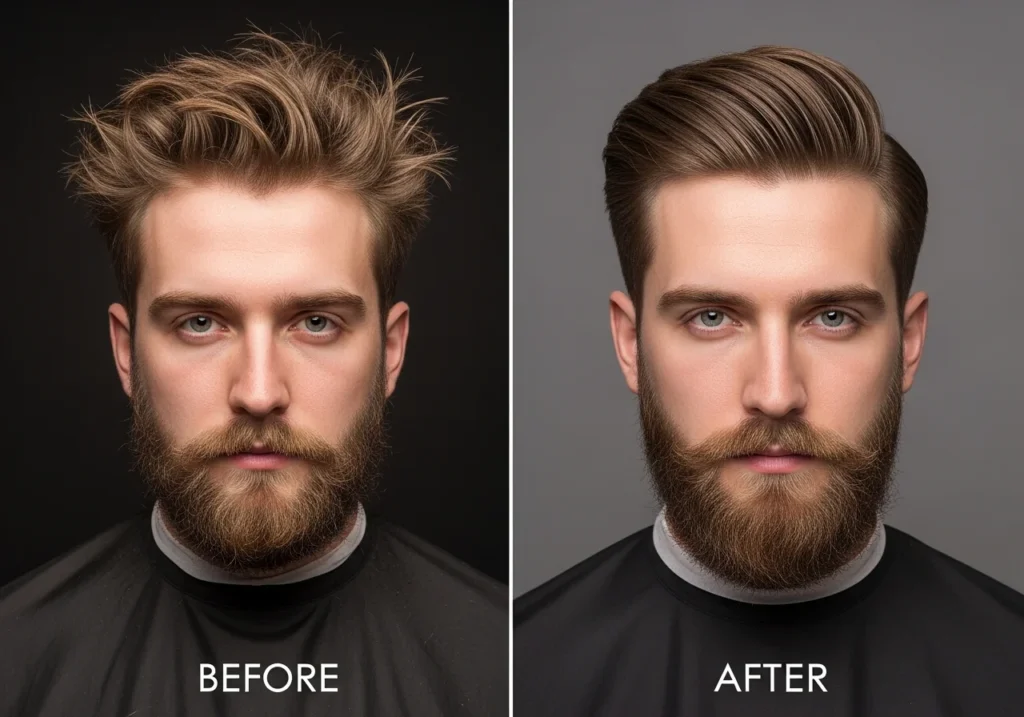
Hair that refuses to flow backward and instead sticks out at the sides indicates either improper cutting or inadequate styling technique. The sides may need to be cut shorter to reduce bulk and encourage backward movement. When styling, blow-dry hair back and slightly down rather than straight back, which can cause it to stick out. Use your free hand to guide hair into position as you dry.
Beard patchiness challenges many men attempting to pair fuller beard styles with the flow haircut. While genetics ultimately determine beard density, proper care optimizes growth potential. Maintaining healthy skin through regular cleansing and moisturizing supports follicle health. Beard oils containing nutrients like vitamin E and biotin may support hair health. For persistent patchiness, consider beard styles that work with your growth pattern rather than against it, such as the Van Dyke which requires less cheek coverage.
Frizz and flyaways disrupt the smooth flow this hairstyle requires. These issues typically indicate dryness or damage. Increase conditioning frequency and consider using a leave-in conditioner or smoothing serum. Avoid excessive heat styling and always use a heat protectant product before blow-drying. Silk or satin pillowcases reduce friction during sleep, preventing frizz formation overnight.
Uneven beard growth creates asymmetry that becomes obvious in combination with the symmetrical flow haircut. Address this by trimming the entire beard to match the length of the slowest-growing areas. As growth continues, the beard will achieve a more uniform appearance. Resist the temptation to let faster-growing areas continue growing while waiting for sparse areas to catch up, as this approach creates increasingly obvious unevenness.
Oily roots combined with dry ends present a common challenge with longer hairstyles. This condition requires targeted treatment rather than uniform product application. Shampoo focus should remain on the scalp and roots, while conditioning focus should remain on mid-lengths and ends. Consider using a clarifying shampoo weekly to thoroughly cleanse the scalp while maintaining your regular conditioning routine for the lengths.
Seasonal Adjustments for Year-Round Success

Summer heat and humidity require adjustments to maintain the flow haircut and beard combination. Higher temperatures increase oil production, potentially requiring more frequent washing. Lighter styling products work better in humid conditions, as heavy products can cause hair to appear greasy and weighed down. Consider slightly shorter beard lengths during summer months, as excessive facial hair can feel uncomfortable in heat.
Winter dryness affects both hair and beard, requiring enhanced moisturizing approaches. Increase beard oil usage and consider adding a beard balm for additional protection against harsh conditions. Hair may need more frequent conditioning or the addition of a deep conditioning treatment every two weeks. Indoor heating creates particularly dry conditions that can cause static and frizz in the flow haircut.
Spring and fall transition periods offer ideal conditions for growing out either element of your style. If you have been considering a longer flow or fuller beard, these moderate temperature seasons provide comfortable growing conditions. The temperate weather also makes it easier to experiment with different styling products and techniques without the complications that temperature extremes create.
Seasonal activity changes may influence your styling choices. Summer often brings more swimming and outdoor activities that can damage hair and beard. Apply leave-in conditioner or protective oil before swimming to minimize chlorine or salt water damage. Winter sports that require helmets or heavy hats can flatten the flow haircut, making styles with some natural texture easier to refresh after equipment removal.
Building Your Home Grooming Routine

Establishing a consistent grooming routine creates the foundation for maintaining your flow haircut and beard combination long-term. Morning styling should begin in the shower, where you wash and condition following your established schedule. Towel-dry hair gently, squeezing rather than rubbing to prevent frizz and damage.
Apply styling products to damp hair, working them through evenly. Blow-dry using the techniques discussed earlier, directing hair backward and using your hands to shape the flow. This process typically requires five to ten minutes once you develop proficiency. Finish with a small amount of pomade or clay to add definition and control flyaways.
Beard maintenance fits naturally into morning and evening routines. Morning sessions focus on styling and applying oils or balms. Evening sessions provide opportunities for washing and conditioning facial hair, allowing products to work overnight. Trimming sessions can occur weekly at a consistent time, making them a predictable part of your schedule rather than an afterthought.
Monthly assessment sessions help you evaluate whether your current combination continues working well or needs adjustment. Take photos from multiple angles and compare them to earlier photos. This objective perspective reveals gradual changes that daily viewing might miss. Consider whether your face shape goals are being met, whether the proportions remain balanced, and whether any modifications might improve the overall effect.
Quarterly major maintenance involves deeper intervention in both elements. Plan for a more substantial hair trim that removes accumulated damage and reestablishes the cut’s shape. Consider trying a professional beard shaping session occasionally, even if you handle regular maintenance yourself. These periodic professional interventions provide learning opportunities and catch issues that home maintenance might miss.
The flow haircut with beard combination offers remarkable versatility and style for men willing to invest modest time in home grooming. The key to success lies in understanding the fundamental principles that make these elements work together, choosing beard styles that complement both your hair and face shape, and establishing consistent maintenance routines. With the techniques and insights provided here, you can achieve and maintain a polished, professional appearance that reflects careful attention to personal presentation without requiring constant salon visits or excessive time investment.
Frequently Asked Questions
How long does hair need to be before I can start styling it as a flow haircut?
Your hair needs at least three to four inches of length on top to begin creating a proper flow haircut. This length provides enough hair to sweep backward while maintaining the flowing movement that defines the style. The sides can be shorter, typically two to three inches, to create the proper proportions. If you are starting from a short cut, expect a growing-out period of four to six months before you have sufficient length to achieve the full flow effect.
Can I pull off a flow haircut and beard if I have thin or fine hair?
Thin or fine hair can absolutely work with the flow haircut, though you will need to adjust your approach. Focus on building volume through layering and proper product selection. Volumizing mousses applied to damp hair before blow-drying add thickness without weight. Clay products provide texture and grip that make fine hair appear fuller. Keep the overall length slightly shorter than you would with thick hair, as excessive length can make fine hair appear stringy rather than flowing.
How often should I trim my beard when pairing it with a flow haircut?
Beard trimming frequency depends on your chosen beard style and natural growth rate. Most beard styles require shape maintenance every one to two weeks to keep the overall length consistent and lines defined. The cheek and neck lines need more frequent attention, typically every three to four days, to maintain crisp boundaries. If you are growing your beard to a specific length, you can extend the time between trims, focusing only on shaping and line maintenance rather than overall length reduction.
What should I do if my flow haircut looks messy rather than styled?
A messy appearance typically indicates either too much length without proper layering, insufficient styling product, or improper blow-drying technique. Start by ensuring your haircut includes adequate layers that remove bulk and create movement. When styling, use enough product to provide hold without making hair stiff or greasy. Focus your blow-drying efforts on directing hair backward from the roots, creating a smooth foundation. The ends can maintain some texture and movement, but the overall direction should be clearly backward rather than randomly dispersed.
Is the flow haircut and beard combination appropriate for professional workplace environments?
The flow haircut with a well-maintained beard works in most professional environments, though specific workplace cultures vary. The key to maintaining professionalism lies in grooming quality rather than the style itself. Keep your hair clean, well-styled, and free of excessive product buildup. Maintain crisp beard lines and consistent length. In conservative professional settings, consider shorter beard options like stubble or a neat circle beard rather than fuller styles. The flow haircut itself reads as professional when properly maintained, as it demonstrates attention to personal presentation rather than neglect.
You may also like this post: 15 Braided Hairstyles For Men’s: That Work Year-Round




2 Comments