
19+ Best Mens Haircuts Scandinavian Styles
Scandinavian hairstyles have captured the attention of men worldwide, combining rugged masculinity with refined aesthetic appeal. These haircuts draw inspiration from both historic Nordic warriors and contemporary European fashion, creating versatile looks that work equally well in boardrooms and casual settings. The enduring popularity of Scandinavian styles reflects their ability to balance timeless tradition with modern sensibility, offering men a distinctive appearance that commands respect and admiration.
The appeal of Scandinavian haircuts extends beyond mere aesthetics. These styles represent a cultural heritage rooted in strength, independence, and natural confidence. From the structured precision of short Nordic cuts to the flowing freedom of longer Viking-inspired styles, Scandinavian haircuts offer remarkable versatility across different hair types, face shapes, and personal preferences. Understanding these styles helps men make informed decisions about their grooming choices while embracing a look that has stood the test of time.
Understanding Scandinavian Hair Culture
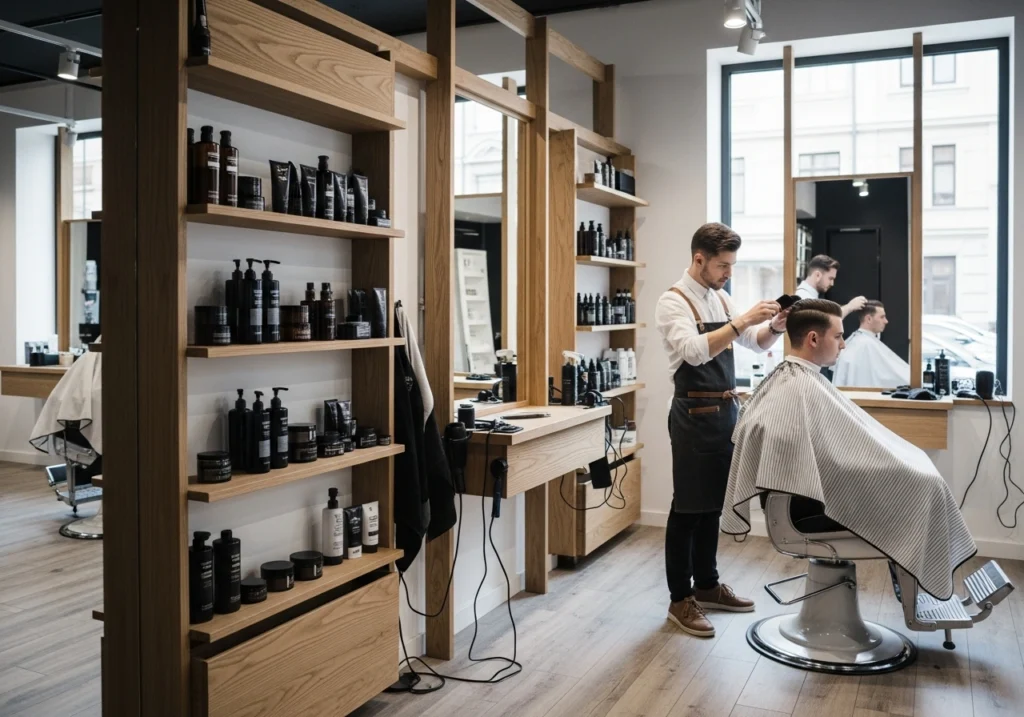
Scandinavian grooming traditions emphasize natural texture and effortless style. Unlike some hair trends that require excessive products and constant maintenance, Nordic approaches favor simplicity and authenticity. This philosophy stems from a cultural appreciation for functionality combined with understated elegance. Men in Scandinavia traditionally maintained practical hairstyles that could withstand harsh climates while still projecting strength and dignity.
The modern interpretation of Scandinavian haircuts builds upon this foundation while incorporating contemporary barbering techniques. Sharp fades blend seamlessly with textured tops, creating contrast that highlights facial features. The emphasis remains on creating looks that appear naturally stylish rather than overly constructed. This approach resonates with men seeking sophisticated grooming without the appearance of excessive effort.
Historical influences play a significant role in shaping current Scandinavian hair trends. Viking warriors wore their hair in ways that conveyed social status and personal identity. Long hair often indicated freedom and prosperity, while specific styles marked different roles within Norse society. Today’s interpretations honor this heritage while adapting to modern lifestyle demands and professional expectations.
The Classic Temple Shave with Long Hair

The temple shave represents one of the most iconic Scandinavian hairstyles. This look features closely shaved or faded sides that create dramatic contrast with longer hair on top and back. The style works particularly well for men with thick, straight hair, though it can be adapted for various hair textures. The sharp lines around the temples frame the face and draw attention upward, creating a strong, masculine silhouette.
Achieving the perfect temple shave requires skilled barbering. The transition between shaved sections and longer hair must be precise yet natural-looking. Many men opt for a gradual fade rather than a stark line, which softens the overall appearance while maintaining definition. The top section typically measures between four to eight inches, providing enough length for various styling options from slicked back to naturally tousled.
Maintenance for this style involves regular trips to the barber every two to three weeks to keep the shaved sections clean and the overall shape intact. The longer top portion requires basic care including quality shampoo and conditioning treatments. Styling products like pomade or clay help control the top section while adding texture and definition. This combination of structured sides and flexible top styling makes the temple shave exceptionally versatile.
you may also like this:22 Mens Haircuts Thin Straight Hair
Nordic Undercut Variations
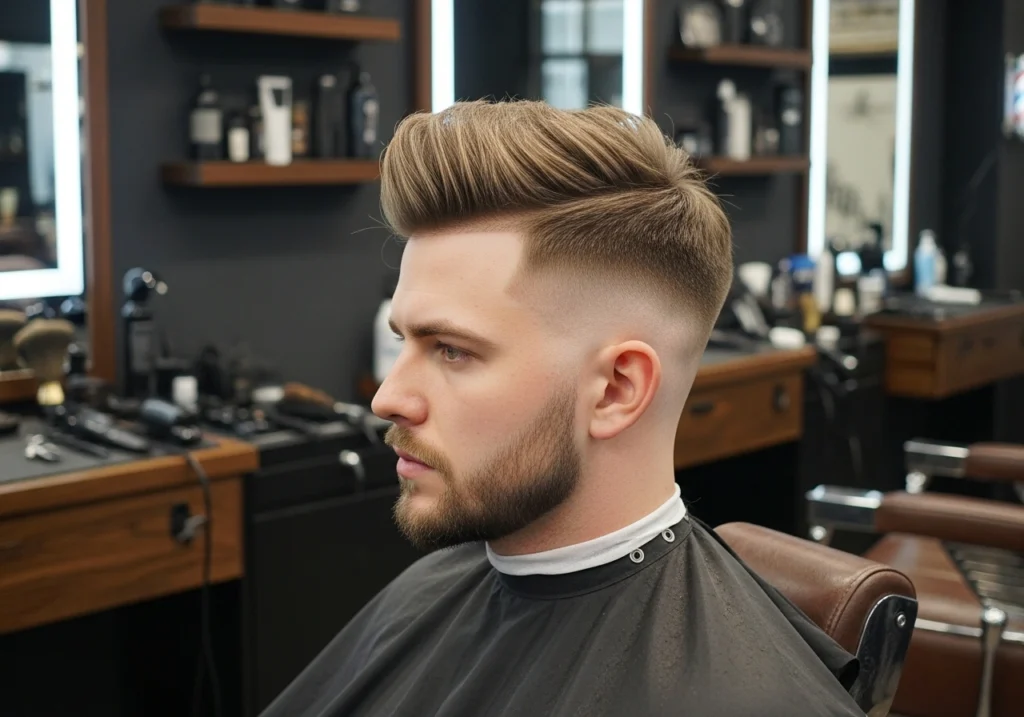
The undercut has become synonymous with Scandinavian style, offering a bold statement that suits various face shapes and hair types. This haircut features very short or shaved back and sides with significantly longer hair on top. The disconnect between lengths creates visual interest and allows for diverse styling possibilities. Men appreciate the undercut for its ability to look polished in professional settings yet edgy and contemporary in social environments.
Several undercut variations cater to different preferences. The classic undercut maintains a uniform short length on sides and back, creating a clean canvas that emphasizes the top section. The faded undercut incorporates gradual length transitions, resulting in a softer, more blended appearance. The textured undercut pairs the cut with choppy, layered top sections that add dimension and movement.
Styling an undercut depends on hair texture and desired finish. Men with straight hair can achieve sleek, combed-back looks using pomade or gel. Those with wavy or curly hair might embrace natural texture, using light styling creams to define without weighing down. The versatility of undercuts makes them suitable for conservative professional environments when styled neatly, yet equally appropriate for casual settings when worn messily and relaxed.
The Modern Viking Man Bun
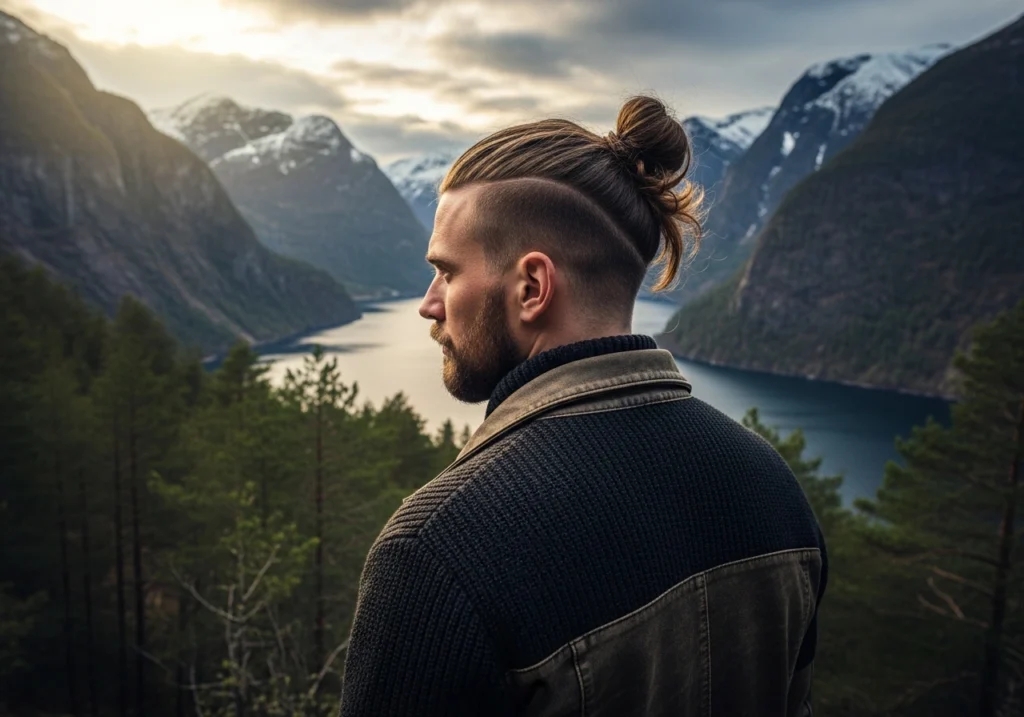
The man bun has evolved from a practical hairstyle into a fashion statement deeply connected to Scandinavian aesthetics. This style requires significant hair length, typically extending past the shoulders when fully grown. The man bun works exceptionally well for men transitioning from shorter styles or those committed to maintaining longer hair. When executed properly, it conveys confidence and nonconformity while remaining surprisingly practical.
Creating an authentic Viking-style man bun involves gathering hair at the crown or higher, securing it loosely to maintain texture and volume. The key difference between a standard man bun and a Viking-inspired version lies in the intentional messiness and the inclusion of shorter pieces that frame the face. Many men pair their man buns with shaved or faded sides, creating a distinctive contrast that heightens the style’s impact.
The man bun suits various occasions when styled appropriately. For professional settings, a neat, tight bun positioned higher on the head appears polished and intentional. Casual environments allow for looser, lower buns with deliberately escaped strands that create a relaxed, effortless vibe. Regular conditioning treatments maintain hair health, particularly important given the stress that tying hair can place on strands and follicles.
Textured Crop with Scandi Influence
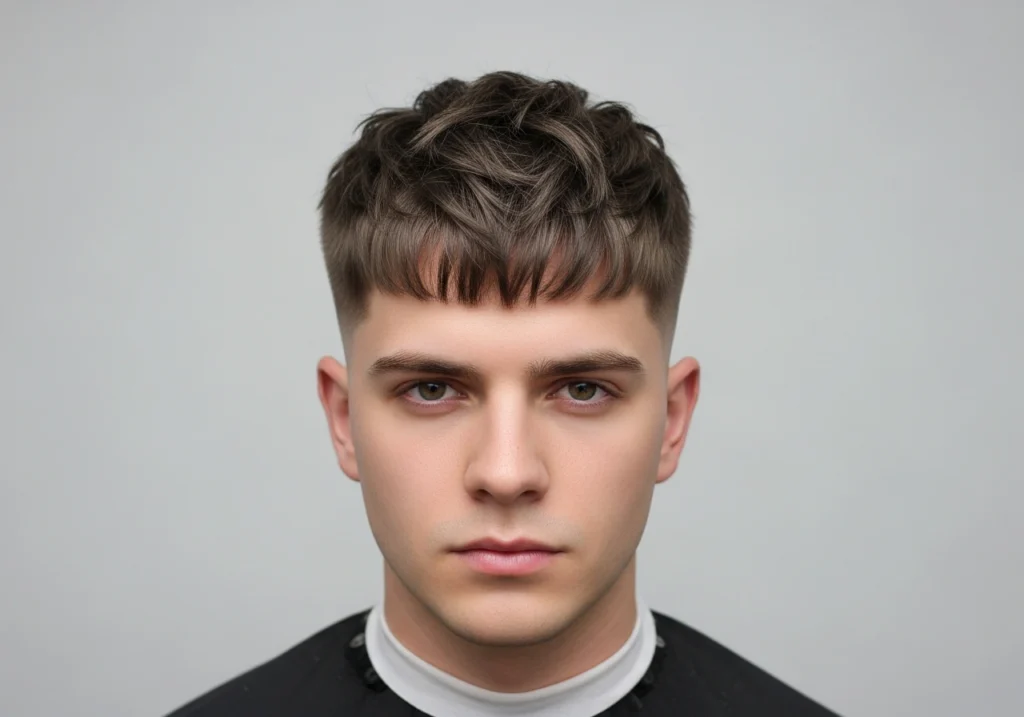
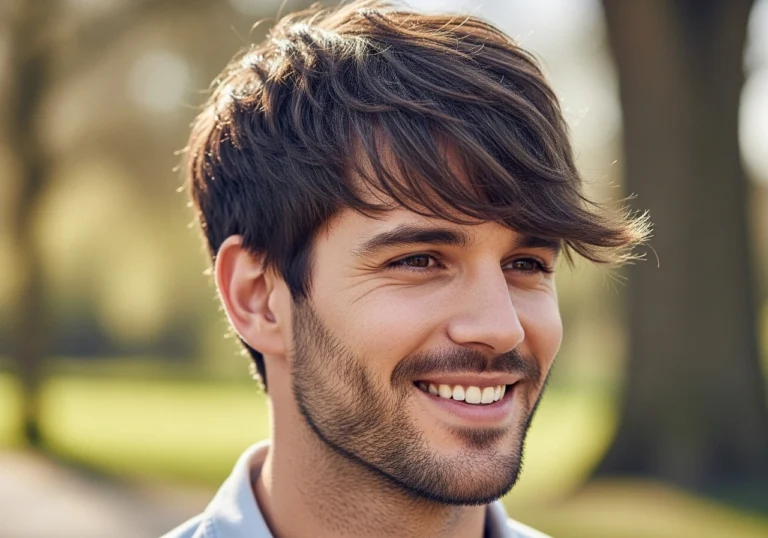
The textured crop represents a shorter Scandinavian option perfect for men seeking low-maintenance sophistication. This haircut features short sides and back with slightly longer top sections cut in layers to create natural texture and movement. The style draws inspiration from contemporary European fashion while maintaining practical, easy-care qualities. Men appreciate the textured crop for its ability to look intentionally styled without requiring extensive morning routines.
Cutting techniques for the textured crop involve point-cutting and texturizing shears that remove weight while preserving length. This creates separation between hair sections, allowing individual strands to move independently. The result is a dimensional appearance that adds visual interest without bulk. The sides typically measure between a number two and four guard length, while the top ranges from one to three inches depending on personal preference.
Styling the textured crop requires minimal effort, making it ideal for busy professionals. A small amount of matte clay or fiber product worked through damp hair creates definition and hold without shine or stiffness. The style naturally falls into place, requiring only occasional finger-combing throughout the day. This wash-and-go quality appeals to men who value efficient grooming without sacrificing style.
Slicked Back Nordic Style
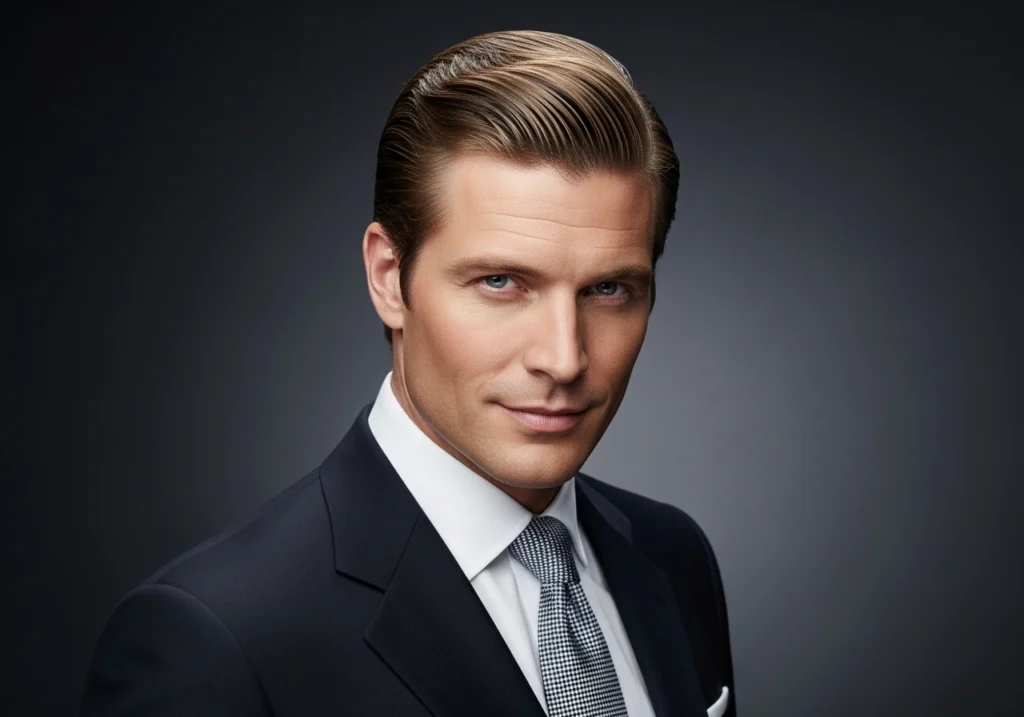
The slicked-back hairstyle embodies Scandinavian sophistication, offering a refined appearance suitable for formal occasions and professional environments. This classic look requires medium to long hair on top, typically measuring at least four inches for proper backward styling. The sides can be kept longer for a traditional approach or faded for a modern interpretation. The slicked-back style projects authority and confidence while maintaining an accessible, approachable quality.
Achieving the perfect slicked-back look begins with proper hair preparation. Towel-dried hair should be combed straight back while applying a strong-hold pomade or gel. The product distributes evenly from roots to ends, ensuring comprehensive coverage and lasting hold. A fine-toothed comb creates the smooth, polished finish characteristic of this style. For added volume, some men blow-dry hair backward before applying product, creating lift at the roots.
Maintenance throughout the day may require occasional adjustments, particularly in humid conditions or during physical activity. Carrying a pocket comb allows for quick touch-ups that restore the sleek appearance. This style works exceptionally well for men with naturally straight or slightly wavy hair. Those with curlier textures may need stronger products or straightening treatments to achieve the desired smoothness.
Scandinavian Fade Haircuts
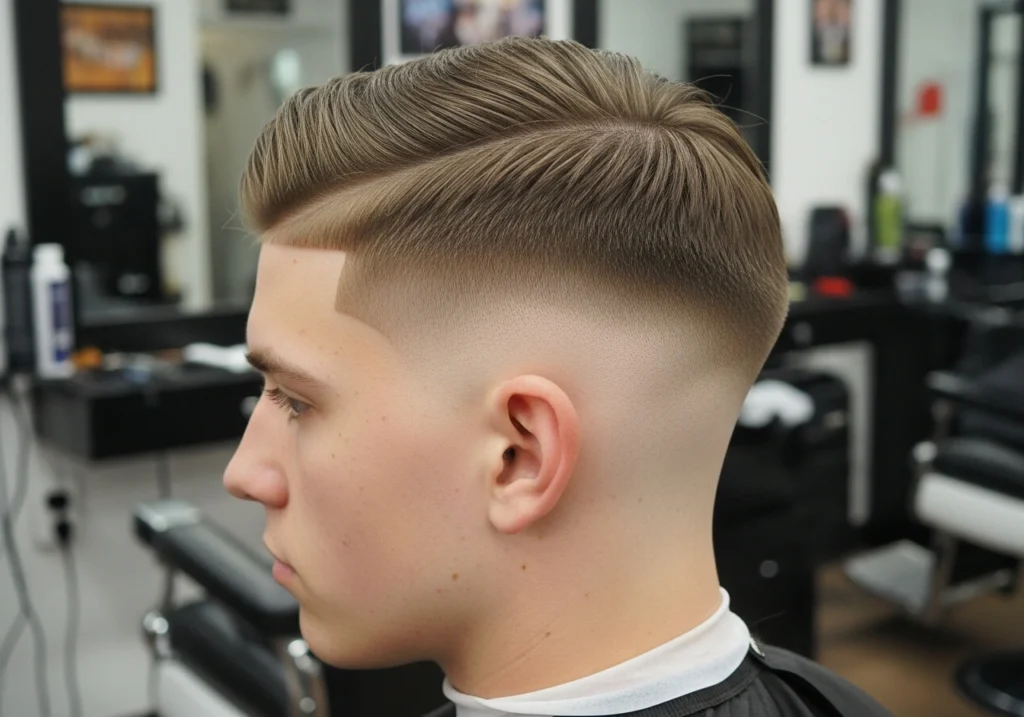
Fade haircuts have become integral to modern Scandinavian styling, offering clean, contemporary looks that suit various preferences. A fade gradually transitions hair length from longer on top to very short or completely shaved at the sides and back. This technique creates dimension and structure while maintaining a neat, professional appearance. Scandinavian fades typically feature higher contrast between sections compared to traditional American fades.
The high fade begins the transition well above the ears, creating maximum contrast and drawing attention to facial features. This bold choice suits men with strong jawlines and angular face shapes. The mid fade starts around ear level, offering a balanced approach that works for most face types. The low fade keeps the transition near the neckline, providing subtle definition while maintaining a more conservative overall appearance.
Combining fades with different top styles creates numerous possibilities. A fade with a quiff adds volume and height, ideal for men with round faces seeking to elongate their appearance. A fade with textured top provides casual sophistication perfect for everyday wear. A fade with slicked-back hair delivers polished professionalism suitable for business environments. Regular maintenance every two to three weeks keeps fades looking sharp and intentional.
Long Flowing Hair with Natural Texture
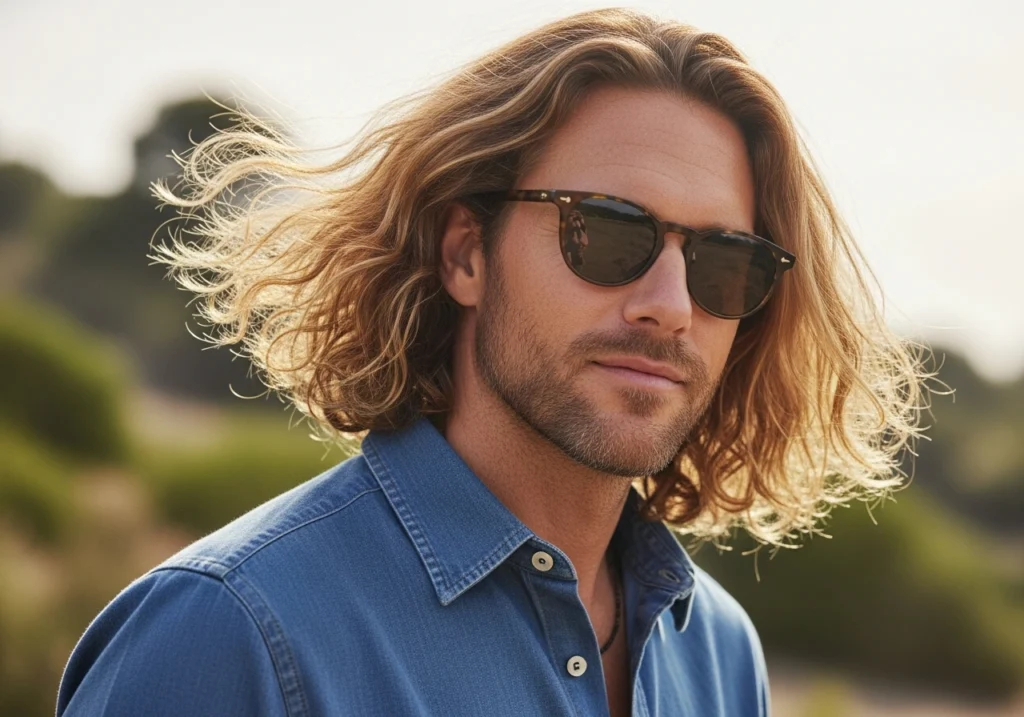
Embracing natural hair length represents a fundamental aspect of traditional Scandinavian style. Men who choose this approach allow their hair to grow freely, typically to shoulder length or beyond. This style works particularly well for those with naturally wavy or slightly curly hair, as texture adds visual interest and prevents the appearance of limpness. Long flowing hair projects a carefree confidence that appeals to creative professionals and those in less formal industries.
Caring for long Scandinavian hair requires commitment to proper maintenance routines. Regular conditioning treatments prevent dryness and split ends while maintaining shine and manageability. Many men incorporate leave-in conditioners or hair oils to protect against environmental damage and styling stress. Trimming every six to eight weeks removes damaged ends while maintaining overall length and shape.
Styling long hair varies based on occasion and personal preference. Leaving it loose and natural suits casual settings, allowing waves and texture to create effortless appeal. Half-up styles pull the top section back while leaving the bottom flowing, combining practicality with aesthetic interest. Full ponytails or buns provide complete control for active situations or professional requirements. This versatility makes long hair more practical than many assume.
The Pompadour with Nordic Edge
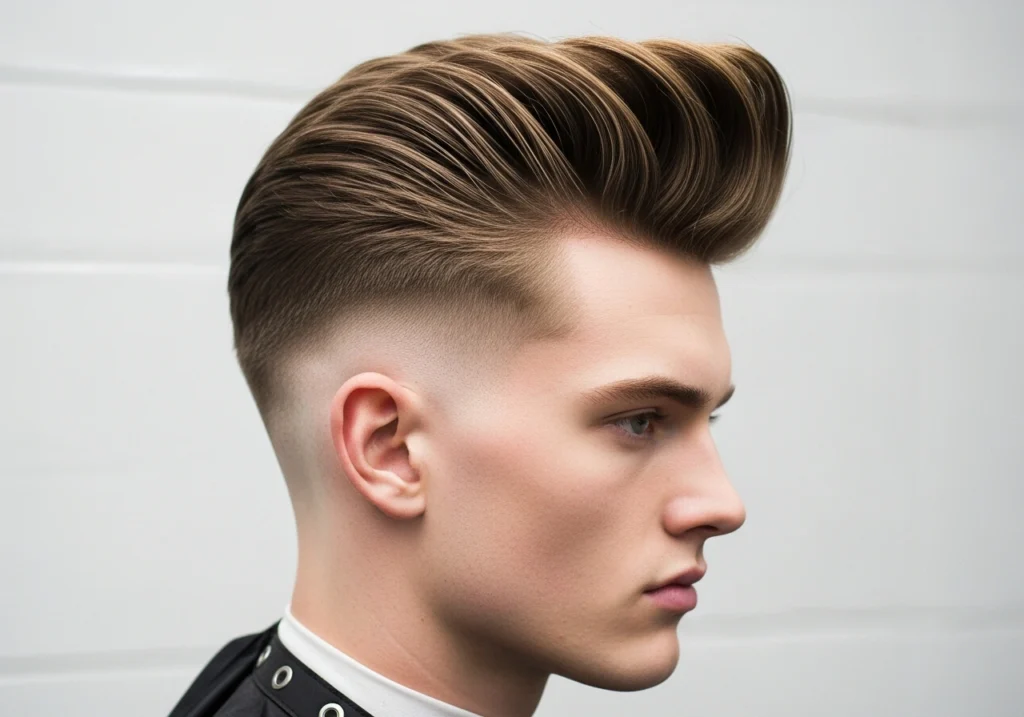
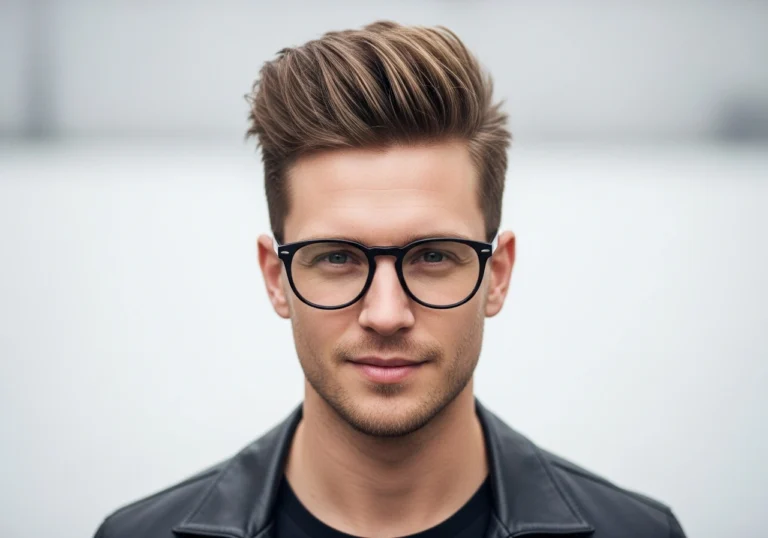
The pompadour haircut gains Scandinavian character through specific styling choices and modifications. This classic style features short sides with significantly longer top sections swept upward and backward, creating height and volume. Nordic interpretations often incorporate fades or undercuts on the sides, adding contemporary edge to the traditional silhouette. The pompadour suits men with oval or square face shapes, as the added height balances facial proportions.
Creating a pompadour requires both proper cutting and skilled styling. The top section needs sufficient length, typically four to six inches, to achieve proper height when styled. A blow dryer becomes essential equipment, used to direct hair backward and upward while applying heat. Strong-hold pomade or styling cream locks the shape in place throughout the day. Some men apply product to damp hair before blow-drying for increased control and lasting hold.
Modern Scandinavian pompadours often feature textured rather than smooth finishes. This approach creates a more relaxed, contemporary appearance while maintaining the style’s essential structure. Point-cutting techniques during the haircut create separation that allows individual sections to move independently. The result is a pompadour that looks intentional yet natural rather than stiff or overly constructed.
Braided Scandinavian Styles
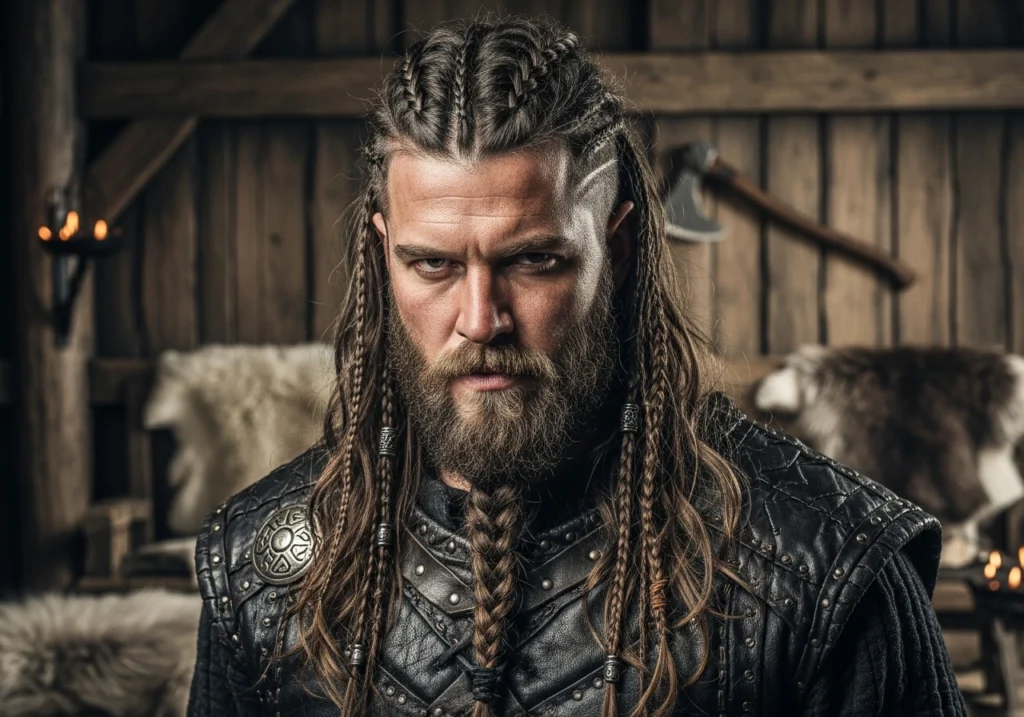
Braiding represents a direct connection to Viking heritage, offering unique styling options for men with longer hair. Traditional Norse warriors incorporated braids both as practical solutions and decorative elements. Modern interpretations range from simple single braids to complex patterns featuring multiple interwoven sections. Braided styles particularly suit men in creative fields or those seeking distinctive personal expression.
The single central braid provides the most straightforward approach, gathering all hair into one plait that extends down the back. This practical style keeps hair contained during physical activity while maintaining a strong visual presence. Side braids create asymmetric interest, with one or both sides braided while the center remains loose or styled differently. Viking-inspired patterns might include multiple thin braids across the top section, creating intricate designs that showcase both skill and patience.
Mastering braiding techniques requires practice and patience. Men new to braiding should start with simple three-strand plaits before attempting more complex patterns. Dutch braids, where sections cross under rather than over, create raised appearances that stand out prominently. French braids, incorporating additional hair as the braid progresses, allow for more integrated designs. Hair accessories like leather cords or metal rings can accent braids, adding authentic Nordic touches.
Short Buzz Cut with Scandinavian Attitude
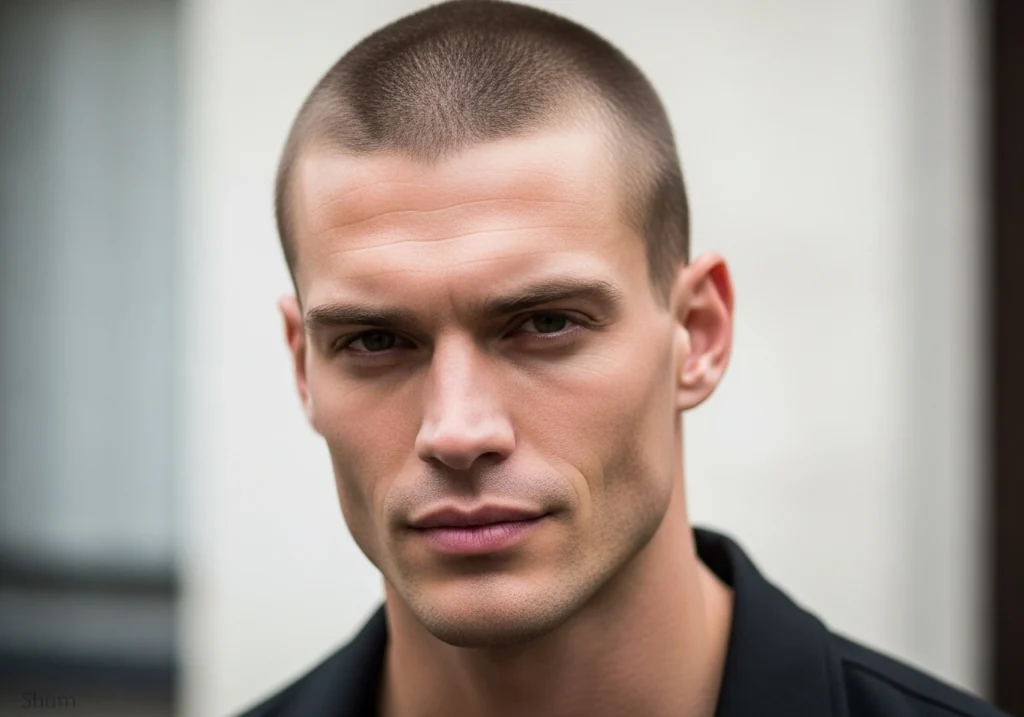
The buzz cut offers the ultimate low-maintenance option while still projecting Scandinavian masculinity. This extremely short style uses clippers to create uniform length across the entire head, typically ranging from one-eighth to one-half inch. While simple in execution, the buzz cut makes a strong statement about confidence and no-nonsense practicality. It works particularly well for men with strong facial features and well-shaped heads.
Variations on the standard buzz cut add subtle differentiation. A slightly longer top section creates minimal but noticeable contrast with shorter sides. Faded edges where the buzz meets the neckline provide polished finishing touches. Some men incorporate line designs or patterns into their buzz cuts, though this moves away from traditional Scandinavian minimalism toward more contemporary urban styles.
The buzz cut requires regular maintenance to preserve its clean appearance. Most men need trimming every one to two weeks to prevent uneven growth. The simplicity of this style makes home maintenance possible with quality clippers and proper technique. Despite minimal styling requirements, men should still maintain scalp health through regular cleansing and moisturizing, as the short length exposes skin more directly to environmental elements.
Combining Beards with Scandinavian Haircuts
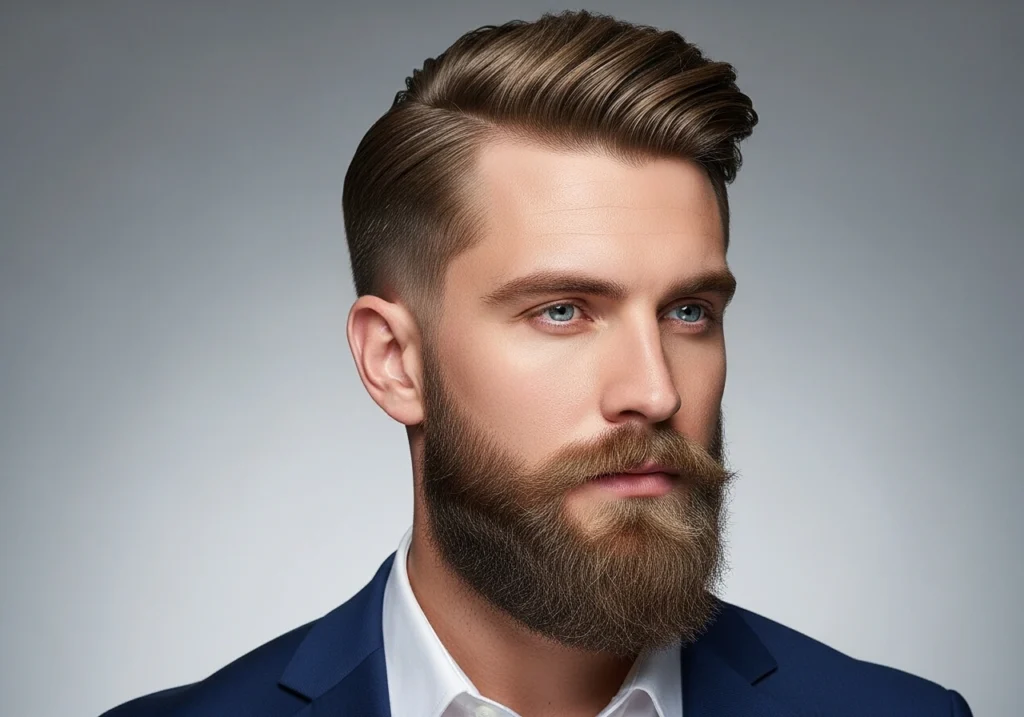
Facial hair plays a crucial role in completing many Scandinavian looks. The relationship between beard style and haircut creates overall aesthetic cohesion. Full, well-maintained beards pair excellently with longer hairstyles, creating a rugged yet refined appearance. Shorter, more structured beards complement precise haircuts like fades and textured crops, maintaining clean lines and intentional styling throughout.
Growing a proper Scandinavian beard requires patience and proper care. Initial growth phases may involve awkward lengths and uneven thickness, but perseverance yields impressive results. Regular conditioning keeps beard hair soft and manageable while preventing the dry, scratchy texture that discourages many men. Beard oils add moisture and subtle fragrance while promoting healthy growth.
Styling beards to complement haircuts involves understanding proportion and balance. A large, voluminous beard can overwhelm a simple buzz cut but perfectly balances a dramatic undercut with long top sections. Trimmed, shaped beards work well with most hairstyles, offering versatility without overpowering facial features. Regular professional shaping every few weeks maintains clean lines and prevents overgrowth that obscures the jaw and neck.
Face Shape Considerations
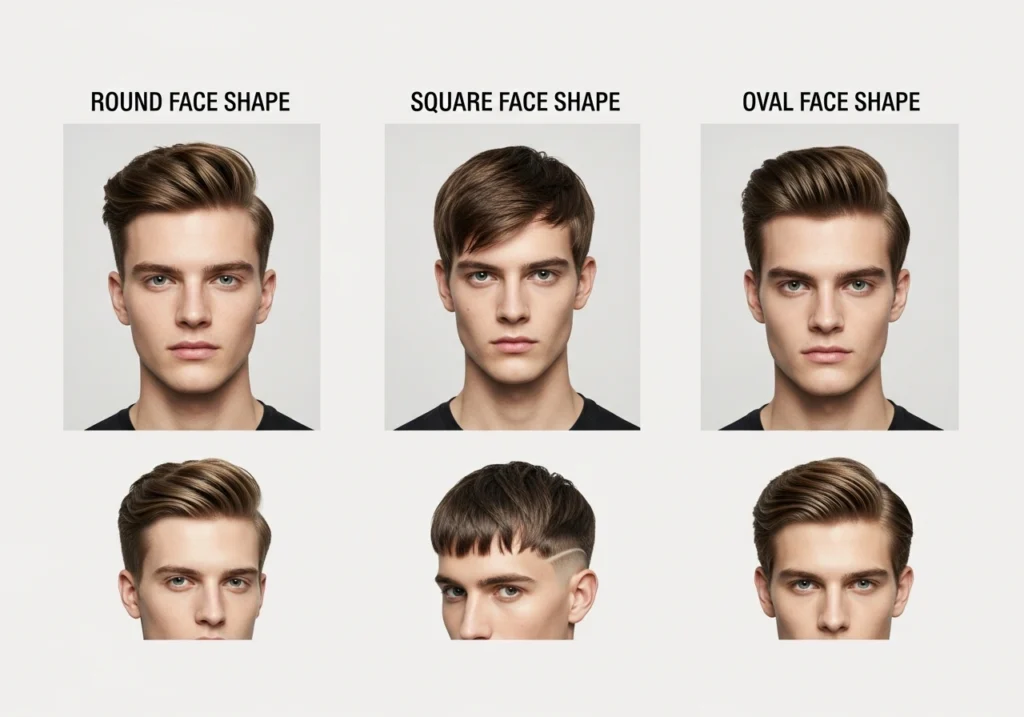
Selecting the right Scandinavian haircut requires understanding how different styles interact with facial structure. Men with round faces benefit from styles that add height and angles, such as pompadours or high fades with voluminous tops. These choices elongate the face and create more defined proportions. Avoiding styles that add width at the sides helps maintain balanced appearance.
Square-faced men possess strong, angular features that suit most Scandinavian styles exceptionally well. The inherent masculinity of square faces complements rugged Viking-inspired looks. Longer styles soften sharp angles slightly, while shorter, more structured cuts emphasize strength and definition. Experimenting with different lengths helps identify which approach best suits personal preferences.
Oval faces represent the most versatile face shape, successfully wearing virtually any Scandinavian style. This balanced proportion allows for creative experimentation without concerns about unflattering effects. Men with oval faces might choose styles based purely on lifestyle factors, professional requirements, or personal aesthetic preferences rather than face-shape compatibility constraints.
Styling Products for Scandinavian Looks

Proper product selection determines the success of most Scandinavian hairstyles. Pomades offer strong hold with varying shine levels, ideal for slicked-back styles and polished pompadours. Water-based formulas provide easier washing and less residue compared to traditional oil-based options. The hold strength should match hair thickness and desired style duration.
Matte clays and fibers suit textured, natural-looking styles that require definition without shine. These products add separation and piece-y texture while allowing hair to move naturally. They work particularly well for shorter styles like textured crops or messy undercuts. Application to damp hair distributes product more evenly, while dry application creates stronger texture and grip.
Styling creams and light gels offer moderate hold suitable for natural styles and loose waves. These products define without stiffness, maintaining touchable softness throughout the day. Men with longer hair often prefer creams that control frizz while enhancing natural texture. Experimenting with different products helps identify which formulations work best for individual hair types and styling preferences.
Maintenance and Care Routines

Maintaining Scandinavian haircuts requires commitment to regular grooming schedules. Short styles with fades need professional attention every two to three weeks to preserve clean lines and proper proportions. Longer styles benefit from trimming every six to eight weeks, removing damaged ends while maintaining length. Finding a skilled barber who understands Scandinavian aesthetics ensures consistent, quality results.
Daily care routines protect hair health and styling capability. Quality shampoos clean without stripping natural oils that protect hair and scalp. Many men find washing every other day sufficient, using dry shampoo or water-only rinses on alternate days. Conditioning treatments restore moisture and prevent damage, particularly important for longer styles or those subjected to regular heat styling.
Seasonal adjustments help maintain optimal hair condition throughout the year. Winter weather requires increased moisture to combat dry indoor heating and cold outdoor air. Summer calls for UV protection products that prevent sun damage and color fading. Adapting care routines to environmental conditions keeps hair looking its best regardless of seasonal challenges.
Professional Versus Casual Styling
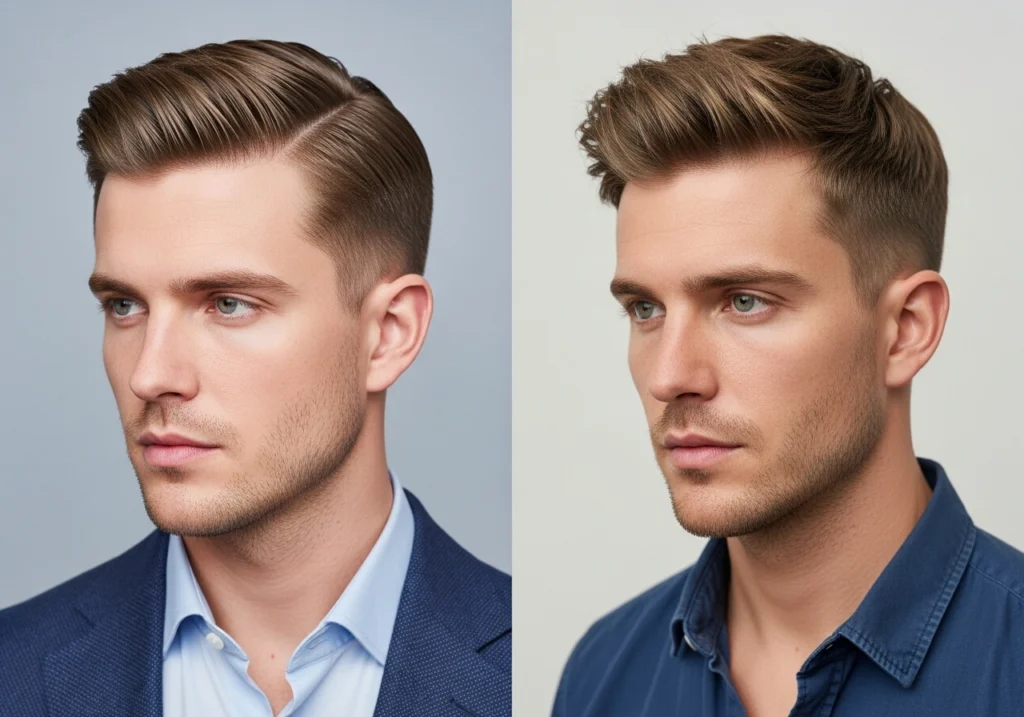
Scandinavian haircuts adapt remarkably well between professional and casual settings through minor styling adjustments. A slicked-back undercut appears polished and corporate-appropriate when smoothly styled with pomade, yet transforms into edgy evening wear when texturized and slightly messy. Understanding these dual possibilities maximizes the value of a single haircut across different life contexts.
Professional environments typically favor neat, controlled styling that projects competence and attention to detail. Clean parts, smooth finishes, and contained hair convey respect for workplace standards. Even longer Scandinavian styles work in business settings when pulled back into neat buns or ponytails. The key lies in maintaining groomed, intentional appearance rather than disheveled casualness.
Casual settings allow for relaxed, natural styling that emphasizes personal character over formal presentation. Textured finishes, piece-y separation, and deliberately imperfect styling create approachable, authentic appearances. The same haircut that looked corporate-crisp earlier becomes laid-back and personable through simple product changes and styling adjustments. This versatility represents a key advantage of well-chosen Scandinavian styles.
Transitioning Between Scandinavian Styles

Many men gradually evolve their look over time, transitioning between different Scandinavian styles as preferences change. Growing out a short cut into longer Viking-inspired hair requires patience through awkward intermediate phases. Strategic styling during these periods maintains presentable appearance while working toward the desired length. Regular trims shape growing hair, preventing mullet-like proportions that occur without guidance.
Transitioning from long to short hair happens more quickly but requires careful planning. Gradual length reduction over several appointments allows adjustment to changing appearance and provides opportunities to explore intermediate styles. Some men discover they prefer moderate lengths encountered during transitions rather than their originally planned destinations. Remaining flexible and open to these discoveries enhances the overall grooming experience.
Seasonal transitions represent another common pattern, with men growing hair during cooler months and cutting shorter for summer. This cyclical approach allows enjoyment of different styles without permanent commitment. It also accommodates natural growth patterns and seasonal lifestyle changes. Understanding that hairstyle evolution is natural and expected reduces pressure to select one perfect style forever.
Conclusion
Scandinavian haircuts represent far more than temporary fashion trends. These styles embody cultural heritage, practical sensibility, and timeless aesthetic appeal that transcends passing fads. From dramatic undercuts to flowing Viking locks, Scandinavian approaches to men’s grooming offer something for virtually every preference, lifestyle, and face shape. The enduring popularity of these styles reflects their ability to project confidence, masculinity, and refined taste simultaneously.
Choosing a Scandinavian haircut involves understanding personal factors including hair type, face shape, lifestyle requirements, and aesthetic preferences. The wide variety of options ensures every man can find an approach that feels authentic and appropriate. Working with skilled barbers who understand these styles helps achieve optimal results while avoiding common pitfalls that undermine intended effects.
Maintaining Scandinavian styles requires commitment to regular grooming and proper care routines. Investment in quality products and professional services pays dividends through consistently excellent appearance and long-term hair health. Men who embrace these practices discover that Scandinavian haircuts offer not just attractive styling but also connection to rich cultural traditions that continue inspiring contemporary fashion. Whether channeling Viking warriors or modern Nordic sophistication, these haircuts provide powerful tools for personal expression and confident self-presentation.
Frequently Asked Questions
What hair length is required for a traditional Viking hairstyle?
Traditional Viking hairstyles typically require hair length of at least six inches on top, though many authentic looks work best with shoulder-length hair or longer. The sides can be any length depending on whether you choose shaved temples, undercuts, or full-length styling. Men transitioning to longer Viking styles should expect a growing period of 12 to 18 months to achieve authentic shoulder-length hair.
How often should I visit the barber for Scandinavian fade maintenance?
Scandinavian fades require professional maintenance every two to three weeks to preserve clean lines and proper shape. The fade gradually grows out, creating a less defined appearance over time. Men who prefer sharper, more dramatic fades may need weekly appointments, while those accepting softer transitions can extend to four weeks between visits. Regular maintenance significantly impacts the overall appearance quality.
Can Scandinavian haircuts work for curly or textured hair?
Scandinavian haircuts absolutely work for curly and textured hair, though styling approaches differ from those used on straight hair. Curly-haired men should embrace natural texture rather than fighting it, using products that define curls without creating stiffness. Undercuts and fades work particularly well with curly tops, creating interesting contrast between structured sides and voluminous natural texture above.
What styling products work best for the slicked-back Scandinavian look?
The slicked-back Scandinavian style requires strong-hold products that maintain position throughout the day. Pomades offer excellent control with options ranging from high-shine to matte finishes. Water-based pomades wash out more easily than oil-based versions while providing comparable hold. Men with thicker hair may need gel-pomade hybrids for maximum control, while those with finer hair often succeed with standard medium-hold pomades.
Are Scandinavian hairstyles appropriate for professional office environments?
Most Scandinavian hairstyles work excellently in professional environments when styled appropriately. Neat fades, well-groomed undercuts, and polished slicked-back styles project professionalism and attention to detail. Even longer styles suit business settings when contained in tidy buns or ponytails. The key lies in maintaining clean, intentional appearance rather than messy or unkempt styling. Conservative workplaces may require discussion with supervisors regarding longer or more dramatic styles.
One Comment