30 Best Curly Haircut Styles for Men: Sexy Short Looks to Elevate Your Style
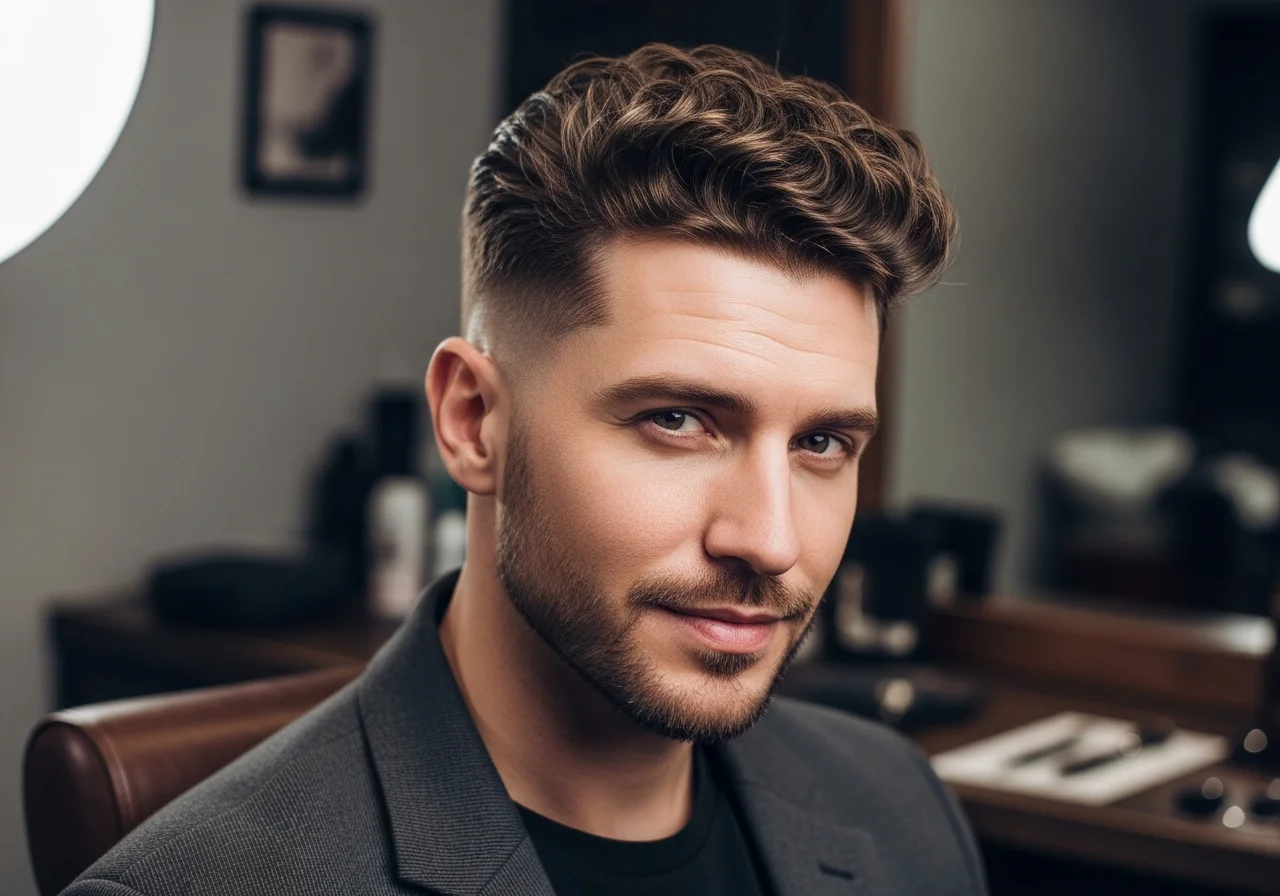
Curly hair has long been a defining feature that sets men apart with texture, volume, and personality that straight hair simply cannot match. For decades, men with curls struggled against their natural texture, but today represents a transformative era where embracing those coils, waves, and spirals has become the ultimate style statement. The modern approach to curly haircuts focuses on working with your natural pattern rather than fighting it, creating looks that are both manageable and undeniably attractive.
The resurgence of curly hairstyles in mainstream fashion owes much to cultural icons and celebrities who have proudly showcased their natural texture. From Hollywood actors to athletes and musicians, curly-haired men are demonstrating that these styles can be refined, edgy, casual, or professional depending on how they are cut and maintained. The key lies in understanding that curly hair offers unique advantages including natural volume, movement, and a distinctive appearance that makes you memorable in any room.
Choosing the right curly haircut requires consideration of several factors including your curl type, face shape, lifestyle, and maintenance preferences. Some men have loose waves that cascade gently, while others have tight coils that spring with energy. Understanding your specific curl pattern helps in selecting a cut that enhances rather than diminishes your natural texture. Additionally, modern cutting techniques like dry cutting allow barbers to see exactly how your curls fall naturally, ensuring a personalized result that looks great from the moment you leave the chair.
This comprehensive guide explores thirty exceptional curly haircut styles that range from ultra-short buzz cuts to medium-length masterpieces. Each style has been selected for its ability to showcase curls in the most flattering way while considering practical aspects like styling time and upkeep requirements. Whether you prefer a clean, professional appearance or something bold and expressive, these options provide inspiration for your next transformation.
Understanding Your Curl Type and Face Shape

Before diving into specific styles, understanding your curl type proves essential for making informed decisions. Hair professionals categorize curls from Type 2 (wavy) through Type 4 (coily), with subcategories indicating tightness and definition. Type 2 curls feature loose S-shaped waves, Type 3 shows well-defined spirals or corkscrews, and Type 4 consists of tight coils or zigzag patterns. Knowing where your hair falls on this spectrum helps you communicate effectively with your barber and choose styles that naturally complement your texture.
Face shape equally influences which curly haircuts will be most flattering. Oval faces offer the most versatility and can accommodate virtually any style from short crops to flowing locks. Round faces benefit from height and volume on top to create length and definition, making styles with lifted crowns or quiffs particularly effective. Square faces with strong jawlines are softened by curls that add width at the temples or feature textured fringes, while heart-shaped faces look best with styles that add volume at the jaw level to balance a wider forehead.
Men with diamond face shapes characterized by wide cheekbones should consider cuts that add width at the forehead and jaw while softening the cheekbone area. Long or rectangular faces gain balance from styles with horizontal volume rather than excessive height. These considerations might seem technical, but they make a substantial difference in how polished and intentional your final look appears. A skilled barber will assess these factors during your consultation and recommend modifications to any style you are considering.
The interplay between curl type and face shape creates endless possibilities. A man with loose Type 2 curls and a square face might thrive with a textured fringe that softens his angles, while someone with tight Type 3 coils and an oval face could confidently rock a dramatic high-top fade. Understanding these fundamentals empowers you to move beyond simply copying a photograph and instead adapt styles to your unique features.
1 The Textured Crew Cut
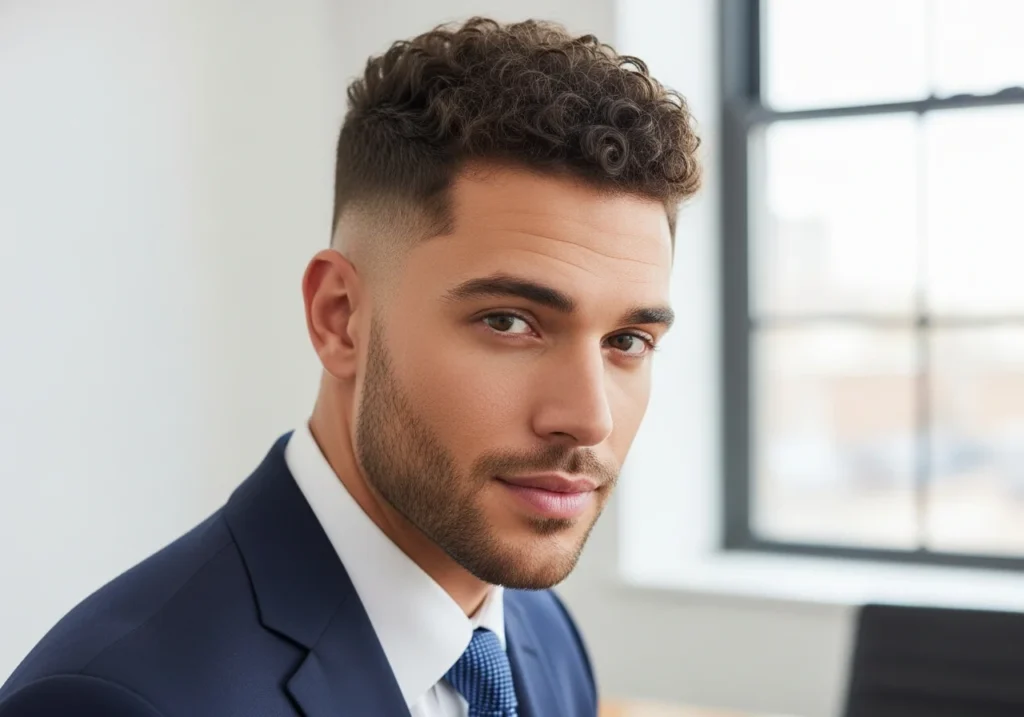
The textured crew cut represents the perfect entry point for men embracing their curls while maintaining a clean, professional aesthetic. This classic military-inspired cut keeps the sides and back short while preserving enough length on top to showcase your natural curl pattern. Unlike traditional crew cuts designed for straight hair, this version incorporates layers and texture to prevent the top from appearing flat or overly uniform.
Barbers achieve this look by tapering the sides to a manageable length while keeping approximately one to three inches on top depending on your curl tightness. The strategic layering prevents bulk while allowing individual curls to separate and define themselves naturally. This creates dimension and personality without appearing messy or unkempt, making it ideal for corporate environments or formal occasions.
Styling a textured crew cut requires minimal effort, which explains its enduring popularity among busy professionals and active men. After washing, apply a lightweight curl cream or defining mousse to damp hair, scrunch to encourage curl formation, and allow to air dry or use a diffuser on low heat. For added separation and a matte finish, work a small amount of styling clay through dry hair, using your fingers to piece out individual curls and create texture.
The beauty of this cut lies in its adaptability across curl types and face shapes. Men with tighter coils can wear it slightly shorter to maintain control while still showing texture, whereas those with looser waves might keep more length to enhance movement and flow. Regular maintenance every three to four weeks keeps the sides crisp and the top shaped, ensuring you always look put-together.
2 Curly Hair Fade
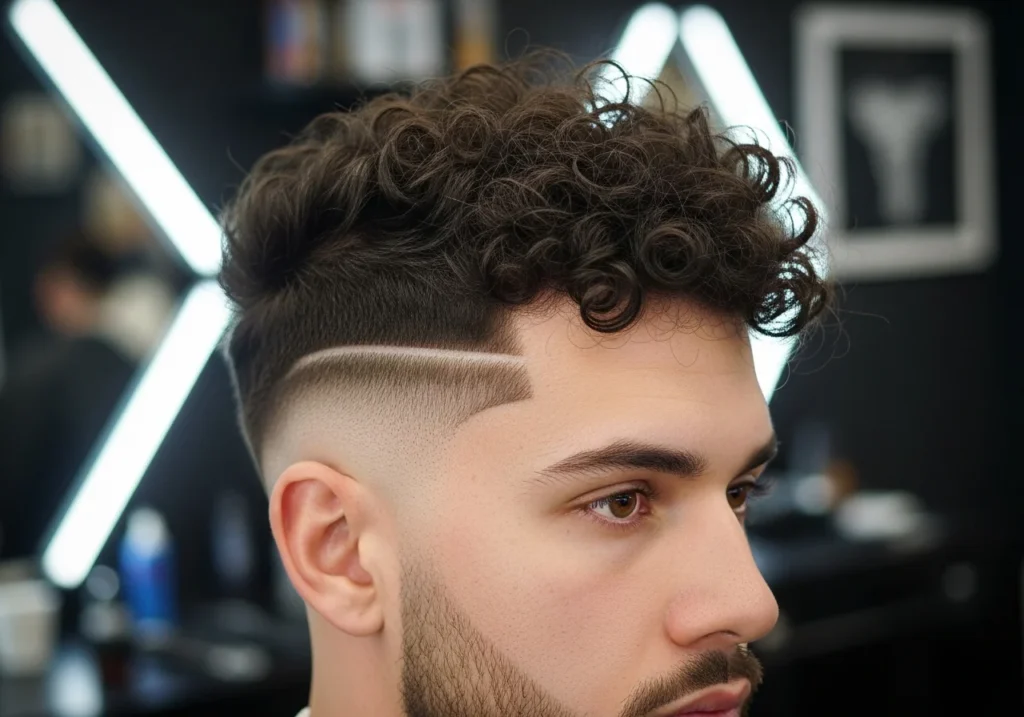
The curly hair fade has dominated barbershops for good reason, offering a striking contrast between closely cropped sides and voluminous curls on top. This high-contrast style creates a modern, edgy appearance while keeping maintenance surprisingly simple. The fade itself can be customized as a low, mid, or high fade depending on where you want the transition to begin, with skin fades offering the most dramatic effect.
What makes this cut particularly effective for curly hair is how the tight sides draw attention upward to the textured crown. The contrast emphasizes volume and makes your curls the focal point of your overall appearance. Whether your curls are loose and flowing or tight and springy, the fade provides structure and definition that prevents the style from overwhelming your features.
Achieving the perfect curly fade requires a barber skilled in both clipper work and curly hair cutting techniques. The fade portion demands precision to create smooth gradations from skin or near-skin at the baseline to the longer hair on top. Meanwhile, the curly section needs careful scissor work or dry cutting to maintain shape while preserving natural texture. Communication proves crucial during your consultation to ensure the fade height and top length align with your vision.
Styling involves applying a curl-enhancing cream to damp hair, focusing on the top section where your curls have the most length. Scrunch the product through your hair to encourage curl formation, then either air dry for a natural finish or use a diffuser to speed the process while adding volume. The fade itself requires no styling, simply keeping it fresh with regular touch-ups every two to three weeks.
3 The Modern Undercut with Curls
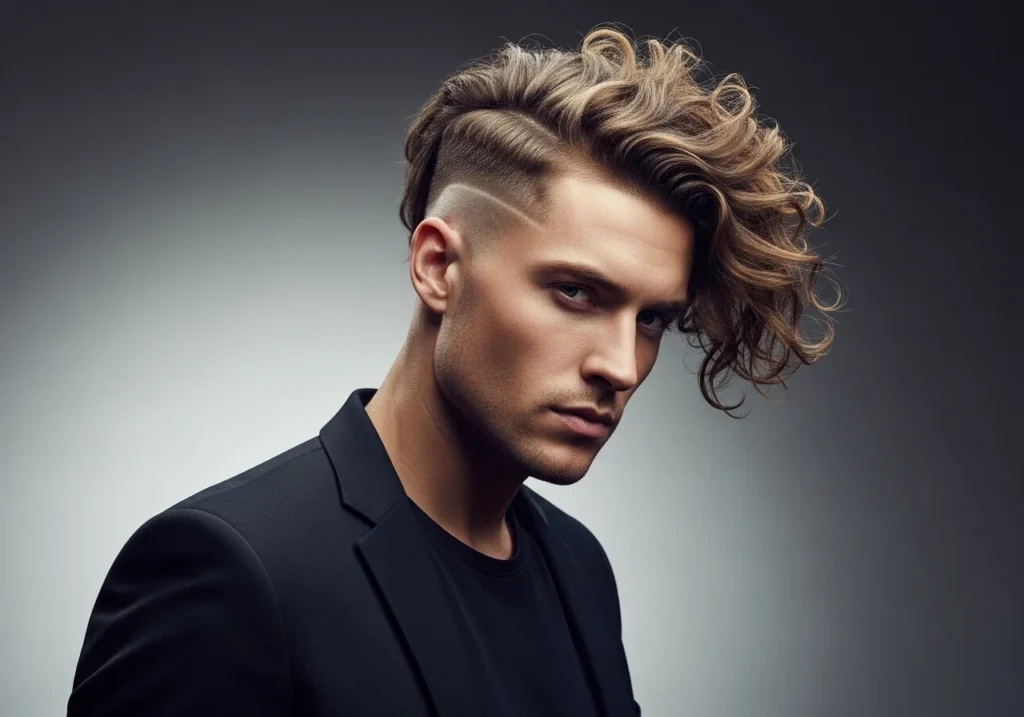
The undercut creates one of the most dramatic contrasts available in curly hairstyles, featuring closely shaved or buzzed sides and back with significantly longer curls flowing on top. This style makes a bold statement and works exceptionally well for men who want to showcase their curls while maintaining sharp, clean lines. The abrupt transition between the shaved portions and the textured top creates visual interest and a contemporary edge.
Unlike fades that gradually blend, undercuts feature a distinct separation line where the short hair meets the long. This hard line can be positioned at various heights depending on your preference, though most men find a mid to high placement most flattering. The top section typically ranges from three to six inches, providing substantial length for curls to develop their full personality and movement.
This cut particularly benefits men with thick, dense curls because the removed weight from the sides prevents the style from becoming triangular or overwhelming. The undercut narrows the sides of your head visually, which can be especially flattering for round or square face shapes by adding vertical dimension. Pairing the undercut with a well-groomed beard creates a cohesive, intentional aesthetic that ties the entire look together.
Styling the modern undercut requires attention to the top section while the shaved portions handle themselves. Apply a curl cream or mousse to freshly washed hair, distribute evenly, and scrunch to activate curls. For extra definition and hold, follow with a light mist of curl-defining spray. The key is achieving bounce and separation without stiffness, allowing your curls to move naturally while maintaining their shape throughout the day.
4 Messy Curly Fringe
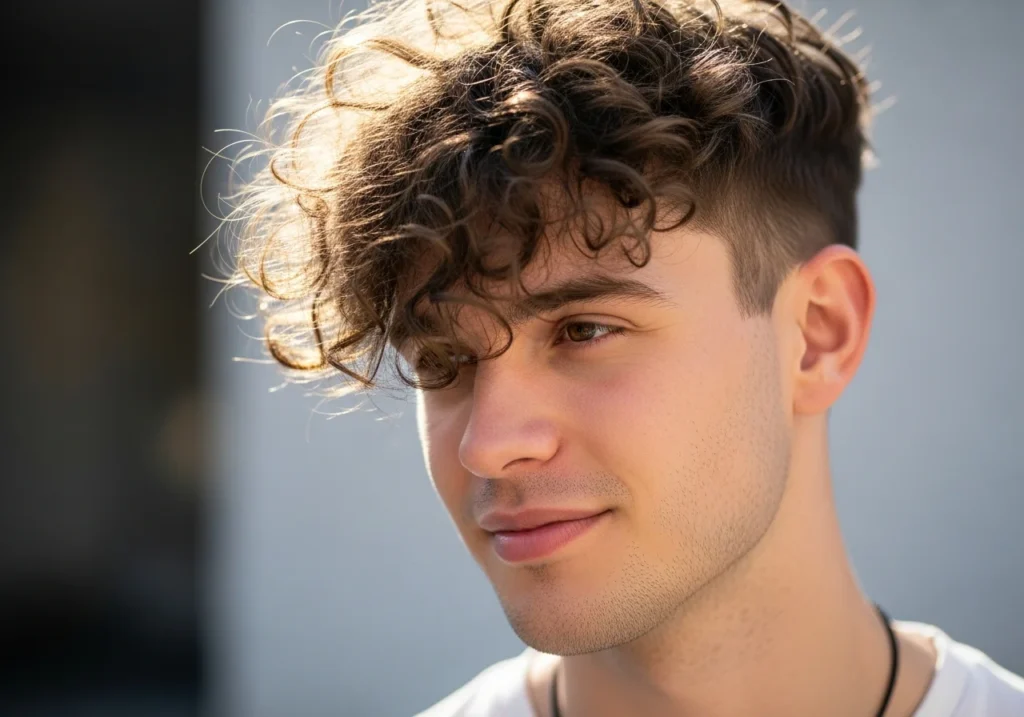
The messy curly fringe brings a youthful, carefree energy to curly hairstyles while remaining surprisingly versatile for various settings. This cut features shorter sides with a longer top section that falls forward over the forehead, creating a textured fringe that showcases your curls in a playful yet stylish manner. The intentional messiness differentiates this from overly styled or rigid looks, embracing the natural unpredictability of curly hair.
Barbers create this style by keeping the sides tapered or faded while leaving substantial length through the crown and front. The fringe itself is cut to fall just above or at the eyebrow level, with layers incorporated to prevent it from appearing too heavy or solid. This layering allows individual curls to separate and create movement, giving the style its characteristic tousled appearance.
What makes the messy curly fringe particularly appealing is its ability to soften angular features while adding dimension to your overall look. The forward-falling curls create horizontal visual interest that can balance long or narrow face shapes, while the textured movement prevents the style from appearing flat or one-dimensional. It works across curl types, though men with medium curls often find it easiest to achieve and maintain.
Styling involves working curl cream through damp hair, focusing heavily on the fringe section to ensure definition and separation. Use your fingers to direct the curls forward and slightly to the sides, creating that deliberately undone appearance. A diffuser can add volume while reducing drying time, though air drying produces a softer, more natural result. A light-hold hairspray applied to the fringe helps maintain placement without creating stiffness.
5 Curly Quiff
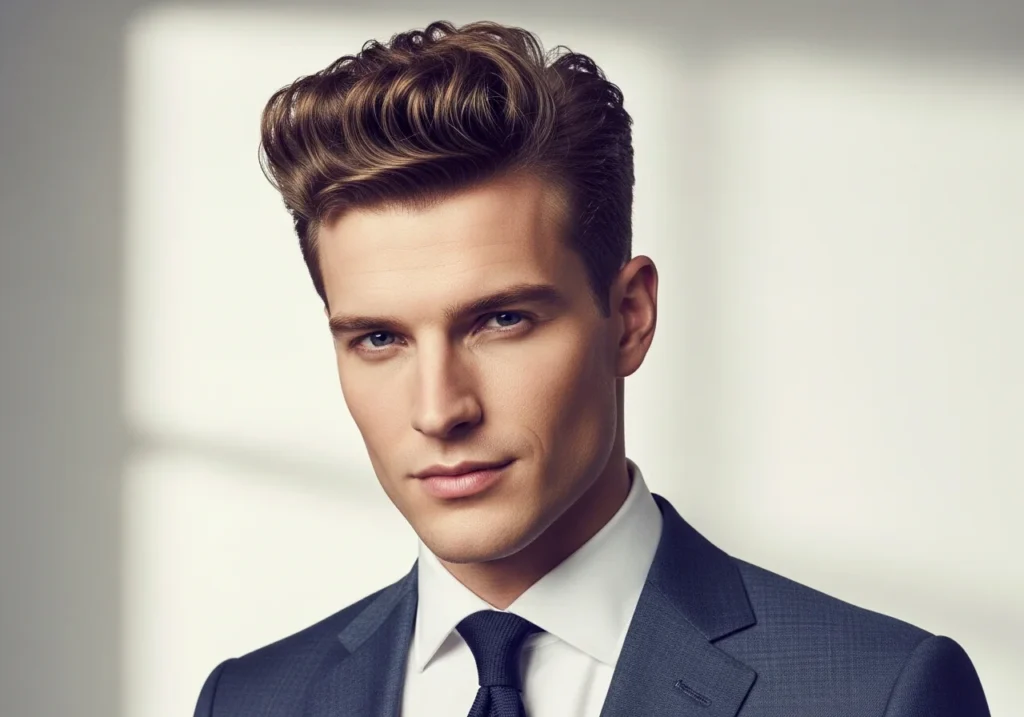
The curly quiff combines classic elegance with modern texture, featuring volume and height at the front that gradually decreases toward the crown. This sophisticated style works beautifully for curly hair, transforming the traditional pompadour influence into something more wearable and texture-forward. The quiff adds vertical dimension that flatters most face shapes while showcasing your curls in a refined, polished manner.
Creating a curly quiff requires keeping the sides shorter through fading or tapering while maintaining medium length on top, typically three to five inches depending on curl tightness. The front section receives the most attention during cutting, with strategic layering to ensure the hair can be styled upward and back while maintaining body and definition. The key difference from straight-hair quiffs is embracing curl texture rather than slicking everything into smooth submission.
This style proves particularly effective for men with loose to medium curls as tighter coils may require significant length to achieve the desired height. The quiff works well in both professional and social settings, offering versatility that justifies the slightly higher maintenance requirements. Its structured appearance conveys confidence and attention to detail without appearing overly formal or rigid.
Styling a curly quiff demands more effort than some other options but delivers impressive results. Apply volumizing mousse to damp hair, focusing on the roots at the front and crown. Use a blow dryer with a diffuser attachment, directing airflow upward and back to encourage lift and shape. Once dry, apply a medium-hold styling cream or pomade to define curls and maintain the quiff structure. Use your fingers to shape and direct the front section upward, allowing some curls to fall naturally for a lived-in finish.
6 Short Curly Afro

The short curly afro celebrates natural texture in its fullest expression while keeping length manageable for everyday maintenance. This iconic style features hair grown out evenly around the head, creating a rounded, voluminous silhouette that commands attention. While traditionally associated with tighter curl patterns, modern variations work across curl types with appropriate adjustments to length and shaping.
Achieving a well-maintained short afro requires regular trimming to preserve the rounded shape and prevent uneven growth patterns. Barbers typically use scissors or specialized afro picks to shape the hair while maintaining consistent density throughout. The goal is creating a balanced, symmetrical appearance that enhances your facial features rather than overwhelming them. Length usually ranges from two to four inches depending on curl tightness and personal preference.
This style particularly suits men with oval or diamond face shapes as the rounded volume creates pleasing proportions. However, with proper shaping and sizing adjustments, the short afro can work for various face types. The key lies in proportionality, ensuring the afro size complements rather than dominates your overall head shape and stature.
Maintaining a short curly afro requires commitment to moisture and definition. Use sulfate-free shampoo sparingly, typically once or twice weekly, while co-washing (using conditioner only) on other days to preserve natural oils. Apply leave-in conditioner to damp hair, followed by a curl-enhancing cream to define and separate curls. Regular pick-outs maintain shape and volume while preventing compaction. For best results, develop a consistent nighttime routine that includes covering hair with a satin or silk scarf to minimize friction and frizz.
7 Tapered Curly Top
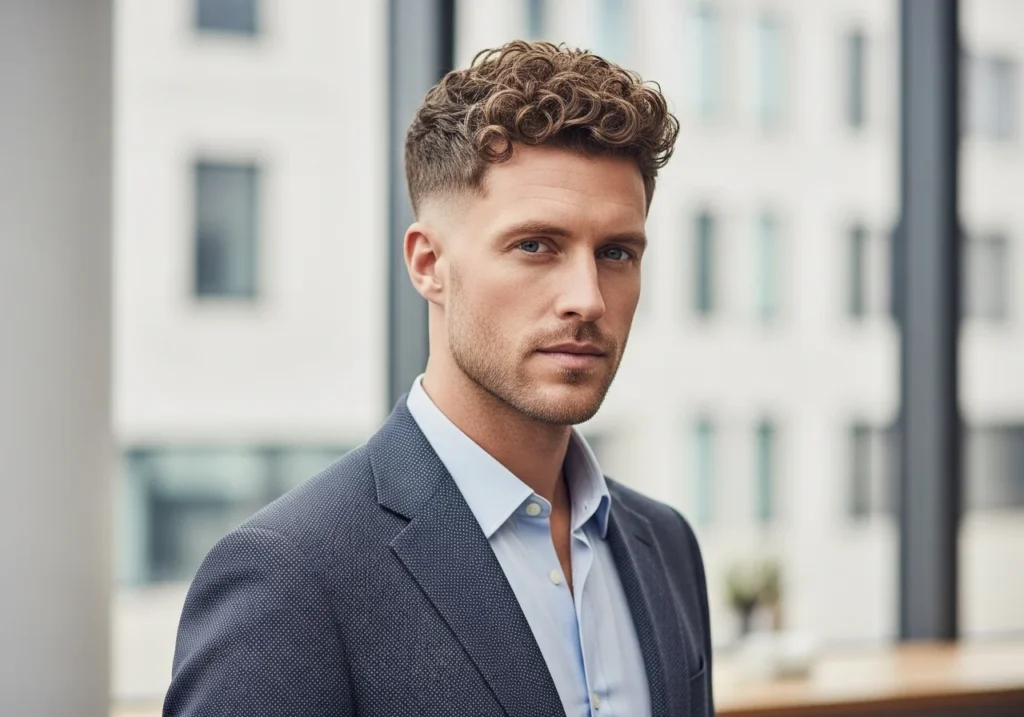
The tapered curly top strikes an ideal balance between professionalism and personality, featuring gradually shortened sides that transition smoothly into a fuller, textured top. This versatile cut adapts to various curl types and works equally well in conservative or creative environments. The taper provides structure and definition while allowing your curls to express themselves freely on top.
The distinction between tapered and faded styles lies in the gradualness of the transition. Tapers create subtle blending from longer to shorter hair without necessarily going down to skin level, offering a softer, less dramatic appearance than skin fades. This makes tapered styles particularly suitable for professional settings where extreme contrasts might be inappropriate while still providing modern edge and personality.
Barbers create this look by using clippers with various guard lengths to gradually reduce hair length from the top down to the neckline and around the ears. The top section retains enough length to showcase curl pattern, typically two to four inches depending on desired volume and curl tightness. Strategic layering in the top section prevents bulk while encouraging curls to separate and define naturally.
Styling the tapered curly top mirrors techniques for other curly cuts but benefits from the structured foundation the taper provides. Apply curl cream to damp hair, distribute evenly through the top section, and scrunch to activate curl formation. The tapered sides require minimal attention beyond keeping them fresh with regular trims. Air drying produces natural results, while diffusing adds volume and reduces wait time. A light styling cream applied to dry hair can enhance separation and provide flexible hold without stiffness.
8 Curly Buzz Cut

The curly buzz cut represents the ultimate low-maintenance option, keeping hair cropped close to the scalp while still revealing your natural texture. This ultra-short style creates a clean, sharp appearance that highlights facial features and bone structure. While it might seem counterintuitive for men wanting to showcase their curls, a longer buzz cut leaves just enough length for texture to appear without requiring any styling effort.
Creating a curly buzz cut involves using clippers with guards typically ranging from number two to number four, depending on how much texture you want visible. Shorter settings produce a nearly uniform appearance with subtle texture, while longer settings allow individual curls to form small coils or waves. The beauty lies in the simplicity and the way this cut frames your face without distraction.
This style works exceptionally well for men with extremely tight coils or those living active lifestyles where lengthy styling routines prove impractical. Athletes, military personnel, and professionals in demanding fields often gravitate toward the curly buzz cut for its combination of sharp appearance and zero-maintenance requirements. It also serves as an excellent transitional style when growing out from a very short cut or resetting your hair after damage.
Maintenance consists primarily of regular trims every two to three weeks to preserve the desired length and shape. Between cuts, use a lightweight leave-in conditioner or moisturizing spray to maintain scalp and hair health without adding weight or requiring styling. The curly buzz cut proves that minimal length does not mean minimal style, offering a confident, streamlined aesthetic that never goes out of fashion.
9 Long Curly Fringe with Short Sides
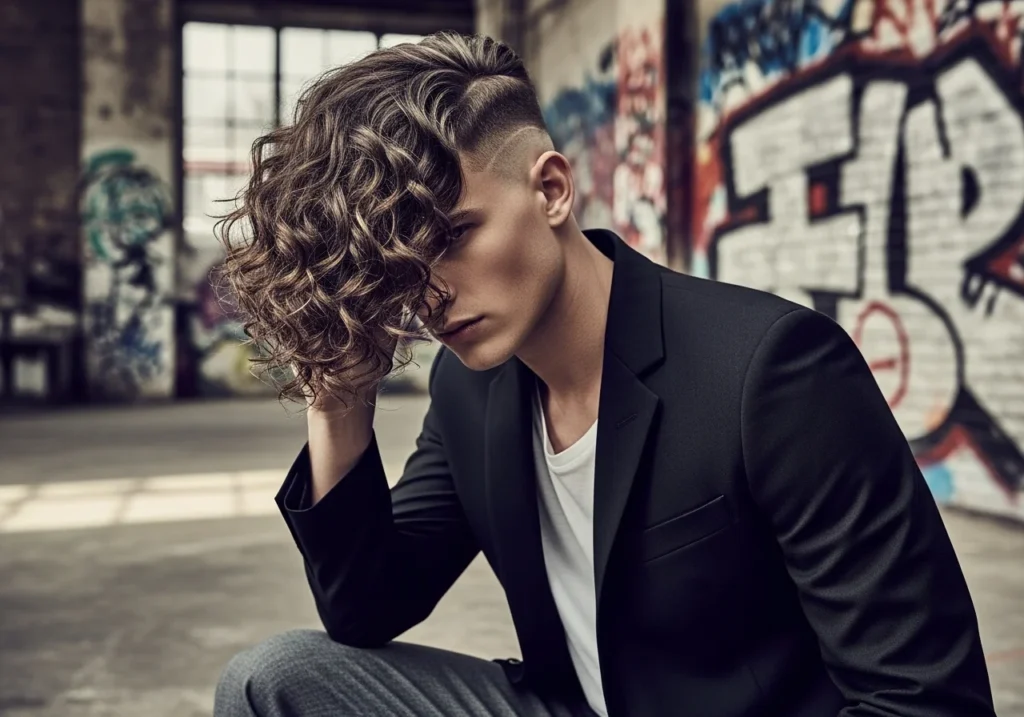
The long curly fringe with short sides creates a striking contrast that draws attention upward while maintaining clean, manageable sides and back. This style features a substantial length difference between the voluminous, textured fringe and the closely cropped perimeter, producing a modern, fashion-forward appearance. The long fringe showcases curl pattern beautifully while the short sides prevent the overall look from becoming overwhelming.
Barbers achieve this style through a combination of fading or tapering the sides and back while preserving significant length through the front and crown. The fringe typically extends to eyebrow level or slightly below, with enough weight and length to allow curls to cascade naturally forward. Layering prevents the fringe from appearing solid or blocky, encouraging individual curl separation and movement.
This cut particularly flatters men with medium to long curls as tighter coils might require excessive length to achieve the desired fringe effect. Face shape considerations prove important, with longer or oval faces wearing this style most successfully as the forward-falling fringe creates horizontal dimension. The style projects creativity and confidence, making it popular among artists, musicians, and those in creative industries.
Styling demands attention to the fringe section to ensure proper definition and placement. Apply curl cream to damp hair, concentrating on the longer sections, and use your fingers to direct curls forward and slightly to the sides. A diffuser on low heat adds volume to the fringe while reducing drying time. Once dry, use fingers to separate and arrange individual curls for optimal framing of your face. Light-hold hairspray maintains placement without creating stiffness, allowing natural movement throughout the day.
10 Curly Pompadour with Taper
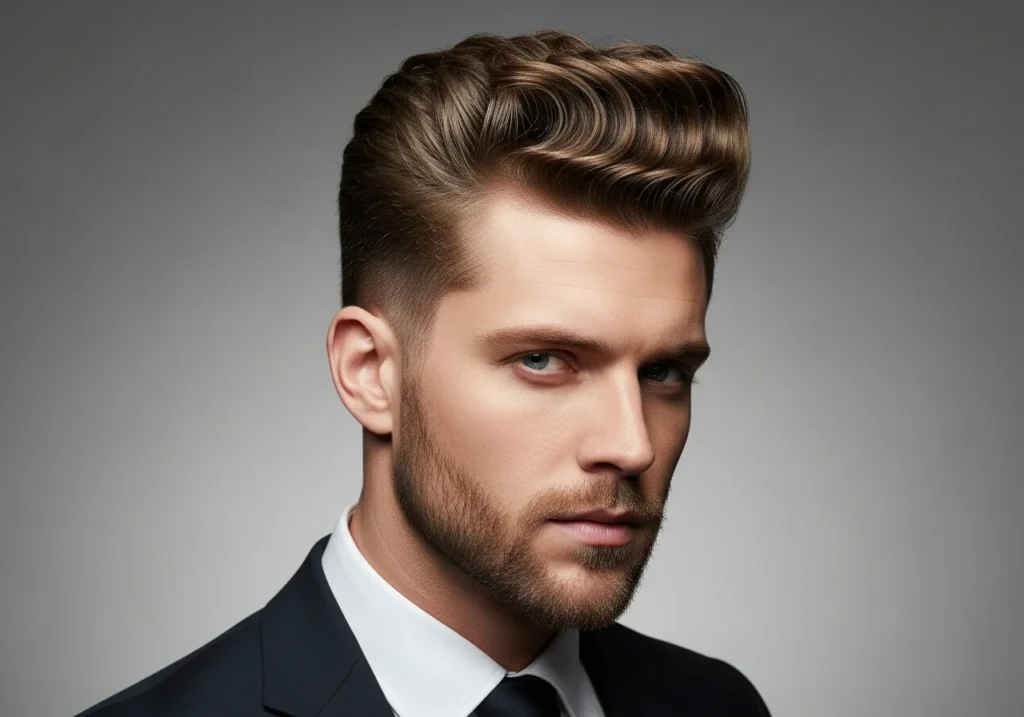
The curly pompadour brings vintage sophistication into contemporary styling, featuring dramatic height and volume at the front that sweeps back toward the crown. This bold style showcases curls while maintaining refined structure through careful shaping and styling. The addition of tapered sides creates clean lines that prevent the voluminous top from appearing excessive or unbalanced.
Creating a successful curly pompadour requires substantial length on top, typically four to six inches, to achieve the signature height and backward sweep. The front section receives the most emphasis, with curls styled upward and back to create the pompadour shape. Tapered or faded sides provide contrast and structure, ensuring the style appears intentional rather than simply voluminous. The key lies in maintaining curl texture throughout the pompadour rather than slicking it into smooth submission.
This style suits men with confident personal style who appreciate classic influences reinterpreted through modern techniques. It works best with loose to medium curls as extremely tight coils require significant length and intensive styling to achieve the pompadour shape. The curly pompadour flatters most face shapes by adding vertical dimension, though men with very long faces might find the added height disproportionate.
Styling requires commitment and the right products to maintain shape and definition. Begin with volumizing mousse applied to damp hair, focusing on roots at the front and crown. Blow dry with a round brush or diffuser, directing hair upward and back to create lift and shape. Once dry, apply a medium to strong-hold pomade or styling cream, using fingers or a comb to shape the pompadour while maintaining curl definition. The result should appear structured yet textured, combining vintage elegance with natural curl personality.
11 Curly Bowl Cut
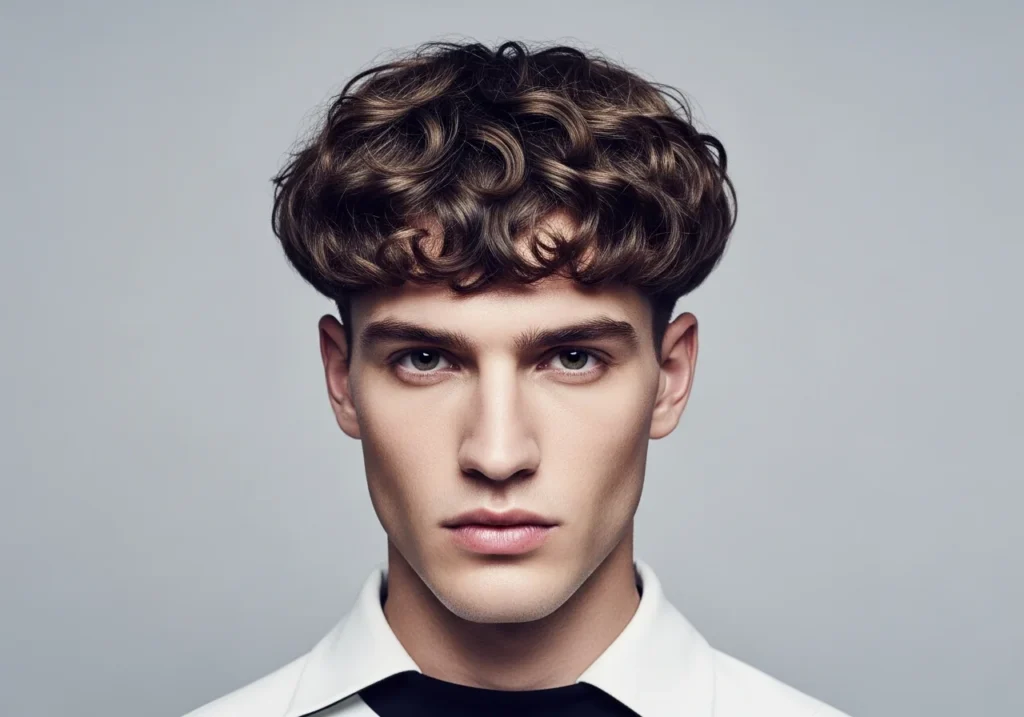
The curly bowl cut represents a bold reinvention of a classic style, transforming it from outdated to fashion-forward through the incorporation of natural texture. This contemporary version features a rounded perimeter that frames the face while allowing curls to create organic, interesting texture throughout. When executed properly, the modern curly bowl cut appears intentional and stylish rather than accidental or dated.
This cut works by creating a uniform perimeter length that typically falls between the eyebrows and mid-ear level, forming a rounded shape that follows the head contours. The key difference from traditional bowl cuts lies in embracing curl texture and incorporating subtle layering to prevent the style from appearing too heavy or solid. Internal layers create movement and allow individual curls to separate, giving the cut contemporary appeal.
The curly bowl cut particularly suits men with oval or heart-shaped faces as the rounded perimeter can soften angular features while creating pleasing proportions. It requires confidence to wear successfully, as the style makes a definite statement. Men in creative fields or those who enjoy pushing style boundaries often gravitate toward this distinctive look.
Styling emphasizes curl definition and maintaining the rounded shape. Apply curl cream to damp hair, distributing evenly throughout, and scrunch to activate curl formation. Allow to air dry or use a diffuser on low heat, occasionally scrunching during the drying process to encourage volume and separation. The perimeter should maintain its rounded shape naturally, though occasional finger-styling can perfect the placement. A light mist of texturizing spray adds dimension without weighing down curls.
12 Curly Man Bun
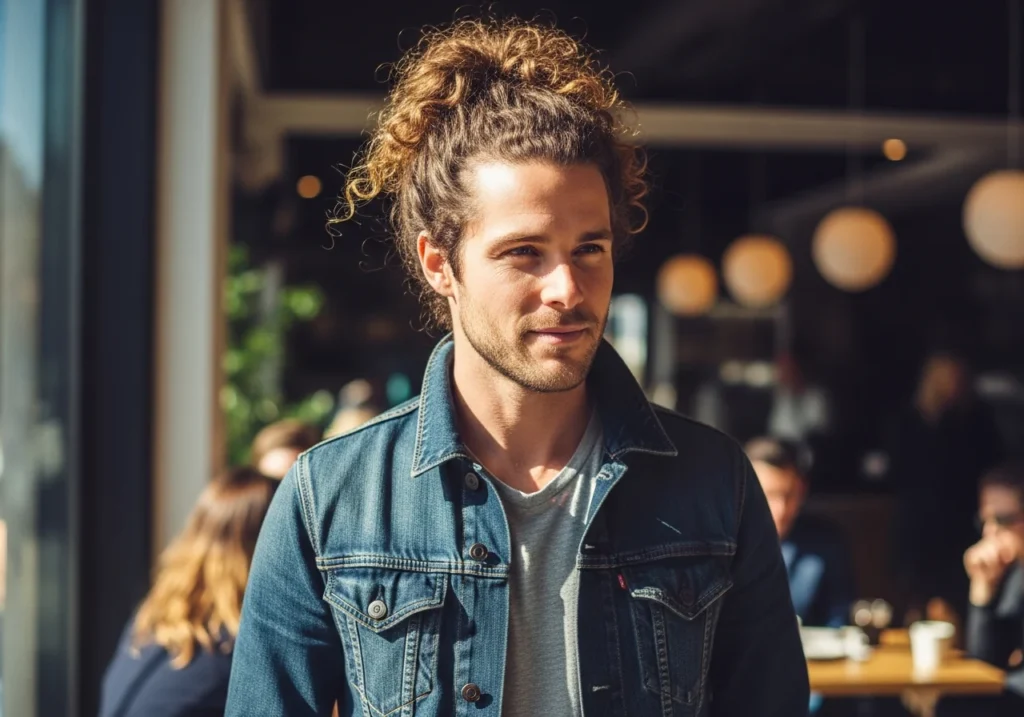
The curly man bun offers a practical yet stylish solution for men with longer curls who want versatility in their styling options. This look involves gathering hair at the crown or mid-back of the head, securing it with an elastic, and allowing natural curl texture to create an appealing, textured bun. The beauty lies in how curls spill out organically from the gathering point, creating dimension and visual interest.
Growing hair to man bun length requires patience and proper care, typically taking six months to over a year depending on curl tightness and desired fullness. During the growth phase, regular trims prevent split ends while maintaining shape. The sides can be kept shorter through tapering or fading, or grown out to match the top for a fuller overall appearance. The versatility of being able to wear hair down or up makes the journey worthwhile for many men.
This style works across curl types, though medium to loose curls often create the most voluminous, textured buns. The man bun suits active lifestyles, professional environments requiring neat appearance, and casual settings equally well. It provides the best of both worlds, allowing you to showcase flowing curls when desired while having the option to create a polished, controlled look when circumstances require it.
Creating a curly man bun starts with applying leave-in conditioner to damp hair to ensure definition and moisture. Gather hair at your desired placement, using fingers or a wide-tooth comb to smooth without eliminating curl texture. Secure with an elastic designed for thick or curly hair, wrapping only as tightly as necessary to hold the bun in place. Allow some curls to escape naturally around the face and nape for a relaxed, intentional appearance. The bun should appear full and textured rather than sleek and tight.
13 Curly Top Knot with Undercut
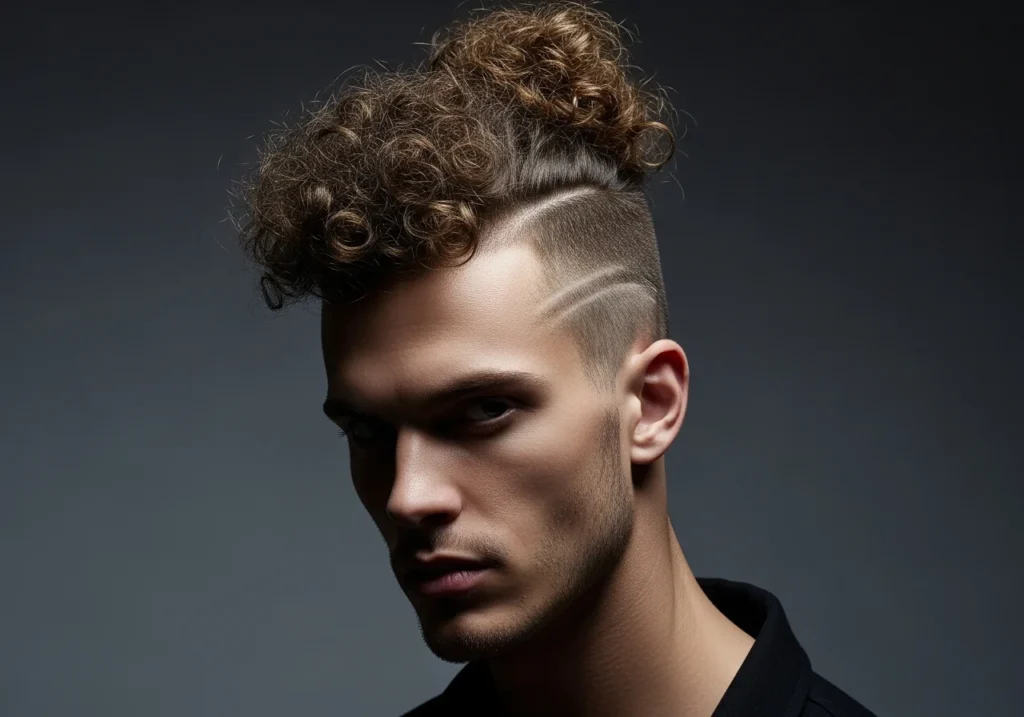
The curly top knot with undercut creates maximum contrast and contemporary edge by combining closely shaved sides and back with a gathered bun positioned at the crown. This dramatic style makes a bold statement while offering practical benefits for men with longer curls. The sharp division between the undercut and the top knot creates visual interest and modern appeal.
This style requires commitment to growing sufficient length on top while maintaining the undercut through regular maintenance. The top section typically needs to reach at least six inches to create a substantial, textured knot, though this varies with curl tightness. The undercut can be customized regarding how high it extends and whether it includes designs or patterns for additional personalization.
The curly top knot with undercut particularly flatters men with strong facial features as the dramatic contrast draws attention upward and creates vertical dimension. It suits confident individuals who appreciate making style statements and works well in creative industries or casual settings. The practicality of keeping long hair controlled makes it popular among active men who want the aesthetic of longer curls without constant management.
Creating the top knot involves gathering the longer top section at the crown, twisting slightly if desired, and securing with an elastic. The natural texture of curly hair creates an inherently interesting knot without requiring perfect smoothness. Some men prefer allowing a few curls to escape around the face and nape for a softer appearance, while others tuck everything tightly for maximum drama. The undercut requires no styling, simply regular touch-ups every two to three weeks to maintain its crisp appearance.
14 Loose Curly Flow
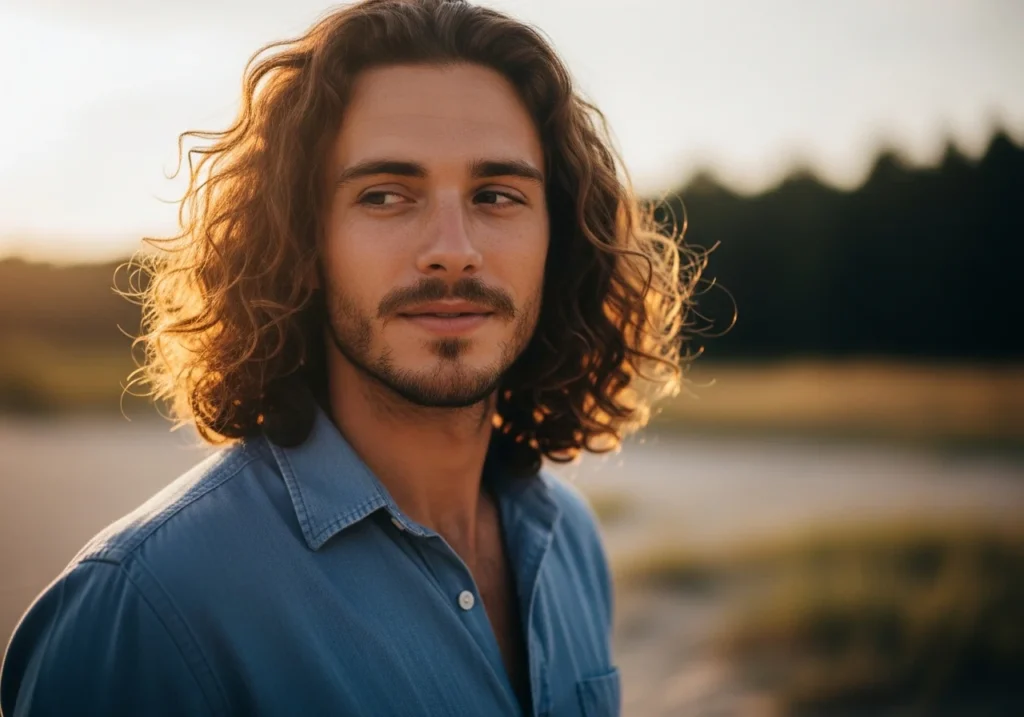
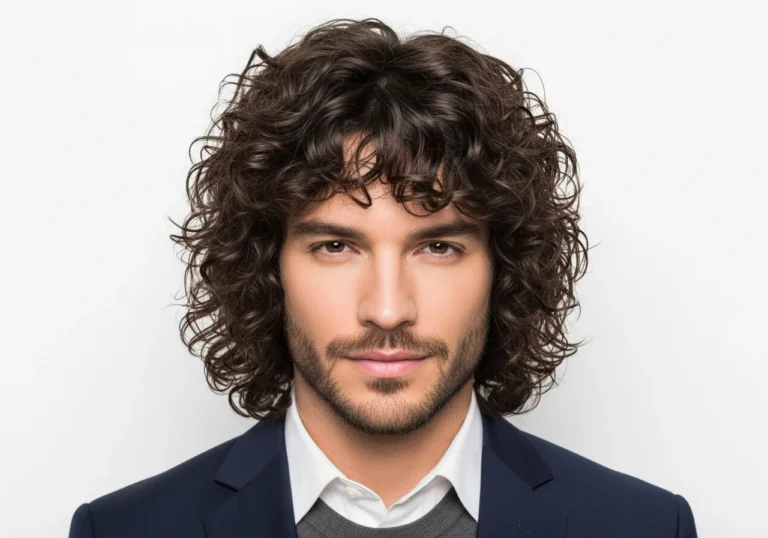
The loose curly flow celebrates natural texture in a relaxed, effortless manner, featuring medium to long length styled with a natural part or swept to one side. This style embodies the contemporary movement toward embracing hair in its natural state rather than forcing it into rigid structures. The flow allows curls to cascade naturally, creating movement and dimension that appears both casual and refined.
Achieving the flow requires growing hair to at least shoulder length, a process that demands patience and consistent care. During the growth phase, regular trims every six to eight weeks prevent split ends while maintaining shape. Layers prove crucial for preventing the style from appearing triangular or bottom-heavy, with strategic cutting throughout creating movement and preventing bulk accumulation at the ends.
This style works beautifully across curl types, though loose to medium curls often achieve the flowing appearance most easily. Men with oval or long face shapes wear this style particularly well, as the horizontal volume created by flowing curls balances facial proportions. The loose curly flow suits creative professionals, artists, musicians, and anyone who appreciates a more bohemian aesthetic.
Styling the flow centers on maintaining curl health and definition while allowing natural movement. Apply leave-in conditioner to damp hair, followed by curl cream distributed evenly throughout. Either air dry for maximum natural texture or use a diffuser on low heat while occasionally scrunching to encourage volume. Once dry, shake hair gently to create separation and flow. Avoid over-touching or manipulating dry curls as this can create frizz and disrupt curl pattern.
15 Curly Mohawk
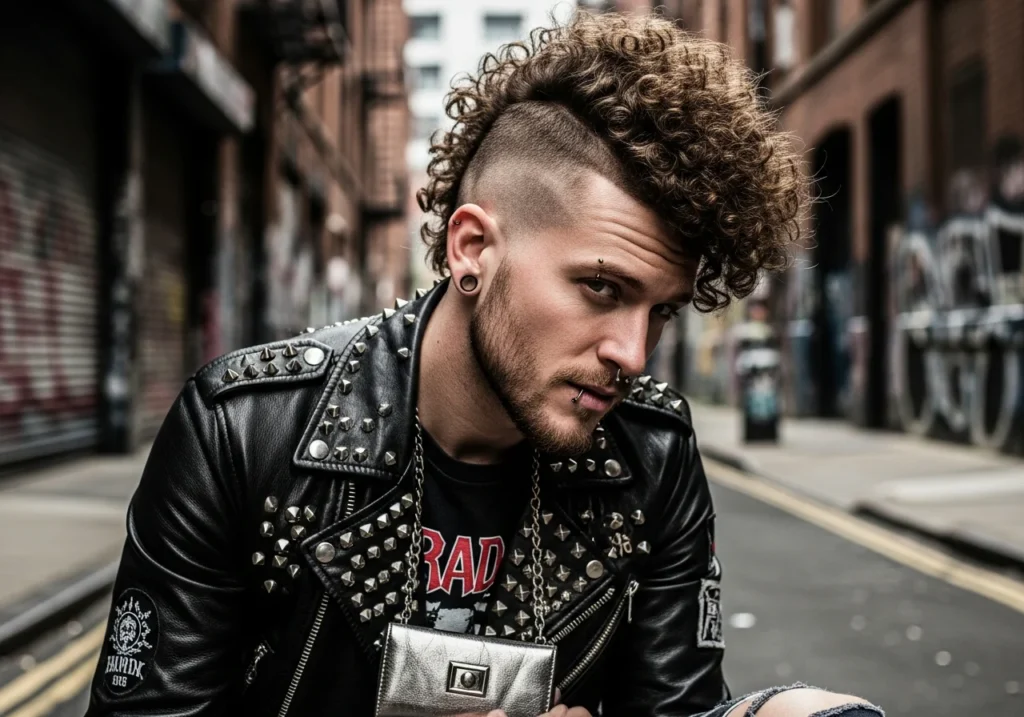
The curly mohawk makes an undeniable statement, featuring a strip of longer curls running from front to crown while the sides remain very short or completely shaved. This bold style channels punk rock energy while showcasing curl texture in an eye-catching manner. Modern versions often soften the traditional mohawk approach through fades or tapers rather than completely shaved sides, creating a wearable yet distinctive look.
Creating a curly mohawk requires growing the central strip to desired length while maintaining the sides through regular clipping or shaving. The width of the mohawk strip can be customized, with wider versions appearing less extreme while narrow strips create maximum drama. Length on top typically ranges from two to six inches depending on curl tightness and personal preference, with longer lengths allowing more dramatic styling possibilities.
This style attracts men who enjoy standing out and making bold style choices. It works particularly well in creative industries, music scenes, and casual environments where individual expression is valued. While less common in conservative professional settings, modern variations with faded sides and moderate mohawk width can bridge the gap between edgy and professional.
Styling the curly mohawk involves applying curl cream or mousse to damp hair along the mohawk strip, encouraging curls to stand upward and maintain volume. Some men prefer using stronger-hold products to create more dramatic height, while others allow curls to fall naturally for a relaxed interpretation. The shaved or faded sides require no styling beyond regular maintenance. For special occasions, consider using a blow dryer on low heat while lifting curls upward to maximize height and drama.
16 Curly Caesar Cut
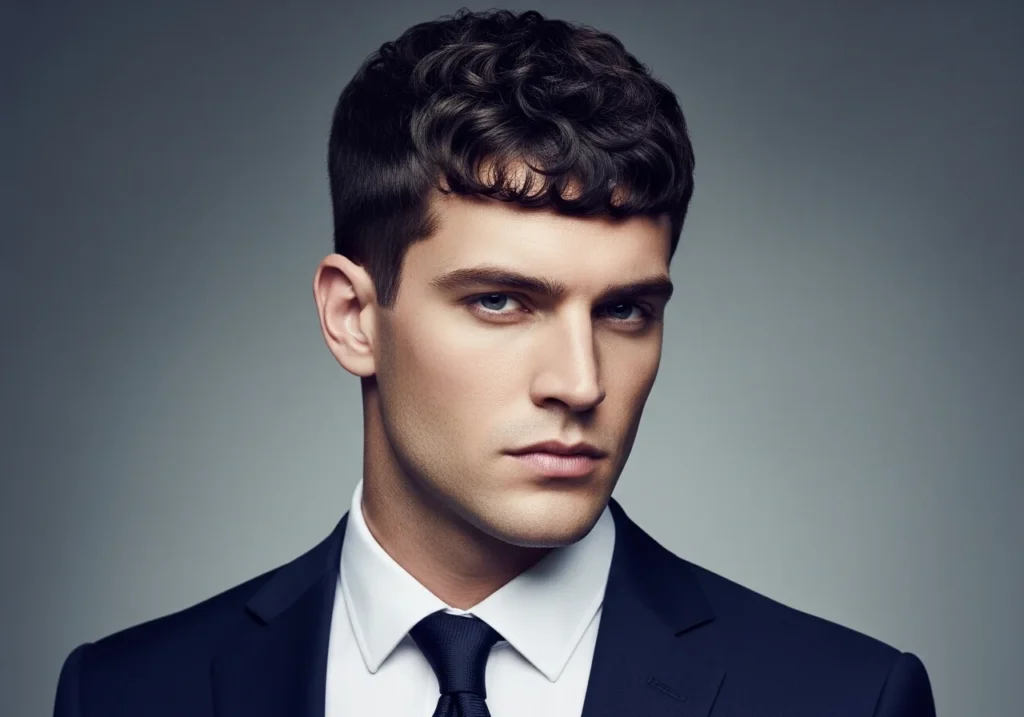
The curly Caesar cut offers a timeless, sophisticated option that works beautifully with natural texture. This style features short, uniform length around the entire head with a slightly longer, textured fringe that falls forward onto the forehead. Originally popularized in ancient Rome and revived in modern styling, the Caesar cut provides clean lines and easy maintenance while accommodating curly hair beautifully.
Barbers create this look by cutting hair to a relatively uniform length, typically one to two inches throughout, while leaving the fringe section slightly longer. The fringe is cut horizontally across the forehead, creating the signature Caesar appearance. For curly hair, the key lies in maintaining enough length to allow texture to show while keeping everything controlled and tidy.
The curly Caesar cut particularly flatters men with tighter curl patterns as the short length prevents curls from becoming overwhelming while still showcasing texture. It works across face shapes, though men with round faces especially benefit from the horizontal fringe which creates width and balance. The style conveys professionalism and confidence while requiring minimal styling effort.
Maintaining a curly Caesar involves applying curl-defining cream to damp hair, working it through evenly to encourage curl formation. Use fingers to direct the fringe forward, allowing curls to define naturally. Air drying works well for this short style, though a diffuser can speed the process. Regular trims every three to four weeks maintain the Caesar shape and prevent the style from losing its distinctive clean lines.
17 Textured Curly Crop

The textured curly crop represents one of the most versatile short curly styles, featuring even length throughout with strategic layering to enhance texture and movement. This modern cut works across curl types and adapts to various personal styles from casual to professional. The crop maintains curls in a controlled, manageable length while allowing natural texture to create visual interest.
Creating a textured crop involves cutting hair to approximately one to three inches throughout, with subtle layering to remove bulk and encourage curl separation. The top may be left slightly longer than the sides, or cut to a more uniform length depending on preference. The goal is maintaining enough length for curls to form while keeping everything neat and structured.
This style proves especially popular among men seeking low-maintenance options that still look intentional and stylish. It flatters most face shapes through customization of top length and side treatment, whether faded, tapered, or kept at similar length to the top. The textured crop works equally well in corporate boardrooms and casual weekend settings.
Styling requires minimal effort, typically just applying curl cream to damp hair, scrunching to activate curls, and allowing to air dry or diffuse on low heat. The short length means quick drying time and reduced product needs. A small amount of matte clay or paste can be worked through dry hair for added texture and separation, creating a lived-in appearance that appears effortlessly stylish.
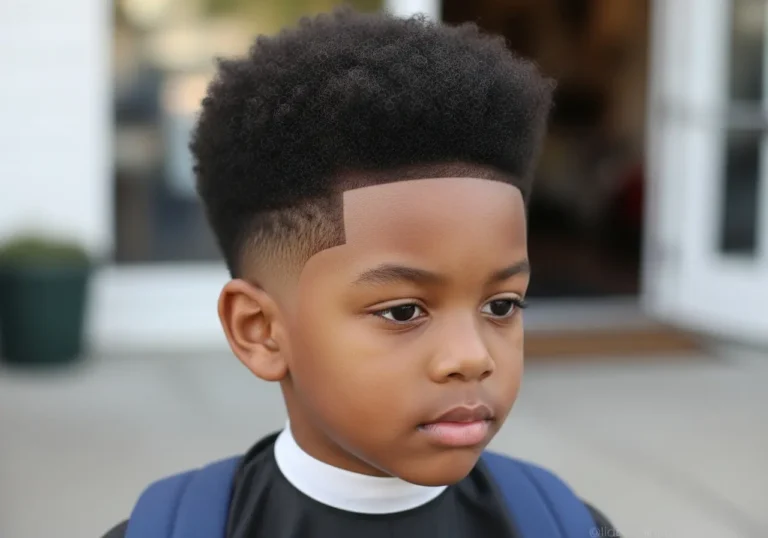
18 High-Top Fade with Curls
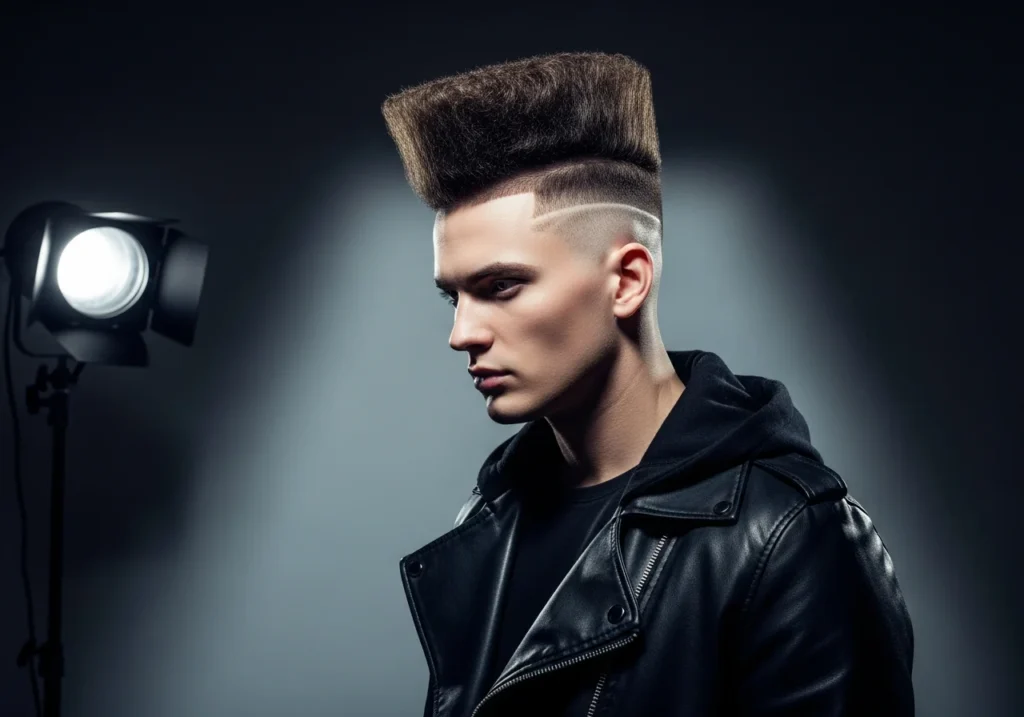
The high-top fade creates dramatic vertical dimension by maintaining substantial length on top while fading the sides down to skin or very short length. This iconic style celebrates curl volume and height while keeping perimeter lines crisp and clean. The high-top works particularly well for men with tighter curl patterns as it allows those coils to create impressive vertical structure.
Achieving a proper high-top fade requires growing the top section to desired height, typically four to eight inches depending on curl tightness and personal preference. Barbers then fade the sides, usually starting high on the head and blending down to very short or skin level. The top is shaped to create an even, flat or slightly rounded surface, highlighting curl texture while maintaining geometric precision.
This style particularly suits men with oval or diamond face shapes as the vertical dimension balances facial proportions beautifully. The high-top makes a bold statement and works well in creative environments or casual settings. While requiring more maintenance than simpler cuts, the striking appearance justifies the effort for many men.
Maintaining a high-top fade demands regular touch-ups every two to three weeks to keep the fade crisp and the top shaped properly. Styling involves applying curl cream to damp hair, using a pick or afro comb to lift curls upward and create even height throughout. Some men prefer using edge control products along the hairline to create sharp, defined boundaries. A satin or silk scarf worn overnight helps maintain shape and definition between styling sessions.
19 Side Part with Curls
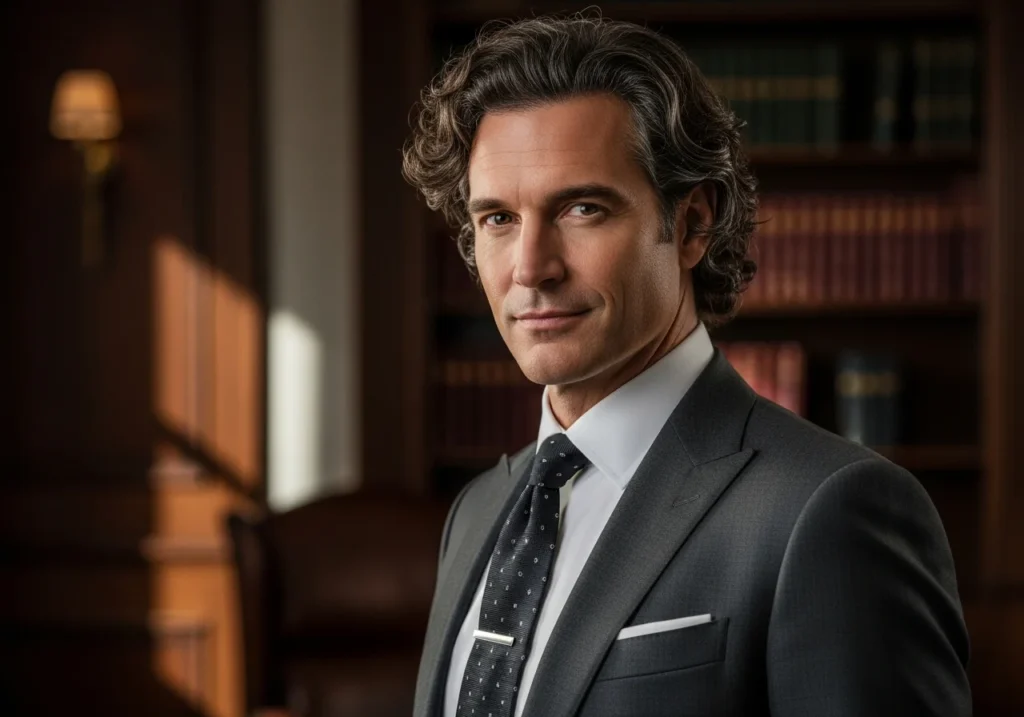
The side part with curls combines classic elegance with natural texture, creating a refined look that works equally well in professional and social settings. This style features a defined part on one side with curls styled to flow naturally away from the parting line. The structured part provides organization and intention while curls add personality and movement.
Creating this style requires medium length on top, typically three to five inches, to allow curls enough length to develop while maintaining the parted structure. The sides can be kept shorter through tapering or fading, or grown to complement the top length. The part itself can be created naturally by styling or cut in by your barber for maximum definition.
This style particularly flatters men seeking sophisticated, professional appearances while embracing their natural texture. The side part works across face shapes, with placement adjusted to create optimal balance and proportion. Men with oval faces can position the part anywhere, while round or square faces often benefit from slightly off-center placement.
Styling involves applying curl cream to damp hair, then using a comb to create the part and direct hair away from the parting line on both sides. Curls can be scrunched or finger-styled to enhance definition while respecting the part structure. Allow to air dry or use a diffuser, occasionally reshaping the part if curls begin to migrate. A light-hold pomade or styling cream applied to dry hair along the part line helps maintain definition throughout the day.
20 Curly Burst Fade

The burst fade creates a semicircular fade pattern around the ear, radiating outward like a sunburst while maintaining longer curls on top. This creative fade variation adds artistic flair to curly styles while keeping maintenance relatively straightforward. The curved nature of the burst fade complements the organic, flowing quality of curls beautifully.
Barbers create this effect by fading hair in a curved pattern following the contour of the ear, typically starting very short or at skin level near the ear and gradually lengthening as it curves toward the back and top. The top section maintains enough length to showcase curl pattern, usually two to five inches depending on desired volume and curl type.
The burst fade particularly appeals to men who appreciate creative details and personalization in their cuts. It works across curl types and face shapes, with the curved fade pattern adding visual interest that standard fades cannot match. This style suits various environments from casual to moderately formal, projecting confidence and style awareness.
Styling focuses on the curly top section as the burst fade requires no product or manipulation. Apply curl cream to damp hair on top, scrunch to activate curls, and either air dry or diffuse on low heat. The curl pattern naturally creates volume and dimension, while the burst fade provides crisp, artistic contrast. Regular touch-ups every two to three weeks maintain the fade precision and prevent the style from losing its distinctive character.
21 Curly Faux Hawk
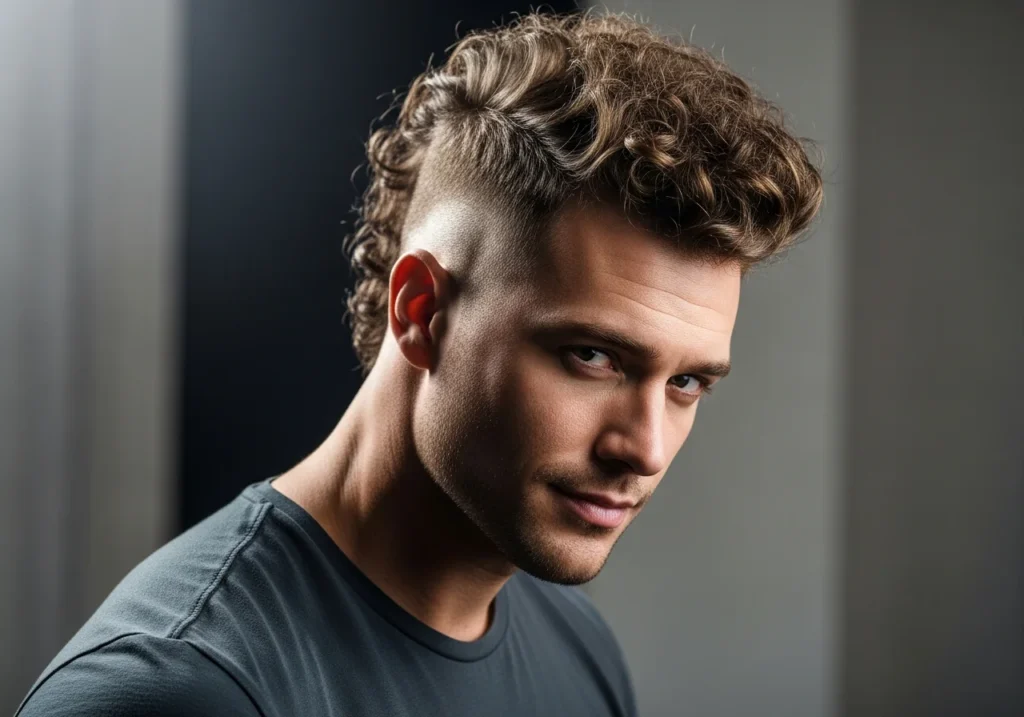
The curly faux hawk offers mohawk energy without the commitment of completely shaved sides, featuring tapered or faded sides with a pronounced central strip of longer curls styled upward. This style strikes a balance between edgy and wearable, making it popular among men who want to make a statement without going to extremes.
Creating a faux hawk involves keeping sides significantly shorter than the central strip, which runs from the front hairline back to the crown. The central section typically measures two to five inches depending on curl tightness and desired drama. Unlike true mohawks with shaved sides, faux hawks incorporate fades or tapers that create softer transitions while maintaining the distinctive central strip.
This style works well for men with medium to tight curls as the natural volume and texture enhance the faux hawk appearance. It flatters most face shapes by adding vertical dimension and creating strong visual lines that draw the eye upward. The faux hawk suits creative professionals, musicians, and anyone who enjoys bold style with room for occasional variation.
Styling the faux hawk involves applying curl cream or mousse to damp hair along the central strip, then using fingers or a comb to direct curls upward and toward the center. Some men prefer blow drying with a diffuser while lifting curls to maximize height, while others allow natural air drying for a more relaxed interpretation. Medium to strong-hold products help maintain the upward styling throughout the day without creating stiffness that compromises curl texture.
22 Medium Length Curly Shag
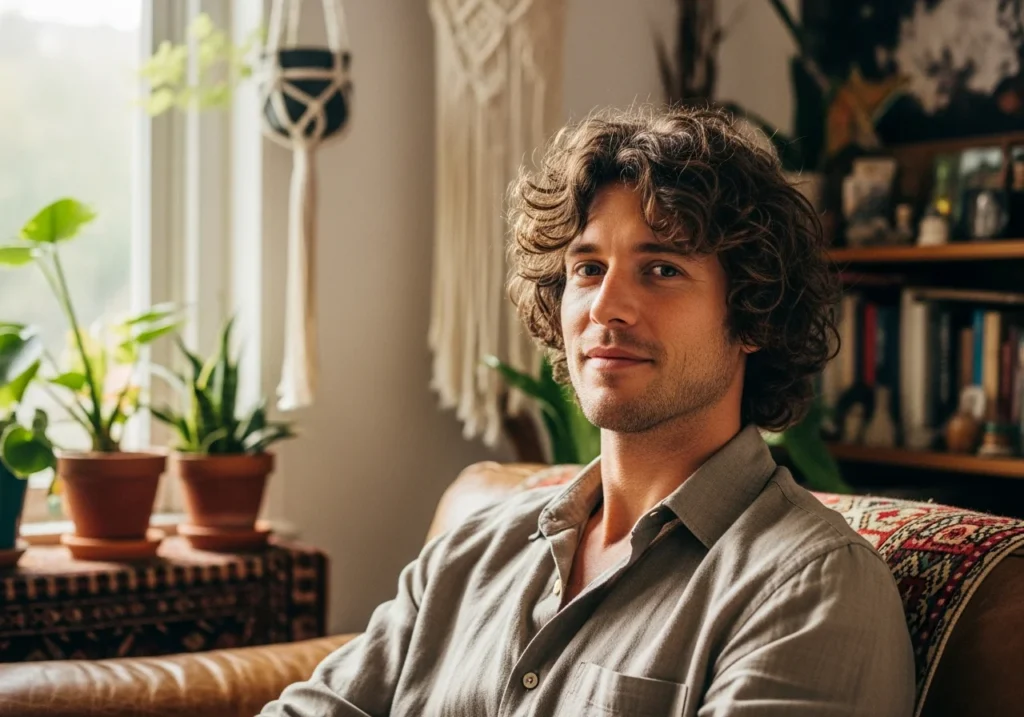
The medium length curly shag embraces texture and movement through strategic layering that creates dimension and prevents bulk accumulation. This style features hair grown to collar length or slightly below with layers throughout that encourage curls to separate and flow naturally. The shag offers a relaxed, effortlessly cool aesthetic that works across various personal styles.
Barbers create the shag by incorporating extensive layering throughout the hair, removing weight and bulk while maintaining overall length. The layers vary in length, creating texture and movement that prevents the style from appearing bottom-heavy or triangular. Face-framing layers add softness and dimension around the perimeter.
This style particularly suits men with loose to medium curls as the layering enhances natural wave patterns and creates beautiful flow. It works well for oval and long face shapes, with the horizontal volume and movement balancing facial proportions. The curly shag appeals to creative individuals who appreciate vintage-inspired styling with modern wearability.
Maintaining a curly shag involves applying leave-in conditioner to damp hair, followed by curl cream distributed throughout all layers. Scrunch to encourage curl formation and allow to air dry for maximum natural texture, or diffuse on low heat for added volume. The key is allowing curls to do their own thing rather than forcing them into specific patterns. Regular trims every six to eight weeks maintain layer integrity and prevent split ends while keeping the shag shaped properly.
23 Curly Blowout Taper

The curly blowout taper features volume and fullness on top achieved through blow drying techniques while tapered sides keep the perimeter clean and defined. This style celebrates natural curl volume while adding intentional lift and structure that creates a polished, put-together appearance. The blowout effect transforms natural curls into a more dramatic, voluminous presentation.
Creating this look requires medium length on top, typically three to six inches, to allow sufficient hair for the blowout effect. Tapered sides provide contrast and structure while preventing the overall style from appearing excessive. The blowout itself is achieved through styling rather than cutting, making this a versatile option that can be worn with natural curls or styled up for special occasions.
This style particularly flatters men with medium to thick curls as the natural volume enhances the blowout effect. It works well for round or square face shapes as the vertical dimension and volume create length and balance. The curly blowout taper suits both professional environments and social settings, projecting confidence and style awareness.
Styling requires effort but delivers impressive results. Apply volumizing mousse to damp hair, focusing on roots for maximum lift. Use a blow dryer with diffuser attachment, working section by section while lifting curls away from the scalp to create volume. For enhanced effect, use a round brush on the front and crown sections while blow drying to create additional height. Once dry, apply a light styling cream or pomade to define curls and maintain structure without weighing down the volume you have created.
24 Curly Temple Fade
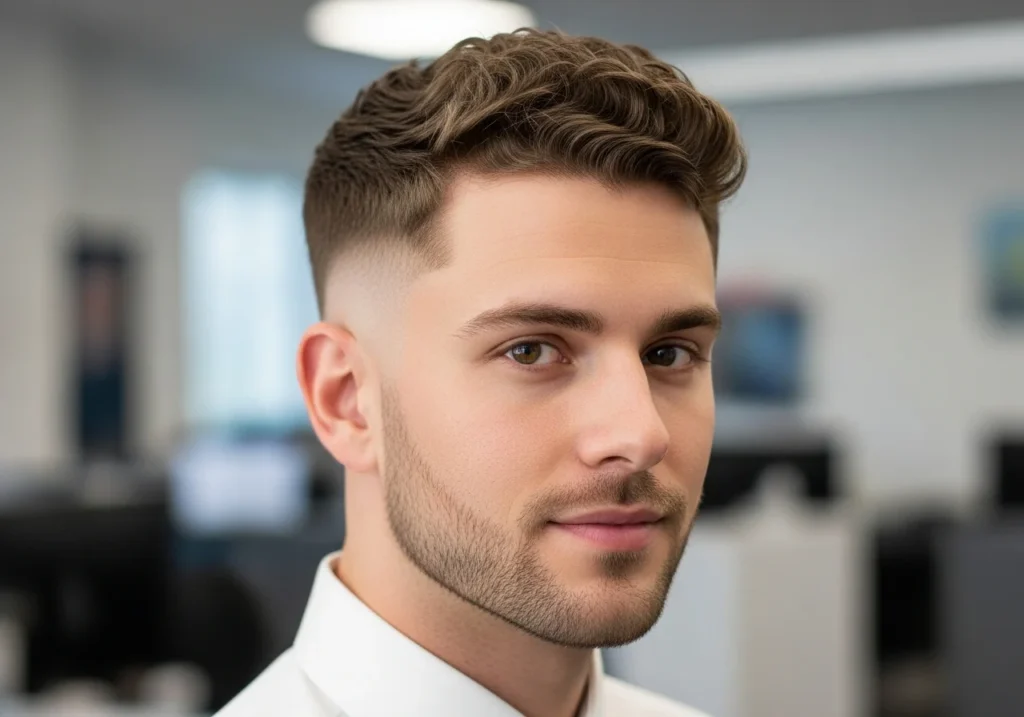
The temple fade focuses fade precision on the temple area while keeping the rest of the sides relatively longer, creating a distinctive look that draws attention to facial structure. This targeted fade adds modern edge without the dramatic contrast of full fades, making it workplace-appropriate while still trendy and stylish.
Barbers create the temple fade by blending hair very short or to skin at the temple area, gradually lengthening as it moves away from this focal point. The top maintains enough length to showcase curls, while the sides away from the temples may be tapered or kept at medium length. This creates a unique appearance that differs from standard all-around fades.
The temple fade particularly suits men who want modern styling without committing to full fades or dramatic undercuts. It works across face shapes and curl types, with the strategic fade drawing attention to eyes and facial structure. This style bridges casual and professional environments effectively.
Styling focuses on the curly top section as the temple fade requires only regular maintenance to keep it precise. Apply curl cream to damp hair, scrunch to activate curls, and allow to air dry or diffuse. The natural curl pattern creates volume and texture while the temple fade adds contemporary edge and definition. Touch-ups every three to four weeks maintain the fade precision and keep the overall style fresh.
25 Curly Middle Part

The curly middle part creates a symmetrical, balanced appearance by parting hair down the center and allowing curls to frame both sides of the face equally. This classic styling approach works beautifully with natural curl texture, creating a relaxed yet intentional look that flatters various face shapes and personal styles.
Creating this style requires medium to long length to allow enough hair for the parted style to appear full and balanced on both sides. The part can be created naturally through styling or cut in for maximum definition and ease of recreation. Sides can be kept at similar length to the top or tapered depending on overall aesthetic preferences.
This style particularly flatters men with oval or heart-shaped faces as the symmetrical framing creates pleasing proportions. The middle part works across curl types, though loose to medium curls often achieve the look most easily. It suits various environments from casual to professional, projecting an easygoing yet put-together aesthetic.
Styling involves applying curl cream to damp hair, then using a comb to create the center part from front to back. Direct curls away from the part on both sides, allowing them to fall naturally while maintaining the central division. Air drying preserves natural texture, though diffusing can add volume and reduce waiting time. The key is maintaining symmetry while allowing curls their natural movement and personality.
26 Curly Ivy League
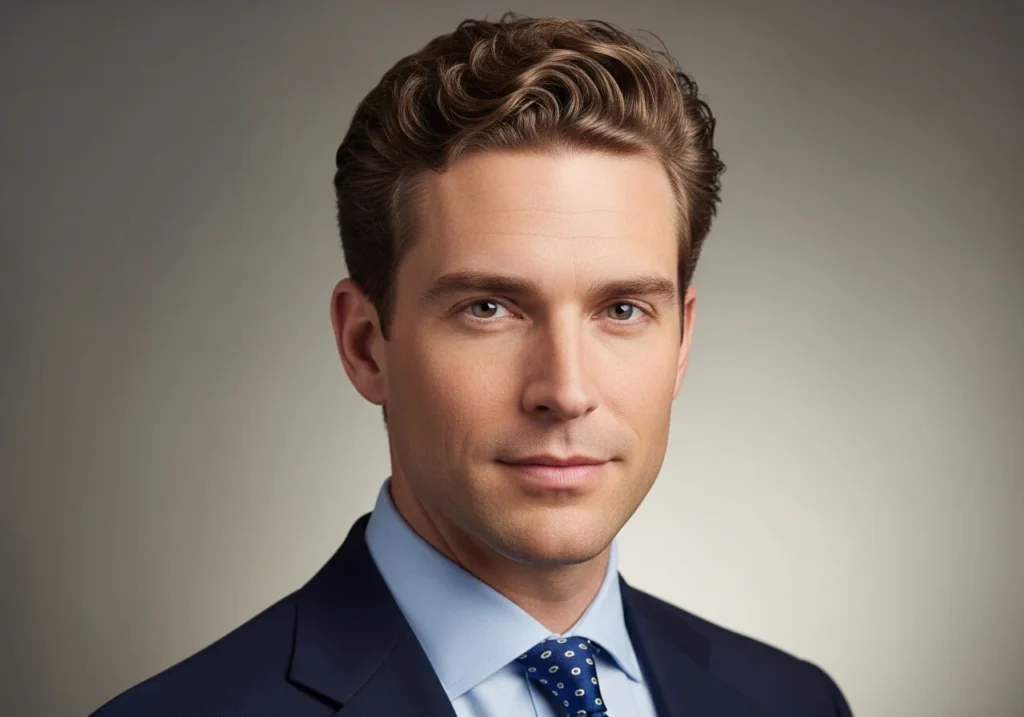
The curly Ivy League represents a refined variation of the crew cut, featuring slightly more length throughout with particular emphasis on a textured front section that can be styled forward or to the side. This preppy, classic style adapts beautifully to curly hair, maintaining professionalism while showcasing natural texture.
Barbers create this cut by keeping sides short through tapering while leaving the top at approximately one to three inches depending on curl tightness. The front section receives special attention with enough length to allow styling versatility. The overall effect is polished and controlled while allowing curls to provide dimension and interest.
This style particularly suits professional environments and men who prefer conservative aesthetics with subtle personality. It works across curl types and face shapes, with adjustments to top length and styling direction customizing the look for individual features. The Ivy League conveys competence and attention to detail without appearing rigid or overly formal.
Styling the curly Ivy League involves applying curl cream to damp hair, then directing the front section forward or to the preferred side using fingers or a comb. The rest of the top can be styled forward or with slight lift depending on preference. Air dry or diffuse on low heat, then apply a small amount of styling cream or light pomade to define curls and maintain placement throughout the day.
27 Curly Disconnected Undercut
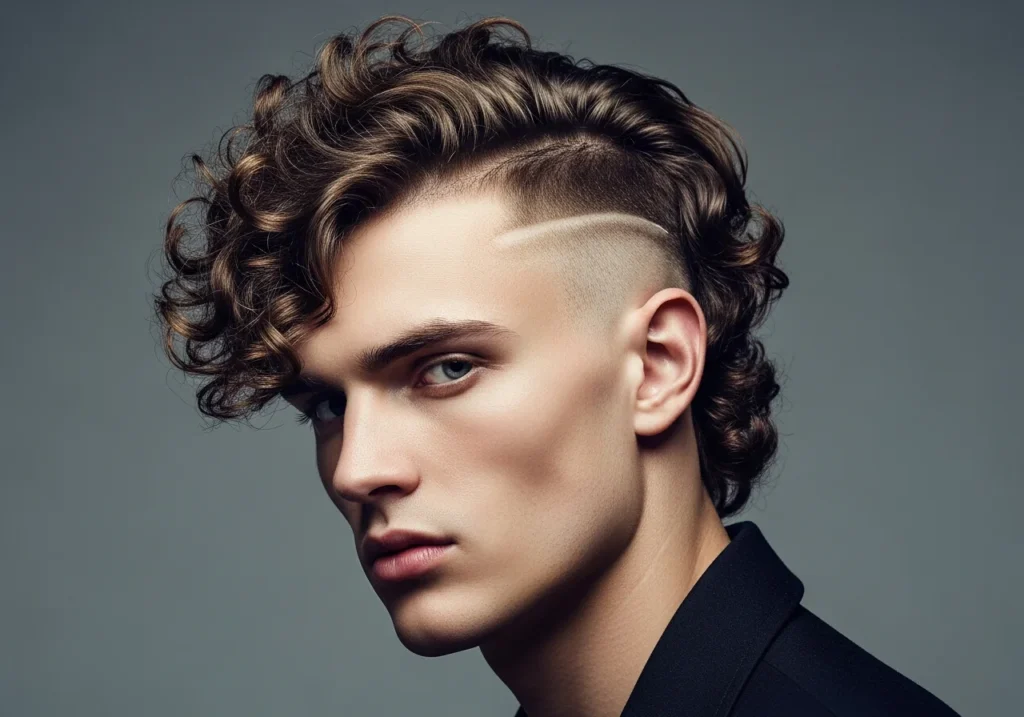
The disconnected undercut creates maximum contrast through an abrupt, unblended transition between the shaved or very short sides and the longer curls on top. Unlike standard undercuts with some blending, the disconnected version features a hard line of demarcation that creates bold, dramatic visual impact.
This edgy style requires commitment as the stark contrast makes a definite statement. The sides are typically buzzed very short or shaved, while the top maintains substantial length, usually four to eight inches, to showcase curl volume and texture. The line where short and long hair meet remains visible and sharp, creating the distinctive disconnected appearance.
The disconnected undercut particularly appeals to men in creative fields or those who appreciate high-fashion, runway-inspired styling. It works well for thick, dense curls as the removed weight from the sides prevents overwhelming volume. Strong facial features carry this dramatic style especially well.
Styling focuses entirely on the top section as the shaved sides require no product or manipulation. Apply curl cream to damp hair, distribute thoroughly, and scrunch to activate curls. Allow curls to dry naturally or use a diffuser for added volume. The key is creating beautiful curl definition and movement on top that contrasts dramatically with the clean, bare sides. Regular maintenance every two to three weeks keeps the disconnected line sharp and prevents the style from losing its distinctive edge.
28 Curly Low Fade
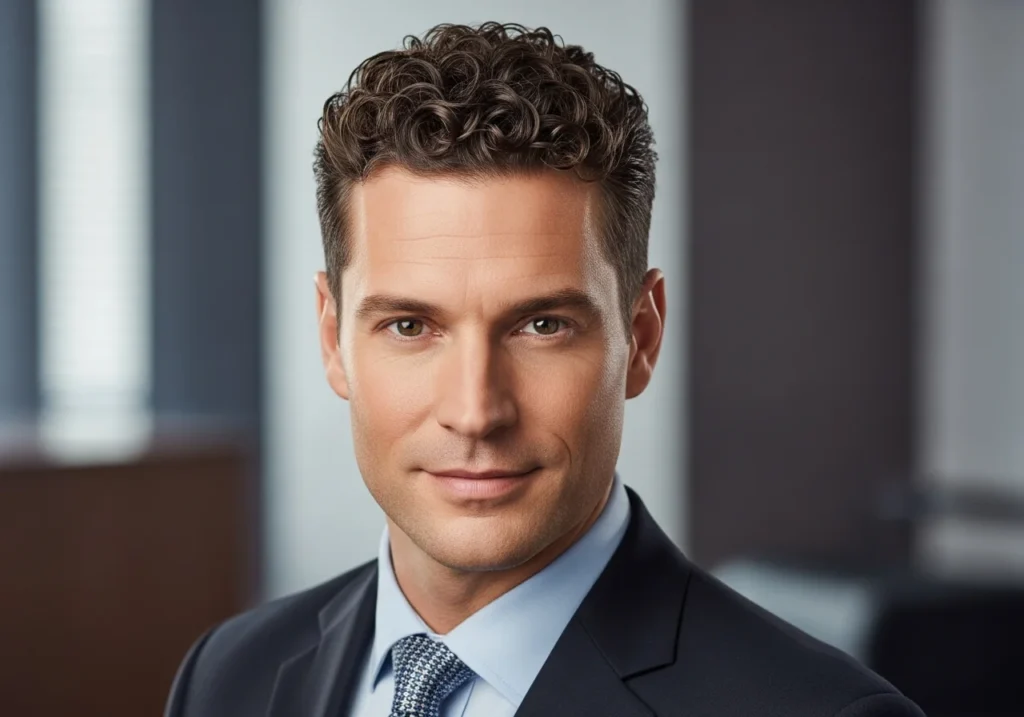
The curly low fade offers a subtle, professional approach to faded styles by beginning the fade transition low on the head near the neckline and around the bottom of the ears. This conservative fade variation maintains more overall length while still providing modern contrast and clean lines that enhance curly hair on top.
Barbers create the low fade by keeping the sides at a moderate length through most of the head, then blending down to very short or skin only in the lowest portion near the ears and neckline. This creates a gentler, less dramatic transition than high fades while still providing contemporary styling. The top maintains enough length to showcase curl pattern and personality.
The low fade particularly suits professional environments where subtle styling is preferred over dramatic statements. It works across curl types and face shapes, offering versatility and timeless appeal. Men who want modern edge without compromising professional appearance often choose this option.
Styling the curly low fade centers on the top section with its abundant curl potential. Apply curl cream to damp hair, scrunch to activate curls, and allow to air dry or diffuse on low heat. The low fade requires only regular touch-ups every three to four weeks to maintain precision. This style offers an ideal entry point for men new to fades or those uncertain about more dramatic fade variations.
29 Textured Curly Mullet
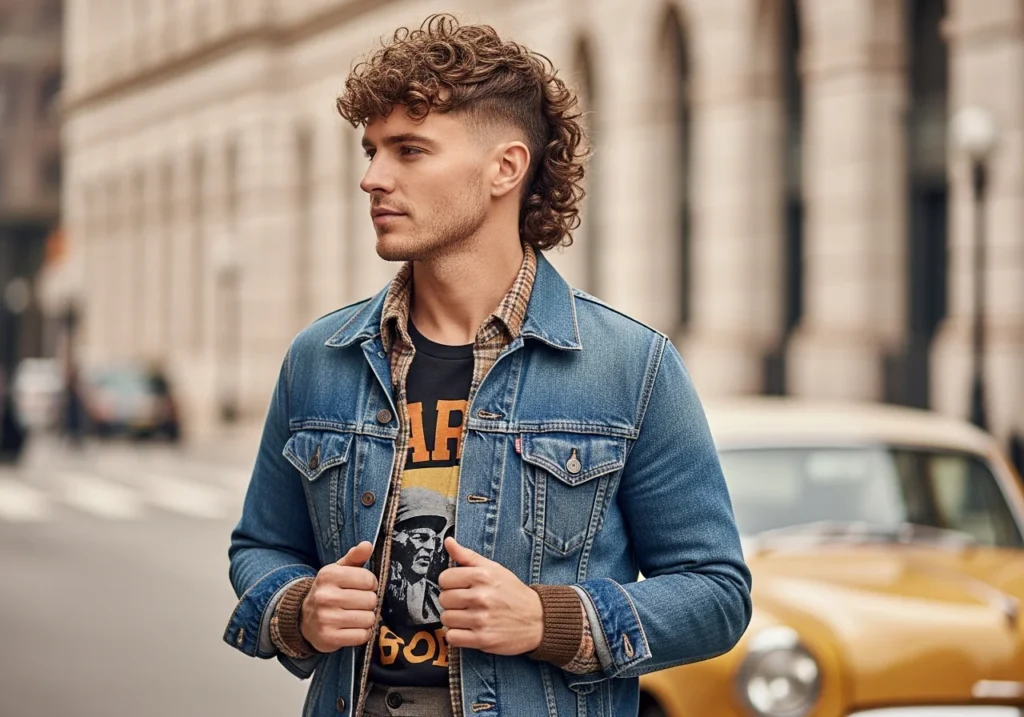
The textured curly mullet resurrects this controversial style through modern execution that emphasizes texture, movement, and intentional styling over the extreme proportions of vintage versions. This contemporary interpretation features shorter sides with a gradually lengthening back section that showcases beautiful curl flow and dimension.
Creating a modern curly mullet involves tapering or fading the sides while keeping increasing length from the crown toward the nape. The difference between front and back length remains noticeable but not extreme, with the back typically reaching collar length or slightly below. Strategic layering throughout prevents bulk accumulation and encourages curl separation.
This style particularly appeals to men in creative industries or those who appreciate vintage influences reinterpreted through contemporary techniques. It works well with loose to medium curls that can flow naturally and create movement. The textured curly mullet suits oval and long face shapes especially well.
Styling involves applying leave-in conditioner to damp hair, followed by curl cream distributed throughout all sections. Focus on encouraging curl formation in the longer back section to create flow and movement. Air drying preserves natural texture, though diffusing can add volume to the crown and sides. The key is balancing structure in the shorter sections with beautiful flow in the back for a cohesive, intentional appearance.
30 Natural Curly Flow with Taper
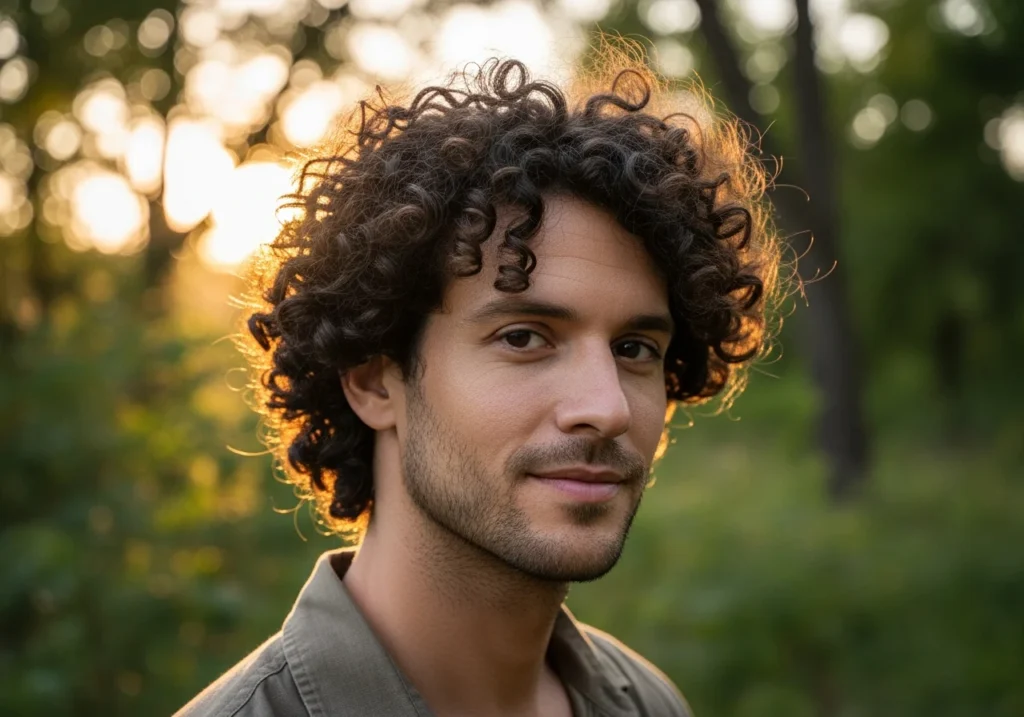
The natural curly flow with taper celebrates your hair in its most authentic state while incorporating subtle taper on the sides for polish and definition. This style prioritizes curl health and natural movement while preventing the overall appearance from becoming unkempt or overwhelming through strategic shaping.
Creating this look requires growing hair to medium or long length throughout the top and crown while gradually tapering the sides from this length down to shorter measurements near the ears and neckline. The taper provides structure without drastically reducing volume, maintaining a natural, flowing aesthetic. Layers throughout the top prevent bulk and encourage beautiful curl separation.
This style works beautifully across curl types and appeals to men who want to embrace their natural texture without committing to extremely short or highly structured cuts. It suits various face shapes through customization of taper height and top length. The natural flow conveys confidence, authenticity, and an easygoing personal style.
Maintaining natural curly flow with taper centers on curl health and definition. Use sulfate-free shampoo sparingly, co-washing regularly to preserve natural oils. Apply leave-in conditioner to damp hair, followed by curl cream worked throughout all sections. Scrunch to encourage curl formation and allow to air dry for maximum natural texture. The taper requires trimming every four to six weeks to maintain definition, while the curly portions benefit from regular deep conditioning treatments to ensure optimal health and beautiful flow.
Essential Hair Care for Curly Styles
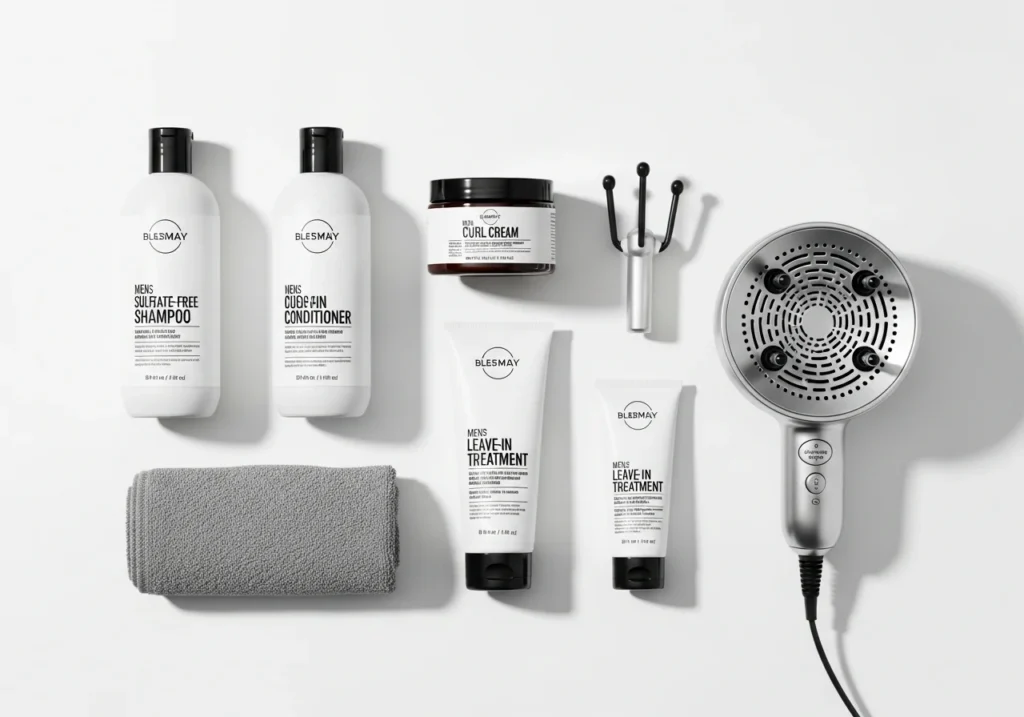
Regardless of which curly haircut you choose, proper hair care forms the foundation for great results. Curly hair requires different care approaches than straight hair, with moisture retention and curl definition being primary concerns. Understanding these fundamentals ensures your chosen style always looks its best.
Washing curly hair too frequently strips natural oils that provide essential moisture and definition. Most curly-haired men benefit from shampooing only two to three times weekly, using sulfate-free formulas that clean without harsh stripping. Between shampoo days, co-washing with conditioner alone removes dirt and buildup while preserving beneficial oils. This routine maintains natural moisture balance that keeps curls healthy and defined.
Conditioning proves crucial for curly hair health, with deep conditioning treatments once weekly providing intensive moisture that combats dryness and frizz. Look for products containing ingredients like shea butter, coconut oil, or argan oil that penetrate the hair shaft and provide lasting hydration. Leave-in conditioners applied to damp hair create a protective barrier that seals in moisture while providing a foundation for other styling products.
Drying techniques significantly impact final curl appearance. Rubbing curly hair vigorously with standard terry cloth towels creates frizz and disrupts curl patterns. Instead, use microfiber towels or soft t-shirts to gently squeeze excess water from hair without roughing up the cuticle. Air drying produces the most natural results, though diffuser attachments for blow dryers can reduce drying time while adding volume when used on low heat settings with minimal direct air flow.
Product selection makes substantial difference in achieving and maintaining your desired style. Curl creams provide moisture and definition, working best when applied to damp hair and scrunched to activate curl formation. Gels offer stronger hold for styles requiring more structure, though modern formulas avoid the crunchy, stiff results of older products. Styling clays and pastes work well for shorter curly styles, providing texture and separation with matte finishes. Experiment to discover which products work best for your specific curl type and chosen style.
Communicating with Your Barber

Achieving your desired curly haircut requires effective communication with your barber or stylist. Many disappointments stem from miscommunication rather than technical inability, making it crucial to convey your vision clearly. Bringing reference photos provides concrete examples, though understanding that your curl type and face shape may require modifications from the pictured style.
Discuss your lifestyle and maintenance preferences during your consultation. If you have only five minutes for morning styling, communicate this so your barber can recommend appropriate cuts and realistic expectations. Conversely, if you enjoy spending time on your hair and experimenting with different styling approaches, mention this to explore options requiring more daily effort but offering greater versatility.
Understanding basic terminology helps in explaining your preferences. Fades refer to gradual transitions from longer to shorter hair, categorized as low, mid, or high based on where the fade begins. Tapers create similar transitions but typically without going as short as fades. Undercuts feature dramatically contrasting lengths with little to no blending. Learning these terms enables precise communication about desired results.
Request that your barber cut your hair dry if you have tight or springy curls. Dry cutting allows the stylist to see exactly how your curls fall naturally, preventing the common problem of hair appearing perfect wet but shrinking excessively when dry. This technique ensures your cut looks great in its natural, styled state rather than only looking good in the salon mirror.
Building a relationship with a skilled barber who understands curly hair proves invaluable over time. Consistency allows your barber to learn your hair patterns, growth tendencies, and styling preferences, continuously refining your cuts for optimal results. Do not hesitate to provide feedback during and after appointments, as this helps your barber understand your preferences and adjust accordingly.
Conclusion
Curly hair offers extraordinary opportunities for self-expression and style when approached with the right techniques and mindset. The thirty styles explored in this guide demonstrate the incredible versatility available to men with curls, ranging from ultra-short, low-maintenance cuts to flowing, dramatic statements. The key to success lies in embracing your natural texture rather than fighting against it, choosing cuts that work with your curl pattern, and maintaining proper care routines that keep your hair healthy and defined.
Modern cutting techniques and styling products have revolutionized what is possible with curly hair, eliminating many of the frustrations previous generations faced. Barbers now understand how to cut curls properly, preserving their natural beauty while creating intentional, flattering shapes. Products provide moisture and definition without the stiffness or greasiness that plagued older formulations. These advances mean that men with curls can achieve virtually any aesthetic they desire with the right approach.
Selecting the ideal curly haircut requires honest assessment of your curl type, face shape, lifestyle, and personal style preferences. A cut that looks amazing on someone else might not suit your features or fit your daily routine. Take time to consider these factors, consult with skilled professionals, and be willing to experiment until you discover the styles that make you feel confident and authentic.
Your curly hair represents a distinctive feature that sets you apart and provides endless styling possibilities. Rather than viewing it as challenging or difficult, embrace it as an asset that allows creative expression and memorable style. With proper care, skilled cutting, and appropriate styling techniques, your curls can become your signature feature and a source of confidence that elevates your entire appearance.
Frequently Asked Questions
How often should I get my curly hair cut?
Most curly haircuts benefit from maintenance every three to six weeks depending on the style. Faded or undercut styles require more frequent touch-ups, typically every two to three weeks, to keep the contrast sharp and prevent the fade from growing out. Longer styles with less structured shaping can extend between cuts to six or eight weeks. Regular trims prevent split ends and maintain your chosen shape, ensuring your style always looks intentional rather than overgrown.
What products work best for styling curly hair?
Curl creams and leave-in conditioners form the foundation of most curly styling routines, providing moisture and definition when applied to damp hair. Gels offer stronger hold for styles requiring more structure, while styling clays and pastes work well for shorter cuts needing texture and separation. Look for products specifically formulated for curly hair that avoid sulfates, parabens, and drying alcohols. Experimentation helps identify which products work best with your specific curl type and chosen style.
Can I style my curls differently for different occasions?
Many curly haircuts offer versatile styling options depending on product choice and technique. Styles with sufficient length on top can be worn naturally curly for casual settings or styled with more structure for formal occasions. Man buns and top knots provide the ultimate versatility, allowing you to wear hair down and flowing or gathered and controlled. Even shorter styles can vary between defined, separated curls for polished looks or tousled, messy texture for relaxed appearances based on styling approach.
How do I prevent frizz in my curly hair?
Frizz prevention starts with proper moisture retention through sulfate-free shampoos, regular conditioning, and leave-in products. Avoid touching or manipulating dry curls excessively as this disrupts the curl pattern and creates frizz. Use microfiber towels or t-shirts instead of regular towels when drying, and consider sleeping on silk or satin pillowcases that reduce friction. Apply curl-defining products to damp hair rather than dry, and avoid brushing or combing except when wet with conditioner applied for detangling.
What face shapes work best with curly hair?
Curly hair works beautifully with all face shapes when cuts are customized appropriately. Oval faces offer the most versatility and can wear virtually any curly style successfully. Round faces benefit from height and volume on top to create length, while square faces are softened by curls that add width at the temples or textured fringes. Heart-shaped faces look best with volume at the jaw level, and long faces gain balance from horizontal volume rather than excessive height. Consulting with your barber about your specific face shape ensures your chosen style enhances your natural features.
You may also like this post: 22+ Best Teen Boy Haircuts: That Taking Over The Internet In 2026
2 Comments