11 Best Haircuts For Men With Diamond Faces
The diamond face shape is one of the most striking and angular facial structures a man can have. Characterized by prominent cheekbones, a narrow forehead, and a gently tapered chin, this face shape presents unique opportunities for creating balanced, flattering hairstyles. Understanding which haircuts for diamond face men complement your natural bone structure can dramatically enhance your overall appearance and boost your confidence.
Many men with diamond faces struggle to find hairstyles that work with their features rather than against them. The key lies in understanding the fundamental principle of facial balance. Since diamond faces are widest at the cheekbones and narrower at both the forehead and jawline, the ideal haircuts for diamond face men should add visual width to these narrower areas while keeping volume controlled at the temples.
This comprehensive guide explores eleven exceptional haircuts specifically chosen for diamond face shapes. Each style has been selected based on how effectively it balances facial proportions, enhances natural features, and provides versatility for different hair types and personal preferences. Whether you prefer classic elegance or contemporary edge, you will find options that align with your lifestyle and aesthetic goals.
Understanding the Diamond Face Shape
Before diving into specific haircuts, it is essential to confirm you have a diamond face shape and understand its defining characteristics. This face shape is relatively rare, making up approximately ten percent of the male population.
The diamond face features high, prominent cheekbones that create the widest point of the face. The forehead tends to be narrow and may have a somewhat pointed hairline. The jawline tapers to a moderately narrow or slightly pointed chin. When you trace the outline of a diamond face, it creates an angular, geometric appearance with distinct planes and angles.
Men with diamond faces often have well-defined facial features that photograph exceptionally well. The natural angularity provides built-in structure that many face shapes lack. However, without the right haircut, this angularity can appear too severe or disproportionate.
The primary objective when choosing a haircut for a diamond face is creating balance. This means adding volume or width where the face is naturally narrow at the forehead and chin while avoiding excessive volume at the temples that would further emphasize the already prominent cheekbones.
Classic Side Part
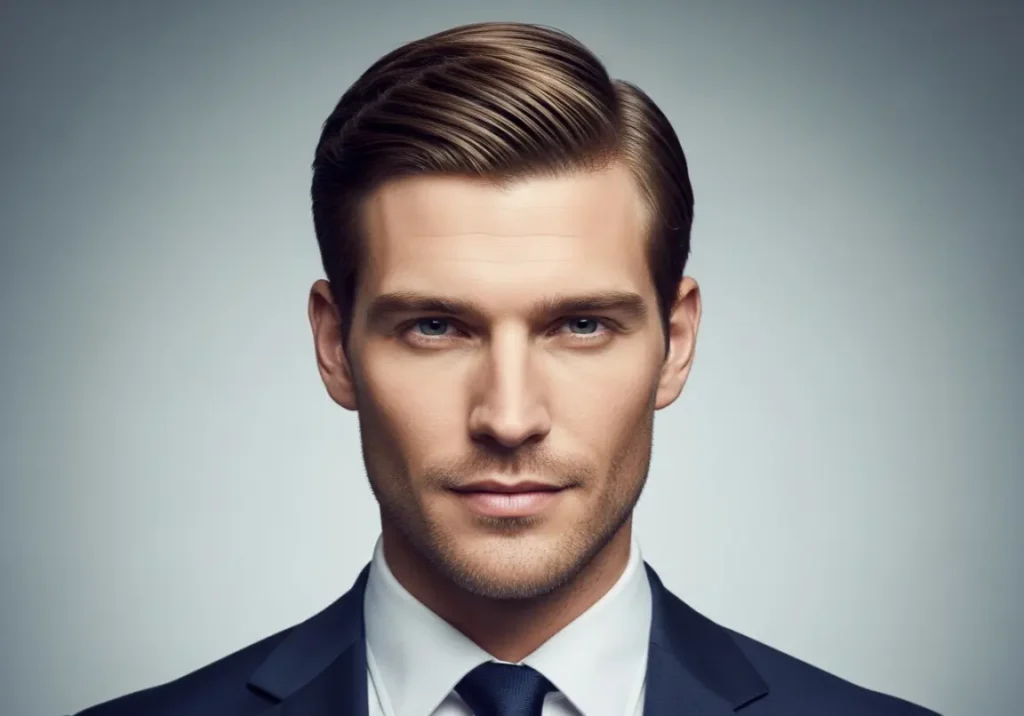
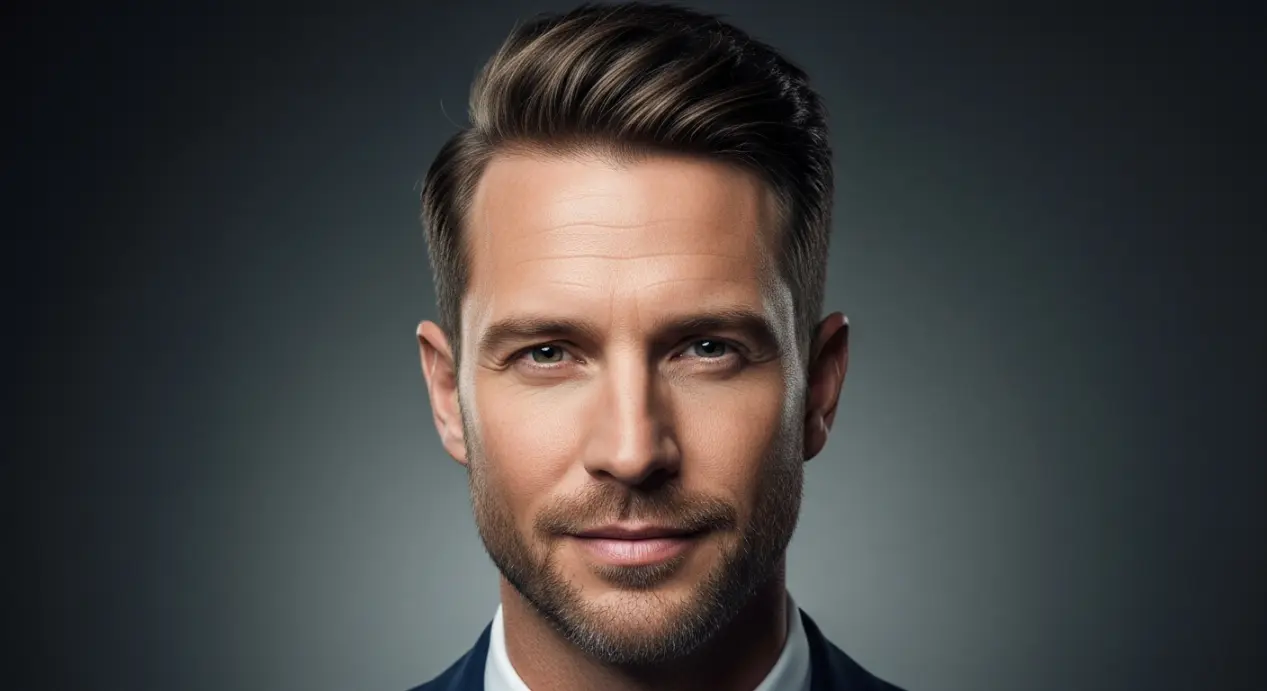
The classic side part remains one of the most sophisticated and universally flattering options for diamond face shapes. This timeless style creates horizontal lines across the forehead, adding perceived width to this narrower area of your face.
The cut typically features shorter sides with gradually increasing length on top, allowing for a clean part to be created on either side. The hair is then combed across, adding volume and coverage to the forehead region. This horizontal movement counterbalances the vertical angularity of the diamond face.
For optimal results, ask your barber for approximately three to four inches of length on top with tapered or faded sides. The sides should not be too short, as extremely short sides can make cheekbones appear even more prominent. A gradual taper starting at a medium length provides better proportional balance.
Styling requires a quality pomade or styling cream. Apply the product to damp hair, create your part with a comb, and direct the hair across the forehead. The finished look should appear polished but not overly stiff. This versatile style works equally well in professional environments and casual settings.
Textured Crop
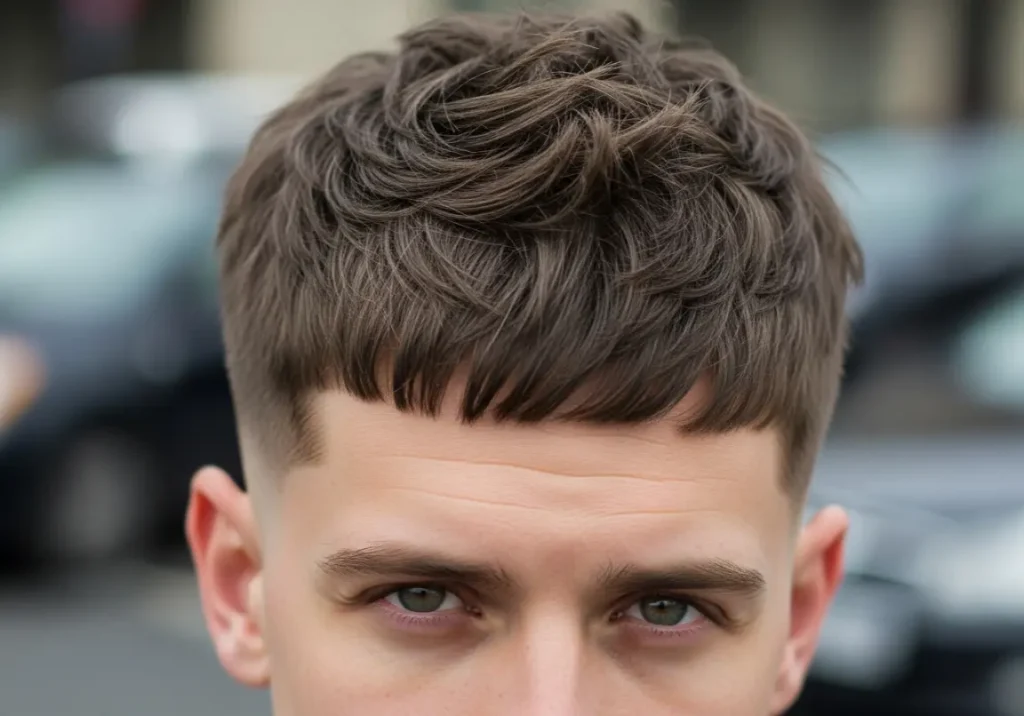
The textured crop has surged in popularity and offers diamond-faced men an excellent modern option. This cut features short to medium length on top with textured, piece-y layers that create natural movement and dimension.
The beauty of the textured crop lies in its ability to add width to the forehead through strategic layering and forward-directed styling. The fringe area typically sits slightly longer, creating a subtle horizontal line across the upper face. The sides remain short but not aggressively so, maintaining overall facial balance.
This haircut works exceptionally well for men with straight to wavy hair textures. The natural texture of your hair becomes a feature rather than something to fight against. The randomized, non-uniform texture prevents the severe geometric look that can occur with more structured styles on angular faces.
Styling is refreshingly simple. Apply a small amount of sea salt spray or texture paste to towel-dried hair. Use your fingers to rough up the hair, directing some pieces forward toward the forehead. The goal is controlled messiness that looks effortless. This low-maintenance approach makes the textured crop ideal for men with active lifestyles.
Modern Quiff
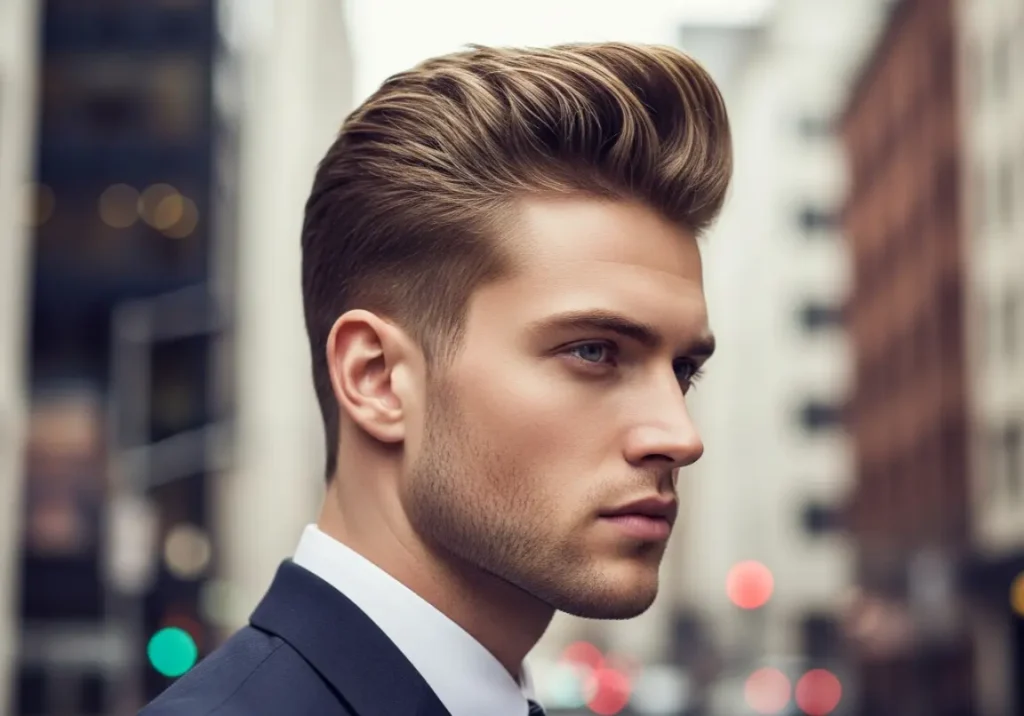
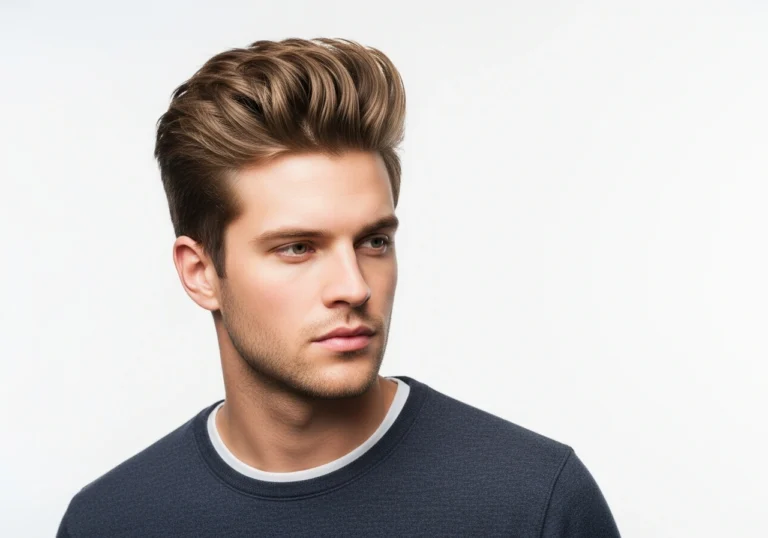
The modern quiff combines classic sensibility with contemporary styling, creating one of the most flattering options for diamond face shapes. This style adds significant height and volume to the front hairline, effectively broadening the appearance of the narrow forehead.
Unlike traditional quiffs that can appear overly formal, the modern interpretation maintains a more relaxed, lived-in quality. The hair gradually increases in length from back to front, with the longest sections at the forehead swept upward and slightly back. The sides feature a medium fade or taper that prevents excessive width at the cheekbone area.
The quiff works with various hair types but performs best with hair that has natural body and thickness. Men with finer hair may need additional product and technique to achieve the desired volume. The cut should leave approximately four to six inches of length at the front, gradually decreasing toward the crown.
Creating the perfect quiff requires blow-drying technique. Apply a volumizing mousse or heat protectant to damp hair. Using a round brush, blow-dry the front section upward and back, creating lift at the roots. Once dry, apply a medium-hold styling cream or pomade to shape and define the quiff. The finished style should have height without appearing overly stiff or unnatural.
Messy Fringe
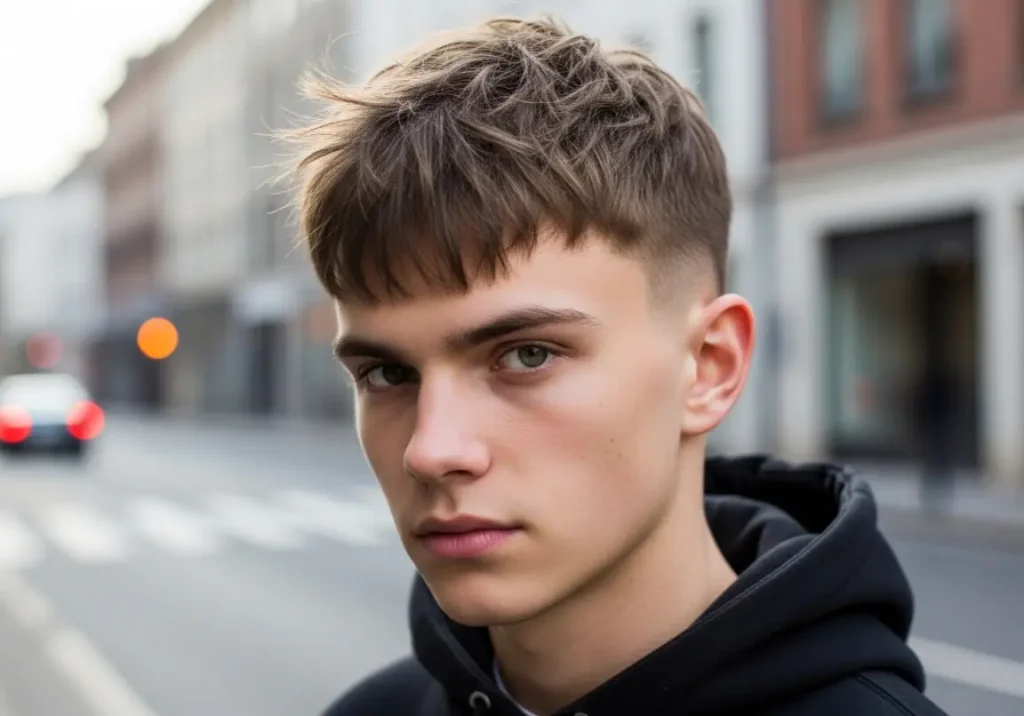
The messy fringe offers a youthful, contemporary aesthetic while providing excellent facial balance for diamond shapes. This style features medium-length hair on top with a deliberately disheveled fringe that falls forward across the forehead.
The strategic advantage of this cut lies in how the forward-moving hair creates horizontal visual interest across the narrow forehead region. Rather than exposing the full forehead and emphasizing its narrowness, the messy fringe partially obscures it while adding perceived width.
The sides should be kept relatively short with a subtle fade or taper. Avoid skin-tight sides that would create too much contrast with the textured top. The connection between the top and sides should feel cohesive rather than starkly divided.
This haircut embraces natural texture and intentional imperfection. Hair with natural wave or slight curl performs particularly well with this style. Even straight hair can achieve the desired effect with proper product application and styling technique.
For styling, work a texturizing paste through damp hair, focusing on the mid-lengths and ends. Allow hair to air-dry or use a diffuser for enhanced texture. Once dry, use your fingers to piece out sections and direct the fringe forward and slightly to one side. The finish should appear casual and unstudied.
Slicked Back Undercut
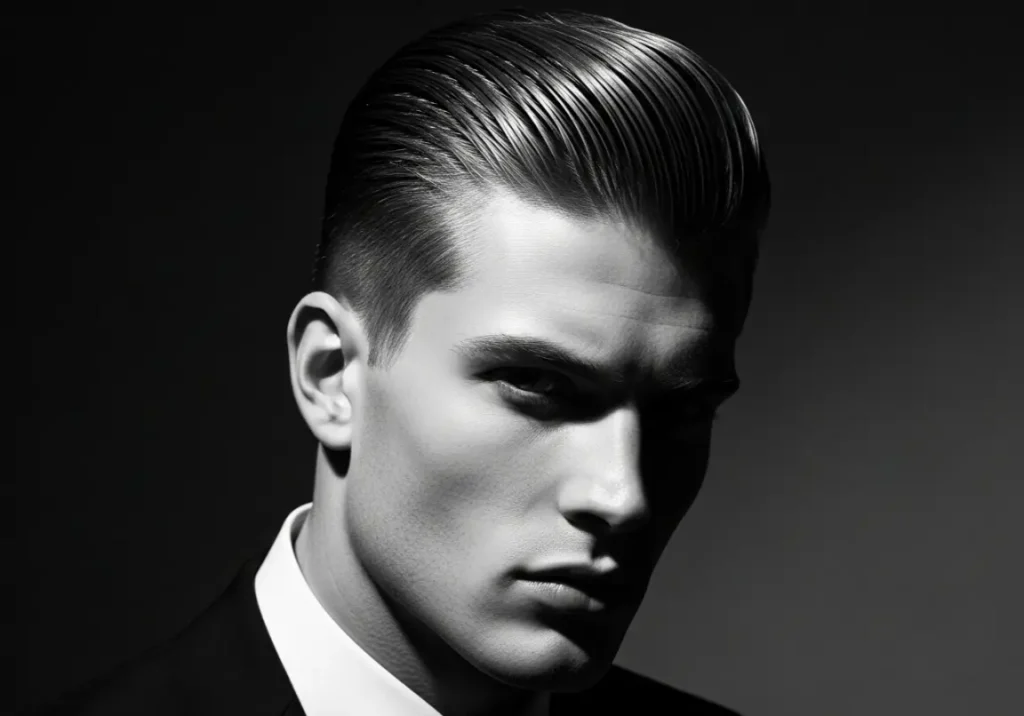
The slicked back undercut creates a bold, confident statement while maintaining excellent proportional balance for diamond faces. This high-contrast style features substantial length on top swept backward with significantly shorter or even shaved sides.
The backward direction of the hair serves multiple purposes for diamond face shapes. First, it adds visual length to the face, which can help balance the width of the cheekbones. Second, when styled with slight volume, it adds breadth to the upper face region. The clean, defined sides prevent additional bulk at the temples.
This cut requires commitment, as the contrast between top and sides is dramatic. The top section should maintain at least four to five inches of length to achieve proper backward flow. The sides can be clipped very short or completely shaved, depending on personal preference and professional requirements.
Achieving the sleek, polished look requires the right products and technique. Start with damp hair and apply a strong-hold pomade or gel. Use a fine-toothed comb to direct all hair straight back from the hairline. For added height, create slight elevation at the front before combing back. The finished style should appear smooth and controlled with a sophisticated sheen.
Layered Medium Length

Medium-length haircuts offer tremendous versatility for diamond-faced men, particularly when incorporating strategic layering. This approach allows hair to sit around the ears and collar while maintaining shape and movement through layered cutting techniques.
The layers serve an important function beyond aesthetic appeal. They create dimension and prevent the hair from lying flat against the head, which could emphasize facial angularity. Internal layering adds body without creating excessive width, while longer layers around the face can partially obscure the widest points of the cheekbones.
This style works beautifully with wavy or curly hair textures, as the natural movement enhances the layered structure. Straight hair can also achieve excellent results but may require more styling effort to maintain volume and prevent flatness.
Ask your stylist for layers that begin around the middle of the hair shaft rather than close to the roots. Face-framing layers should be slightly longer to create a softening effect around the cheekbones. The overall length can vary based on personal preference, typically ranging from chin-length to shoulder-grazing.
Styling medium-length layered hair involves enhancing natural texture. Apply a leave-in conditioner and volumizing spray to damp hair. Scrunch sections while blow-drying or allow to air-dry for a more natural finish. Once dry, work a small amount of styling cream through the layers to define and separate. The goal is touchable movement rather than stiff hold.
Angular Fringe
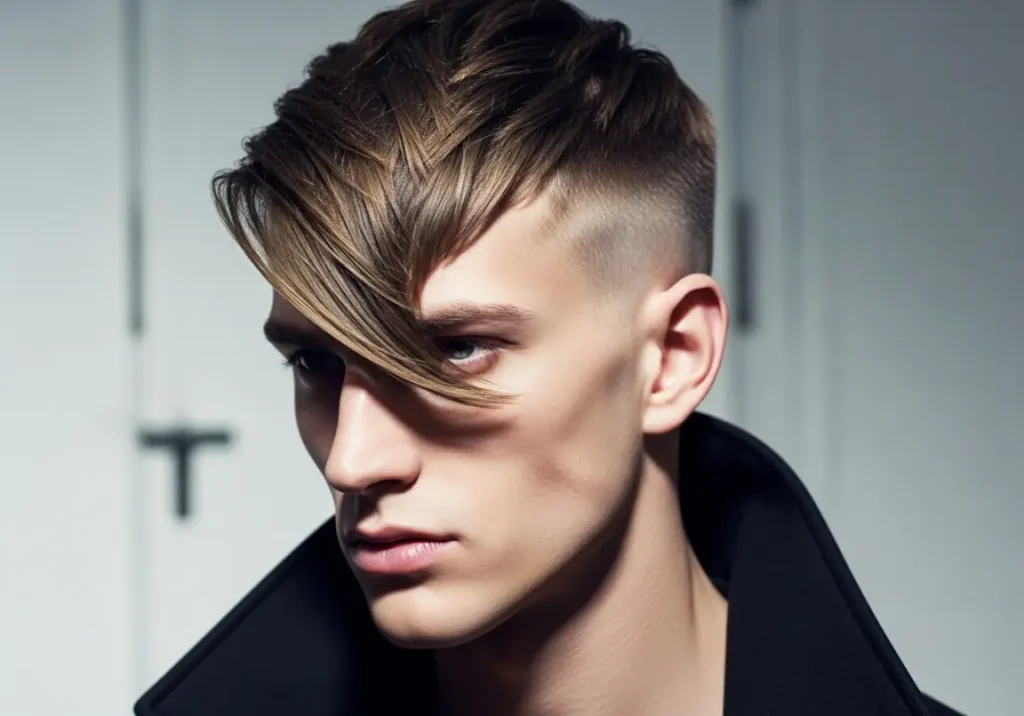
The angular fringe represents a more fashion-forward approach that works exceptionally well for diamond face shapes. This style features a diagonal or asymmetric fringe that cuts across the forehead at an angle rather than falling straight across.
The angular orientation creates dynamic visual interest that draws attention away from the geometric precision of the diamond face. The diagonal line adds perceived width to the forehead while the asymmetry introduces an element of softness to counter facial angularity.
This cut typically maintains medium length on top with the fringe falling across one side of the forehead. The opposite side may be swept back or to the side, creating an intentional imbalance that paradoxically achieves overall facial balance. The sides remain fairly short with a gradual taper.
Styling the angular fringe requires directing the hair forward and across during the blow-drying process. Apply a heat protectant and volumizing product to damp hair. Using a paddle brush or your hands, direct the fringe across the forehead at your desired angle while applying heat. Once dry, use a light-hold styling cream to define the pieces and maintain the angular direction throughout the day.
Short Pompadour
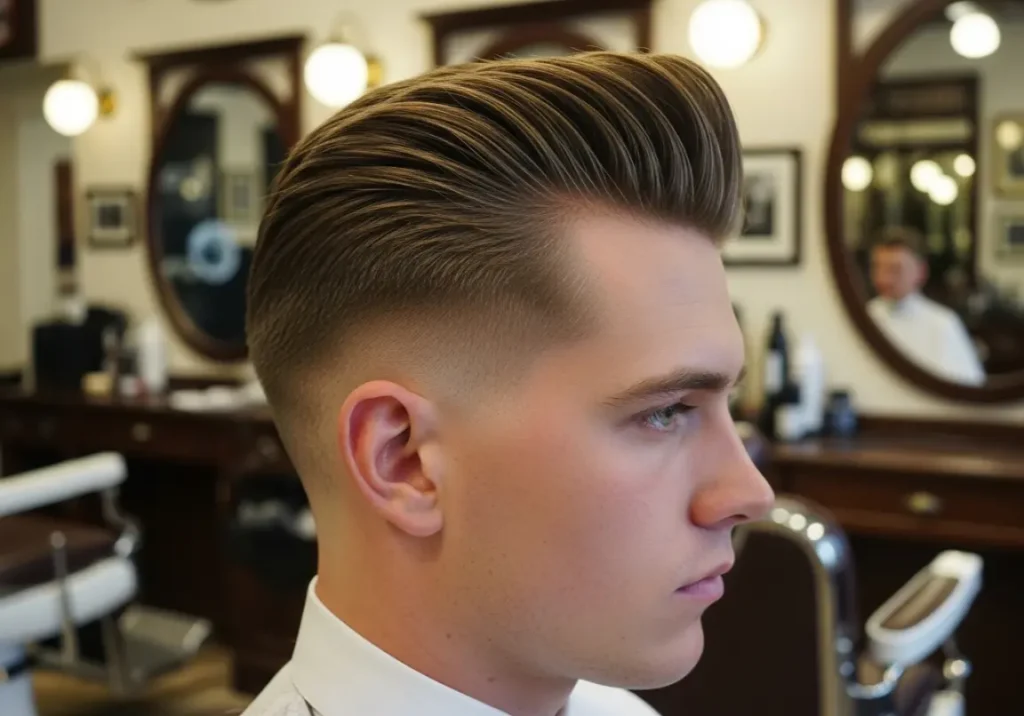
The short pompadour offers the elevation and frontal emphasis of a traditional pompadour while maintaining a more conservative, wearable length. This adaptation makes it suitable for various professional environments while still providing excellent facial balance.
The defining characteristic is the upward and slightly backward sweep of hair at the front hairline. This creates vertical height that adds perceived width to the narrow forehead of diamond faces. The sides feature a clean taper or fade that prevents bulk at the temples.
Unlike the towering pompadours of previous eras, the modern short version maintains modest height of one to two inches. This proportional approach prevents the style from overwhelming the face while still achieving the desired balancing effect. The hair gradually decreases in length from front to back, creating a natural slope.
Creating a short pompadour begins with the right foundation cut. The front section should maintain approximately three to four inches of length. Apply a volumizing mousse to damp hair and blow-dry the front section upward using a round brush. The airflow should direct from roots to ends, creating lift. Once dry, apply a medium-hold pomade and use a comb to shape the pompadour, sweeping it up and slightly back. The sides should lie smooth and clean.
Textured Quiff
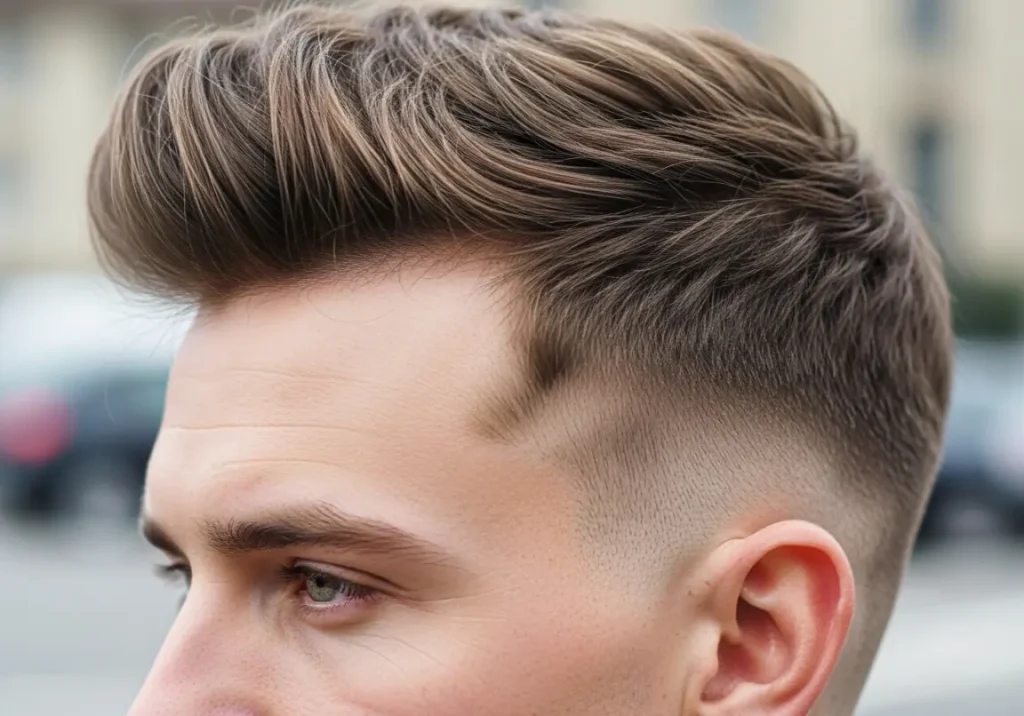
The textured quiff combines the height and frontal emphasis of a classic quiff with the modern appeal of piece-y, separated texture. This hybrid approach delivers excellent results for diamond face shapes by adding width to the forehead while maintaining contemporary style.
The cut features graduated length from back to front, with the longest sections at the hairline. However, rather than being cut blunt, the ends receive point-cutting or texturizing techniques that create separation and movement. The sides maintain a medium length with subtle tapering.
This style works across various hair types but shines particularly with hair that has natural thickness and body. The texture prevents the quiff from appearing too formal or rigid, making it appropriate for both professional and casual contexts.
Styling involves creating height while maintaining texture and separation. Apply a volumizing spray to damp hair and blow-dry the front sections upward and slightly back, using your fingers rather than a brush to maintain texture. Once dry, work a texturizing paste through the hair, focusing on the ends. Use your fingers to lift and separate sections, creating defined pieces that move independently. The finished style should have dimension and depth with visible texture throughout.
Wavy Side Swept

For men blessed with natural wave, the side-swept style capitalizes on this texture while creating ideal balance for diamond faces. This approach allows the natural wave pattern to fall diagonally across the face, adding width to the forehead and softening the angular cheekbones.
The cut maintains medium length on top, typically three to five inches, allowing the waves to develop their natural S-curve pattern. The sides are kept shorter but not extremely so, with enough length to blend smoothly into the top section. Layering throughout prevents the hair from becoming too bulky while enhancing the wave pattern.
The side-swept direction is crucial for facial balance. The hair parts on one side and sweeps across toward the opposite side, creating horizontal movement across the forehead. This counteracts the vertical angularity of the diamond face and adds softness to the overall appearance.
Styling wavy hair requires working with its natural tendencies rather than against them. Apply a curl-enhancing cream or mousse to wet hair. Create your desired part and direct the hair across using your fingers. Allow to air-dry or use a diffuser attachment to enhance the wave pattern without creating frizz. Once dry, apply a small amount of lightweight styling cream to define waves and eliminate any flyaways. Avoid brushing or combing dry wavy hair, as this disrupts the wave pattern and creates frizz.
Crew Cut with Texture

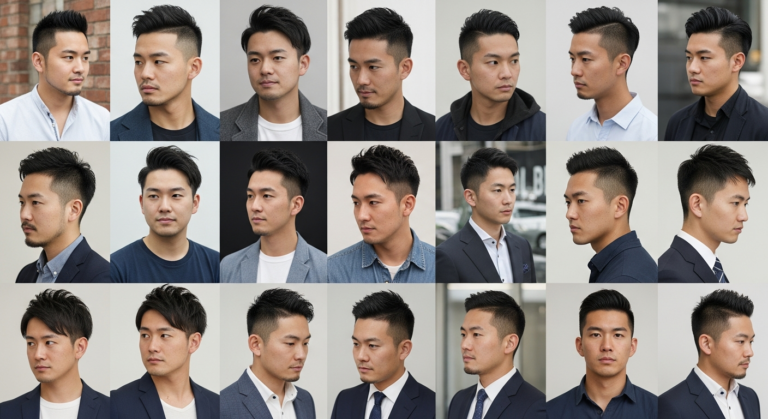
The crew cut represents a classic, low-maintenance option that can be adapted for diamond face shapes through strategic texturing. While traditional crew cuts feature uniform shortness, the textured variation incorporates slight length differences and piece-y separation.
This modern take on the crew cut maintains very short sides with slightly longer length on top, typically one to two inches. The top receives texturizing techniques during cutting, creating separation between hair shafts. This prevents the solid, helmet-like appearance that can emphasize facial angularity.
The beauty of this cut lies in its simplicity and ease of maintenance. It requires minimal styling time while still looking intentionally crafted. The short length keeps the style from adding excessive volume anywhere on the face, while the texture creates subtle visual interest.
For men with active lifestyles or those who prefer minimal grooming routines, this represents an ideal choice. The cut looks appropriate in virtually any setting and requires trimming only every four to six weeks to maintain its shape.
Styling requires just a small amount of matte paste or clay. Apply to dry or slightly damp hair and work through with your fingers, creating subtle texture and separation on top. The entire process takes less than a minute. For an even simpler approach, allow hair to dry naturally after washing for an effortless, barely-styled appearance.
Styling Products and Maintenance
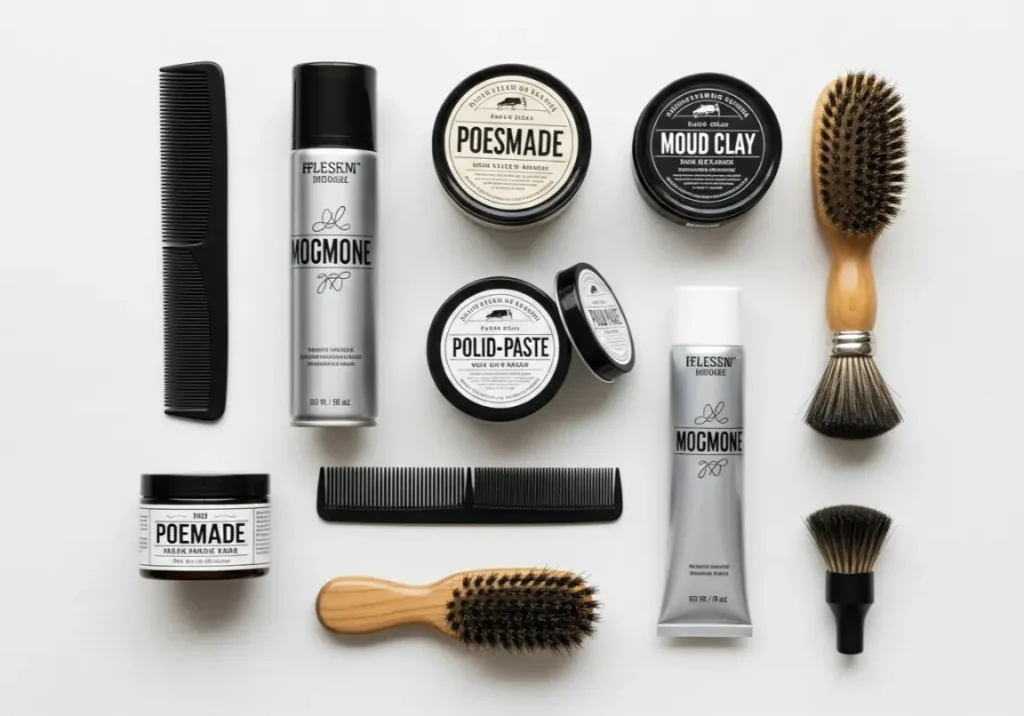
Selecting appropriate styling products significantly impacts how well these haircuts perform for your diamond face shape. The product choice should align with your specific cut, hair texture, and desired finish.
For styles requiring hold with shine, such as slicked-back looks or classic pompadours, choose a traditional pomade or gel. These provide strong hold and create a polished, reflective finish. Water-based formulas offer easier washing and restyling throughout the day.
Matte-finish products like clay, paste, or putty work best for textured, contemporary styles. These provide hold and separation without shine, creating a more natural, modern appearance. They work particularly well for shorter to medium-length cuts where piece-y definition is desired.
Volumizing products serve an important role for diamond faces, as they help create breadth at the forehead. Mousse, volumizing spray, and root-lift products applied before blow-drying can dramatically increase the height and fullness of your style.
Regular maintenance ensures your chosen haircut continues to flatter your face shape. Most styles require professional trimming every three to five weeks, depending on hair growth rate and style precision. Communicate clearly with your barber or stylist about maintaining the specific proportions that balance your facial features.
Between cuts, proper hair care maintains optimal condition and manageability. Use a quality shampoo and conditioner appropriate for your hair type. Avoid washing daily if possible, as this can strip natural oils and make hair more difficult to style. Most men achieve best results washing every two to three days.
Conclusion
The diamond face shape provides a strong foundation for numerous flattering haircut options. By understanding the fundamental principle of adding width to the narrower forehead and jawline while controlling volume at the temples, you can select cuts that enhance your natural features and create proportional harmony.
The eleven haircuts explored in this guide represent diverse approaches to achieving facial balance. From classic elegance to contemporary edge, options exist for every personal style preference and lifestyle requirement. The key lies in identifying which characteristics resonate with your individual aesthetic and practical needs.
Working with a skilled barber or stylist who understands face shape theory will help you achieve optimal results. Bring reference photos and communicate clearly about the specific elements you want to incorporate. Be open to professional recommendations, as experienced stylists often identify options you might not have considered.
Remember that the best haircut is one that not only flatters your face shape but also aligns with your hair texture, maintenance willingness, and personal confidence. When you feel good about your appearance, that confidence radiates in every aspect of your life. Take the time to experiment, refine your approach, and discover the haircut that makes you look and feel your absolute best.
Frequently Asked Questions
What is the main characteristic of a diamond face shape?
A diamond face shape features prominent, high cheekbones as the widest point of the face, with a narrow forehead and a tapered chin. This creates an angular, geometric appearance. The face is widest at the cheekbones and narrower at both the top and bottom, forming a diamond-like outline when viewed straight-on.
Should men with diamond faces avoid short hairstyles completely?
No, men with diamond faces can absolutely wear short hairstyles. The key is ensuring the short cut incorporates texture or strategic length placement that adds visual width to the forehead. A textured crew cut or short crop with a forward fringe works well. Avoid extremely short, uniform cuts that expose the entire face without any balancing elements.
How do I know if my face is actually diamond-shaped?
Measure your face at the widest points of your forehead, cheekbones, and jawline, then measure the length from hairline to chin. If your cheekbones are the widest measurement, your forehead and jawline are similar in width and narrower than your cheekbones, and your face length is greater than the width, you likely have a diamond face shape.
Can I have a beard with a diamond face shape?
Yes, facial hair can complement a diamond face shape beautifully. A fuller beard along the jawline adds width to the lower face, creating better balance with the prominent cheekbones. Avoid overly sculpted or narrow beard styles that emphasize the face’s natural angularity. A medium-length, well-groomed beard that adds dimension to the jaw area works best.
How often should I get my hair cut to maintain these styles?
Most of these haircuts require professional maintenance every three to five weeks to preserve their shape and proportions. Styles with faded or tapered sides need more frequent attention, typically every three weeks. Longer, layered styles may extend to five or six weeks between cuts. Consistent maintenance ensures your haircut continues to flatter your face shape effectively.
You may also like this post: 15 Gorgeous Curly Butterfly Haircut Styles for Men with Natural Curls