Long Hair Layers | Best Layered Haircuts for Every Face Shape
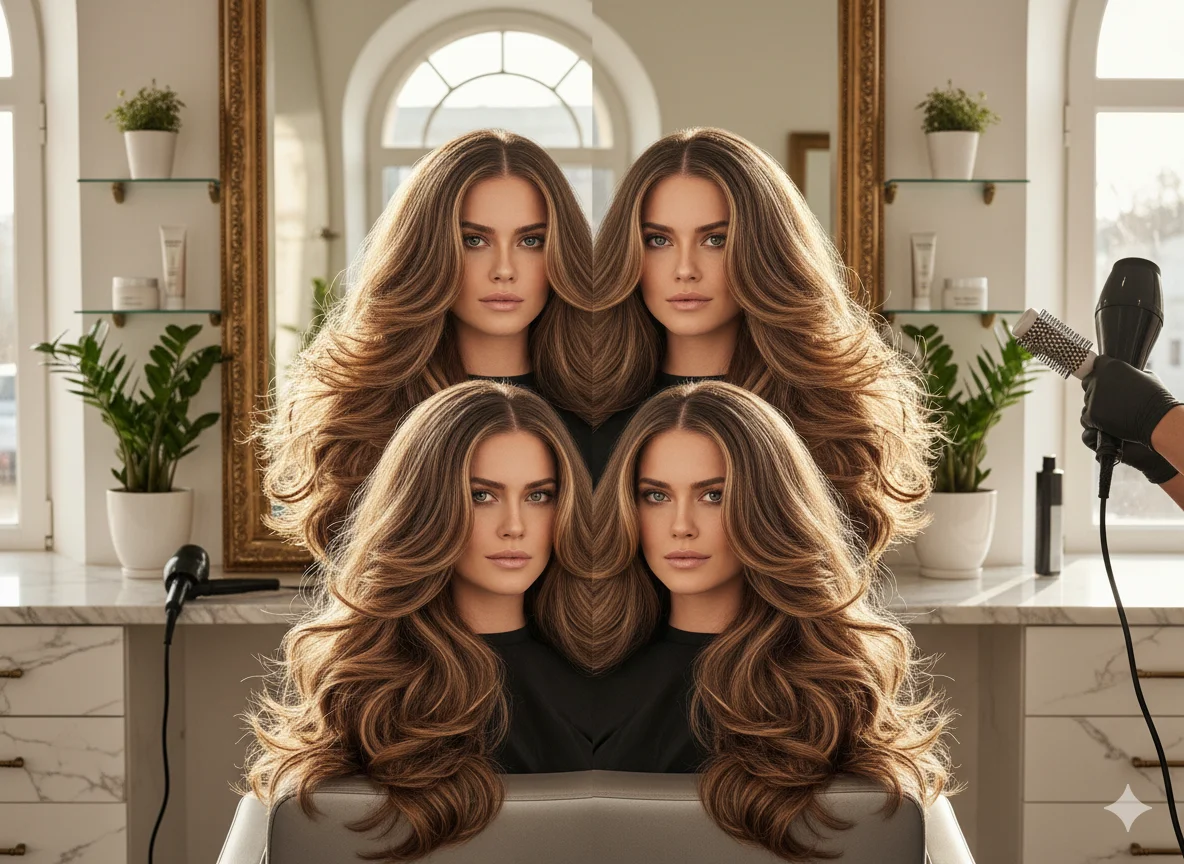
The power of transformation lies not in cutting off your precious length but in strategically adding dimension and movement through expertly placed layers. Long hair layers represent the perfect marriage between keeping the locks you love and achieving that coveted salon-fresh appearance that makes heads turn. When done correctly, layered haircuts can completely revolutionize your look without requiring you to sacrifice those inches you have worked so hard to grow.
Your face shape serves as the blueprint for determining which layer placement will enhance your natural beauty most effectively. Understanding this relationship empowers you to walk into your next salon visit armed with knowledge rather than just hoping for the best. Whether blessed with thick hair that needs weight removal or fine hair craving volume, the strategic art of layering addresses your unique concerns while creating a customized style that celebrates your individual beauty.
Understanding the Magic Behind Long Hair Layers
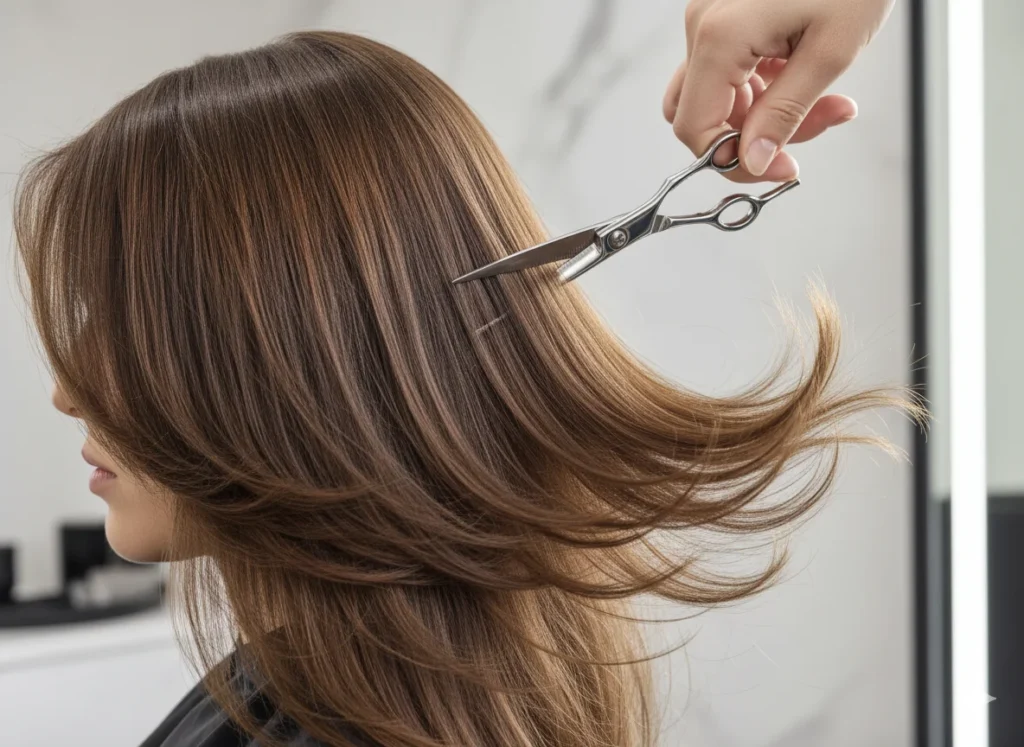
Layered haircuts involve cutting hair at different lengths throughout the head to create texture, dimension, and movement. Unlike blunt cuts where every strand falls at an identical length, layers feature shorter pieces strategically placed at various points while maintaining longer lengths throughout. This cascading effect prevents hair from appearing heavy or lifeless while adding that desirable flowing quality that catches light beautifully.
The technique transforms flat, one-dimensional hair into a multi-faceted masterpiece. For women with thick hair, layers remove excessive bulk that weighs down styles and makes daily styling feel exhausting. The right hair stylist knows exactly where to place layers to eliminate heaviness without creating choppy, disconnected sections. Conversely, those with fine hair benefit tremendously from carefully positioned layers that create the illusion of fullness by adding bounce and preventing that flat, stringy appearance that plagues many thin-haired individuals.
Professional hairstylists employ various cutting techniques to achieve different effects. The sliding technique creates seamless, soft transitions between lengths for a polished appearance. Point cutting produces more texture and edginess perfect for contemporary styles. Feathered layers involve a specific cutting angle that creates wispy, airy ends reminiscent of classic styles. Each technique serves a purpose, and your stylist should select methods based on your desired outcome and natural texture.
How Face Shape Influences Your Perfect Layered Cut
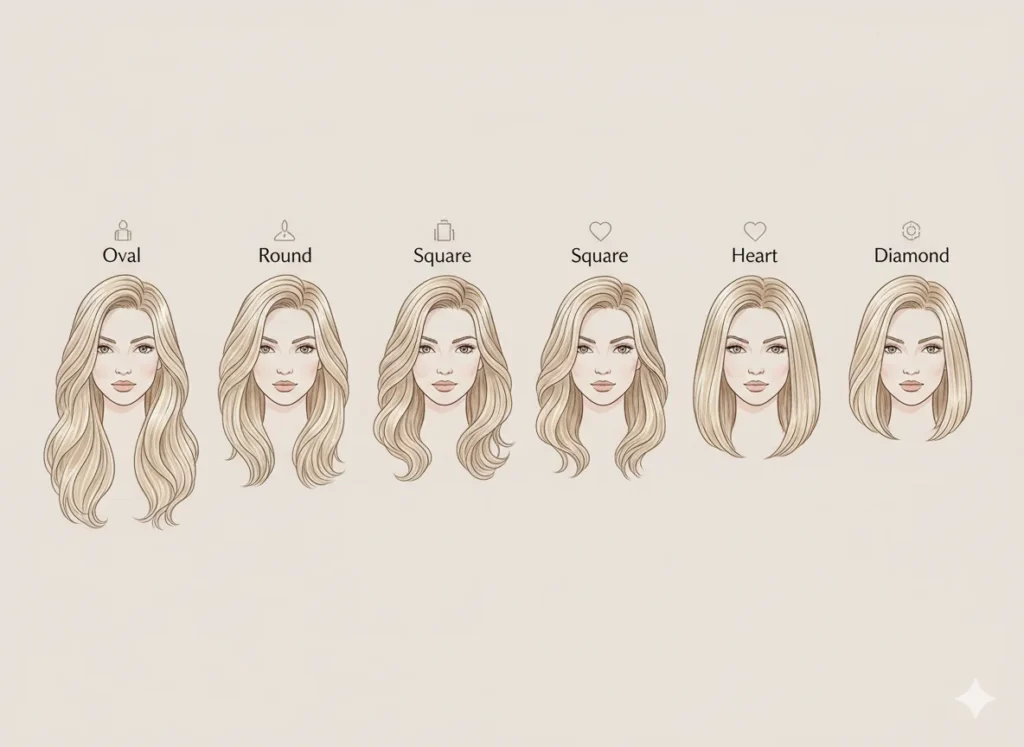
Your face shape dramatically influences which layered haircuts will enhance your features most beautifully. The relationship between hair and facial structure operates on balance and proportion principles. Understanding this connection allows you to make informed choices that either emphasize your best features or create visual harmony where proportions might benefit from adjustment.
The fundamental goal involves creating dimensional effects that flatter rather than compete with your natural bone structure. Oval faces with their naturally balanced proportions accommodate nearly any layering style, making them the most versatile canvas. Round faces featuring soft curves and similar width-to-length measurements benefit from layers creating vertical lines and elongation. Square faces showcasing strong angular jawlines need softening layers adding curves and movement around the face.
Heart-shaped faces characterized by wider foreheads tapering to narrow chins find balance through layers adding volume around the jawline area. Understanding these principles elevates your haircut from merely attractive to strategically flattering, working in harmony with your unique facial architecture rather than against it.
Layered Perfection for Oval Face Shapes
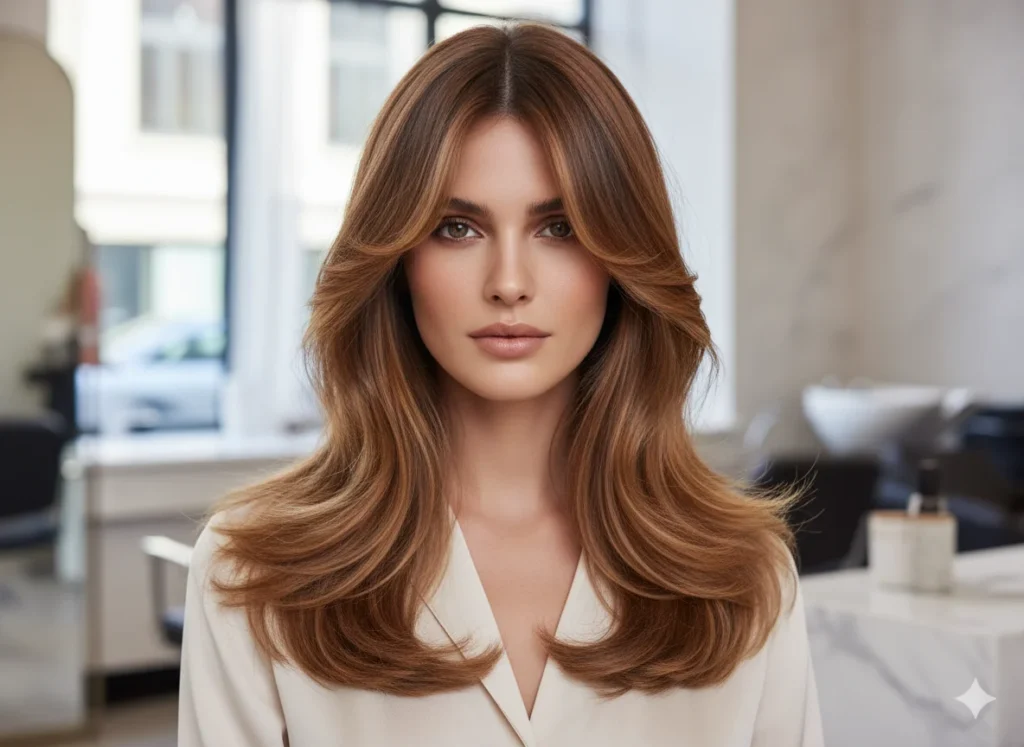
Women with oval face shapes possess the beauty industry’s most coveted facial proportions. This shape features balanced measurements where face length measures approximately one and a half times its width, with gently rounded jawlines and slightly wider foreheads than chins. The natural symmetry provides an ideal foundation for experimentation with various layered haircuts without restrictions that other face shapes encounter.
Long face-framing layers starting around the collarbone and cascading downward create flowing movement that enhances natural balance while adding dimensional appeal. These layers work magnificently whether your hair texture runs straight, wavy, or somewhere in between. For minimal maintenance lovers, subtle layers or invisible layers provide shape and texture without demanding extensive daily styling. These barely-there layers blend seamlessly while preventing the heavy, weighted appearance that sometimes plagues one-length cuts.
Curtain bangs paired with long layers create a romantically flattering frame drawing attention to eyes while maintaining oval face harmony. This combination delivers exceptional results on both straight hair and natural waves, offering styling versatility for various occasions. The secret to maximizing oval face advantages involves avoiding styles hiding or overshadowing the face’s inherent balance. Keep face-framing pieces visible and embrace styles showcasing your naturally proportioned features.
Creating Length with Layers for Round Face Shapes
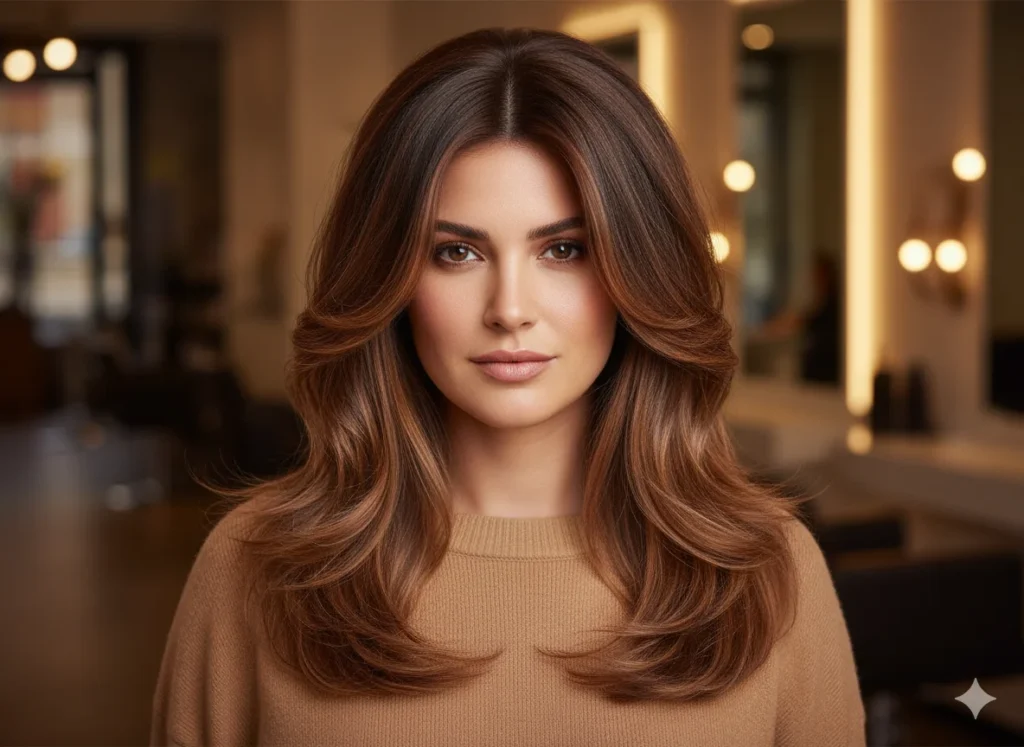
Round faces display beautiful soft curves with full cheeks and gently rounded rather than sharply angled jawlines. Width and length measure nearly equal, creating circular proportions that exude youthful appeal. The primary styling goal involves creating length illusions and adding angles providing definition and structure to soften roundness.
Long layers prove exceptionally flattering when strategically placed below the chin rather than at face level, avoiding roundness accentuation. Face-framing layers sweeping downward create vertical lines visually elongating faces, making them appear more oval-shaped. Pairing these layers with deep side parts rather than center parts further enhances the elongating effect, creating asymmetry that breaks up circular proportions.
Volumizing products applied at the crown create height adding length to round faces. Using a round brush during blow-drying to lift roots upward maximizes this elongating effect beautifully. Avoid heavy, blunt bangs cutting straight across foreheads, as these emphasize width rather than desirable length. Instead, opt for longer, side-swept bangs or curtain bangs creating diagonal lines and adding flattering movement. Strategic layer placement combined with thoughtful styling techniques transforms round faces into beautifully balanced canvases.
Softening Strong Features with Layers for Square Face Shapes
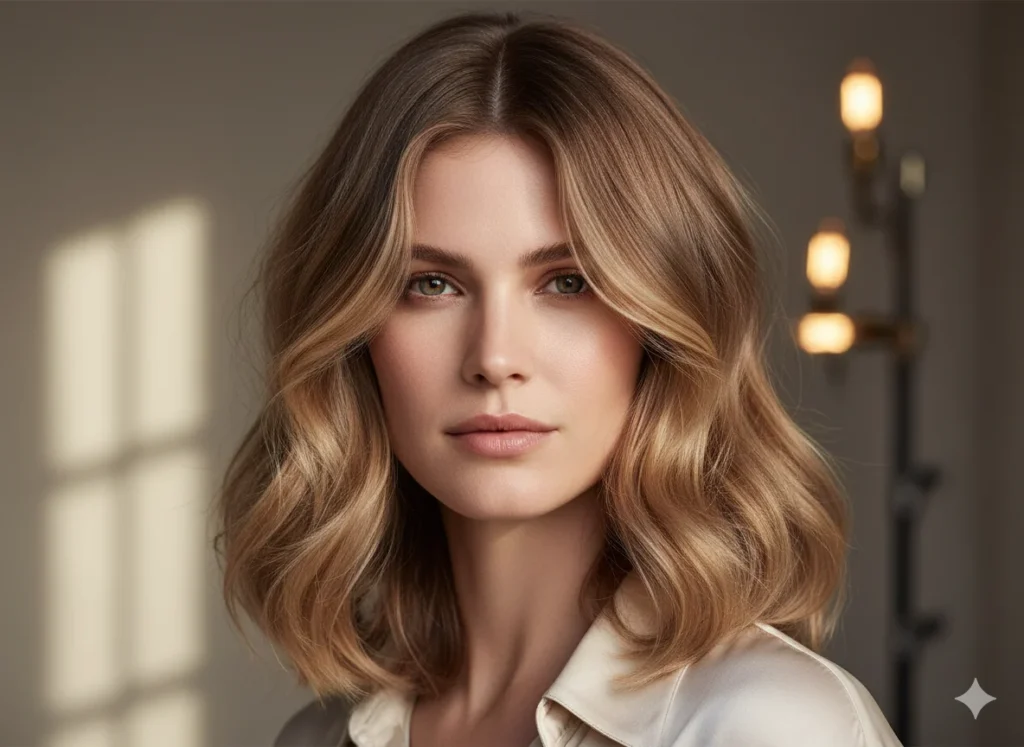
Square faces showcase strength through defined features with angular jawlines, broad foreheads, and relatively equal width and height measurements. This shape exudes confidence and structure, making it naturally striking. The layered haircuts approach focuses on softening angular features while maintaining inherent strength and character that makes square faces so captivating.
Choppy layers work magnificently by introducing curves and movement contrasting beautifully with strong jawlines. These textured, disconnected layers create visual interest preventing hair from appearing too severe or overly structured. Feathered layers around the face add softness through their wispy, airy quality, gently framing angular features without competing against them.
Wavy textures enhance layered cuts on square faces by introducing organic curves balancing geometric facial features. Even if your natural texture runs straight, creating loose waves with a curling iron or overnight braiding techniques adds the softness complementing square face shapes beautifully. Long layers starting around cheekbones and flowing downward create flattering cascades drawing eyes vertically rather than emphasizing width. Avoid blunt, one-length cuts and severe center parts that can emphasize angularity rather than soften it gracefully.
Balancing Proportions with Layers for Heart-Shaped Faces
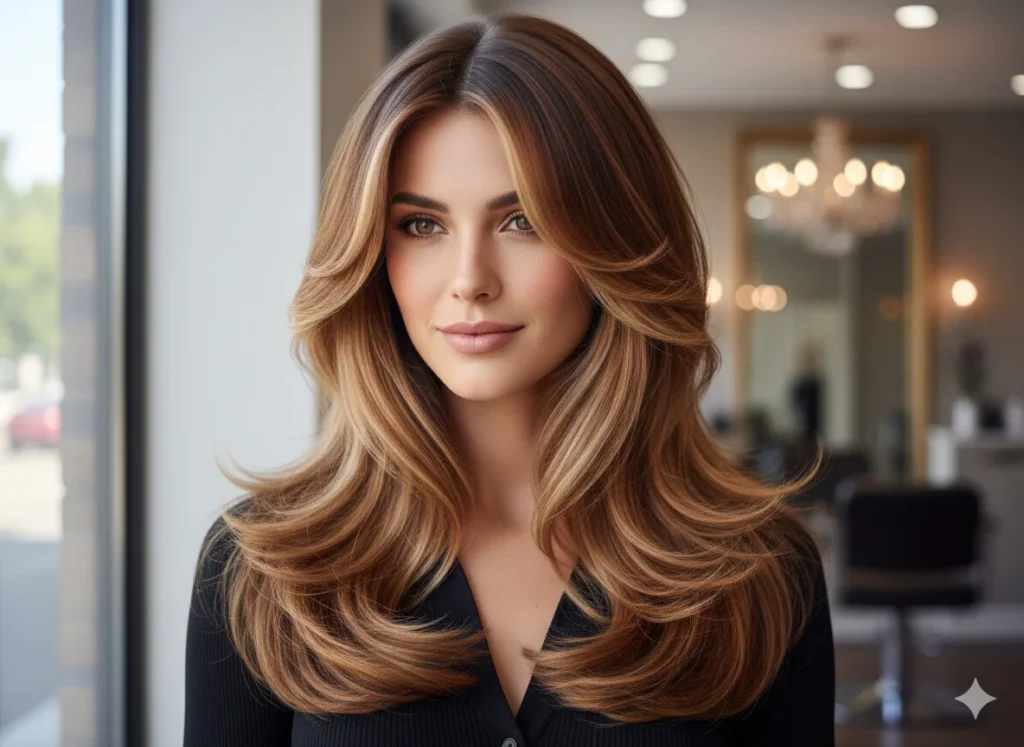
Heart-shaped faces feature wider foreheads and cheekbones tapering down to narrow, often pointed chins. This shape possesses romantic, delicate qualities that layered haircuts can enhance beautifully through strategic placement. The goal involves creating balance between the wider upper face and narrower lower face while highlighting gorgeous cheekbones many heart-shaped individuals possess.
Face-framing layers starting around cheekbones and extending downward add width and volume around the jawline area, creating visual balance with broader foreheads. This technique prevents faces from appearing top-heavy while emphasizing natural bone structure advantages. Curtain bangs work exceptionally well, sitting around cheekbone tops to draw attention to this attractive feature while softening forehead width.
Long layers with added bounce and volume around the jaw area through styling techniques create fullness balancing heart-shaped proportions. Using a blow-dryer with a round brush to curl layers outward around the lower face achieves this effect beautifully. Avoid severe pulled-back styles without face-framing pieces left out, as these can emphasize width differences between forehead and chin. Soft, flowing layers adding movement around the entire face create the most harmonious looks for heart-shaped beauties.
Choosing Layers Based on Hair Texture and Density
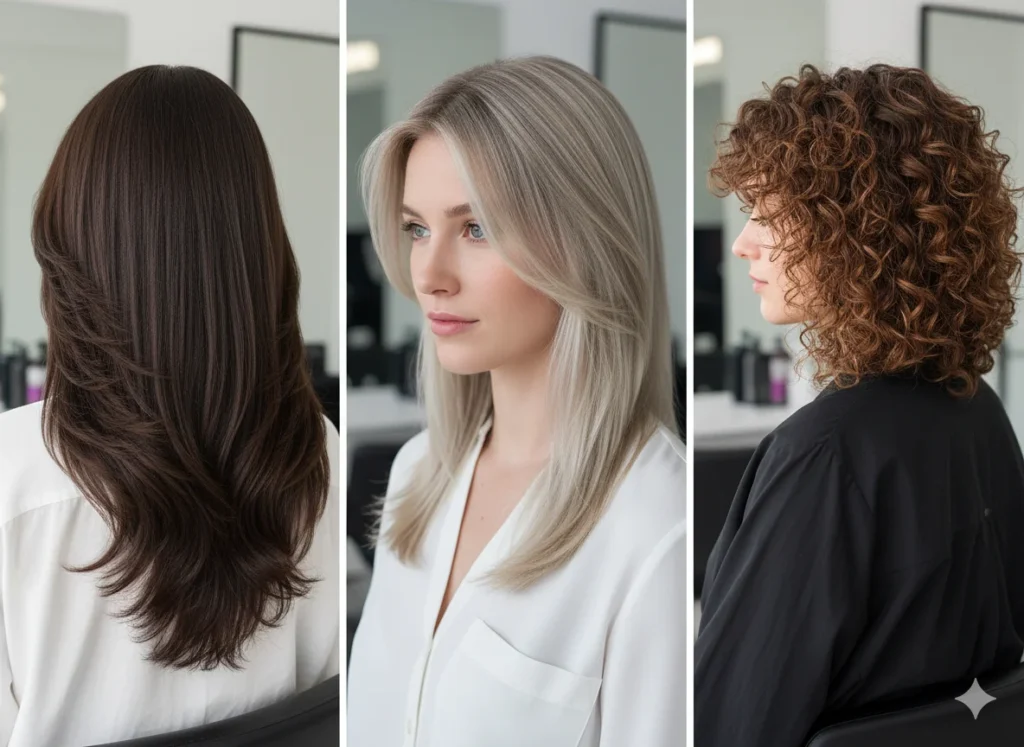
Beyond face shape considerations, your hair texture and hair density dramatically influence which layered style delivers optimal results. Thick hair presents different challenges and opportunities compared to fine hair, requiring tailored approaches achieving beautiful, manageable outcomes.
Women with thick, dense hair often struggle with excessive weight making hair feel heavy and look flat despite abundant volume. Long layers strategically placed throughout remove bulk without sacrificing overall length or creating thin, straggly ends. V-shaped layering works particularly well, creating rounded shapes at the back while maintaining fullness. U-shaped cuts create more dramatic tapering, perfect for those desiring significant weight removal.
Fine hair requires gentler layering approaches. Too many layers or layers cut too short make fine hair appear thin and stringy rather than full and voluminous. Subtle layers or invisible layers add movement and prevent flatness without compromising thickness appearance. Blunt cuts with minimal layering near ends preserve density illusions while face-framing layers around front add dimension where it matters most.
Curly hair and wavy hair benefit from layers allowing natural curl patterns to form beautiful, bouncy shapes. Dry cutting techniques where stylists cut curly hair while dry rather than wet ensure layers fall naturally with curl patterns. This prevents the dreaded triangle shape occurring when curly hair receives incorrect layering.
Essential Styling Products and Techniques for Layered Hair
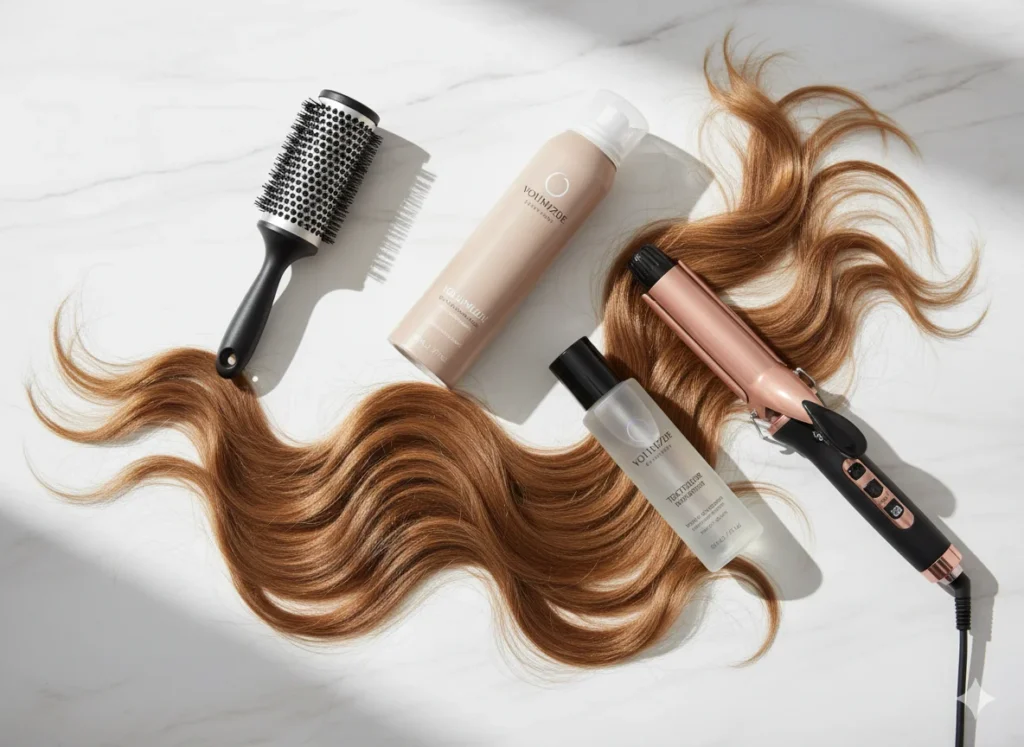
Maximizing your layered cut beauty requires understanding which styling products and techniques bring out the best in your specific style. The right products transform good layers into magazine-worthy tresses while simplifying daily routines.
Volumizing mousse applied to damp hair before blow-drying creates lift and body making layers appear more pronounced and dynamic. Focus application at roots where volume matters most, working product through mid-lengths with fingers. Texturizing spray enhances layer separation and creates that coveted lived-in style looking effortlessly chic. These products work particularly well on fine hair needing extra grip and fullness.
Heat protectant products prove essential when using hot tools like blow-dryers, curling irons, or straighteners. Protecting hair from heat damage maintains hair health and prevents split ends that make layered cuts appear ragged and unkempt. Apply heat protectant to damp hair before any heat styling for maximum protection.
A quality round brush becomes your best friend when styling layered hair. The barrel size you choose depends on desired results with larger barrels creating loose, flowing waves while smaller barrels produce tighter curls and more volume. Use the round brush during blow-drying to shape layers, curling ends under for polished finishes or flipping them outward for playful, retro vibes.
Maintaining Your Layered Cut Between Salon Visits
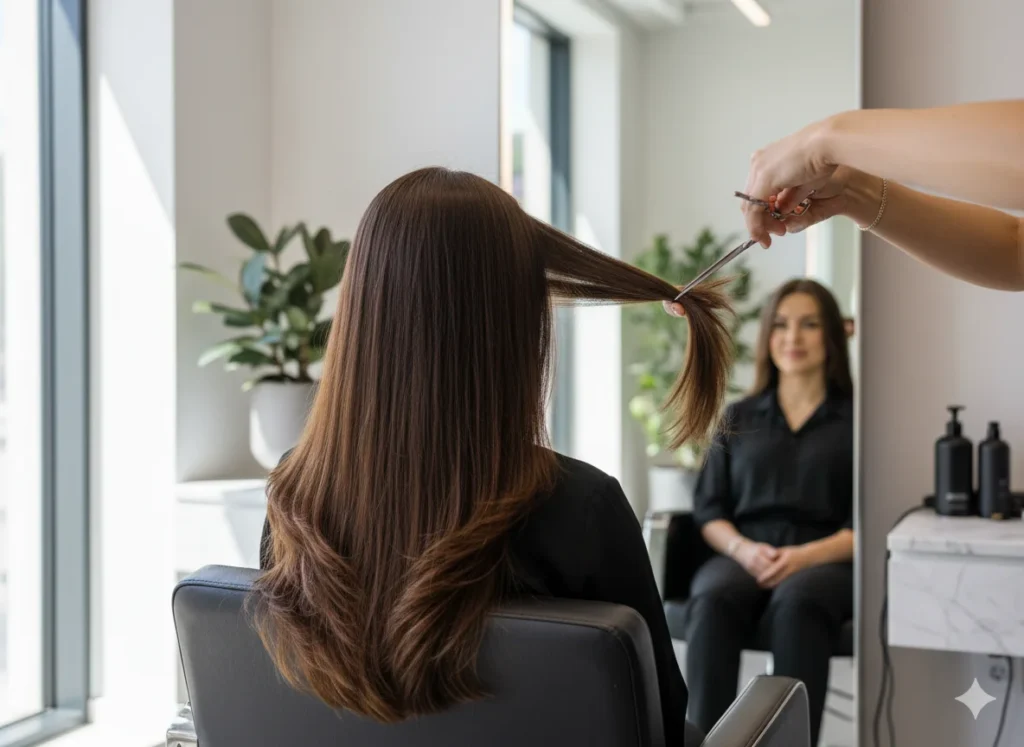
The longevity and continued beauty of your layered haircut depend heavily on proper maintenance and regular upkeep. Understanding how to care for layers ensures they remain fresh, healthy, and flattering as they grow out.
Regular trims every six to eight weeks maintain layer integrity and prevent split ends from traveling up the hair shaft. While this might seem counterintuitive when growing hair long, these small trims actually promote healthier growth by removing damaged ends that would otherwise break off. Communicate clearly with your hair stylist about maintaining your current layer pattern while preserving length.
Deep conditioning treatments once weekly keep layers looking lustrous and healthy. Focus conditioner on mid-lengths and ends where layers tend to dry out most quickly, avoiding roots that can become greasy. Natural texture maintenance involves using products specifically formulated for your hair type, whether straight, wavy, or curly.
Protect layers during sleep by using silk or satin pillowcases reducing friction that causes frizz and breakage. For longer layers, consider loose braids or low ponytails preventing tangling while maintaining movement and preventing creasing. Avoid tight elastics that can damage hair and create awkward bends in your layers.
Seasonal Styling Adaptations for Long Layers
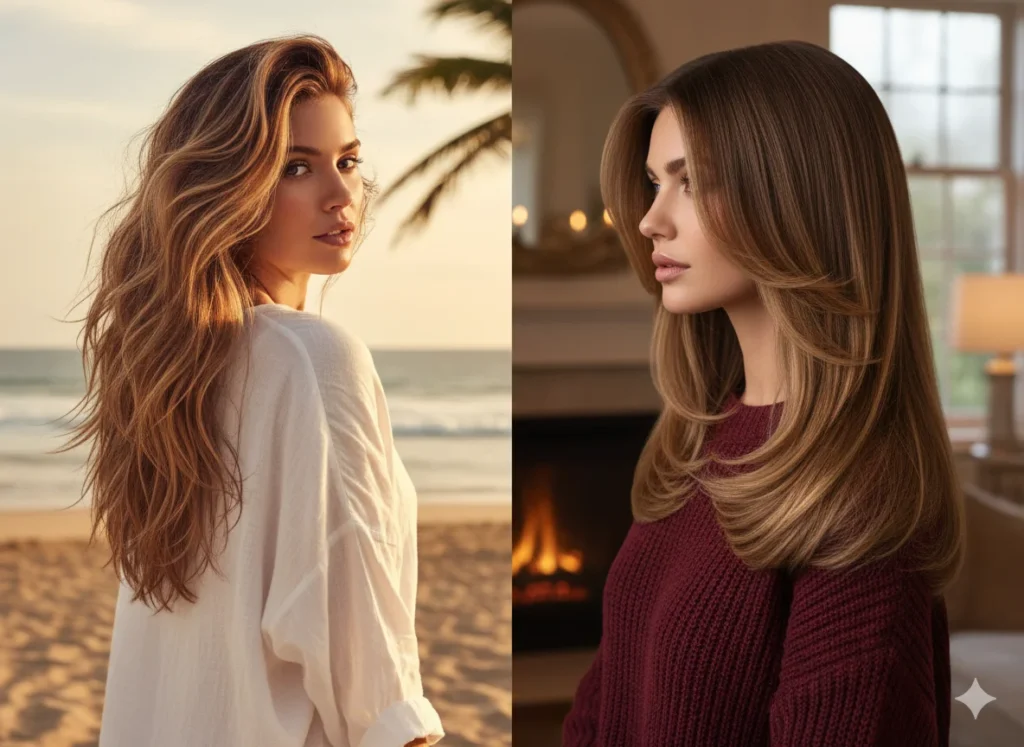
Different seasons demand adjusted approaches to styling and maintaining your long layered haircuts. Summer humidity requires different products and techniques than winter dryness, and adapting your routine ensures year-round gorgeous hair.
Summer demands lightweight styling products that control frizz without weighing down layers. Texturizing sprays and sea salt sprays enhance natural texture while providing humidity resistance. Embrace your hair’s natural tendencies during humid months rather than fighting against them with excessive heat styling that damages hair and rarely holds anyway.
Winter dryness necessitates heavier moisturizing products preventing static and breakage. Leave-in conditioners and hair oils become essential for maintaining layer health during cold months. Protect layers from harsh weather by wearing protective styles or hats when temperatures drop, preventing wind damage and moisture loss that creates frizz and tangles.
Transform Your Look with Confidence
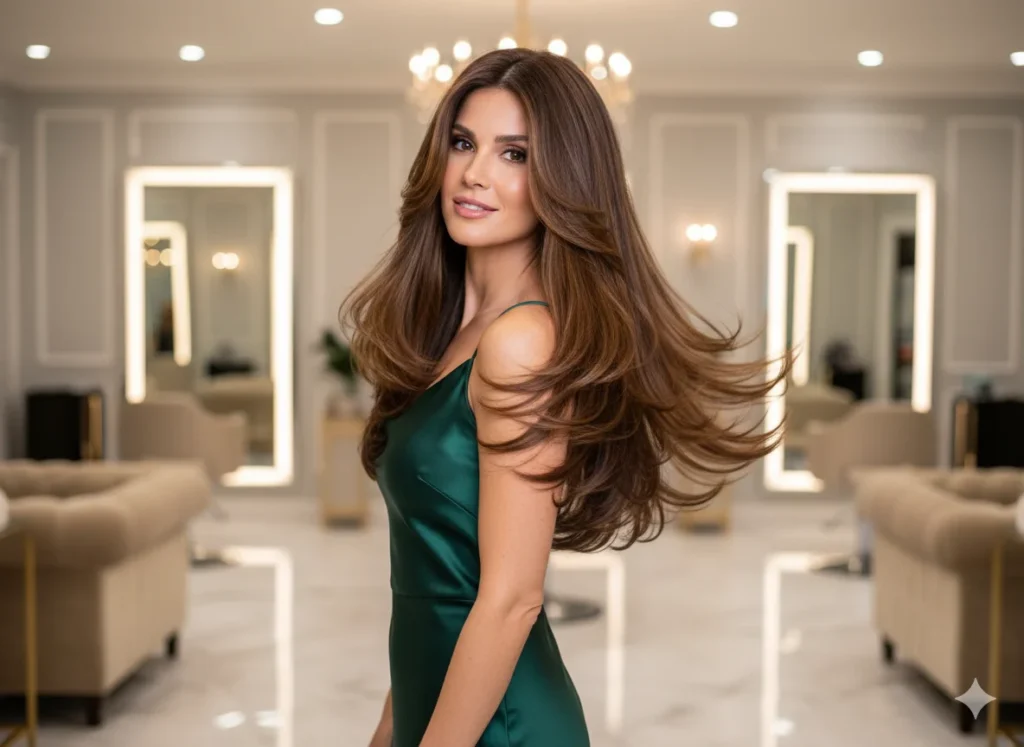
Long hair layers represent a timeless choice offering versatility, dimension, and beauty enhancement without sacrificing beloved length. Understanding how face shape, hair texture, and hair density influence which layered haircuts suit you best empowers confident decisions during salon visits. Whether you possess thick hair needing weight removal, fine hair craving volume, or simply desire added movement and texture, strategic layering addresses your unique needs while flattering natural features.
The journey to perfect layers begins with honest assessment of your hair type, realistic understanding of your styling commitment level, and clear communication with your hair stylist. Armed with knowledge about face-framing layers, curtain bangs, choppy versus feathered approaches, and maintenance requirements, you can confidently request the layered haircut that transforms your long hair from ordinary to extraordinary. Embrace the dimensional beauty that layers provide and enjoy the compliments that inevitably follow when your hair moves, flows, and shines with renewed vitality.
FREQUENTLY ASKED QUESTIONS
What is the difference between long layers and short layers?
Long layers feature subtle length variations with most hair maintaining similar lengths, creating gentle movement without dramatic disconnection. Short layers involve more significant length differences with shorter pieces throughout, producing pronounced texture and volume. Long layers suit those wanting subtle changes, while short layers deliver dramatic transformation.
How often should I trim my long layered hair?
Schedule trims every six to eight weeks to maintain layer shape and prevent split ends. These regular maintenance appointments keep your layered haircut looking fresh and healthy. While it seems counterintuitive when growing hair, small trims actually promote healthier growth by removing damaged ends before they break off.
Can fine hair handle long layers without looking thin?
Absolutely! Fine hair benefits from subtle layers or invisible layers adding movement without removing too much density. Avoid excessive layering and request your hair stylist keep layers minimal near ends while adding face-framing pieces for dimension. Volumizing products and proper styling techniques enhance fullness.
What are face-framing layers and why are they popular?
Face-framing layers are shorter pieces around the face that highlight facial features while adding dimension. They create a flattering frame drawing attention to eyes and cheekbones regardless of face shape. These layers pair beautifully with curtain bangs and work on all hair textures, making them universally flattering and perpetually popular.
Do layered haircuts work on curly and wavy hair?
Yes! Curly hair and wavy hair actually benefit tremendously from layers that allow natural curl patterns to form beautiful shapes. Request dry cutting techniques where your stylist cuts curls while dry rather than wet, ensuring layers fall naturally with your curl pattern. Layers prevent the triangle shape and add gorgeous bounce to textured hair.
You may also like this post: 14 Wolfcut Hair Long That Turn Flat Hair Into Lively Masterpieces
2 Comments