Short To Medium Length Hairstyles For Junior Boys [2026-27]

Finding the perfect hairstyle for junior boys can feel like navigating a maze of trends, practicality, and personal preference. Parents want something manageable, boys want something cool, and everyone wants a style that works for school, sports, and social activities. Short to medium length hairstyles strike the ideal balance, offering versatility without the high maintenance demands of longer styles or the severity of very short cuts.
The landscape of boys hairstyles has evolved dramatically over recent years. Gone are the days when choices were limited to basic buzz cuts or simple bowl cuts. Today’s junior boys have access to sophisticated styling options that respect their developing sense of identity while remaining age-appropriate and practical for their active lifestyles. Medium length hairstyles provide enough hair to work with for different looks while staying manageable for busy mornings and active afternoons.
This comprehensive guide explores the most popular and practical short to medium hairstyles for boys aged 8 to 14, offering insights into what works best for different hair types, face shapes, and lifestyle needs. Whether your junior boy prefers a classic gentleman’s cut or something more contemporary and edgy, there’s a perfect style waiting to be discovered.
Understanding Short To Medium Length For Boys
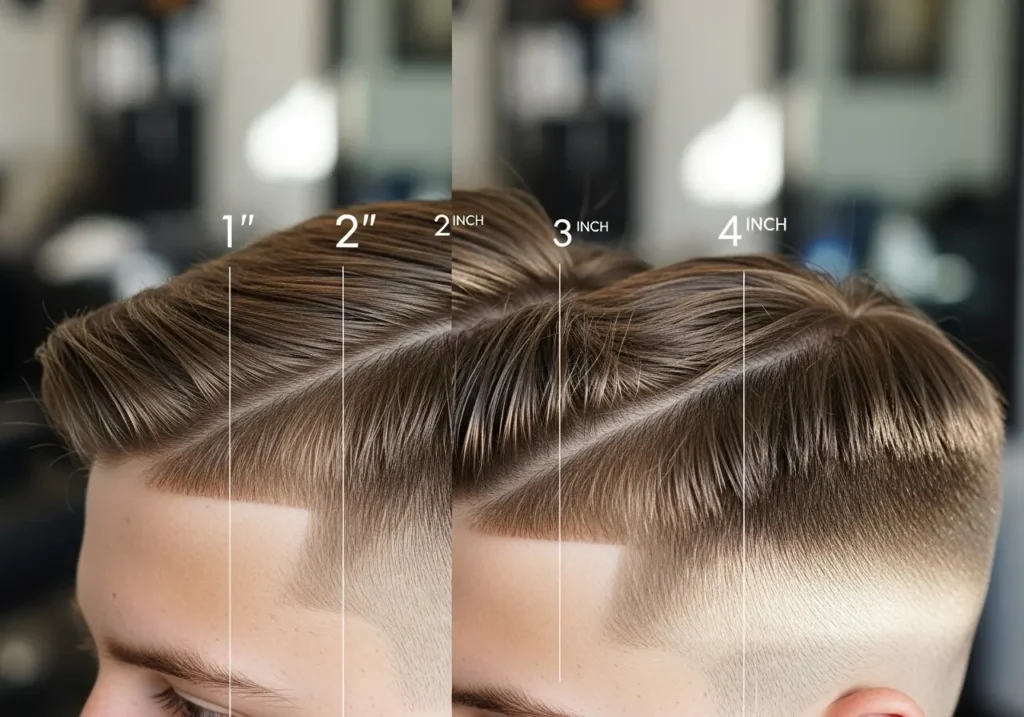
Before diving into specific styles, it’s essential to understand what qualifies as short to medium length in the context of junior boys hairstyles. This range typically includes hair that measures between one to four inches on top, with sides that can vary from closely cropped to moderately longer. The beauty of this length range lies in its flexibility.
Short to medium cuts offer practical advantages that longer styles cannot match. They stay neat throughout the school day, dry quickly after swimming or showering, and require minimal styling product or expertise. For parents, this translates to less morning drama and lower maintenance costs. For boys, it means more time playing and less time fussing with hair.
The length also accommodates various hair textures beautifully. Straight hair can be styled sleek or given texture with the right cut. Wavy hair gains natural movement and body at this length. Even curly hair becomes more manageable when kept in this range, avoiding the bulk that comes with longer lengths while preventing the tight, helmet-like appearance of very short cuts.
The Modern Textured Crop

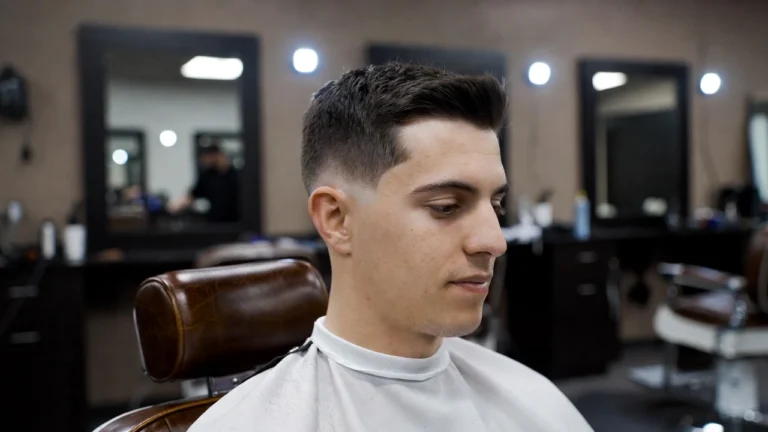
The textured crop has emerged as one of the most requested styles in barbershops serving junior clients. This contemporary cut features short to medium length hair on top with slightly shorter sides, creating a clean silhouette that works for virtually any occasion. The defining characteristic is the textured finish on top, achieved through point cutting or texturizing shears.
This style works exceptionally well for boys with straight to slightly wavy hair. The texture prevents the hair from lying flat, creating natural volume and movement. Parents appreciate how the cut maintains its shape as it grows, extending the time between haircuts. Boys love how effortlessly cool it looks with minimal styling required.
To style a textured crop, a small amount of lightweight styling product rubbed between the palms and worked through slightly damp hair creates definition and hold. The style can be worn messy for a casual look or combed forward for a more polished appearance. The versatility makes it suitable for school presentations, family gatherings, and weekend activities alike.
For active junior boys involved in sports, the textured crop offers practical benefits. It stays out of the eyes during play, doesn’t require constant adjustment, and looks presentable even after removing a helmet or hat. The style also photographs well, an increasingly important consideration in an age where school photos and family pictures are shared widely.
Classic Side Part Styles

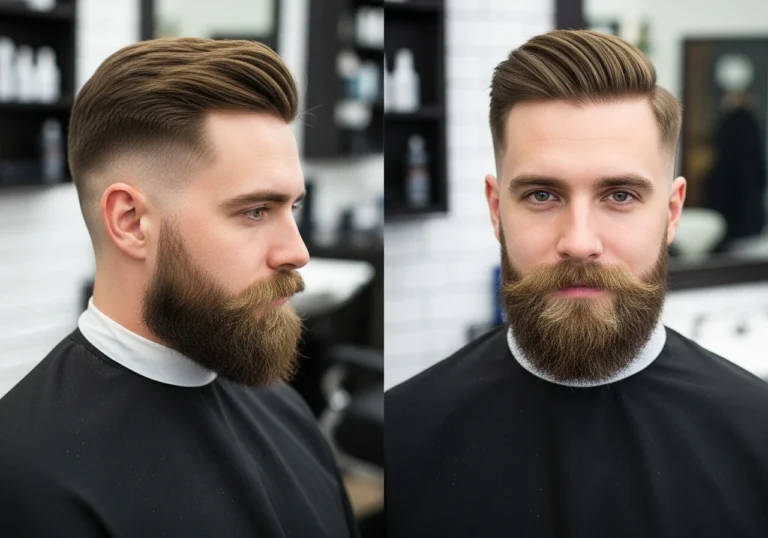
The side part represents timeless sophistication that never truly goes out of style. For junior boys, modern interpretations of this classic look combine traditional elegance with contemporary edge. The style features medium length hair on top, typically two to three inches, combed to one side with a defined part line.
What makes the side part particularly appealing for this age group is its chameleon-like quality. When combed neatly with a bit of pomade or cream, it presents a polished, gentleman’s appearance perfect for formal occasions or school presentations. When allowed to fall more naturally or styled with a matte product, it takes on a relaxed, effortless vibe suitable for everyday wear.
Barbershops often recommend the side part for boys with naturally straight or slightly wavy hair. The style requires enough length to create the sweeping motion across the head while maintaining enough weight to hold the part. Sides are typically kept shorter, often with a fade or taper, creating clean lines that emphasize the styled top.
Teaching junior boys to style a side part also imparts valuable grooming skills. The process is simple enough for them to master independently, fostering self-sufficiency. A comb, a small amount of product, and 30 seconds of effort yields professional results. This independence builds confidence and establishes good grooming habits that extend into adolescence and adulthood.
The Versatile Fringe Cut

Fringe hairstyles have gained tremendous popularity among junior boys, offering a youthful, on-trend look that still maintains appropriate length. The fringe cut features medium length hair on top that falls forward toward the face, creating a soft, face-framing effect. The fringe can be blunt, textured, or side-swept depending on preference and face shape.
For boys with round face shapes, a side-swept fringe creates flattering angles and visual length. Those with longer, narrower faces benefit from a fuller, more straight-across fringe that adds width. The style works across various hair types, though it achieves particularly striking results with thick, straight hair that holds the fringe shape naturally.
Modern fringe cuts often incorporate layered cutting techniques that prevent the style from appearing too heavy or dated. Strategic layering creates movement and prevents the fringe from looking like a solid block of hair. This contemporary approach keeps the style fresh and age-appropriate for junior boys who want to look current without appearing too adult or styled.
Maintenance of a fringe cut requires regular trims every four to six weeks to keep the length out of the eyes and maintain the shape. Between cuts, styling involves working product through damp hair and either blow-drying the fringe forward or allowing it to air dry naturally. The style accommodates both neat and messy interpretations, making it suitable for various occasions and personal preferences.
Fade And Taper Combinations
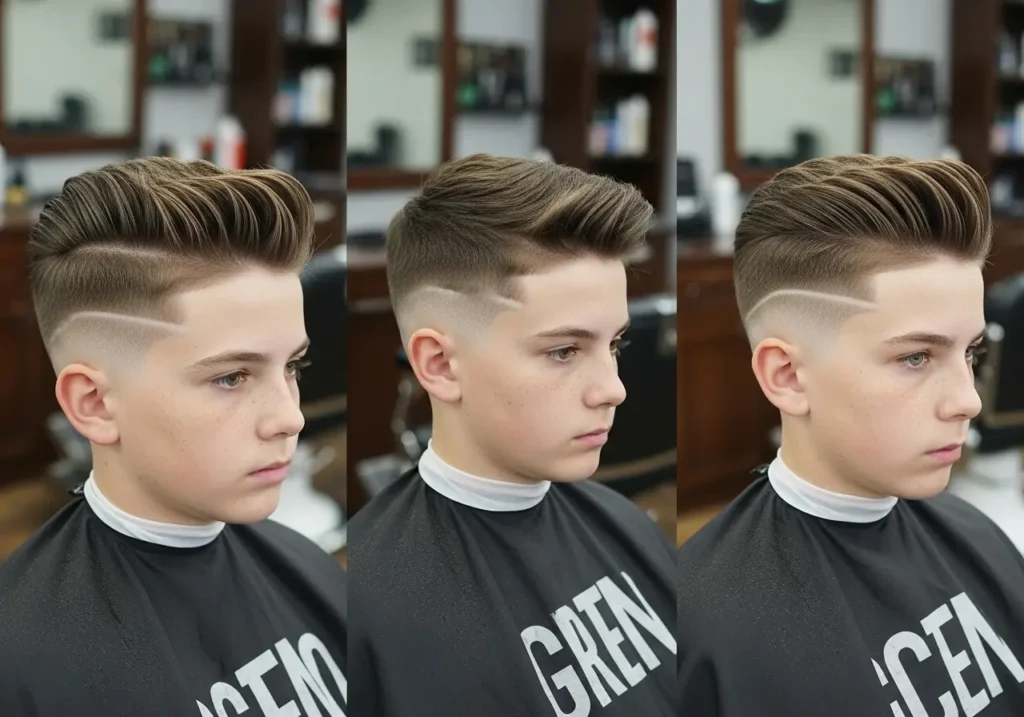
Fade haircuts have become staples in boys grooming, offering crisp, clean aesthetics with remarkable versatility. A fade involves gradually transitioning hair from longer on top to very short or shaved on the sides and back. For junior boys, fades combined with medium length tops create dynamic, modern looks that balance youthful energy with sophisticated style.
The low fade starts the transition just above the ears, creating a subtle, professional appearance suitable for conservative school environments. The mid fade begins higher on the head, offering more dramatic contrast and a sportier look. The high fade creates bold definition, popular among boys who want a more fashion-forward statement.
What makes fades particularly appealing is how they work with virtually any top hairstyle. A fade can be paired with a textured crop, a side part, a fringe, or even a small pompadour. This combination approach allows for personalization while maintaining the clean, maintained appearance that parents appreciate.
Fades do require more frequent barbershop visits, typically every two to three weeks, to maintain the crisp lines and gradual transition. However, many parents find this schedule worthwhile for the consistently neat appearance it provides. For boys who enjoy the ritual of regular haircuts and the relationship with their barber, this becomes a positive bonding experience rather than a chore.
The Contemporary Crew Cut
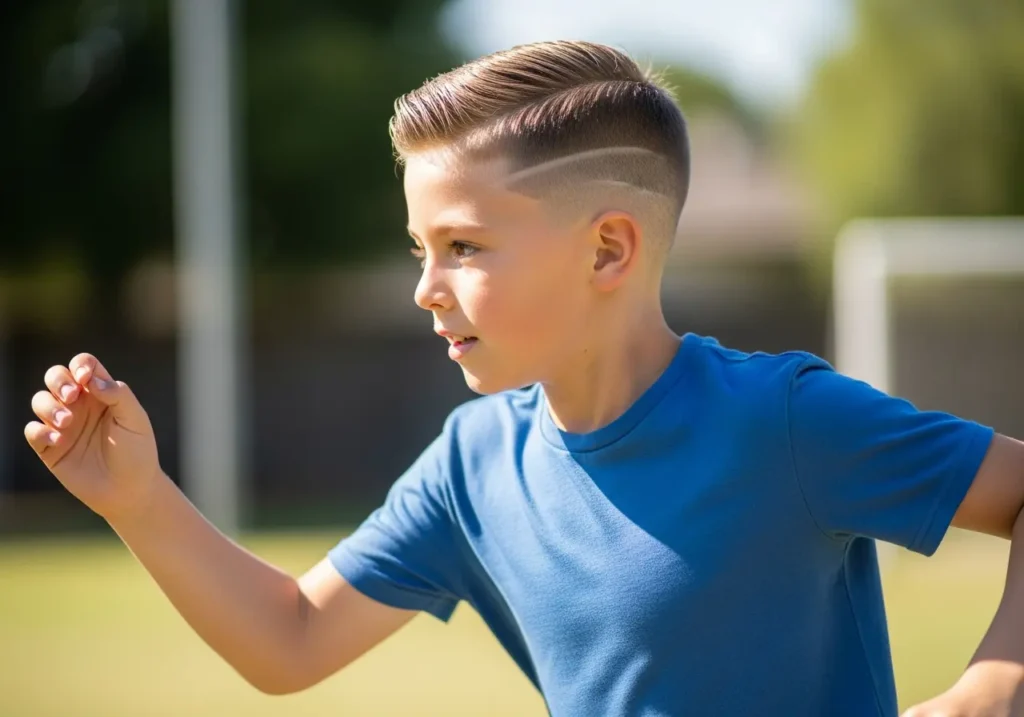
The crew cut has evolved far beyond its military origins to become a sophisticated option for junior boys. Modern interpretations feature slightly more length on top than traditional versions, typically one to two inches, allowing for subtle styling while maintaining the cut’s inherent practicality and neatness.
This extended crew cut variation works exceptionally well for boys with active lifestyles. The short length means virtually no styling time, yet there’s enough hair to avoid the completely buzzed look. The style works across all hair types and textures, making it universally accessible. For boys with thick hair, it reduces bulk while maintaining coverage. For those with fine hair, it creates the illusion of fuller coverage through strategic cutting.
Parents of junior boys often appreciate the crew cut’s economic advantages. The style grows out gracefully, extending the time between necessary haircuts. When maintenance does become needed, the cut is straightforward and relatively quick, often less expensive than more complex styles requiring detailed clipper work or extensive scissor cutting.
The crew cut also offers an excellent foundation for boys beginning to experiment with their personal style. As they grow and their preferences evolve, the cut can be easily grown out into longer styles or modified with fades, textured tops, or other contemporary elements. This flexibility makes it an ideal starting point for junior boys developing their grooming identity.
Layered Medium Length Styles
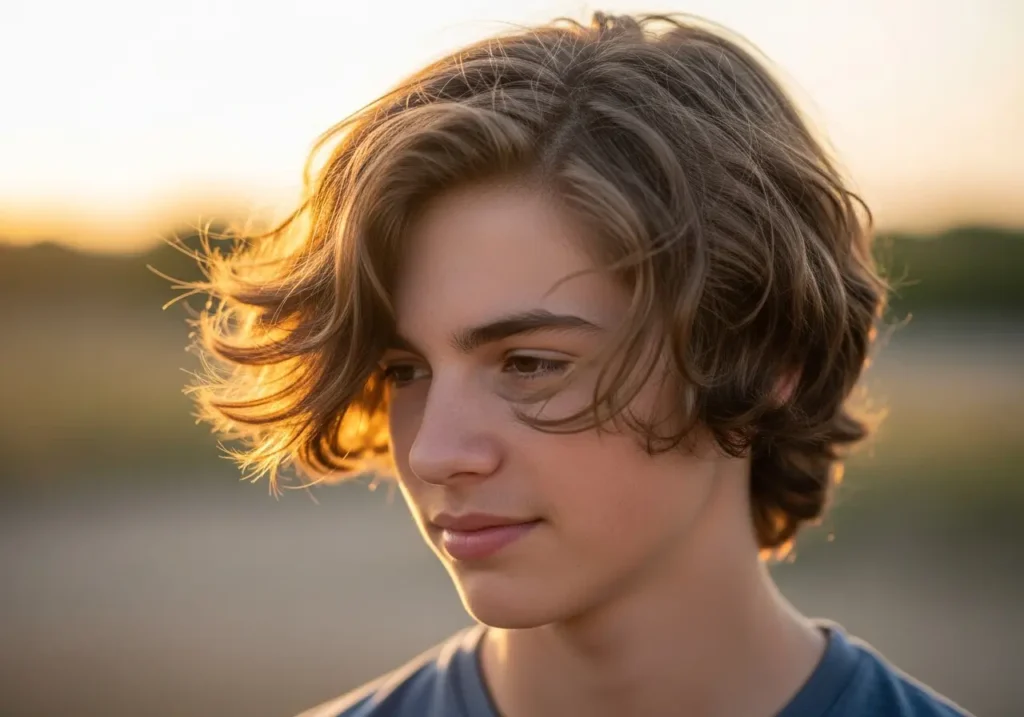
Layered haircuts introduce dimension and movement to medium length hair, creating sophisticated styles that work beautifully for junior boys with various hair types. Layers involve cutting hair at different lengths throughout the head, with shorter pieces on top and gradually longer pieces underneath, or vice versa depending on the desired effect.
For boys with naturally wavy or curly hair, layers are particularly transformative. They reduce bulk while enhancing natural texture, allowing curls and waves to form attractive patterns rather than creating shapeless volume. The strategic removal of weight prevents the triangular silhouette that often plagues medium length curly hair, replacing it with balanced, appealing shape.
Even boys with straight hair benefit from layered cuts. The varying lengths create natural volume and prevent the flat, lifeless appearance that can occur when all hair is cut to uniform length. Face-framing layers draw attention to features while maintaining overall neatness. The style accommodates both casual, tousled looks and more polished, combed appearances depending on the occasion.
Styling layered medium length hair requires minimal effort. A small amount of styling cream or mousse worked through towel-dried hair enhances natural texture. For special occasions, a blow dryer can be used to add volume at the roots or direct hair in specific directions. The style’s inherent movement means that even with no styling products, the hair looks intentionally styled rather than neglected.
Undercut Variations For Junior Boys
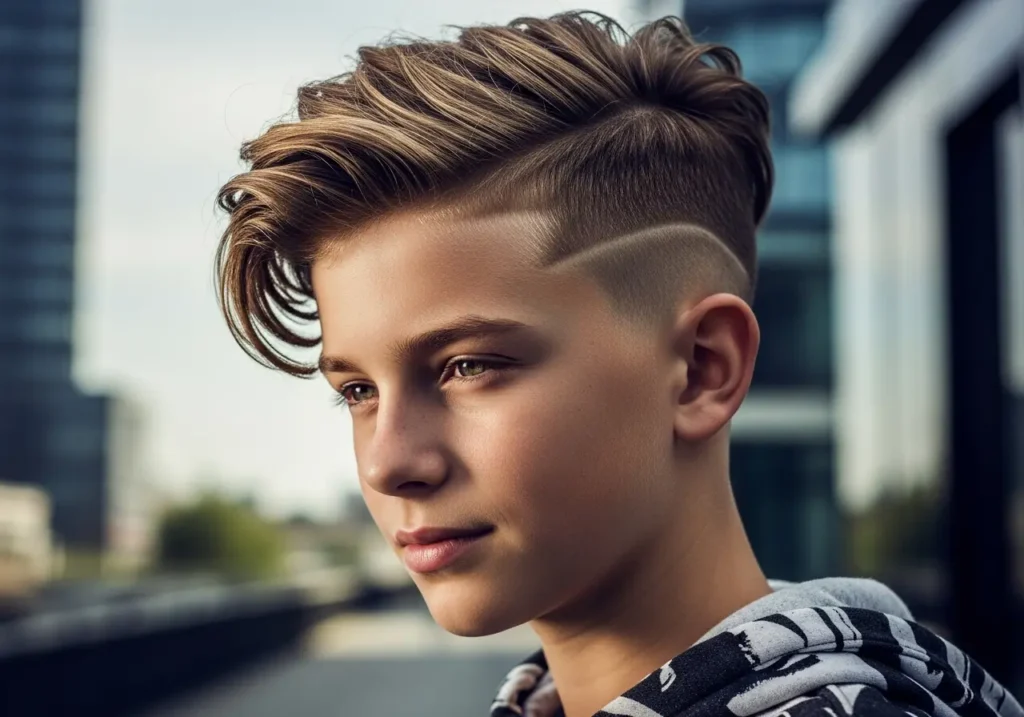
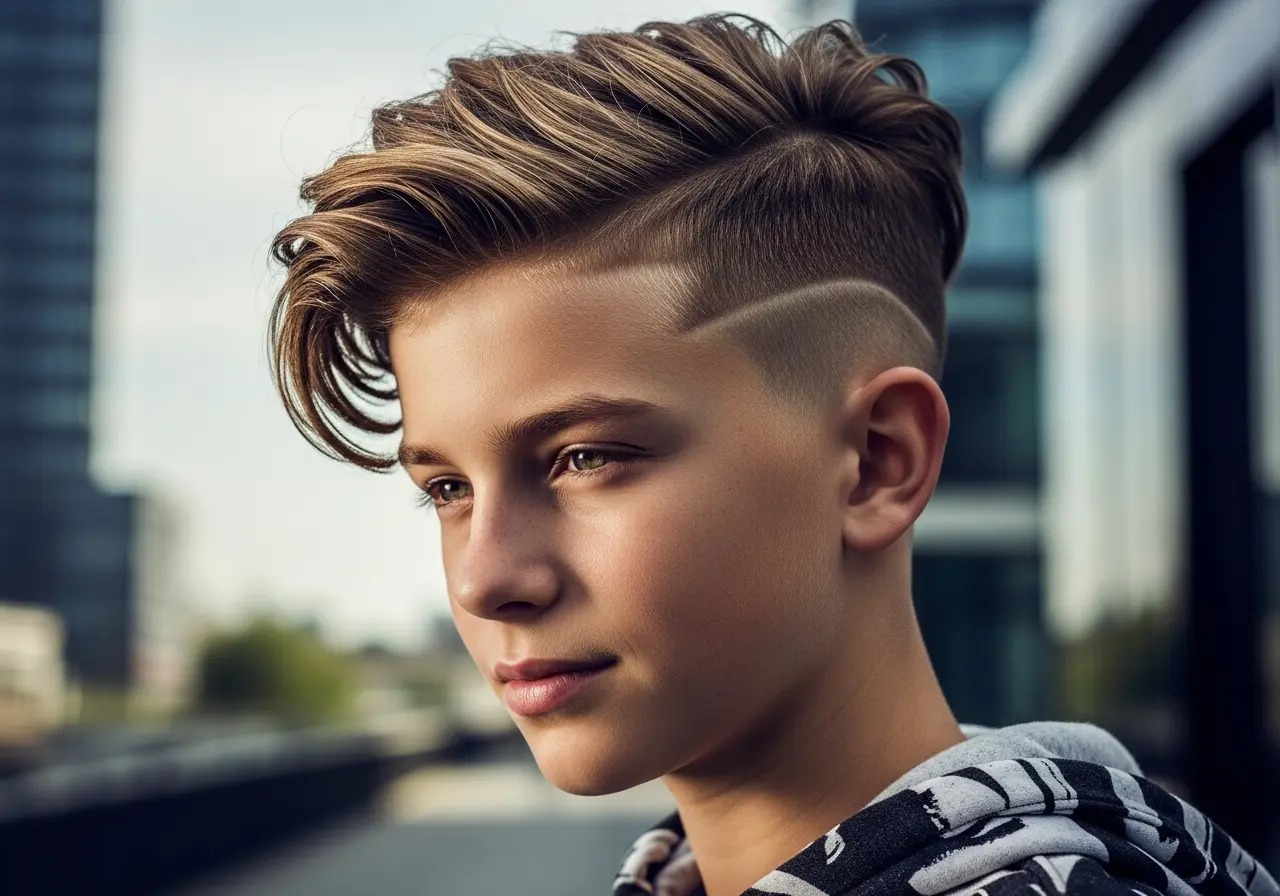
The undercut represents one of the boldest short to medium options available, featuring a distinct separation between longer hair on top and closely shaved or very short sides and back. While dramatic, modern undercut variations for junior boys balance edge with appropriateness, creating styles that express personality without crossing into territory parents or schools might find problematic.
The key to an age-appropriate undercut lies in the top section’s styling. Rather than the slicked-back, adult looks often associated with undercuts, junior versions typically feature textured, natural-looking tops. The contrast between short sides and longer top creates visual interest without requiring complex styling. Boys can wear the top forward, to the side, or even slightly messy, all with successful results.
Disconnected undercuts create the most dramatic contrast, with no gradual transition between the short sides and longer top. This works well for boys who want a statement style and have the hair thickness to support it. Connected undercuts incorporate subtle fading where sides meet the top, creating a softer, more versatile look suitable for conservative environments.
One consideration with undercuts is the commitment they require. The style is difficult to grow out gracefully, as the extremely short sides take considerable time to catch up with the longer top. Parents and boys should be certain about this choice, as living with the style for several months while it grows out may be necessary if they change their minds. However, for those who commit, the undercut offers a distinctive, fashion-forward look that stands out positively.
The Natural Tousled Look
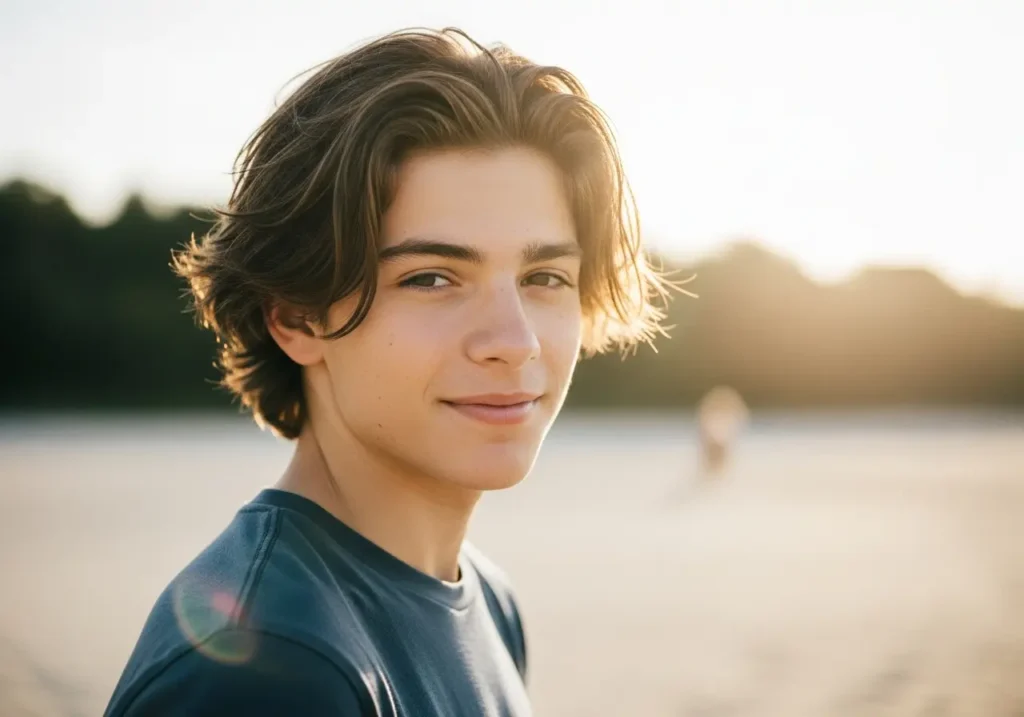
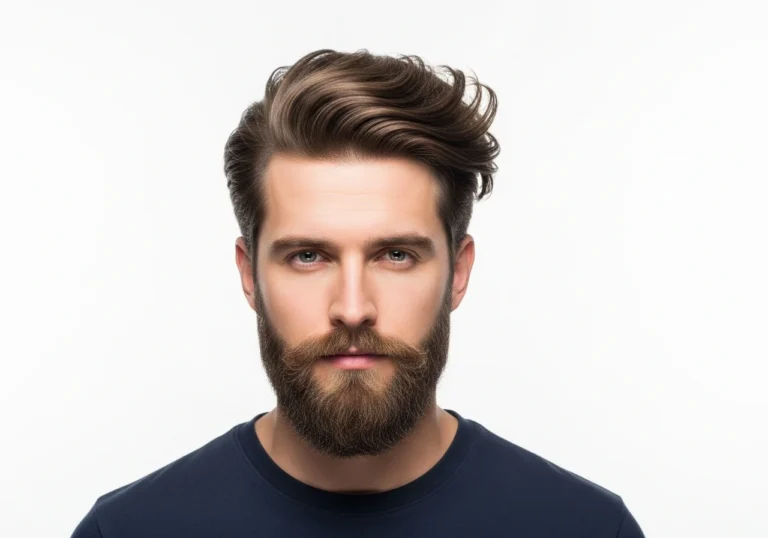
For boys who prefer low-maintenance styling with a relaxed, effortless appearance, the natural tousled look delivers perfectly. This style features medium length hair, typically two to three inches on top, cut with subtle layers and texture to enhance natural movement and body. The defining characteristic is its deliberately undone appearance.
The tousled look works particularly well for boys with naturally wavy or slightly curly hair. Their natural texture provides the foundation for the style’s casual elegance. Even boys with straight hair can achieve convincing results with the right cutting technique and minimal product application. The key lies in the cut itself, which should incorporate enough texture and layering that the hair naturally falls into appealing patterns.
Styling requires remarkably little effort. After washing, hair is towel-dried to remove excess moisture. A small amount of sea salt spray or texturizing product is scrunched into the hair, then allowed to air dry or gently blown dry while scrunching. The result is hair that looks styled but not overly done, perfect for the junior boy who wants to look good without appearing to try too hard.
This style’s casual nature makes it ideal for everyday wear, particularly for school and casual social activities. However, it may be less suitable for very formal occasions where a more polished appearance is expected. Parents often appreciate how the style requires no morning battle, as the messier the better is essentially the guiding principle. Boys enjoy the freedom and the cool, relaxed vibe the style projects.
Short Pompadour Adaptations
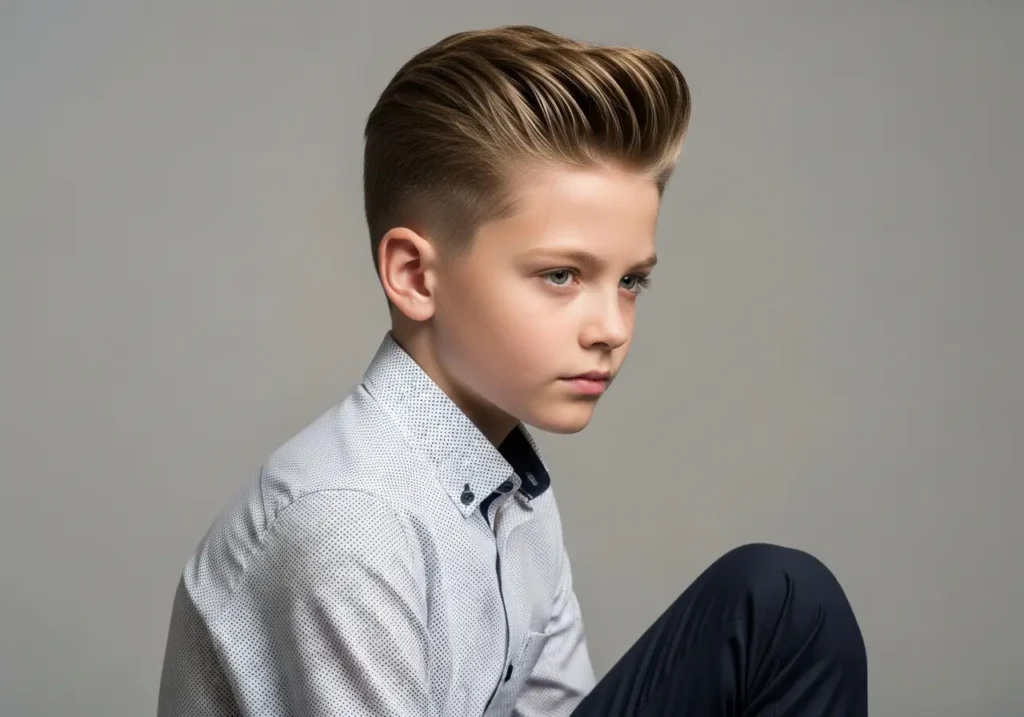
The pompadour has experienced a renaissance in recent years, and junior boys have enthusiastically embraced age-appropriate versions. The classic pompadour features hair swept up and back from the face, creating volume and height. For junior boys, shorter, less dramatic interpretations maintain the style’s spirit while remaining practical and age-appropriate.
A junior pompadour typically features medium length hair on top, around two to three inches, with shorter, faded sides. The hair is styled upward and slightly back, creating modest lift rather than the towering volume of adult versions. This scaled-down approach captures the sophistication and style of the pompadour while remaining suitable for school environments and active play.
Styling a junior pompadour requires a bit more effort than some other options but remains manageable for this age group. Starting with damp hair, a small amount of pomade or styling cream is worked through the top section. Using fingers or a comb, the hair is directed up and back, with additional product added as needed for hold. A quick blast from a blow dryer can set the style and add extra volume.
The pompadour works best for boys with thick, straight to slightly wavy hair that has enough body to hold the upward style. Fine or very curly hair may struggle to maintain the structure, though skilled barbers can often adapt the cut to work with various textures. The style offers an excellent option for boys who want something distinctive that sets them apart from peers while maintaining age-appropriate boundaries.
Choosing Based On Hair Type
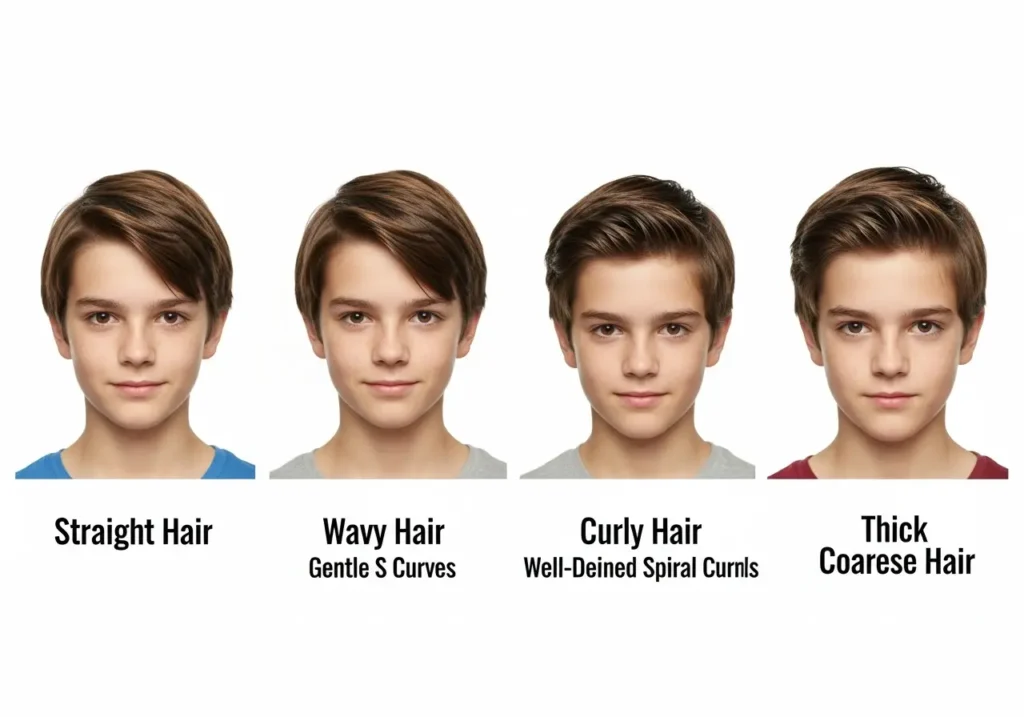
Understanding how different styles interact with various hair textures is crucial for selecting a cut that will look good and remain manageable. Hair type significantly impacts which styles will work effortlessly and which will require constant maintenance or ultimately prove frustrating.
Boys with straight hair have the most versatile canvas, capable of pulling off virtually any short to medium style. Straight hair holds styles well, from sleek side parts to textured crops. The main challenge is that straight hair can sometimes lack natural volume, making layered cuts and textured styles particularly beneficial for creating visual interest and body.
Thick, coarse hair benefits from styles that reduce bulk while maintaining shape. Textured crops, crew cuts, and layered styles work exceptionally well, removing excess weight without sacrificing coverage. Fades and undercuts also complement thick hair beautifully, creating clean lines that emphasize the substantial top section. Avoiding blunt, one-length cuts helps prevent the boxy, heavy appearance that can occur with thick hair.
Boys with fine or thin hair should seek styles that create the illusion of fuller coverage. Textured cuts add dimension that makes hair appear thicker. Shorter lengths often work better than medium lengths, as fine hair can look sparse when too long. Strategic layering and the right styling products can create volume and body that overcome natural fineness.
Curly and wavy hair thrives at medium length, where natural texture can be showcased without overwhelming volume. Layers are essential for curly hair, preventing the pyramid effect while allowing curls to form attractive patterns. Products designed for curly hair help define texture and control frizz. Styles that work with rather than against natural curl patterns will always yield the best results and easiest maintenance.
Face Shape Considerations
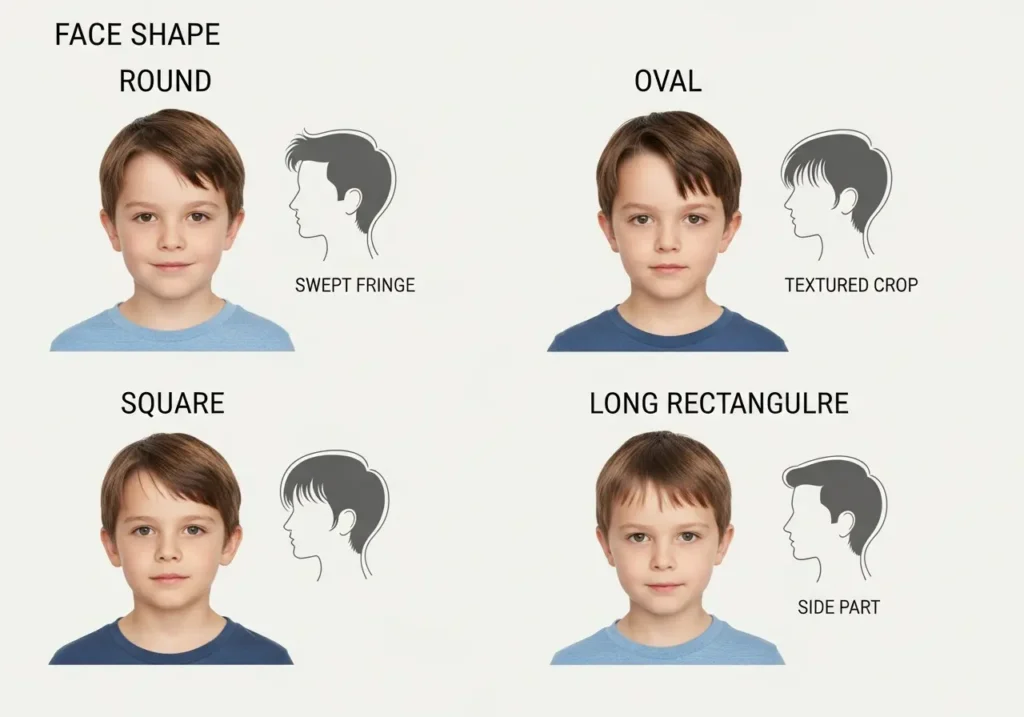
Selecting a hairstyle that complements face shape enhances overall appearance and creates balanced, flattering proportions. While junior boys may not yet be thinking in these terms, parents and barbers can guide choices that will photograph well and boost confidence.
Boys with round faces benefit from styles that add height and create vertical lines. Pompadours, quiffs, and styles with volume on top elongate the face visually. Side parts also help by creating diagonal lines that break up roundness. Avoiding styles that add width at the sides, such as very full fringes or bulky sides, prevents emphasizing the face’s circular nature.
Oval face shapes are considered the most versatile, working well with virtually any style. Boys with oval faces can experiment freely with crops, fringes, side parts, and more dramatic options like undercuts. The balanced proportions of oval faces accommodate both horizontal and vertical styling without creating unflattering effects.
Boys with square face shapes have strong, angular jawlines and broad foreheads. Styles that soften these angles work best. Textured, slightly longer styles on top, particularly those with forward movement or side-swept elements, create gentle curves that contrast with strong angles. Avoiding very short, blunt cuts that emphasize squareness produces more flattering results.
Long or rectangular faces benefit from styles that add width rather than height. Fuller fringes, styles with volume at the sides, and cuts that avoid extreme vertical emphasis create better balance. The fringe is particularly effective for long faces, as it visually shortens the face by covering part of the forehead.
Practical Maintenance And Care
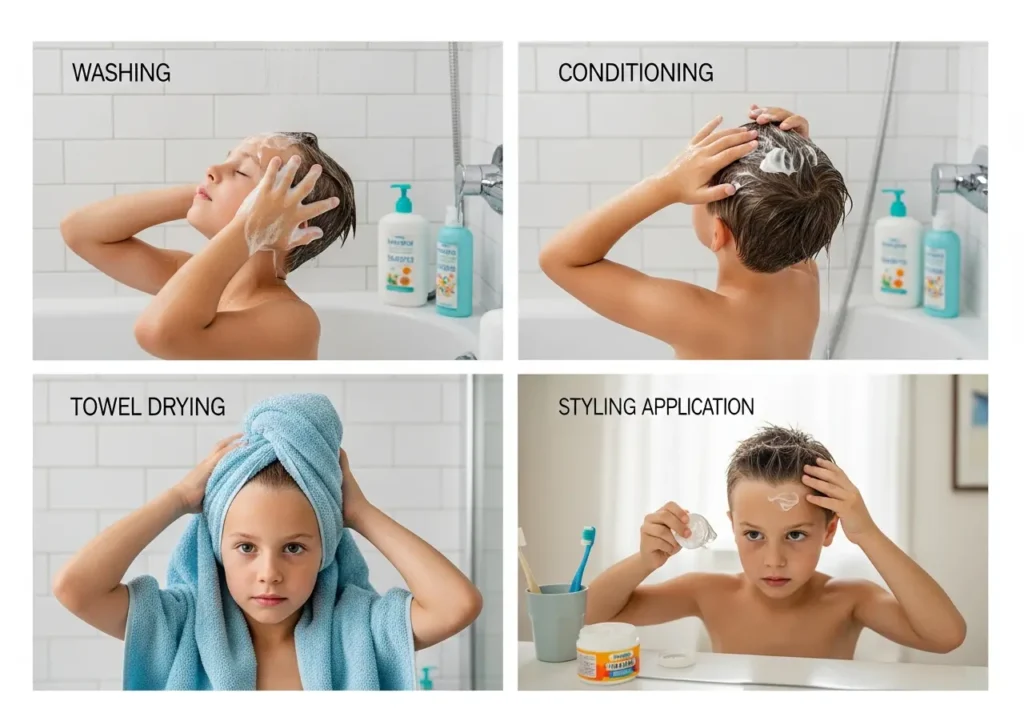
Even the best haircut requires proper maintenance and care to look its best throughout the weeks between barber visits. Teaching junior boys basic hair care habits establishes patterns that serve them well throughout life while keeping their current style looking fresh.
Regular washing is essential but shouldn’t be overdone. Most junior boys do well washing hair every other day or after particularly sweaty activities. Daily washing can strip natural oils, leading to dry, unmanageable hair. Using a quality shampoo formulated for their hair type makes a significant difference in manageability and appearance.
Conditioning shouldn’t be overlooked, even for boys with short to medium hair. A lightweight conditioner helps detangle, adds moisture, and makes styling easier. Boys with curly or coarse hair particularly benefit from conditioning, which helps control frizz and define texture. The conditioner should be applied primarily to the ends and mid-lengths rather than the roots to avoid weighing hair down.
Investing in appropriate styling products suited to the chosen hairstyle and hair type ensures the best results. Different styles require different products: pomades for sleek looks, matte pastes for textured styles, light creams for natural looks, and gels for hold without movement. Starting with small amounts and adding more as needed prevents the overly-styled, crunchy appearance that occurs with product overuse.
Regular barber visits maintain the style’s shape and prevent the unkempt appearance that develops as hair grows past its ideal length. The frequency depends on the specific style and how quickly the individual’s hair grows. Fades require the most frequent maintenance, every two to three weeks. Other styles can often go four to six weeks between cuts. Establishing a regular schedule prevents the last-minute scramble when hair suddenly looks too long.
Seasonal Adaptations
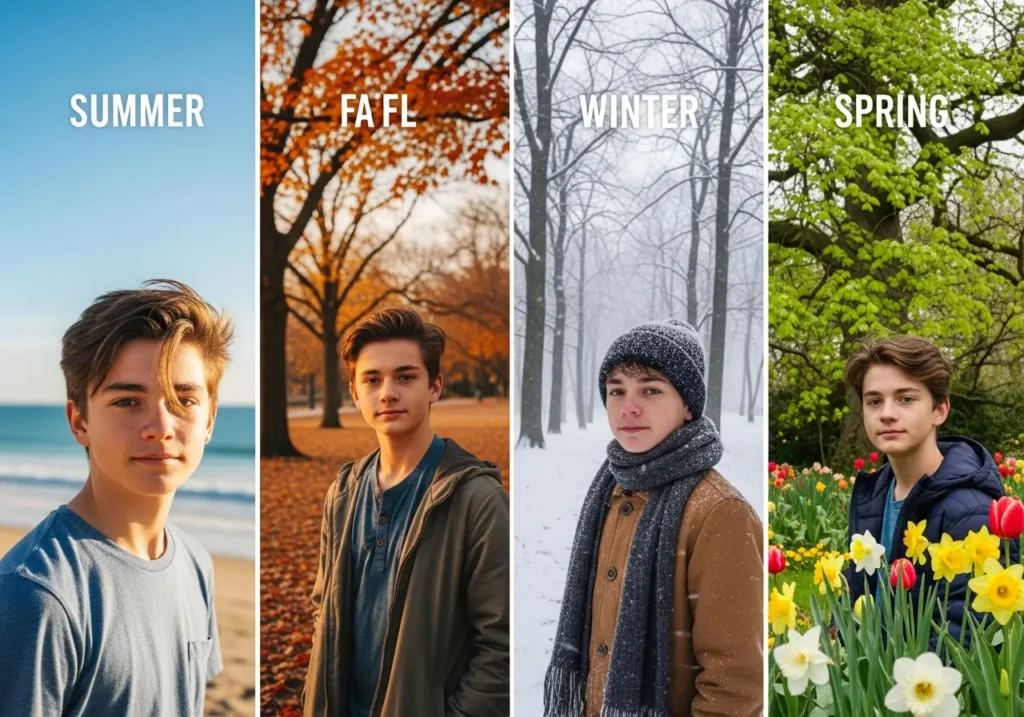
Seasonal changes affect hair comfort and manageability, making it worthwhile to consider minor adaptations throughout the year. While short to medium styles remain practical year-round, small adjustments can enhance comfort and appearance as weather changes.
Summer heat makes shorter styles particularly appealing. Many parents opt to trim hair slightly shorter during summer months to keep boys cool during outdoor play and swimming. Crew cuts and shorter textured crops become especially popular. Shorter styles also simplify summer routines, drying quickly after pool visits and requiring minimal styling when heat makes spending time on hair unappealing.
Fall and back-to-school season often sees boys opting for slightly more polished styles. The side part and well-maintained textured crops become popular choices, creating neat appearances for school photos and setting a good impression with new teachers. The moderate temperatures make medium length comfortable without the heat concerns of summer.
Winter allows for slightly longer styles if desired, as the extra length provides modest warmth and protection. Boys can explore the longer end of medium length without the discomfort that might accompany such styles in summer heat. Layered styles work particularly well, providing coverage without excess bulk that would be uncomfortable under winter hats.
Spring brings renewed interest in fresh, trendy looks. Many boys use the season to try new styles, growing out winter cuts into different shapes or trying more adventurous options like textured fringes or pompadours. The moderate weather accommodates experimentation without the extreme conditions of summer or winter.
Communication With Your Barber

Achieving the desired result requires effective communication with the barber. Many disappointing haircuts stem not from lack of skill but from miscommunication about what’s wanted. Teaching junior boys to articulate their preferences and parents to provide helpful guidance ensures better outcomes.
Bringing reference photos proves invaluable. Verbal descriptions can be interpreted differently by different people, but photos provide concrete examples. Having two or three images showing the desired style from different angles helps the barber understand exactly what’s wanted. Many barbers appreciate when clients save examples to their phones to show during consultations.
Being realistic about what’s achievable with the specific hair type and texture prevents disappointment. If reference photos show styles on thick, straight hair but the client has fine, wavy hair, the exact result may not be possible. Good barbers will honestly assess whether a style will work and suggest modifications if needed. Trusting their professional judgment typically yields better results than insisting on something incompatible with the hair type.
Establishing a relationship with a consistent barber offers significant advantages. Over multiple visits, the barber becomes familiar with how the hair grows, what styles work well, and personal preferences. This familiarity allows for better results with less detailed explanation each visit. For junior boys, the relationship also makes haircuts more comfortable and enjoyable rather than stressful or unpleasant.
Providing feedback after the cut helps refine future results. If something isn’t quite right, politely mentioning it allows the barber to adjust immediately or remember for next time. Similarly, when a cut turns out perfectly, letting the barber know ensures they understand what worked well and can replicate it in the future.
Building Grooming Independence
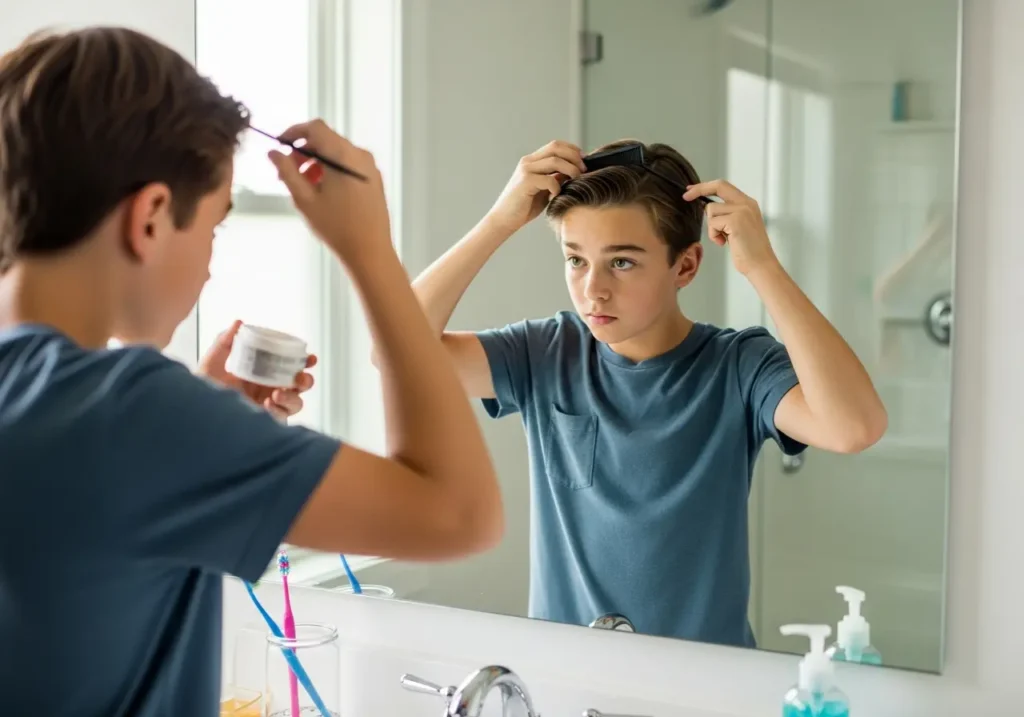
The junior years represent an ideal time to teach boys grooming independence. Learning to care for their hair builds self-sufficiency, confidence, and personal responsibility. These lessons extend beyond hair care to broader life skills about personal presentation and self-care.
Start by teaching the basics of washing and conditioning properly. Many boys rush through hair washing, leading to product buildup or inadequately rinsed hair. Taking time to demonstrate thorough rinsing, proper product amounts, and why these steps matter establishes good foundations. Making the connection between proper washing and how good their hair looks can motivate thoroughness.
Styling basics should be taught patiently, with realistic expectations. Initial attempts will be imperfect, but practice brings improvement. Demonstrating techniques several times, allowing them to try while supervising, and providing encouraging feedback creates a supportive learning environment. Many boys master basic styling quickly once they understand it affects how they’re perceived by peers.
Teaching boys to recognize when they need a haircut develops judgment and awareness. Discussing signs like hair falling in their eyes, looking shaggy, or not holding its style helps them understand timing. Some families involve junior boys in scheduling their own appointments, teaching additional responsibility around planning and time management.
Product knowledge represents another learning area. Explaining what different products do, how much to use, and proper application techniques prevents waste and poor results. Allowing boys to experiment with different products under guidance helps them discover what works best for their specific hair and preferred styles.
Conclusion
The world of short to medium length hairstyles for junior boys offers remarkable variety, combining practicality with style in ways that work for active lifestyles and developing personal identities. From classic side parts to contemporary textured crops, from subtle fringes to bold undercuts, options exist for every hair type, face shape, and personal preference.
The key to finding the perfect style lies in considering multiple factors: the individual’s hair texture and thickness, face shape, lifestyle demands, maintenance willingness, and personal style preferences. What works beautifully for one boy may be completely wrong for another, even if both admire the same reference photo. Understanding these nuances and making informed choices leads to satisfaction with the results.
Beyond the specific style chosen, the junior years represent valuable opportunities to teach grooming skills and personal care habits that will serve boys throughout their lives. Learning to communicate with barbers, maintain their chosen style, and take pride in their appearance builds confidence and self-sufficiency. These lessons extend far beyond hair, touching on broader themes of responsibility and self-presentation.
For parents navigating the sometimes overwhelming array of choices, remember that hair grows back. If a particular style doesn’t work out perfectly, it can be adjusted or changed in a few weeks. This forgiving nature allows for experimentation and discovery without permanent consequences. The willingness to try different options often leads to finding that perfect style that makes both parents and boys happy.
As trends continue evolving and new interpretations of classic styles emerge, the short to medium length range will remain the sweet spot for junior boys. It offers enough hair to be interesting and expressive while maintaining the practicality that active young lives demand. Whether choosing a timeless classic or embracing the latest trend, the right short to medium hairstyle helps junior boys look and feel their best as they navigate these formative years.
You may also like this post: How To Cut Mens Long Curly Hair At Home
Frequently Asked Questions
How often should junior boys get haircuts with short to medium styles?
The frequency depends on the specific style and growth rate. Fades and undercuts require the most frequent maintenance, typically every two to three weeks, to keep lines sharp and proportions balanced. Textured crops, side parts, and most other short to medium styles generally need cutting every four to six weeks. Boys with faster-growing hair or parents preferring consistently neat appearances should aim for the shorter end of these ranges, while those comfortable with slightly longer looks between cuts can extend the time.
What products work best for styling junior boys hair?
The ideal product depends on the hair type and desired style. Lightweight styling creams and pastes work well for most textured, natural looks and suit various hair types. Pomades create sleeker, more polished styles but can be heavy for fine hair. Matte clays and putties provide hold without shine, perfect for messy, modern looks. For curly hair, curl-defining creams or light gels help manage texture. Always start with a small amount roughly the size of a pea and add more only if needed, as using too much creates greasy, stiff results.
Can these styles work for all hair types including curly and ethnic hair?
Absolutely, though specific approaches may vary. Curly and coily hair types thrive at medium lengths where natural texture can be showcased. Key adaptations include strategic layering to remove bulk while maintaining shape, using appropriate products designed for curly textures, and choosing styles that work with natural curl patterns rather than against them. Fades look particularly striking with textured tops on curly hair. Consulting with barbers experienced in various hair types ensures cuts that enhance natural characteristics rather than fight them.
How can I get my son to cooperate with regular haircuts?
Making haircuts positive experiences increases cooperation significantly. Let him have input on style choices within reasonable boundaries, showing reference photos and discussing options. Find a barber who works well with children and makes the experience enjoyable. Consider scheduling appointments when he’s not tired or hungry. Some families make haircuts special by combining them with other treats like getting lunch afterward. For boys with sensory sensitivities, communicate this to the barber who can adapt their approach, perhaps starting with just a trim to build comfort.
What style requires the least maintenance for active boys?
The crew cut and short textured crop require minimal daily maintenance while looking consistently neat. Both styles wash and wear well, needing no styling products or blow drying. They stay out of the eyes during sports and look presentable even after removing helmets or hats. While both require regular barbershop visits to maintain their shape, the daily time investment is essentially zero. For boys involved in multiple sports or activities who genuinely have no time or interest in styling hair, these options deliver the best balance of appearance and practicality.