
Top 07 Stylish Braids And Man Bun Looks For Guys
Modern hairstyling has witnessed a remarkable transformation in recent years. Men are increasingly exploring creative options that blend tradition with contemporary aesthetics. Among these evolving trends, braids have emerged as a powerful statement of personal style and cultural appreciation. The combination of braids with man buns represents more than just a fashion choice. It reflects a broader acceptance of diverse grooming standards and an embrace of hairstyles that prioritize both functionality and visual appeal.
Long hair for men has gained significant traction across various professional and social settings. The protective nature of braided styles makes them particularly attractive for individuals seeking low maintenance solutions without compromising on appearance. Whether you have naturally textured hair or straight locks, braided man bun combinations offer versatility that adapts to different occasions and personal preferences.
The appeal extends beyond aesthetics. These styles provide practical benefits including protection from environmental damage, reduced styling time, and the ability to maintain healthy hair growth. The cultural roots of braiding techniques add depth and meaning to these contemporary adaptations. From athletes to corporate professionals, men from all backgrounds are discovering how these hairstyles can enhance their overall presentation while expressing individuality.
Understanding The Foundation Of Braided Styles
Before exploring specific styles, establishing a solid foundation proves essential. The success of any braided look depends on proper hair preparation and understanding your hair type. Different textures respond uniquely to various braiding techniques, and recognizing these characteristics helps achieve optimal results.
Hair length plays a crucial role in determining which styles work best. Most braided man bun combinations require at least four to six inches of hair on top, though some variations can work with shorter lengths. The sides and back can be customized according to preference, with options ranging from full coverage to dramatic undercuts and fades.
Scalp health forms the cornerstone of successful braiding. Regular moisturizing prevents dryness and irritation that can occur during the braiding process. Using lightweight oils and leave-in conditioners keeps both the scalp and hair hydrated without creating buildup. This preparation step ensures comfortable wear and promotes longevity of the style.
The braiding technique itself requires patience and precision. Whether completing the process yourself or working with a professional stylist, maintaining consistent tension throughout prevents loose sections while avoiding excessive tightness that could damage hair follicles. The goal involves creating secure braids that lie flat against the scalp without causing discomfort or stress on the hairline.
01 Classic Cornrow Man Bun 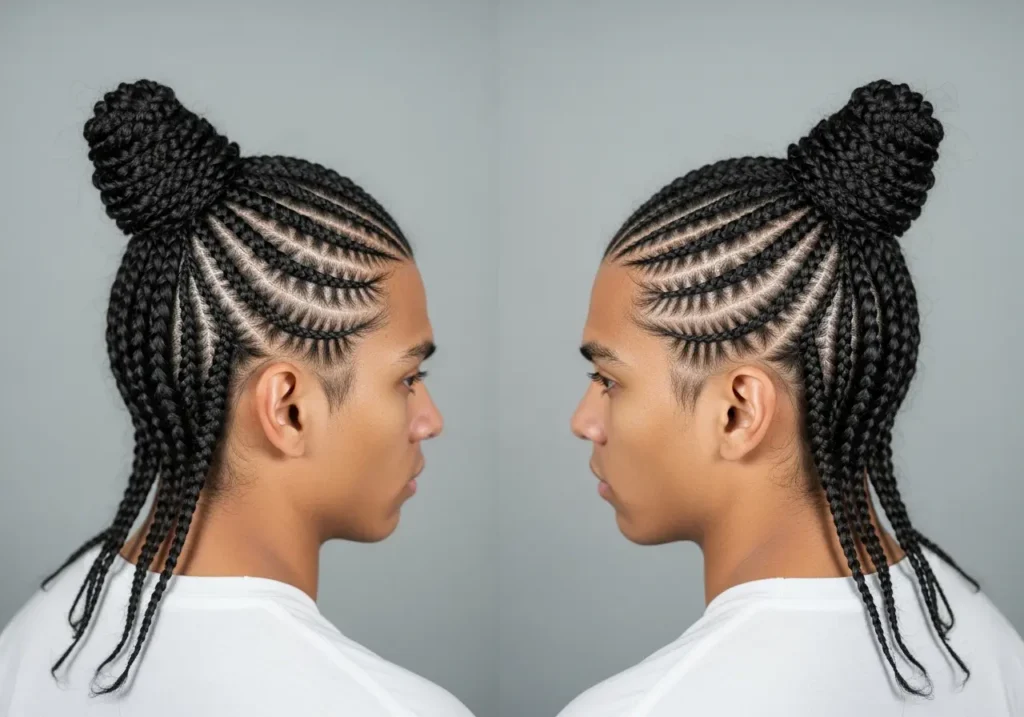
The classic cornrow man bun stands as one of the most recognizable and timeless options available. This style features multiple braids running straight back from the hairline to the crown, where they converge into a neat bun. The clean lines and structured appearance make this choice suitable for various settings, from casual outings to more formal environments.
Creating this look begins with sectioning the hair into parallel rows. The braiding process moves systematically from front to back, incorporating hair close to the scalp. The tightness should remain moderate, secure enough to hold throughout the day but loose enough to avoid tension headaches or damage. Once all cornrows reach the desired point, gathering them into a bun completes the transformation.
The versatility of this style allows for customization through bun placement and size. A high bun creates a more dramatic effect and works well for athletic activities, keeping hair completely off the neck. Alternatively, a low bun positioned at the nape offers a subtle, professional appearance. The number of cornrows can vary based on hair thickness and personal preference, with options ranging from four thick braids to ten or more thinner rows.
Maintenance remains straightforward with this style. Covering the hair at night with a silk or satin scarf preserves the braids and prevents frizzing. Regular moisturizing of the scalp every few days maintains comfort and prevents flaking. With proper care, classic cornrow man buns can last between two to four weeks, making them an excellent choice for busy individuals seeking reliable styling solutions.
02 Feed-In Braids With Top Knot 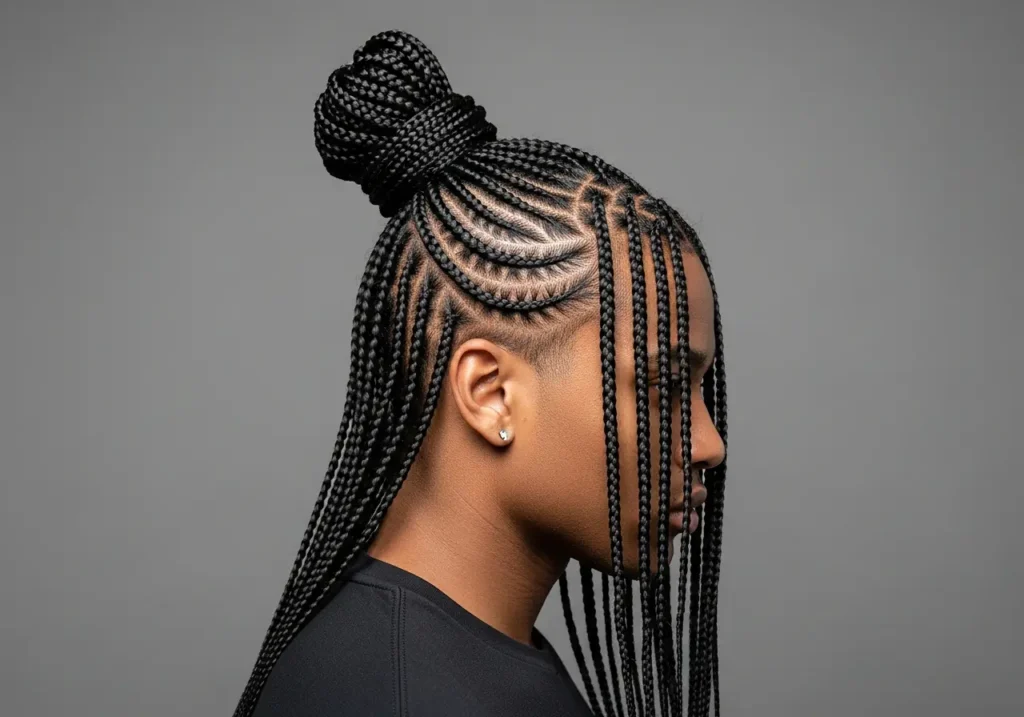
Feed-in braids represent a sophisticated evolution in braiding technique. Unlike traditional methods that begin with the full thickness of each braid, this approach gradually adds hair as the braid progresses down the scalp. The result appears more natural, with less stress placed on the hairline and edges. Combined with a top knot, this style creates an elegant aesthetic that works particularly well for special occasions.
The technique requires skill and patience. Starting with small sections of hair near the hairline, the braider gradually incorporates additional hair as each row moves toward the crown. This gradual building prevents the bulky appearance that sometimes accompanies traditional braiding methods. The seamless integration creates a polished look that appears professionally crafted.
Top knots differ from traditional buns in their placement and styling. Positioned at the highest point of the crown, a top knot adds height and draws attention upward. This positioning works particularly well for individuals seeking to elongate their facial appearance or create a bold statement. The combination of sleek feed-in braids leading to a prominent top knot balances structure with creative flair.
Styling variations within this category offer numerous possibilities. Some prefer tight, precise feed-in braids that create geometric patterns across the scalp. Others opt for looser, more organic appearances that emphasize texture and movement. The top knot itself can be styled smooth and compact or deliberately messy for a more relaxed vibe. Accessories such as hair ties, bands, or cuffs can enhance the overall presentation without overwhelming the natural beauty of the braids.
03 Two Braid Viking Style With Bun 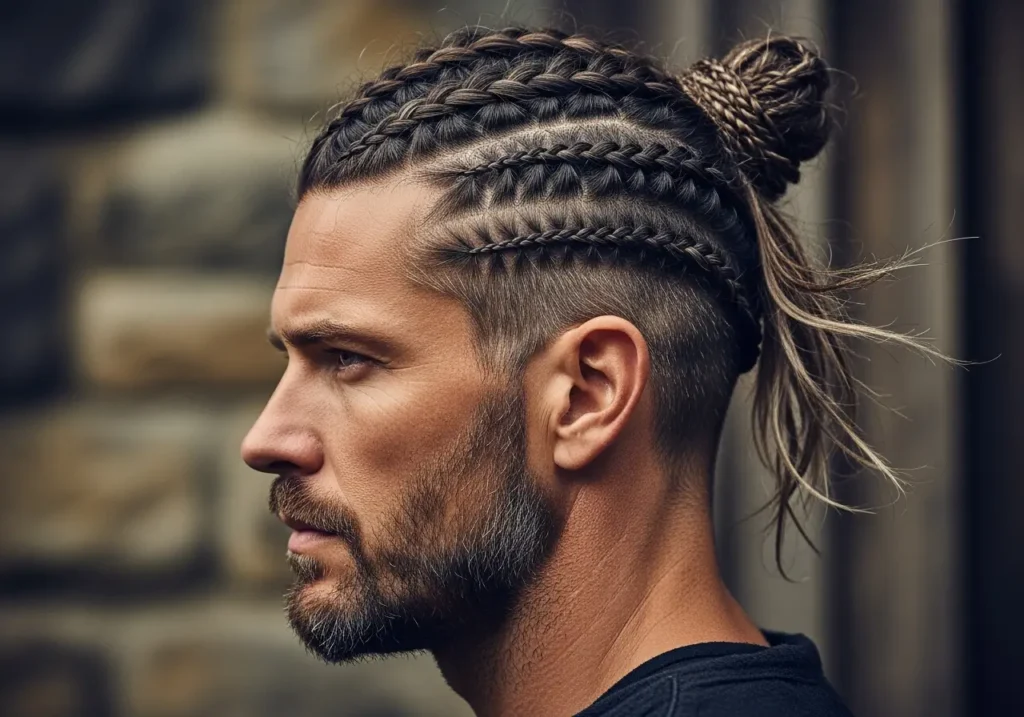
Drawing inspiration from historical Nordic traditions, the two braid Viking style has gained contemporary popularity. This distinctive look features two prominent braids, typically French or Dutch style, running from the temples or front hairline back toward the crown. The braids then merge into a single bun, creating a warrior-inspired aesthetic that commands attention.
French braiding involves crossing sections of hair over one another while gradually incorporating additional strands. This technique creates braids that sit on top of the hair rather than lying flat against the scalp. Dutch braiding, conversely, crosses sections under each other, producing a raised effect that appears more pronounced and dimensional. Both approaches work effectively for the Viking style, with the choice depending on desired visual impact.
The cultural significance of this style extends beyond its visual appeal. Viking warriors traditionally wore their hair in practical styles that kept it secure during battle while reflecting their heritage. Modern adaptations honor these roots while making the style accessible and appropriate for contemporary settings. The combination of masculine strength and meticulous grooming creates a unique balance.
Executing this style successfully requires hair length of at least eight inches for optimal results. The process begins by creating a center or slightly off-center part from the forehead back several inches. Each side receives its braid, which can be tight and precise or slightly looser for a more relaxed appearance. Once both braids reach the designated point, they join together, and the remaining hair wraps into a bun secured with elastic bands or pins.
04 Undercut With Stitch Braids And Bun 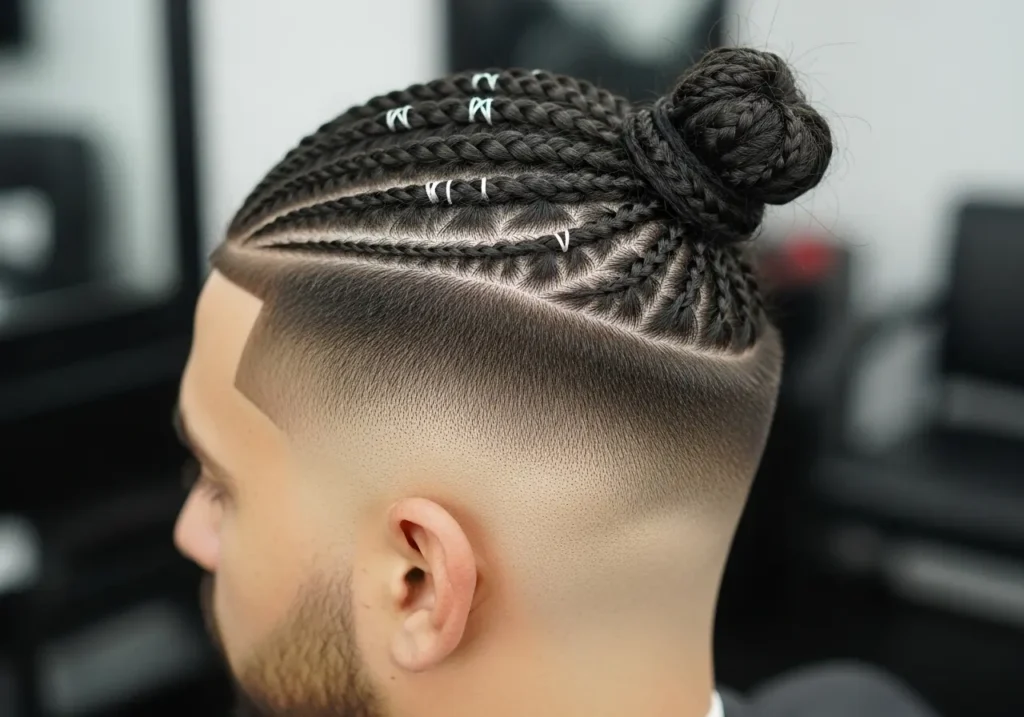
The undercut with stitch braids represents a perfect marriage of edgy modern styling and traditional braiding techniques. Stitch braids earn their name from the distinctive pattern created along each braid’s sides, resembling delicate stitching on fabric. This intricate detailing elevates the overall appearance, transforming a simple braided style into an artistic statement.
Creating the undercut portion requires careful attention to the desired fade level and transition. Some prefer a dramatic contrast with skin-tight fades on the sides and back, while others opt for gentler transitions that maintain some length. The undercut serves multiple purposes beyond aesthetics. It reduces overall hair volume, making the style cooler and more comfortable during warm weather. It also emphasizes the braided section, ensuring the intricate work receives proper attention.
The stitch braiding process demands precision and patience. Using a rat-tail comb or the edge of a pinky fingernail, the stylist creates thin, horizontal lines along each braid’s perimeter. These lines must remain consistent in spacing and angle to achieve the signature stitched appearance. The technique requires steady hands and careful sectioning, making professional execution often worthwhile for those new to the style.
Combining stitch braids with an undercut and bun creates multiple focal points that work together harmoniously. The clean sides draw the eye upward to the detailed braid work, which then culminates in the bun as a final statement piece. This layering of visual elements prevents the style from appearing flat or one-dimensional. The overall effect projects confidence and attention to detail.
05 Box Braids Into Low Man Bun 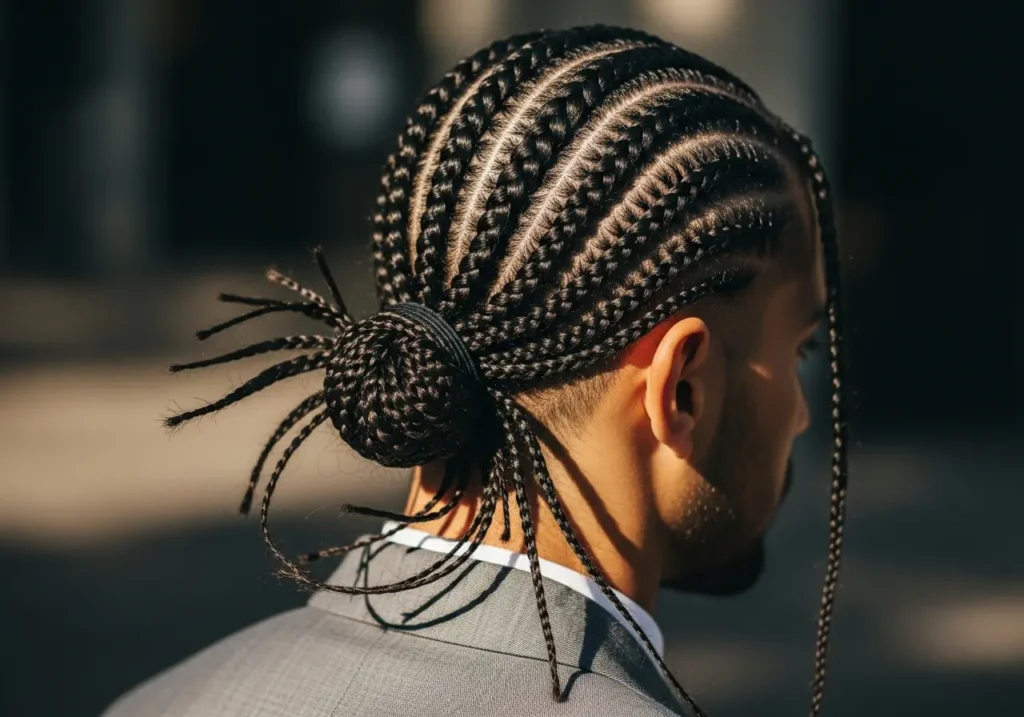
Box braids offer a distinctive alternative to cornrow styles. Rather than lying flat against the scalp, individual box braids hang freely from square-shaped sections of hair. This style originated in African braiding traditions and has become popular worldwide due to its versatility and protective qualities. When gathered into a low man bun, box braids create a relaxed yet refined appearance.
The installation process for box braids takes considerably longer than cornrows, often requiring several hours depending on the desired size and number of braids. Each section of hair is divided into a square or rectangular shape, then braided from root to tip. The braids can be made thin for a delicate look or thick for a bolder statement. Many individuals choose to incorporate hair extensions during this process, adding length and volume while protecting natural hair.
Box braids provide exceptional versatility in daily styling. They can be worn loose and flowing, pulled into ponytails, or as explored here, gathered into buns of various styles. The low man bun positioning creates a mature, sophisticated appearance that works well in professional settings. Unlike high buns that make strong statements, low buns convey understated confidence and refined taste.
Maintenance for box braids differs from cornrow styles. The individual nature of the braids allows for easier scalp access, making moisturizing and cleansing more straightforward. However, the style typically remains in place for six to eight weeks, requiring commitment and proper care routines. Regular light oiling of the scalp and occasional gentle washing maintains freshness without causing frizz or loosening the braids prematurely.
06 Zigzag Part Cornrows With High Bun 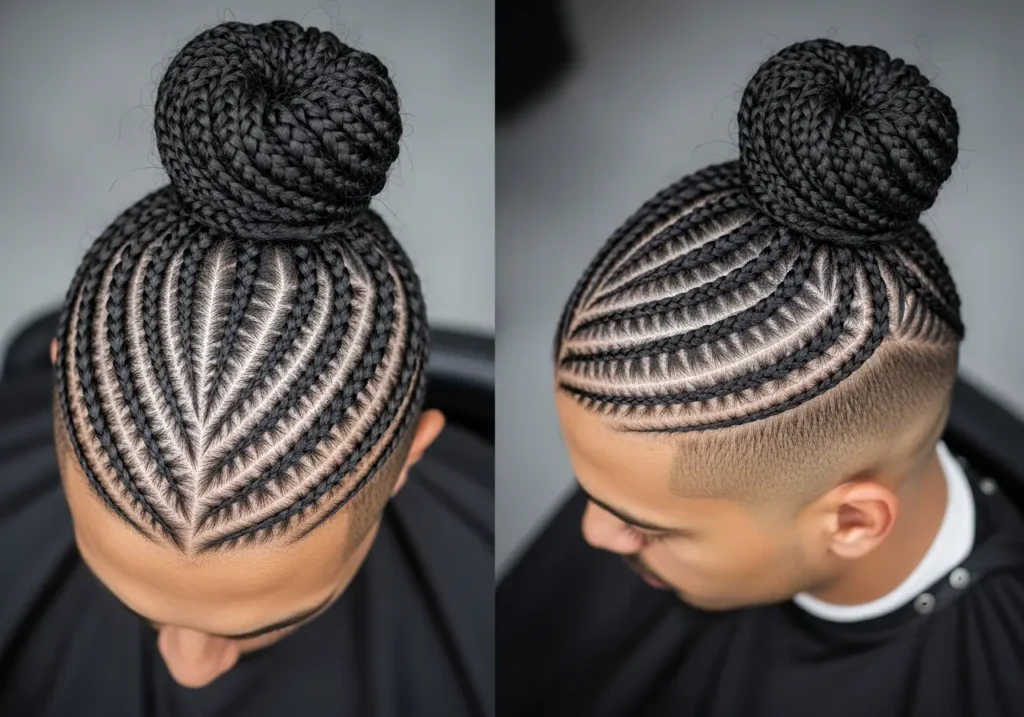
Innovation in braiding often comes through creative parting techniques. The zigzag part cornrow style transforms traditional straight-back rows into dynamic, attention-grabbing patterns. Rather than following predictable straight lines, the parts between each cornrow follow angular, zigzagging paths across the scalp. This geometric approach adds visual interest while maintaining the clean, structured nature of cornrow braiding.
Creating zigzag parts requires steady hands and careful planning. The stylist must visualize the final pattern before beginning, ensuring consistency in the zigzag angle and spacing. Using the pointed end of a rat-tail comb, they create sharp directional changes at regular intervals. The braiding itself follows normal cornrow techniques, but the unconventional parts make the style stand out dramatically.
The high bun placement amplifies the style’s impact. Positioned at the crown or slightly forward, a high bun adds vertical height that elongates the overall silhouette. This proves particularly beneficial for individuals seeking to balance broader facial structures or add presence to their appearance. The elevated positioning also keeps hair completely away from the neck and face, making this an excellent choice for athletic activities or hot weather.
Styling the high bun itself offers creative freedom. Some prefer tight, sleek buns that appear polished and controlled. Others deliberately create texture and volume, allowing some looseness that suggests effortless confidence. Small details like wrapping a single braid around the bun’s base or leaving strategic pieces slightly loosened can personalize the look without compromising its overall structure.
07 French Braid Crown Leading To Messy Bun 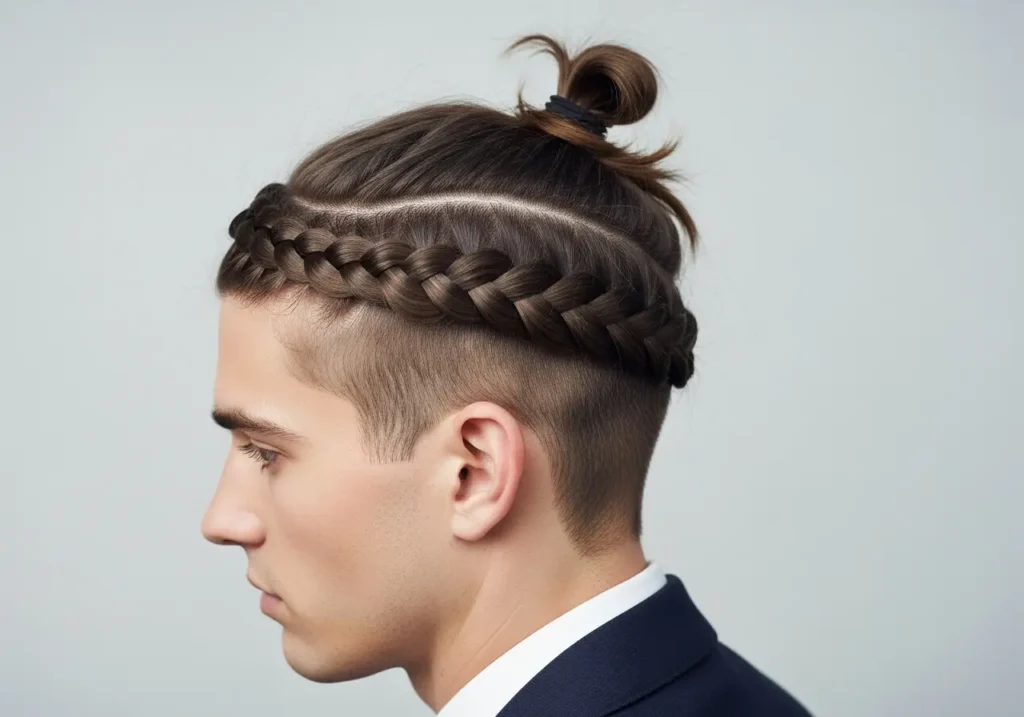
The French braid crown style takes a romantic, intricate approach to braided man buns. This technique involves creating one or more French braids that follow the hairline around the head, forming a crown-like border. The remaining hair then gathers into a deliberately messy bun, creating an interesting contrast between the structured crown and the relaxed central styling.
French braiding around the hairline requires sectioning the hair carefully and working in a circular or semi-circular pattern. The braid begins at one temple, moves around the back of the head near the nape, and continues to the opposite temple. Some variations include creating two French braids that start at either temple and meet at the back. The key involves maintaining even tension and consistently incorporating new hair sections as the braid progresses.
The messy bun component balances the precision of the crown braid. Rather than striving for perfect smoothness, this bun celebrates natural texture and deliberate imperfection. The hair is gathered loosely and twisted or wrapped around itself, with some pieces intentionally left to fall naturally. This creates a lived-in, approachable aesthetic that prevents the overall style from appearing overly formal or rigid.
This combination works particularly well for individuals with naturally wavy or curly hair, as these textures enhance the messy bun’s organic appearance. However, straight hair can achieve similar effects with proper technique and texture-enhancing products. The crown-and-bun combination also offers practical benefits, keeping hair secure and manageable while providing an elevated aesthetic suitable for various occasions from casual gatherings to semi-formal events.
Essential Maintenance And Care Guidelines
Proper maintenance determines the longevity and appearance of braided man bun styles. Regardless of which specific style you choose, certain universal care principles apply. Understanding and implementing these practices ensures your braids remain fresh, comfortable, and attractive throughout their lifespan.
Scalp care takes priority in braided style maintenance. The braiding process creates tension on the scalp that can lead to dryness and irritation if not properly addressed. Lightweight oils such as jojoba, coconut, or specialized braid sprays should be applied to the scalp every two to three days. Focus on areas where the braids originate and where tension feels most pronounced. Gentle massage during application stimulates blood flow and prevents buildup.
Nighttime protection prevents premature frizzing and loosening of braids. Silk or satin scarves, bonnets, or pillowcases reduce friction that cotton materials create. The smooth texture of these fabrics allows hair to glide rather than catch and pull. This simple step significantly extends the life of braided styles, often adding one to two weeks of quality appearance.
Washing braided hair requires a modified approach compared to loose hair care. Rather than thorough shampooing that can cause frizz and loosen braids, focus on cleansing the scalp with diluted shampoo applied directly with a nozzle-tipped bottle or cotton pads. Gently massage the scalp without disturbing the braids themselves, then rinse thoroughly. This process removes buildup and sweat without compromising the style’s integrity.
Edge control and baby hair maintenance deserves special attention. The hairline bears significant stress from braiding and bun placement. Using edge control gels or pomades smooths flyaways and provides a polished appearance, but these products should be used sparingly to avoid buildup. Regular gentle treatment of edges prevents thinning and breakage that can result from repeated tension.
Customizing Styles For Face Shape And Personal Preference
Individual features significantly influence how braided man bun styles appear and whether they complement overall appearance. Understanding face shape, hair texture, and personal style preferences enables informed decisions about which variations to pursue and how to customize them for optimal results.
Round faces benefit from styles that add vertical height and create the illusion of length. High buns and top knots work exceptionally well, drawing the eye upward and elongating the face’s appearance. Braids that start further back from the hairline rather than immediately at the front also help create length. Avoid overly wide bun placements that emphasize horizontal rather than vertical dimensions.
Square faces possess strong, angular features that can handle bold, dramatic styling. Almost any braided man bun variation works well with square face shapes, offering flexibility in experimentation. However, styles with some texture or deliberate messiness can soften the strong angles, creating a more balanced overall appearance. Side-swept elements or asymmetrical designs add interest without overwhelming the natural facial structure.
Oval faces represent the most versatile shape for braided styles. The balanced proportions accommodate virtually any variation, from sleek and structured to loose and textured. This versatility allows individuals with oval faces to focus primarily on personal style preferences and lifestyle needs rather than compensating for facial proportions. Experimentation becomes easier and more forgiving.
Long or rectangular faces require careful consideration to avoid excessive elongation. Low buns positioned at the nape rather than high buns prevent adding too much vertical emphasis. Styles with horizontal elements, such as braids that run partially across the head rather than straight back, create visual width that balances length. Beards and facial hair also help add visual weight to the lower face, creating better overall proportions.
Troubleshooting Common Challenges
Even with proper technique and care, challenges can arise during the creation and maintenance of braided man bun styles. Understanding common issues and their solutions helps preserve the style’s appearance and comfort throughout its duration.
Excessive tension represents one of the most frequent concerns. While braids need adequate tightness to remain secure, too much tension causes discomfort, headaches, and potential hair damage. If you experience persistent pain or tension headaches after getting braids, they are too tight. Immediate action becomes necessary. Gently loosening the most affected sections by carefully pulling the braids away from the scalp can provide relief. For severe cases, removing and redoing the problematic sections proves necessary to prevent permanent damage.
Frizzing occurs naturally over time as new hair growth emerges and individual strands escape their braided confinement. Strategic use of edge control products and oils can tame minor frizz without requiring complete reinstallation. For more significant frizzing, targeted rebraiding of the most affected sections extends the overall style’s life without starting completely from scratch.
Bun slippage frustrates many individuals new to braided bun combinations. Proper securing techniques prevent this common issue. Using multiple small elastic bands rather than one large band distributes tension more evenly. Bobby pins inserted at angles through the bun and into the braids beneath provide additional security. Hair with less natural texture may require texture-enhancing products or slightly rougher handling during bun creation to provide adequate grip.
Scalp irritation and itching can develop, particularly during the first few days after installation. This often results from the adjustment period as the scalp adapts to the new tension patterns. Witch hazel applied with cotton pads provides soothing relief without adding oil or product buildup. If irritation persists beyond the initial adjustment period, this may indicate an allergic reaction to products used during installation or excessive tightness requiring correction.
Cultural Appreciation And Respectful Adoption
Braiding traditions carry deep cultural significance, particularly within African and African diaspora communities. Understanding and respecting these roots while adopting braided styles represents an important consideration for individuals outside these communities. Approaching these hairstyles with knowledge and respect honors their origins while allowing broader appreciation.
Braids have served functional, spiritual, and social purposes in African cultures for thousands of years. Different patterns and styles communicated information about tribe, status, age, religion, and other aspects of identity. This rich history transforms braids from mere hairstyles into cultural artifacts with profound meaning. Recognizing this depth prevents reducing these traditions to simple fashion statements.
Cultural appreciation differs from appropriation through intent, understanding, and acknowledgment. Appreciation involves learning about the styles’ origins, understanding their significance, and crediting their cultural roots. It means wearing braids because you respect and value the tradition, not simply because they appear fashionable. This respectful approach includes supporting Black-owned hair businesses and braiders who carry forward these traditional techniques.
Discussions about who can appropriately wear certain braided styles continue within broader cultural conversations. While opinions vary, general consensus suggests that adoption with respect, acknowledgment, and support for the originating communities represents a positive approach. This includes speaking up when others make ignorant comments, educating yourself about the discrimination many Black individuals face regarding their natural hair and protective styles, and never claiming invention or ownership of styles rooted in other cultures.
The practical benefits of braided styles, including their protective qualities and low maintenance requirements, make them attractive to diverse individuals. This universal appeal need not conflict with cultural respect. The key lies in approaching these styles with humility, willingness to learn, and genuine appreciation rather than entitled appropriation. Supporting the communities from which these styles originate, whether through patronizing Black-owned businesses or advocating against hair discrimination, demonstrates meaningful respect beyond surface-level adoption.
Conclusion
Stylish braids and man bun combinations have evolved from niche trends to mainstream grooming options embraced by men across diverse backgrounds and lifestyles. These versatile styles offer practical benefits including protection, low maintenance, and adaptability while providing aesthetic appeal that ranges from professional polish to bold artistic statements.
The seven styles explored here represent just a sampling of the countless variations possible within this creative space. From classic cornrows to intricate stitch braids, from Viking-inspired designs to contemporary undercut combinations, the options accommodate different hair types, face shapes, and personal preferences. The key to success lies in proper technique, consistent maintenance, and thoughtful customization that honors both the style’s cultural roots and individual needs.
As grooming standards continue expanding and diversifying, braided man bun styles stand as testament to the beauty of this evolution. They demonstrate that masculinity and meticulous hair care are not opposing concepts but complementary aspects of self-expression. Whether you seek a dramatic transformation or subtle enhancement, these braided combinations offer pathways to confident, stylish presentation that reflects who you are while honoring the rich traditions from which these techniques emerged.
Frequently Asked Questions
How long does hair need to be for braided man bun styles?
Most braided man bun styles require at least four to six inches of hair on top, though some variations work with shorter lengths. For more intricate styles like box braids or multiple cornrows leading to buns, six to eight inches provides better results. Hair extensions can be incorporated to add length and volume if your natural hair falls short of these measurements.
How long do braided man bun styles typically last?
The longevity depends on the specific style and maintenance routine. Cornrow-based styles typically last two to four weeks with proper care, while box braids can remain intact for six to eight weeks. Factors affecting duration include hair texture, scalp oiliness, activity level, and nighttime protection practices. Regular moisturizing and gentle handling extend the style’s lifespan significantly.
Can braided styles damage hair or cause hair loss?
When executed properly with appropriate tension, braided styles are protective and promote hair health. However, excessively tight braids can cause traction alopecia, a form of hair loss resulting from repeated pulling on hair follicles. To prevent damage, ensure braids feel comfortable rather than painful, take breaks between installations, and vary braid patterns to distribute tension across different areas of the scalp.
What products are essential for maintaining braided man bun styles?
Essential products include lightweight scalp oils like jojoba or coconut oil, leave-in conditioner, edge control gel or pomade for smoothing flyaways, and diluted shampoo for cleansing. A silk or satin scarf or bonnet for nighttime protection is crucial. Avoid heavy products that cause buildup, and focus on items that moisturize without weighing down the braids or making them greasy.
How much does it typically cost to get professional braided man bun styling?
Costs vary significantly based on location, stylist experience, and style complexity. Simple cornrow styles may cost between 40 to 80 dollars, while intricate patterns with stitch braids or feed-in techniques can range from 80 to 150 dollars or more. Box braids typically fall in the higher price range due to installation time. Prices in major metropolitan areas tend to be higher than in smaller cities or towns.
One Comment