21+ New Haircuts Ideas For Men In 2025
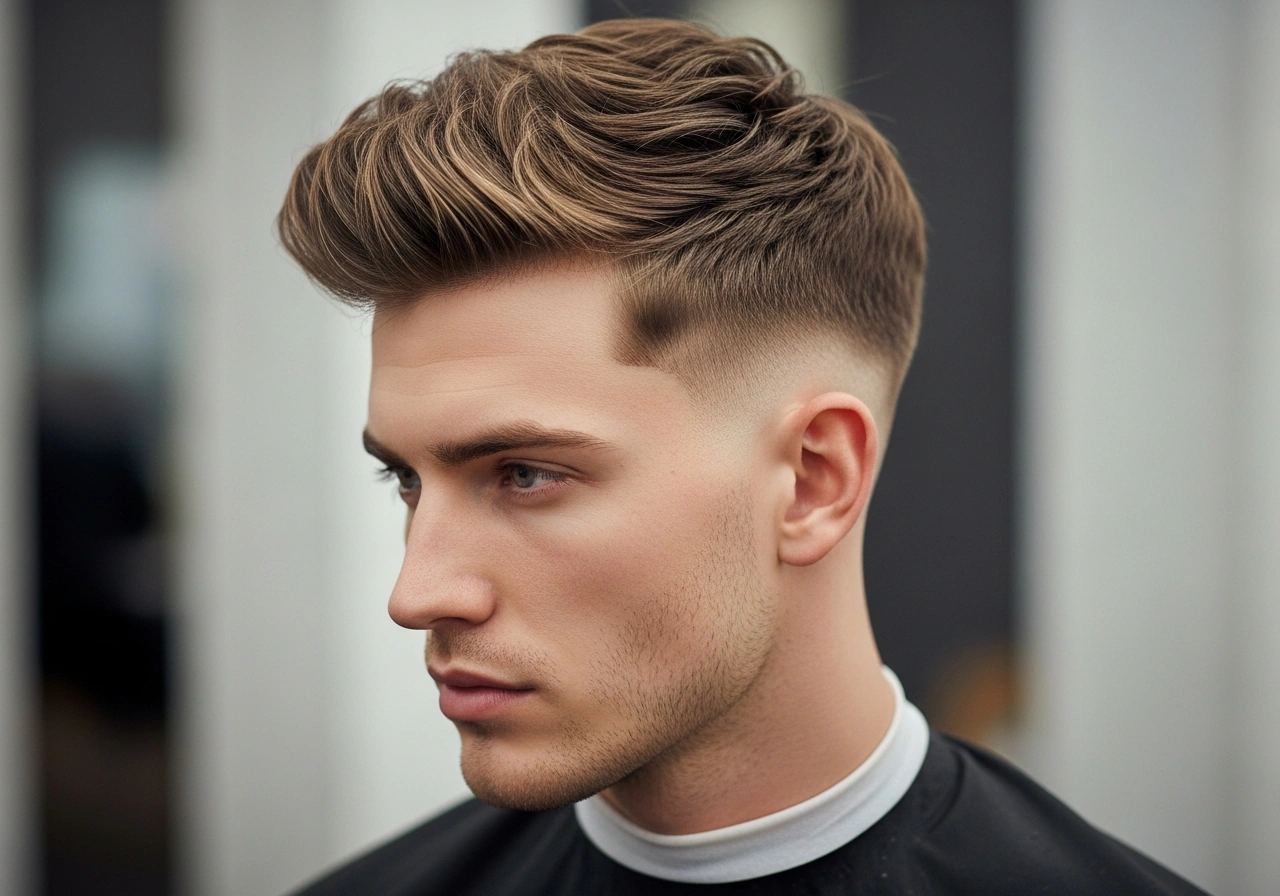
The world of men’s grooming continues to evolve at a remarkable pace, and 2025 brings an exciting blend of reimagined classics and bold innovations. Whether you’re looking to refresh your current look or completely transform your style, understanding the latest haircut trends can help you make an informed decision that complements your lifestyle, face shape, and personal aesthetic. This comprehensive guide explores over twenty-one cutting-edge haircut ideas that are defining men’s style this year, offering something for every preference, hair type, and occasion.
Choosing the right haircut goes beyond simply following trends. The best hairstyle enhances your natural features, fits seamlessly into your daily routine, and boosts your confidence. From low-maintenance crops to statement-making styles that require dedicated upkeep, the options available today cater to diverse needs and preferences. The key is finding that perfect balance between what’s current, what suits you, and what you can realistically maintain.
The Modern Textured Crop
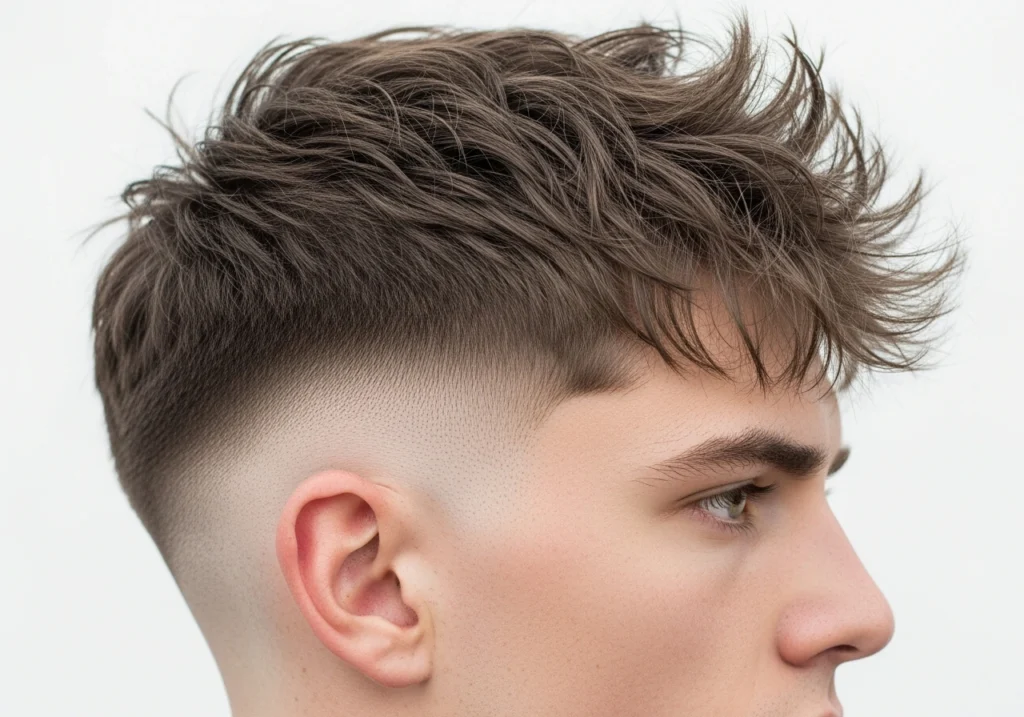
The textured crop has solidified its position as one of the most versatile and popular choices for men in 2025. This style features short sides with slightly longer hair on top, cut to create natural texture and movement. The beauty of the textured crop lies in its adaptability. It works exceptionally well for men with thick hair, as the layering reduces bulk while adding definition. The cut typically involves choppy, uneven lengths on top that create a deliberately casual, effortless appearance.
Styling the textured crop requires minimal effort, making it ideal for busy professionals and students alike. A small amount of matte clay or texturizing paste worked through damp hair creates that coveted piece-y, lived-in look. The style works particularly well for oval and square face shapes, as the texture on top adds dimension without overwhelming facial features. One significant advantage is that as the cut grows out, it maintains its shape reasonably well, extending the time between barbershop visits.
High Fade with Hard Part
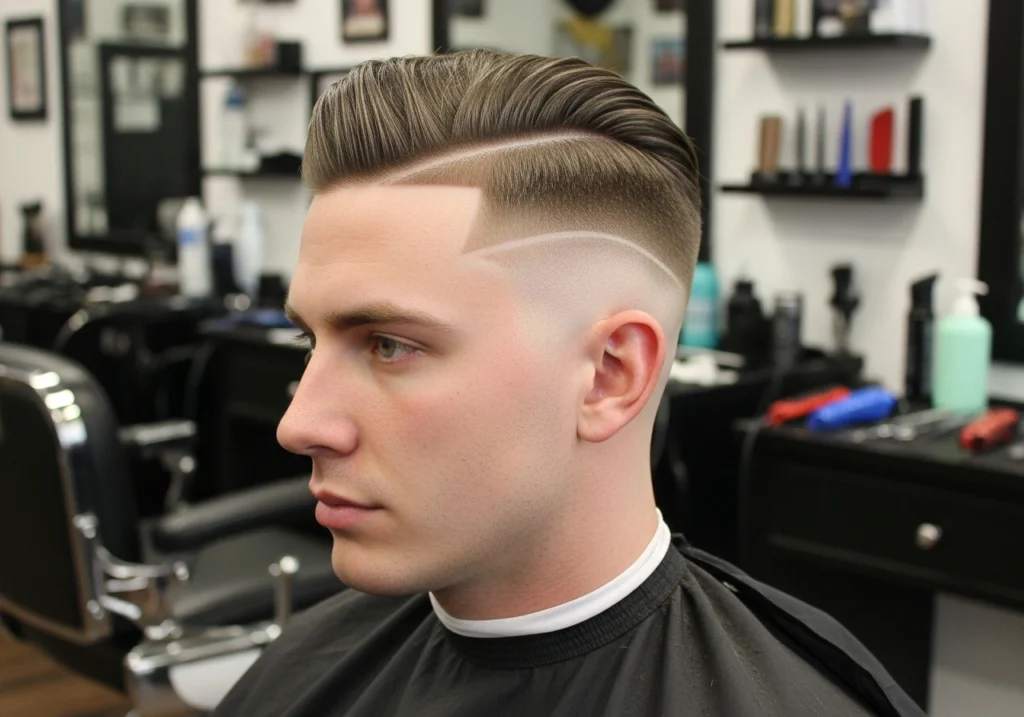
The high fade with hard part represents precision barbering at its finest. This haircut features a dramatic fade that starts high on the sides and back, transitioning from skin to longer hair in a matter of inches. The hard part is a shaved line that creates a sharp, defined separation between the faded sides and the longer top section. This geometric element adds a polished, architectural quality to the overall look.
This style projects confidence and attention to detail, making it particularly popular among young professionals in creative industries. The longer hair on top can be styled in various ways, from slicked back for formal occasions to textured and messy for weekend casual looks. Regular maintenance is essential to keep the fade crisp and the hard part visible, typically requiring barbershop visits every two to three weeks.
The Contemporary Pompadour
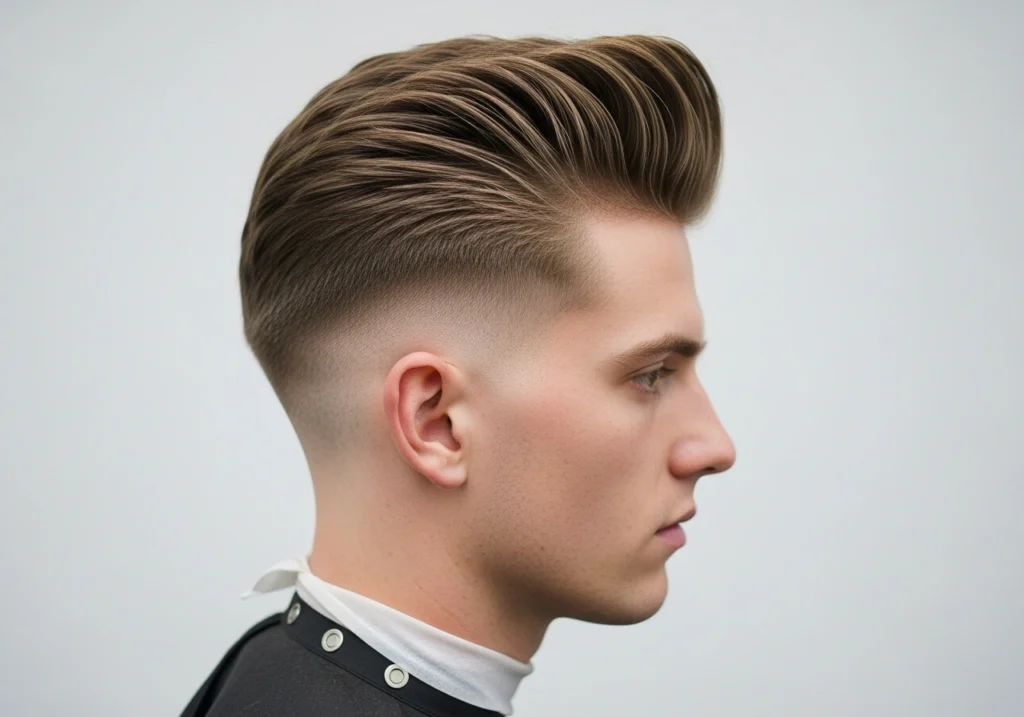
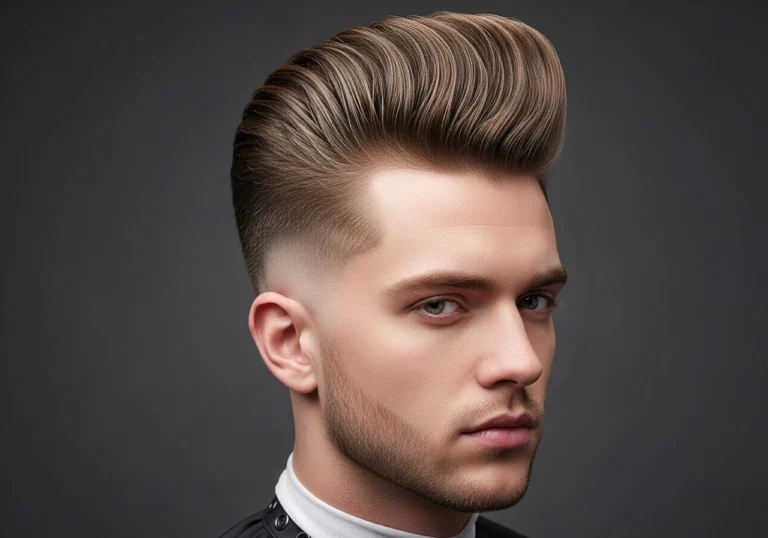
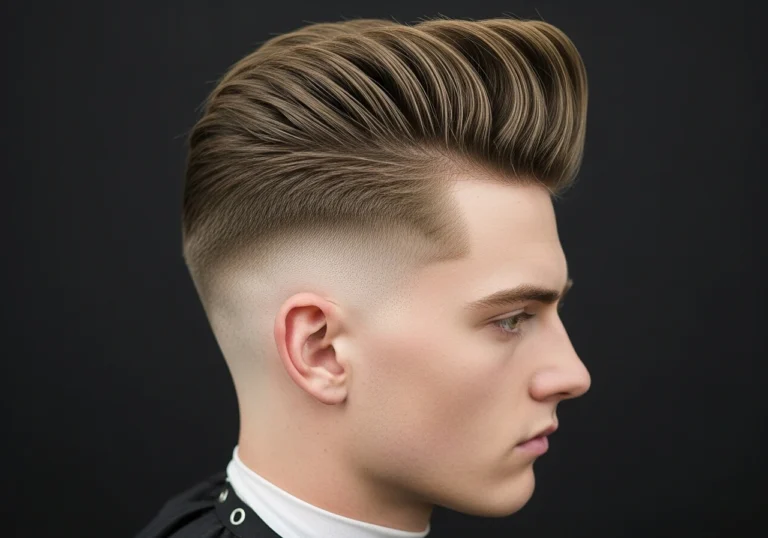
The pompadour has undergone numerous transformations throughout history, and its 2025 iteration strikes a perfect balance between vintage sophistication and modern edge. Today’s pompadour features voluminous height at the front that gradually tapers toward the crown, paired with faded or tapered sides that prevent the style from appearing too heavy. Unlike its overly sculpted predecessors, the contemporary version embraces a more natural, slightly undone finish.
Creating this look requires hair with some length on top, typically three to five inches, allowing for the necessary volume and sweep. Blow-drying is crucial to achieving the height and shape, with the hair directed upward and backward from the forehead. A combination of volumizing mousse applied to damp hair and a medium-hold pomade for finishing provides the structure needed while maintaining flexibility. This style particularly flatters men with heart-shaped or oval faces, as the volume balances facial proportions.
Low Maintenance Buzz Cut Variations
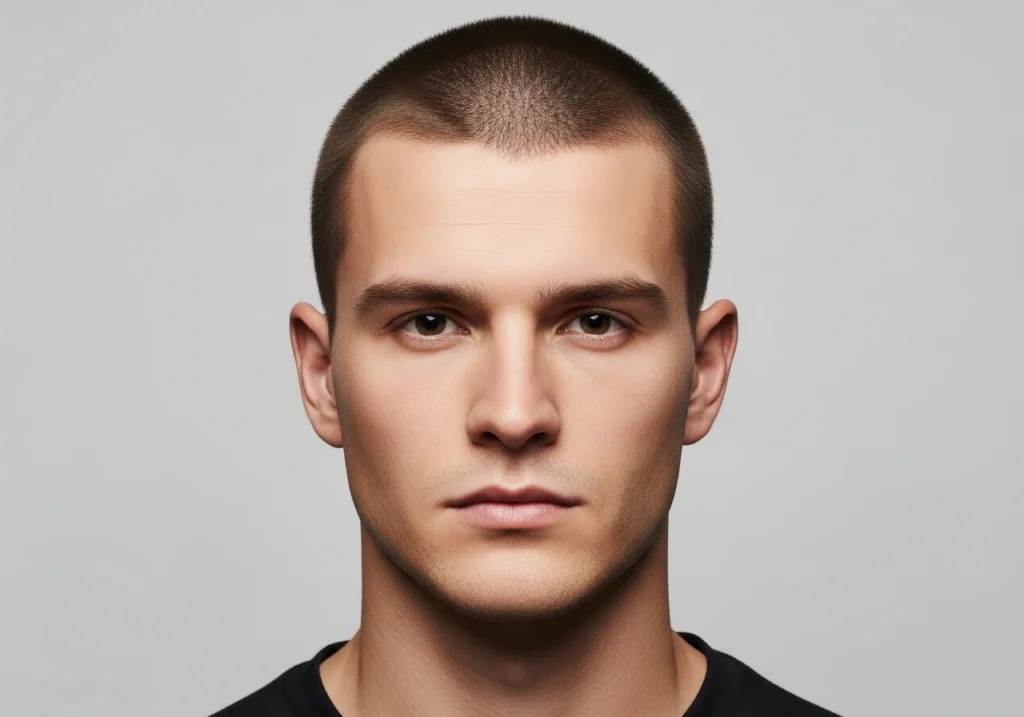
Buzz cuts have evolved far beyond the simple all-over clipped look. In 2025, barbers are creating sophisticated variations that maintain the low-maintenance appeal while adding visual interest. The butch cut features slightly longer hair on top compared to the sides, creating subtle dimension. The induction cut offers a uniform length all over, typically ranging from one-eighth to half an inch, providing a clean, military-inspired aesthetic.
The burr cut sits between these two options, featuring a slightly longer length that shows texture while remaining extremely short. These styles are particularly advantageous for men experiencing hair thinning or those living in warmer climates. The minimal styling requirement means you can literally get up and go, making these cuts ideal for athletes, military personnel, or anyone prioritizing convenience. Despite their simplicity, these styles project masculinity and confidence while highlighting facial features and head shape.
Textured French Crop
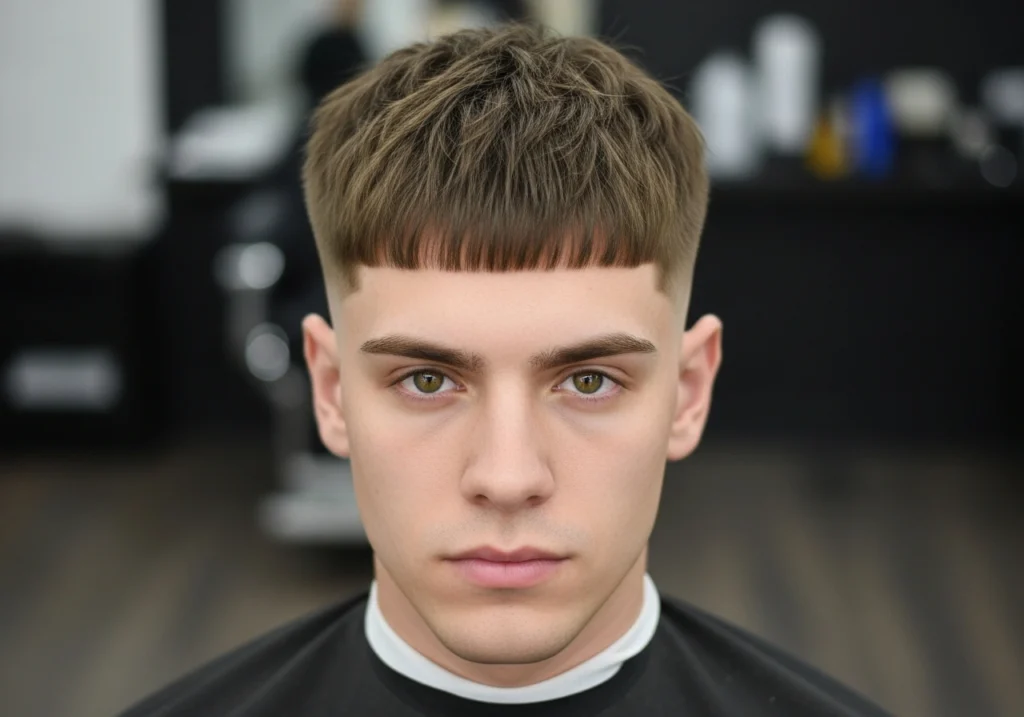
The French crop distinguishes itself through its short, horizontally cut fringe and textured top. This European-influenced style has gained tremendous popularity for its ability to work with various hair types and face shapes. The fringe typically falls forward naturally, sitting just above the eyebrows, while the top section features choppy, layered cutting that creates movement and dimension.
One of the primary advantages of the French crop is its suitability for men with receding hairlines, as the forward fringe draws attention away from the temples. The sides are usually kept short through fading or tapering, creating a clean contrast with the textured top. Styling is straightforward, requiring only a small amount of product worked through towel-dried hair and pushed forward. This cut works exceptionally well for fine to medium hair textures and complements round or square face shapes by adding angularity through the horizontal fringe line.
Mid Fade with Quiff
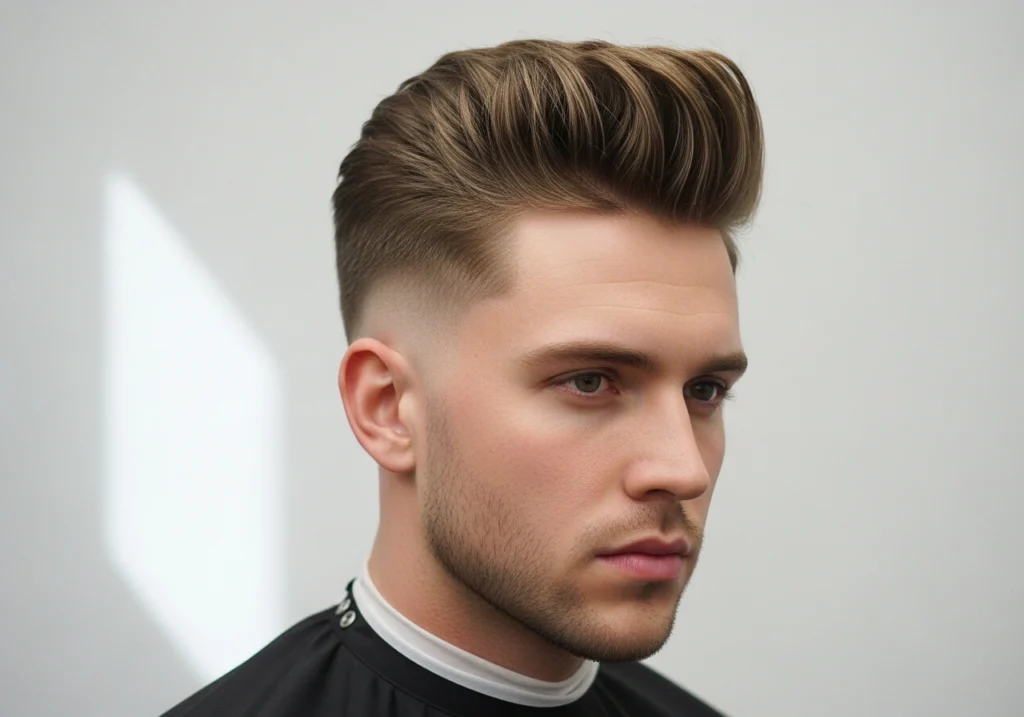
The mid fade with quiff combines classic styling with modern barbering techniques. The fade begins at the temple level, creating a gradual transition that’s less dramatic than a high fade but more defined than a low fade. The quiff involves sweeping the front hair upward and slightly backward, creating volume and a subtle pompadour-like effect while maintaining a more relaxed appearance.
This versatile style transitions seamlessly from professional environments to social settings. The height of the quiff can be adjusted based on preference and occasion, ranging from a modest lift for conservative workplaces to dramatic volume for evening events. Achieving this look requires blow-drying the front section upward while the hair is damp, then applying a medium to strong hold product to maintain the lift throughout the day. The style works best for men with thick to medium hair density and particularly flatters those with longer face shapes by adding width at the crown.
The Disconnected Undercut

The disconnected undercut creates striking contrast through its deliberate lack of blending between the long top and short sides. Unlike traditional undercuts that feature gradual transitions, this version maintains a clear, visible line where the lengths change. The sides and back are clipped very short or even shaved, while the top retains significant length, typically four inches or more.
This bold style makes a definitive statement and works particularly well for men with thick, straight hair that can hold its shape when styled. The dramatic contrast allows for versatile styling options on top, from slicked back sophistication to messy, textured casual looks. Some men choose to emphasize the disconnect further with a hard part shaved along the division line. Regular maintenance is crucial, as even slight growth on the sides can diminish the intentional contrast that defines this cut.
Classic Taper with Side Part
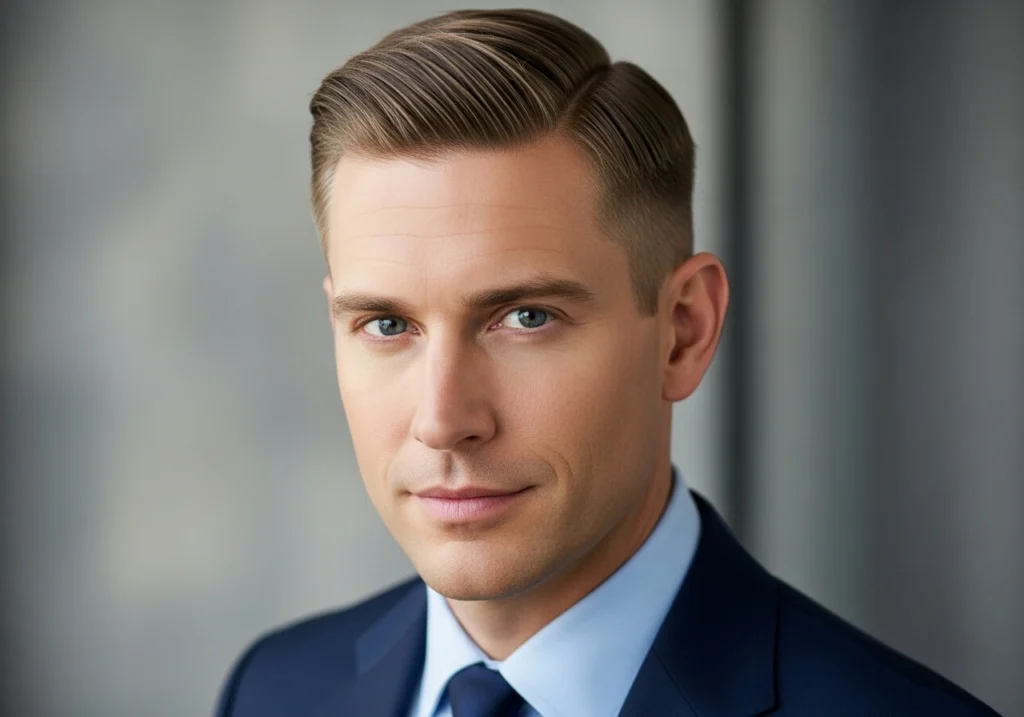
Timeless elegance never goes out of style, and the classic taper with side part exemplifies this principle. This refined haircut features a gradual taper on the sides and back, with longer hair on top styled with a clean side parting. The taper creates a subtle gradient rather than the more dramatic transitions seen in fade cuts, offering a sophisticated, conservative appearance suitable for formal professional environments.
The side part can be enhanced with a subtle hard part for added definition, though many men prefer the softer look of a natural parting. This style requires regular trimming to maintain its shape and daily styling with a comb and pomade or light wax to keep the part defined and hair in place. It particularly complements men with oval or diamond face shapes and works well with most hair textures, though it achieves peak sophistication with straight to slightly wavy hair.
Skin Fade with Design
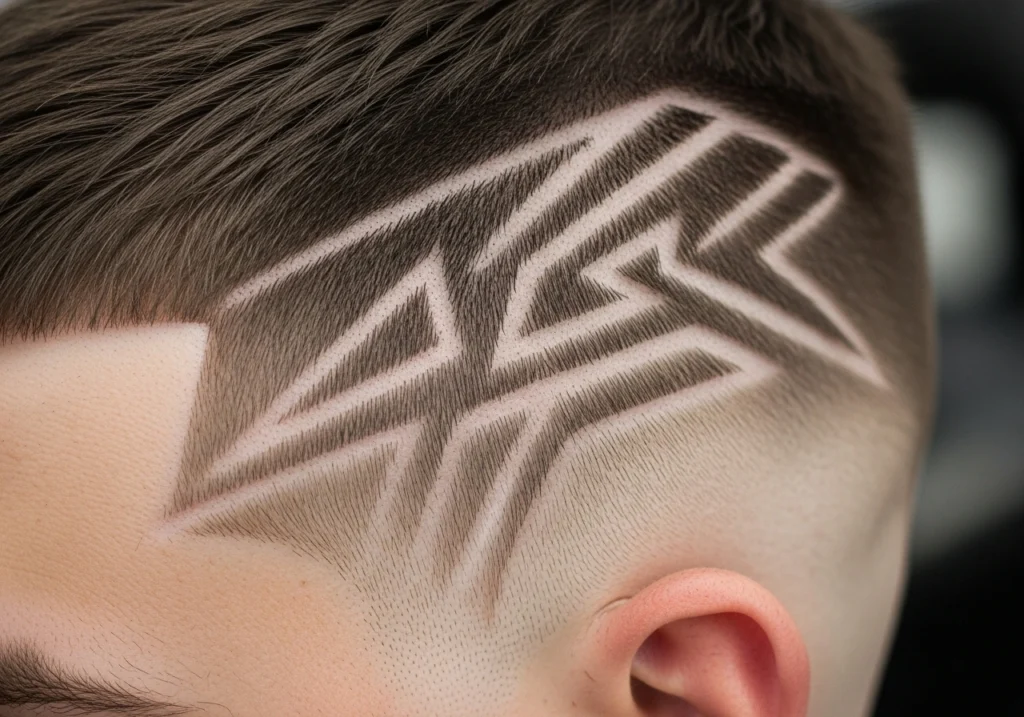
The skin fade with design elevates barbering into an art form. This haircut features an ultra-close fade that transitions down to bare skin at the sides and back, creating maximum contrast with longer hair on top. What distinguishes this style in 2025 is the incorporation of shaved designs ranging from simple lines to intricate geometric patterns or artistic imagery carved into the faded sections.
These designs add personality and individuality to the haircut, allowing for creative expression that can be changed with each visit to the barber. Popular design elements include lightning bolts, waves, tribal patterns, or custom artwork reflecting personal interests. The skin fade requires exceptional skill to execute properly, ensuring smooth gradients without visible lines or patches. Maintenance is intensive, with designs needing refreshing every one to two weeks to remain visible as hair grows.
The Ivy League Cut
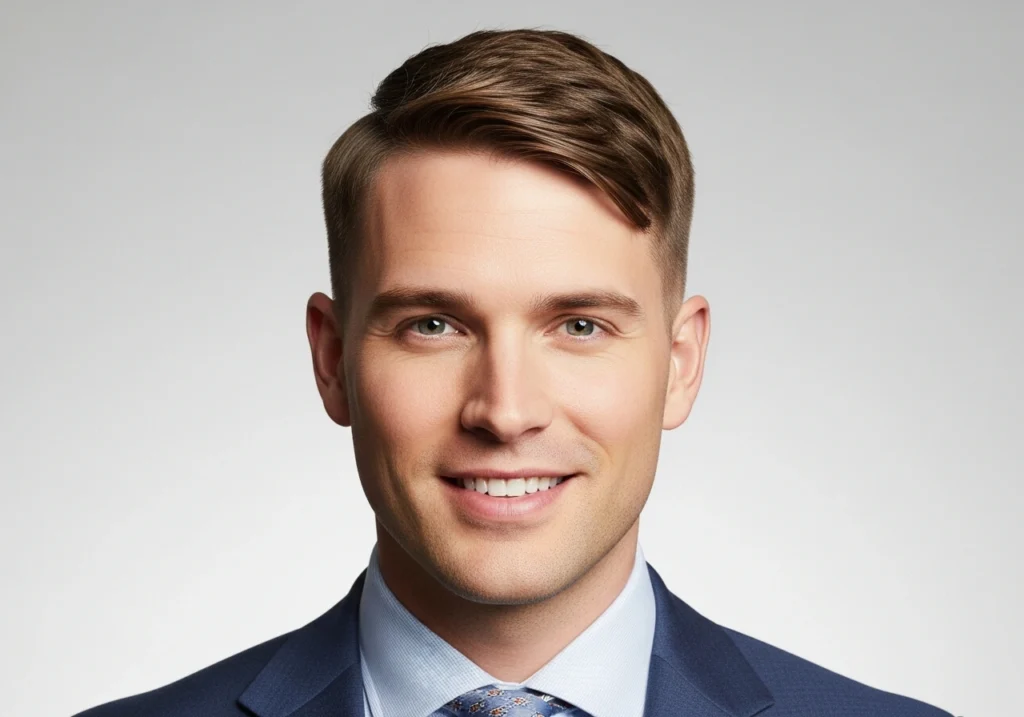
The Ivy League cut, also known as the Harvard clip or Princeton cut, offers understated refinement perfect for professional settings. This style features short, tapered sides with enough length on top to create a subtle side part or slight forward styling. The cut is longer than a crew cut but shorter than traditional side-parted styles, striking an ideal balance between polished and practical.
This versatile option requires minimal styling, typically just a small amount of light pomade or cream combed through for definition and hold. The Ivy League cut works exceptionally well for men with fine to medium hair who want a professional appearance without extensive daily styling routines. It complements virtually all face shapes and projects an image of competence and reliability, making it a perennial favorite in corporate, legal, and academic environments.
Long Slick Back
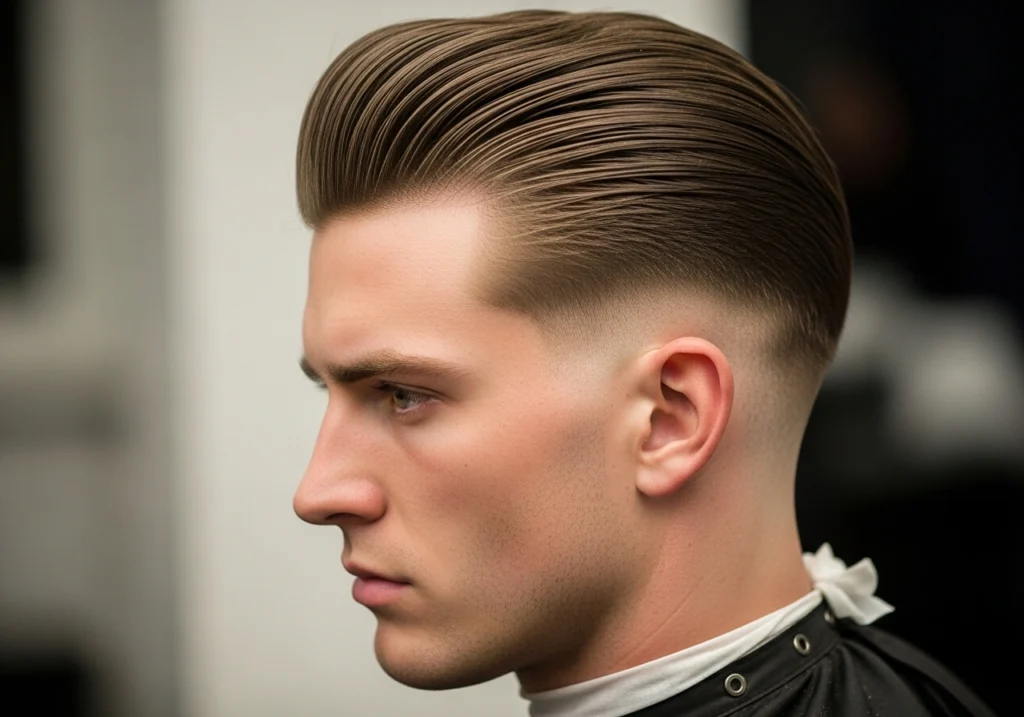
The long slick back makes a powerful statement of confidence and style. This look requires significant length on top, typically six inches or more, which is combed straight back from the forehead and held in place with pomade or gel. The sides can be kept relatively long for a more classic appearance or faded for a contemporary twist.
Achieving this style successfully requires patience, as growing out the necessary length takes time. Daily styling involves applying product to damp hair and combing everything smoothly backward, ensuring even distribution and no stray pieces. The slick back works particularly well for men with thick, straight hair that holds its shape. This commanding style projects authority and sophistication, though it may appear too formal for casual environments. It especially flatters men with strong jawlines and angular facial features.
Textured Crop with Fringe

The textured crop with fringe adds a youthful, contemporary edge to the classic crop silhouette. This variation features choppy, layered cutting throughout the top with a textured fringe that falls forward, typically just touching or slightly covering the forehead. The intentional irregularity creates movement and visual interest while maintaining a masculine, structured outline.
This style works exceptionally well for men with naturally wavy or slightly curly hair, as the texture enhances the cut’s inherent character. Styling requires only a small amount of matte product worked through with fingers, embracing the piece-y, imperfect finish. The fringe element makes this cut particularly suitable for men with larger foreheads or those wanting to minimize the appearance of forehead wrinkles. It complements oval, heart, and diamond face shapes while projecting a relaxed yet put-together aesthetic.
Drop Fade with Curls
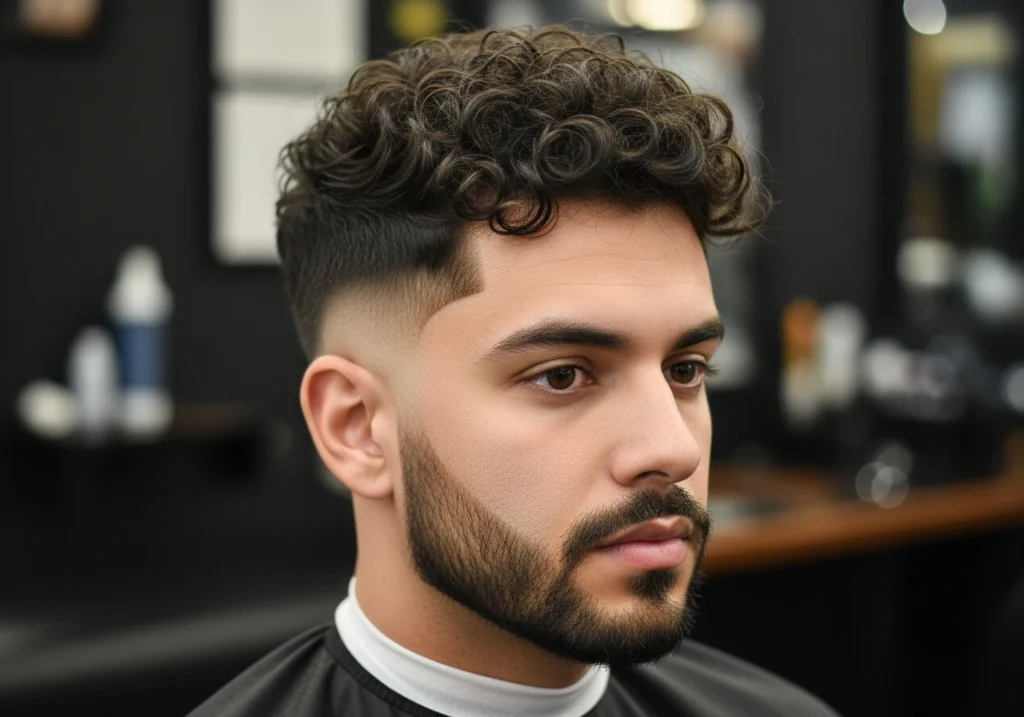
Men with curly hair are embracing their natural texture more than ever, and the drop fade with curls perfectly showcases this celebration of natural hair. The drop fade curves down behind the ears, following the natural contour of the head, creating a distinctive shape that differs from traditional straight-across fades. The top section maintains significant length to allow curls to form and display their natural pattern.
This style requires specific products designed for curly hair, including leave-in conditioners and curl-defining creams that enhance the natural curl pattern while controlling frizz. The contrast between the tightly faded sides and voluminous curls on top creates striking dimension. Regular conditioning treatments help maintain curl health and definition. This cut works particularly well for men with tight to medium curls and complements round or square face shapes by adding height and elongating facial proportions.
The Regulation Cut
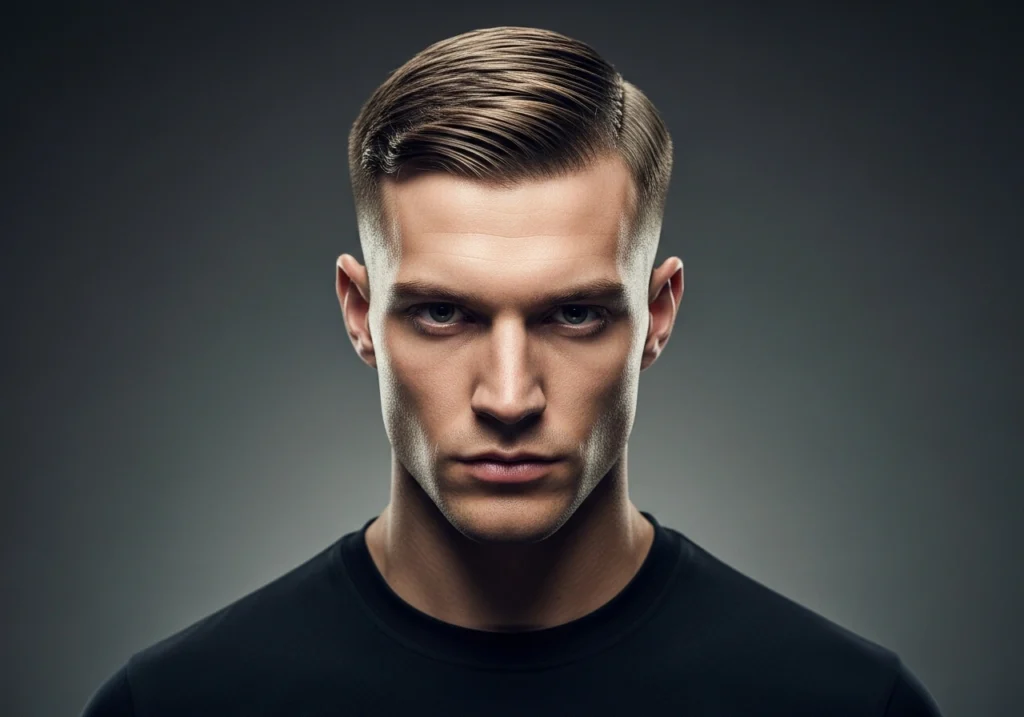
The regulation cut maintains its appeal through its no-nonsense functionality and clean appearance. Inspired by military standards but adapted for civilian style, this haircut features very short sides and back with slightly more length on top, all cut to uniform specifications that create a sharp, disciplined look.
The appeal lies in its extreme low maintenance requirements and universal acceptability across professional environments. This cut requires virtually no styling and grows out evenly, maintaining its shape for several weeks. It particularly suits men with active lifestyles who prioritize function over fashion-forward styling. The regulation cut works with all face shapes and hair types, though it especially benefits those with thick, coarse hair that might be difficult to manage at longer lengths.
Angular Fringe with Fade
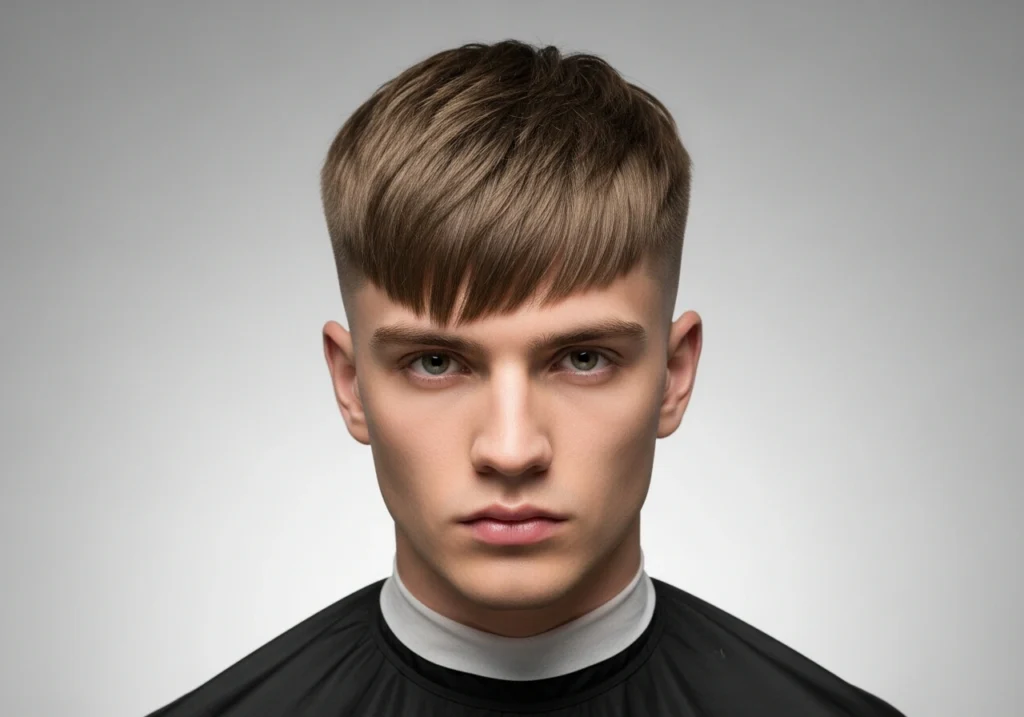
The angular fringe cut features a distinctive diagonal fringe that sweeps across the forehead, creating dynamic lines and visual movement. This contemporary style typically pairs the angled fringe with faded sides, though the degree of fade can vary based on preference. The fringe might angle from short on one side to longer on the other, or feature a uniform angled cut across the forehead.
This geometric approach adds architectural interest and works particularly well for men with straight to slightly wavy hair that can hold the intended shape. The angular element creates asymmetry that adds intrigue and modernity to the overall look. Styling involves blow-drying the fringe into position and using a light to medium hold product to maintain the angle throughout the day. This cut especially flatters men with round faces, as the diagonal lines create the illusion of length and angularity.
Messy Wavy Top with Skin Fade
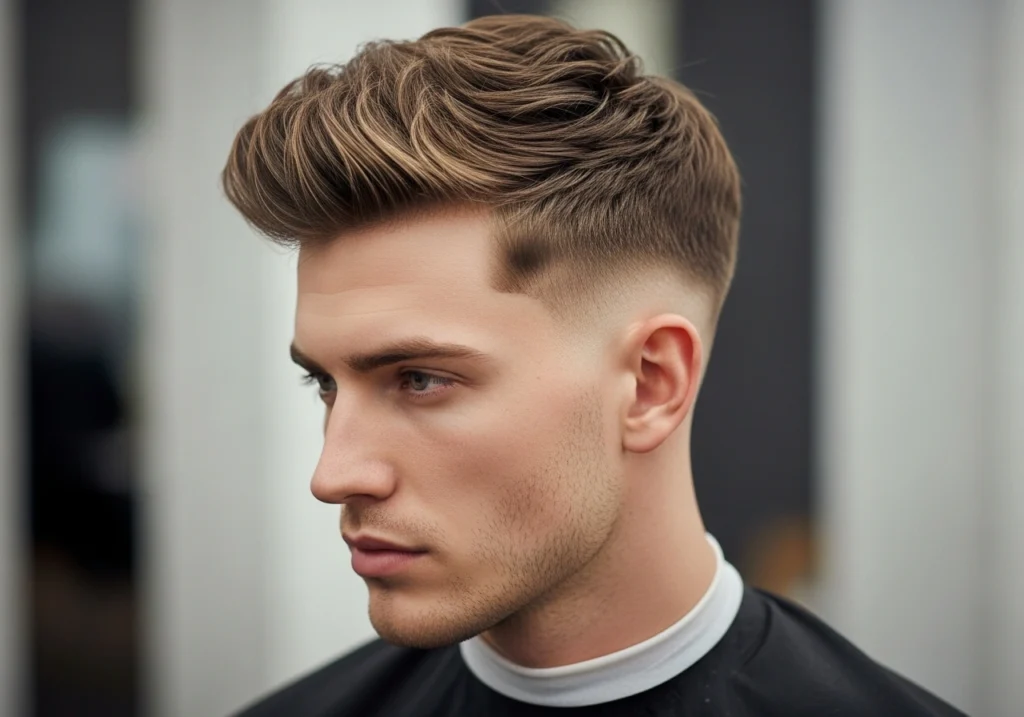
This style celebrates natural wave patterns while incorporating modern barbering precision. The skin fade provides clean, sharp sides that gradually disappear into the skin, while the top maintains significant length to allow waves to form and create texture. The intentionally messy styling embraces imperfection and natural movement, contrasting beautifully with the precision of the fade.
Men with natural wave patterns find this cut particularly flattering, as it works with rather than against their hair’s inherent tendencies. Styling involves applying sea salt spray or texturizing product to damp hair, then either air-drying or diffusing to enhance wave formation. The result is an effortlessly cool appearance that balances refinement with relaxed style. This cut suits most face shapes and projects a confident, contemporary aesthetic appropriate for creative professional environments and casual settings alike.
The Crew Cut Fade
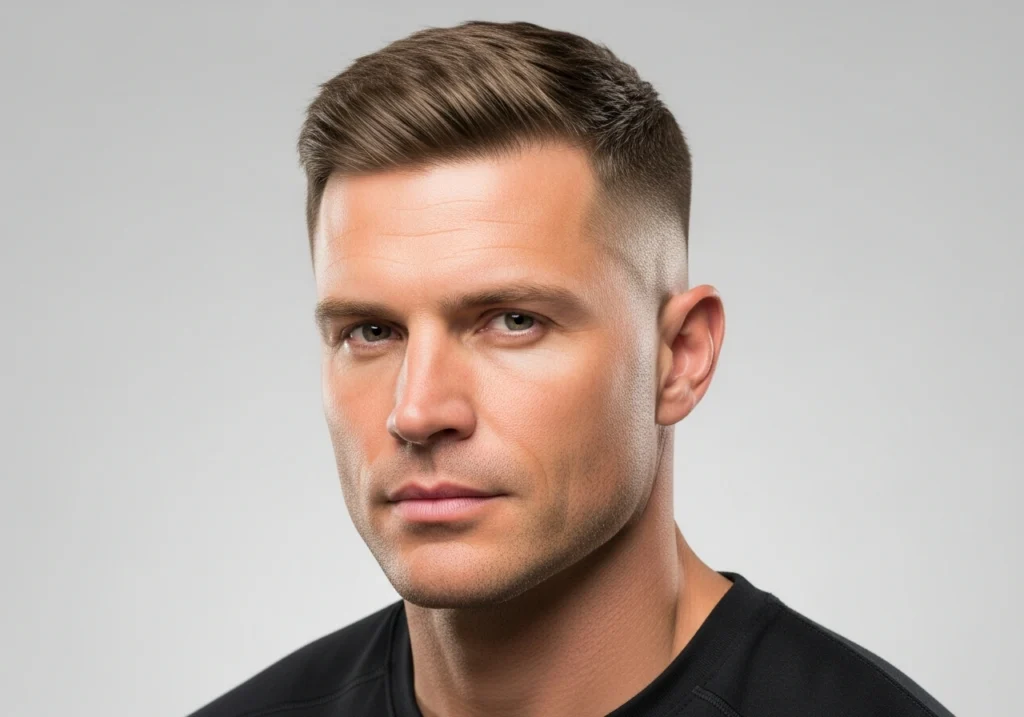
The crew cut fade represents an evolution of the classic military-inspired cut, adding contemporary fading techniques to the timeless short-all-over style. This version maintains the crew cut’s characteristic short length on top with a slightly longer front section, but incorporates a fade on the sides and back rather than the traditional uniform taper.
This modernized approach creates more dimension and visual interest while retaining the practical, masculine appeal of the original crew cut. The minimal length means almost zero styling time, requiring only a quick towel dry after showering. The crew cut fade works exceptionally well for men with thick hair, as the short length prevents bulk and weight. It complements athletic builds and angular facial features, projecting straightforward masculinity and practicality.
Longer Top with Temple Fade
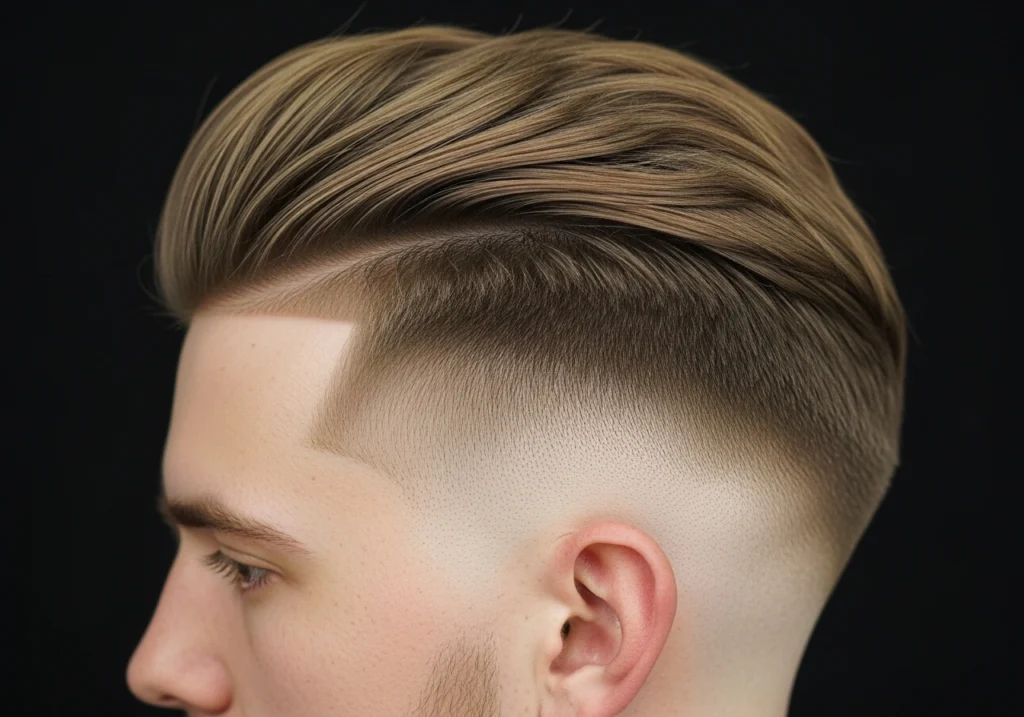
This balanced style maintains moderate to long length on top while incorporating a temple fade that specifically targets the temple region, creating clean lines around the face without extending the fade down the entire head. The longer top provides styling versatility, allowing for various looks from slicked back to textured and messy.
The temple fade, sometimes called a temp fade, creates definition around the hairline and temples, enhancing facial structure without the commitment of a full fade. This approach works particularly well for men who want the clean aesthetic of faded sides but prefer to maintain more overall length. Styling options are extensive, from professional side parts to casual tousled textures, making this a highly adaptable choice for men whose schedules include both formal and casual situations.
Brush Up with Low Fade
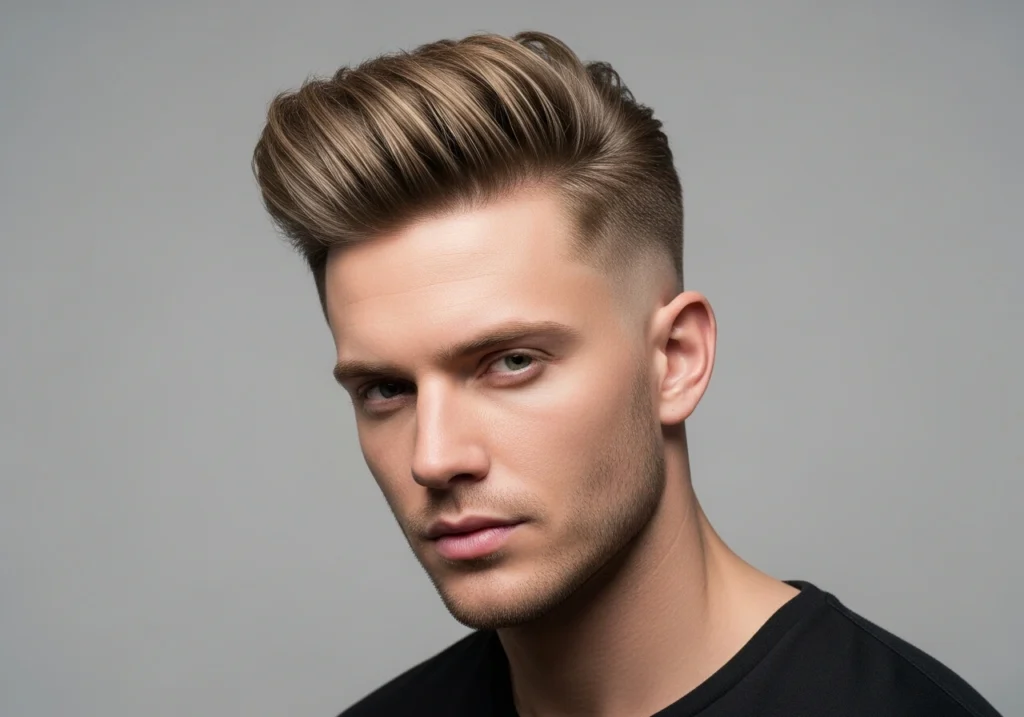
The brush up style involves styling the top hair upward and slightly forward, creating volume and height while maintaining a natural, textured appearance. When paired with a low fade that begins just above the ears, this creates a balanced look that’s neither too conservative nor overly dramatic.
Achieving this style requires blow-drying the hair upward from the roots while still damp, creating lift and direction. A volumizing product applied beforehand helps maintain the upward orientation throughout the day. The brush up works particularly well for men with fine to medium hair, as the styling technique creates the illusion of greater density and volume. This cut flatters longer face shapes by adding width at the top and works well in both professional and casual contexts.
Caesar Cut with Modern Twist
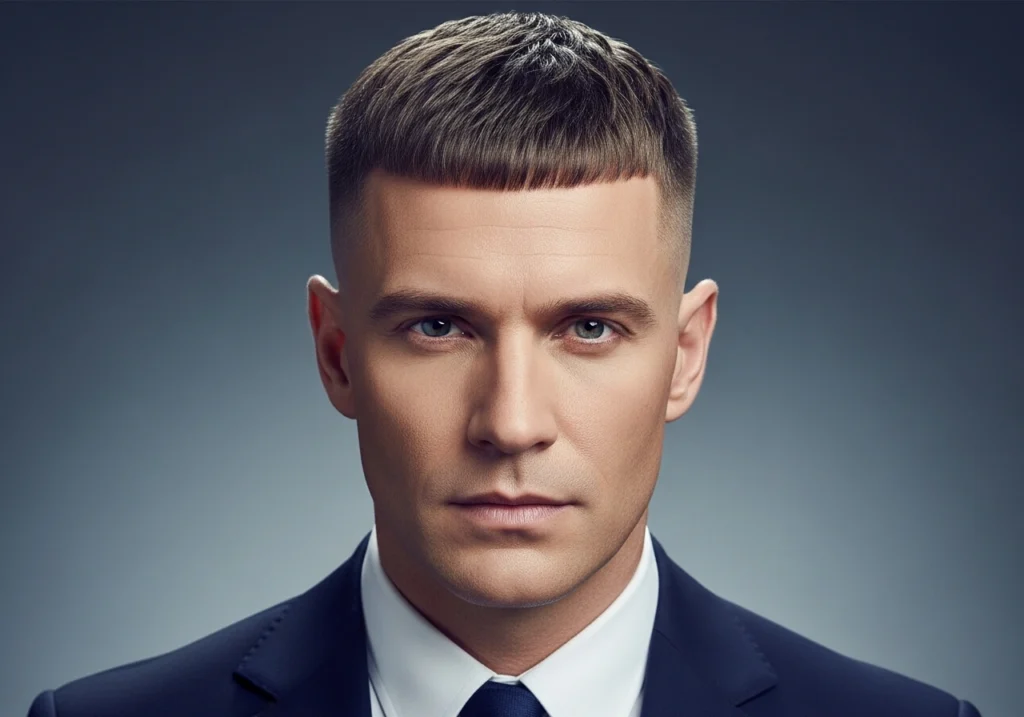
The Caesar cut, characterized by its short, horizontally cut fringe and uniform length throughout, receives a contemporary update through subtle texturing and optional fading on the sides. The traditional version features blunt, straight-across cutting, while the modern interpretation incorporates point-cutting techniques that create texture and remove weight.
This low-maintenance style works exceptionally well for men with thinning hair or receding hairlines, as the forward fringe minimizes these concerns. The short length throughout means minimal styling requirements, typically just a quick application of light product for definition. When combined with a subtle fade on the sides, the Caesar cut maintains its classic character while feeling current and fresh. It particularly suits men with square or rectangular face shapes and projects an image of quiet confidence.
Comb Over Fade
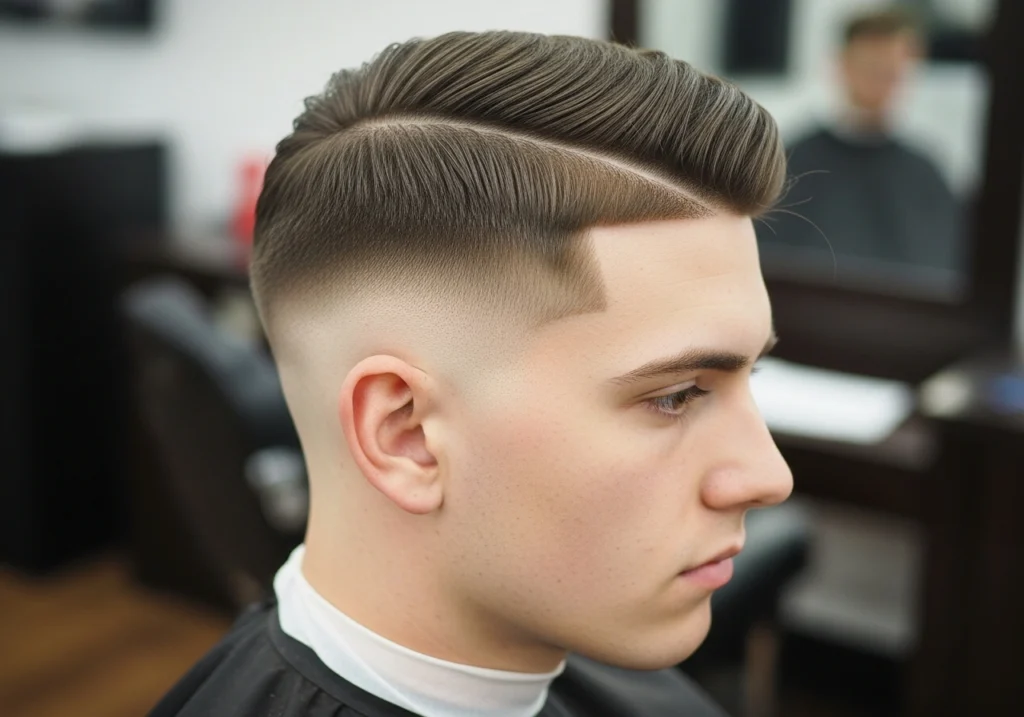
The comb over fade transforms what was once associated with concealing hair loss into a deliberately stylish, contemporary choice. This version features a defined side part with hair combed over to one side, paired with a fade that creates clean, modern lines. The comb over section can range from subtle and professional to more dramatic and voluminous.
This versatile style works across age groups and professional environments. The key to success lies in the quality of the fade and the precision of the part, which should be positioned to complement the individual’s natural hair growth patterns and face shape. Styling requires blow-drying the combed section into place and finishing with pomade or wax for hold and shine. This cut especially flatters men with oval or oblong face shapes and projects polished sophistication.
Spiky Textured Top
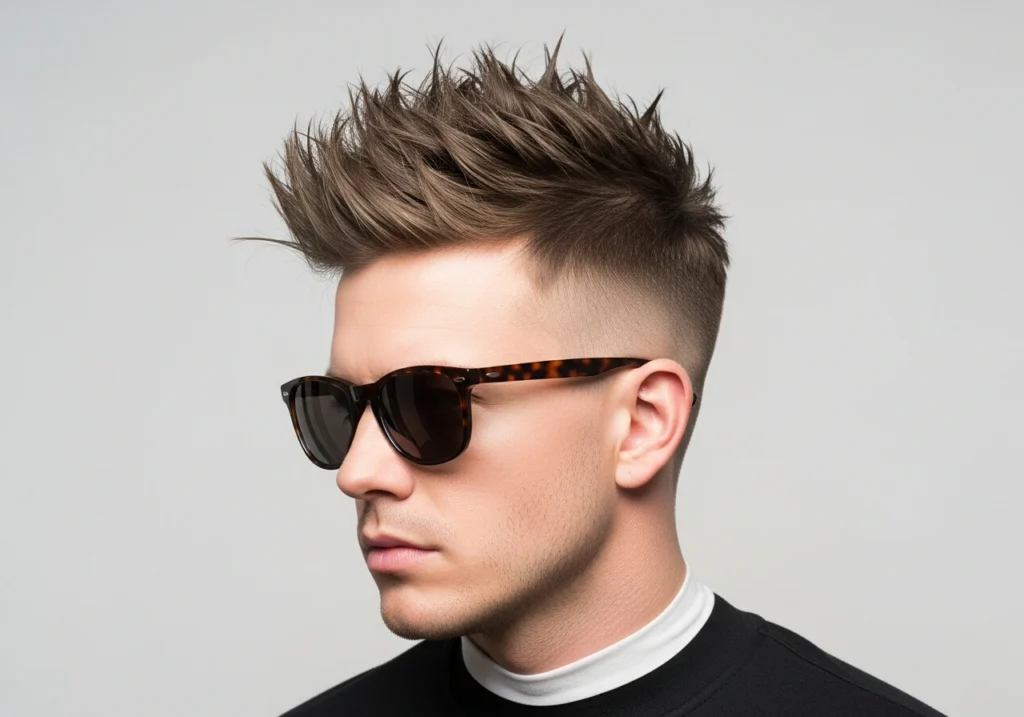
Spiky styles have evolved from the heavily gelled, rigid looks of previous decades into more natural, piece-y interpretations that embrace texture and movement. The modern spiky textured top features shorter sides, often faded, with enough length on top to create upward, irregular spikes when styled with the right products.
This youthful, energetic style works best with thick, straight hair that can hold the upward orientation. Styling involves applying a strong-hold product to damp hair and using fingers to create irregular, upward pieces throughout the top section. The result should appear intentionally messy rather than overly sculpted. This cut works well for men with round or square face shapes, as the vertical elements add length to facial proportions. The style projects confidence and approachability while maintaining a put-together appearance.
Finding the perfect haircut involves considering multiple factors beyond current trends. Your face shape, hair texture, density, and natural growth patterns all play crucial roles in determining which styles will look best and prove most manageable. Additionally, consider your lifestyle and how much time you realistically want to dedicate to daily styling. Some cuts require significant morning maintenance, while others need only minutes to look sharp.
The relationship you build with a skilled barber cannot be overstated. A professional who understands your hair’s characteristics and your style preferences can offer invaluable guidance, helping you navigate the vast array of options to find what truly suits you. Don’t hesitate to bring reference photos and have detailed conversations about what you want to achieve and what’s realistically possible with your hair type.
As you explore these haircut options, remember that hair grows and styles can be changed. If you’ve been wearing the same cut for years, 2025 might be the perfect time to step outside your comfort zone and try something new. Whether you choose a dramatic transformation or a subtle update, the right haircut can significantly impact how you feel and how others perceive you. Confidence often starts with feeling good about your appearance, and a haircut that truly suits you can provide exactly that foundation.
The variety of options available today means there’s genuinely something for everyone, regardless of age, profession, hair type, or personal style preferences. From the ultra-low maintenance buzz cut variations to the styling-intensive pompadours and slick backs, the spectrum covers every possible need and aesthetic. The key is honest self-assessment about what you want and what you can maintain, combined with professional guidance from a skilled barber who can execute the cut with precision.
you may also like this:Teenage Men Haircuts: Trendy Styles For 16-19-Year-Olds in 2026
Frequently Asked Questions
How often should I get my haircut to maintain these styles?
Most faded styles require maintenance every two to three weeks to keep the fade crisp and defined. Longer styles with less dramatic fading can typically go three to five weeks between cuts. The higher and tighter your fade, the more frequently you’ll need touch-ups to maintain the sharp contrast.
What face shape works best with faded haircuts?
Faded haircuts are remarkably versatile and can be adapted to suit virtually any face shape. The key is adjusting the height of the fade and the styling on top. Round faces benefit from height on top with lower fades, while longer faces work well with fuller sides and less dramatic vertical styling.
Can these styles work with thinning hair?
Many of these cuts actually work very well for thinning hair. Shorter styles like buzz cuts, crew cuts, and Caesar cuts minimize the appearance of thinning by creating uniform density. Textured styles can also create the illusion of fuller hair through strategic cutting and styling techniques.
What products do I need to style these haircuts?
Product needs vary by style. Textured looks typically require matte clay or paste, while slicked styles need pomade or gel. Most styles benefit from having a blow dryer for proper styling. Start with one or two quality products suited to your chosen style rather than accumulating numerous products.
Are these styles appropriate for professional environments?
Most of these cuts can be adapted for professional settings through conservative styling and appropriate fade heights. Classic tapers, Ivy League cuts, and subtle fades work in the most formal environments, while creative industries often welcome bolder expressions. Consider your specific workplace culture when choosing both the cut and daily styling approach.
2 Comments