21+ Trendy Barbershop Haircuts Ideas!
Walking into a barbershop today is vastly different from what it was a decade ago. The modern barbershop has evolved into a hub of style innovation, where traditional techniques meet contemporary trends. Whether you’re looking to reinvent your look completely or simply refine your current style, understanding the landscape of barbershop haircuts can transform not just your appearance but your entire confidence level.
The right haircut does more than just trim your hair. It frames your face, complements your lifestyle, and makes a statement about who you are. For men seeking that perfect balance between professional polish and personal style, barbershop haircuts offer an incredible range of possibilities. From timeless classics that have stood the test of time to cutting-edge styles that push boundaries, there’s never been a better time to explore what a skilled barber can create.
This comprehensive guide walks you through over twenty-one trending barbershop haircuts that are making waves in 2025. Each style brings its own character, suited for different face shapes, hair types, and personal preferences. Whether you have thick, thin, curly, or straight hair, you’ll find options that work for your unique features and daily routine.
The Classic Fade
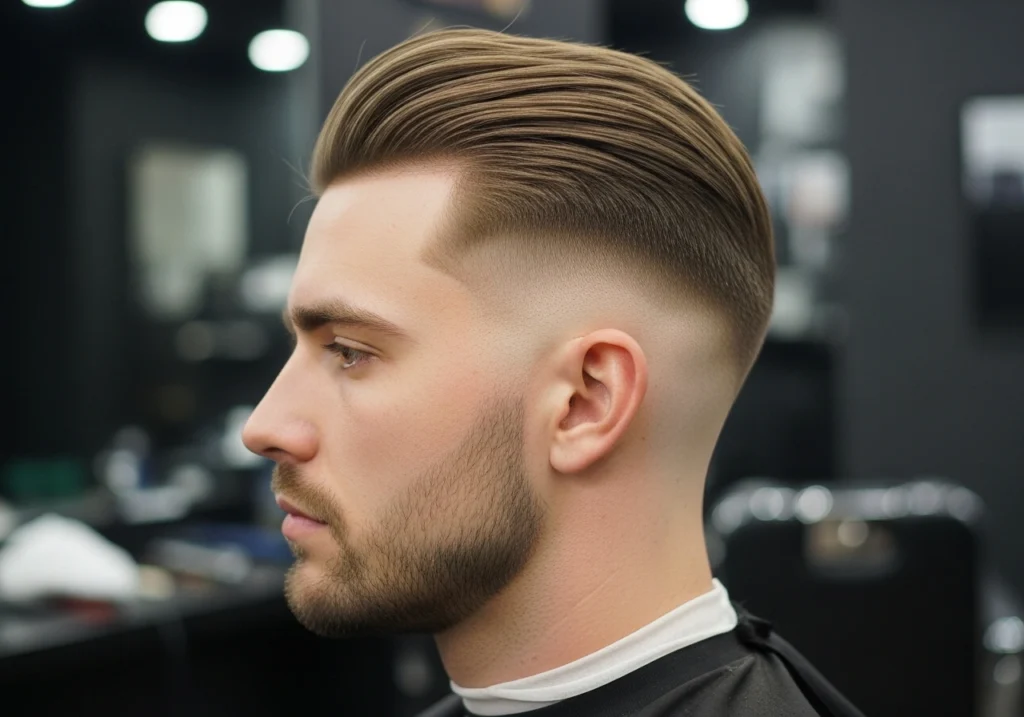
The fade remains one of the most requested haircuts in any barbershop, and for good reason. This versatile style gradually transitions from longer hair on top to progressively shorter hair on the sides and back. The beauty of the fade lies in its adaptability. You can customize the height where the fade begins, the sharpness of the transition, and how short the sides go.
A low fade starts just above the ears and provides a subtle, professional appearance perfect for corporate environments. The mid fade begins around the temple area and offers a balanced look that works in almost any setting. The high fade starts near the top of the head, creating a bold, dramatic contrast that makes a strong style statement.
Barbers achieve fades using multiple clipper guard sizes, blending each section seamlessly into the next. The result is a clean, polished look that grows out gracefully and maintains its shape between appointments.
Textured Crop

The textured crop has surged in popularity for its effortlessly stylish appearance. This cut features short sides with slightly longer hair on top that’s cut to create natural texture and movement. Unlike slicked-back styles, the textured crop embraces the hair’s natural pattern and creates a relaxed, modern aesthetic.
This haircut works exceptionally well for men with naturally wavy or slightly curly hair, as it enhances those natural textures. However, even those with straight hair can achieve this look with the right cutting technique. Barbers use point-cutting methods to remove weight and create those coveted choppy, piece-y ends.
The textured crop requires minimal styling, making it ideal for busy professionals who want to look sharp without spending excessive time on their hair each morning. A small amount of matte clay or texture paste is usually all you need.
Pompadour

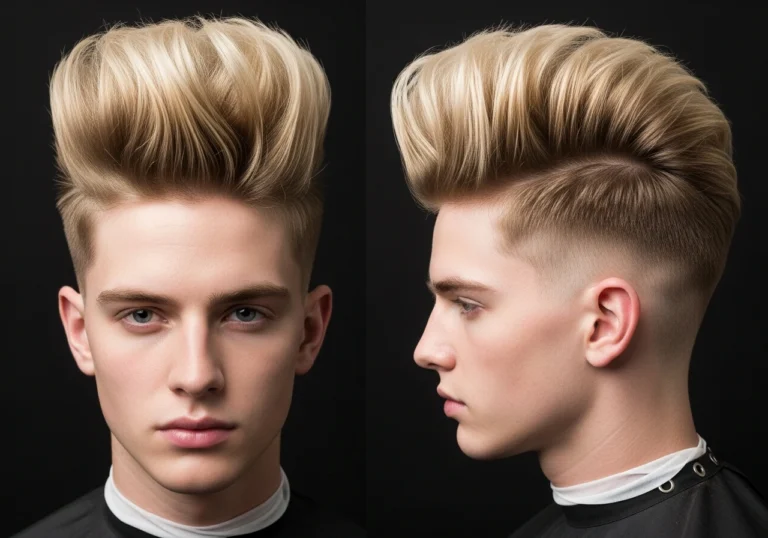
The pompadour stands as one of the most iconic barbershop haircuts, combining vintage charm with contemporary appeal. This style features shorter sides with dramatically longer hair on top that’s swept upward and back, creating impressive volume and height.
Modern pompadours come in various iterations. The classic pompadour maintains length throughout the top, while disconnected versions create a sharp contrast between the short sides and long top. Some men prefer a more relaxed, textured pompadour that looks less structured and more lived-in.
Achieving the perfect pompadour requires both the right cut and proper styling technique. Your barber will leave substantial length on top while tapering or fading the sides. Daily styling involves blow-drying the hair upward and back, then using a strong-hold pomade to lock the style in place.
Buzz Cut

Sometimes the most powerful statement is simplicity itself. The buzz cut strips away all unnecessary elements, leaving you with an ultra-short, uniform length across your entire head. This low-maintenance option has transcended its military origins to become a fashion-forward choice for men who value efficiency and minimalism.
Buzz cuts come in various lengths, typically ranging from a number one guard up to a number four or five. Shorter buzz cuts offer the ultimate convenience, requiring virtually no styling and looking sharp for weeks. Longer buzz cuts provide slightly more texture while still maintaining that clean, streamlined appearance.
This haircut works particularly well for men with strong facial features, as it draws attention to the face rather than the hair. It’s also an excellent choice for those dealing with thinning hair, as the uniform length minimizes the appearance of any sparse areas.
Undercut

The undercut creates one of the most striking contrasts in barbershop haircuts. This style features very short or shaved sides and back with significantly longer hair on top, creating a distinct line of demarcation between the two sections. Unlike fades that blend gradually, undercuts embrace the sharp transition.
This versatile cut allows for numerous styling options. You can slick the top back for a formal look, sweep it to the side for casual sophistication, or style it forward for a more contemporary edge. The length on top can range from a few inches to much longer, depending on your preference and styling goals.
Undercuts require regular maintenance to keep that crisp line sharp and prevent the sides from growing out. However, many men find the bold aesthetic worth the extra barbershop visits.
Side Part

The side part represents timeless elegance in barbershop culture. This classic style features a defined part on one side of the head, with hair combed neatly away from the part line. The sides are typically tapered or faded, while the top maintains enough length to create that signature swept appearance.
Modern interpretations of the side part have evolved beyond the rigid, overly formal versions of decades past. Contemporary side parts incorporate texture, slightly relaxed styling, and varied part placements to create a look that feels fresh while honoring tradition.
This haircut communicates professionalism and attention to detail, making it a favorite among executives, lawyers, and anyone in client-facing roles. The defined part creates structure and symmetry, flattering most face shapes when placed correctly.
Crew Cut
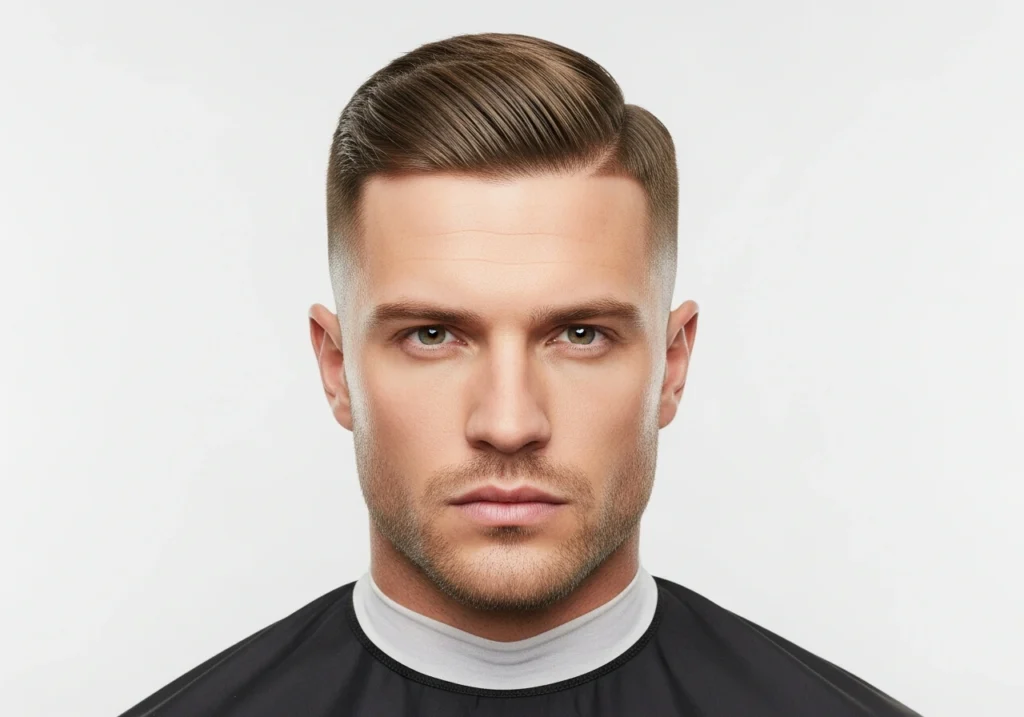
The crew cut strikes an ideal balance between the buzz cut’s convenience and longer styles’ versatility. This cut features short sides that taper into slightly longer hair on top, with the front typically styled upward in a small brush-like fashion.
Originally popularized by Ivy League rowing crews, this haircut has maintained its appeal through decades of changing trends. The crew cut works well in professional settings while still allowing for some personality and style variation.
Different crew cut variations exist, from the butch cut with its extremely short, uniform length to the Ivy League cut that leaves more length on top for styling flexibility. Your barber can adjust the proportions to suit your face shape and hair texture.
Quiff
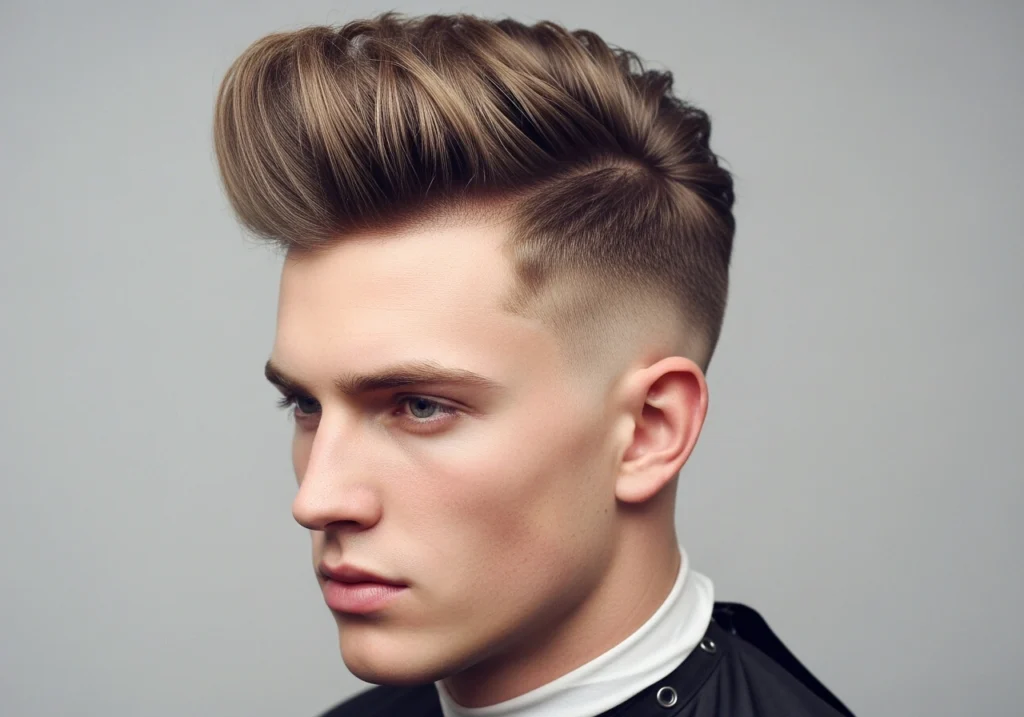
The quiff combines elements of the pompadour, flat top, and sometimes the mohawk, resulting in a style that’s both refined and rebellious. Hair on top is styled upward and slightly back, creating volume and height at the front of the head while the sides remain short.
This haircut offers significant styling versatility. You can create a sleek, polished quiff for formal occasions or a messy, textured version for casual outings. The quiff works particularly well for men with oval or square face shapes, as the vertical height balances facial proportions.
Styling a quiff requires some practice and the right products. Blow-drying is essential for creating the necessary volume, followed by a combination of styling products to achieve your desired texture and hold.
French Crop
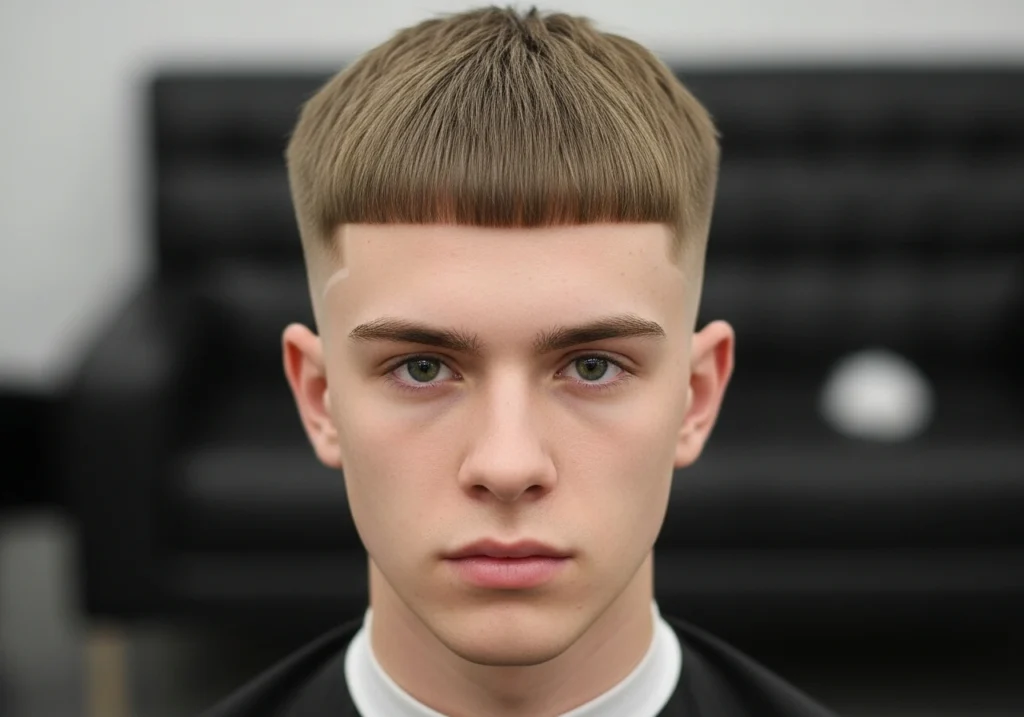
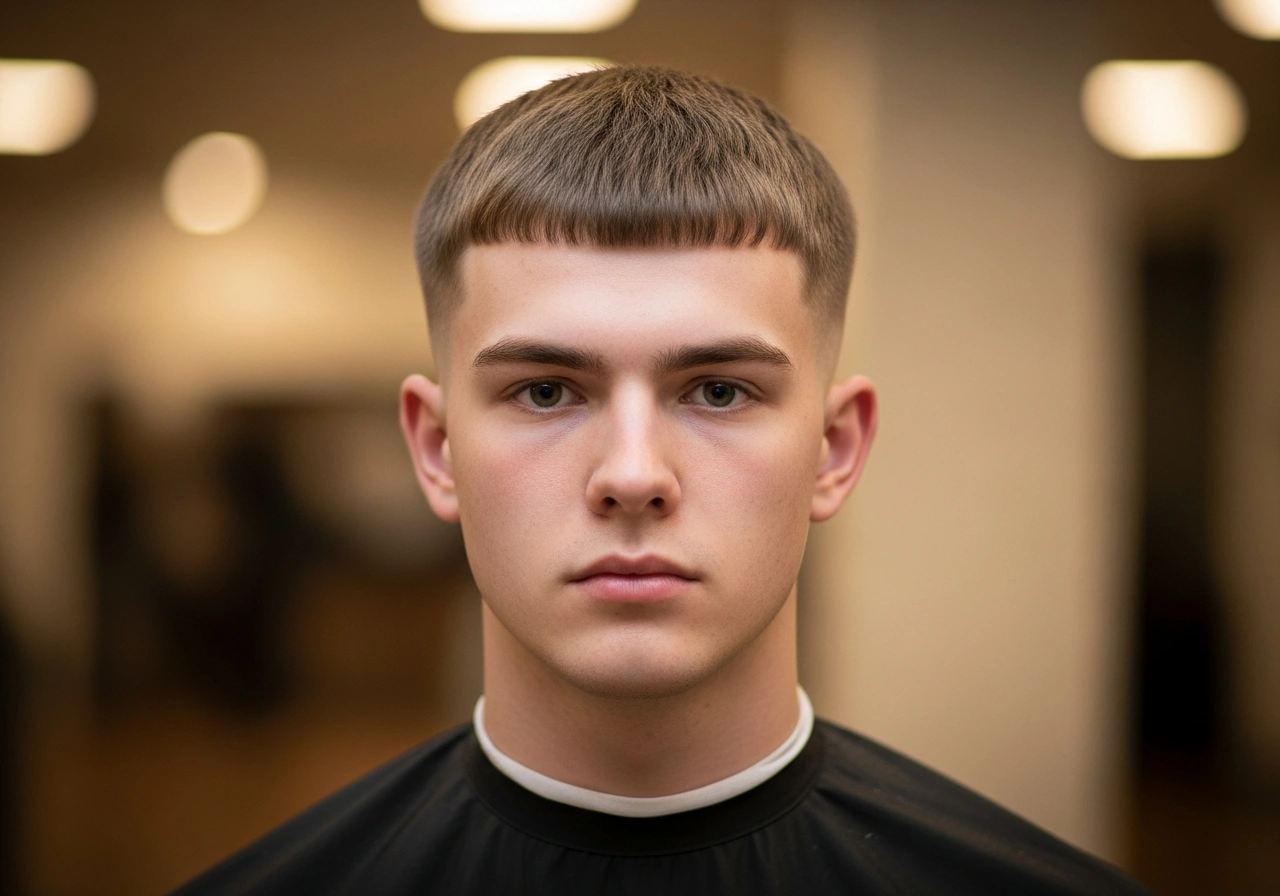
The French crop, also known as a Fringe crop, features a short fringe that sits on the forehead, combined with faded or tapered sides. This European-influenced style has gained tremendous popularity for its clean lines and contemporary appeal.
What distinguishes the French crop from other fringe styles is the blunt, horizontal cutting line across the front. The fringe typically sits about an inch above the eyebrows, creating a distinctive, fashion-forward look. The top is cut relatively short, usually between one and two inches, with texture added for dimension.
This haircut suits men with angular faces particularly well, as the horizontal fringe line softens sharp features. It’s also an excellent option for those with receding hairlines, as the fringe creates a new focal point.
Taper Fade
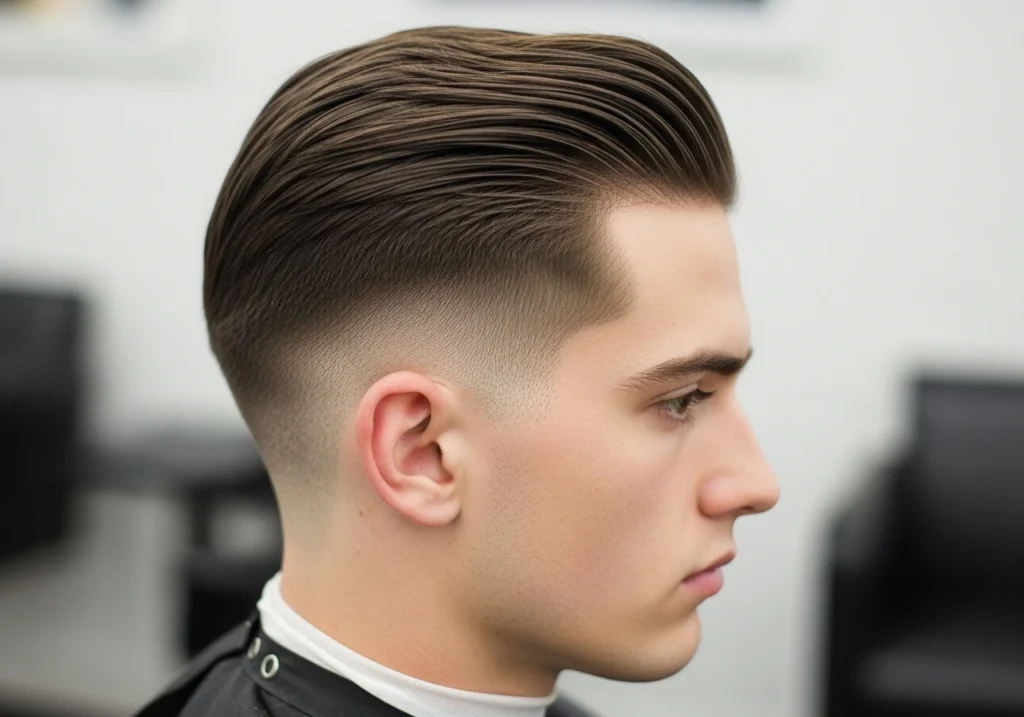
The taper fade represents a refined variation of the standard fade, offering a more gradual, subtle transition from longer to shorter hair. While similar to a regular fade, the taper extends further down the head and neck, creating a softer, more natural-looking gradient.
Taper fades work exceptionally well in professional environments where extremely short fades might feel too casual or aggressive. The gentle transition maintains a polished appearance while still providing that clean, barbered look that defines quality haircuts.
Barbers can adjust taper fades to begin at different heights and blend to different final lengths, allowing for customization based on your preferences and hair growth patterns. This style grows out more gracefully than sharper fades, extending the time between necessary touch-ups.
Slick Back
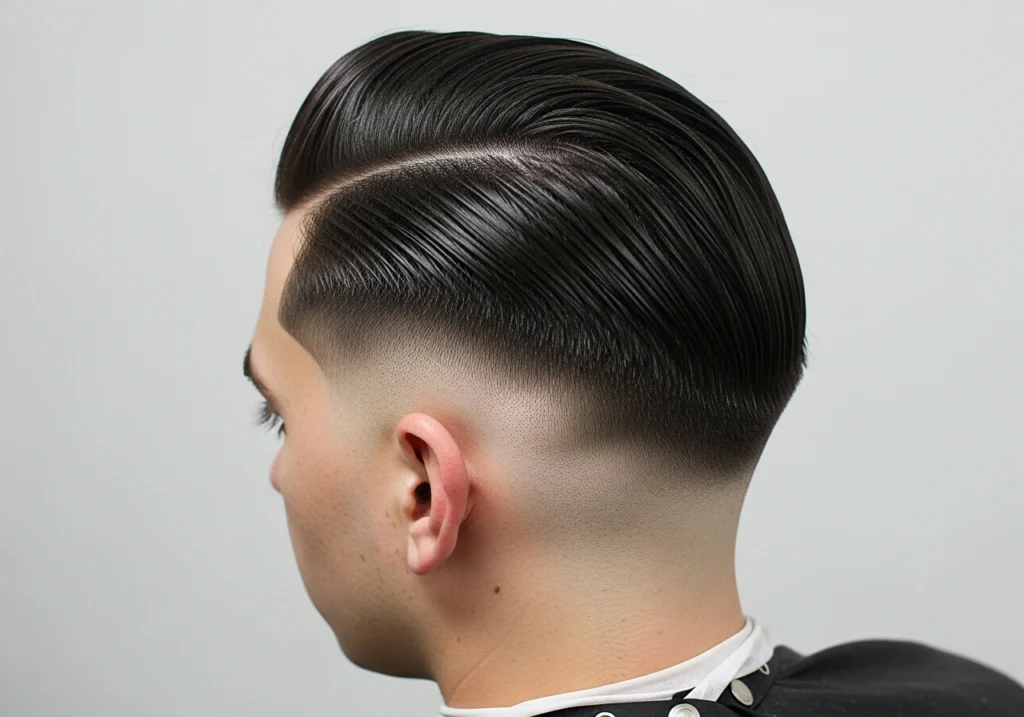
The slick back exudes confidence and sophistication. This timeless style involves combing all the hair on top backward, away from the face, and using product to hold it in place. The sides can be faded, tapered, or left with more length depending on the overall look you want to achieve.
Modern slick backs have evolved beyond the overly greasy appearance of past decades. Contemporary versions often incorporate texture and natural movement while still maintaining that swept-back direction. Some men prefer a tighter, more controlled slick back, while others opt for a looser, more relaxed interpretation.
This haircut requires sufficient length on top, typically at least three to four inches, to achieve the proper sweep and volume. Daily styling involves applying pomade or gel to damp hair and combing it back while blow-drying for maximum hold and shine.
Mohawk Fade

The mohawk fade brings an edgy, alternative aesthetic to the barbershop. This style features very short or shaved sides with a distinct strip of longer hair running from the front of the head to the back. The fade element softens the traditional mohawk’s punk rock aggression, making it more wearable in various contexts.
Modern mohawk fades come in numerous variations. Some maintain a subtle difference between the mohawk strip and the sides, while others create dramatic contrast. The strip itself can be styled upward for maximum impact or left more relaxed for a toned-down version.
This haircut appeals to men who want to express individuality and aren’t afraid to stand out. It works particularly well with naturally thick hair that can support the volume and structure of the central strip.
Comb Over
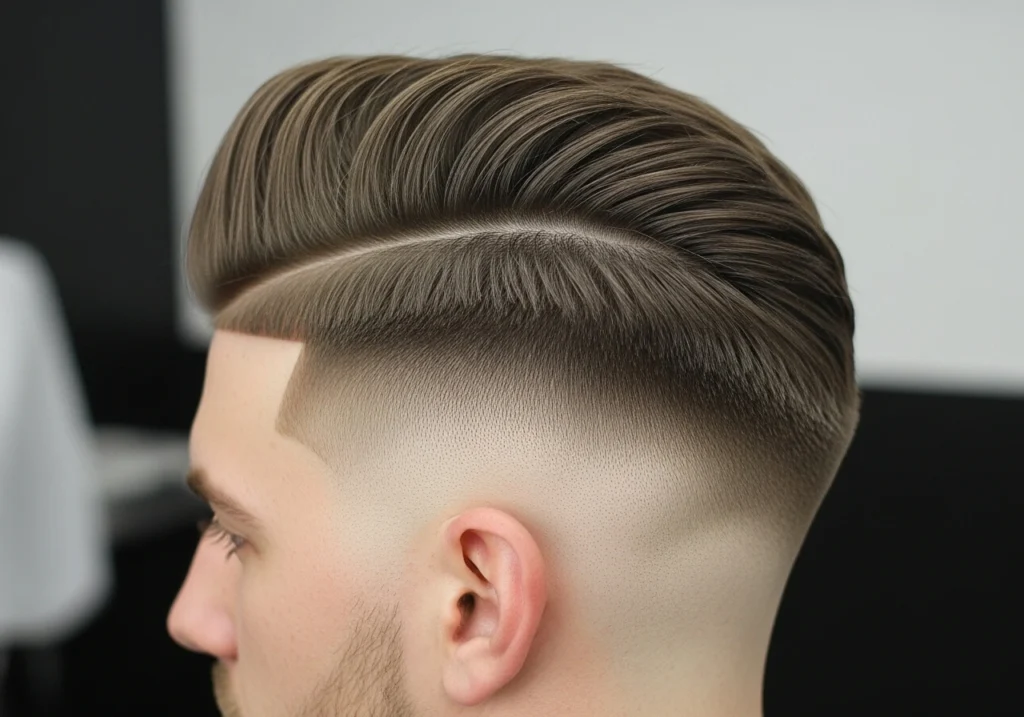
The comb over has shed its outdated reputation to become a genuinely stylish choice when executed properly. This cut features a deep side part with hair combed over from one side to the other, creating volume and coverage. The sides are typically faded or tapered for a contemporary edge.
The key difference between a modern comb over and the versions that earned this style its negative associations is volume and texture. Contemporary comb overs embrace natural texture, avoid excessive product that creates a flat, artificial appearance, and work with rather than against your hair’s natural growth patterns.
This style offers practical benefits for men experiencing early hair thinning, as the strategic combing direction can help disguise sparse areas when done tastefully. It also provides a professional, put-together appearance suitable for any setting.
Ivy League
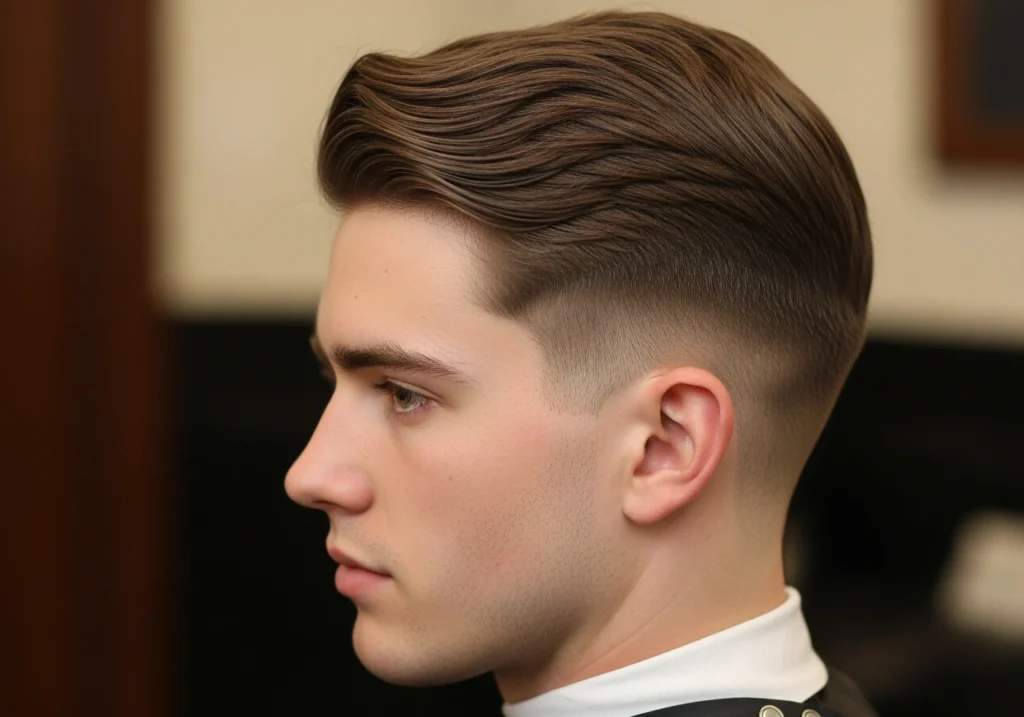
The Ivy League cut represents collegiate sophistication translated into a haircut. Essentially a longer version of the crew cut, this style maintains enough length on top to create a small side part while keeping the overall cut short and manageable.
This haircut originated on Ivy League campuses and has maintained its association with educated, professional men. The Ivy League offers more styling versatility than a crew cut while requiring only slightly more maintenance and effort.
The proportions matter significantly with an Ivy League cut. The front should have enough length to brush to the side, typically about an inch, while the back gradually tapers shorter. The sides are cut short but not as severely as with some other styles, creating a balanced, classic appearance.
Caesar Cut
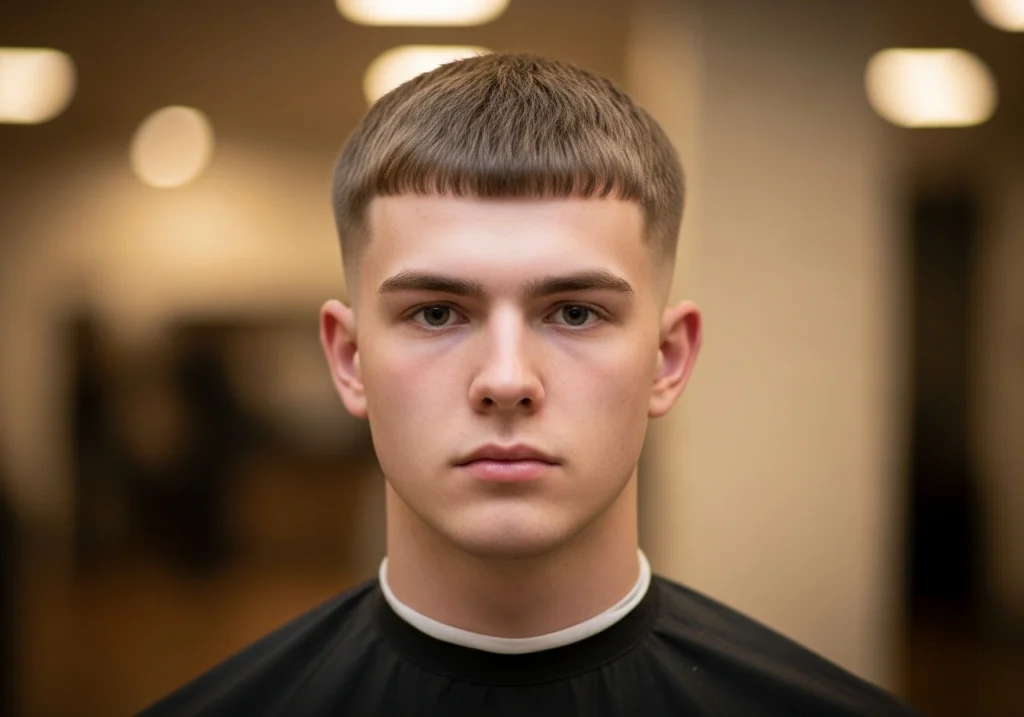
The Caesar cut draws inspiration from ancient Rome, featuring short, horizontally cut hair with a small fringe that brushes forward onto the forehead. This style became famous in modern times thanks to celebrities like George Clooney, proving that simple can be incredibly effective.
The defining characteristic of a Caesar cut is its uniform length across the top, typically between one and two inches, with the fringe brushed forward and cut in a straight line. The sides and back are usually cut slightly shorter but not dramatically so, maintaining a consistent overall appearance.
This haircut works exceptionally well for men with thinning hair or receding hairlines, as the forward-brushed fringe creates coverage and the overall short length minimizes the appearance of any sparse areas. It’s also remarkably low-maintenance, requiring minimal styling beyond a quick brush forward.
High and Tight
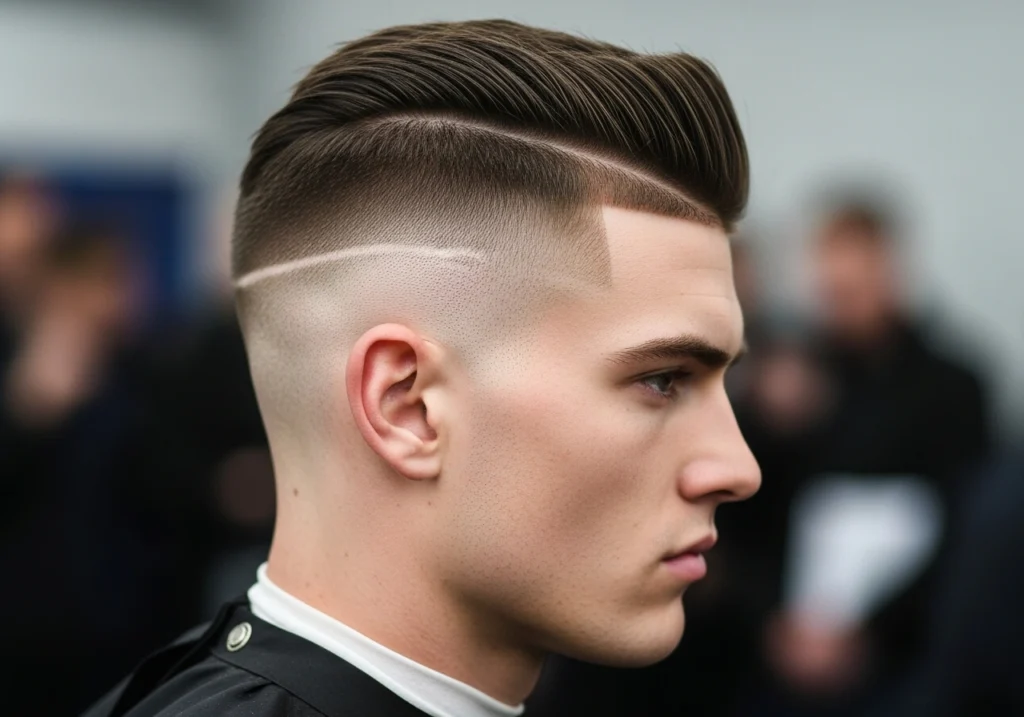
The high and tight brings military precision to civilian barbershops. This cut features extremely short sides and back, often shaved down to the skin, with slightly longer hair on top. The transition between the shaved sides and longer top creates a high, clean line that gives this style its name.
Originally developed for military personnel who needed haircuts that met strict regulations while still allowing some personal style, the high and tight has found a civilian audience among men who appreciate its sharp, disciplined appearance and minimal maintenance requirements.
Variations include the high and tight recon, which leaves the top extremely short as well, and the high and tight fade, which blends the sides more gradually. Each version maintains that distinctive high line that sets this style apart from regular fades.
Curly Top Fade

Men with naturally curly hair have their own set of considerations when choosing barbershop haircuts. The curly top fade embraces those natural curls while keeping the sides clean and sharp. This style features faded sides with longer, natural curls left on top to create texture and dimension.
The key to a successful curly top fade lies in understanding curl patterns and cutting the hair in a way that enhances rather than fights against those natural tendencies. Skilled barbers know how to shape curly hair to control volume and create defined, intentional shapes.
This haircut requires minimal styling for most men, as the natural curl provides all the texture needed. A leave-in conditioner or curl-defining cream helps maintain healthy, defined curls while the clean sides keep the overall look polished.
Mullet Fade

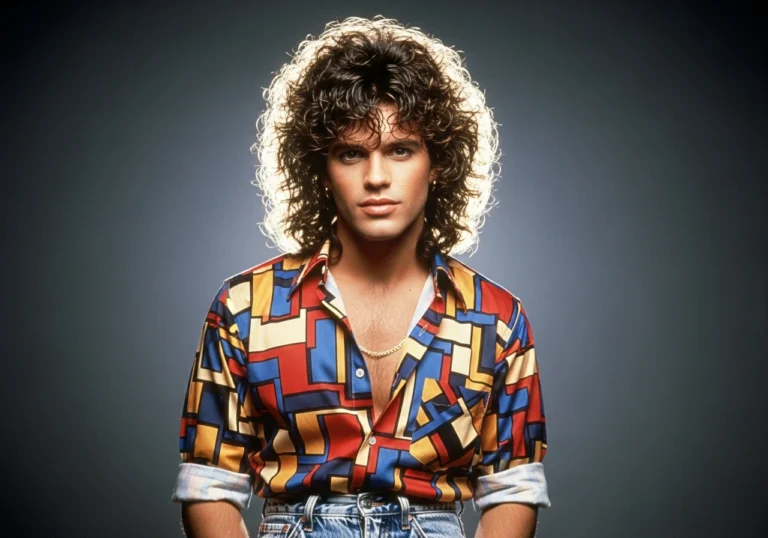
The mullet has experienced an unexpected renaissance, with modern interpretations bringing this controversial style into contemporary relevance. The mullet fade features short hair in the front and on the sides with significantly longer hair in the back, but updates the classic formula with faded sides for a cleaner, more refined appearance.
Today’s mullets avoid the excessive, unkempt look of 1980s versions. Instead, they incorporate intentional shaping, texture, and blending that creates a cohesive style rather than a jarring contrast. The fade element bridges the short front and longer back, making the transition more sophisticated.
This bold choice appeals to men who want to make a statement and aren’t concerned with fitting into conventional style norms. It works best with naturally thick hair that can support the length in back without appearing thin or scraggly.
Faux Hawk
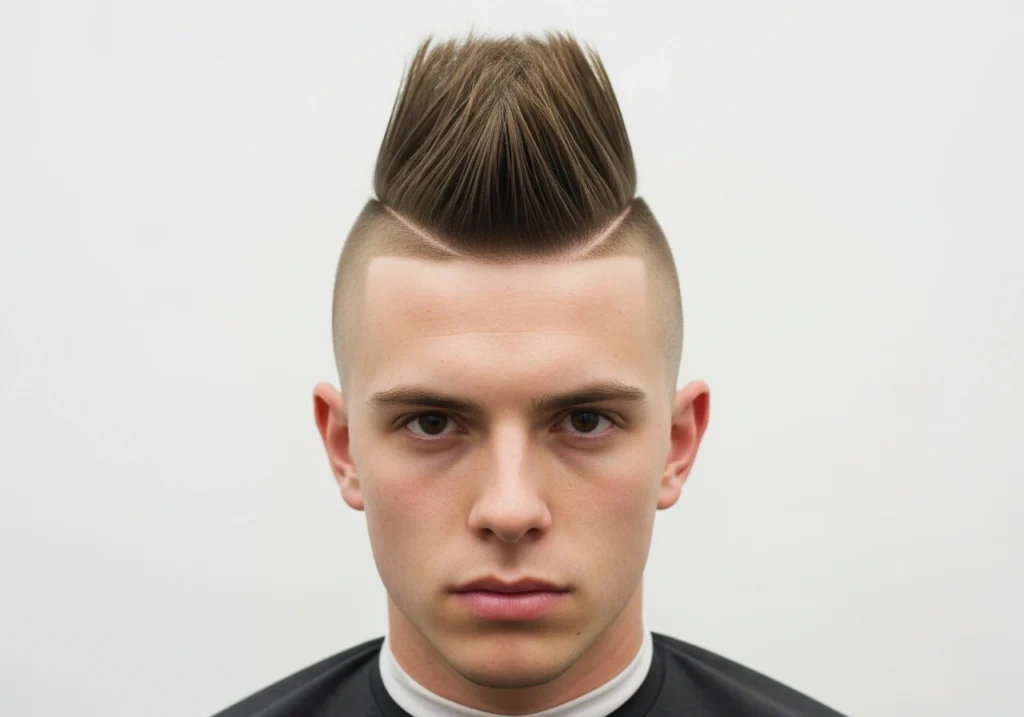
The faux hawk delivers mohawk energy without the commitment of shaved sides. This style features shorter sides with longer hair on top that’s styled upward and toward the center, creating a mohawk-like ridge without the extreme contrast of a true mohawk.
The beauty of the faux hawk lies in its versatility. You can style it up for maximum impact when you want that edgy look, or brush it down and to the side for a more conservative appearance when the situation demands it. This flexibility makes it ideal for men whose lifestyle requires adaptability.
Different faux hawk variations exist, from subtle versions that barely create a ridge to more pronounced styles that approach true mohawk territory. Your barber can adjust the proportions based on your comfort level and how bold you want to go.
Bald Fade
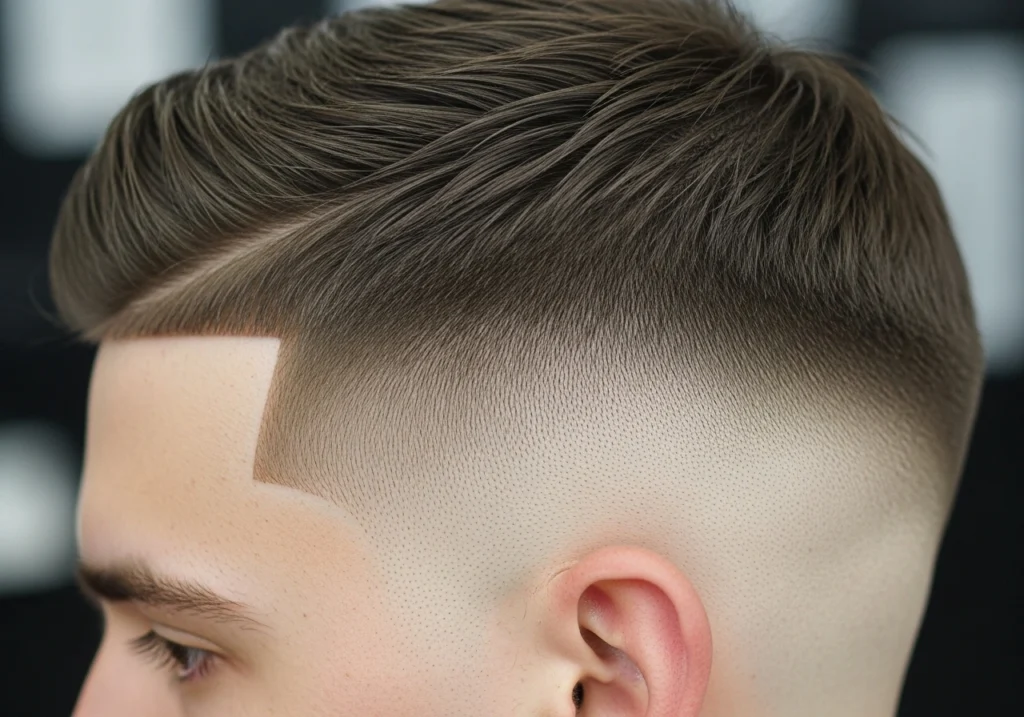
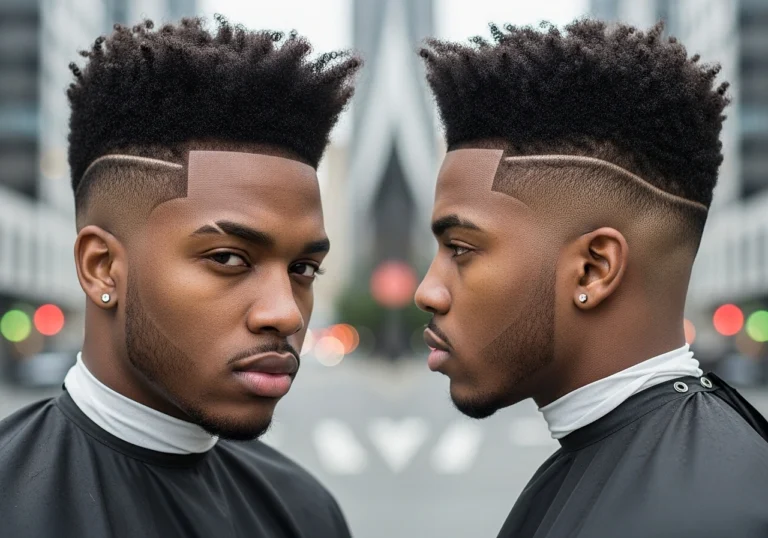
The bald fade takes the fade concept to its ultimate conclusion. This style blends from longer hair on top down to completely shaved skin on the sides and back, creating the sharpest possible contrast and the cleanest lines in barbershop haircuts.
Also known as a skin fade, this cut requires exceptional skill to execute properly. The barber must create a seamless transition from visible hair to bare skin, a technique that demands precision and experience. When done well, the result is stunning and creates a frame for your face unlike any other haircut.
Bald fades require frequent maintenance, as any growth on the shaved sections quickly disrupts the clean lines. Most men who choose this style visit their barber every one to two weeks to maintain that crisp appearance.
Textured Quiff
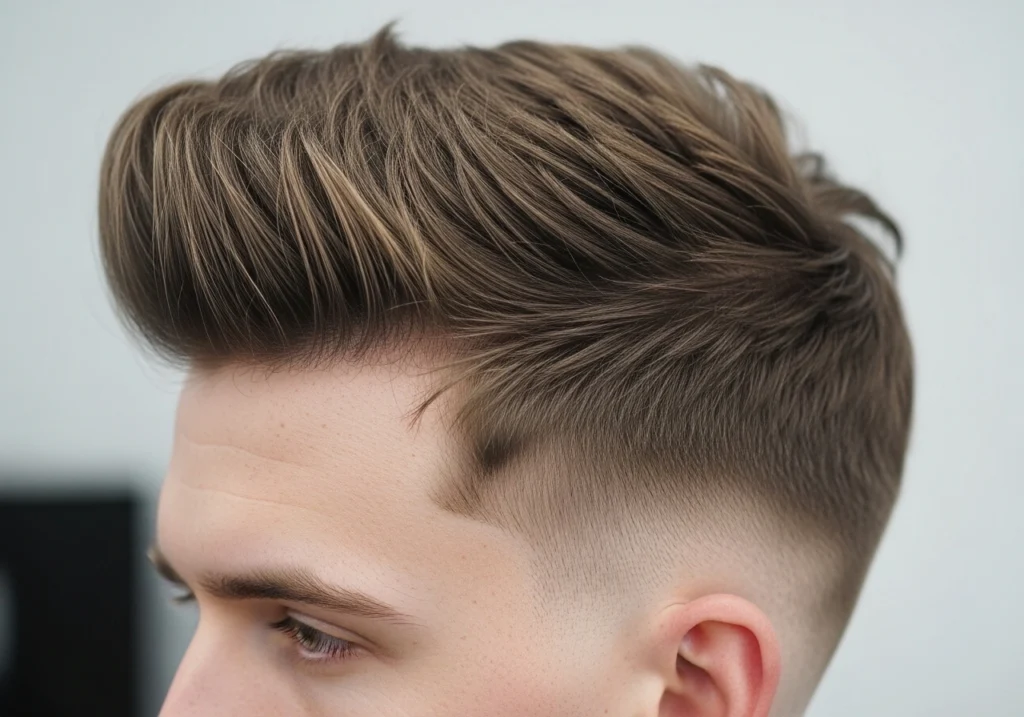
The textured quiff modernizes the traditional quiff by incorporating choppy, piece-y texture instead of smooth, slicked styling. This variation maintains the upward and backward sweep that defines a quiff while adding dimension and movement that feels current and fresh.
Achieving a textured quiff requires both the right cut and proper styling approach. Barbers use point-cutting and texturizing techniques to remove weight and create natural separation in the hair. The result is a style that looks intentional but not overly constructed.
This haircut appeals to men who want the sophistication of a quiff without the formality of traditional versions. It bridges the gap between polished and relaxed, working equally well in professional settings and casual environments.
Drop Fade
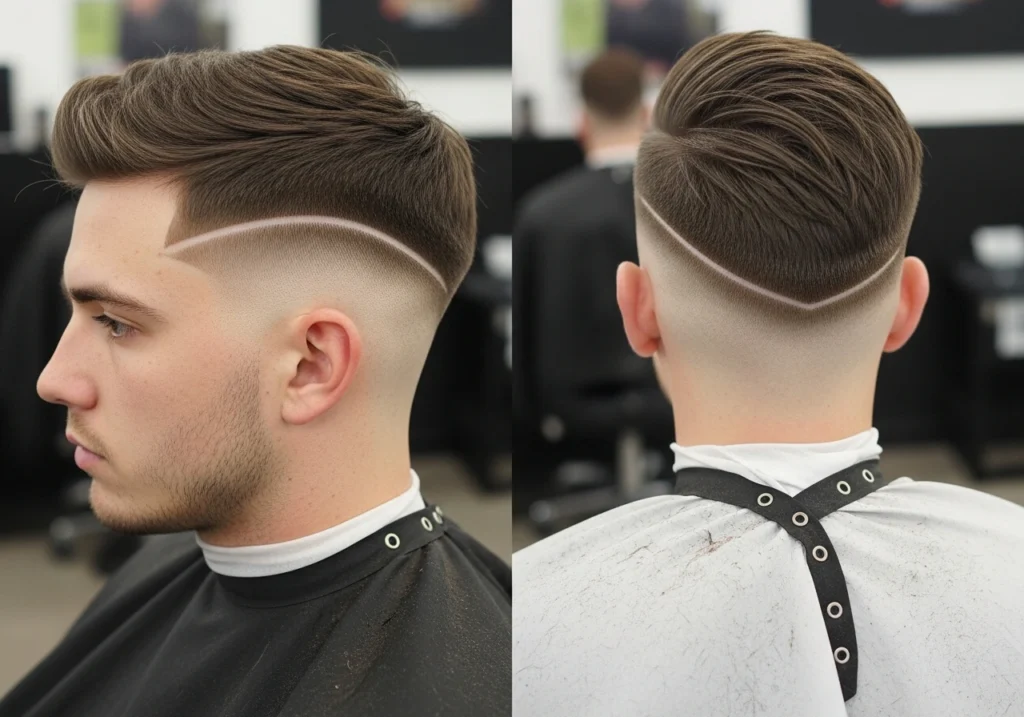
The drop fade creates a unique arc around the ears and down the back of the head, following the natural curvature of your skull rather than creating a straight horizontal line like traditional fades. This subtle variation adds visual interest and creates a softer, more organic appearance.
The drop element refers to how the fade literally drops behind the ear, curving downward toward the nape of the neck. This technique works particularly well with various top styles, from pompadours to textured crops, adding a contemporary edge to classic cuts.
Drop fades require a skilled barber who understands head shape and proportions. The curve must flow naturally with your skull structure to create a flattering, seamless appearance. When executed properly, this fade style adds dimension and sophistication.
you may also like this:17+ Black Men with Blonde Hair Ideas
Conclusion
Choosing the right barbershop haircut transforms more than just your appearance. It affects how you feel when you look in the mirror, how others perceive you in professional and social settings, and even how you approach your daily routine. The styles outlined in this guide represent the best of what modern barbershops offer, from timeless classics that have proven their worth across decades to contemporary innovations that push stylistic boundaries.
Your ideal haircut depends on multiple factors including your face shape, hair type, lifestyle requirements, and personal style preferences. A fade might suit your professional environment perfectly, while a textured crop could align better with your casual, creative workplace. The pompadour might express your bold personality, or the classic side part might communicate the traditional values you hold dear.
The relationship you build with a skilled barber proves just as important as the style you choose. A good barber learns your hair’s unique characteristics, understands what works for your face shape, and can guide you toward cuts that enhance your best features. They become partners in developing and maintaining your personal style.
Take time to research styles that appeal to you, bring reference photos to your barber, and don’t be afraid to ask questions about what will work best for your specific situation. The investment you make in finding the right haircut and the right barber pays dividends in confidence, appearance, and the ease of your daily grooming routine.
The world of barbershop haircuts continues to evolve, with new variations and interpretations emerging regularly. However, the fundamental principles remain constant: clean lines, precise execution, and styles that enhance your natural features while expressing your personality. Whether you choose a bold statement cut or a refined classic, the right barbershop haircut empowers you to put your best self forward every single day.
Frequently Asked Questions
How often should I get a barbershop haircut?
The frequency depends on your chosen style and how fast your hair grows. Fades and styles with sharp lines typically require maintenance every two to three weeks to stay crisp. Longer styles like pompadours or textured crops can often go four to six weeks between cuts. Discuss a maintenance schedule with your barber based on your specific haircut and how quickly it grows out.
What should I tell my barber if I want a new style?
Bring reference photos showing the exact style from multiple angles if possible. Describe the length you want on top and sides using specific measurements when you can. Mention your styling routine honestly, so your barber can recommend cuts that fit your lifestyle. Don’t hesitate to ask for their professional opinion on what would work best for your face shape and hair type.
Can any haircut work with my face shape?
While most styles can be adapted to work for various face shapes, certain cuts naturally complement specific facial structures better than others. Round faces often benefit from styles with height on top that elongates appearance. Square faces work well with textured styles that soften angular features. Oval faces have the most versatility and can pull off nearly any style. A skilled barber can modify proportions to make your chosen style work for your unique features.
How do I maintain my haircut between barbershop visits?
Invest in quality styling products appropriate for your cut. Learn the basic styling technique your barber uses so you can recreate it at home. Keep your neckline trimmed if you can do so safely, though be cautious about attempting to trim other areas yourself. Use proper shampoo and conditioner for your hair type to keep hair healthy and manageable between appointments.
What if I don’t like my haircut after leaving the barbershop?
Communicate with your barber immediately if possible, as most are willing to make adjustments to ensure satisfaction. Sometimes haircuts look different when you style them yourself at home versus how the barber styled them initially. Give yourself a few days to learn how to work with the cut before deciding if changes are needed. For future appointments, be more specific about what you do and don’t want, using your experience to guide clearer communication.