
25 Mustache Styles for Men in 2026: The Best Grooming & Styling Guide for Every Face Shape
The mustache has reclaimed its position as one of the most powerful statements a man can make with his appearance. Far from being a relic of past decades, facial hair styling has evolved into a sophisticated form of personal expression that combines tradition with contemporary grooming standards. In 2026, men are discovering that the right mustache can transform their entire look, adding character, maturity, and undeniable confidence to their presence.
What makes choosing a mustache style particularly interesting is the sheer variety available. From the bold and commanding to the subtle and refined, there exists a mustache for every personality type and facial structure. The key to success lies not just in selecting a popular style but in understanding which specific design complements your unique features and lifestyle.
This comprehensive guide explores twenty-five distinct mustache styles that are defining men’s grooming in 2025. Whether you’re growing your first mustache or looking to refresh your current look, understanding the nuances of each style, along with proper maintenance techniques, will ensure you achieve a polished and intentional appearance.
Understanding Your Face Shape
Before selecting a mustache style, understanding your face shape is fundamental to achieving a flattering result. Your facial structure determines which styles will enhance your natural features and which might create unwanted visual effects.
Men typically fall into one of seven face shapes. Oval faces are longer than wide with balanced proportions and a gently rounded jawline. This versatile shape accommodates nearly any mustache style. Square faces feature a strong, angular jawline with equal width and length measurements. Round faces have soft curves with similar width and length dimensions, while oblong faces are noticeably longer than they are wide.
Heart-shaped faces are characterized by a broader forehead that tapers to a pointed chin. Diamond faces showcase wide cheekbones with a narrower forehead and jawline. Triangle faces are wider at the jaw than the forehead. Each of these shapes responds differently to various mustache styles, making proper identification crucial for optimal results.
To determine your face shape, measure four key areas. Start with your forehead at its widest point, typically from one eyebrow arch to the other. Next, measure your cheekbones at their widest point beneath the outer corners of your eyes. Then measure your jawline from the tip of your chin to below your ear, multiplying this number by two for the full measurement. Finally, measure your face length from the center of your hairline to the tip of your chin. Comparing these measurements reveals your face shape category.
1. The Classic Chevron
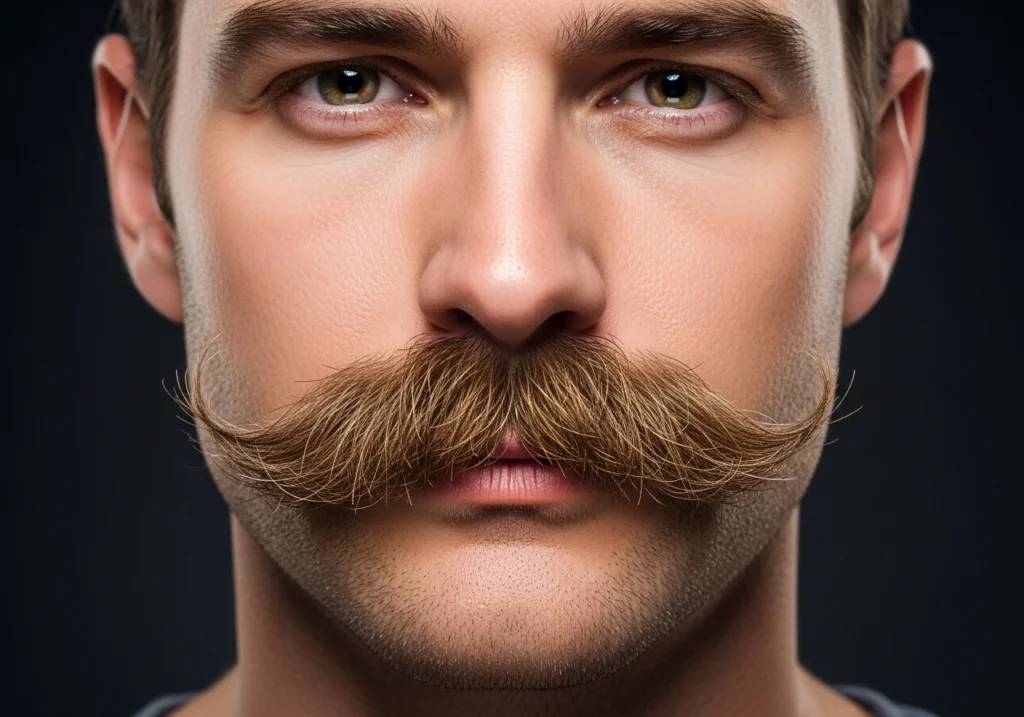
The Chevron mustache stands as one of the most recognizable and masculine styles available. This thick, full mustache covers the entire upper lip, ending just at the corners of the mouth in a natural downward angle. Made famous by icons like Tom Selleck and Freddie Mercury, the Chevron projects confidence without pretension.
This style requires relatively minimal grooming compared to more elaborate designs. The key is allowing the mustache to grow naturally thick while keeping the edges neat and preventing hair from extending over the lip line. Regular trimming maintains the defined shape. The Chevron works exceptionally well for men with square or oval face shapes, as it adds horizontal visual weight that balances facial proportions.
Growing a proper Chevron takes approximately four to six weeks. During this time, resist the urge to shape it too early. Once adequate growth is achieved, trim the bottom edge to prevent hair from entering your mouth. Use a quality beard trimmer set to maintain consistent length across the entire mustache.
2. The Distinguished Handlebar
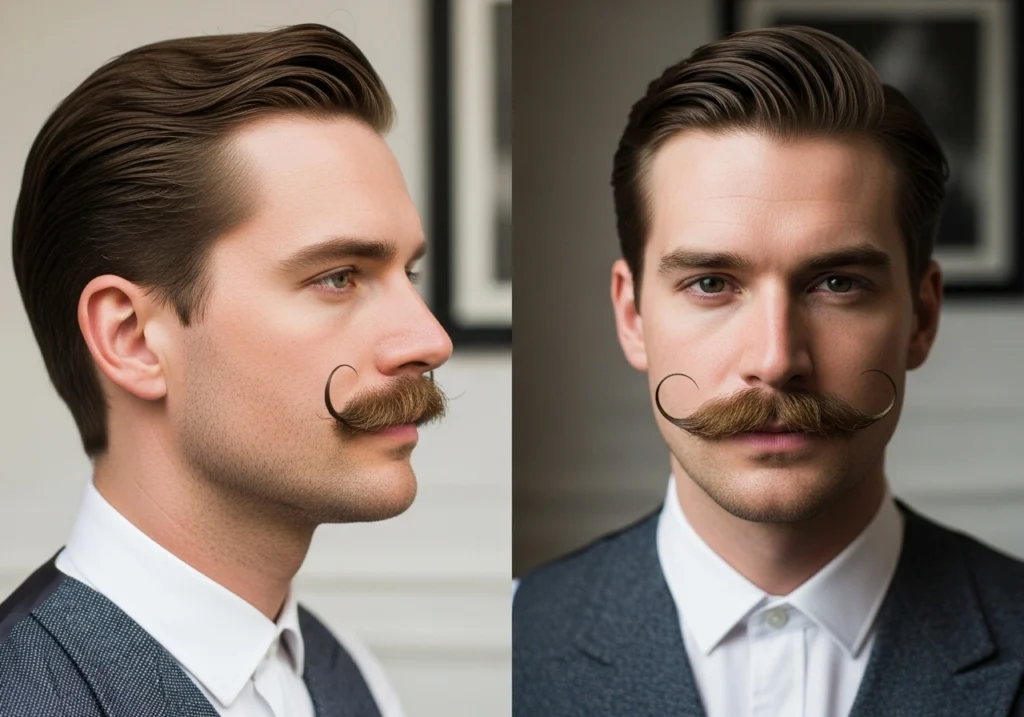
Few mustache styles command attention like the Handlebar. This iconic look features thick growth that extends past the corners of the mouth, with the ends waxed and curled upward into fine points. The Handlebar communicates sophistication and dedication to grooming.
This style demands significant growth time, often requiring six months or longer to achieve proper length. The handles are grown from the hair at the outer edges of the mustache. Daily styling with mustache wax is essential to maintain the characteristic upward curl.
The Handlebar suits men with oblong, diamond, or triangle face shapes particularly well. The upward curl adds width to the face while drawing attention to the mid-face area. For square faces, this style can soften angular features. Growing a Handlebar requires patience, but the impressive result makes the commitment worthwhile.
3. The Bold Horseshoe
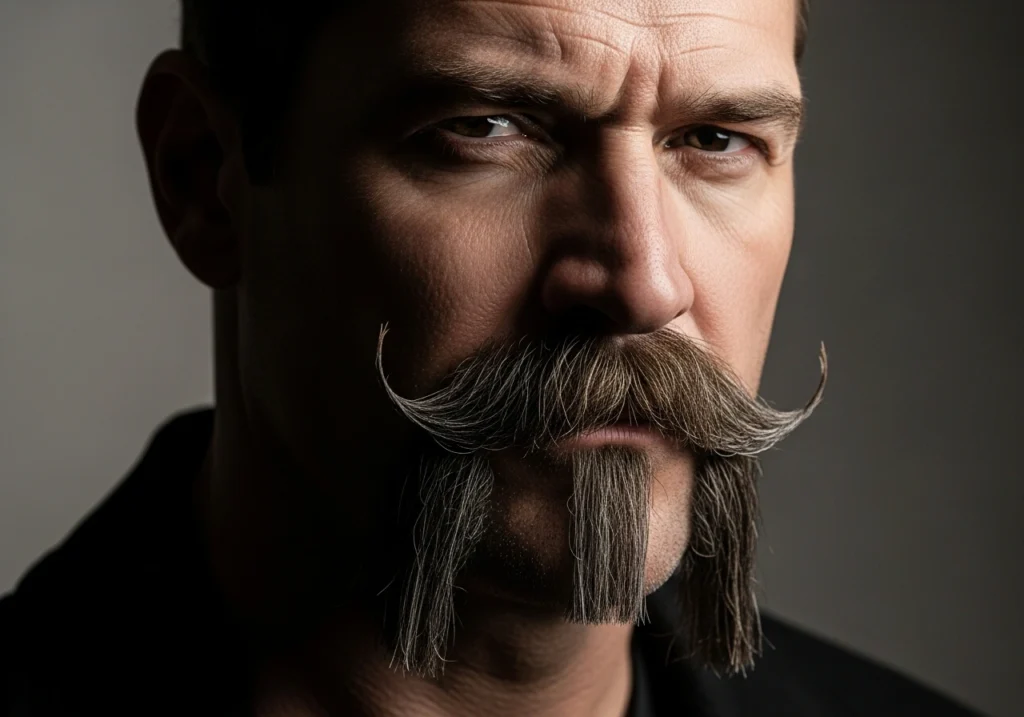
The Horseshoe mustache makes an unmistakable statement. This style features thick vertical bars that drop from the corners of the mouth down to the jawline, forming an upside-down U shape. Popular among bikers and athletes, the Horseshoe projects rugged masculinity and boldness.
Creating this look involves growing a full mustache and allowing hair to extend downward from the mouth corners. The key distinction from similar styles is that the Horseshoe connects to the face only at the top corners of the mouth, with the vertical sections remaining separate from any cheek hair.
This style works best for men with longer face shapes, as it adds visual width and draws attention horizontally across the face. Those with naturally downturned mouths should consider carefully, as the Horseshoe can emphasize this feature. Maintenance involves regular trimming to keep the vertical bars even and well-defined.
4. The Refined Pencil
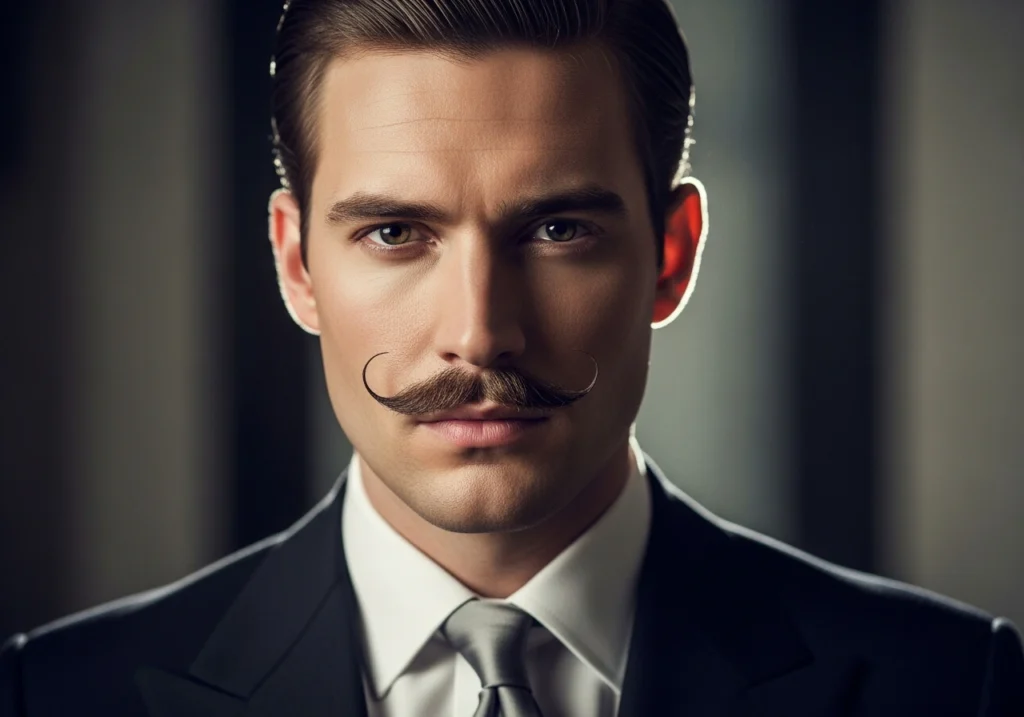
The Pencil mustache embodies elegance and precision. This thin line of hair sits directly above the upper lip, spanning the width of the mouth. Made famous by classic Hollywood stars and more recently by Brad Pitt in certain roles, the Pencil communicates sophistication with a hint of mystery.
This style requires meticulous grooming and works best on men with darker hair, as lighter shades can make the thin line difficult to perceive. The Pencil suits oval and heart-shaped faces particularly well, adding definition without overwhelming delicate features.
Achieving the Pencil mustache demands precision trimming and regular maintenance. Use a detailed trimmer or razor to create the thin line, ensuring both sides remain symmetrical. This style typically sits just above the upper lip line, following its natural curve. Daily maintenance is necessary to prevent stray hairs from disrupting the clean line.
5. The Impressive Walrus
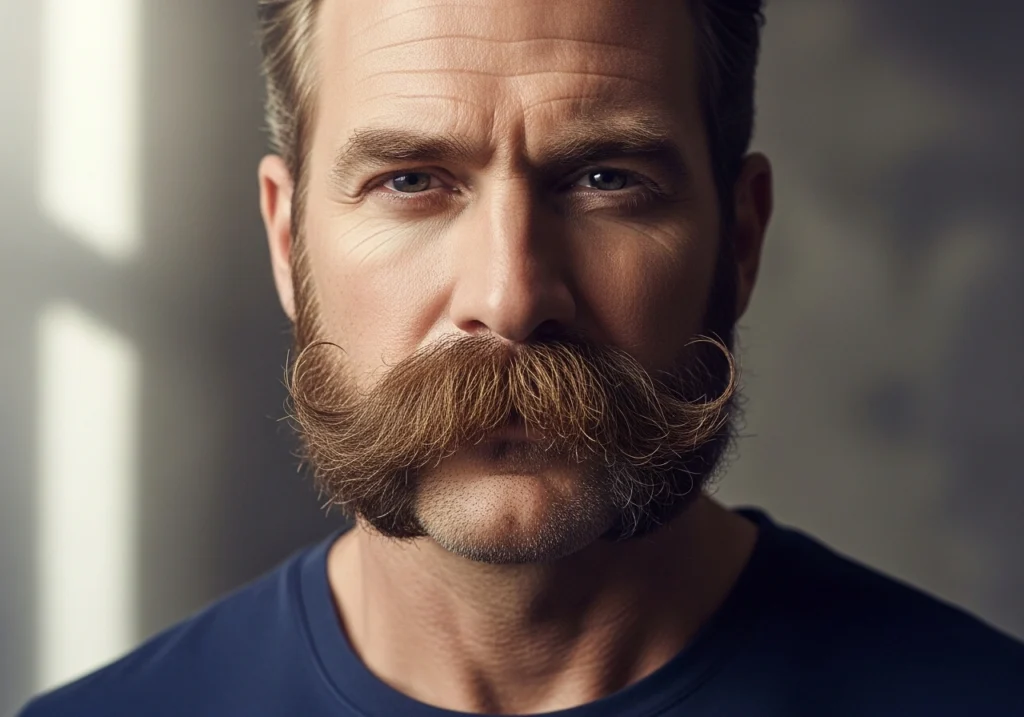
The Walrus mustache represents the ultimate in bold facial hair statements. This bushy, full style covers the entire upper lip and often extends downward over the mouth. The Walrus projects a rugged, no-nonsense personality.
Growing a Walrus requires substantial time and genetic capability for thick facial hair growth. The mustache is allowed to grow naturally without much shaping, creating a full, bushy appearance. Some men style the ends downward rather than allowing them to curl naturally.
This style suits men with longer face shapes, as it adds substantial visual weight to the upper face. The Walrus requires regular washing and conditioning to keep the hair soft and manageable. Trimming is minimal, focusing mainly on preventing the mustache from becoming too unruly while maintaining its characteristic fullness.
6. The Modern Beardstache
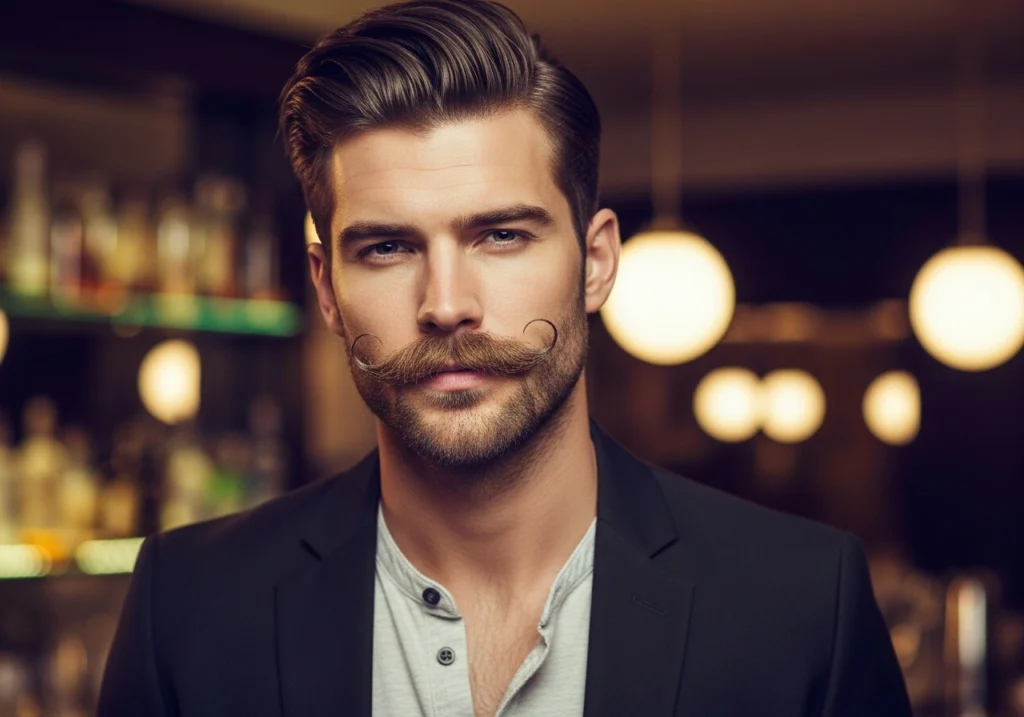
The Beardstache combines the best of both worlds, featuring a prominent mustache paired with light stubble or a short beard. This contemporary style offers versatility and requires less maintenance than a full beard while still providing substantial visual interest.
The key to the Beardstache is maintaining clear contrast between the full mustache and the shorter facial hair surrounding it. The mustache should be noticeably longer and more defined than the beard portion. This creates a focal point that draws attention to the upper face.
This style works with virtually any face shape and pairs well with various mustache designs. Whether you prefer a Chevron, Handlebar, or standard mustache, the Beardstache format enhances its impact. Use adjustable clippers to maintain the shorter beard length while allowing the mustache to grow fuller. Regular trimming keeps the look intentional rather than unkempt.
7. The Hungarian Masterpiece
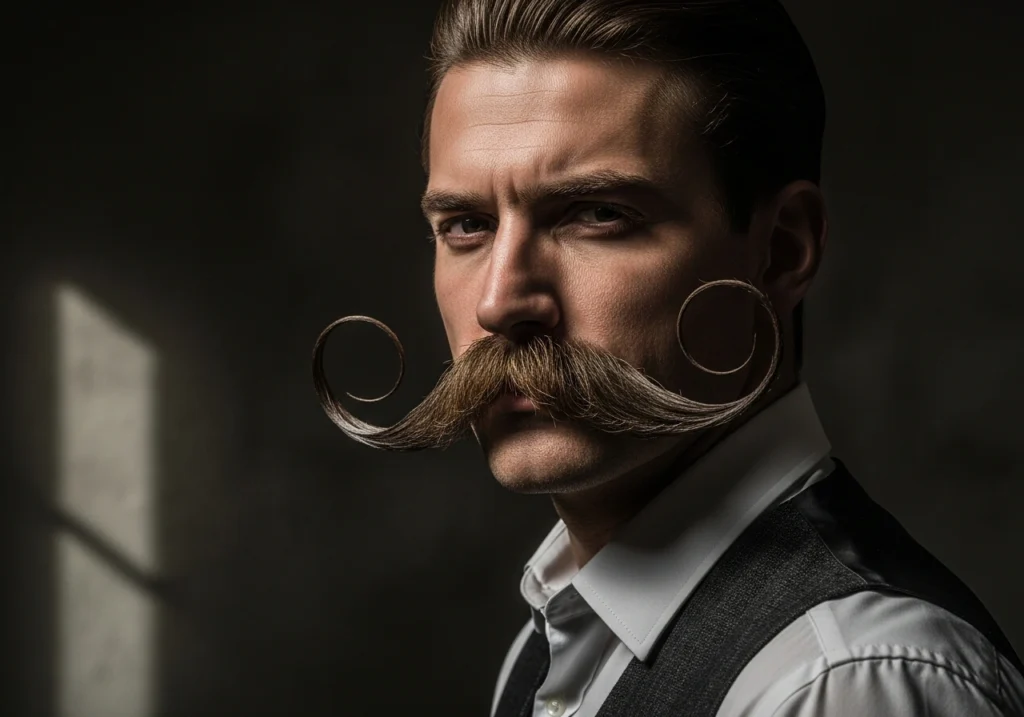
The Hungarian mustache represents one of the most impressive styles available. Similar to the Handlebar but even more dramatic, the Hungarian features thick growth with long, swooping curves that extend well beyond the face. This style communicates commitment and confidence.
Growing a Hungarian can take up to a year, as significant length is required for the characteristic sweeping curves. The mustache is grown thick like a Walrus, then shaped to create the long handles. Unlike the standard Handlebar, the Hungarian often features more natural curves rather than tightly waxed points.
This style suits oval and square face shapes particularly well. The dramatic curves add width and draw attention across the entire face. Maintenance involves regular brushing or combing to train the hair to curl naturally in the desired direction. Minimal wax may be used to enhance the natural curl without creating a stiff appearance.
8. The Artistic Dali
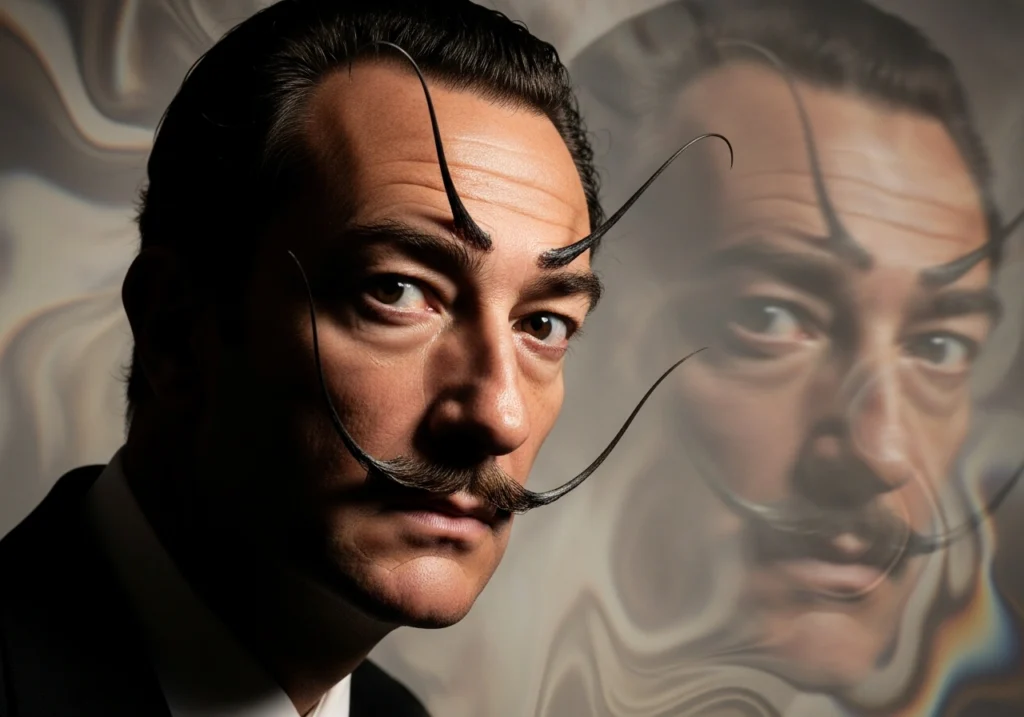
Named after surrealist painter Salvador Dali, this mustache style is nothing short of theatrical. The Dali features long, thin handles that extend upward and outward from the upper lip, often waxed into dramatic points that defy gravity.
Creating a Dali mustache requires growing the hair at the outer edges of the mustache to substantial length. The center is kept thinner, allowing the handles to be the focal point. Heavy-hold mustache wax is essential for maintaining the upward styling throughout the day.
This avant-garde style suits men with artistic personalities who enjoy making bold statements. It works best on oval or square face shapes where the dramatic lines can be fully appreciated. Daily styling is required, making this a high-maintenance choice. The Dali is not for those seeking subtlety but rather for individuals who view their facial hair as a form of art.
9. The Sophisticated English
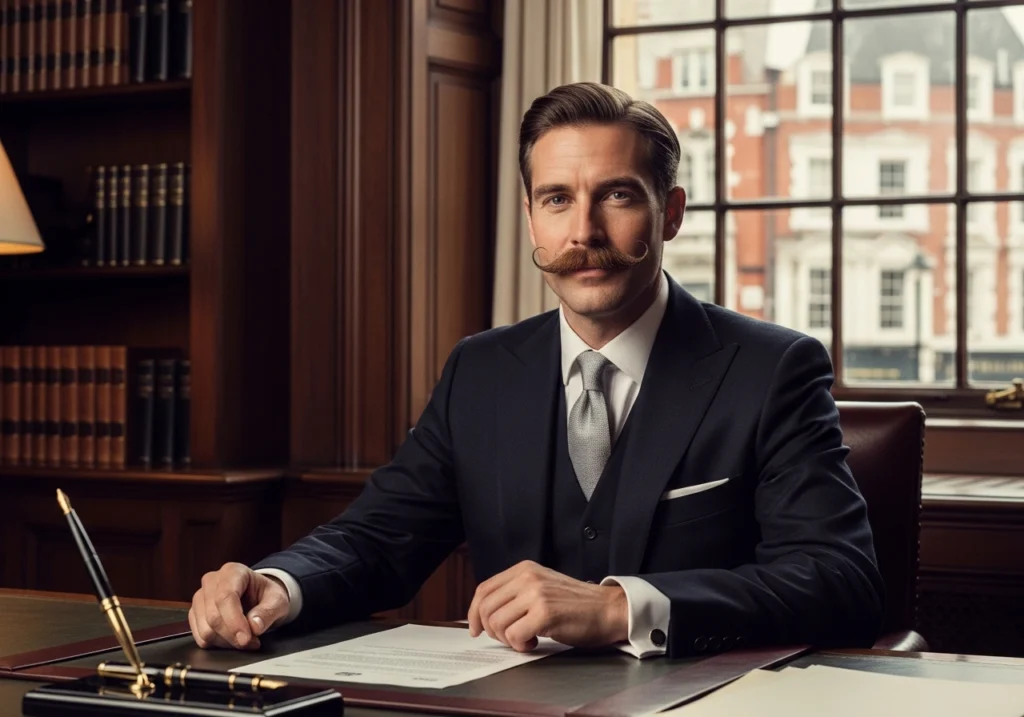
The English mustache features refined, outward-pointing handles that extend horizontally from the face rather than curling upward. This style communicates British elegance and old-world charm while remaining more subdued than the Handlebar.
Growing an English mustache takes several months. The handles are grown long enough to extend past the corners of the mouth but are styled outward in a straight line rather than curled. Medium-hold wax provides structure without the dramatic curl of other styles.
This mustache complements square and rectangular face shapes, as the horizontal lines balance strong jaw structures. The English works well in professional settings where a bold statement is desired without appearing too theatrical. Regular trimming of the body of the mustache while allowing the ends to grow maintains the proper proportions.
10. The Classic Lampshade
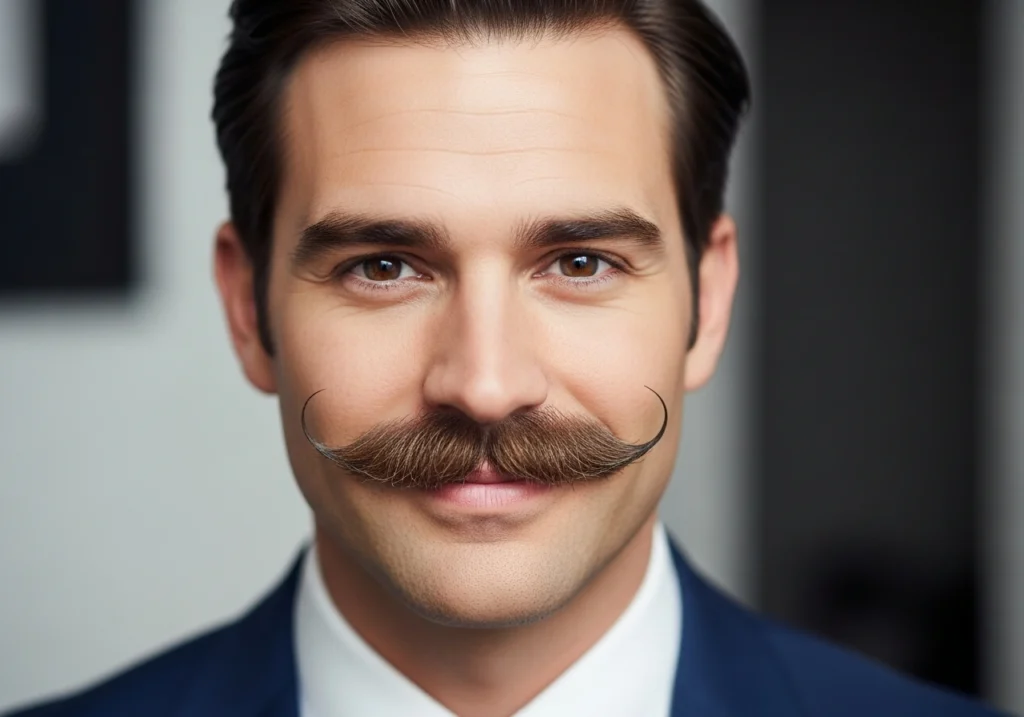
The Lampshade mustache offers a clean, approachable look. This style closely follows the natural curve of the upper lip, creating a boxy appearance that is well-defined yet understated. The Lampshade provides a middle ground between barely-there stubble and more dramatic styles.
This style requires regular trimming to maintain its characteristic shape. The mustache should cover the upper lip without extending beyond it or drooping over the mouth. The edges are kept neat and defined.
The Lampshade suits virtually all face shapes and works particularly well for men new to mustache growing. It provides enough presence to be noticed without overwhelming facial features. This style transitions well between casual and professional settings, making it highly versatile.
11. The Distinctive Anchor
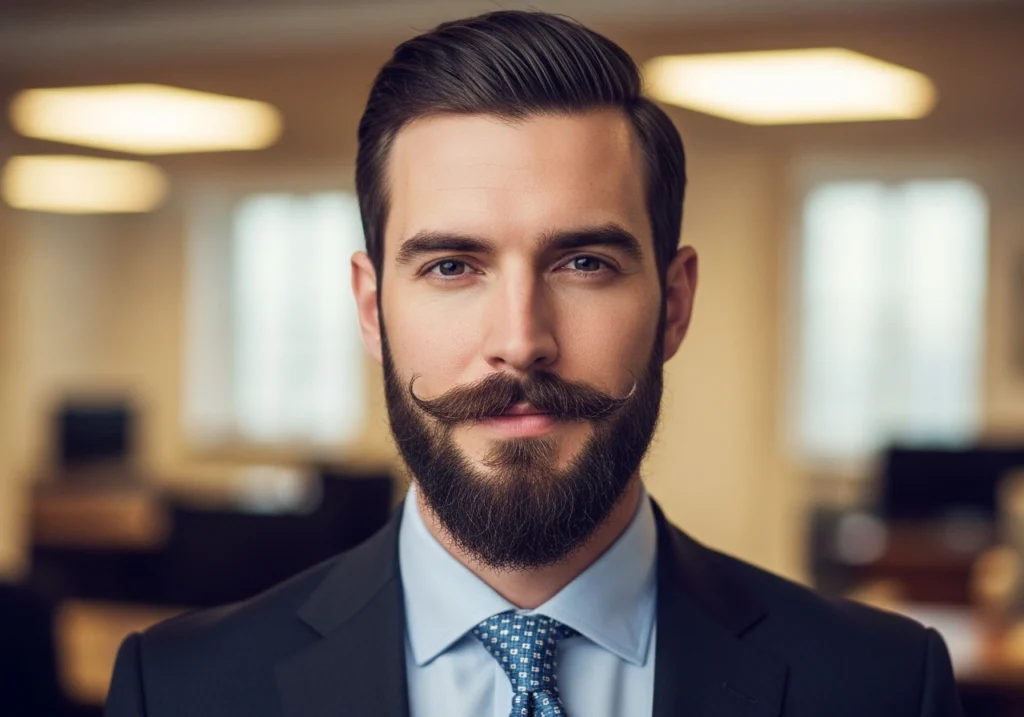
The Anchor beard combines a pointed beard that traces the jawline with a disconnected mustache, creating the shape of a ship’s anchor. This style offers a unique aesthetic that stands out from more common designs.
To achieve the Anchor, grow both the mustache and chin hair while keeping the cheeks clean-shaven. The beard portion is shaped into a downward-pointing triangle that follows the jawline. The mustache remains separate and can be styled according to preference.
This style suits square and diamond face shapes particularly well, as it adds definition and structure. The pointed beard draws the eye downward, creating a lengthening effect that balances wider faces. Regular shaping is necessary to maintain the precise lines that define this style.
12. The Traditional Van Dyke
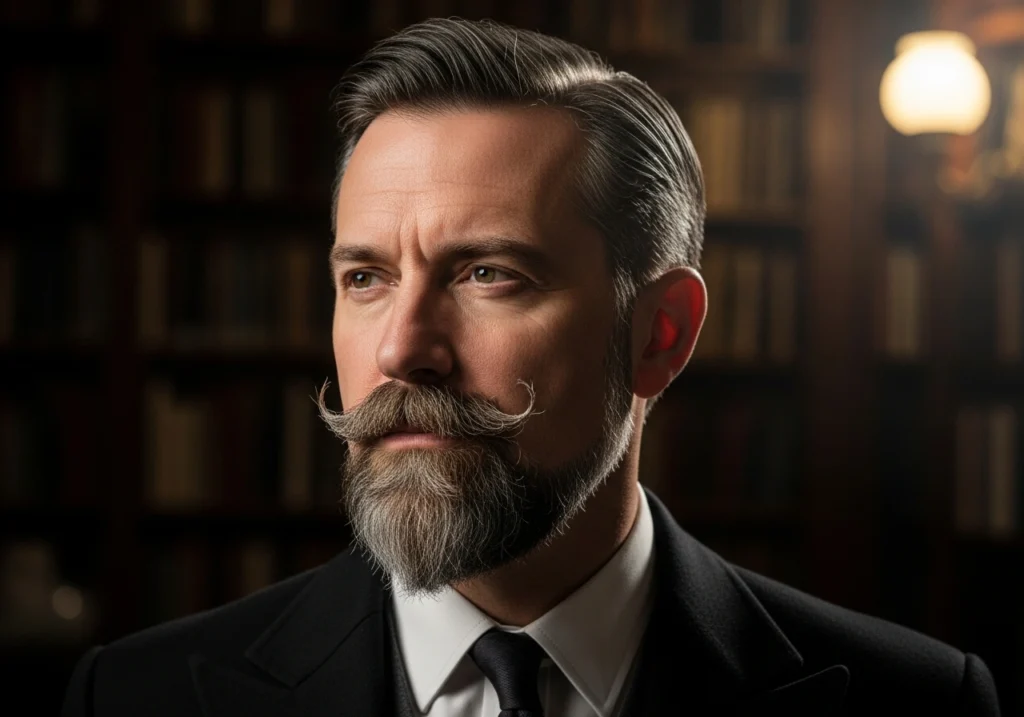
The Van Dyke represents classic sophistication. This style features a goatee combined with a mustache, both kept separate from each other. Named after Flemish painter Anthony van Dyck, this look has been favored by intellectuals and artists throughout history.
Creating a Van Dyke requires growing facial hair on the chin and upper lip while keeping the cheeks and the area connecting the mustache to the goatee clean-shaven. The goatee can be styled into a point or kept more rounded depending on preference.
This style works well for men with patchy cheek growth, as it focuses hair where growth is typically strongest. The Van Dyke suits oval and heart-shaped faces particularly well. Regular trimming maintains the distinct separation between the mustache and goatee, which defines this classic style.
13. The Professional Short Boxed

The Short Boxed mustache offers a neat, professional appearance. This style features a closely trimmed mustache with precise edges and clean lines. The Short Boxed communicates attention to detail and works well in corporate environments.
This style requires regular trimming to maintain its defined shape. The mustache is kept short, typically no longer than a few millimeters beyond the skin. Sharp lines along the edges create the “boxed” appearance that gives this style its name.
The Short Boxed suits round and square face shapes, adding structure without overwhelming features. This low-maintenance style requires only a few minutes of grooming every few days. It pairs well with various hairstyles and dress codes, making it ideal for professional men who want facial hair without appearing too casual.
14. The Bold Imperial
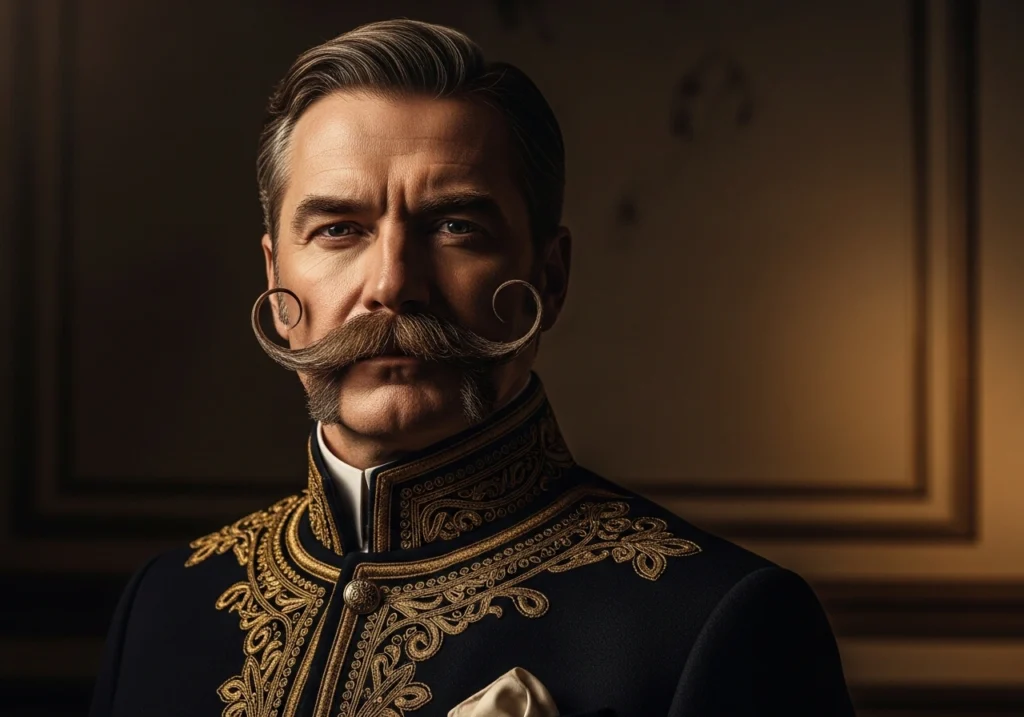
The Imperial mustache features thick growth with dramatically waxed ends that curl upward and often outward. Named after Emperor Napoleon III, this regal style commands attention and respect.
Growing an Imperial requires substantial length in both the body of the mustache and the handles. The ends are waxed into exaggerated curves that showcase grooming expertise and dedication.
This theatrical style suits men with oval or square face shapes who enjoy making bold statements. The Imperial works best when the rest of the face is clean-shaven, allowing the mustache to be the focal point. Daily waxing and styling are required to maintain the dramatic curves.
15. The Rugged Mutton Chops
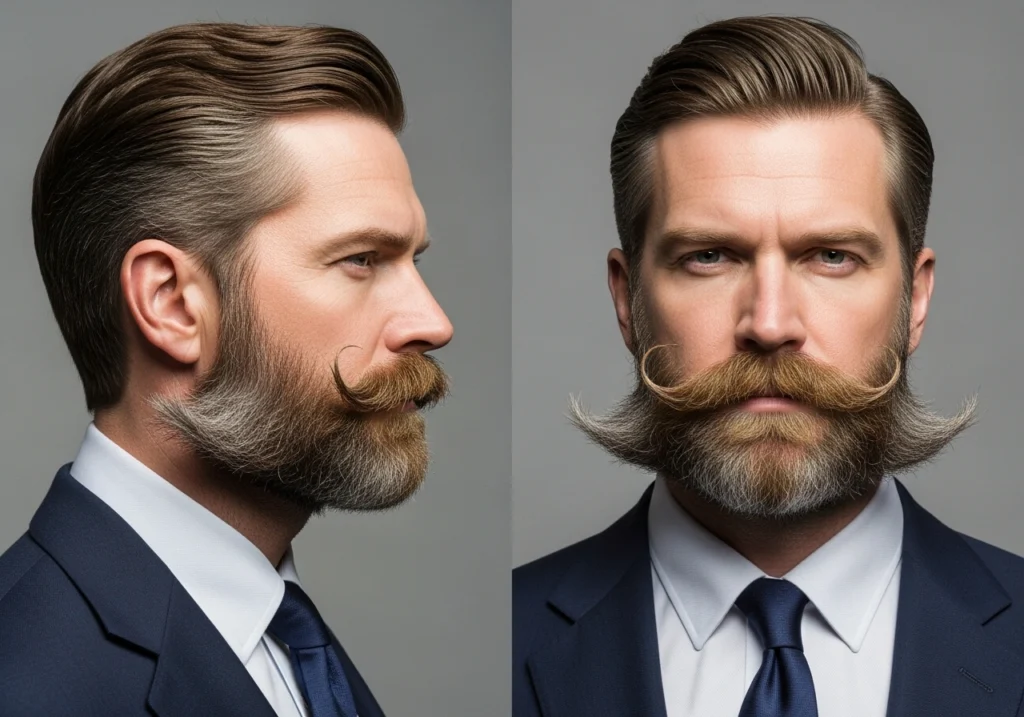
Mutton Chops represent a distinctive style that extends facial hair from the sideburns down along the jawline while keeping the chin clean-shaven. When combined with a mustache, this creates a unique frame for the face.
Growing Mutton Chops requires allowing sideburns to grow thick and extend down to the jaw. The hair follows the jawline forward but stops before reaching the chin. The mustache remains separate, connected only through the sideburns.
This style suits rectangular and oblong face shapes, as it adds width and creates better facial proportions. Mutton Chops require regular trimming to maintain their distinctive shape and prevent them from looking unkempt. This bold choice reflects confidence and individuality.
16. The Subtle Shadow Stache

The Shadow Stache represents the minimalist approach to mustache styling. This barely-there style features light stubble growth above the upper lip, providing subtle definition without full commitment.
Achieving the Shadow Stache involves allowing one to three days of growth, then maintaining that length with regular trimming. The goal is a natural, effortless appearance that suggests facial hair capability without the maintenance of fuller styles.
This style works for virtually all face shapes and is ideal for men testing whether a mustache suits them. The Shadow Stache transitions seamlessly between clean-shaven and more substantial facial hair. It requires minimal maintenance and works well in all professional and social settings.
17. The Creative Zappa
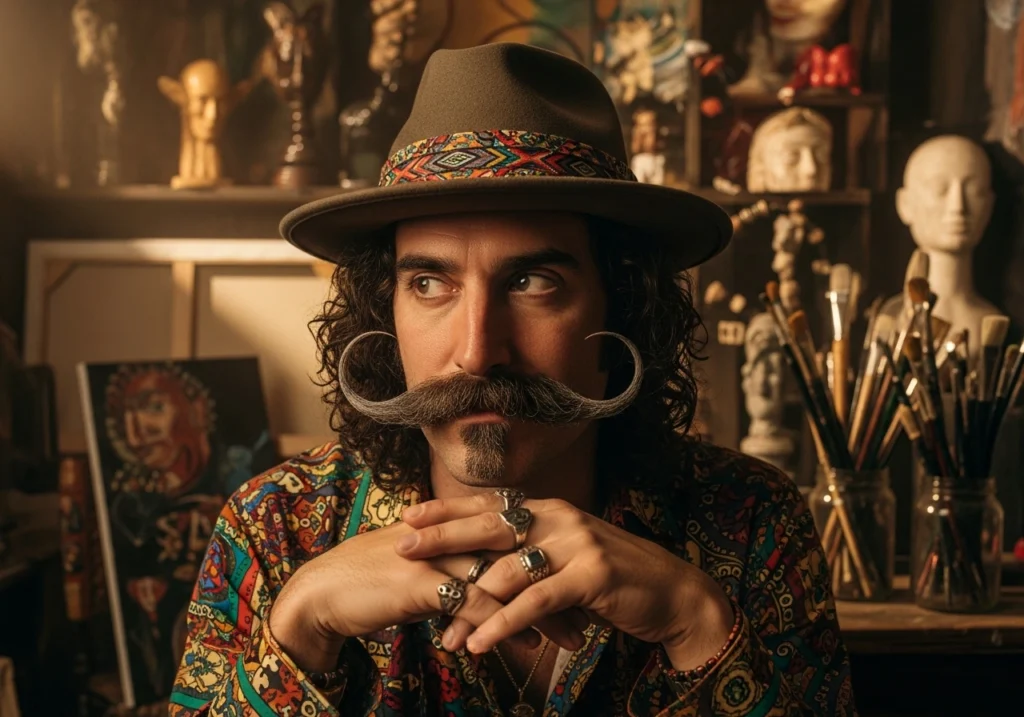
Named after musician Frank Zappa, this style combines a thick mustache with a soul patch beneath the lower lip. The Zappa offers an artistic, unconventional look that stands out from traditional styles.
Creating a Zappa requires growing both elements independently while keeping the rest of the face clean-shaven. The mustache can be styled according to preference, though a fuller style typically works best. The soul patch should be well-defined and proportional to the mustache.
This style suits men with strong facial features and artistic personalities. The Zappa works on oval and square face shapes, adding interest without overwhelming the face. Regular trimming of both elements maintains the defined appearance that makes this style distinctive.
Essential Grooming Tools and Products
Achieving and maintaining any mustache style requires proper tools and products. A quality beard trimmer with adjustable guards provides versatility for different lengths and styles. Sharp scissors designed specifically for facial hair allow precise detail work. A fine-toothed mustache comb helps train hair and distribute products evenly.
Mustache wax is essential for styles requiring hold and shaping. Light-hold wax works for subtle styling, while firm-hold options support more dramatic designs like the Handlebar or Dali. Beard oil keeps facial hair soft and manageable while moisturizing the skin beneath. Regular washing with beard-specific shampoo prevents buildup and keeps hair clean without stripping natural oils.
A quality mirror, preferably with magnification, enables precise trimming and styling. Consider investing in a dedicated grooming kit that includes various comb sizes, trimming scissors, and styling products. These tools make the difference between a well-maintained mustache and one that appears neglected.
Maintenance and Care Routines
Proper maintenance separates impressive mustache styles from unkempt facial hair. Daily washing removes food particles, oils, and environmental debris. Use lukewarm water and a small amount of beard shampoo, working it through the mustache gently. Rinse thoroughly and pat dry with a clean towel.
Apply beard oil daily to keep hair soft and skin moisturized. Place a few drops in your palm, rub your hands together, and work the oil through the mustache from roots to tips. This prevents itching, reduces dandruff, and keeps hair manageable.
Trimming frequency depends on your chosen style and growth rate. Most styles benefit from trimming every three to seven days. Remove stray hairs, maintain defined edges, and preserve the overall shape. Always trim when the mustache is dry, as wet hair appears longer and can lead to over-trimming.
Brush or comb your mustache daily to train the hair, distribute natural oils, and remove tangles. For styles requiring wax, apply after the mustache is clean and dry. Work a small amount between your fingers until pliable, then apply to the mustache, shaping as desired.
Common Mistakes to Avoid
Many men make similar mistakes when growing and maintaining mustaches. Trimming too early prevents proper assessment of growth patterns and potential styles. Allow at least four weeks of growth before significant shaping.
Using regular hair shampoo rather than beard-specific products can dry out facial hair and irritate skin. Beard shampoos are formulated for coarser hair and the more delicate facial skin.
Neglecting the skin beneath the mustache leads to itching, flaking, and discomfort. Regular exfoliation removes dead skin cells, while beard oil keeps skin healthy and moisturized.
Choosing a style based solely on appearance without considering face shape often results in unflattering results. Always evaluate how a style will complement your natural features rather than simply copying someone else’s look.
Over-styling with excessive product creates a stiff, unnatural appearance. Use the minimum amount of wax necessary to achieve your desired look, allowing some natural movement and texture to remain.
Building Confidence with Your Mustache
Growing a mustache requires confidence, particularly during the early stages when growth may appear uneven or sparse. Remember that most mustaches take several weeks to months to reach their full potential. Embrace the process rather than becoming discouraged by temporary awkwardness.
Your mustache reflects your personality and style preferences. Choose a design that feels authentic rather than one you think you should wear. Confidence comes from wearing a style that aligns with your self-image and lifestyle.
Be prepared for comments and questions, especially if your mustache represents a significant change in appearance. Respond with humor and confidence, explaining your choice if you wish or simply acknowledging the change. Most reactions will be positive, particularly once your mustache is well-groomed and properly maintained.
Remember that facial hair is not permanent. If you try a style that doesn’t work, you can always shave and start fresh. This flexibility allows experimentation without long-term commitment. Many men try several styles before finding their signature look.
Conclusion
The mustache renaissance of 2026 offers men unprecedented opportunities to express personality and style through facial hair. From the bold statement of a Hungarian to the refined elegance of a Pencil, each style communicates something unique about the wearer.
Selecting the right mustache style requires understanding your face shape, considering your lifestyle and grooming commitment, and choosing a design that reflects your personality. Proper maintenance, quality products, and regular grooming transform facial hair from an afterthought into a defining feature.
Whether you prefer classic styles with historical significance or contemporary designs that push traditional boundaries, a well-maintained mustache enhances your appearance and boosts confidence. The key is finding a style that feels authentic, committing to proper care, and wearing it with pride.
Experiment with different options, invest in quality grooming tools, and most importantly, enjoy the process of discovering which mustache style makes you look and feel your best. In 2026, facial hair is not just accepted but celebrated as a legitimate form of self-expression and personal style.
You my also like this post:Beard and Hairstyles Guide for Men | Modern & Classic Looks