How to Dress Groomsmen?
Getting your groomsmen dressed well is one of those wedding planning tasks that sounds straightforward until you actually start doing it. Suddenly, you are juggling questions about suit colors, fabric types, whether to rent or buy, how to stand out as the groom without leaving your crew looking underdressed, and how to make sure everyone looks like they belong together without wearing carbon copies of the same outfit. It is a lot more involved than most people expect, and making the wrong call early on can cost you time, money, and unnecessary stress in the final stretch before your wedding day.
The truth is, dressing your groomsmen well is not just about picking a nice suit off a rack. It is about understanding the tone of your wedding, reading the venue and the season, and making smart decisions about color, fabric, and accessories that all work together to create a look that is polished, cohesive, and right for your celebration. Whether you are planning a black-tie affair in a grand ballroom or a relaxed backyard gathering under string lights, the way your groomsmen are dressed will shape how the entire wedding party feels and looks in every single photograph you will keep for the rest of your life.
This guide will walk you through every step of the process. By the time you finish reading, you will know exactly how to choose the right style, pick the right colors, select the right fabrics for your season, coordinate with the bridal party, accessorize the look, and make sure your groomsmen feel comfortable, confident, and ready to celebrate with you.
1. Start With the Wedding Dress Code

The single most important factor when deciding how to dress your groomsmen is the dress code of your wedding. Everything else, from the color of the tie to the type of shoe, flows from this one decision. If you have not clearly defined the dress code yet, do that first. Common wedding dress codes range from black-tie, which demands the most formal attire, to semi-formal, cocktail, and casual. Each one sets a different expectation for what your groomsmen should wear.
A black-tie wedding calls for tuxedos. This is not optional. Tuxedos are the standard for black-tie events, and showing up in a regular suit at a black-tie wedding would be a clear breach of etiquette. If your wedding is black-tie optional, you have a bit more flexibility. Your groomsmen can wear either a tuxedo or a well-tailored dark suit, but the overall look should still lean toward the formal end of the spectrum.
Semi-formal and cocktail weddings are where suits become the go-to choice. A sharp, well-fitted suit in navy, charcoal, or a deeper tone works perfectly here. You do not need the extra formality of a tuxedo, but you also do not want anything too relaxed. For casual weddings, especially those held outdoors at a garden, a beach, or a rustic barn, lighter suits in tan, grey, or even linen become the natural choice. The key is that whatever your groomsmen wear should feel at home in the setting you have chosen.
you may also like this:16 Best 2026 Hair Trends for Men: Your Complete Guide to Modern Styling
2. Understanding the Difference Between Tuxedos and Suits
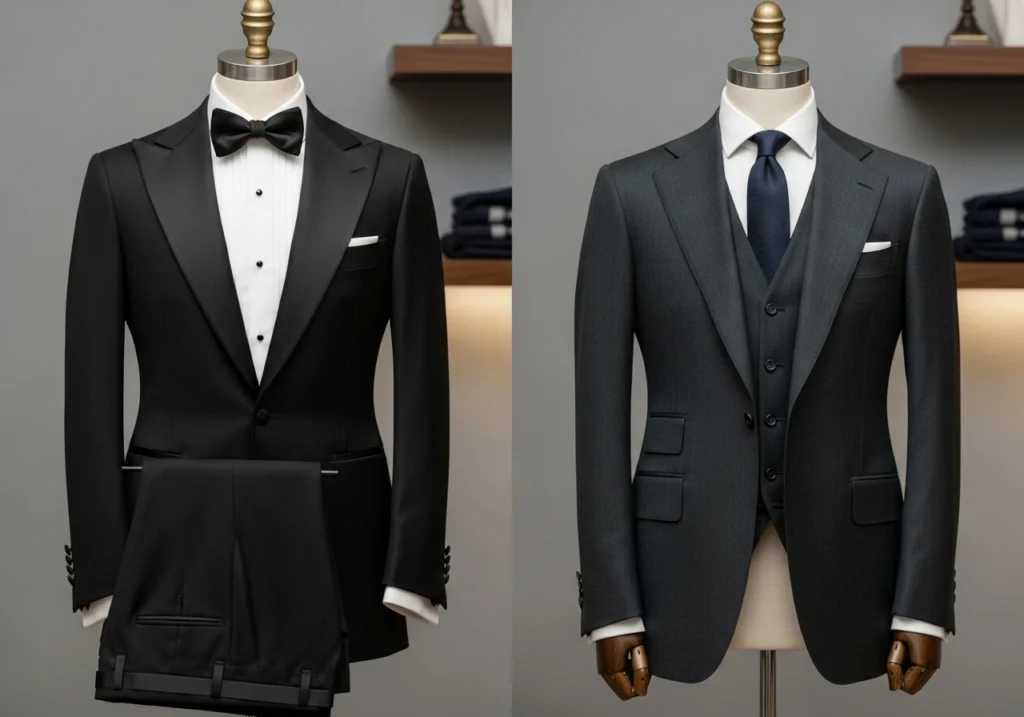
Before you move forward with any decisions, it helps to understand exactly what separates a tuxedo from a suit, because they are not interchangeable. A tuxedo is a formal garment defined by its satin or silk lapels, matching satin stripe down the trouser leg, a crisp white dress shirt, and a bow tie. It is designed for the most formal occasions and carries a weight and presence that a standard suit simply does not.
A suit, on the other hand, is far more versatile. It can be dressed up or dressed down depending on the accessories, the fabric, and the color you choose. A three-piece suit, which includes a matching waistcoat or vest along with the jacket and trousers, sits slightly higher on the formality scale than a two-piece suit. A two-piece suit, consisting of just the jacket and trousers, is more flexible and works across a wider range of wedding styles.
For most weddings that are not strictly black-tie, suits are the better and more practical option. They allow for more personalization, are easier to source in a range of sizes and budgets, and can be styled in dozens of different ways to fit your vision.
3. Choosing the Right Colors for Your Groomsmen
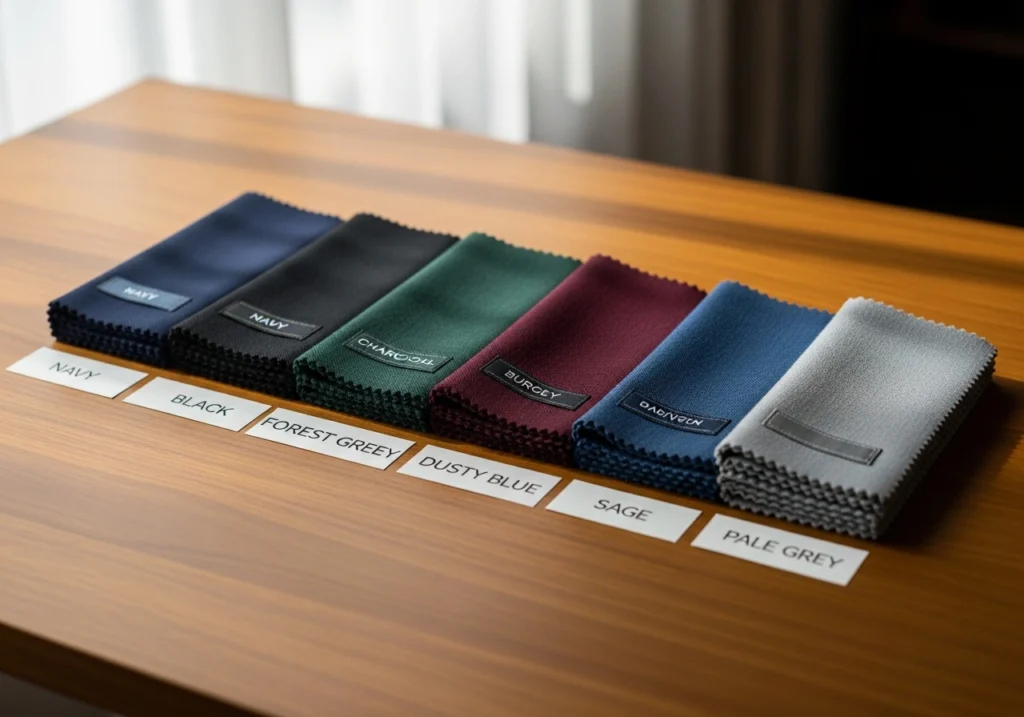
Color is one of the most powerful tools you have when it comes to dressing your groomsmen, and it is also one of the areas where couples make the most mistakes. The color you choose for your groomsmen should do two things at the same time. It should complement the overall color palette of your wedding, and it should work alongside the bridal party without clashing or competing for attention.
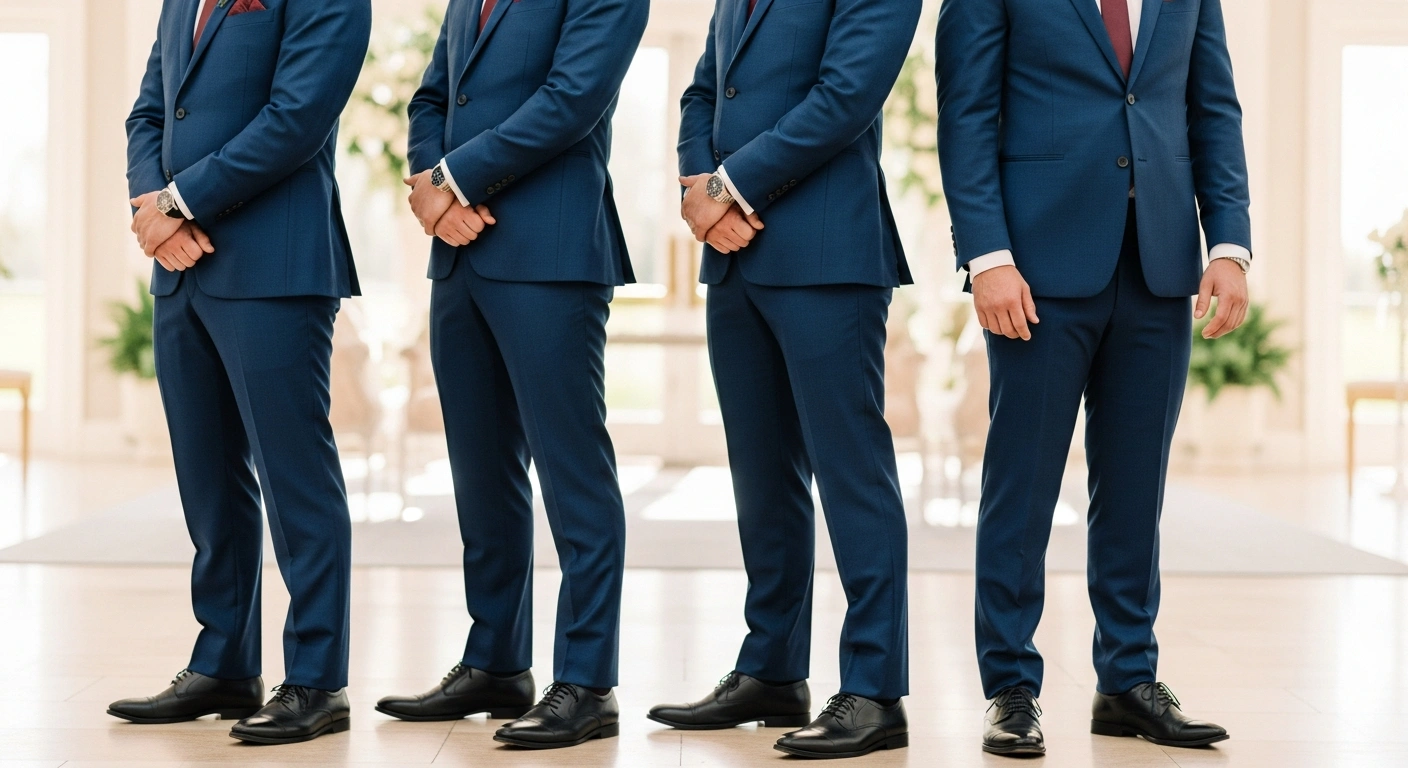
Navy blue is consistently one of the most popular and versatile choices for groomsmen suits. It is classic, it photographs beautifully, and it pairs well with almost any wedding color, from soft blush tones to deep jewel shades. Charcoal grey is another safe and sophisticated option that works across every season and nearly every venue type. Black suits are timeless but can sometimes feel too heavy for daytime or outdoor weddings, so consider whether your setting calls for that level of darkness.
If you want to add a bit more personality to the look, colors like forest green, burgundy, and even dusty blue have become increasingly popular in recent years. These bolder tones work especially well for autumn and winter weddings, where the natural light and surroundings already lean toward deeper, richer shades. For spring and summer weddings, lighter and softer tones like sage, light grey, or pale blue can feel fresh and appropriate without looking out of place.
One important rule to keep in mind is that your groomsmen should not wear a color that directly competes with the groom. If you as the groom are wearing a darker or more distinctive suit, your groomsmen should be in something that sits a step below in terms of visual impact. The goal is harmony, not uniformity.
4. Selecting Fabrics That Suit the Season
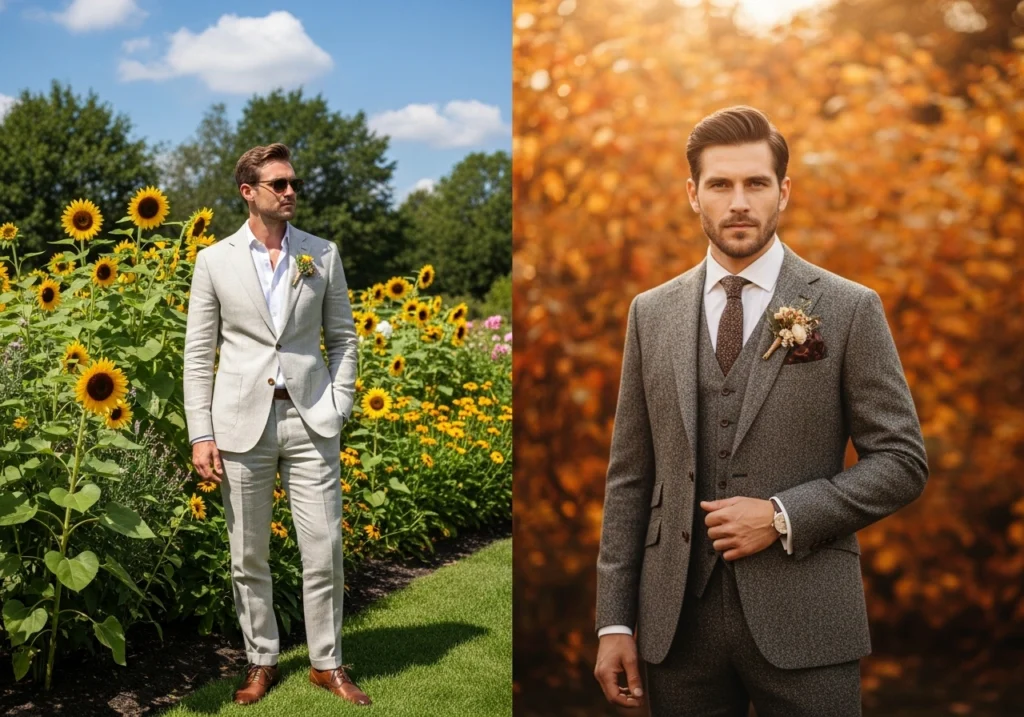
The fabric of your groomsmen’s suits matters more than most people realize, especially when it comes to comfort. A suit that looks stunning in a photograph but leaves your groomsmen drenched in sweat during an outdoor summer ceremony is not going to serve anyone well on the big day.
For spring and summer weddings, lighter and more breathable fabrics are the way to go. Linen is a classic choice for warm-weather weddings. It is lightweight, breathable, and carries an effortlessly relaxed quality that works beautifully at beach, garden, and destination weddings. Cotton is another solid option for warmer months. It holds its shape well and feels comfortable without being too heavy. Lightweight wool blends can also work in the spring if the weather is mild, offering a slightly more structured look than linen or cotton.
For fall and winter weddings, you want fabrics that offer a bit more weight and warmth without being stiff or uncomfortable. Wool is the standard choice here. It provides insulation, drapes well, and gives suits a rich, polished look that feels right for the cooler months. Tweed is another option worth considering for rustic or countryside weddings in the autumn. It has texture and character, and it pairs beautifully with earthy color palettes. Velvet is a more dramatic choice, best reserved for evening events or weddings with a luxurious, glamorous feel.
5. How to Make the Groom Stand Out From the Groomsmen
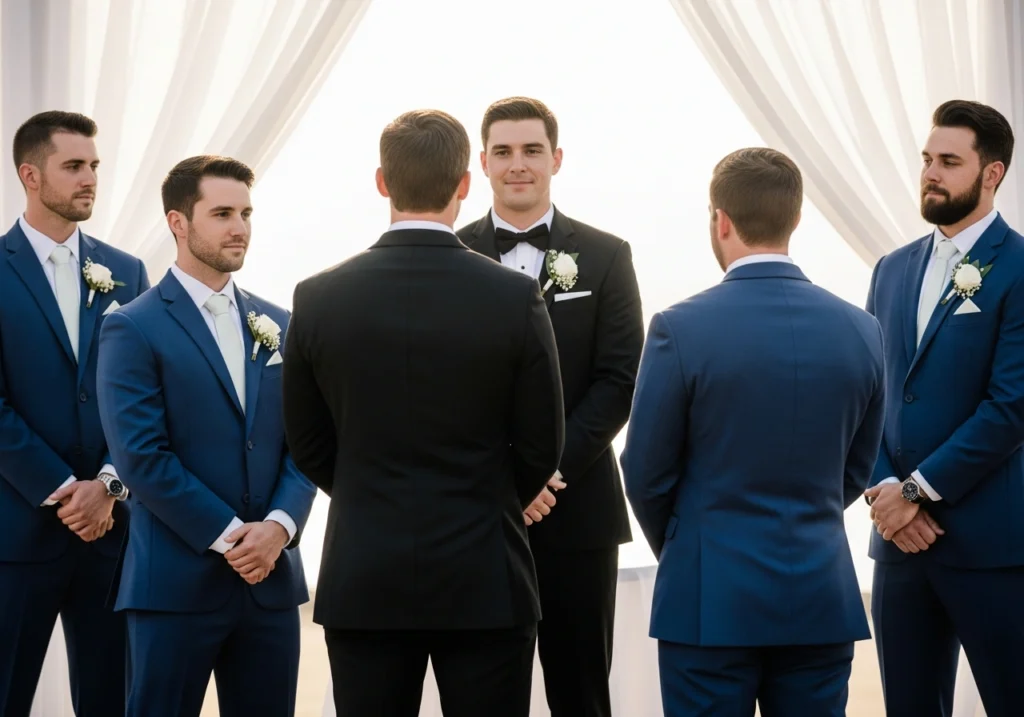
One of the most common questions grooms ask is whether their groomsmen need to wear the exact same outfit they are wearing. The answer is no, and in fact, it is generally a better idea for the groom to look slightly different from the rest of the wedding party. The couple should always be the focal point of the event, and there are several tasteful ways to achieve that without making the groomsmen look underdressed or disconnected.
The simplest approach is to vary one key element. If your groomsmen are in two-piece suits, you could wear a three-piece suit with a matching waistcoat. If they are in a standard tie, you could wear a bow tie. If they are in a lighter shade, you could opt for a deeper or richer tone in the same color family. These small differences create a clear visual hierarchy without drawing too much attention away from the wedding party as a whole.
Another popular approach is to let the groom wear a tuxedo while the groomsmen wear suits. This works particularly well for semi-formal weddings where a black-tie dress code has not been set. The contrast between the two levels of formality creates a natural distinction and ensures the groom commands attention when walking down the aisle.
6. Coordinating With the Bridal Party
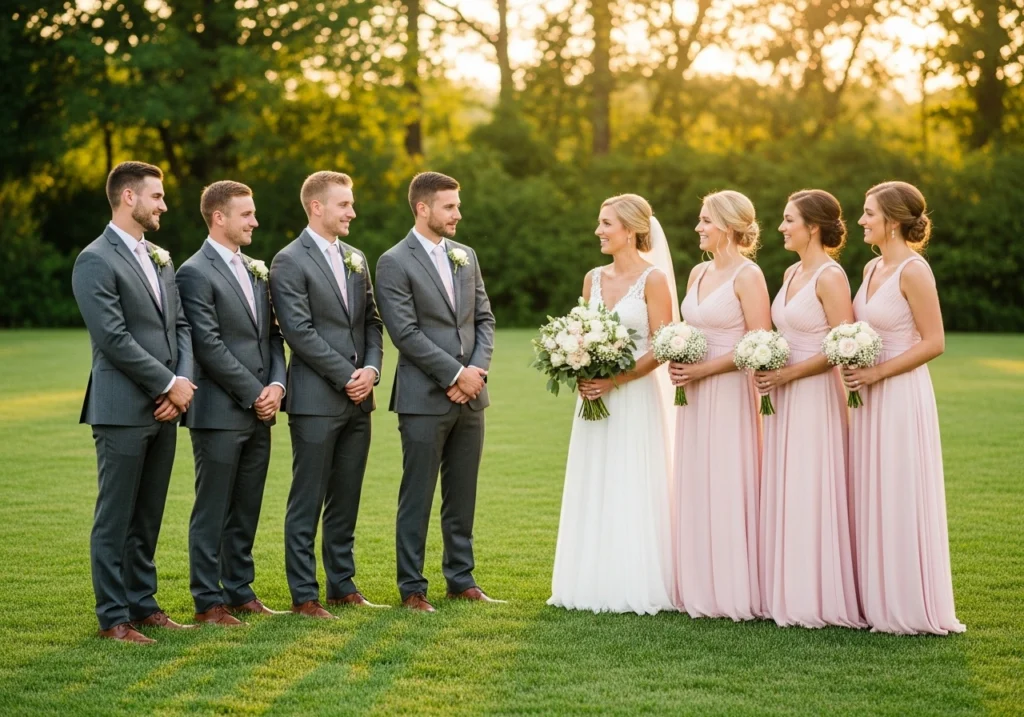
Your groomsmen do not exist in a vacuum. They are going to be standing alongside bridesmaids, flower girls, and other members of the wedding party, and the way they are dressed should complement that larger picture. The best way to achieve this is to communicate early and often with your partner about the color palette and overall aesthetic you are both aiming for.
If the bridesmaids are wearing navy dresses, for example, your groomsmen could wear suits in a complementary shade like charcoal grey or a warm tan. If the bridal party is going with soft blush tones, a light grey or dusty blue suit for the groomsmen will sit next to it beautifully. The goal is not to match color for color but to create a visual harmony that ties the entire wedding party together.
Accessories are one of the easiest ways to create that connection. Matching boutonnieres across the entire wedding party, for instance, can pull the whole look together even if the suits and dresses are in completely different colors. The same goes for ties or pocket squares that echo the wedding color palette.
7. The Art of Accessorizing Your Groomsmen
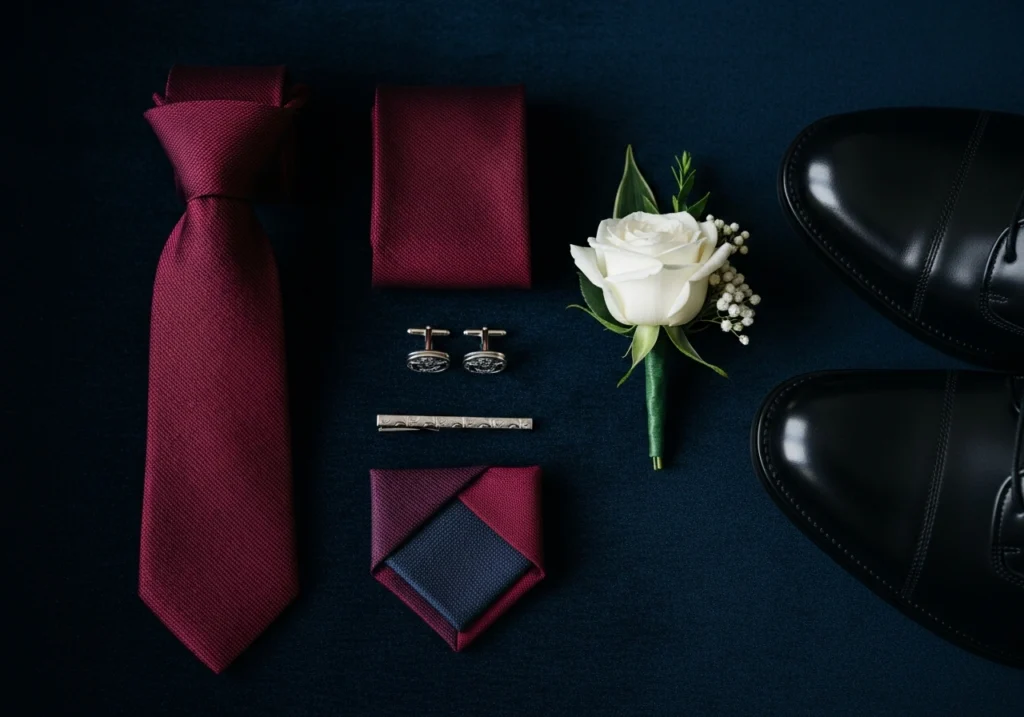
Accessories are where you can add the most personality and polish to your groomsmen’s outfits without changing the core of what they are wearing. A well-chosen tie, a crisp pocket square, a pair of quality shoes, and a thoughtful boutonniere can take a simple suit and turn it into something that feels intentional and refined.
Ties and bow ties are the most visible accessory on any suit. For formal weddings, bow ties tend to feel more appropriate, especially if the groomsmen are wearing tuxedos or darker suits. For semi-formal and cocktail weddings, neckties in a solid color or a subtle pattern work well. Matching all of your groomsmen in the same tie creates a sense of unity, while giving each one a slightly different color or pattern within the same palette can add individuality without looking disorganized.
Pocket squares are a small detail that makes a noticeable difference. They do not need to match the tie exactly. In fact, a pocket square in a complementary color or a different texture often looks better than a perfect match. Cufflinks and tie bars add another layer of refinement, and they are also an opportunity for personalization. Some couples choose cufflinks or tie clips engraved with the wedding date or the initials of the couple as a meaningful keepsake for each groomsman.
Shoes should not be overlooked either. Black oxford shoes remain a classic and safe choice for formal and semi-formal weddings. For more casual events, brown leather shoes or even well-kept loafers can work beautifully and feel more comfortable for dancing later in the evening.
8. Renting Versus Buying: What Makes the Most Sense

One of the most practical decisions you will face when dressing your groomsmen is whether they should rent their suits or purchase them. There is no single right answer, but there are some factors worth considering before you commit to one path.
Renting a suit is convenient, especially for groomsmen who may not wear a suit again for a long time. It is typically less expensive upfront, and rental companies handle the sizing and delivery process, which saves time. However, rented suits may not fit as precisely as a purchased and tailored suit, and there is often less flexibility in terms of color and style options.
Buying a suit gives each groomsman something they can wear again, whether for future weddings, job interviews, or other formal occasions. It also allows for proper tailoring, which means a better fit. The trade-off is the higher initial cost, and the responsibility of finding the right suit independently. If budget is a concern, it is worth having an honest conversation with your groomsmen early on about what is realistic. Choosing a suit at a moderate price point that is widely available makes the process easier for everyone involved.
9. Timing and Planning Ahead

One detail that trips up many couples is the timeline for getting groomsmen dressed. Waiting until the last minute creates unnecessary pressure and limits your options, especially if you are renting suits or if any of your groomsmen need alterations. The general recommendation is to have suits sorted out at least four to six weeks before the wedding. If you are renting, start the process even earlier to allow for fittings and any adjustments.
Communication is everything in this process. Send your groomsmen a clear, written outline of what you expect them to wear, including specific details like color, style, and any accessories that are required. If you are paying for part of their outfit, make that clear upfront as well. The earlier everyone is on the same page, the smoother the whole process will be.
Conclusion
Dressing your groomsmen is one of those wedding tasks that, when done well, looks completely effortless. Nobody at your wedding will think about how many hours went into selecting the right shade of navy or debating between linen and lightweight wool. They will simply see a polished, put-together wedding party that looks like they belong together, and that is exactly what you are aiming for.
The key is to start with your dress code, let it guide your choices for style, color, and fabric, and then layer in the accessories and personal touches that make the look feel complete. Keep the season in mind, keep your budget realistic, and keep the lines of communication open with your groomsmen throughout the process. When all of those pieces fall into place, you will have a wedding party that not only looks incredible but also feels confident and comfortable on one of the most important days of your life.
Frequently Asked Questions
1. Do groomsmen have to wear the same outfit as the groom? No, they do not. In fact, it is generally better for the groom to look slightly different from the groomsmen so that the couple remains the focal point of the wedding. Small differences in style, color, or accessories are all you need to create that distinction while keeping the overall look cohesive.
2. How far in advance should groomsmen get their suits? Aim to have suits sorted out at least four to six weeks before the wedding. If renting, start even earlier to allow time for proper fittings and any necessary adjustments. This also gives groomsmen enough runway to handle alterations if they are purchasing.
3. Should groomsmen rent or buy their suits? It depends on budget and preference. Renting is more convenient and often less expensive upfront, but buying gives each groomsman a suit they can wear again and allows for a better tailored fit. Have an early conversation about what works best for your group.
4. What color suits work best for groomsmen? Navy blue, charcoal grey, and black are the safest and most versatile choices. For a bolder look, forest green, burgundy, and dusty blue are strong options, particularly for autumn and winter weddings. Choose a color that complements your wedding palette without competing with the groom or the bridal party.
5. How do you coordinate groomsmen outfits with the bridesmaids? Focus on complementary colors rather than exact matches. If bridesmaids are in a deep tone, groomsmen can wear a neutral or a lighter shade that pairs well. Matching accessories like boutonnieres or ties in a shared wedding color are one of the simplest ways to tie the two sides of the wedding party together visually.