12 Modern Layered Haircuts for Long, Thick Hair
Long, thick hair is often considered a blessing, but anyone who has it knows the reality can be quite different. The weight, the bulk, the endless styling time, and the struggle to create movement and dimension are challenges that come with abundant locks. This is precisely where strategic layering becomes transformative. Layered haircuts for long, thick hair are not just about aesthetics; they serve a functional purpose by removing excess weight while maintaining length and creating a silhouette that moves with natural grace.
The modern approach to hair layers has evolved significantly from the heavily textured, razor-cut styles of the past. Today’s techniques focus on precision cutting that enhances your natural hair texture, complements your face shape, and most importantly, makes your daily styling routine manageable. Whether you prefer sleek and polished or tousled and textured, the right layered haircut can completely transform how your thick hair looks and feels.
This comprehensive guide explores twelve contemporary layered haircuts specifically designed for long, thick hair. Each style offers unique benefits, from reducing bulk to adding movement, creating the illusion of even more volume where desired, or simply making your hair easier to manage. Understanding these options will help you communicate effectively with your stylist and choose a cut that aligns with your lifestyle, face shape, and personal style preferences.
Classic Long Layers with Face Framing
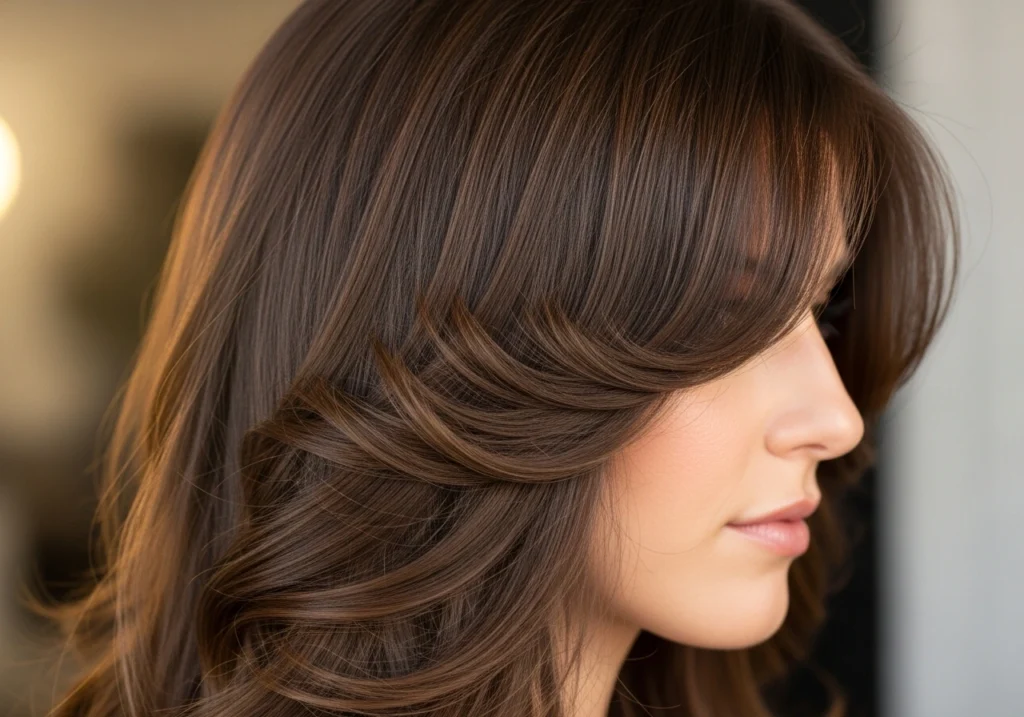
The foundation of timeless hair design, classic long layers remain one of the most requested cuts for thick hair, and for good reason. This technique involves cutting the hair at varying lengths throughout, with the shortest layers typically beginning around the collarbone or slightly below, cascading down to the longest pieces at the bottom. The true magic happens with face framing sections that are cut shorter around the front, drawing attention to your best features while creating natural movement.
For thick hair specifically, this cut removes internal bulk without sacrificing the overall length you love. The layering is distributed throughout the hair shaft, reducing the pyramid effect that often plagues thick hair when cut blunt. Stylists achieve this by using point cutting or slide cutting techniques that create soft, blended transitions between layers rather than harsh, visible steps.
The versatility of classic long layers makes them suitable for nearly every face shape when customized properly. Round faces benefit from longer face framing pieces that create vertical lines, while square faces soften with wispy, feathered front sections. The key to success with this cut lies in the precision of layer placement and ensuring your stylist understands the specific weight distribution of your thick hair.
you may also like this:15 Pompadour Hairstyles For Men For Bold & Classic Look
Butterfly Layers for Maximum Movement

Butterfly layers have emerged as one of the most sought-after styles in recent years, and thick hair is the perfect canvas for this dramatic cut. The name comes from the distinctive shape created when hair falls naturally, resembling butterfly wings with shorter layers concentrated around the crown and upper sections, creating lift and volume at the top while maintaining substantial length at the bottom.
This cut works exceptionally well for thick hair because it strategically removes weight from the crown area where thick hair tends to fall flat. The shortest layers typically begin at chin or shoulder length, gradually extending downward. When styled with a round brush or allowed to air dry, these layers create a beautiful, dimensional effect that moves independently, catching light and creating visual interest from every angle.
The styling potential of butterfly layers is remarkable. They look equally stunning when straightened for a sleek, polished appearance or enhanced with loose waves that emphasize the layered structure. For thick hair that tends toward straightness, this cut provides built-in movement without requiring extensive heat styling. The key is maintaining regular trims every eight to ten weeks to prevent the layers from growing out unevenly and losing their distinctive shape.
V-Cut Layers for Length Retention

For those committed to maintaining maximum length while still enjoying the benefits of layering, the V-cut approach offers the ideal compromise. This technique creates a V-shaped silhouette when hair is viewed from behind, with the longest point extending down the center back and gradually shorter pieces framing the sides. The layers are subtle and concentrated primarily in the lower half of the hair shaft.
Thick hair particularly benefits from V-cut layers because the technique preserves density at the ends while removing some internal weight. This prevents the bottom of your hair from looking stringy or thin, a common concern when adding too many layers to already thick hair. The V-shape also creates the optical illusion of even greater length, making it popular among those growing out their hair or trying to achieve mermaid-length locks.
Styling V-cut layers requires minimal effort, which makes this cut ideal for busy lifestyles. The natural shape is visible even with air-dried hair, though adding loose curls or waves enhances the dimensional effect. When straightened, V-cut layers create a sleek, elongated silhouette that works beautifully in professional settings. The gradual nature of the layering means this cut grows out gracefully, extending the time between necessary salon visits.
Choppy Layers for Edgy Texture

Choppy layers represent a more modern, textured approach to cutting thick hair. Unlike the soft, blended transitions of classic layers, choppy cuts feature intentionally disconnected sections that create a piece-y, editorial look. This style works particularly well for thick hair with natural texture or wave, as it enhances and emphasizes the hair’s inherent movement patterns.
The technique involves using point cutting, razor cutting, or a combination of both to create varied lengths throughout the hair. The result is a deliberately unpolished appearance that paradoxically requires significant skill to execute properly. For thick hair, choppy layers excel at reducing bulk while adding an element of cool-girl effortlessness that softer layering techniques cannot achieve.
Styling choppy layers is remarkably forgiving. The intentionally imperfect nature of the cut means that slightly messy, undone styling actually enhances the overall look. Sea salt sprays, texturizing creams, and dry shampoos become your best friends, helping to separate and define the individual layers. This cut particularly suits those with an edgier personal style or creative professions where a more polished, conventional look is not required.
Feathered Layers for Lightweight Feel
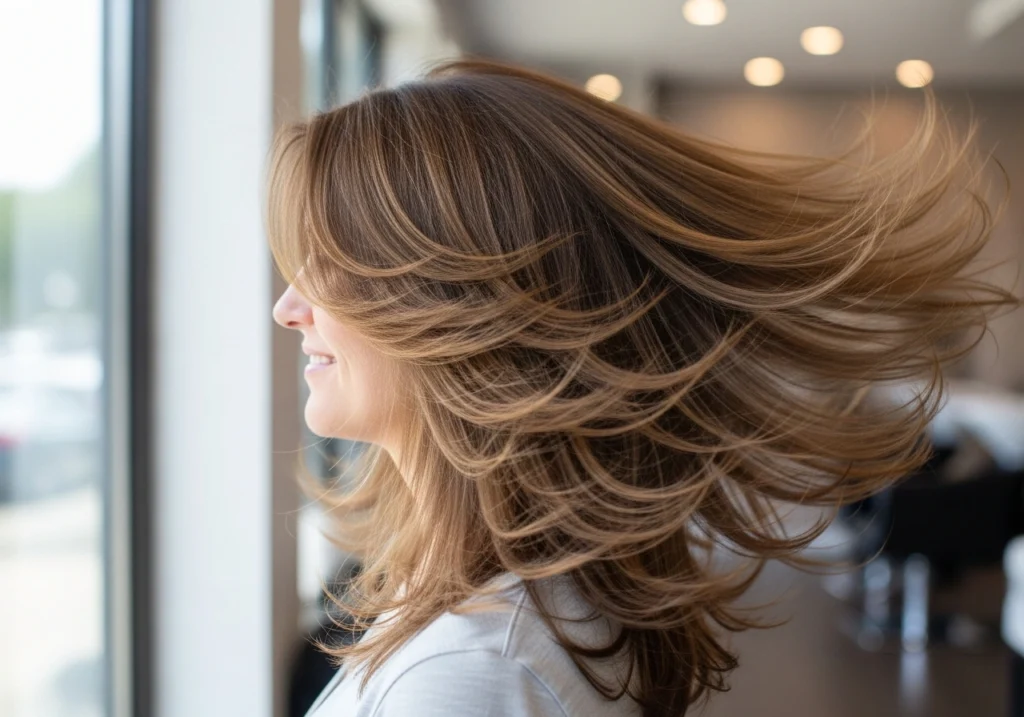
Feathered layering represents one of the most effective techniques for making thick hair feel substantially lighter without dramatically altering the overall length or shape. This method uses specialized cutting techniques, often involving razors or thinning shears, to create wispy, feather-like ends on each layer. The result is hair that moves with exceptional fluidity and bounce.
For thick hair that feels heavy or tends to pull on the scalp, feathered layers provide tremendous relief. The technique removes interior bulk while maintaining perimeter density, creating the perfect balance between fullness and manageability. The feathered ends catch and reflect light beautifully, adding dimension and the appearance of even more movement than the hair actually possesses.
This style requires a skilled stylist who understands how to use texturizing techniques without creating frizz or damaging the hair shaft. When executed properly, feathered layers should feel soft and blend seamlessly throughout the hair. Styling is straightforward, typically requiring only a round brush during blow-drying to enhance the feathered effect. The lightweight nature of this cut makes it particularly appealing during warmer months when thick hair can feel especially burdensome.
Curtain Bangs with Long Layers
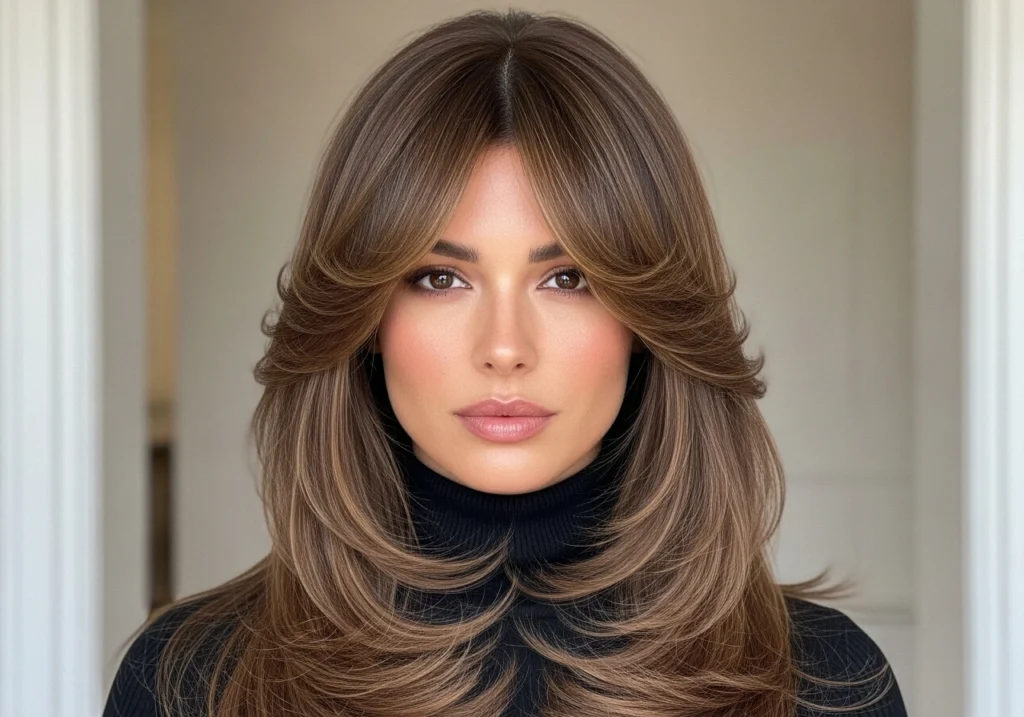
Curtain bangs paired with long layers have become a signature look that flatters virtually every face shape while adding sophistication to thick hair. This combination features face framing bangs that part down the middle and sweep to either side, reminiscent of curtains being drawn open, integrated seamlessly into a layered cut that extends throughout the length.
The beauty of this style for thick hair lies in its ability to soften facial features while creating vertical lines that elongate the face. The bangs typically begin at eyebrow length or slightly longer at the center part, angling downward to blend with the first layer around the cheekbones. This creates a flattering frame that draws attention to the eyes while the longer layers throughout provide movement and reduce bulk.
Maintenance for curtain bangs with layers is surprisingly manageable. The longer length of curtain bangs compared to traditional straight-across bangs means they require less frequent trims and can be styled away from the face on days when you prefer a different look. A round brush and moderate heat during styling helps create the characteristic swooping shape, though many find that their curtain bangs naturally fall into place with minimal effort after the initial cut.
Shaggy Layers for Bohemian Vibes
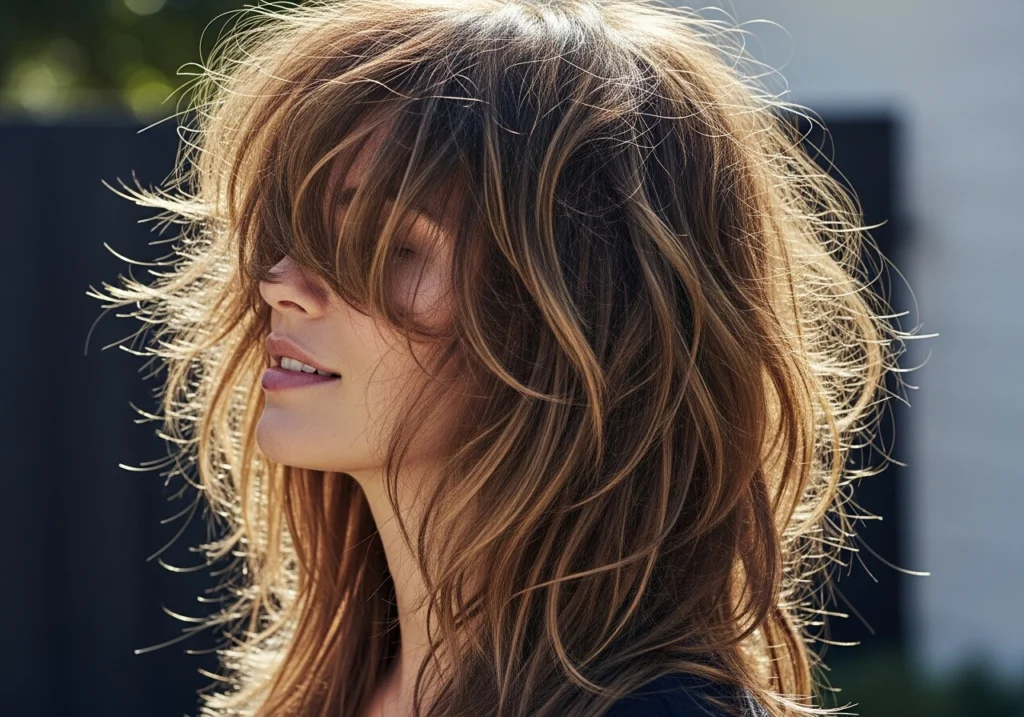
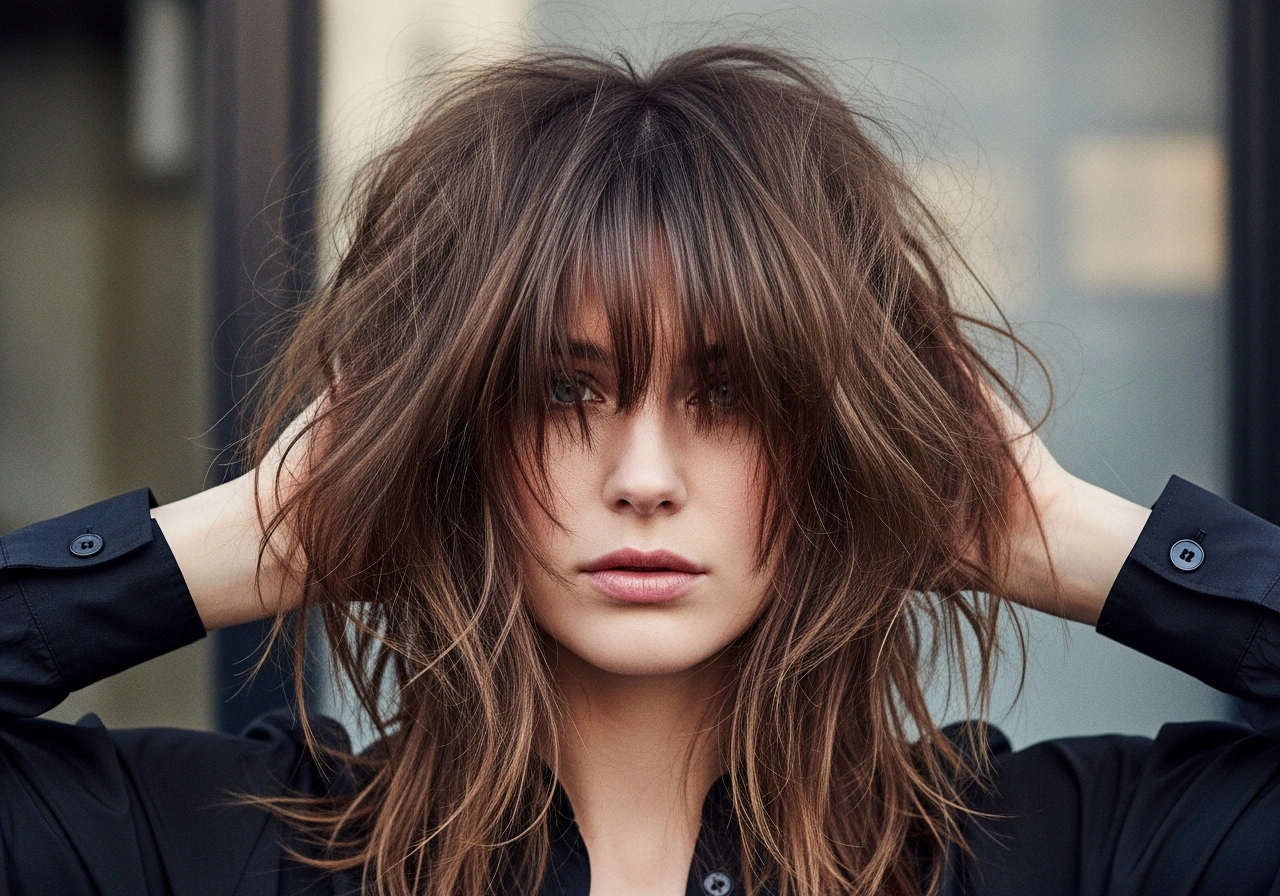
The modern shag has experienced a remarkable resurgence, and thick hair provides the perfect foundation for this effortlessly cool style. Contemporary shags feature heavily layered cuts with significant texture throughout, creating a deliberately tousled appearance that manages to look both carefree and carefully styled. Unlike the shags of previous decades, modern versions are more refined while maintaining that essential rock-and-roll edge.
For thick hair, shaggy layers work wonders in reducing weight while maximizing movement and texture. The cut typically incorporates shorter layers throughout the crown and mid-lengths, with longer pieces underneath that provide structure and prevent the overall look from becoming too short. The heavy layering characteristic of shags means thick hair won’t appear bulky or overwhelming, instead achieving that coveted lived-in texture.
Styling a modern shag on thick hair is remarkably straightforward. The cut is designed to look slightly messy, which means perfect precision is not required. Texturizing products, particularly dry texture sprays and lightweight creams, help separate and define the layers. Many with thick hair find they can air dry their shag and achieve excellent results, making this an ideal choice for those seeking a low-maintenance yet stylish option.
Blunt Cut with Internal Layers
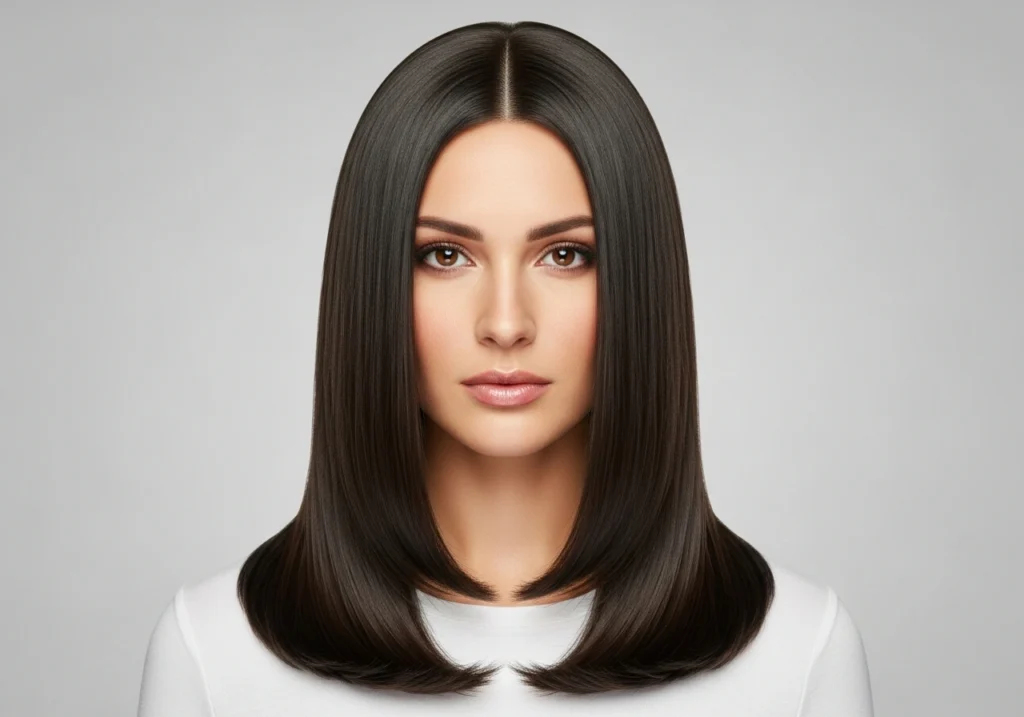
For those who love the clean, polished appearance of a blunt cut but struggle with the weight and lack of movement in thick hair, internal layering offers the perfect solution. This technique maintains the sharp, even perimeter line characteristic of blunt cuts while incorporating hidden layers throughout the interior of the hair shaft. The result is hair that appears dense and full at the ends while feeling significantly lighter overall.
The internal layering technique, sometimes called invisible layers, removes bulk from within the hair without affecting the outer appearance. Stylists achieve this through careful sectioning and cutting layers that remain concealed beneath the top layer of hair. For thick hair, this approach provides the weight reduction needed for comfort and styling ease while preserving the sleek, sophisticated aesthetic of a blunt cut.
This style particularly appeals to those in professional environments or anyone who prefers a more polished, refined appearance. The blunt perimeter creates clean lines that look exceptionally sharp when straightened, while the internal layers prevent the hair from appearing too heavy or triangular. Styling is versatile, working beautifully whether worn sleek and straight or with subtle waves that add dimension without compromising the overall shape.
Face Framing Layers with Length
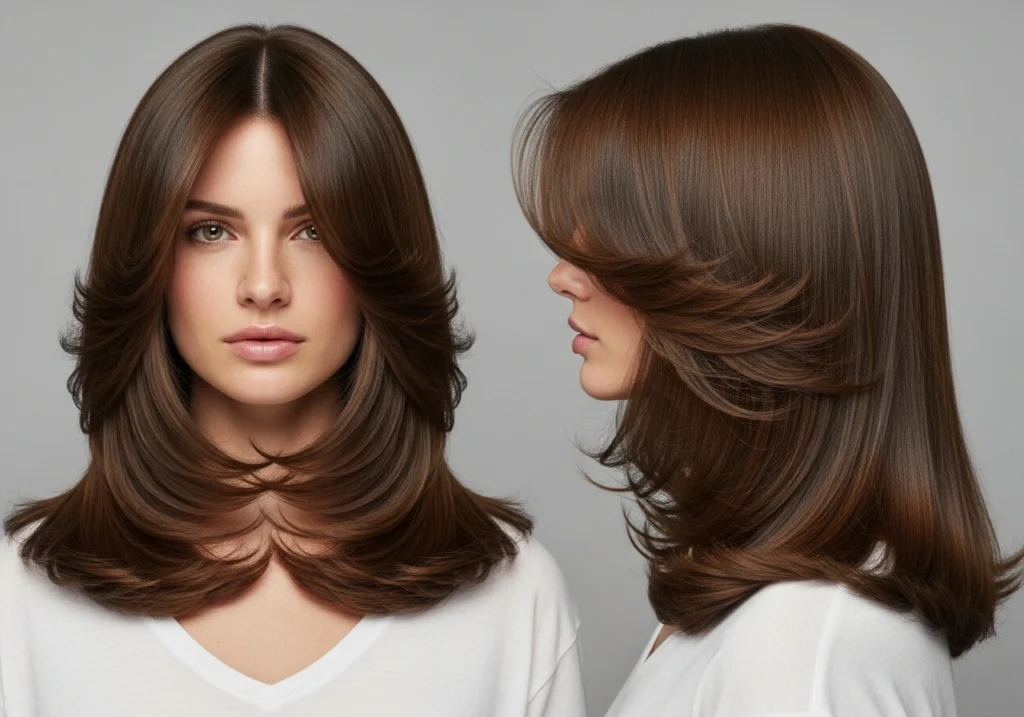
Face framing layers concentrated around the front sections while maintaining substantial length throughout the rest of the hair represents one of the most flattering and versatile options for thick hair. This approach focuses attention on creating movement and dimension around the face, with the shortest pieces typically beginning at the chin or cheekbone and gradually blending into longer layers.
The strategic placement of these layers serves multiple purposes for thick hair. They reduce bulk around the face where heavy hair can overwhelm delicate features, create the illusion of cheekbones and facial structure, and provide styling versatility by framing the face regardless of whether hair is worn down, half-up, or fully pulled back. The concentration of layers at the front means the back and sides maintain more weight and length.
Styling face framing layers is intuitive and quick. The layers naturally want to sweep away from the face, requiring minimal effort to achieve a flattering look. A large round brush during blow-drying or a quick pass with a flat iron to add slight bends enhances the face framing effect. This cut works exceptionally well for thick hair that tends to be straight, as the layers add much-needed movement without requiring extensive styling throughout all the hair.
U-Shaped Layers for Soft Curves
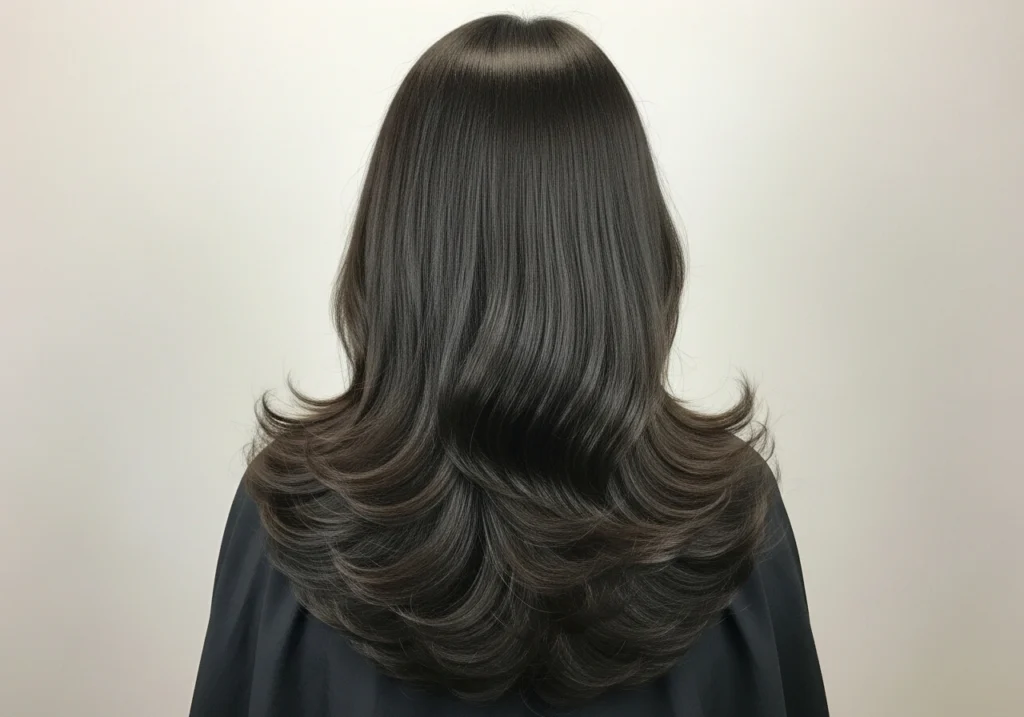
The U-shaped layering technique creates a gentle, curved silhouette that appears especially flattering on thick hair. Unlike the dramatic point of V-cut layers, U-shaped layers form a softer, more rounded hemline when viewed from behind. The layers are distributed throughout the hair with the shortest typically beginning at shoulder length or below, creating a cascade effect that maintains substantial fullness at the ends.
This cut excels at creating a balanced, feminine appearance that suits most face shapes and personal styles. For thick hair specifically, U-shaped layers provide structure and shape without removing too much density. The gentle curve prevents the blunt, heavy look that can occur with thick hair while avoiding the dramatic point that some find too bold for their preferences.
The versatility of U-shaped layers makes them suitable for various styling approaches. They look beautiful when enhanced with waves or curls that emphasize the rounded shape, yet work equally well when straightened for a sleek, polished appearance. The gradual nature of the layering means this cut maintains its shape nicely as hair grows, requiring touch-ups only every few months rather than frequent trims.
Long Layers with Textured Ends
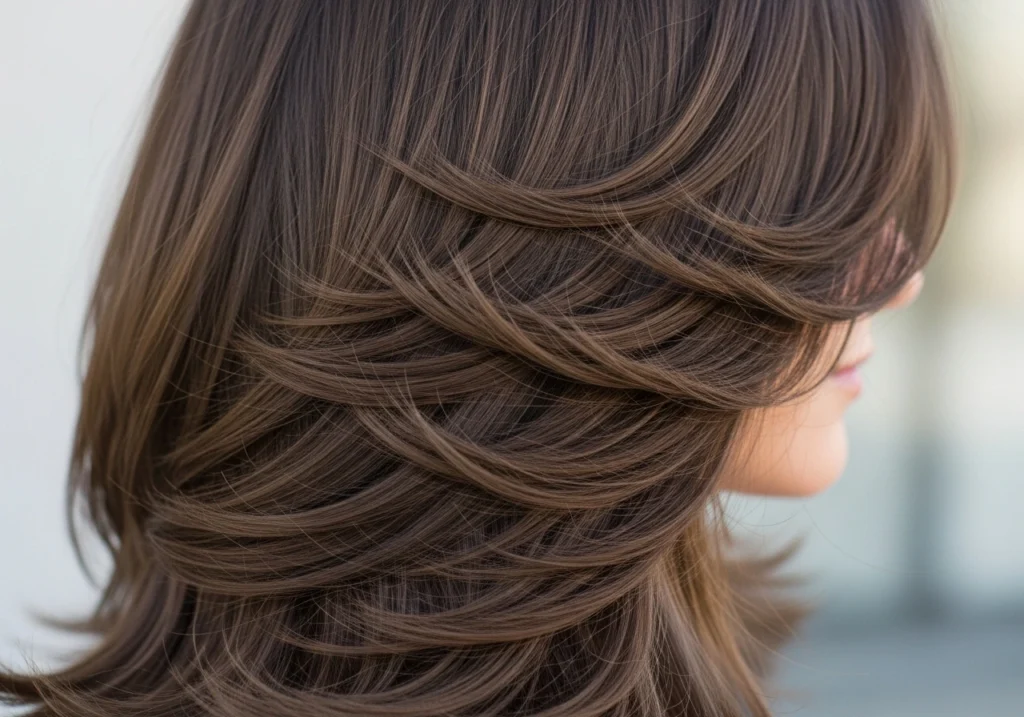
Combining long layers with deliberately textured ends creates a modern, dimensional look that addresses common thick hair concerns while maintaining a natural appearance. This technique distributes layers throughout the hair length while using point cutting or razor techniques at the ends to create texture and movement. The result is hair that feels lighter and moves more freely while avoiding the blunt, heavy appearance common with thick hair.
The textured ends are the distinguishing feature of this cut, creating separation and definition that catches light beautifully. For thick hair that tends to clump together or appear too uniform, this texturing provides visual interest and the appearance of more dynamic movement. The layers themselves remove internal weight while the textured ends prevent the bottom of the hair from looking too thick or overwhelming.
Styling this cut emphasizes the textured ends through techniques that create separation and definition. Lightweight styling creams, sea salt sprays, or texturizing products help piece out the ends while maintaining the natural movement of the layers. This cut works particularly well for those with naturally wavy or slightly textured thick hair, as it enhances and works with the hair’s natural tendencies rather than fighting against them.
Graduated Layers for Volume Control
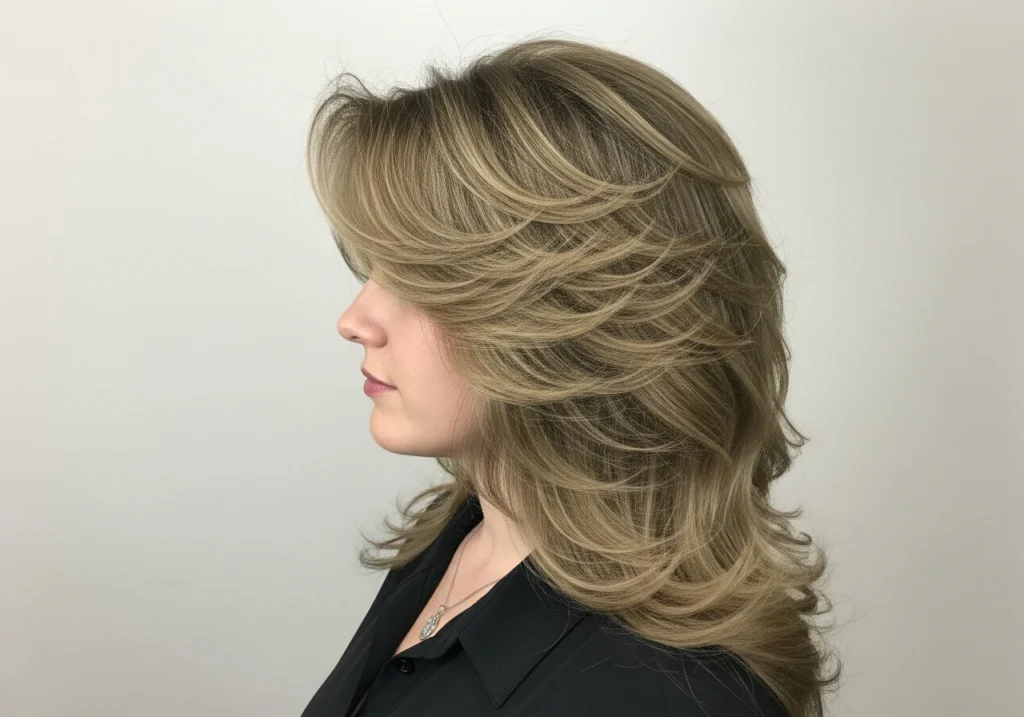
Graduated layering represents a technical approach to cutting thick hair that focuses on creating specific volume distribution. This method features shorter layers stacked at the crown that gradually increase in length toward the bottom, creating elevation at the top while reducing bulk throughout. For thick hair that tends to fall flat at the roots despite its overall density, graduated layers provide lift where it’s most needed.
The precision required for graduated layers means finding a skilled stylist is essential. The cut involves careful measurement and sectioning to ensure each layer is precisely the right length to create the desired stacked effect. When executed properly, graduated layers eliminate the common thick hair problem of root flatness combined with excessive bulk at mid-lengths and ends.
This style particularly suits those who want to maintain length while creating more volume and shape at the crown. The graduated structure naturally lifts away from the scalp, creating body that doesn’t require extensive styling to maintain. A round brush during blow-drying enhances the volume at the crown, while the longer layers underneath provide the length and fullness most people with thick hair want to preserve.
Frequently Asked Questions
How often should I trim my layered thick hair?
Layered thick hair typically requires trimming every eight to twelve weeks to maintain the intended shape and prevent split ends. The exact timing depends on how quickly your hair grows and how well-defined you want to keep the layers. If you notice the layers blending together or losing their movement, it’s time for a trim.
Will layers make my thick hair look thinner?
Layers remove bulk and weight from thick hair but should not make it appear thin when cut properly. The goal is to create movement and reduce heaviness while maintaining overall fullness. Communicate clearly with your stylist about preserving density while adding dimension through strategic layering.
Can I add layers to thick hair if it’s already damaged?
Layering can actually help damaged thick hair by removing compromised ends and creating a fresher, healthier appearance. However, ensure your stylist uses sharp scissors and proper cutting techniques rather than razors, which can exacerbate damage. Pair the layered cut with a solid hair care routine focused on repair and moisture.
What’s the best way to style layered thick hair for maximum volume?
Blow-dry hair upside down or use a round brush to lift at the roots, focusing on the shorter layers near the crown. Lightweight volumizing products applied at the roots before styling help create lift, while the layers themselves naturally provide movement and dimension throughout the length.
Do certain face shapes look better with specific layer types?
Yes, layer placement should complement your face shape. Round faces benefit from longer, vertical layers that create length. Square faces soften with wispy, feathered layers around the jawline. Oval faces can wear nearly any layer style. Heart-shaped faces look great with layers beginning at the chin to balance a wider forehead. Always consult with your stylist about customizing layers for your unique features.