
10 Haircut For Triangle Shape Face Men
Understanding your face shape is the foundation of choosing a hairstyle that enhances your natural features. For men seeking the ideal haircut for triangle shape face, the goal is to create balance between a broader forehead and a narrower chin and jawline. This comprehensive guide explores ten exceptional haircuts specifically designed to complement the triangle face shape, offering practical styling advice and professional insights to help you achieve a harmonized, confident look with the perfect haircut for triangle shape face that suits your lifestyle.
Understanding the Triangle Face Shape
The triangle face shape, sometimes called an inverted triangle or pear shape, is characterized by a wider forehead that gradually narrows toward the chin. Men with this facial structure typically have prominent temples, a broader upper face, and a more delicate jawline and chin area. The cheekbones may be the widest part of the face, with the overall silhouette forming a distinctive V or triangle when viewed straight on.
Recognizing this face shape is essential because it informs which haircuts will create visual balance. The primary objective when selecting a hairstyle for a triangle face is to add width and volume around the jawline while minimizing excessive volume at the crown or top of the head. This approach creates a more oval appearance, which is generally considered the most balanced face shape.
Men with triangle faces should look for haircuts that incorporate texture around the sides, avoid severe short cuts on the lower portions, and strategically use length to create the illusion of width where the face naturally narrows. The right haircut transforms your appearance by working with your bone structure rather than against it.
Classic Side Part with Medium Length

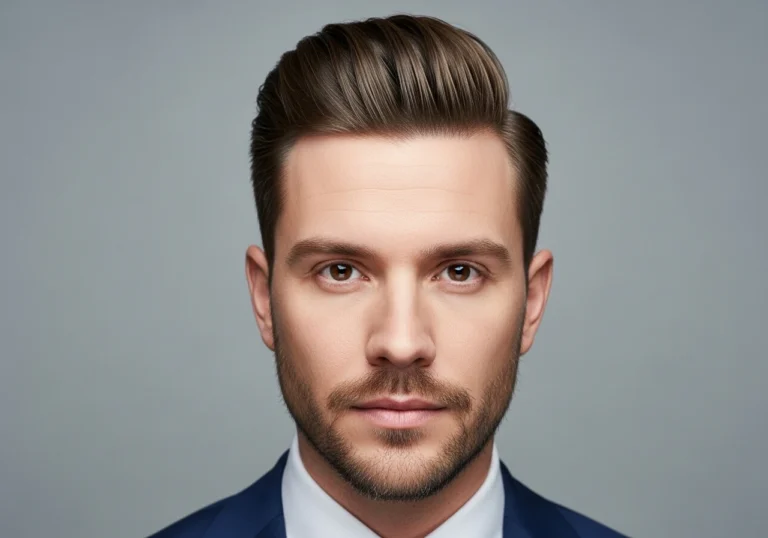
The classic side part remains one of the most versatile and flattering options for men with triangle face shapes. This timeless style works by creating a horizontal line across the head, which helps break up the vertical emphasis of the triangle shape. The key to making this work for your face shape lies in the execution and length.
For optimal results, maintain a medium length of approximately two to four inches on top, with slightly shorter sides that are not buzzed too close. This length allows for natural movement and texture that adds dimension to the lower portions of your face. The side part itself should be clean and defined, positioned slightly off-center to create asymmetry that draws attention away from the forehead width.
When styling this cut, use a medium-hold pomade or styling cream to create texture rather than slicked-back smoothness. The goal is to achieve a polished yet natural appearance with some volume throughout, avoiding flat styles that emphasize the face’s angular qualities. This haircut works exceptionally well in professional environments while remaining versatile enough for casual settings.
Textured Crop with Fringe
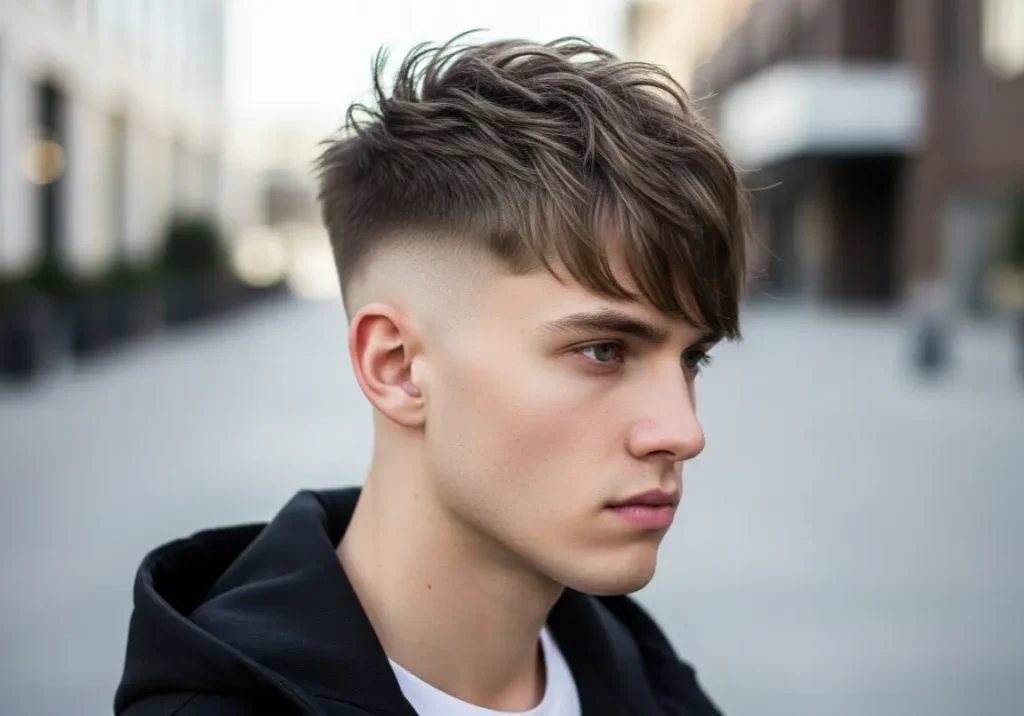
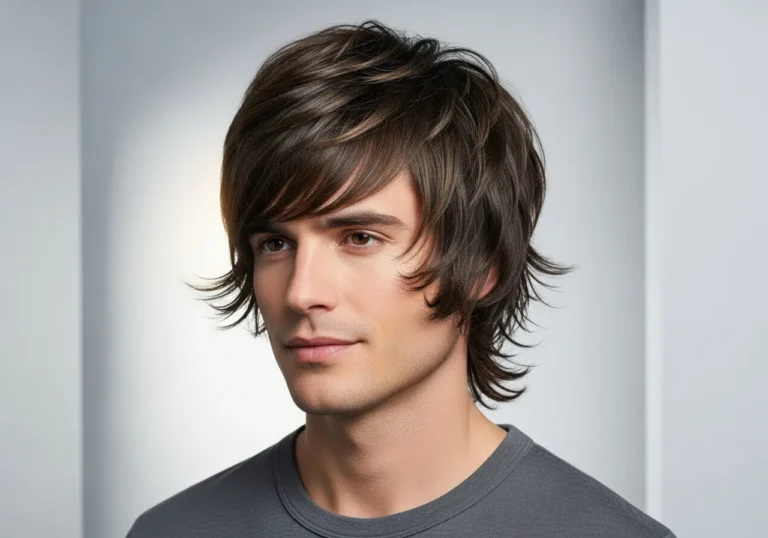
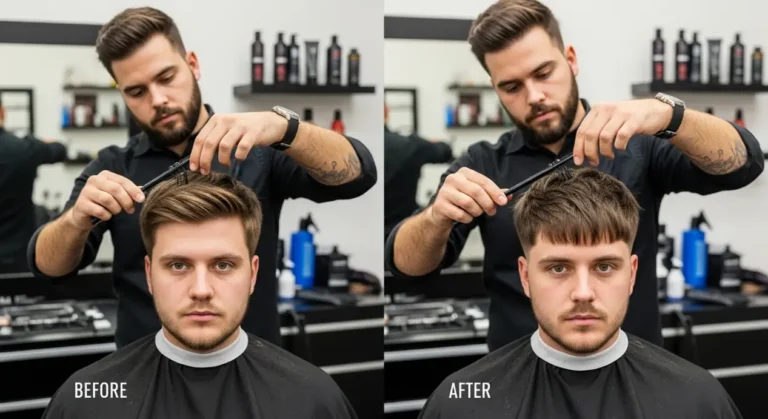
The textured crop has gained tremendous popularity in recent years, and for good reason. For triangle face shapes, this style offers multiple benefits by adding strategic volume and creating a more balanced facial proportion. The defining characteristic is a textured, choppy top with a forward-moving fringe that softens the forehead.
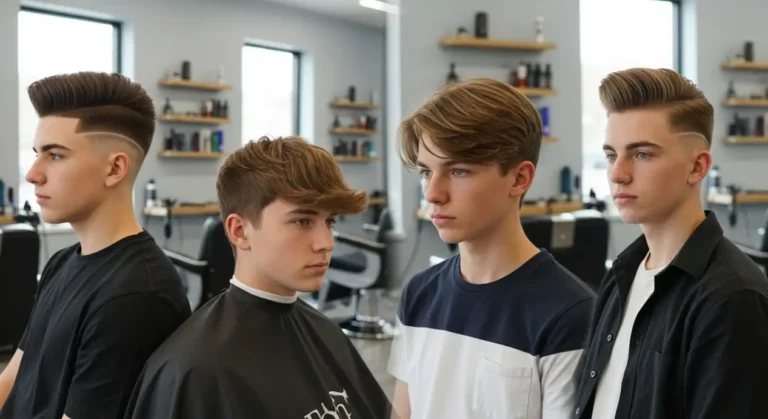
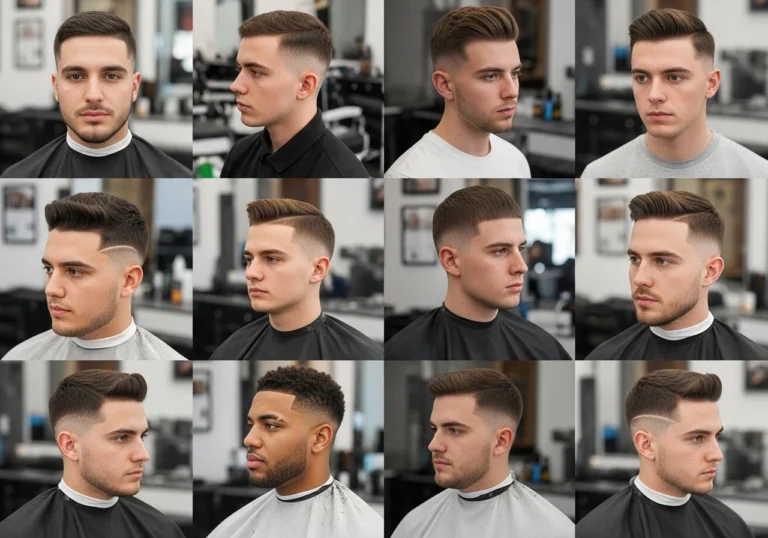
This haircut typically features shorter sides with a gradual fade or taper, while the top maintains enough length for styling versatility. The fringe component is crucial for triangle faces because it visually shortens the forehead and draws attention to the eyes rather than the upper face width. The texture throughout prevents the style from looking too heavy or blocky.
Styling requires a matte clay or texture powder to enhance the piece-y, lived-in appearance. Work the product through damp hair, using your fingers to create separation and direction. The fringe should fall naturally across the forehead without being too structured or uniform. This modern cut balances edge with sophistication, making it suitable for creative professionals and style-conscious individuals.
Long Layered Hair

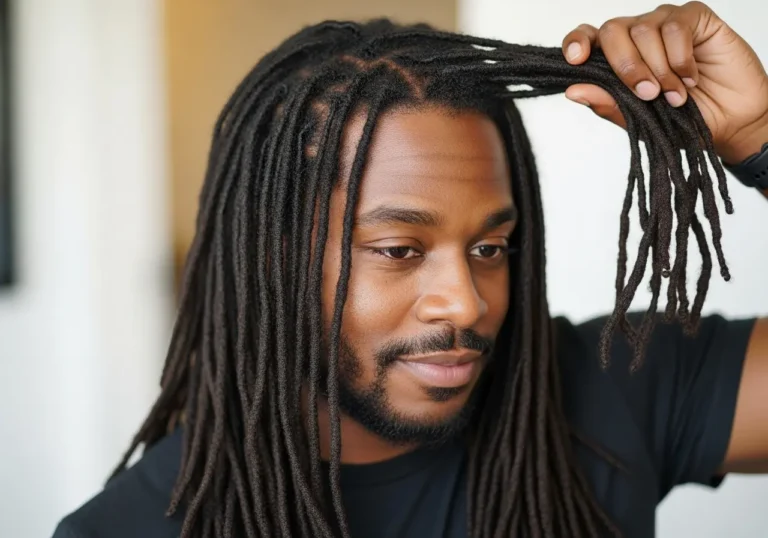
For men willing to embrace longer hair, a layered approach creates exceptional balance for triangle face shapes. Long hair, when cut with strategic layers, adds substantial width around the jawline and lower face while allowing the natural weight of the hair to minimize crown volume that would otherwise emphasize the wide forehead.
The key distinction with this style is the layering technique. Request layers that begin around chin level or slightly above, creating movement and volume precisely where your face shape needs it most. The top should not be layered too heavily, as this can create unwanted volume at the crown. Instead, subtle layering provides texture without adding excessive height.
Maintenance for longer layered cuts requires commitment. Regular trims every six to eight weeks prevent split ends and maintain the shape integrity. When styling, apply a leave-in conditioner or light styling cream to enhance natural texture. This length works particularly well for men with wavy or curly hair, as the natural texture adds to the width-creating effect. The overall appearance is relaxed and artistic, perfect for those who prefer a less structured aesthetic.
Messy Quiff with Tapered Sides
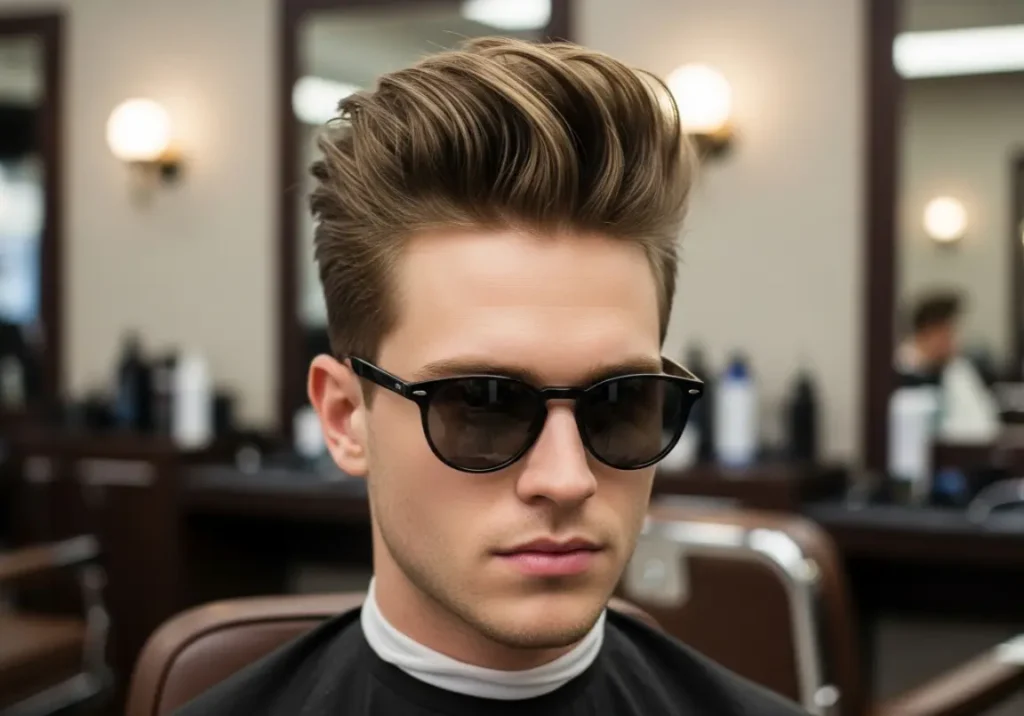
The quiff represents a perfect middle ground between classic and contemporary styling. For triangle face shapes, a messy quiff variation provides volume in the right places while creating visual interest that distracts from facial angularity. Unlike traditional pompadour-style quiffs that can add too much height, the messy version is more horizontal in its volume distribution.
This haircut features tapered or faded sides that transition smoothly into a textured top of moderate length. The front section is styled upward and slightly forward, creating a soft wave rather than a dramatic sweep. The messiness comes from irregular styling that appears effortless rather than overly manufactured.
Application technique matters significantly with this style. Start with damp hair, applying a pre-styler or sea salt spray for grip. Blow-dry while lifting the front section upward and forward, using your fingers to create natural separation. Finish with a flexible-hold product that maintains shape without stiffness. The result should look as though you could easily run your fingers through your hair, not like a shellacked sculpture. This style projects confidence and contemporary awareness while remaining appropriate for most professional contexts.
Buzz Cut with Defined Beard
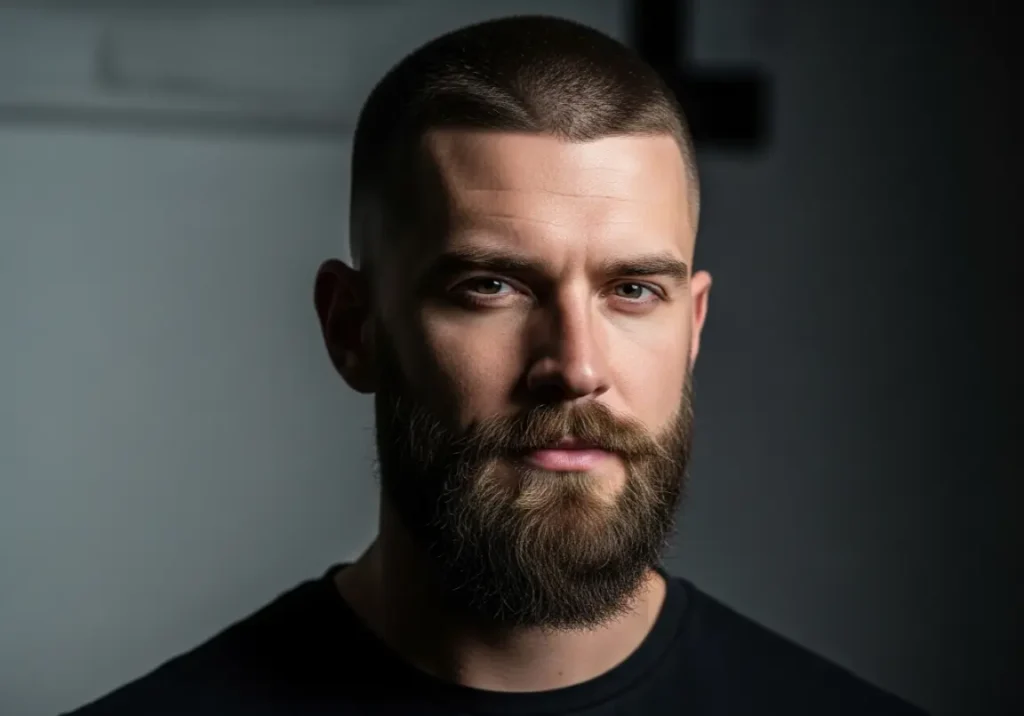
Sometimes the most effective solution is the most straightforward. A well-executed buzz cut can work for triangle face shapes when paired strategically with facial hair. The key is maintaining enough length in the buzz to avoid extreme severity while using facial hair to add width at the jawline.
For this approach, consider a longer buzz cut in the range of a number three to five guard, which maintains some texture and dimension rather than skin-tight closeness. The uniformity of length across the entire head minimizes the forehead width by creating a consistent visual field. The real magic happens with the accompanying beard or stubble.
A full beard, shaped to add width at the jaw and chin, counterbalances the triangle shape perfectly. Keep the sides of the beard fuller while maintaining a clean neckline and cheek line. If a full beard is not feasible, even heavy stubble maintained at a consistent length provides some balancing effect. This combination is exceptionally low-maintenance while delivering a masculine, intentional appearance. The buzz cut and beard pairing suits men who value practicality and a rugged aesthetic.
Slicked Back Undercut

The slicked-back undercut has become a signature style in modern men’s grooming, and it adapts well for triangle face shapes when executed with specific considerations. This style features dramatically short or faded sides and back with substantial length on top that is styled backward away from the face.
For triangle faces, the critical modification is maintaining some width in the styling rather than pulling everything tightly back. Allow the hair to have volume and movement as it moves backward, creating a rounded rather than flat silhouette. The length on top should be sufficient to achieve this effect, typically four to six inches.
The undercut component provides strong visual contrast between the sides and top, which itself creates horizontal lines that balance the facial triangle. When styling, use a medium to strong-hold pomade with some shine, working it through towel-dried hair and combing or brushing backward. The front can be styled with a slight lift to add dimension. This sophisticated style works exceptionally well in formal and business settings, projecting polish and attention to detail.
Angular Fringe with Fade
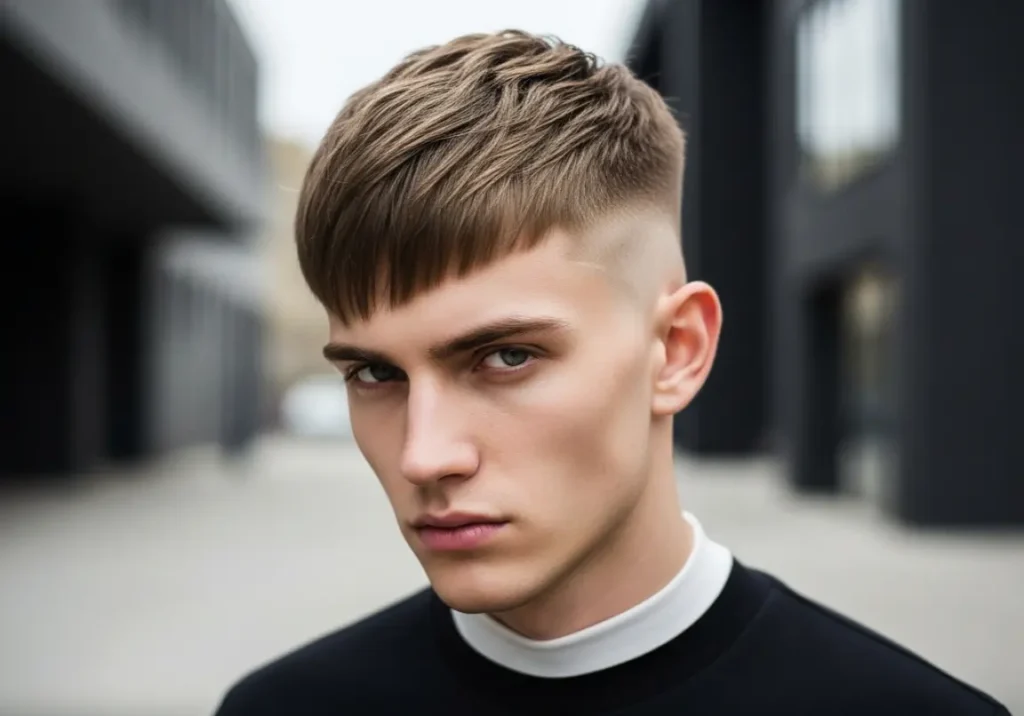
An angular fringe cut creates geometric interest that complements rather than competes with the triangle face shape. This contemporary style features a distinctive diagonal fringe that sweeps across the forehead, typically from one side toward the center or opposite side. The sides incorporate a fade that transitions from very short at the bottom to longer as it approaches the top.
The angular nature of the fringe provides visual intrigue while breaking up the forehead’s width with a dynamic line. The fade prevents the sides from adding bulk where it is not needed, keeping attention focused on the top styling. The top itself maintains texture and movement rather than lying flat.
Styling requires precision with the fringe direction. Use a blow dryer to set the diagonal direction while the hair is still damp, then apply a styling product that provides hold without making the hair crunchy or stiff. The fringe should have a natural sweep rather than appearing forced or overly styled. This haircut appeals to younger men and those in creative industries who appreciate modern, fashion-forward aesthetics.
Wavy Mid-Length with Side Sweep

Men blessed with natural wave or curl have a distinct advantage when working with triangle face shapes. A mid-length wavy cut with a side sweep utilizes the hair’s natural texture to create width and volume at the sides and lower portions of the face. This style typically ranges from three to five inches in length throughout, with minimal layering to maintain weight.
The side sweep component involves styling the hair to one side with a deep part, allowing the natural wave pattern to create movement and dimension. The waves add visual width to the face, particularly around the ears and jawline where triangle faces need additional balance. The overall effect is romantic and slightly undone, projecting a relaxed confidence.
Maintenance for wavy hair focuses on hydration and curl definition. Use curl-enhancing products and avoid over-brushing, which can create frizz and disrupt the natural wave pattern. The side sweep is achieved by directing wet hair to the desired side while applying product, then allowing it to air dry or using a diffuser attachment on low heat. This style suits men who prefer a more artistic, unconventional appearance.
Short Textured Spikes
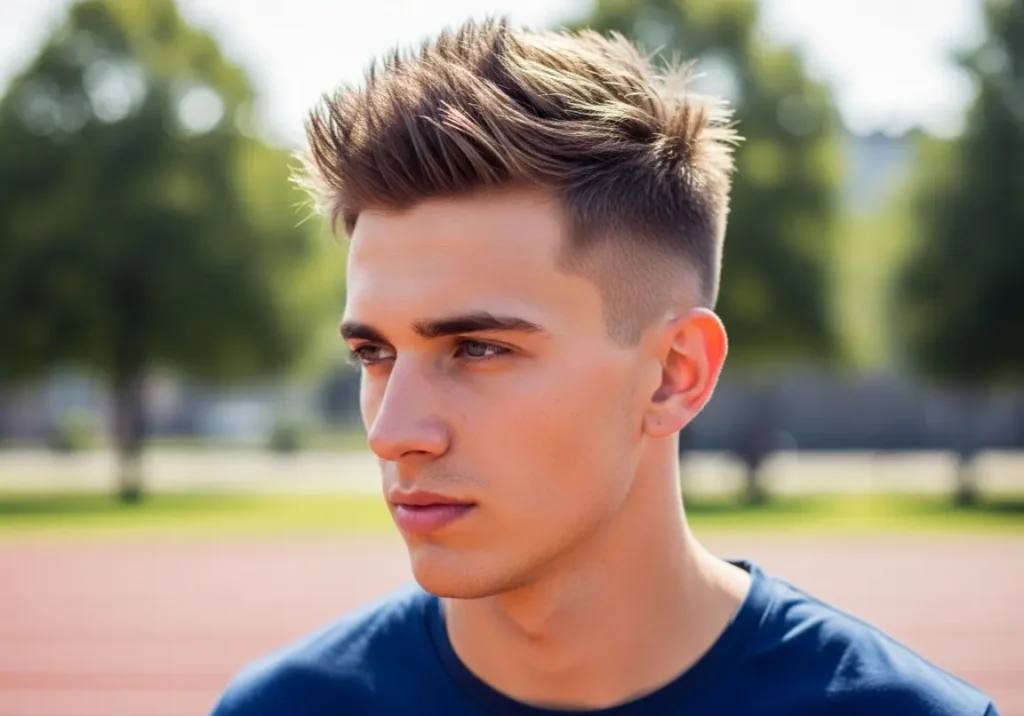
Textured spikes offer a youthful, energetic aesthetic while providing strategic volume distribution for triangle faces. This style features short to medium length on top with highly textured, piece-y spikes that create vertical interest without adding excessive height. The sides are kept shorter, often with a fade or taper.
The spike placement is crucial for face shape balance. Rather than creating uniform spikes across the entire top, focus the more prominent texture toward the front and sides, allowing the back to remain slightly less defined. This creates a rounded silhouette when viewed from the front, counteracting the face’s natural narrowing.
Styling requires a strong-hold product with matte finish, such as a fiber or clay. Work the product through dry or slightly damp hair, using fingertips to pull small sections upward and twist slightly to create the spikes. The key is irregularity, avoiding the dated look of uniform, gel-hardened spikes from previous decades. This contemporary interpretation works well for active men and those who prefer a sporty, casual style.
The Caesar Cut
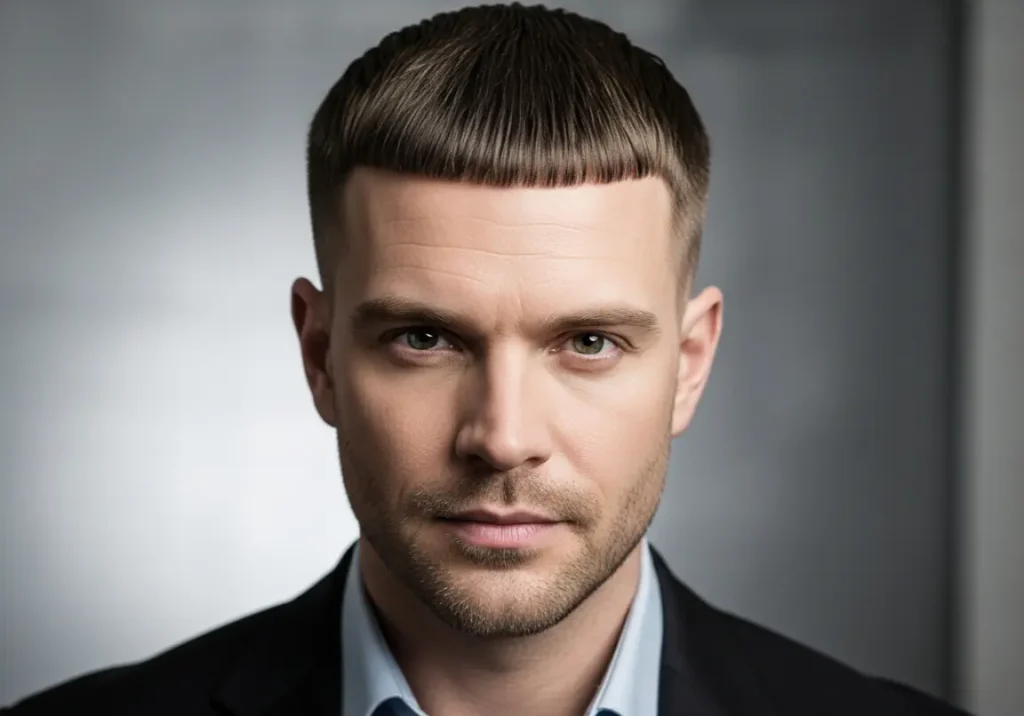
The Caesar cut, named after the Roman emperor, has endured through centuries because of its universal flattering qualities. For triangle face shapes, this style offers particular benefits through its characteristic short, horizontal fringe and uniform length throughout. The cut typically maintains one to two inches of length across the entire head, with a short fringe that comes forward onto the forehead.
The horizontal fringe element is especially valuable for triangle faces because it creates a strong horizontal line that shortens the appearance of a long or wide forehead while adding visual width to the upper face. The uniform length prevents excessive volume at the crown that would emphasize facial angularity. The overall silhouette is neat and compact.
This low-maintenance style requires minimal styling effort. After washing, simply apply a small amount of light pomade or styling cream and comb or brush the hair forward and slightly to one side. The Caesar cut projects a clean-cut, confident image that works across professional and casual contexts. It is particularly well-suited for men with thinning hair, as the forward styling minimizes the appearance of recession while the uniform length creates a consistent density illusion.
Styling Products and Techniques
Selecting appropriate styling products is as important as choosing the right haircut. For triangle face shapes, products that add texture and volume without excessive shine or weight deliver the best results. Matte clays and texture powders work exceptionally well for most styles, providing hold while maintaining a natural appearance.
When applying product, focus on mid-lengths and ends rather than roots, which helps prevent the flat, slicked appearance that can emphasize facial angularity. Use fingers rather than combs for most styles to maintain texture and separation. For styles requiring more precision, such as side parts or slicked-back looks, combing is appropriate but should still preserve some natural movement.
Heat styling tools, particularly blow dryers, offer significant control over volume placement. When using a blow dryer, direct heat and airflow toward areas where you want to add volume, using your free hand to lift and shape the hair. A round brush can help create smooth volume for styles like quiffs or side-swept looks. Always use a heat protectant spray before applying high temperatures to prevent damage.
Consultation and Maintenance
The relationship with your barber or stylist is foundational to achieving and maintaining your ideal look. During consultations, bring reference photos of styles you admire but also listen to professional recommendations based on your specific hair type, texture, and face shape. A skilled barber will adapt general styles to suit your individual characteristics.
Regular maintenance appointments every three to six weeks keep your chosen style looking sharp. Shorter styles generally require more frequent trims, while longer cuts can go slightly longer between appointments. Between visits, maintain the shape with at-home care including proper washing frequency, conditioning, and occasional trimming of stray hairs around the ears and neck.
Investing in quality hair care products appropriate for your hair type ensures your style looks its best between cuts. This includes shampoo and conditioner formulated for your specific needs, whether that is moisture for dry hair, volume for fine hair, or curl definition for textured hair. The cumulative effect of proper product selection, regular maintenance, and skilled cutting creates consistently excellent results.
Conclusion
Choosing the right haircut for a triangle face shape involves understanding your facial proportions and selecting styles that create balance by adding width where the face narrows while managing volume at the wider upper portions. The ten haircuts explored in this guide offer diverse options ranging from classic to contemporary, short to long, and low-maintenance to more styling-intensive.
The common thread across all these recommendations is the strategic use of length, texture, and volume to create a more balanced, harmonious appearance. Whether you prefer the polished sophistication of a slicked-back undercut, the casual texture of a messy quiff, or the simplicity of a buzz cut with a defined beard, there is an option that suits your lifestyle, personality, and aesthetic preferences.
Remember that the best haircut is one that not only flatters your face shape but also aligns with your daily routine, professional requirements, and personal style. Experiment with different options, work with a skilled barber who understands face shape theory, and pay attention to how different styles make you feel. Confidence in your appearance translates to confidence in all areas of life, and the right haircut is a powerful tool in your presentation arsenal.
Frequently Asked Questions
What is the main characteristic of a triangle face shape?
A triangle face shape features a wider forehead and temples that gradually narrow toward a more delicate chin and jawline. The face forms an inverted triangle or V shape when viewed from the front, with the upper portion being the broadest and the chin area being the narrowest point.
Should men with triangle faces avoid short hairstyles completely?
No, short hairstyles can work well for triangle faces when executed properly. The key is maintaining some texture and volume on the sides rather than buzzing everything extremely short. Styles like textured crops or short spikes with strategic volume placement can be very flattering.
How does facial hair help balance a triangle face shape?
Facial hair adds visual width and dimension to the jawline and chin area, which are naturally narrower on triangle faces. A full beard, shaped to be fuller at the sides and bottom, creates balance by widening the lower face and making the overall facial proportions appear more oval.
What length of hair works best for triangle face shapes?
Medium lengths generally work best because they provide enough hair to create volume and texture around the sides and lower face without adding excessive height at the crown. However, both shorter textured cuts and longer layered styles can be adapted successfully with proper cutting techniques.
How often should someone with a triangle face shape get a haircut?
Maintenance frequency depends on the specific style chosen. Shorter cuts with fades typically require trimming every three to four weeks, while medium to longer styles can extend to six to eight weeks between appointments. Regular maintenance ensures the style continues to provide proper face shape balance.
You may also like this post: 25+ Modern Taper Haircut Styles For Men: From Classic To Contemporary