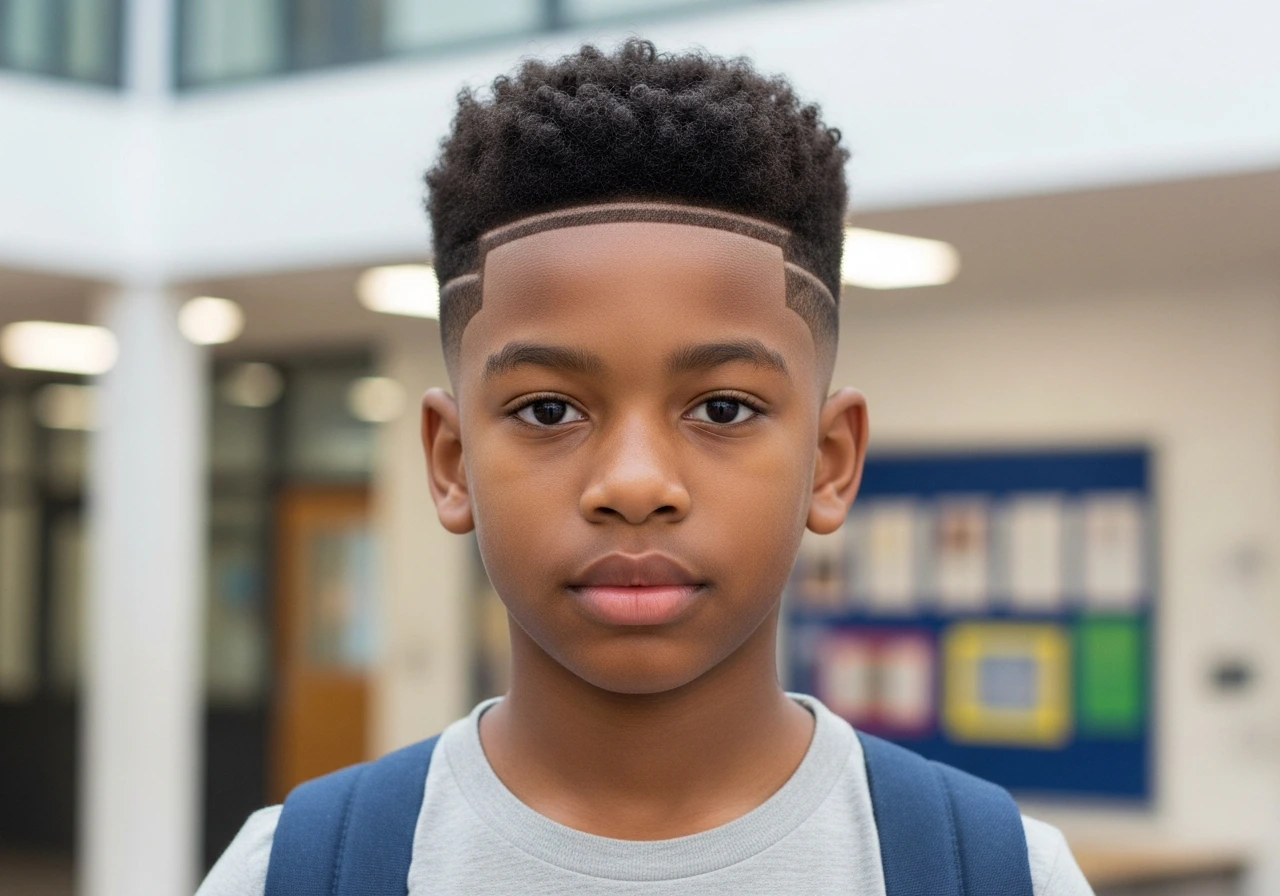
15 Cool Haircuts For Black Boys Perfect For School
Choosing the right haircut for your son can feel overwhelming given the incredible variety of styles available today. Black boys have the unique advantage of working with rich, textured hair that opens doors to countless creative possibilities. From classic cuts that have stood the test of time to modern styles that turn heads in the hallway, finding a haircut that balances personality with school appropriateness requires thoughtful consideration.
The beauty of natural hair texture lies in its versatility. Whether your child has tight coils, loose curls, or kinky strands, there exists a perfect haircut that celebrates his natural texture while remaining practical for everyday wear. School-appropriate haircuts must strike a balance between self-expression and maintaining a neat, polished appearance that meets dress code requirements while allowing your son to feel confident and comfortable.
This comprehensive guide presents fifteen exceptional haircuts specifically selected for black boys heading to school. Each style has been chosen for its ability to work with natural hair texture, ease of maintenance, and appropriateness for educational settings. These cuts range from simple, low-maintenance options to more elaborate designs that showcase personality and creativity. Whether your son prefers keeping things classic or wants to make a bold statement, you will find inspiration within these carefully curated selections.
1. The Classic Low Fade
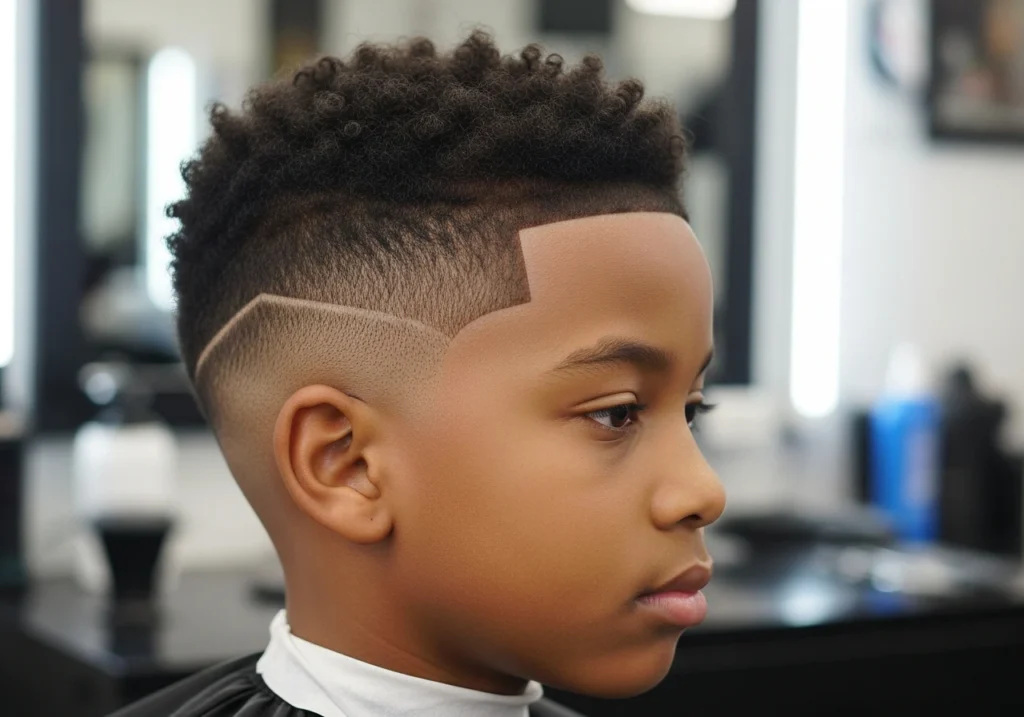
The low fade represents one of the most timeless and universally flattering haircuts for black boys. This style features gradually shortened hair that begins near the ear and transitions smoothly into longer hair on top. The subtle nature of this fade makes it exceptionally appropriate for school settings while maintaining a clean, sharp appearance.
What makes the low fade particularly appealing is its incredible versatility. The top can be styled in numerous ways, from short and simple to longer and more textured. Boys can wear their natural curls, create waves, or even sport a neat, combed look depending on personal preference. The fade itself requires minimal daily maintenance, making it ideal for busy school mornings when time is limited.
Barbers typically execute this cut by using clippers with various guard sizes, creating a seamless blend from the shortest point at the bottom to the longer hair above. Parents appreciate this style because it grows out gracefully, meaning visits to the barber can be spaced further apart without the haircut looking unkempt. For boys who want to look polished without excessive styling, the classic low fade delivers consistently excellent results.
2. High Top Fade with Sharp Lines

The high top fade brings a bold, distinctive look that commands attention while remaining school appropriate. This iconic style features significantly longer hair on top shaped into a flat, boxy silhouette, paired with closely faded sides and back. The dramatic contrast between the voluminous top and tapered sides creates a striking visual effect that celebrates natural hair texture.
Creating a high top fade requires patience and skill from both the barber and the wearer. The hair on top must grow to sufficient length before shaping can occur, typically requiring several weeks of growth. Once achieved, the style can be maintained with regular trims that preserve the flat top shape while keeping the fade fresh and clean. Many boys enhance this look with a precise line up around the hairline, adding extra sharpness to an already bold style.
The high top works particularly well for boys with coarser, denser hair texture that naturally stands upright. This texture provides the structure needed to maintain the signature flat appearance on top. While this style requires more commitment than simpler cuts, it rewards wearers with a distinctive, memorable look that sets them apart from their peers while maintaining appropriate boundaries for school environments.
3. Textured Curly Top with Taper

Boys blessed with natural curls can showcase them beautifully with a textured curly top paired with a taper. This style allows curls to flourish on top while the sides and back receive a gradual taper that keeps everything neat and manageable. The combination celebrates natural texture while maintaining a polished, school-ready appearance.
The key to success with this haircut lies in proper moisture and curl definition. Using leave-in conditioners and curl-defining creams helps maintain healthy, well-defined curls that look intentional rather than messy. The taper provides structure and prevents the overall look from becoming overwhelming or unkempt. This balance makes the style appropriate for school while still allowing boys to embrace their natural hair.
Regular maintenance involves keeping the taper fresh with visits to the barber every two to three weeks, while the curls on top require consistent moisture and occasional shaping. Many boys find this style strikes the perfect balance between showing off their natural curl pattern and meeting school standards for neat appearance. The versatility of this cut allows for adjustment in curl length based on personal preference and face shape.
4. 360 Waves with Crisp Line Up
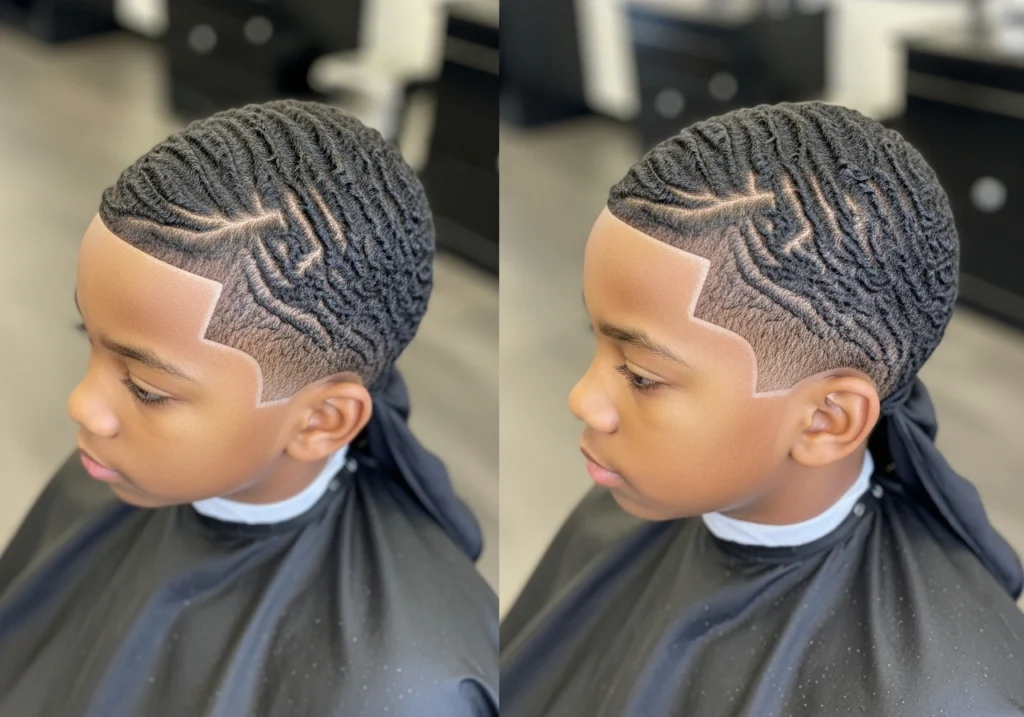
The 360 waves hairstyle represents a classic look that has maintained popularity across generations. This style features waves that flow in all directions around the head, creating a distinctive ripple pattern that showcases patience and dedication to hair care. When paired with a crisp line up along the hairline, the result is a sophisticated, polished appearance perfect for school.
Achieving 360 waves requires commitment and consistency. Boys must brush their hair regularly in specific patterns, typically multiple times daily, while using appropriate products like wave pomade. A durag worn during sleep helps train the hair into the desired wave pattern. The process typically takes at least two months before waves become clearly visible, teaching young men valuable lessons about patience and consistent effort.
Despite the time investment required to develop waves, the maintenance becomes relatively straightforward once established. Regular brushing, periodic touch-ups to the line up, and consistent product application keep waves looking sharp. Schools generally view this classic style favorably because of its neat, well-groomed appearance. Boys who commit to maintaining their waves develop a sense of pride in their appearance and learn important grooming habits that serve them well throughout life.
5. Buzz Cut with Creative Design
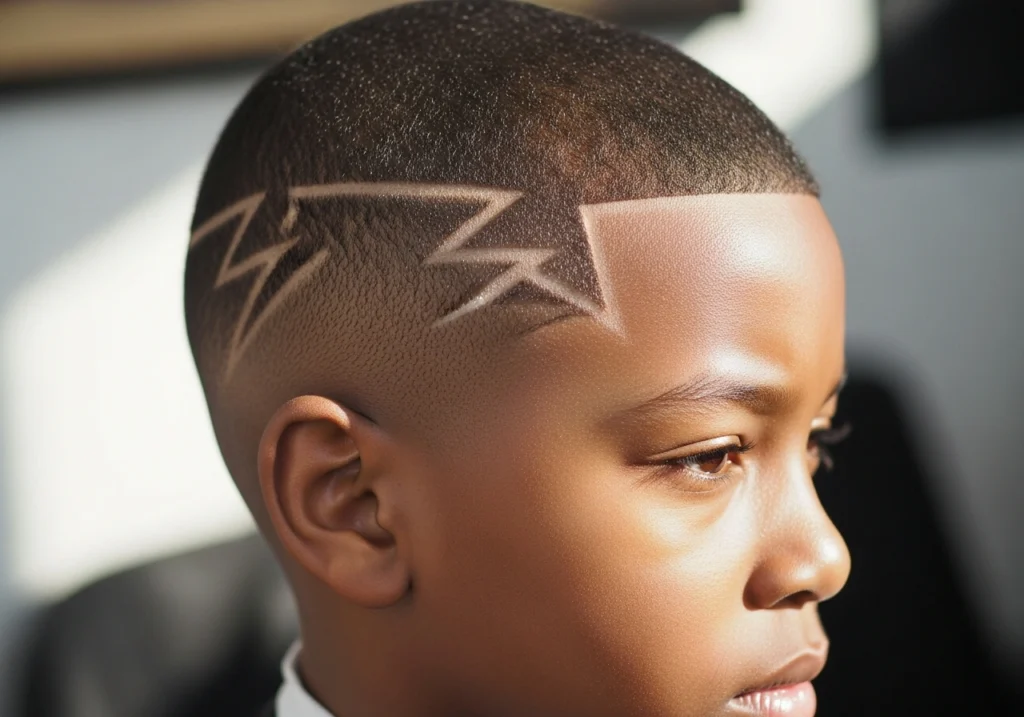
The buzz cut offers ultimate simplicity and practicality while still allowing for personal expression through creative hair designs. This ultra-short style features hair cut to a uniform length across the entire head, creating a clean, no-fuss look that works perfectly in school settings. Adding a shaved design on the sides or back transforms this simple cut into something special and unique.
Creative designs can range from simple lines and geometric shapes to more elaborate patterns like lightning bolts, stars, or custom symbols. These designs allow boys to express personality while maintaining an overall neat appearance that meets school standards. The designs typically last one to two weeks before growing out, at which point they can be refreshed or changed to something new.
Parents and teachers appreciate buzz cuts because they eliminate concerns about hair maintenance and styling. Boys can roll out of bed and head to school without worrying about their hair, making this ideal for those who prefer simplicity or participate in sports where helmets and physical activity might disrupt more elaborate styles. The addition of a creative design prevents the look from being too plain, giving boys something distinctive without requiring daily styling efforts.
6. Short Afro with Temple Fade
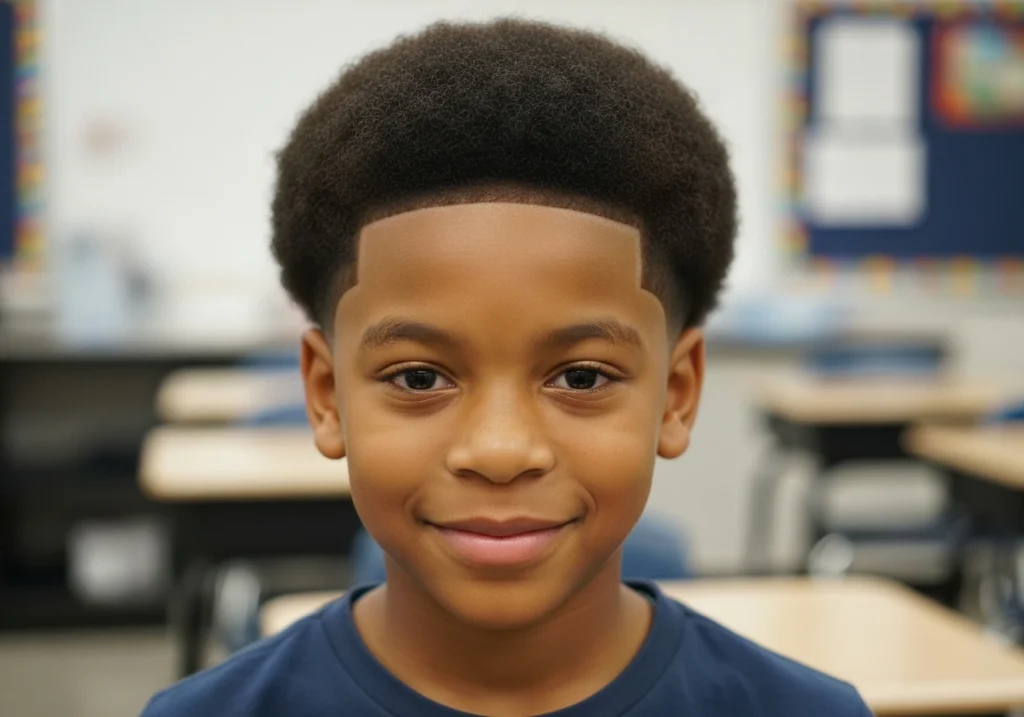
The short afro celebrates natural hair texture in its purest form while incorporating a modern temple fade for structure and definition. This style features naturally curly or coily hair grown to a moderate length on top, shaped into the classic rounded afro silhouette. The temple fade tapers the hair around the temples and ears, creating clean lines that frame the face beautifully.
What distinguishes this style from a full, grown-out afro is its controlled length and the addition of the temple fade. Keeping the afro relatively short makes it more manageable for school settings while still allowing boys to embrace their natural texture. The fade adds a contemporary touch to a classic style, demonstrating that traditional looks can be updated for modern sensibilities.
Maintaining a short afro requires regular moisturizing to prevent dryness and breakage. Products like leave-in conditioners and natural oils keep the hair healthy and the afro soft and defined. Picking out the afro with a wide-tooth comb or afro pick helps maintain the round shape and prevents matting. The temple fade needs refreshing every two to three weeks to maintain clean lines. This style works exceptionally well for boys who want to honor their heritage while looking current and stylish.
7. Two-Strand Twists with Undercut
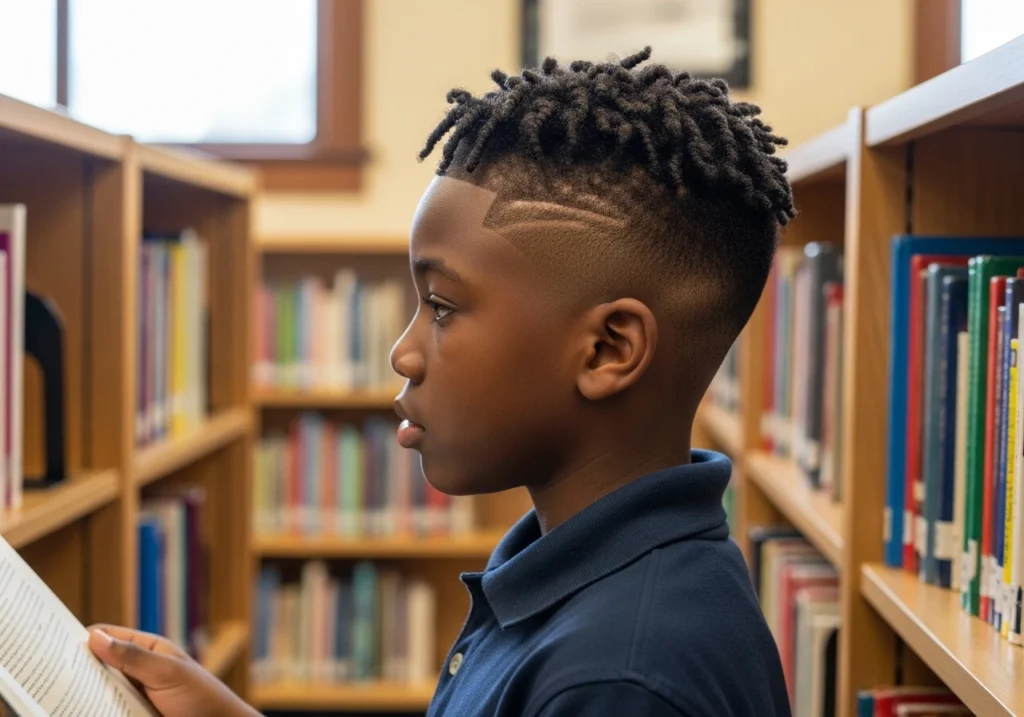
Two-strand twists provide a protective style that looks sophisticated and works beautifully for school. This technique involves taking two sections of hair and wrapping them around each other from root to tip, creating rope-like twists throughout. When combined with an undercut on the sides and back, the style gains structure and visual interest that elevates it beyond a simple protective style.
The benefits of two-strand twists extend beyond aesthetics. This style protects hair from daily manipulation and environmental damage, promoting healthy growth. The twists can last several weeks with proper care, making them an excellent choice for busy families who want to reduce daily styling time. The undercut portion requires regular maintenance to keep it fresh, but the twisted top needs minimal daily attention.
Many boys appreciate how two-strand twists offer a neat, intentional appearance that schools readily accept while still allowing them to showcase their natural hair texture. The style works with various hair lengths and can be customized with different twist sizes to create different looks. Adding clean parts or patterns in the undercut section provides additional opportunities for personalization without compromising the overall school-appropriate nature of the style.
8. Mohawk Fade with Natural Texture

The mohawk fade brings an edgy, modern look that remains appropriate for school when executed with the right balance. This style features a strip of longer hair running from the front of the head to the back, with faded sides that create dramatic contrast. For black boys, allowing the natural texture to shine through on the mohawk portion adds authenticity and celebrates their unique hair characteristics.
Unlike punk-style mohawks that stand straight up, school-appropriate versions keep the center section at a moderate height and width. The hair can be left natural and curly or styled with products for definition and hold. The faded sides transition smoothly from skin to the longer mohawk section, creating a polished gradient that looks intentional and well-maintained rather than extreme.
Styling a mohawk fade typically involves applying curl cream or styling gel to the center section and using fingers or a comb to shape it as desired. Some boys prefer a neat, controlled look, while others embrace a more textured, voluminous appearance. The versatility of this style allows for adjustment based on setting; it can be styled more dramatically for weekends and toned down for school days while maintaining the same basic cut.
9. Box Braids with Fade
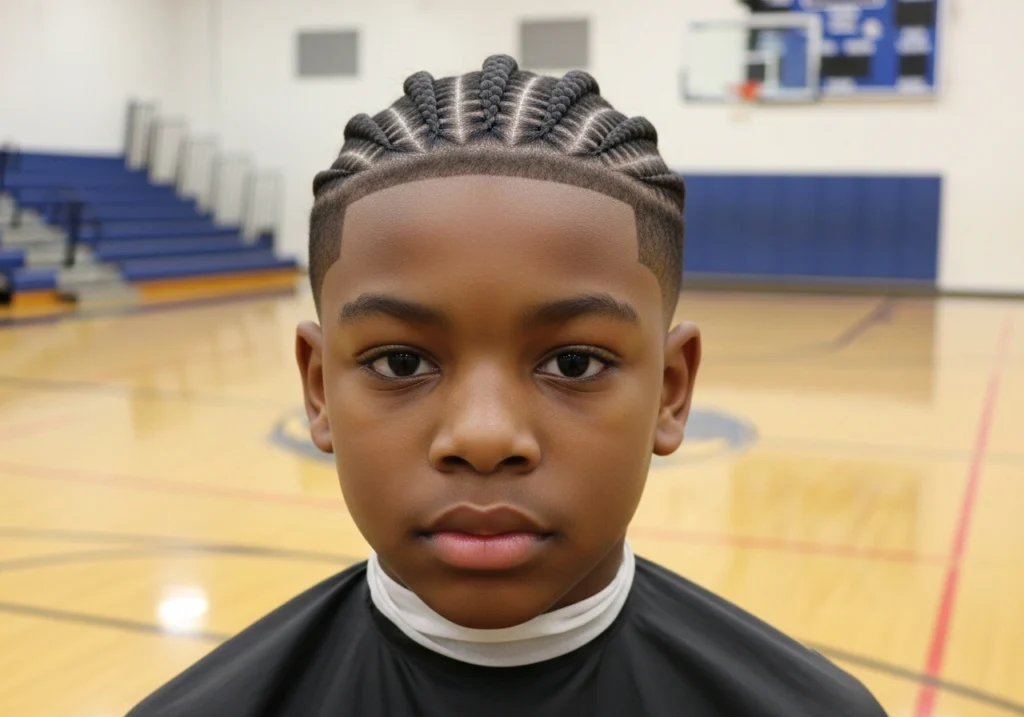
Box braids combined with a fade create a striking look that blends traditional African hairstyling with contemporary barbering techniques. The braids section the hair into neat squares or boxes on the scalp before braiding each section, while the sides and back receive a fade that provides clean contrast. This combination results in a style that is both culturally significant and modern.
The installation process for box braids requires several hours but results in a style that can last four to six weeks with proper care. This longevity makes box braids an excellent investment for families seeking to reduce daily styling demands. The fade portion requires regular touch-ups to maintain its crisp appearance, typically every two weeks, but the braided sections need minimal daily attention beyond moisturizing the scalp.
Schools generally welcome box braids with fades because the overall appearance is neat, intentional, and well-maintained. The style keeps hair secured and out of the face, which teachers appreciate during classroom activities. Boys benefit from the protective nature of braids, which shield their hair from damage and promote healthy growth. The combination of traditional braiding with a modern fade demonstrates how cultural heritage and contemporary style can blend seamlessly.
10. Sponge Curls with High Taper

Sponge curls have become increasingly popular for their ability to create uniform, defined curl patterns that look polished and intentional. This technique uses a special curl sponge rubbed in circular motions over damp hair to form tight, consistent curls throughout. When paired with a high taper fade on the sides, the result is a contemporary style that balances texture on top with clean structure below.
Creating sponge curls requires hair of appropriate length, typically two to three inches for best results. The process is relatively quick and can be done at home, making it accessible for boys who want to refresh their style between barber visits. The curls maintain their definition throughout the day with minimal product, though a light curl cream can enhance hold and reduce frizz.
The high taper fade provides the structured foundation that makes this style school appropriate. Without the fade, sponge curls might appear too casual or unstructured for some school environments. The combination creates clear separation between the styled top and the neat sides, resulting in a balanced look that demonstrates attention to grooming and personal presentation. This style works particularly well for boys who want to embrace their natural curl pattern while maintaining a modern, fresh appearance.
11. Side Part with Low Fade
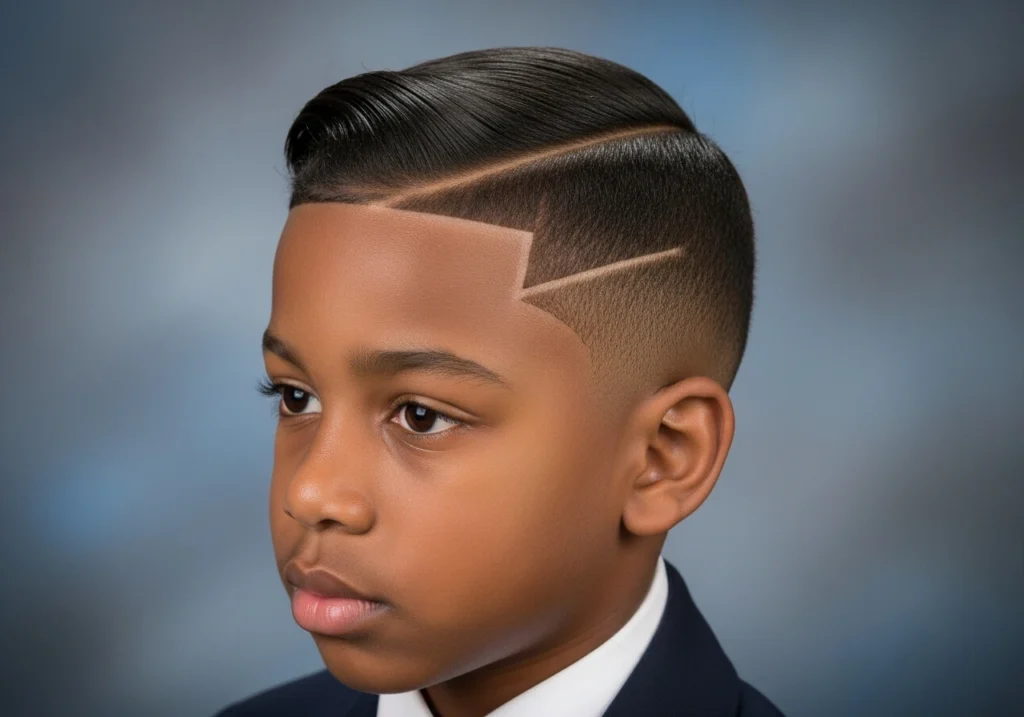
The side part represents classic sophistication translated for younger generations. This timeless style features a distinct part line carved into the hair on one side of the head, with hair combed or brushed away from the part in opposite directions. When combined with a low fade on the sides and back, this traditional look gains contemporary relevance while maintaining its polished character.
Creating a sharp side part requires precision from the barber, who typically uses a straight edge or clippers to carve a clean line where the part will sit. The hair on top can be kept relatively short for easy maintenance or left longer for boys who enjoy styling. The low fade ensures the overall look remains neat and structured without drawing attention away from the distinctive part line.
Boys who wear side parts often receive compliments on their neat, mature appearance. This style works exceptionally well for school photos, special events, and formal occasions while remaining practical for everyday wear. Maintenance involves regular brushing or combing to maintain the part and periodic trims to keep the fade fresh. Some boys choose to add styling products for extra hold and shine, though the style looks equally good with minimal product for a more natural finish.
12. Curly Frohawk with Burst Fade
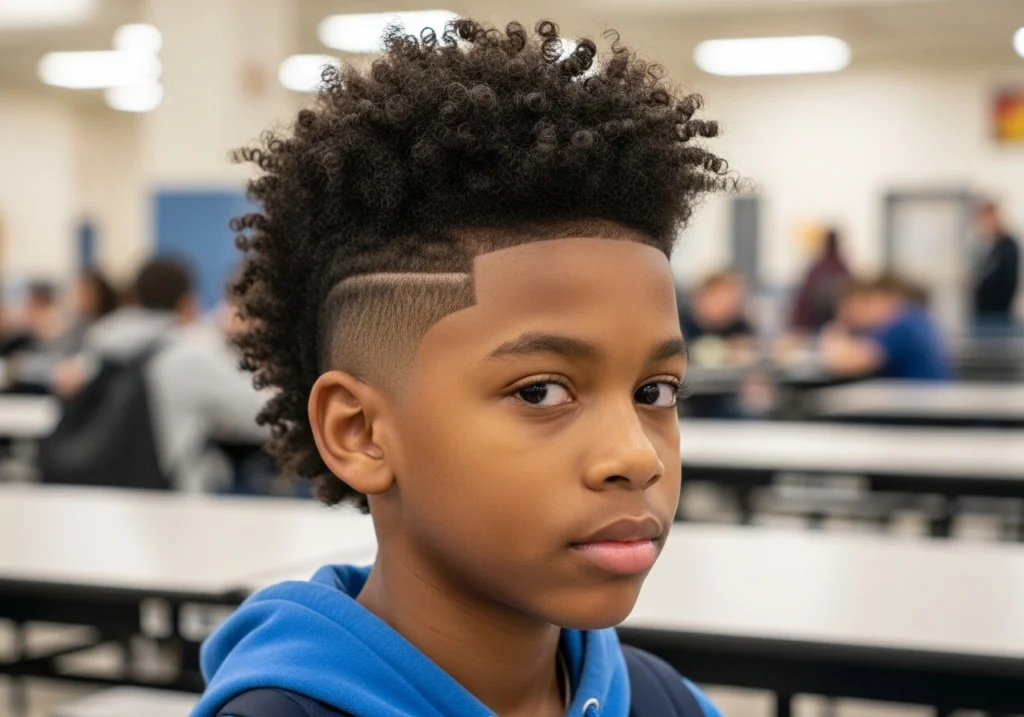
The curly frohawk combines the boldness of a mohawk with the volume of an afro, creating a distinctive style that turns heads while remaining appropriate for school. This look features a strip of curly or coily hair running from front to back, shaped higher and more prominent than the sides. The burst fade, which curves around the ear in a semicircular pattern, provides the structural element that defines this modern style.
What sets the frohawk apart from a traditional mohawk is its celebration of natural curl texture. Rather than slicking the hair or forcing it into unnatural positions, the frohawk allows curls to flourish and expand naturally, creating organic volume and movement. The burst fade frames this textured section beautifully, with the curved fade lines drawing the eye to the voluminous center portion.
Styling a curly frohawk typically involves applying moisturizing products to encourage curl definition and using fingers to shape the center section into the desired position. The style can be worn tall and dramatic or more subdued depending on preference and setting. Many boys find this look strikes an ideal balance between expressing personality and meeting school standards, as it demonstrates clear attention to grooming and style while celebrating natural hair characteristics.
13. Mini Locs with Tapered Sides
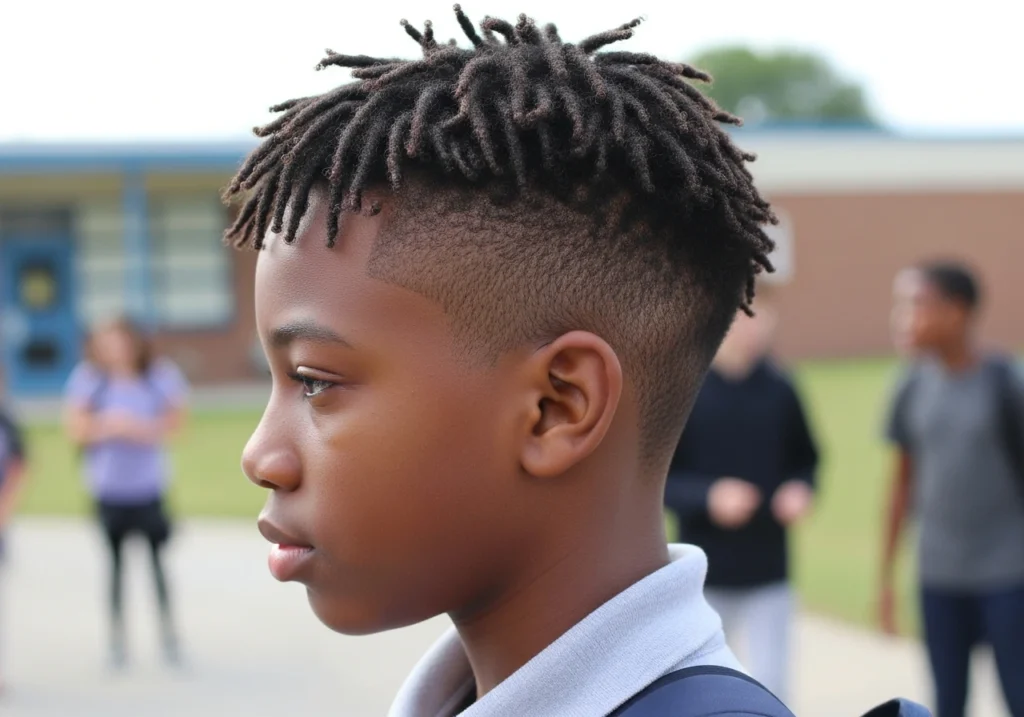
Locs represent a deeply cultural hairstyle that connects wearers to African heritage while offering a unique, low-maintenance option. Mini locs feature smaller, thinner locs than traditional styles, creating a neater appearance that many find more appropriate for school settings. When combined with tapered sides, the style gains contemporary relevance while maintaining its cultural significance.
Starting locs requires commitment, as the process of forming and maturing locs takes months to years depending on hair type and desired loc size. However, once established, locs require relatively minimal daily maintenance. Regular palm rolling, moisturizing, and occasional retwisting keep them looking neat and well-maintained. The tapered sides add structure to the overall look and prevent it from appearing too casual for school environments.
Many families choose locs for their sons because of the deep cultural connection and the practical benefits of reduced daily styling. Schools increasingly recognize and accept locs as an important cultural expression deserving of respect and accommodation. Mini locs offer a particularly school-friendly version of this traditional style, as their smaller size creates a neater, more uniform appearance that addresses concerns some administrators might have about grooming standards while allowing boys to embrace their heritage.
14. Textured Crop with Mid Fade
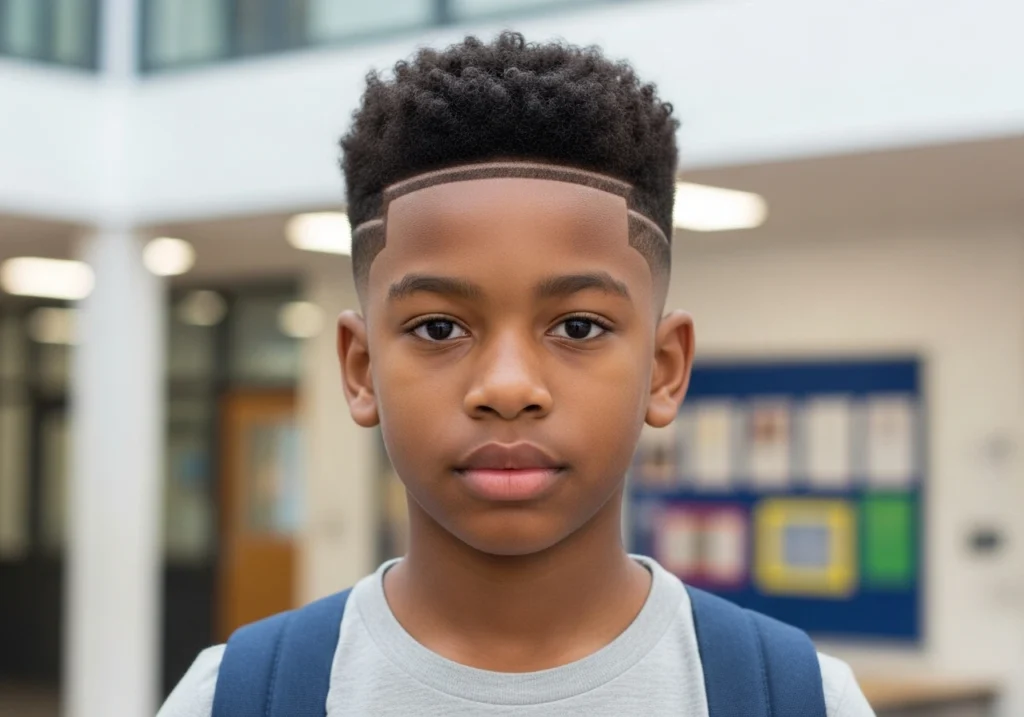
The textured crop brings European barbering techniques to black hair with excellent results. This style features short hair on top cut to roughly the same length, creating a horizontal line across the top of the head. The mid fade on the sides provides graduated length that connects the short top to even shorter sides, creating smooth transition and structure.
What makes this style work particularly well for black boys is the celebration of natural texture. Rather than attempting to smooth or straighten the hair on top, the textured crop embraces the natural coil and curl pattern, creating visual interest through texture rather than length. The defined curls or coils on top catch light and create dimension, preventing the short length from appearing flat or lifeless.
Maintaining a textured crop requires regular barber visits to preserve the precise length on top and keep the mid fade fresh. Daily styling is minimal, typically involving a small amount of curl cream or moisturizer to define the texture and prevent dryness. This style works exceptionally well for boys who want a modern, trendy look that requires minimal morning styling but still demonstrates attention to personal grooming. Teachers and administrators appreciate the neat, intentional appearance that clearly shows care and effort.
15. Waves with Line Design

Waves paired with a creative line design create a sophisticated style that demonstrates dedication to hair care while allowing for personal expression. As discussed earlier, achieving waves requires consistent brushing and product use over several months. Adding a shaved line design into the waves elevates the look from classic to contemporary, providing visual interest without compromising the neat, polished nature of the wave pattern.
Line designs can be simple or elaborate, depending on personal preference and school policies. A single straight line shaved behind the ear or across the side of the head provides subtle detail without being overly dramatic. More complex designs might include multiple lines, curves, or intersecting patterns that create geometric interest. These designs typically last one to two weeks before requiring touch-ups as the hair grows.
The combination of waves and line designs demonstrates a commitment to personal grooming that schools and parents value. The neat wave pattern shows consistency and care, while the added design element reveals personality and creativity within appropriate boundaries. Boys who maintain this style learn important lessons about dedication, as waves require daily attention, and they develop pride in their appearance that translates to confidence in other areas of life.
Choosing the Right Haircut for Your Son

Selecting the perfect haircut involves considering multiple factors beyond simple aesthetics. Face shape plays an important role, as certain styles complement different facial structures more effectively. Round faces often benefit from styles with height on top, such as high top fades or frohawks, which create the illusion of length. Boys with longer, narrower faces might prefer styles that add width, such as fuller afros or wide mohawks.
Hair texture and density also influence which styles work best. Boys with tighter, denser curl patterns can achieve styles like high tops and box shapes more easily than those with looser curls. Conversely, looser curl patterns might lend themselves better to defined curl styles and textured crops. Understanding your son’s natural hair characteristics helps identify which styles will be easiest to create and maintain.
Consider your family’s lifestyle and schedule when choosing a haircut. Some styles require daily attention and product application, while others need minimal daily care but frequent barber visits. Protective styles like braids and twists reduce daily styling time but require hours for installation. Simpler cuts like buzz cuts and low fades offer convenience at the expense of dramatic impact. Finding the right balance between desired appearance and practical maintenance requirements ensures your son can maintain his chosen style consistently.
School policies and cultural considerations should inform your decision without completely dictating it. Most schools have grooming standards that prohibit extreme or distracting styles, but interpretations of these policies vary. Review your school’s specific guidelines and communicate with administrators if you have questions about whether a particular style meets their standards. Remember that many traditional African American hairstyles are increasingly recognized as important cultural expressions that deserve protection from discriminatory policies.
Finally, involve your son in the decision-making process. His comfort and confidence in his appearance significantly impact his school experience. Show him various options, discuss the maintenance requirements of different styles, and respect his preferences when they fall within appropriate boundaries. A haircut he helped choose becomes something he takes pride in maintaining, teaching responsibility and self-care habits that extend beyond hair into other aspects of life.
Maintenance and Care Tips
Regardless of which haircut you choose, proper maintenance keeps it looking fresh and school appropriate throughout the weeks between barber visits. Establishing a consistent hair care routine teaches your son important grooming habits while ensuring his haircut maintains its intended appearance.
Moisturizing represents the single most important aspect of caring for black hair. Natural hair tends toward dryness, and many haircuts expose the ends to air and environmental factors that increase moisture loss. Daily application of leave-in conditioner, natural oils like coconut or jojoba, or specialized hair moisturizers keeps hair healthy, soft, and manageable. Focus moisturizer application on the ends and any longer sections, as these areas experience the most dryness.
Regular washing maintains scalp health and removes product buildup, but frequency depends on hair type and style. Most black boys benefit from washing once or twice weekly rather than daily, as overwashing strips natural oils that protect and moisturize the hair. Use sulfate-free shampoos designed for textured hair, and always follow with a conditioner. Boys with protective styles like braids or twists should focus on cleansing the scalp rather than manipulating the styled hair.
Protective measures during sleep prevent damage and maintain style definition. Sleeping on cotton pillowcases can create friction that leads to breakage and frizz. Switching to satin or silk pillowcases reduces this friction significantly. Alternatively, wearing a durag or silk bonnet to bed protects the hair and helps maintain styles like waves and defined curls.
Conclusion
Finding the perfect haircut for your son combines practical considerations with personal expression, creating opportunities for him to develop his individual style while meeting the expectations of school environments. The fifteen haircuts presented in this guide offer diverse options that celebrate natural hair texture, demonstrate cultural pride, and maintain the neat, polished appearance that schools and families value.
From classic styles like low fades and buzz cuts to more contemporary looks like mohawk fades and textured crops, these haircuts prove that school-appropriate does not mean boring or restrictive. Each style provides opportunities for personalization through length adjustments, added designs, or styling variations while maintaining an overall appearance that meets reasonable grooming standards.
Remember that the best haircut is one your son feels confident wearing, that suits his face shape and hair texture, and that fits within your family’s maintenance capabilities. Take time to explore different options with your barber, involve your son in the decision-making process, and be willing to adjust if a chosen style does not work as expected. With proper care and regular maintenance, any of these fifteen haircuts will keep your son looking sharp, feeling confident, and ready to succeed throughout the school year.
You may also like this post:20 Best Low Fade Hairstyles for Men 2026!
Frequently Asked Questions
How often should my son get his haircut to maintain these styles?
Most of these styles require barber visits every two to three weeks to maintain their fresh appearance. Fades and tapers grow out quickly and need regular attention to preserve clean lines and proper shape. Protective styles like braids or twists last longer, typically four to six weeks, though the faded portions still need touch-ups every two weeks. Simple styles like buzz cuts can sometimes stretch to four weeks between cuts, while complex styles with designs need more frequent attention to keep designs visible and lines sharp.
What products do I need for maintaining my son’s haircut at home?
Basic maintenance requires a good moisturizer or leave-in conditioner, a sulfate-free shampoo, and a quality conditioner. For specific styles, you might need curl-defining cream for textured looks, wave pomade for 360 waves, or edge control for sharp line-ups. A wide-tooth comb, a brush suitable for his hair texture, and a durag or silk bonnet for sleep protection complete the essential toolkit. Many boys also benefit from natural oils like coconut or jojoba for additional moisture and scalp health.
Are these haircuts appropriate for all ages?
Yes, these fifteen haircuts work well for boys from elementary school through high school. Simpler styles like buzz cuts and low fades suit younger boys who need minimal maintenance and maximum practicality. Older boys might gravitate toward more complex styles like mohawk fades or wave patterns that allow greater personal expression. The key is matching the style complexity to your son’s age, maturity level, and willingness to participate in the maintenance routine required for more involved cuts.
What should I tell my barber to get these styles?
Bring reference photos showing the exact style you want, as visual examples eliminate confusion and ensure clear communication. Describe key features like fade height, top length, and any design elements you want included. Use proper terminology when possible such as low fade, taper, or burst fade. Do not hesitate to ask your barber for their professional opinion on whether a style will work with your son’s hair texture and face shape. Experienced barbers can often suggest modifications that make a desired style more achievable and flattering.
How do I handle school policies that might restrict certain hairstyles?
First, carefully review your school’s written grooming policies to understand specific restrictions. Many policies prohibit distracting or extreme styles but provide limited definition of these terms. If a traditional cultural hairstyle faces restriction, document the policy and consider discussing it with school administrators, as many jurisdictions now have laws protecting cultural hairstyles from discrimination. Organizations like the CROWN Coalition provide resources for families facing discriminatory hair policies. When possible, choose styles that clearly meet guidelines while still allowing your son to express his identity and cultural heritage.