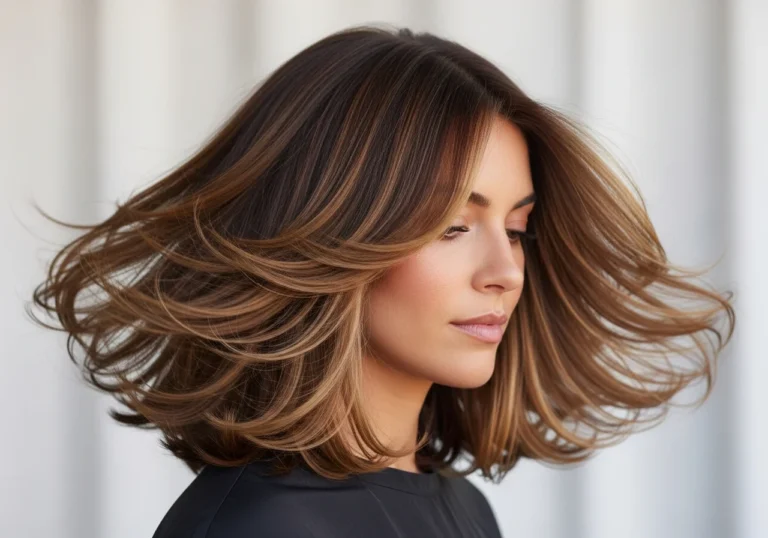
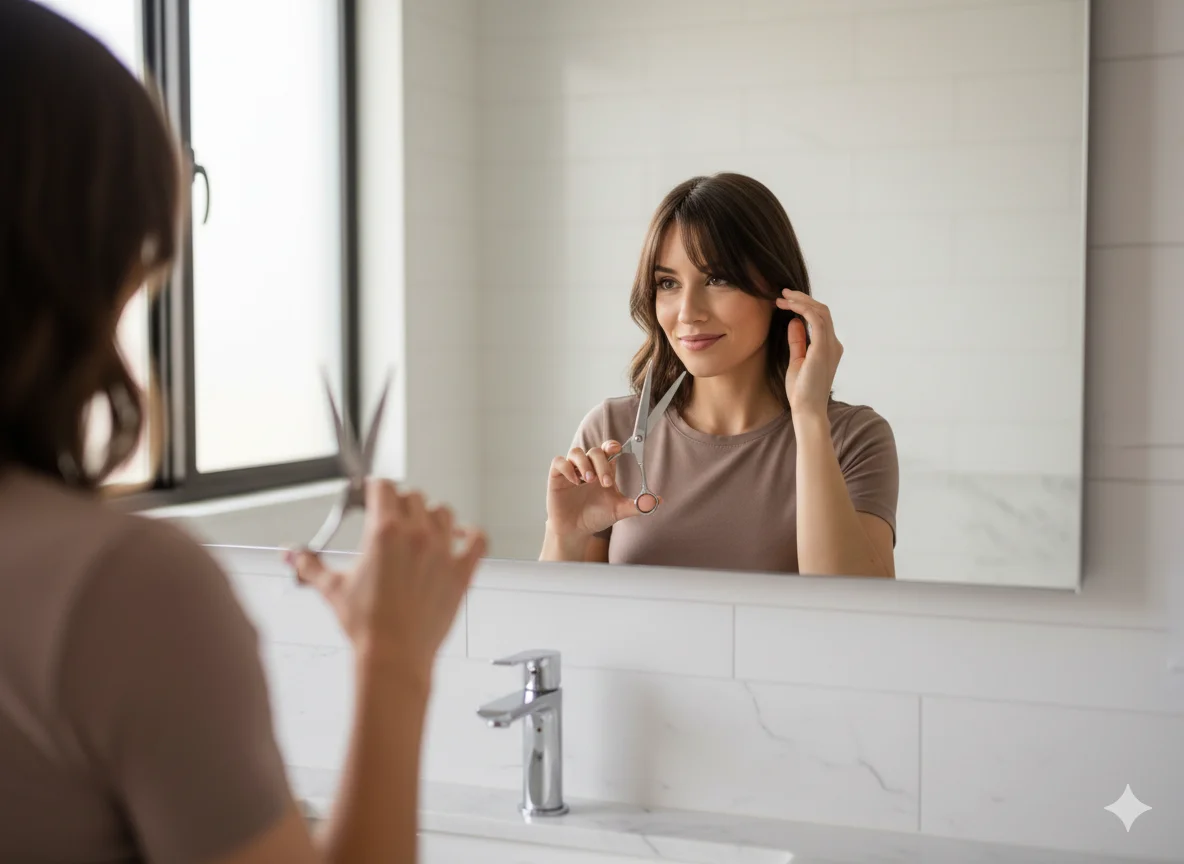
How to Cut Side Bangs at Home: 10 Easy Steps & Tutorials for 2026
Picture this: you wake up one morning craving a fresh new look, but the salon appointment is weeks away and your budget is already stretched thin. What if you could transform your entire appearance in just 20 minutes with nothing more than a pair of professional scissors and a mirror? Welcome to the world of DIY side bangs, where salon-quality results meet the comfort of your own home.
Side swept bangs have dominated beauty trends for decades, and 2026 is no exception. Unlike other hairstyle commitments that require extensive upkeep or professional intervention, face framing bangs offer the perfect balance of style and practicality. Whether you scroll through Pinterest boards filled with celebrity transformations or Instagram feeds showcasing everyday makeovers, one thing remains clear: side bangs possess an almost magical ability to refresh your look without the permanence of a dramatic haircut.
The secret that professional stylists rarely advertise is that cutting side bangs at home is remarkably achievable when you understand the fundamental techniques. This comprehensive tutorial will transform you from nervous beginner to confident home stylist, armed with insider knowledge about sectioning techniques, point cutting, and the precise diagonal cutting method that creates that coveted sweeping effect.
Why Side Bangs Remain the Most Flattering Bang Style in 2026
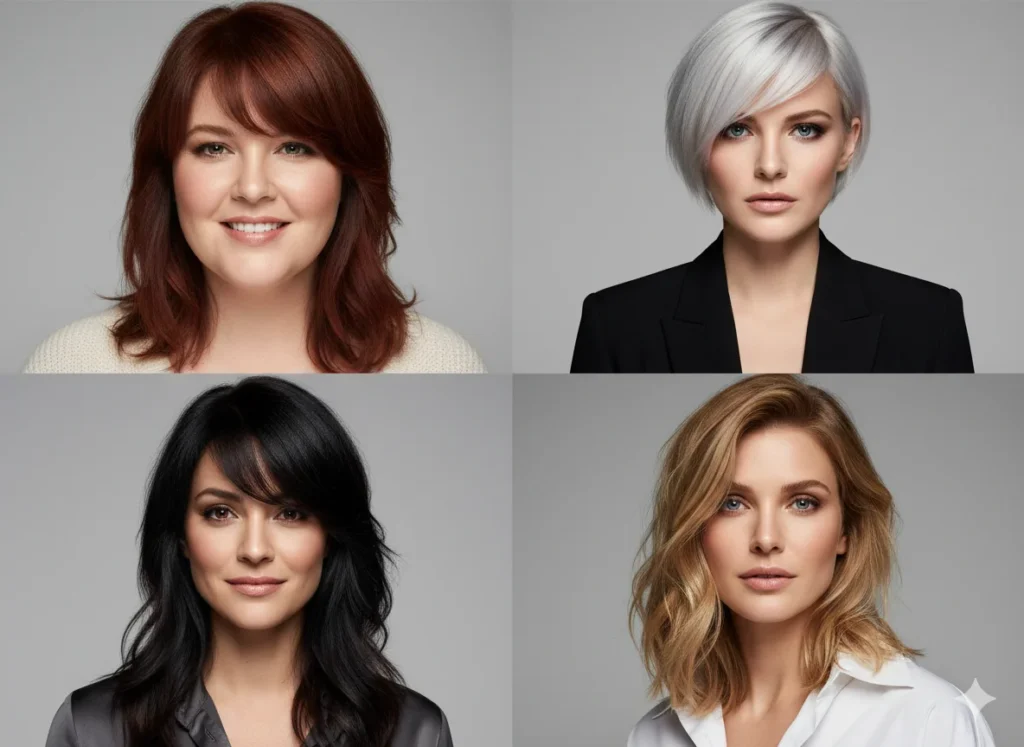
Side swept bangs continue their reign as the ultimate face framing solution because they solve multiple beauty concerns simultaneously. The diagonal cut creates an elongating effect that flatters virtually every face shape, while the sweeping motion draws attention to your eyes and cheekbones rather than overwhelming delicate features.
Unlike blunt bangs that require daily styling commitment or curtain bangs that demand specific hair texture for optimal results, side bangs work with your natural hair growth pattern. This versatility explains why beauty influencers consistently pin side bang tutorials to their Pinterest boards and why Google searches for this style spike throughout every season.
The psychological impact cannot be understated either. Research in beauty psychology suggests that strategic face framing through bangs creates perceived symmetry and youthfulness. The angled fringe softens harsh features while adding dimension to flat or thin hair, making it a universally flattering choice that transcends age, ethnicity, and personal style preferences.
Understanding Your Face Shape for Perfect Side Bang Customization
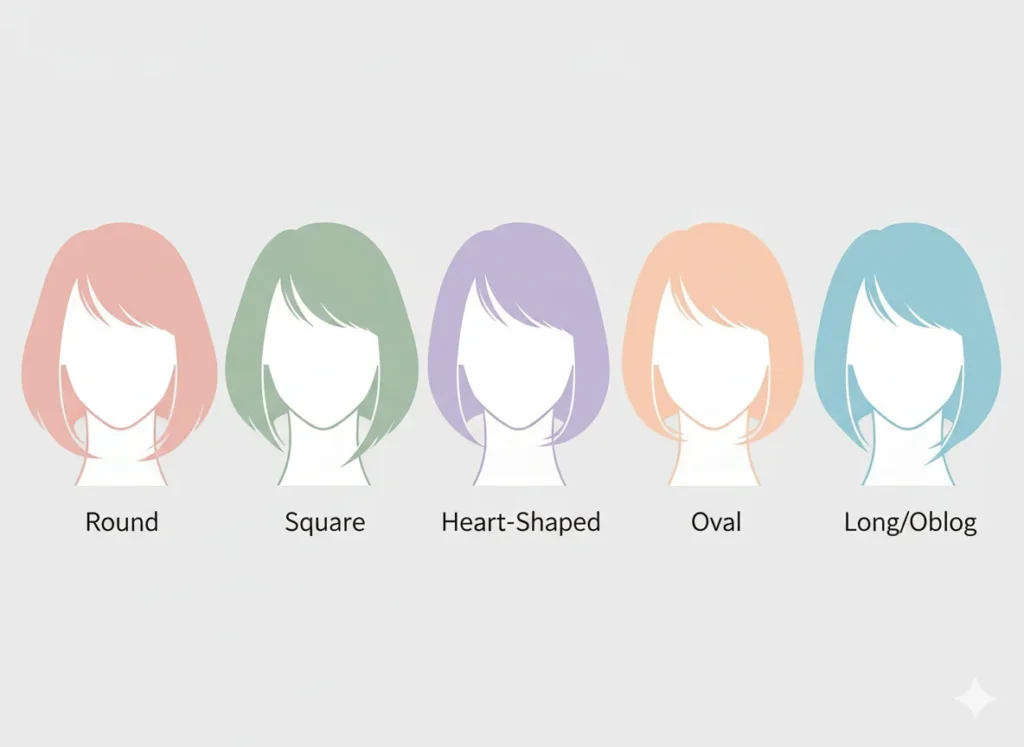
Before touching those haircutting shears, spend five minutes analyzing your face shape in natural lighting. This crucial step determines the ideal length, angle, and thickness of your side swept bangs.
Round face shapes benefit tremendously from longer side bangs that create vertical lines across the forehead. The diagonal sweep visually elongates rounded features, making the face appear slimmer and more sculpted. Aim for bangs that extend past your cheekbone for maximum elongating effect.
Square face shapes with defined jawlines look stunning when soft layering meets strategic texturizing. The goal here involves softening angular features through gentle curves rather than harsh lines. Your side bangs should incorporate subtle point cutting at the ends to create movement rather than bluntness.
Heart shaped faces featuring wider foreheads and narrow chins achieve balance through side swept bangs that reduce forehead prominence. The sweeping motion creates horizontal visual interest that counteracts the natural triangle shape, producing more harmonious facial proportions.
Oval face shapes enjoy maximum versatility, accommodating nearly any bangs length or angle. This balanced foundation allows for experimentation with different styling techniques and creative variations without worrying about proportion mishaps.
Long or oblong faces need side bangs that add width rather than length. Keeping bangs slightly shorter and fuller creates horizontal lines that break up vertical facial dimensions, producing more balanced proportions overall.
Gathering Your Essential Tools for Professional Results
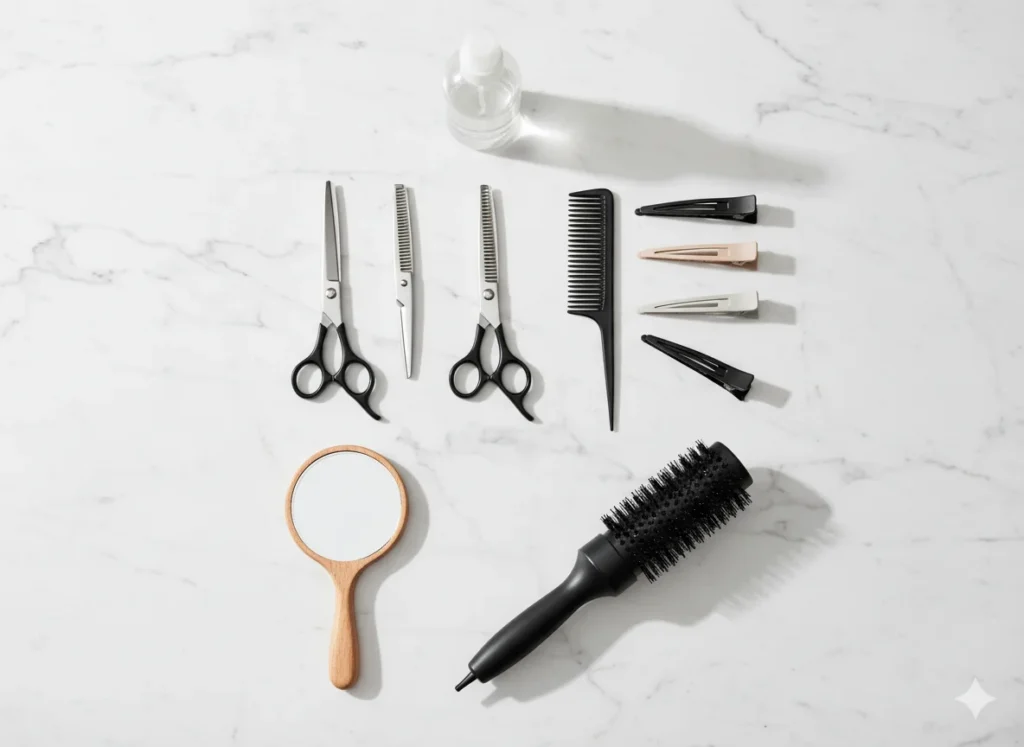
Professional haircutting scissors represent your most critical investment. Regular household scissors create jagged edges and split ends that compromise the entire look. Quality haircutting shears featuring sharp, stainless steel blades glide smoothly through hair without pulling or tearing, producing clean lines that last.
Your tool collection should include a fine toothed comb for precise sectioning, multiple hair clips to secure unwanted sections, and a handheld mirror for viewing angles. A spray bottle helps maintain slight dampness if you prefer working with damp hair, though cutting dry hair provides more accurate length assessment.
Consider adding texturizing shears to your arsenal if you have particularly thick or coarse hair texture. These specialized scissors remove bulk without shortening length, creating lighter, more manageable side bangs that move naturally rather than hanging heavily.
Preparing Your Hair the Right Way
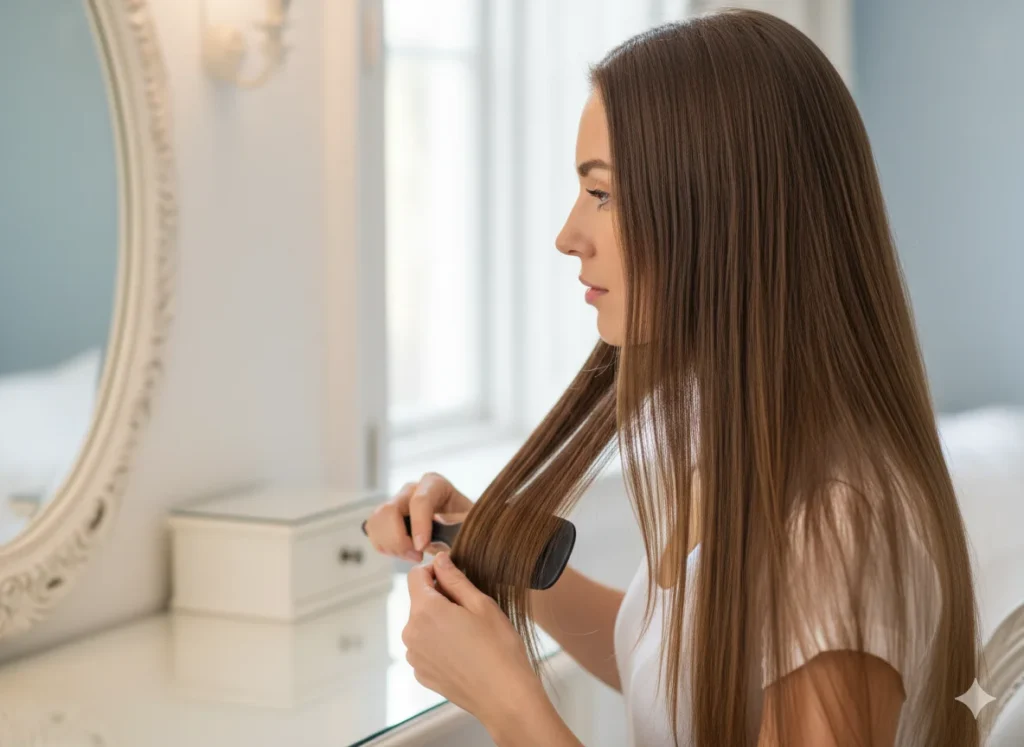
Proper preparation separates amateur attempts from professional looking results. Start with freshly washed and conditioned hair to remove product buildup and natural oils that can affect how scissors glide through strands. Clean hair also reveals your authentic hair texture and natural movement patterns.
The wet versus dry hair debate deserves careful consideration. While wet hair appears longer and smoother, it shrinks considerably during drying, especially for wavy or curly textures. Most professional stylists recommend cutting dry hair or hair that is only slightly damp to accurately predict final results.
Blow drying your hair completely before cutting allows you to see exactly how it falls naturally. Style your hair as you typically would, including your usual part and any cowlick management techniques. This authentic preview ensures your side bangs integrate seamlessly into your everyday look.
Brush thoroughly to eliminate every tangle and knot. Smooth, tangle free hair enables even cutting and prevents scissors from snagging, which could create unintended choppy sections or uneven lengths.
The Triangle Section Method for Perfect Side Bangs
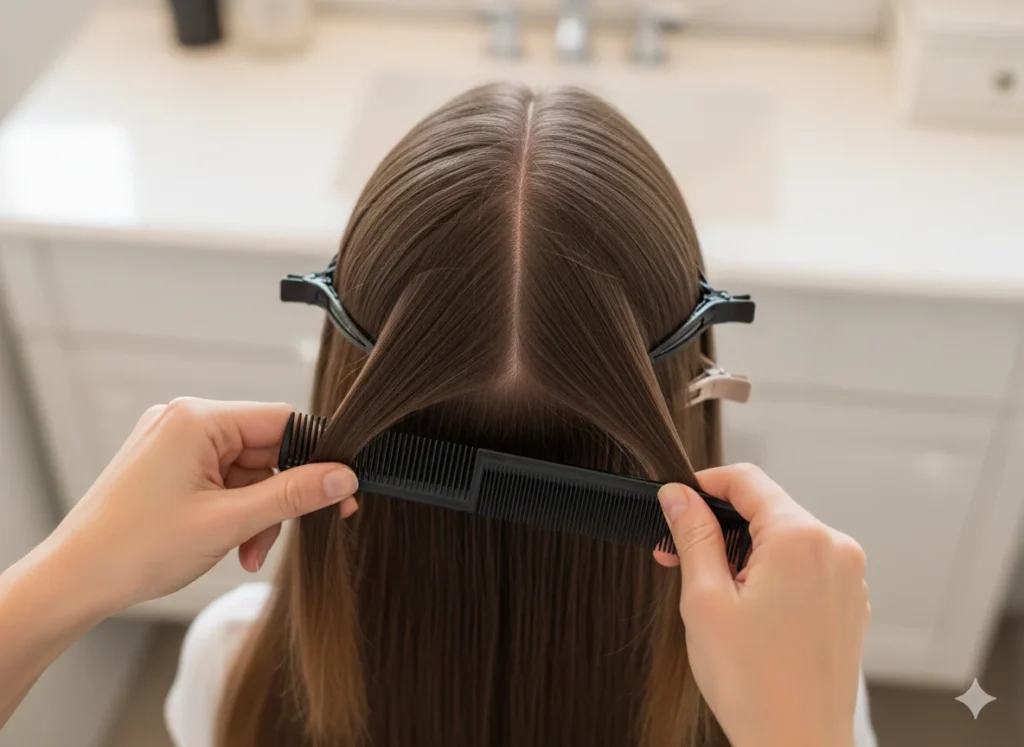
Creating the triangle section forms the foundation of successful side swept bangs. This geometric approach ensures you cut the right amount of hair while leaving the rest of your style intact. Position the point of your triangle approximately one to two inches back from your hairline, with the base extending to the outer corners of your eyebrows.
Use your fine toothed comb to create clean divisions, then secure all remaining hair completely away from your face using clips or elastics. This isolation prevents accidental cuts to sections you want to preserve at their current length.
Examine your triangle section for any cowlicks or unusual growth patterns. These natural quirks affect how your side bangs fall and must be accommodated rather than fought against. A cowlick pushing hair forward might require slightly longer cutting to compensate for the lift it creates.
Step One Through Three: Setting Up for Success
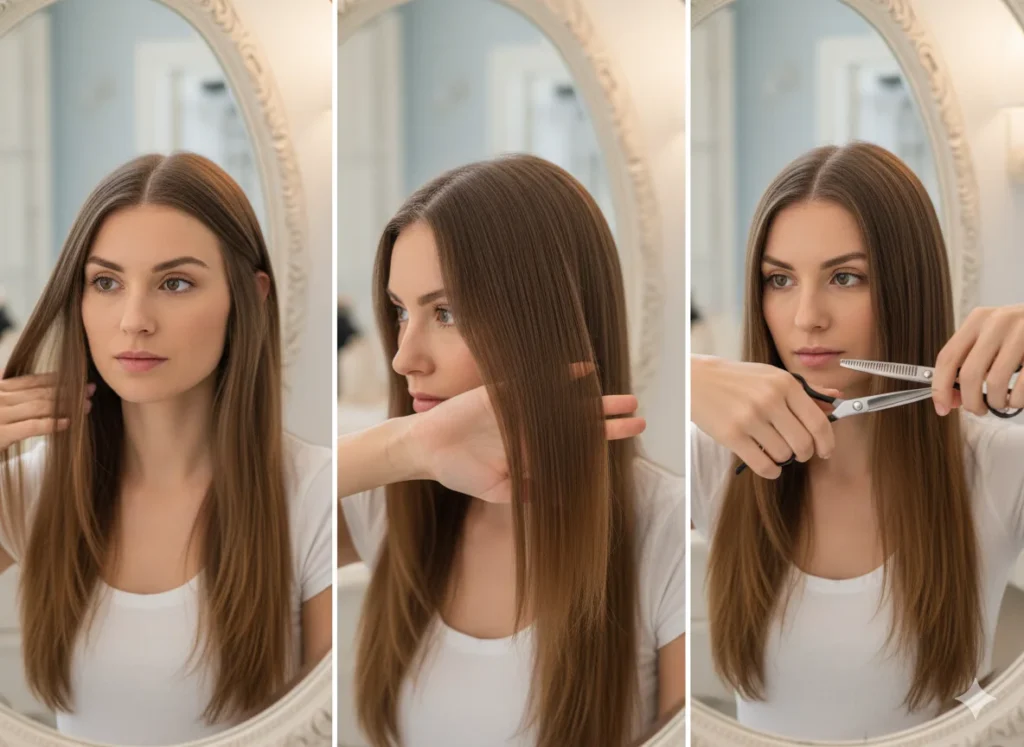
Step One involves determining which direction you want your side swept bangs to fall. If you prefer them sweeping toward your right side, you will pull the sectioned hair to your left during cutting. This counterintuitive approach creates the necessary diagonal angle.
Step Two requires holding the sectioned hair firmly between your fingers, pulling it across your face in the opposite direction of your desired sweep. Maintain consistent tension without pulling so tightly that you distort the hair’s natural fall. Your fingers act as a cutting guide, so positioning them precisely determines your final bangs length.
Step Three involves positioning your haircutting shears at the exact diagonal angle you want to achieve. Remember that side bangs should be longer on one side and progressively shorter as they sweep across. Start your cut conservatively, leaving hair approximately one inch longer than your desired final length to allow for adjustments.
Step Four Through Six: Executing the Perfect Diagonal Cut

Step Four is the moment of truth. Using smooth, confident motions rather than tentative snips, cut along your established diagonal line from the longer side toward the shorter side. Maintain your angle consistently throughout the entire cut to ensure the sweeping effect flows naturally.
Step Five happens immediately after releasing the hair from your fingers. Let your newly cut side bangs fall naturally and assess both length and angle. Check multiple angles using your handheld mirror, ensuring the face framing effect flatters from every viewpoint. The bangs should sweep gracefully across your forehead without obscuring your vision or feeling uncomfortably short.
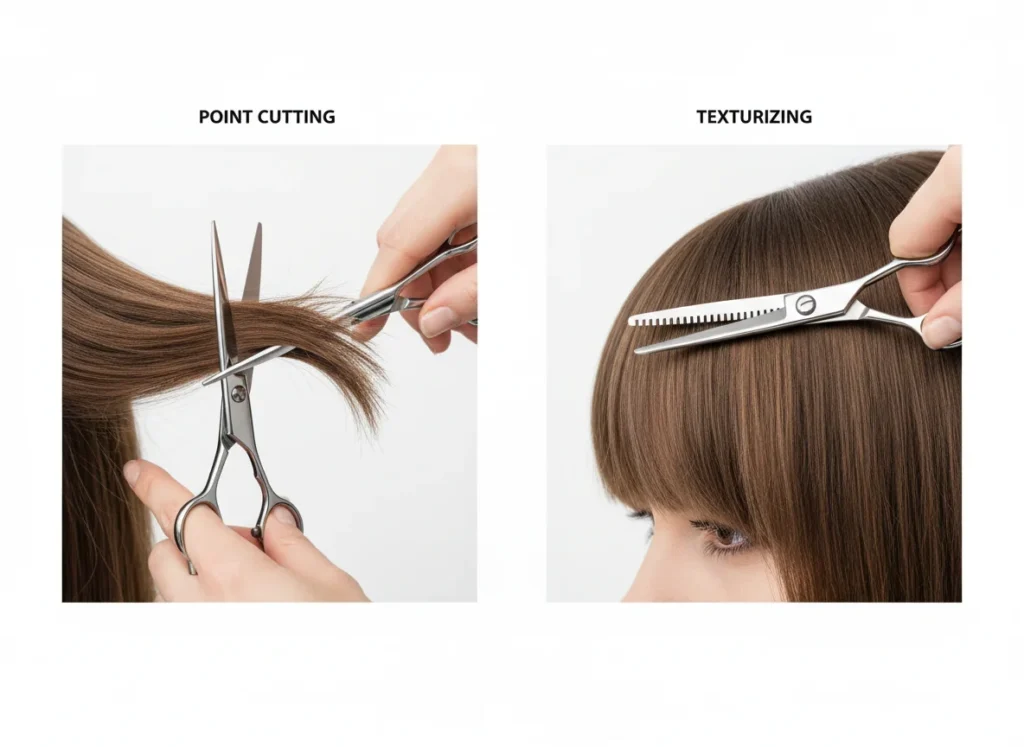
Step Six introduces refinement through point cutting. Hold your haircutting shears vertically and make small, careful snips into the ends of your side bangs. This texturizing technique creates natural movement and prevents the blunt, artificial line that screams homemade haircut. Point cutting softens edges while removing weight, allowing bangs to blend seamlessly with the rest of your hair.
Step Seven Through Ten: Advanced Refinement Techniques
Step Seven addresses symmetry and balance. While side swept bangs are intentionally asymmetrical in their sweep, the overall face framing should feel balanced. Stand directly in front of your mirror and verify that both sides of your face receive complementary framing, even though the bangs themselves angle dramatically.
Step Eight involves creating internal layers for dimension and lightness. Take small vertical sections of your side bangs and cut them at marginally different lengths, with underneath layers being slightly shorter. This layering technique prevents heavy, flat bangs that lack movement, especially crucial for those with thick or coarse hair texture.
Step Nine introduces optional thinning for particularly dense hair. Using texturizing shears, carefully remove bulk from the underneath sections of your side bangs. Work from mid length to ends rather than near roots, preserving coverage while creating airiness. Apply this technique sparingly; you can always remove more bulk but cannot replace what you have eliminated.
Step Ten represents your final assessment and micro adjustments. Examine your side bangs in various lighting conditions and from multiple angles. Make tiny refinements as needed, never cutting more than a quarter inch at a time. Remember that conservative trimming allows for gradual perfection, while aggressive cutting creates irreversible mistakes requiring weeks of growth to correct.
Mastering the Styling Techniques That Make Side Bangs Shine
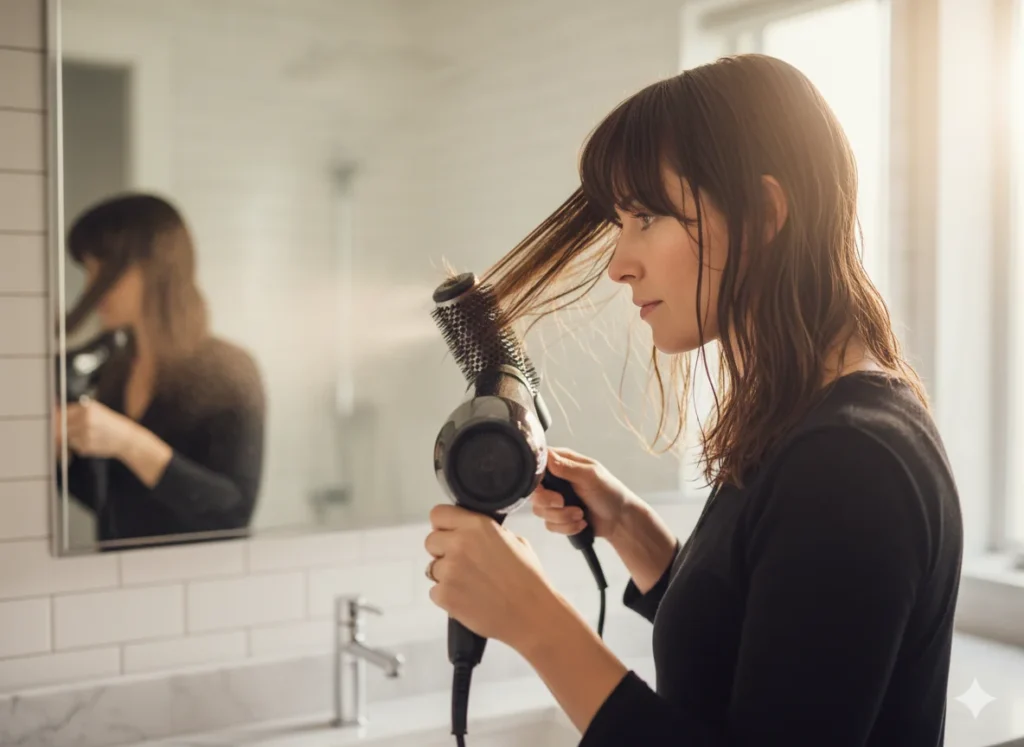
Proper styling transforms good side bangs into great ones. The foundational blow drying technique involves directing heat in the opposite direction of your desired sweep, then flipping bangs back to their intended position. This counter directional drying creates volume and encourages bangs to stay in place throughout the day.
Round brush styling adds polish and sophistication. Starting at the roots, roll your brush underneath while applying heat from your dryer. This motion creates a gentle curve that looks intentionally styled without appearing overly done. Keep heat settings moderate to prevent damage while maintaining the health of your front sections.
Styling products should be applied minimally and strategically. A small amount of lightweight cream or mousse worked through damp side bangs provides hold without stiffness or greasiness. Avoid heavy products that can make bangs appear oily or weighed down, especially since this section sits close to your forehead where natural oils accumulate.
For those preferring minimal heat exposure, the damp setting method works beautifully. Lightly mist your side swept bangs with water, comb them into position, and allow them to air dry naturally. This approach works especially well for naturally cooperative hair textures that hold shape without extensive manipulation.
Common Mistakes That Sabotage Home Bang Cutting
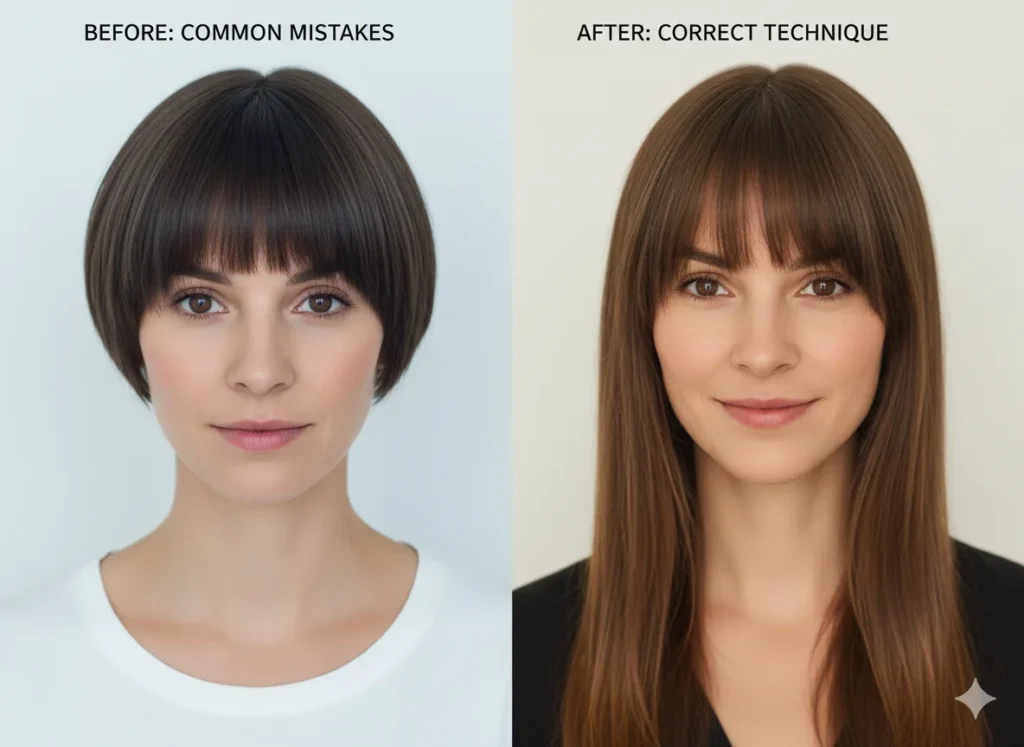
Cutting too short tops the list of devastating errors. This typically occurs when people cut wet hair without accounting for shrinkage, or when they become overzealous with trimming to achieve perfect symmetry. Always start longer than you think necessary, making incremental adjustments until you achieve your ideal length.
Creating excessively wide sections ruins the flattering face framing effect. When your triangle section extends beyond your eyebrows’ outer edges, the resulting side bangs open up your face too much rather than creating the intended slimming, focusing effect. Keep sections narrow and concentrated for optimal results.
Using dull scissors creates more problems than any technique error. Dull blades pull and tear at hair rather than making clean cuts, resulting in frayed ends, split ends, and an overall ragged appearance that screams amateur attempt. If your scissors feel like they are tugging rather than gliding, they need sharpening or replacement immediately.
Fighting your natural growth patterns instead of working with them leads to frustration and poor results. A strong cowlick or unusual hair growth pattern cannot be eliminated through cutting alone. Acknowledge these natural tendencies and adjust your bangs length and angle to accommodate rather than battle them.
Neglecting the test strand approach causes unnecessary anxiety. Before committing to cutting your entire triangle section, consider testing your technique on a small subsection first. This practice run builds confidence and allows you to verify your chosen length and angle before making irreversible changes.
Maintaining Your Side Bangs Between Professional Visits
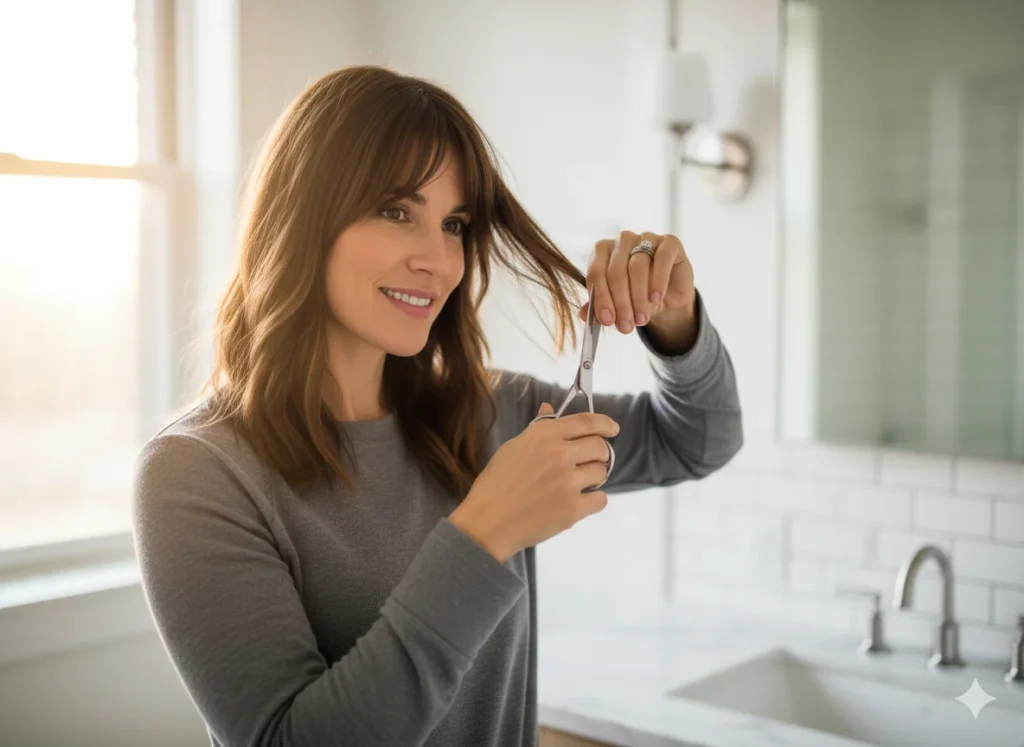
Regular maintenance trimming keeps your side swept bangs looking intentional rather than neglected. Most people require touch ups every three to four weeks, though individual hair growth rates vary significantly. Watch for signs that trimming is needed: bangs obscuring vision, loss of the original diagonal angle, or general shapelessness.
Home maintenance trimming follows the same principles as your initial cut but requires even more conservative approach. Work with completely dry hair styled as you normally wear it. Remove tiny amounts, typically no more than an eighth inch at a time, preserving your established shape rather than recreating it entirely.
Washing frequency impacts how your side bangs behave daily. While you might not wash your entire head daily, the front sections benefit from more frequent cleansing since they are exposed to facial oils and environmental pollutants. You can wash just your bangs without wetting your entire head, quickly blow drying them back into position.
Nighttime protection extends the life of your styling efforts. Consider wearing a silk or satin scarf or using a silk pillowcase to minimize friction that can disturb your side swept bangs while sleeping. Some people prefer gently pinning bangs to the side overnight using small clips, then restyling in the morning.
Adapting Side Bangs for Different Hair Textures
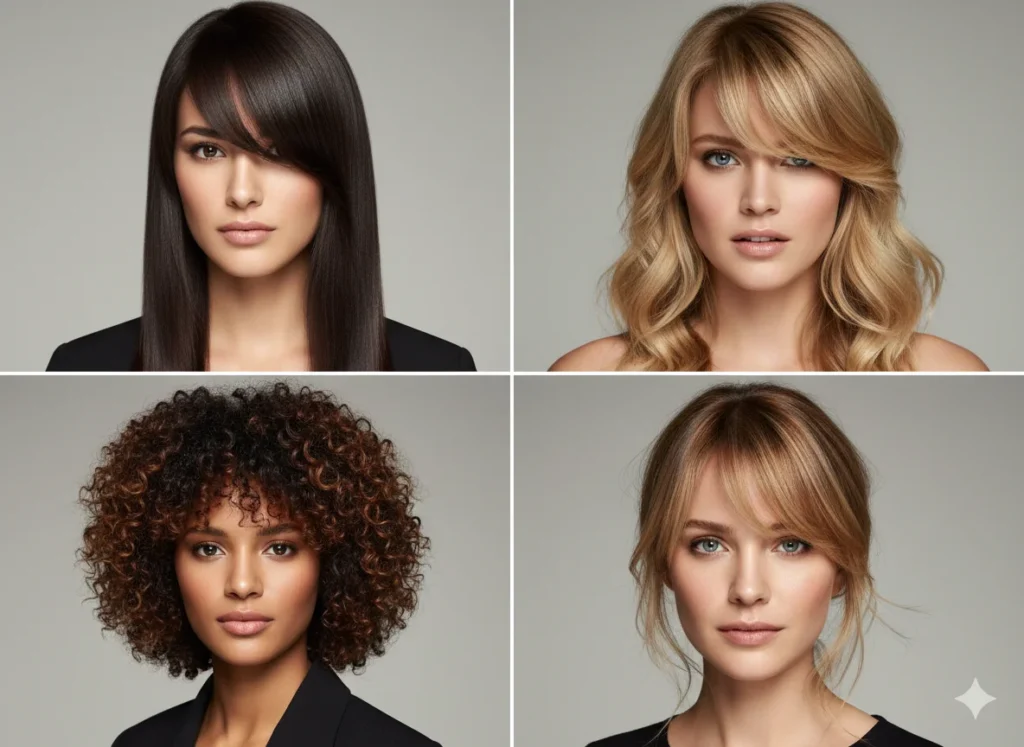
Straight hair provides the most predictable canvas for side swept bangs. The hair falls exactly where you cut it without shrinkage or unexpected curl patterns. Straight hair users can achieve either crisp, defined edges or softly textured looks depending on their point cutting technique and styling product choices.
Wavy hair introduces beautiful natural movement but requires length compensation. Waves cause hair to appear shorter than when pulled straight, so leave extra length during cutting to account for this effect. Wavy side bangs often look most flattering when allowed to maintain their natural texture rather than being blown completely straight.
Curly hair demands the most careful consideration and conservative cutting approach. The spring in curls means they will shrink considerably from wet to dry states. Always cut curly hair when completely dry and styled in its natural state. Work with individual curl patterns rather than pulling hair straight to measure length, as this provides the only accurate preview of final results.
Fine or thin hair benefits from slightly blunter edges that create the illusion of fuller side bangs. Avoid excessive texturizing or point cutting that can make already sparse hair appear even thinner. Keep a slightly heavier edge while using gentle softening techniques only at the very tips.
Thick or coarse hair often requires significant weight removal through layering and thinning techniques. Without this bulk reduction, thick side swept bangs can appear triangular and heavy rather than gracefully sweeping. Use texturizing shears liberally on underneath sections while maintaining coverage on top layers.
Troubleshooting When Side Bangs Go Wrong
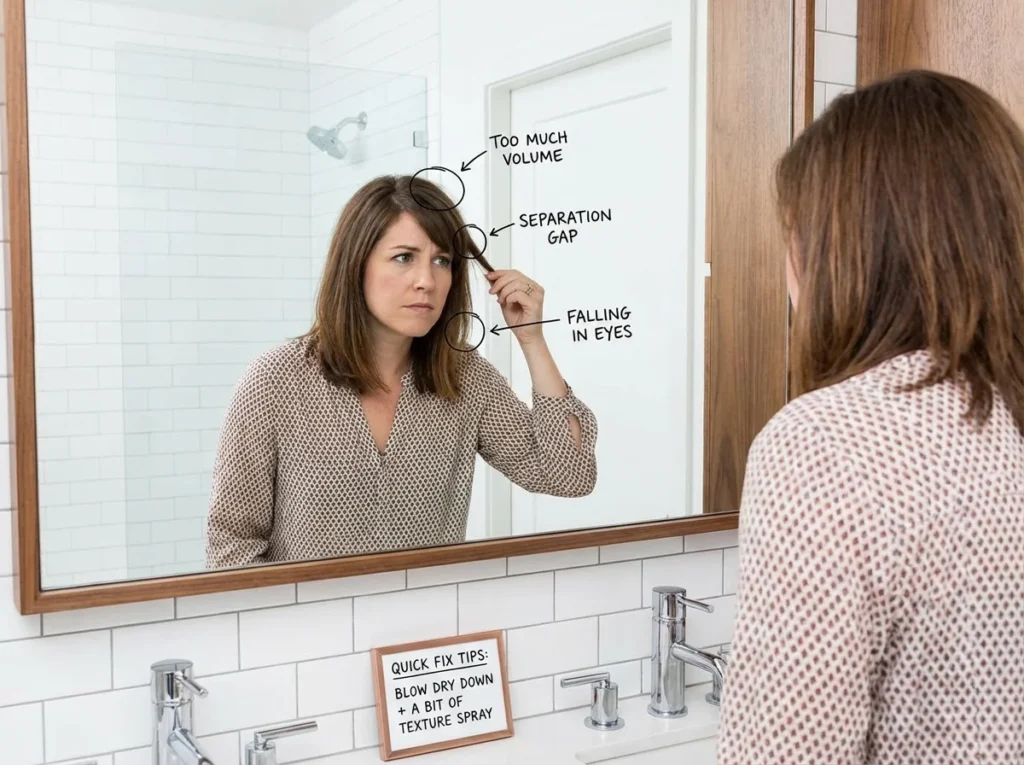
Bangs that constantly separate down the middle indicate either excessive width in your original triangle section or insufficient length. Narrowing the section during your next trim and adding slight length helps bangs stay together as a cohesive unit rather than splitting apart.
Bangs that stick straight out result from cutting too short for your hair texture or ignoring natural growth patterns. While you cannot immediately fix this issue, strategic styling with round brushes and small amounts of pomade can train bangs downward until they grow sufficiently. Prevention involves leaving extra length, especially for those with wavy, curly, or particularly springy hair.
Bangs falling too far forward and obscuring vision signal that they have grown too long. This easy fix requires a simple maintenance trim focusing on the shortest point of your diagonal cut. A quarter inch adjustment typically resolves vision obstruction while maintaining your established side swept angle.
Unintentional cowlick disruption becomes apparent only after cutting, when a previously hidden growth pattern suddenly asserts itself. While you cannot eliminate cowlicks through cutting, you can minimize their impact through strategic blow drying techniques. Dry the problem area forward with high heat, then flip it back to your desired direction using cool air to set the style.
Excessive oiliness concentrating in your bangs indicates they need more frequent washing or you are using too much styling product. Side swept bangs sit close to your forehead where sebaceous glands produce natural oils. Washing just the front sections daily while using minimal, lightweight products resolves this common frustration.
Advanced Styling Variations for Different Occasions
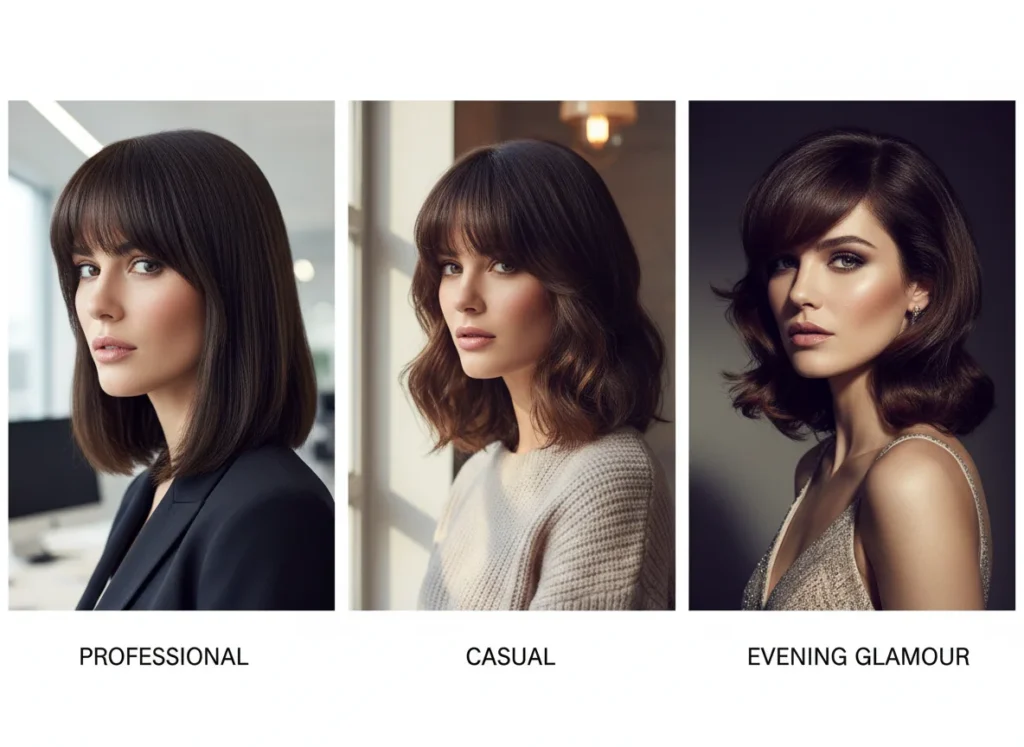
Sleek and polished side bangs suit professional environments and formal occasions. Achieve this sophisticated look through straight styling with flat irons, finishing with lightweight serum for shine. The key involves creating smooth, controlled face framing without frizz or flyaways disrupting the clean lines.
Tousled and textured side bangs work beautifully for casual settings and creative environments. Enhance natural movement through texturizing spray and gentle scrunching with your fingers. This effortless aesthetic suggests you woke up naturally beautiful rather than spending significant time on styling techniques.
Dramatically swept side bangs create glamorous, evening ready looks perfect for special events. Use strong hold styling products and strategic blow drying to create exaggerated sweep across your forehead. Pin the longest section behind your ear for added drama and to showcase statement earrings.
Braided or twisted side bangs offer creative solutions for growing them out or changing up your look temporarily. Incorporate your side swept bangs into small braids or twists that pin back, creating entirely different aesthetics without cutting or permanent changes.
The Pinterest Perfect Side Bangs That Go Viral

Creating shareable side bang content for Pinterest requires understanding visual search optimization. Pins featuring clear before and after comparisons, step by step visual tutorials, and text overlays describing key benefits generate maximum engagement and saves.
High quality images showing your side swept bangs from multiple angles perform better in Pinterest’s algorithm. Natural lighting, clean backgrounds, and close up shots that clearly display the diagonal cut and face framing effect help your content surface in relevant searches.
Keyword rich descriptions incorporating terms like tutorial, DIY haircut, face shape guide, and styling tips improve discoverability both on Pinterest and through Google image search. Strategic hashtag use focusing on beauty trends, hair texture specifics, and seasonal styling keeps your content relevant throughout the year.
Fresh pin designs showcasing the same side bang content with different graphic treatments signal to Pinterest that you are providing ongoing value. The platform rewards consistent pinning of varied designs over repeatedly sharing identical images.
Side swept bangs represent more than a simple hairstyle choice. They embody transformation, confidence, and the empowerment that comes from taking control of your appearance. The techniques outlined in this comprehensive guide provide everything necessary to achieve salon quality side bangs without leaving your home or depleting your budget.
Remember that haircutting skills improve dramatically with practice. Your first attempt might not achieve perfection, but each subsequent trim will feel more natural and produce better results as you become familiar with your unique hair texture, growth patterns, and face shape requirements.
The beauty of side swept bangs lies in their forgiving nature. Unlike dramatic cuts that require professional correction when mistakes occur, minor side bang adjustments blend seamlessly into your overall style as they grow. This low risk, high reward ratio makes them the ideal DIY haircut for beginners building confidence with at home hair maintenance.
Embrace the journey of discovering your perfect side bang style. Experiment with different lengths, angles, and styling techniques until you find the combination that makes you feel most confident and beautiful. The mirror reflection smiling back at you, framed perfectly by your expertly cut side swept bangs, will confirm that you have mastered a valuable skill that saves money while delivering consistent, flattering results for years to come.
Frequently Asked Questions
Should I cut my side bangs when hair is wet or completely dry?
Always cut side bangs when your hair is completely dry or only slightly damp. Wet hair appears longer and straighter than it actually is, causing you to cut too short once it dries and shrinks back to its natural state. Dry cutting shows you exactly how your bangs will fall naturally every day, preventing the common mistake of creating unexpectedly short results. For curly or wavy hair textures, dry cutting becomes even more critical since these hair types can shrink several inches as they dry.
How often do side swept bangs need trimming to maintain their shape?
Most people need to trim their side swept bangs every three to four weeks to maintain the ideal length and diagonal angle. However, individual hair growth rates vary significantly, so some might require more frequent touch ups while others can extend to five or six weeks. Watch for signs that trimming is needed such as bangs obscuring your vision, losing their sweeping shape, or appearing generally unkempt. Home maintenance trimming between professional cuts helps extend salon visit intervals while keeping your look polished.
Can side bangs work well with naturally curly or textured hair?
Absolutely. Side swept bangs can look stunning on curly hair when cut and styled correctly. The key involves cutting when hair is completely dry and in its natural curly state, leaving significantly more length than you think necessary to account for curl spring. Work with individual curl patterns rather than pulling hair straight during cutting. Many people with textured hair find that side bangs add beautiful face framing while requiring less daily maintenance than other bang styles since the curls provide natural movement and dimension.
What face shapes look most flattering with side swept bangs?
Side swept bangs flatter virtually every face shape, making them one of the most universally flattering bang styles. Round faces benefit from the elongating effect of the diagonal cut, square faces enjoy the softening of angular features, heart shaped faces achieve better balance by reducing forehead width, and oval faces can experiment with any variation. Even long faces look great with side bangs that add width and break up vertical lines. The key lies in customizing the length, angle, and thickness to complement your specific facial proportions.
How can I fix side bangs that were accidentally cut too short?
If you cut your side swept bangs too short, focus on styling techniques to help them blend while they grow out. Use a round brush and blow dryer to add curve and volume that creates the illusion of length. Apply lightweight styling products to control flyaways and create a more polished appearance. Consider pinning them back with decorative clips or incorporating them into small braids for special occasions. Bangs typically reach a more manageable length within two to three weeks, and you can help speed the process by maintaining overall hair health through proper nutrition and gentle care.
You may also like this post: 15 Butterfly Haircut Long Hair Ideas That Frame Your Face Perfectly