15+ Best Layered Haircuts For Men: With Thick Or Fine Hair
Layered haircuts have revolutionized modern men’s grooming by offering versatility, movement, and style adaptability that works across different hair types and textures. Whether you’re dealing with thick, unmanageable hair that needs taming or fine strands that require volume and dimension, layered cuts provide solutions that enhance your natural features while keeping maintenance manageable. This comprehensive guide explores the best layered haircut options that cater to various hair densities, face shapes, and lifestyle preferences.
The beauty of layered haircuts lies in their ability to remove bulk where needed while adding texture and visual interest throughout. For men with thick hair, layers prevent the dreaded triangle or mushroom shape that often accompanies dense hair growth. For those with finer hair, strategic layering creates the illusion of fullness and body that might otherwise be lacking. Understanding which layered style complements your specific hair type transforms a simple haircut into a grooming asset that works with you rather than against you.
Understanding Layered Haircuts for Different Hair Types
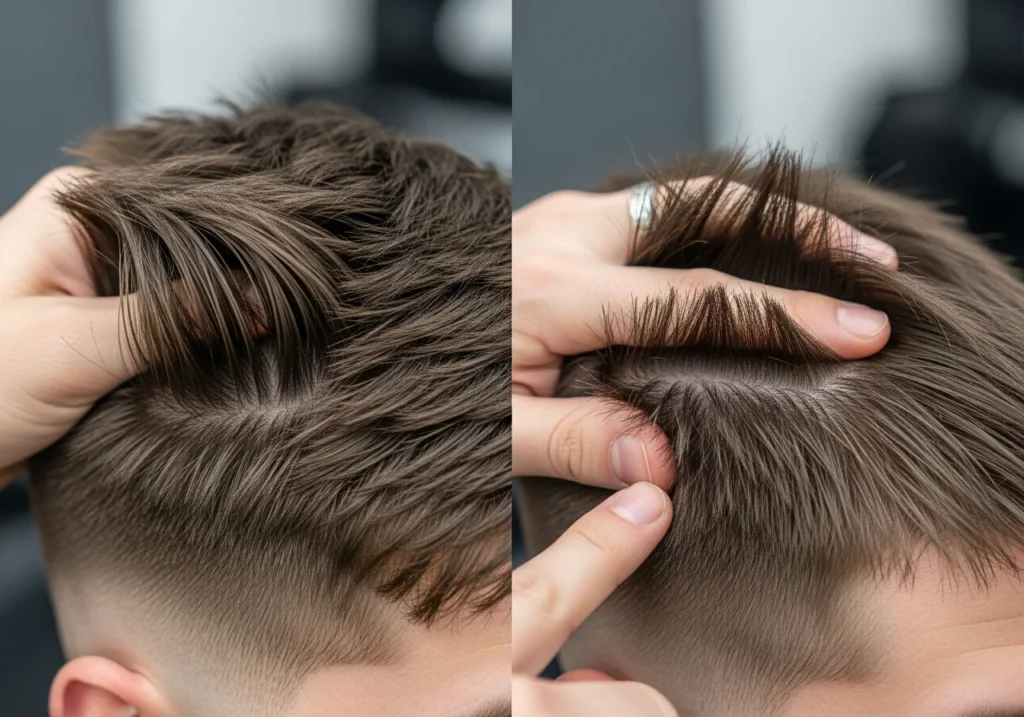
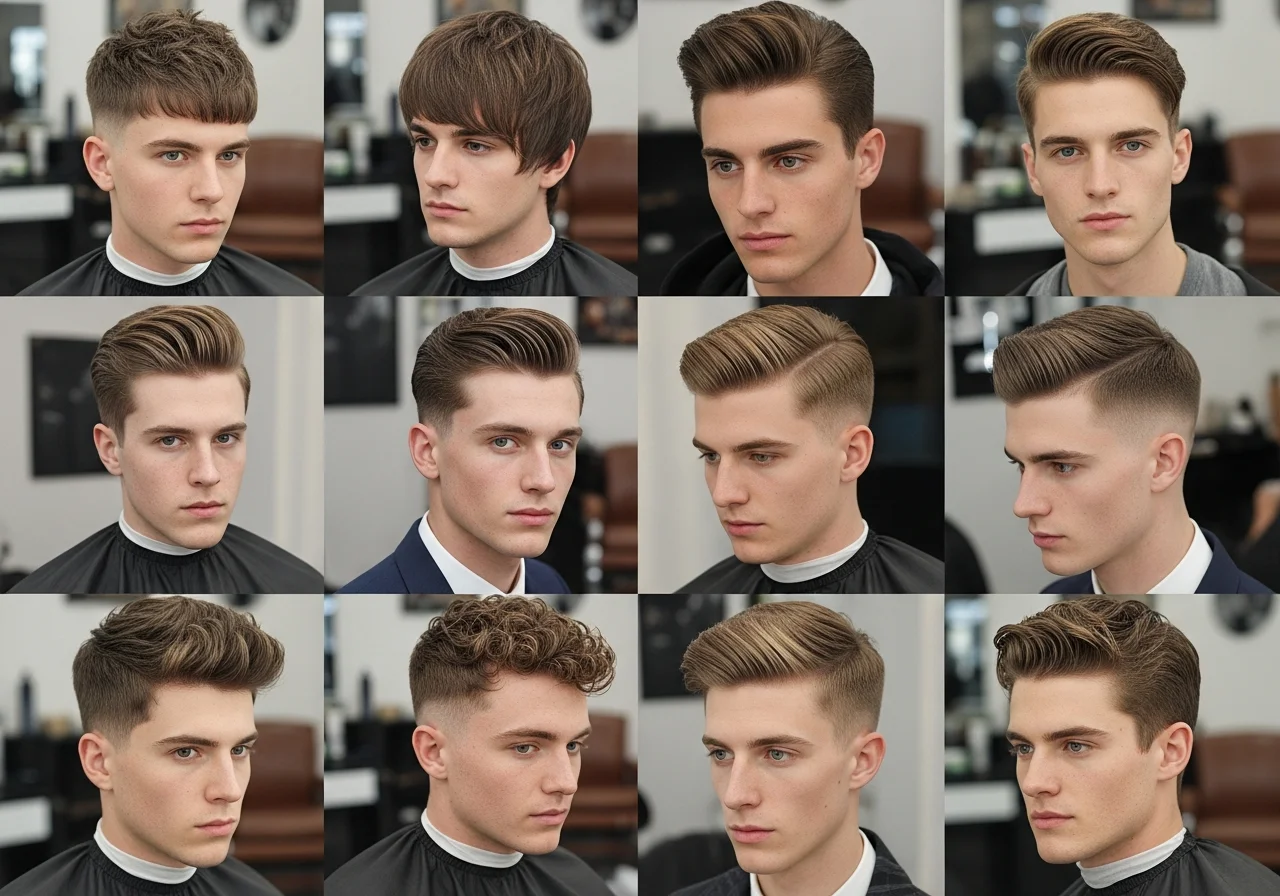
Layered haircuts function by cutting hair at varying lengths throughout the head, creating dimension and movement rather than one uniform length. This technique serves different purposes depending on your hair density. For thick hair, layers reduce weight and bulk, making hair more manageable and preventing it from overwhelming your facial features. The removal of internal weight allows thick hair to lay flatter and move more naturally.
Fine hair benefits from layers through the creation of texture and the illusion of volume. When cut at strategic points, layers in fine hair create separation between sections, making individual strands more visible and giving the appearance of greater density. The key difference lies in the layering technique. Thick hair typically requires deeper, more aggressive layering to remove sufficient weight, while fine hair needs subtle, carefully placed layers that add dimension without sacrificing the appearance of fullness.
The positioning of layers also matters significantly. Top layers can add height and volume, while layers around the sides and back create shape and control. Face-framing layers draw attention to your best features, while internal layers affect how your hair moves and sits. A skilled barber or stylist will assess your hair’s natural growth patterns, density, and texture before determining the optimal layering strategy.
Classic Textured Crop with Layered Fringe
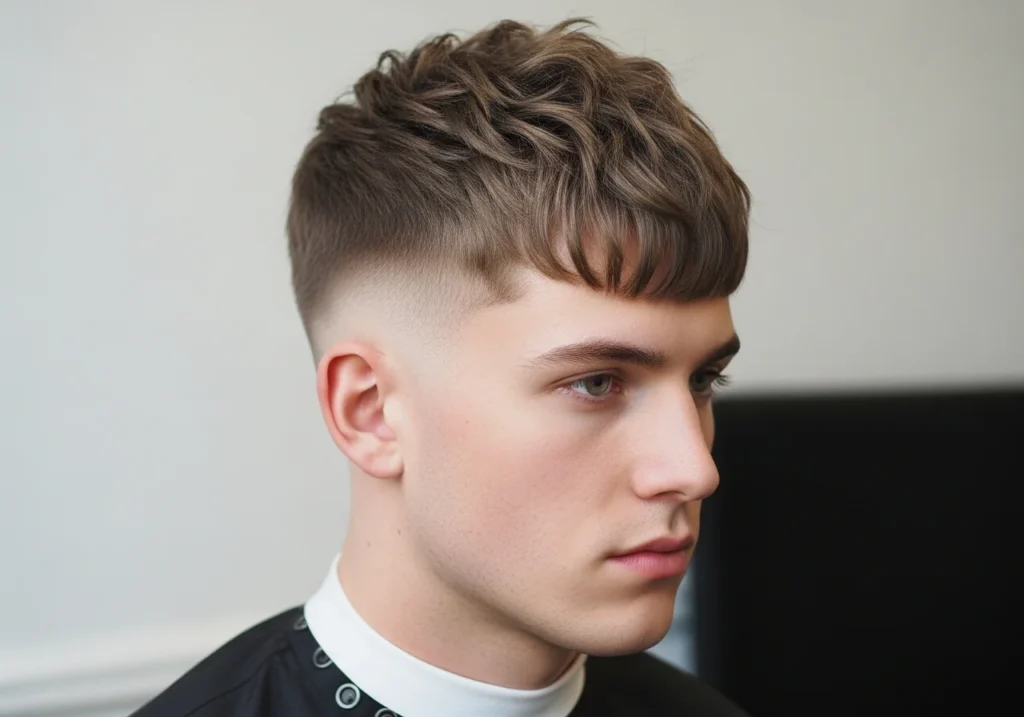
The textured crop stands as one of the most popular contemporary haircuts for men, and layering elevates it from basic to exceptional. This style features short to medium-length hair on top with gradually shorter sides, but the defining characteristic is the heavily textured, layered top section. For men with thick hair, this cut removes substantial weight while maintaining enough length to style forward, to the side, or with a slight lift.
The layered fringe component adds versatility, allowing you to wear it brushed forward for a casual look or swept to the side for something more polished. Point cutting and slide cutting techniques create the choppy, piece-y texture that defines this style. Fine-haired men should request lighter layering concentrated at the ends rather than throughout, preserving density at the roots while adding movement at the tips.
Styling requires minimal effort with the right products. A small amount of matte clay or texturizing paste worked through damp hair and then allowed to air dry creates an effortlessly styled appearance. The layers ensure the hair doesn’t sit flat, and the varying lengths catch light differently, adding visual depth.
Layered Quiff with Tapered Sides
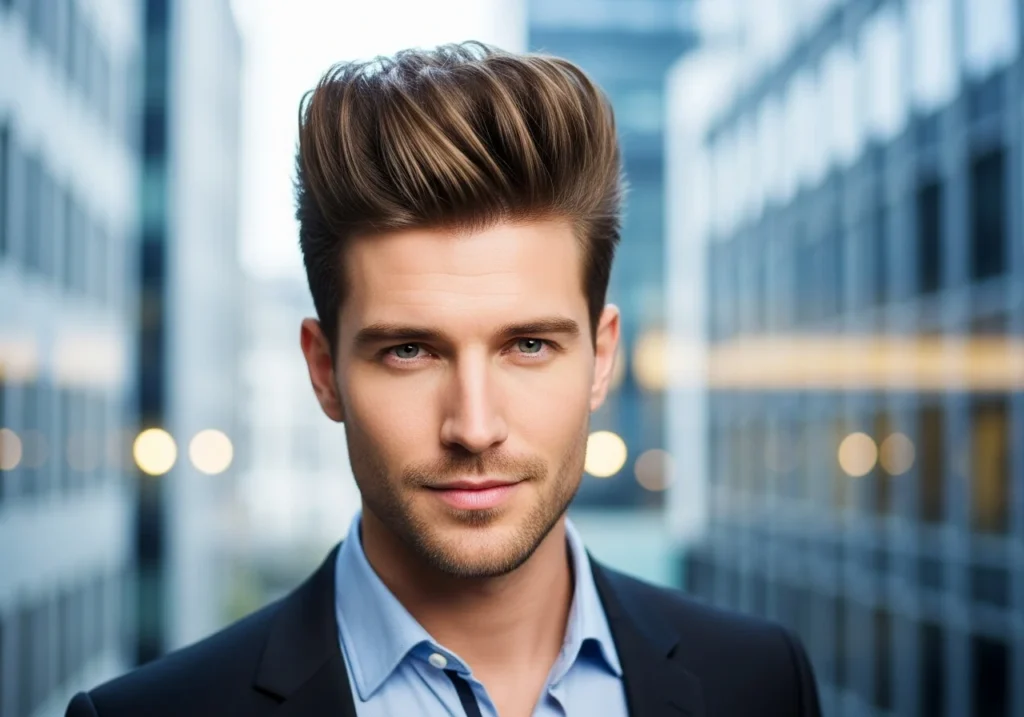
The quiff remains a timeless choice that gains modern edge through strategic layering. This style features substantial volume and height at the front, gradually decreasing toward the crown, with tapered or faded sides. Layers are essential for creating the quiff’s signature lift without making the hair stick straight up unnaturally. The graduated lengths allow hair to sweep back and upward while maintaining a natural flow.
For thick hair, aggressive layering through the top section prevents the quiff from becoming too heavy and falling flat throughout the day. The weight reduction allows styling products to hold the volume more effectively. Fine hair benefits from more conservative layering that focuses on the front sections, creating lift where it’s most visible while keeping enough density throughout to support the style.
The versatility of a layered quiff makes it suitable for both professional environments and casual settings. Blow drying with a round brush while directing hair upward and backward establishes the foundation, while pomade or styling cream provides hold and shine. The layers create natural separation that prevents the monolithic look of an unlayered quiff.
Shaggy Layered Medium Length
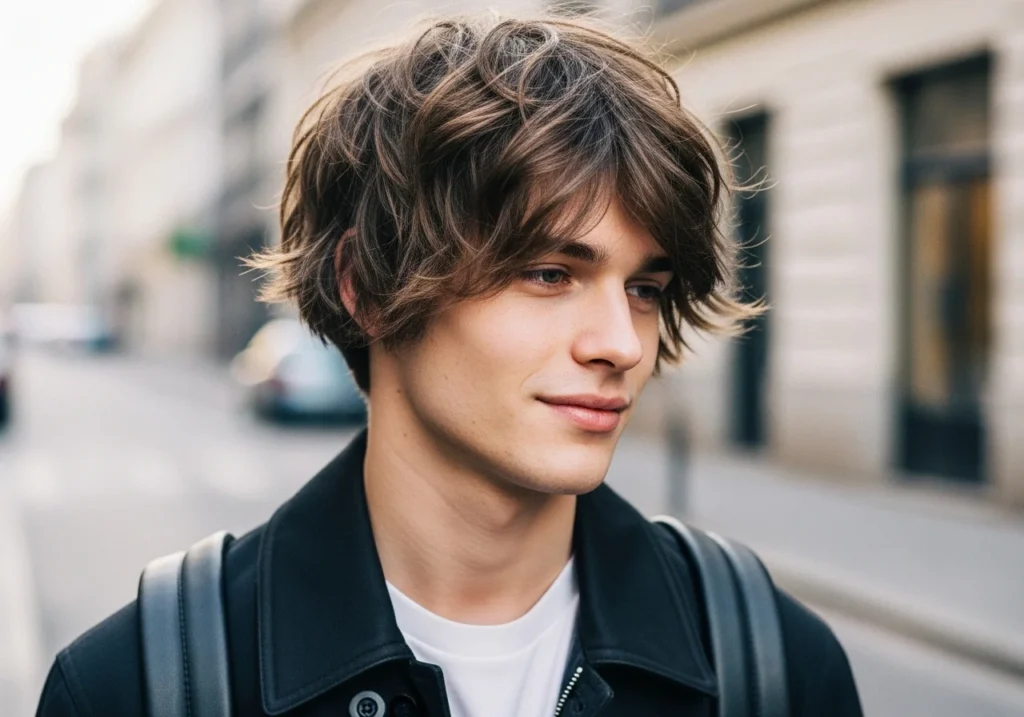
For men willing to embrace slightly longer hair, the shaggy layered cut delivers an effortlessly cool aesthetic. This style typically ranges from three to five inches on top with shorter, textured sides and back. Heavy layering throughout creates that deliberately undone, lived-in appearance that characterizes the shag. The cut works exceptionally well for men with natural wave or curl, as the layers enhance texture and prevent bulk.
Thick, straight hair transforms into a more manageable and stylish option through the substantial weight removal that shaggy layers provide. The varying lengths prevent hair from looking boxy or heavy. Fine hair gains personality and movement, though stylists should avoid over-layering, which can make fine hair look sparse. The key is creating texture through the mid-lengths and ends while maintaining some density at the roots.
This cut requires a commitment to regular trims every four to six weeks to maintain the intentionally messy shape. Styling involves working a small amount of sea salt spray or light pomade through damp hair and either air drying or rough drying with your fingers. The multiple layers ensure natural piece-y separation without requiring precise styling.
Short Layered Crew Cut

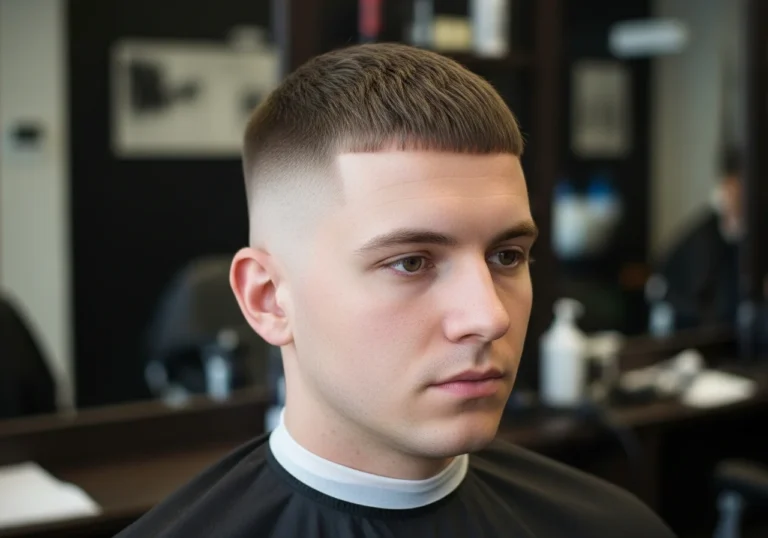
The crew cut receives a contemporary update through subtle layering that adds dimension to this classic military-inspired style. Traditional crew cuts feature uniform length that decreases from front to back, but modern interpretations incorporate light layering that creates texture and visual interest. This approach works particularly well for thick hair, as it prevents the dense, heavy appearance that can occur with a standard crew cut.
The layering remains subtle, focusing on creating slight variation in the top section rather than dramatic choppy pieces. This maintains the clean, professional aesthetic of the crew cut while adding modern appeal. For fine hair, the textured variation makes the hair appear fuller and less flat. The shorter length means the difference between layered and non-layered versions is nuanced but noticeable.
Maintenance is minimal, requiring little more than a quick application of lightweight styling cream or paste to define the texture. The short length and layered structure mean the cut grows out neatly, extending the time between necessary appointments.
Layered Side Part with Volume

The side part represents classic men’s styling, and layering brings this traditional look into contemporary relevance. This cut features a defined part with hair swept to one side, graduated lengths throughout the top, and shorter, blended sides. The layering creates lift and volume on the longer side of the part while preventing the style from appearing too slick or dated.
Men with thick hair benefit from the bulk reduction that allows the side-swept section to hold its position without falling flat or creating excessive volume. The layers also help the hair conform to the head shape more naturally. Fine hair gains the body needed to create a substantial swept section rather than lying limply against the scalp.
This versatile style transitions seamlessly from business meetings to evening events. Blow drying while directing hair to the side establishes the foundation, while pomade or styling cream provides hold and shine. The layered structure ensures the style maintains dimension rather than appearing flat and one-dimensional.
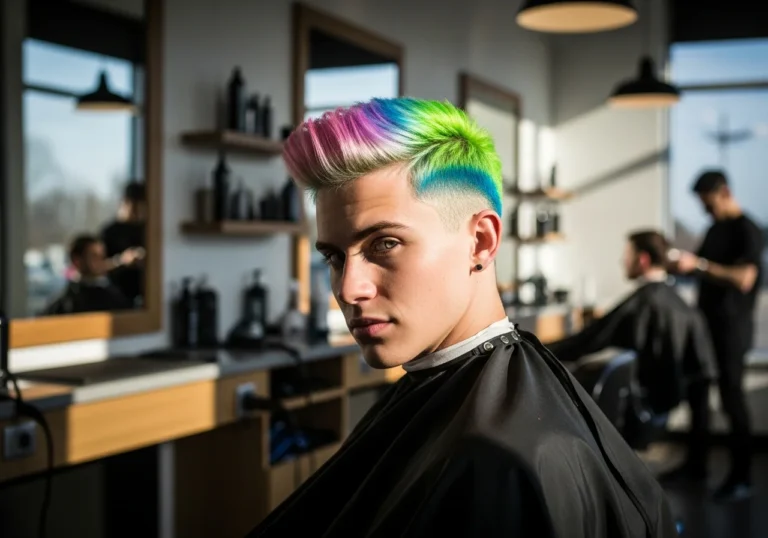
Messy Layered Top with Skin Fade

Combining heavily layered, textured hair on top with a dramatic skin fade creates striking contrast and modern edge. The top section features aggressive layering that creates substantial texture and movement, while the sides transition from longer hair down to bare skin. This high-contrast approach works well for men seeking a bold, fashion-forward look.
Thick hair especially benefits from this combination, as the extensive layering removes weight while the fade prevents side volume from creating an unbalanced appearance. The messy, textured top can be styled in various directions depending on mood and occasion. Fine hair should receive more conservative layering to maintain adequate density, but the contrast with faded sides still creates visual impact.
Styling focuses on enhancing the natural texture created by the layers. Working a small amount of matte paste or clay through the hair and using your fingers to create deliberate separation and height produces the desired messy effect. The layers ensure the hair doesn’t simply lie flat but instead creates interesting shapes and movement.
Layered Pompadour

The pompadour, characterized by volume and height at the front with hair swept upward and backward, achieves its best form through proper layering. Shorter layers at the crown blend into progressively longer pieces toward the front, creating the graduated height that defines this iconic style. The layering prevents the pompadour from appearing too uniform or blocky while making it easier to style and maintain throughout the day.
For thick hair, layers are essential for removing the weight that would otherwise cause the pompadour to collapse. The varying lengths also allow styling products to grip better, maintaining hold throughout the day. Fine hair benefits from strategic layering that creates the illusion of the density needed for a full pompadour without actually removing so much hair that it appears thin.
Achieving the pompadour requires blow drying hair upward and backward with a round brush or paddle brush, then applying pomade or strong-hold styling cream. The layers create natural breaks in the hair that add texture and prevent the overly smooth, dated appearance of traditional pompadours.
Choppy Layered Bowl Cut Modernization
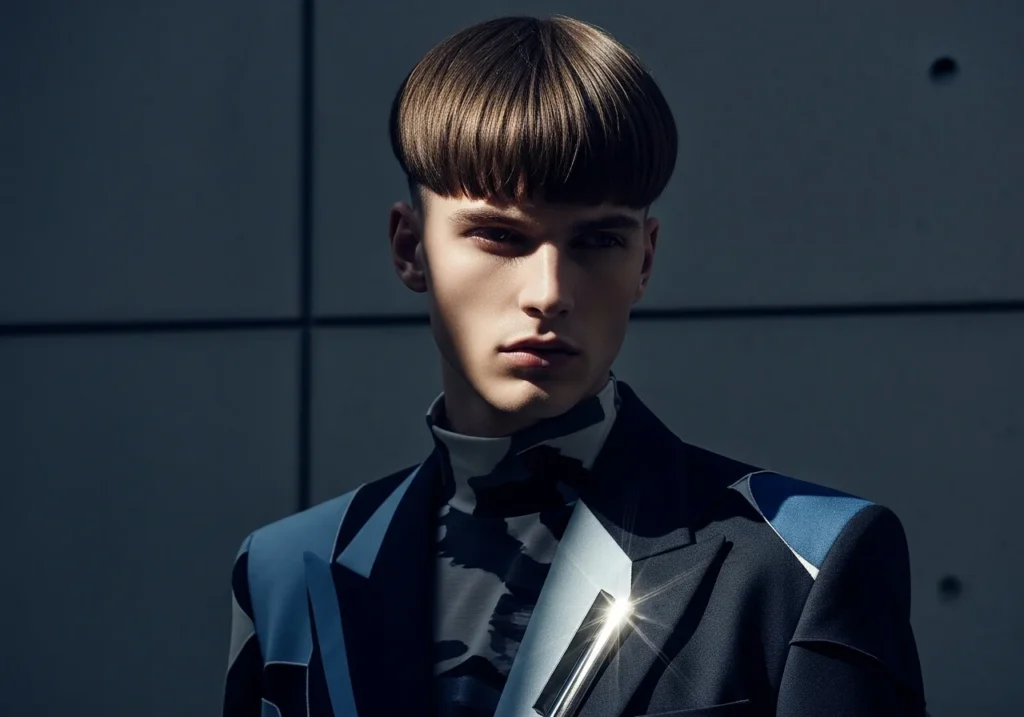
The bowl cut, long relegated to childhood haircut mishaps, has been reimagined through choppy layering that transforms it into an edgy, fashion-forward option. Modern versions feature heavily textured, piece-y layers throughout rather than the blunt, uniform length of traditional bowl cuts. The result is a statement-making style that works for fashion-conscious men willing to embrace bold choices.
Thick hair provides the ideal foundation for this cut, as the density supports the shape while layering prevents it from appearing too heavy. The choppy texture created by point cutting and razor work softens the geometric silhouette. Fine hair can also work with this style, though stylists should focus layering toward the ends to maintain body throughout.
This cut requires confidence and regular maintenance to keep the shape intact. Styling involves enhancing the choppy texture with matte products that provide separation without weighing hair down. The layers ensure movement and dimension that distinguish this from its outdated predecessor.
Layered Slicked Back Style

Slicked-back hair gains sophistication and depth through proper layering that prevents it from appearing flat or greasy. While the style appears smooth on the surface, underlying layers create subtle dimension and ensure the hair flows naturally backward rather than lying plastered against the scalp. Longer layers at the crown transition to shorter pieces at the sides, creating shape and structure.
Men with thick hair find that layering makes slicking hair back significantly easier, as the removed weight allows hair to be directed backward smoothly without creating excessive bulk. Fine hair benefits from the volume that layers create at the roots, making slicked-back styles appear fuller and more substantial.
Application of pomade or gel to damp hair followed by combing straight back creates the foundation, while blow drying locks the style in place. The layers prevent the monolithic appearance of unlayered slicked-back hair, adding subtle texture and movement.
Textured French Crop with Disconnected Layers
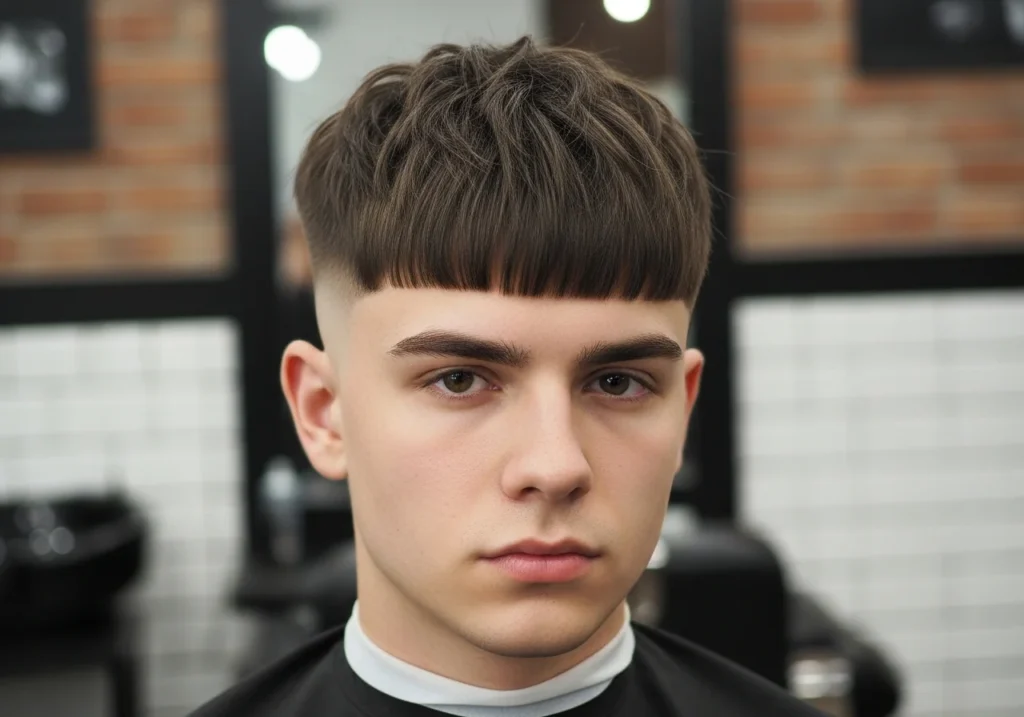
The French crop features a short fringe and cropped sides, but disconnected layering through the top section elevates this style significantly. Rather than blending layers smoothly, the disconnected approach creates deliberate separation between lengths, producing bold texture and modern edge. The blunt fringe contrasts with the choppy, varied lengths on top.
This style works exceptionally well for thick hair, as the aggressive layering removes substantial weight while creating eye-catching texture. The disconnection between the fringe and the layered top section adds visual interest and dimension. Fine hair should receive more conservative treatment, with disconnection created through styling products rather than overly aggressive cutting.
Styling requires working matte paste or clay through the top section to enhance separation while leaving the fringe relatively smooth. The contrasting textures create a dynamic, contemporary appearance that stands out without requiring elaborate styling routines.
Layered Faux Hawk
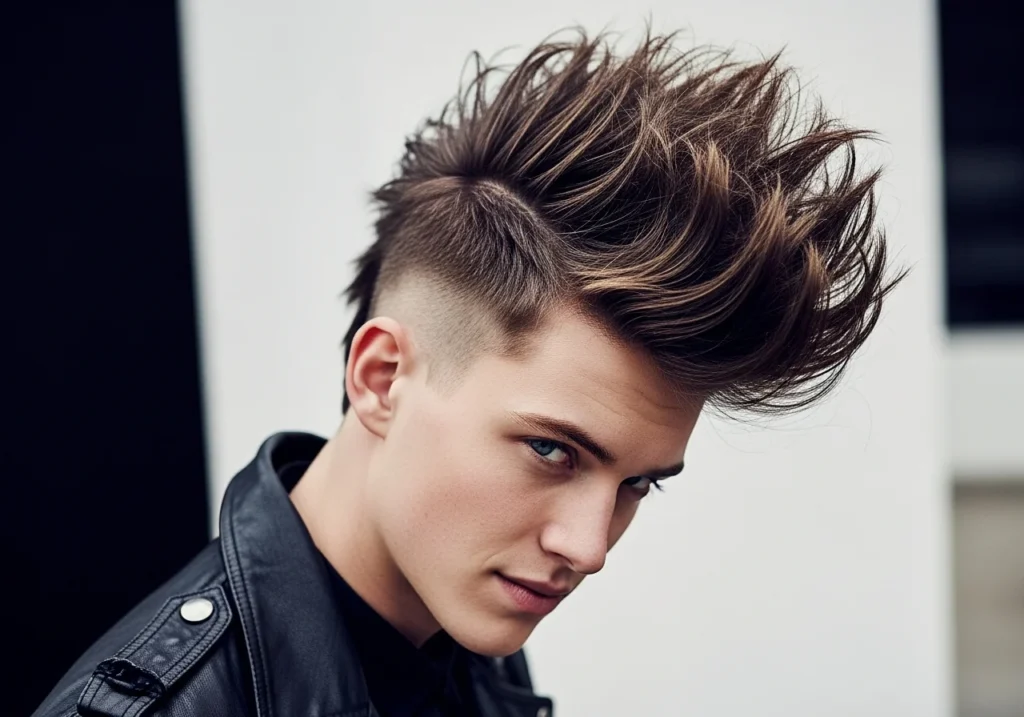
The faux hawk, featuring raised hair down the center of the head with shorter sides, achieves optimal results through strategic layering that creates the height and texture necessary for the style. Layers graduate from shorter at the sides of the raised section to longer at the very center, creating the mohawk-inspired shape without the commitment of actually shaving the sides.
Thick hair benefits tremendously from layering, as unlayered faux hawks can appear too dense and struggle to maintain the desired height. The weight removal allows hair to be styled upward more easily while maintaining hold throughout the day. Fine hair gains the texture and grip needed to create height, though over-layering should be avoided to prevent the style from appearing too thin.
Blow drying hair upward while using a round brush creates the foundation, followed by strong-hold pomade or gel worked through the raised section. The layers ensure natural texture and separation that distinguish quality faux hawks from amateur attempts.
Long Layered Surfer Style
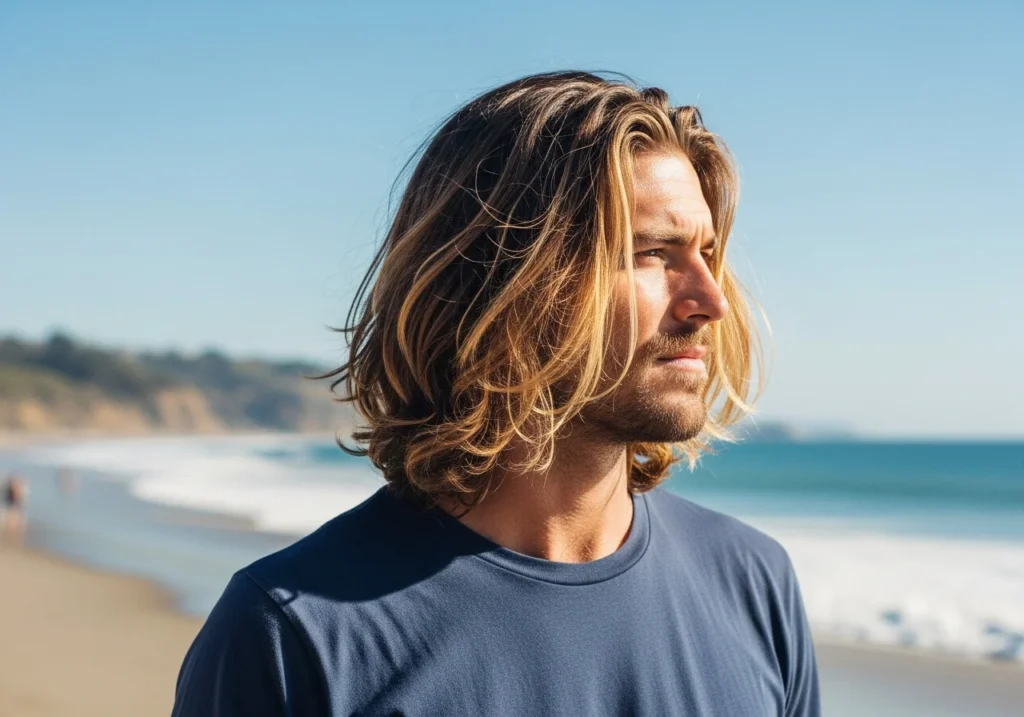
Men embracing longer hair find that layering transforms potentially unruly length into a manageable, stylish option. The surfer-inspired look typically features hair ranging from six to ten inches, with extensive layering throughout that creates movement, reduces bulk, and prevents the hair from appearing too heavy or triangular. Face-framing layers add structure while internal layers create body and flow.
Thick hair especially benefits from this approach, as the substantial length combined with natural density can become overwhelming without proper layering. The varying lengths allow hair to move naturally and catch light, creating dimension. Fine hair gains the appearance of fullness through layers that create separation and prevent hair from clumping together flatly.
This low-maintenance style often looks best with minimal styling, perhaps just a small amount of sea salt spray or light oil to enhance natural texture. The layers ensure the hair dries with natural movement and body rather than lying limply.
Layered Caesar Cut

The Caesar cut, characterized by a short, horizontal fringe and uniform length on top, receives contemporary appeal through subtle layering that adds texture without sacrificing the style’s defining characteristics. Light layering through the top section creates dimension while maintaining the overall structure. The fringe can be blunt or lightly textured depending on preference.
For thick hair, layering prevents the Caesar from appearing too heavy or boxy, creating a more refined silhouette. The texture also makes the style more versatile for different styling approaches. Fine hair benefits from the added dimension and movement, making the cut appear less flat and more dynamic.
Styling is straightforward, requiring just a small amount of light pomade or styling cream worked through the hair and brushed forward. The layers ensure natural texture that elevates this classic cut beyond its simple foundation.
Asymmetrical Layered Cut

For men seeking something truly distinctive, asymmetrical layered cuts offer bold visual appeal through intentionally uneven lengths and dramatic layering on one side. This might feature longer, heavily layered hair swept to one side with a shorter, tapered opposite side, or varying fringe lengths with textured layers throughout. The asymmetry creates visual interest and makes a strong style statement.
Thick hair provides an ideal foundation for dramatic asymmetrical cuts, as the density supports bold shapes while layering prevents excessive weight. The varying lengths and directions create dynamic movement. Fine hair can also work with asymmetrical cuts, though the degree of asymmetry might be more subtle to maintain adequate density throughout.
These cuts require regular maintenance and deliberate styling to maintain their intentional shape. Working styling products through the hair while emphasizing the asymmetrical elements ensures the cut maintains its distinctive appearance.
Layered Brush Up
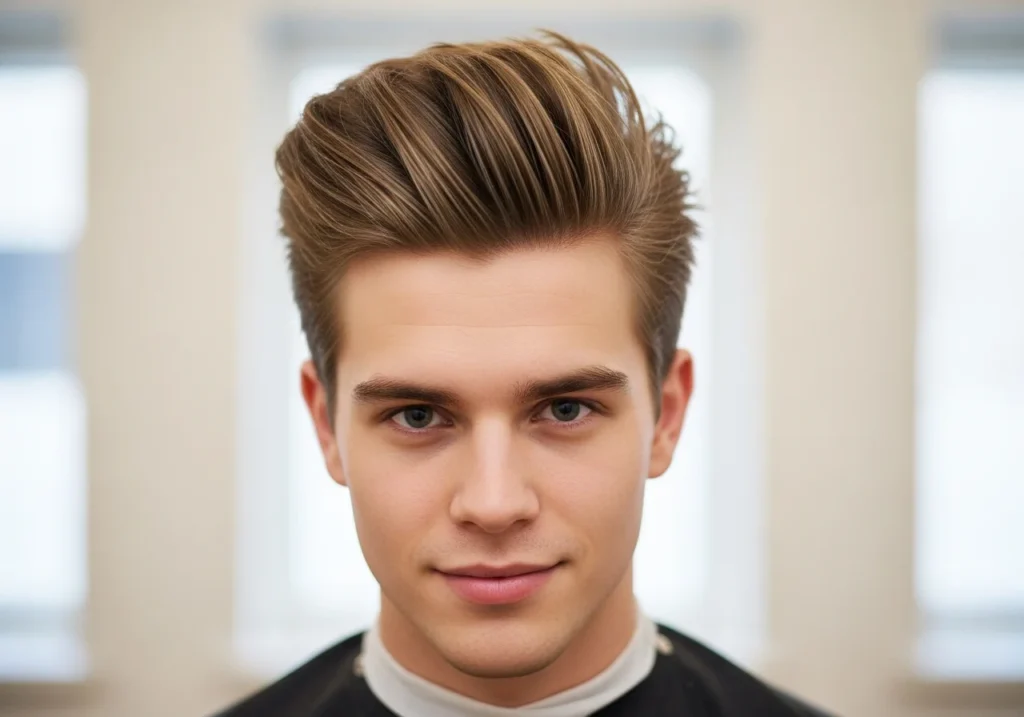
The brush-up style features hair brushed straight up from the forehead with volume and height, then allowed to fall naturally backward or to the side. Layering throughout the top section creates the texture and separation that prevents this style from appearing too stiff or uniform. Shorter layers at the front blend into longer pieces at the crown, creating graduated height.
Men with thick hair benefit from the weight reduction that makes brushing hair upward achievable without requiring excessive product. The layers also create natural texture that adds visual interest. Fine hair gains the grip and separation needed to create volume and maintain the brushed-up position without falling flat.
Styling involves blow drying hair upward while using a brush or your hands to direct it, then applying strong-hold pomade or paste to maintain position. The layers ensure the style has dimension and movement rather than appearing solid and immovable.
Maintaining Your Layered Haircut
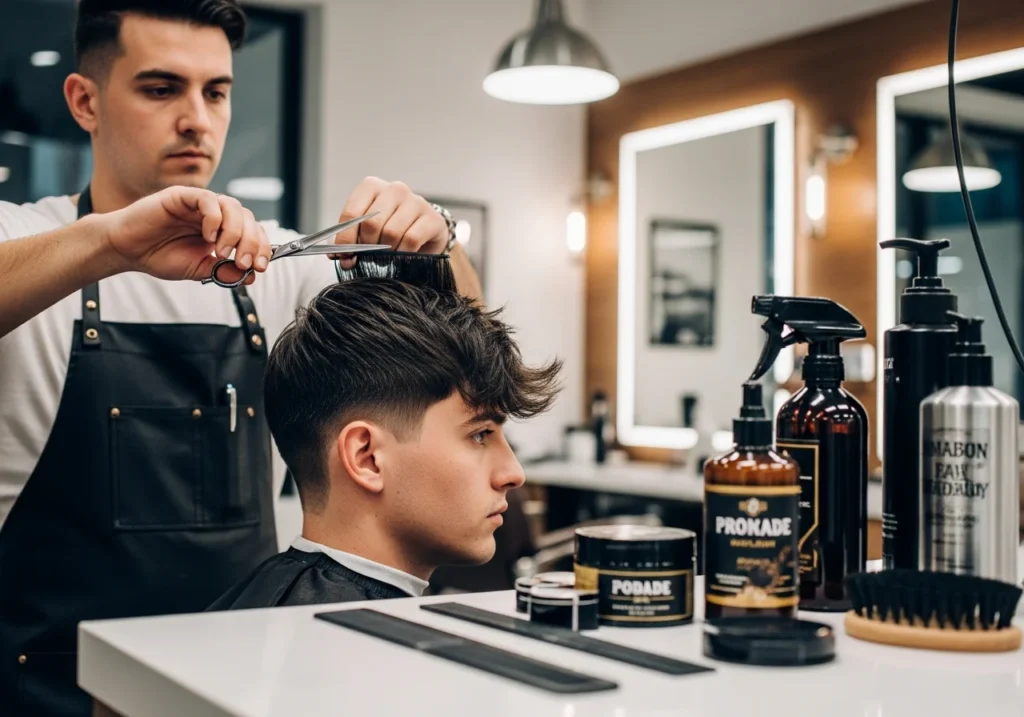
Regardless of which layered style you choose, proper maintenance ensures your cut continues looking fresh and intentional. Layered cuts generally require trims every three to six weeks depending on hair growth rate and style complexity. More dramatic layers with significant texture need more frequent attention to prevent the shape from becoming distorted as hair grows.
Product selection plays a crucial role in enhancing your layered cut. Thick hair typically benefits from lighter products like clays, pastes, or creams that provide hold without adding weight. Fine hair often works best with volumizing mousses, light pomades, or texturizing sprays that add body without making hair appear greasy or flat. Experiment with different products to find what works best for your specific hair type and chosen style.
Regular shampooing and conditioning maintains hair health, but men with layered cuts should avoid heavy conditioners that weigh hair down and diminish the texture that layering creates. Leave-in conditioners or light oils applied to the ends provide moisture without compromising volume and movement.
Conclusion
Layered haircuts offer exceptional versatility for men across all hair types, textures, and style preferences. Whether you’re working with thick hair that requires bulk reduction or fine hair that needs dimension and volume, proper layering techniques create manageable, stylish results that enhance your natural features. The fifteen-plus styles outlined here represent just a fraction of the possibilities that layering creates.
The key to success lies in finding a skilled barber or stylist who understands how to adapt layering techniques to your specific hair characteristics and face shape. Communicate clearly about your styling routine, lifestyle demands, and aesthetic preferences to ensure your cut works with your daily reality rather than against it. With the right layered cut and proper maintenance, your hair becomes an asset that requires minimal effort while delivering maximum impact. The investment in a quality layered haircut pays dividends through easier styling, enhanced appearance, and the confidence that comes from knowing your hair looks its best.
Frequently Asked Questions
How often should I get my layered haircut trimmed?
Most layered haircuts require trimming every four to six weeks to maintain their intended shape and texture. More dramatic styles with heavy layering may need attention every three to four weeks, while conservative layered cuts can sometimes extend to eight weeks between appointments. Your hair growth rate and style complexity determine the optimal schedule.
Can layered haircuts work for men with thinning hair?
Yes, strategic layering can actually help camouflage thinning hair by creating texture and dimension that makes hair appear fuller. The key is avoiding over-layering, which can make sparse areas more obvious. Work with a skilled stylist who can place layers to maximize the appearance of density while maintaining natural movement.
What products work best for styling layered haircuts?
Product selection depends on your hair type and desired finish. Matte clays and pastes work well for textured, natural-looking styles on most hair types. Pomades provide shine and strong hold for slicked styles. Sea salt sprays and texturizing sprays enhance natural texture on wavy or fine hair. Light mousses add volume to fine hair without weighing it down.
Will layers make my thick hair look thinner?
Layers remove internal bulk from thick hair but should not make it appear genuinely thin if executed properly. The goal is reducing weight and creating movement while maintaining adequate density. A skilled barber will remove bulk strategically without over-thinning, ensuring your hair appears manageable rather than sparse.
How do I know which layered style suits my face shape?
Generally, oval faces work well with most layered styles. Round faces benefit from styles with height on top and shorter sides to elongate the face. Square faces pair well with textured, softer styles that reduce angular appearance. Heart-shaped faces look best with styles that add width at the jaw level. Consulting with an experienced stylist provides personalized recommendations based on your specific features.
You may also like this post: How To Style Curly Hair For Men: Complete Guide (2026-27)