15+ Medium Beard Styles That Add Instant Character
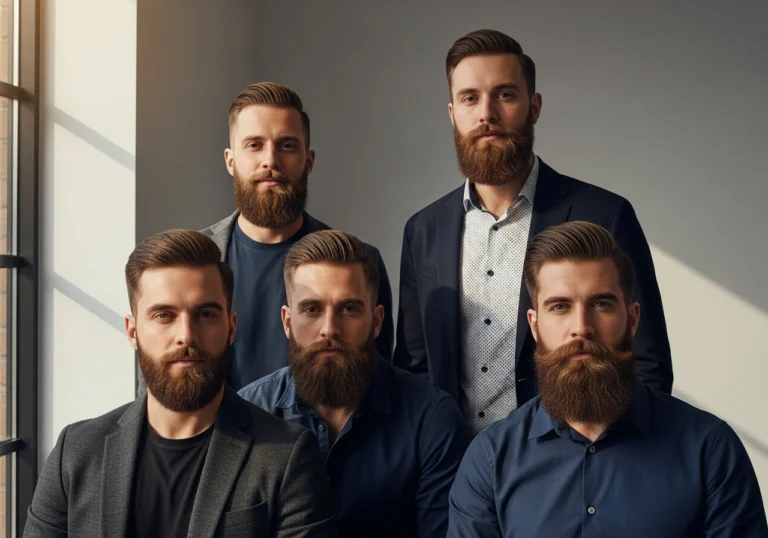
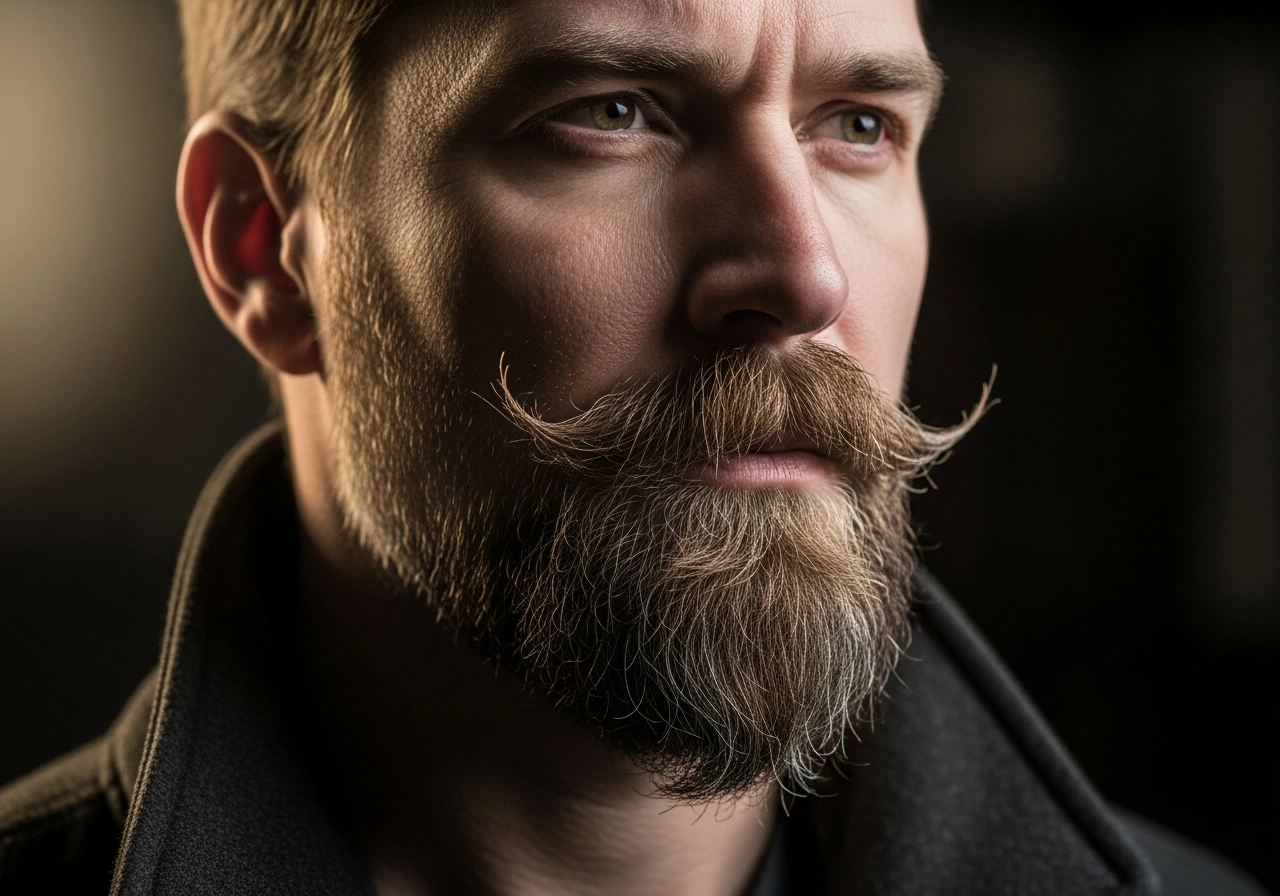
The medium beard occupies a sweet spot in facial hair fashion. Neither too short to lack presence nor too long to appear unkempt, this length strikes the perfect balance between sophistication and ruggedness. For men seeking to enhance their appearance without committing to lengthy maintenance routines, medium beard styles offer unmatched versatility and character.
A medium beard typically ranges from one to three inches in length, providing enough volume to shape and style while remaining manageable for daily grooming. This length allows for definition around the jawline, fullness in the cheeks, and the ability to craft distinct looks that complement various face shapes and personal styles. Whether you work in a corporate environment or creative field, there exists a medium beard style that elevates your appearance while maintaining appropriate professional boundaries.
The appeal of medium beard styles extends beyond aesthetics. These styles communicate maturity, confidence, and attention to personal grooming. They frame the face in flattering ways, can disguise minor imperfections, and add dimension to facial features. The right medium beard style transforms an ordinary look into something memorable, lending instant character that shorter stubble simply cannot achieve.
This comprehensive guide explores over fifteen proven medium beard styles, each with unique characteristics suited to different preferences and facial structures. From classic approaches that have stood the test of time to contemporary interpretations that push creative boundaries, you will discover options that align with your lifestyle and aesthetic goals.
Understanding Medium Beard Length Fundamentals
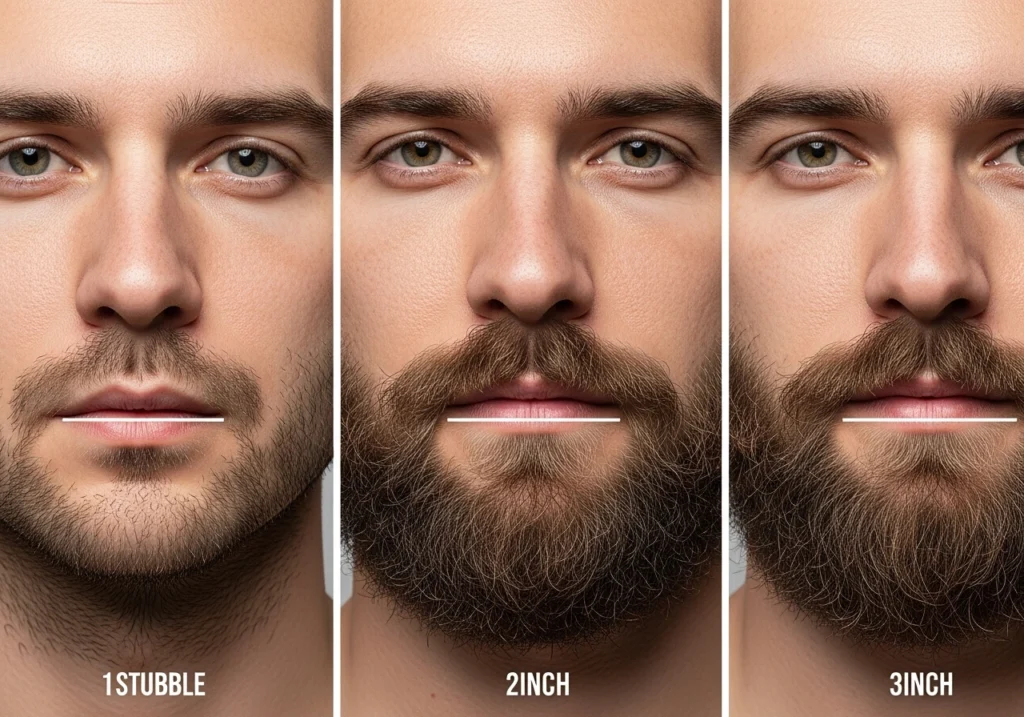
Before diving into specific styles, understanding what defines a medium beard proves essential. This category encompasses facial hair that has grown beyond the stubble and short beard phases but has not yet reached the territory of long, flowing beards. The typical range spans approximately one to three inches from the face, though individual variations occur based on hair texture and density.
Growth time for achieving medium length varies significantly between individuals. Some men reach this stage within six to eight weeks, while others with slower growth patterns may require three to four months. Hair thickness, genetics, and overall health all influence growth rates. Patience during the initial growth phase becomes crucial, as many men abandon their beard journey during the awkward transitional period when hair appears uneven or patchy.
Density and texture play vital roles in how medium beards appear and behave. Coarse hair creates fuller looking beards even with less density, while fine hair may require additional length to achieve similar visual weight. Wave patterns and natural curl also affect the final appearance, with straighter hair appearing longer than curly varieties at the same actual length.
The medium length category offers remarkable versatility in styling options. Unlike short beards that limit shaping possibilities or long beards that demand extensive daily maintenance, medium beards provide the perfect canvas for experimentation. This length allows for defined lines along the cheeks and neck while maintaining enough volume to sculpt into various shapes.
The Classic Full Medium Beard
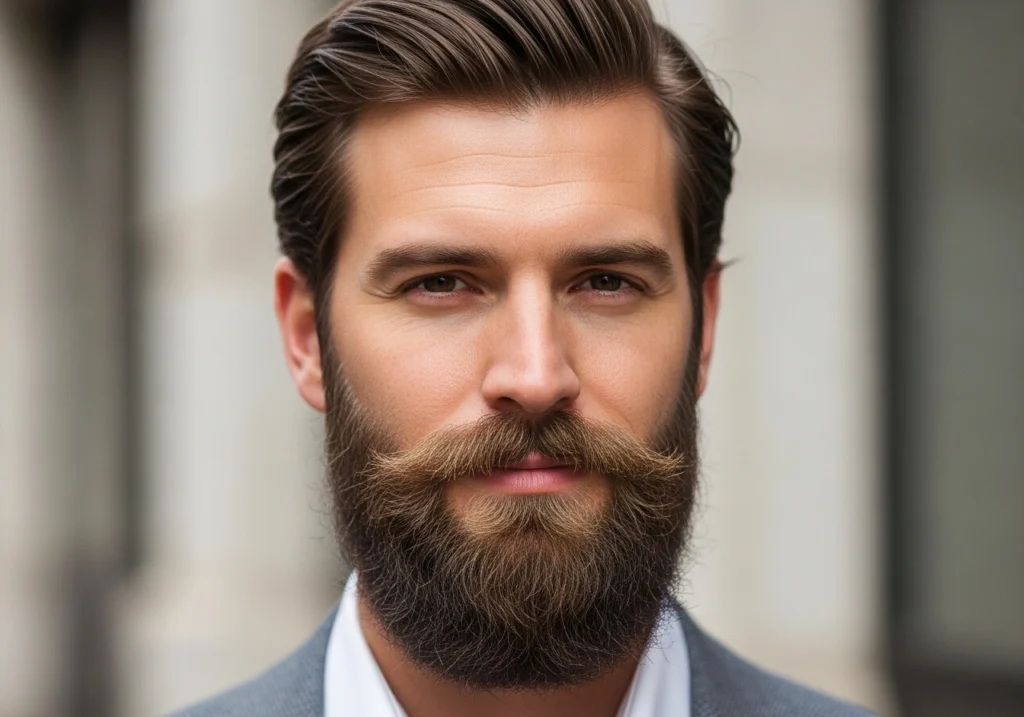
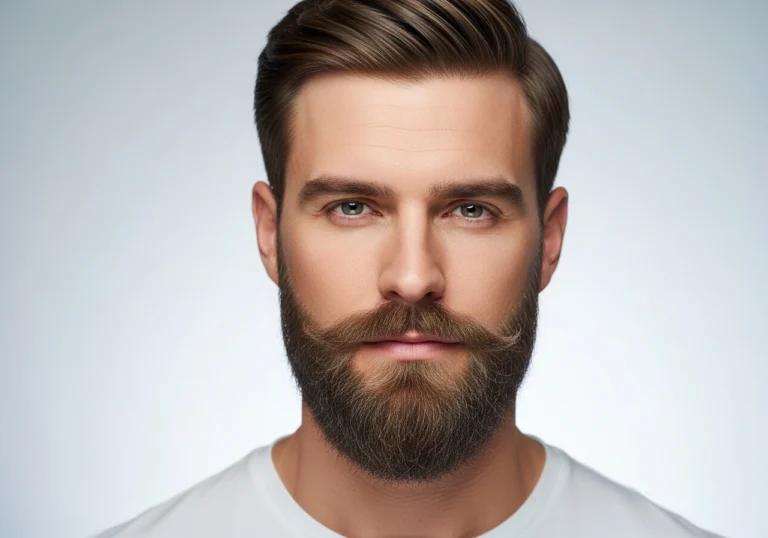
The full medium beard represents the foundation from which many other styles derive. This approach maintains relatively uniform length across the entire beard area, creating a cohesive, masculine appearance. The style covers the cheeks, jawline, chin, and upper lip with consistent density and length.
Achieving a well-executed full medium beard requires attention to perimeter shaping. The cheek line should follow natural growth patterns while maintaining a clean, intentional edge. Most men benefit from shaping the cheek line slightly below where hair naturally grows highest, creating a deliberate rather than haphazard appearance. The neck line demands equal attention, typically defined at or slightly above the point where the neck meets the jawline when viewed from the side.
This style suits virtually all face shapes when properly proportioned. Men with round faces benefit from keeping slightly more length on the chin to create vertical elongation. Those with longer, narrower faces should maintain fuller sides to add width. Square-faced individuals can wear this style with minimal adjustment, as the full coverage complements their natural structure.
Maintenance involves regular trimming to preserve the desired length and shape. Using quality clippers with guard attachments allows for consistent results. Most wearers of this style trim every one to two weeks, depending on growth rate and personal precision preferences. Daily brushing distributes natural oils, prevents tangles, and trains hair to grow in the desired direction.
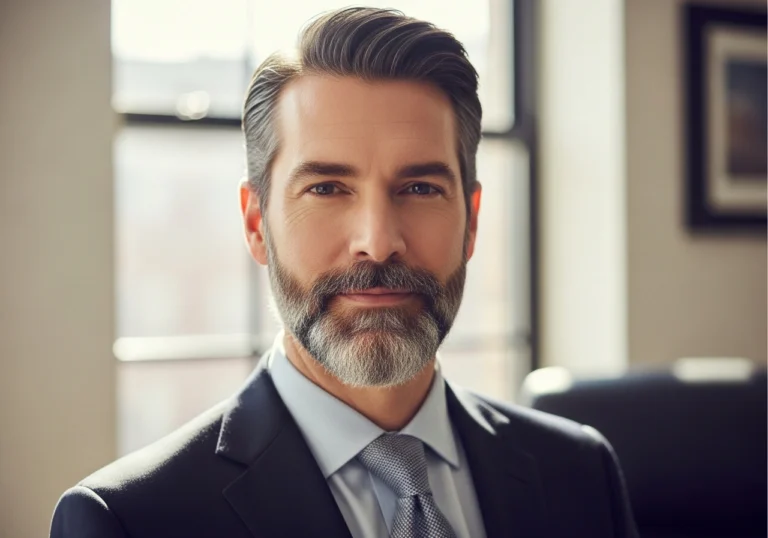
The Corporate Beard for Professional Settings
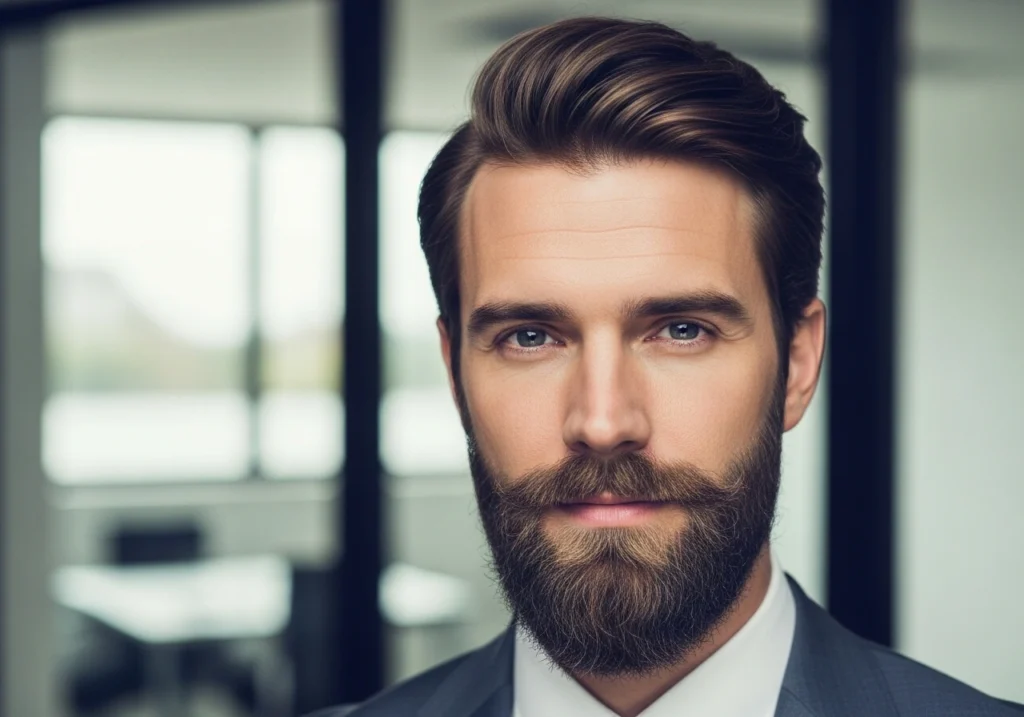
Professional environments once frowned upon facial hair, but evolving workplace cultures now embrace well-groomed beards. The corporate beard style represents a refined approach to medium length facial hair, emphasizing clean lines, careful maintenance, and conservative proportions.
This style typically features shorter length on the cheeks with slightly more fullness through the chin and jawline. The overall effect suggests polish and intentionality rather than casual growth. Sharp, well-defined edges along the cheeks and neck prove essential, as these boundaries communicate attention to grooming standards.
Color consistency matters significantly in corporate settings. Men experiencing gray growth may choose to embrace the distinguished appearance or use subtle coloring products to maintain uniformity. Either approach works provided the execution appears natural and well-maintained.
The corporate beard pairs excellently with business attire and professional hairstyles. When combined with neat haircuts and appropriate clothing, this beard style enhances rather than detracts from professional presentation. Many executives, entrepreneurs, and office professionals adopt this approach successfully.
Maintenance schedules for corporate beards tend toward frequency. Touching up edges every few days maintains the crisp appearance that professional settings demand. Investing in quality grooming tools, including precision trimmers and scissors, enables consistent results. Many men dedicate five to ten minutes daily to beard maintenance, viewing it as essential personal presentation rather than optional effort.
The Van Dyke for Distinctive Style
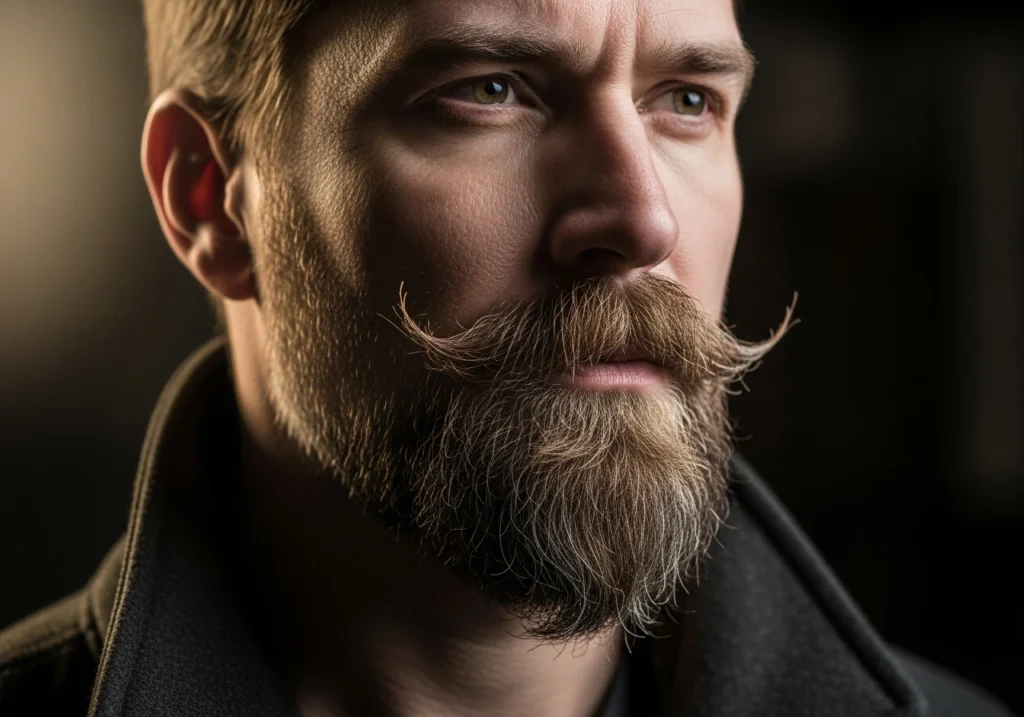
The Van Dyke stands among the most recognizable beard styles, featuring a goatee disconnected from a mustache without connecting sideburns or cheek coverage. This style carries historical associations with artists, intellectuals, and free thinkers, lending wearers an air of creativity and individuality.
Creating a Van Dyke requires more precise shaping than full beards. The goatee portion typically extends from beneath the lower lip down the chin, with width varying based on face shape and personal preference. The mustache remains separate, usually styled with slight upward curves at the ends or worn naturally. The key distinguishing feature involves the clean-shaven cheek areas and the visible gap between mustache and goatee.
Face shape considerations prove particularly important with Van Dykes. This style works exceptionally well for men with round or square faces, as the vertical emphasis of the goatee creates length and definition. Those with already elongated faces should approach this style cautiously, as it may exaggerate facial length.
The Van Dyke demands regular maintenance due to its defined perimeters. Shaving the cheeks and maintaining the separation between facial hair elements requires attention every one to two days. The goatee and mustache themselves need trimming weekly to maintain proportional balance and prevent overgrowth.
This style allows for personality expression through variations. Some men prefer narrow, pointed goatees for dramatic effect, while others choose wider, more substantial chin coverage. Mustache styling offers additional customization, from natural and understated to waxed and theatrical.
The Balbo for Angular Definition
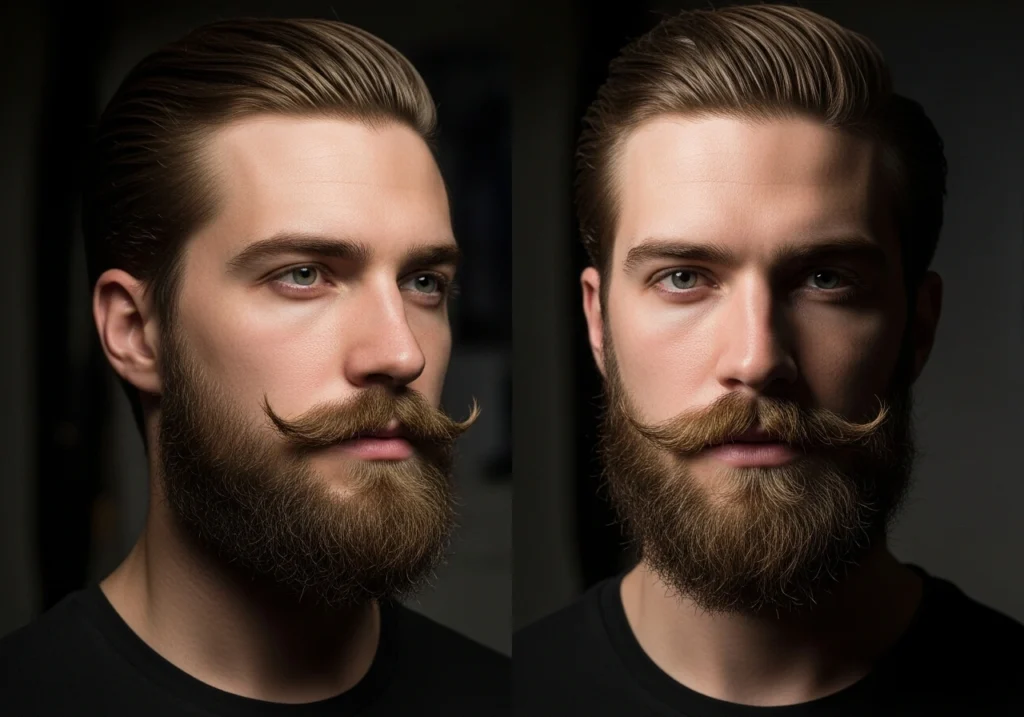
The Balbo style features a beard without sideburns, typically including a disconnected mustache and an inverted T-shape on the chin. This style gained prominence through celebrity adoption and remains popular for its ability to create sharp, masculine angles.
Construction of a proper Balbo involves careful planning. The chin beard extends across the jawline without connecting to the mustache, creating a deliberate gap. Unlike the Van Dyke, the Balbo often includes more coverage along the lower jaw, sometimes extending toward the ears without actually connecting. This creates a floating effect that appears both intentional and striking.
The style excels at adding definition to softer facial features. Men with less pronounced jawlines find that the Balbo creates the illusion of stronger bone structure through strategic hair placement. The bare cheeks focus attention on the eyes and upper face while the beard draws emphasis to the jaw and chin.
Precision becomes paramount when maintaining a Balbo. The distinctive gaps and defined edges require regular attention, typically every two to three days for clean results. Many wearers use templates or stencils initially to establish the correct shape before maintaining it freehand. Practice improves accuracy, but this style always demands more effort than simpler approaches.
Variations of the Balbo accommodate personal preferences. Some men prefer a soul patch beneath the lower lip as part of the design, while others omit this element. Mustache width and chin beard coverage also allow for individual interpretation within the overall framework.
The Extended Goatee
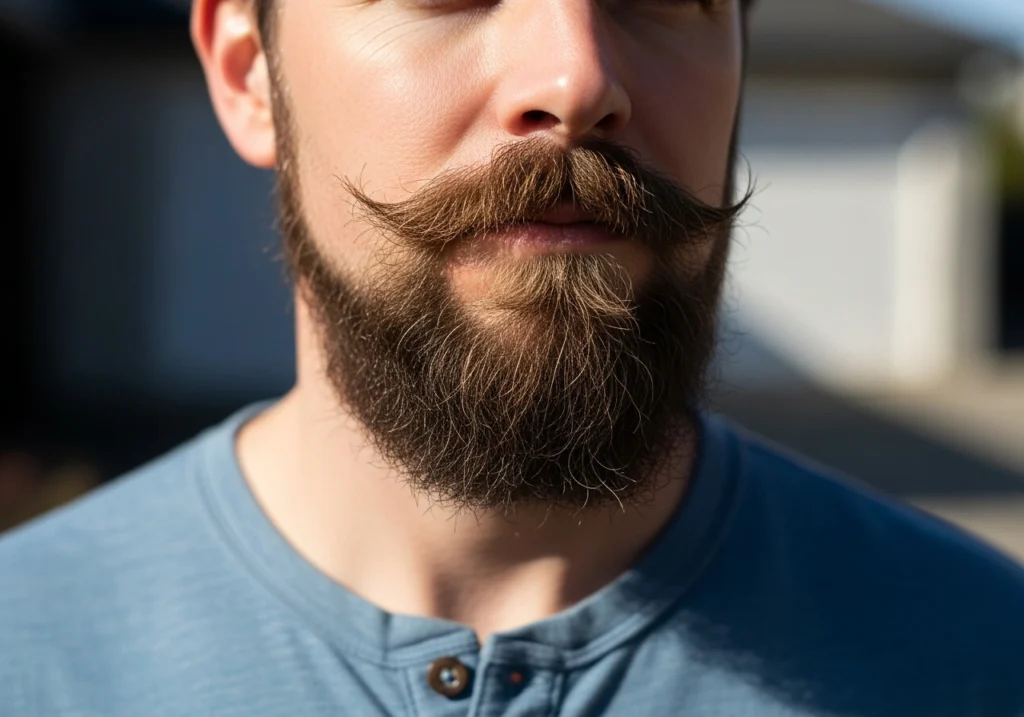
The extended goatee combines mustache and chin beard elements while including coverage along the jawline, creating a connected facial hair frame without full cheek coverage. This style bridges the gap between traditional goatees and full beards, offering substance without complete coverage.
Shaping an extended goatee involves defining where the jaw coverage terminates. Some variations extend nearly to the ears, while others stop midway along the jaw. The transition from chin to jaw should appear gradual and natural rather than abrupt. Maintaining consistent length throughout the bearded area creates cohesion.
This style flatters most face shapes through its adaptable nature. Adjusting the width of the mustache and chin portions along with the extent of jaw coverage allows for customization that complements individual features. Men with round faces benefit from narrower widths that emphasize vertical lines, while those with angular features can wear wider variations comfortably.
The extended goatee provides an excellent compromise for men uncertain about committing to full beards. The style offers substantial facial hair presence while remaining less demanding than complete coverage. Maintenance requirements fall between simple goatees and full beards, with attention needed primarily along the defined edges.
Styling products enhance the appearance of extended goatees significantly. Beard oil maintains softness and sheen while preventing the dry, brittle texture that diminishes appeal. Light balms provide hold for shaping without creating stiffness, allowing the beard to move naturally while maintaining its intended form.
The Friendly Mutton Chops
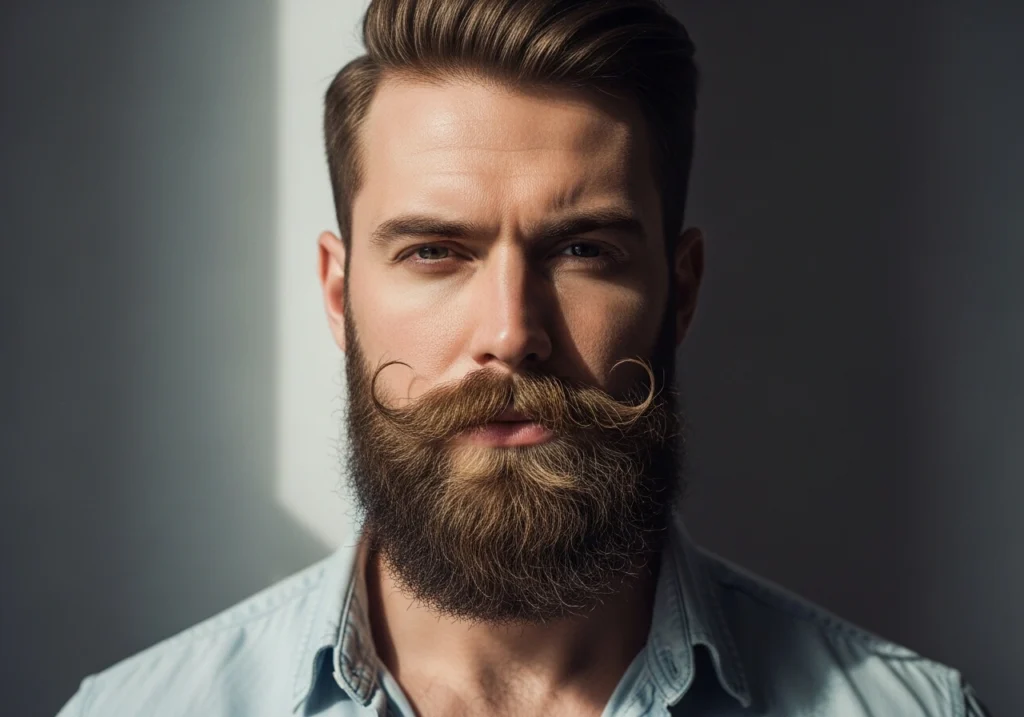
Mutton chops represent a bold styling choice that has experienced periodic resurgences in popularity. This approach features substantial sideburn growth that extends down to connect with a mustache while leaving the chin clean-shaven. The result creates a distinctive frame around the face that makes strong visual statements.
Modern interpretations of mutton chops tend toward moderation compared to historical extremes. Contemporary versions maintain substantial volume but avoid the exaggerated proportions of Victorian-era styles. The width typically ranges from one to two inches, creating presence without appearing costume-like.
Face shape compatibility becomes crucial with this dramatic style. Men with longer, narrower faces wear mutton chops most successfully, as the horizontal emphasis adds width and balance. Those with rounder or wider faces should approach this style cautiously, as it may create unflattering proportions.
Maintenance involves regular trimming to preserve the defined upper and lower boundaries. The mustache connection requires attention to ensure smooth integration with the sideburn portions. The clean-shaven chin area demands daily or every-other-day shaving to maintain the crisp contrast that makes this style work.
Mutton chops pair best with confident personal style and appropriate contexts. This look makes statements that suit creative professions, casual environments, and individuals comfortable with attention. Professional corporate settings rarely accommodate this distinctive approach, making it better suited to more relaxed circumstances.
The Hollywoodian for Refined Masculinity
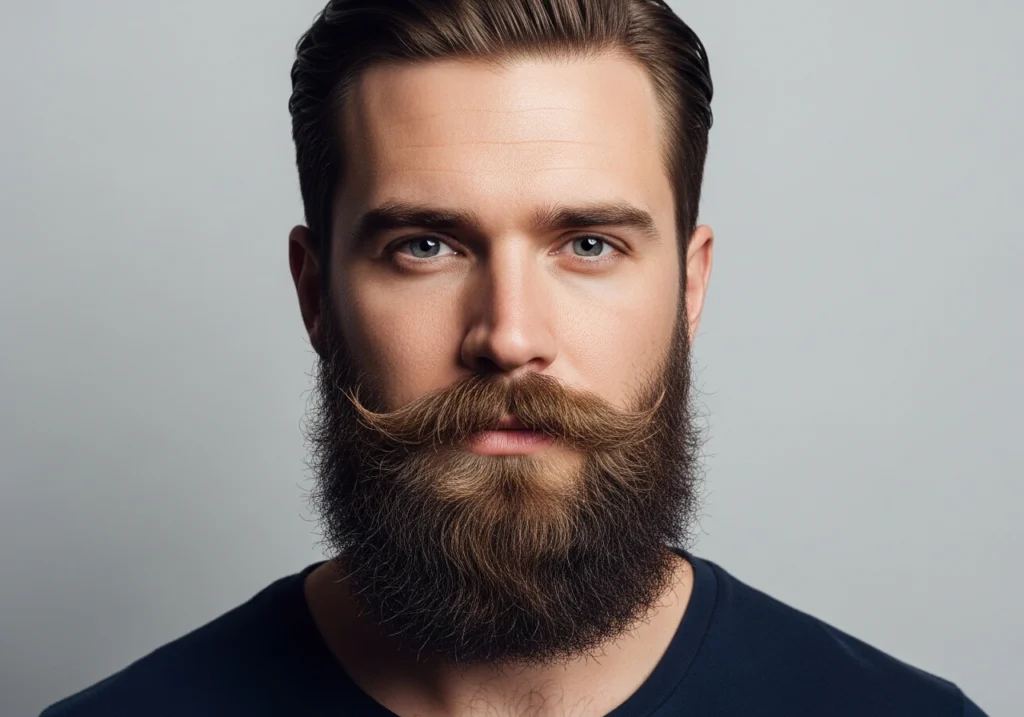
The Hollywoodian style closely resembles a full beard but omits sideburn connections, creating a floating effect similar to the Balbo but with more extensive coverage. This style combines the presence of a full beard with the definition of disconnected styles.
Creating a Hollywoodian requires allowing full growth across the mustache, chin, and lower jaw before carefully removing the sideburn connections. The trimmed areas should extend from the corners of the mouth upward toward the ears, creating clean lines that emphasize the deliberate nature of the style.
This approach works particularly well for men who grow patchy sideburns or prefer emphasizing their lower facial features. By eliminating potentially sparse upper cheek coverage, the Hollywoodian focuses attention on areas where growth typically appears fullest and most impressive.
The style demands regular edge maintenance to preserve its distinctive appearance. Allowing the sideburn areas to grow even briefly compromises the intentional, groomed look that defines the style. Most wearers address these areas every two to three days, with full beard trimming occurring weekly.
Product selection for Hollywoodian beards mirrors that of full beard care. Quality oils maintain softness and prevent irritation in longer hair. Balms provide light hold and shaping ability while conditioners keep the beard healthy and manageable. Brushes and combs distribute products evenly and train growth patterns.
The Anchor Beard for Nautical Appeal
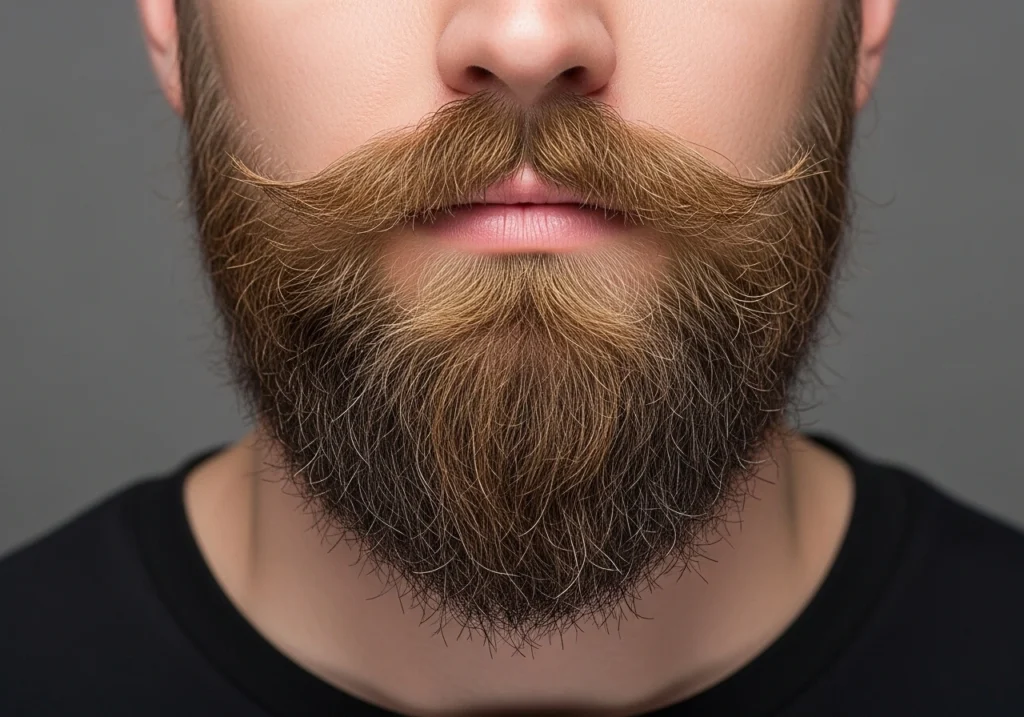
The anchor beard earned its name from the distinctive shape that resembles a ship’s anchor when viewed from the front. This style features a pointed chin beard extending downward with a mustache and often includes a soul patch, while the cheeks remain clean-shaven.
Constructing an anchor requires precision in establishing the pointed chin element. The sides of the chin beard angle inward as they descend, creating a triangular point that distinguishes this style from wider goatees. The mustache typically remains relatively narrow, proportional to the pointed chin beard.
This style excels at creating the illusion of a more pointed, defined chin. Men with rounder chin shapes find that the anchor adds angularity and definition that their natural features lack. The vertical emphasis also benefits those seeking to elongate shorter face shapes.
Maintenance of anchor beards involves regular trimming to preserve the pointed shape and prevent the style from broadening into a standard goatee. The angled sides require attention every few days, while the point itself needs careful shaping to maintain symmetry and sharpness.
The anchor works well in various professional and casual contexts. Its defined, intentional appearance reads as groomed rather than haphazard, making it acceptable in many workplace environments. The distinctive shape adds character without appearing overly dramatic or attention-seeking.
The Ducktail for Distinguished Presence
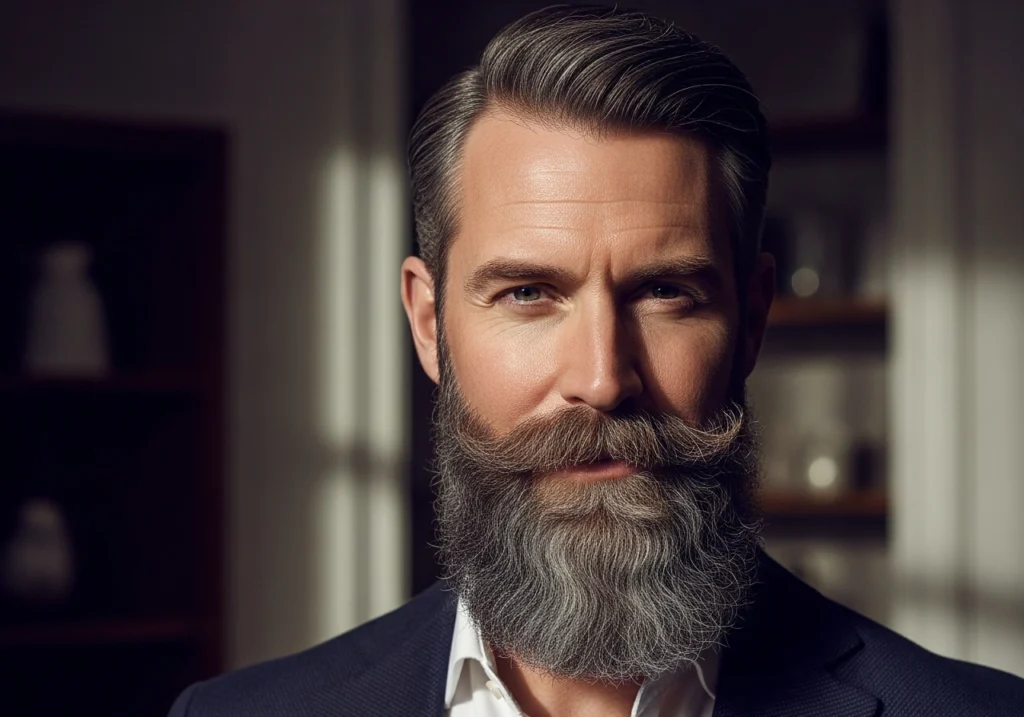
The ducktail beard features a rounded, pointed chin section that extends slightly beyond the natural chin line, creating a subtle tail-like projection. This style combines the coverage of a full beard with the distinctive shaping that adds character and sophistication.
Creating a ducktail involves allowing full beard growth before carefully shaping the chin area into the characteristic point. Unlike sharp, triangular points, the ducktail maintains a softer, more rounded appearance that appears distinguished rather than aggressive. The sides of the beard typically maintain fuller coverage that gradually tapers toward the central point.
This style particularly flatters men with shorter faces or weaker chin profiles. The extended point creates length and definition while the fuller sides add masculine substance. The effect enhances natural features rather than drastically altering appearance.
Maintenance requirements for ducktails prove moderate compared to more elaborate styles. The distinctive point requires attention during trimming sessions, but the fuller sides demand less precision. Most wearers trim every one to two weeks, with daily brushing and conditioning maintaining the health and appearance between sessions.
The ducktail communicates maturity and refinement. This style suits professional environments, formal occasions, and men seeking distinguished rather than trendy appearances. The classic, timeless nature of the ducktail ensures it remains appropriate across decades and style movements.
The Garibaldi for Robust Character
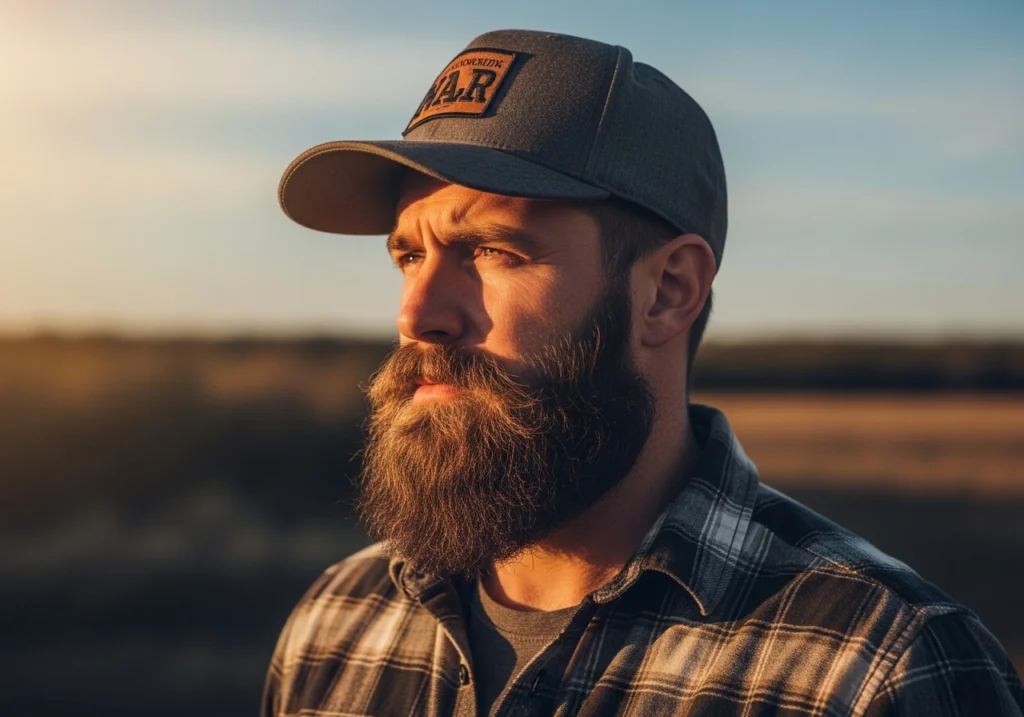
The Garibaldi represents one of the fullest medium beard styles, featuring substantial volume and a rounded bottom that creates impressive presence. Named after Italian general Giuseppe Garibaldi, this style communicates robust masculinity and confidence.
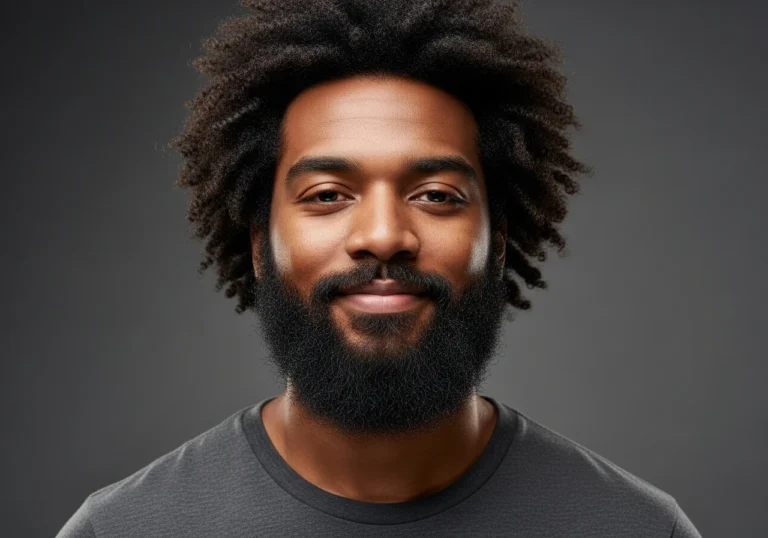
Growing a Garibaldi requires patience through the initial months as length accumulates. The style maintains full coverage across all beard areas with the defining characteristic being the rounded, full bottom rather than a pointed or sculpted chin. The overall impression suggests natural growth refined through maintenance rather than extensively manipulated styling.
This approach suits men comfortable with substantial facial hair who prefer low-maintenance styling. The natural, slightly wild appearance of the Garibaldi requires less precise trimming than sharply defined styles. However, maintaining the rounded bottom and preventing excessive length does require regular attention.
Face shape considerations prove important with this voluminous style. Men with longer, narrower faces wear Garibaldis most successfully, as the substantial coverage adds width and balance. Those with rounder faces should approach cautiously, as adding volume may create unflattering proportions.
Product use becomes particularly important for Garibaldi beards due to their substantial length and volume. Quality oils prevent dryness and brittleness while balms provide light control without sacrificing the natural appearance that defines the style. Regular washing and conditioning prevent the unkempt look that crosses from distinguished to disheveled.
The Chin Strap for Defined Contours
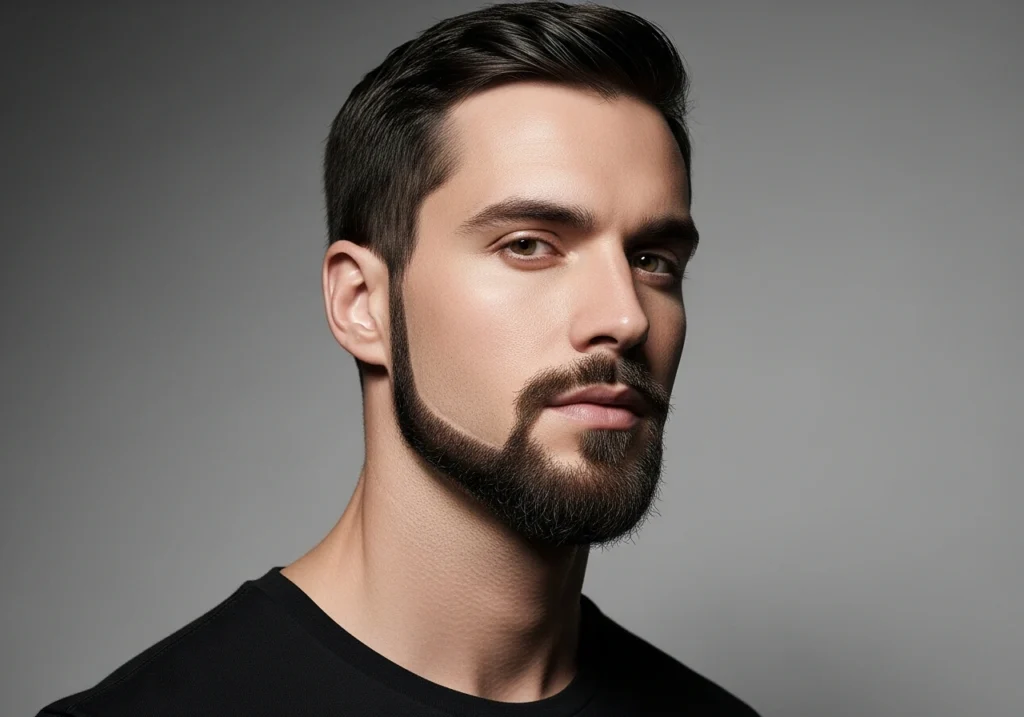
The chin strap creates a thin line of facial hair that traces the jawline from ear to ear, often connecting to a small goatee or soul patch. This minimalist approach emphasizes bone structure and facial contours through strategic hair placement.
Creating an effective chin strap demands precision and steady hands. The line should follow the natural jawbone, maintaining consistent width throughout its path. Most successful chin straps measure between one-quarter and one-half inch in width, substantial enough to create definition without appearing overgrown.
This style works exceptionally well for men with strong, well-defined jaw structures that deserve emphasis. Those with softer jawlines may find that chin straps highlight rather than improve their features. The style also suits individuals who prefer minimal facial hair without complete clean-shaving.
Maintenance proves crucial for chin strap success. The narrow line requires frequent attention to prevent widening beyond its intended dimensions. Most wearers address edge trimming every one to two days, while the length of the strap itself needs trimming weekly to maintain appropriate proportions.
The chin strap offers excellent versatility across professional and casual environments. Its minimal nature appears groomed and intentional without making bold statements that might prove inappropriate in conservative settings. Athletes particularly favor this style for its clean appearance combined with masculine edge.
The Short Boxed Beard for Clean Lines
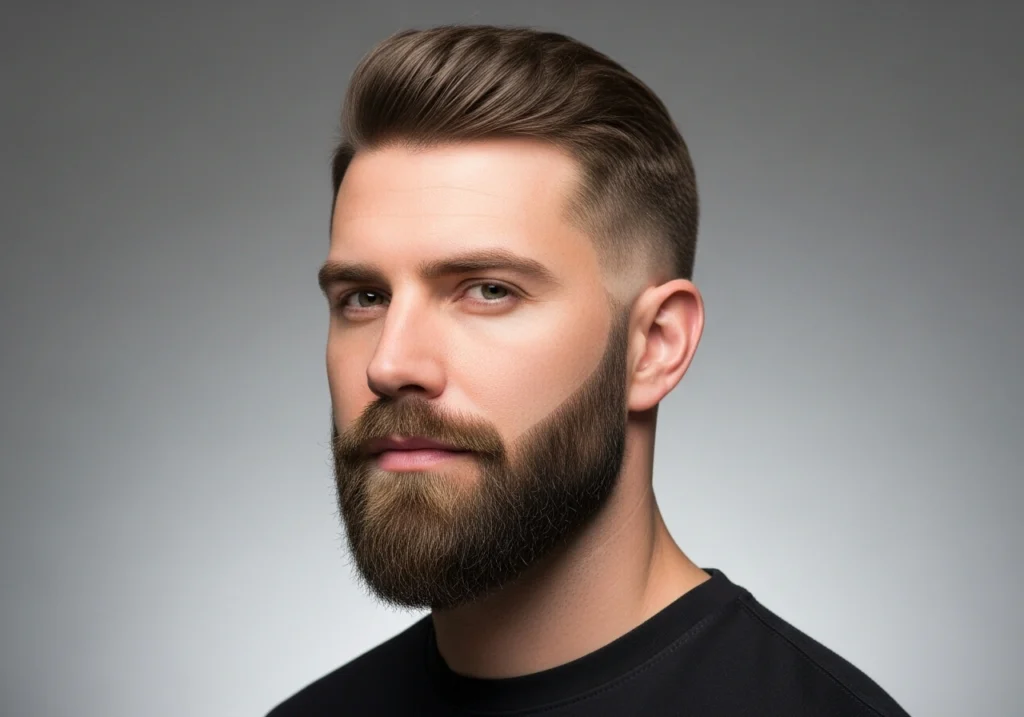
The short boxed beard features a full beard with sharply defined edges and uniform length, creating a contained, geometric appearance. This style emphasizes precision and intentional grooming through its clean lines and deliberate boundaries.
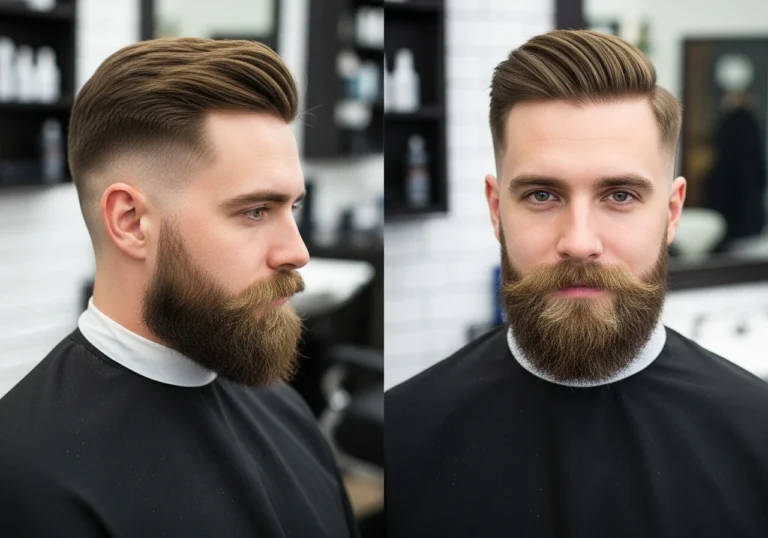
Establishing a boxed beard involves growing full coverage before defining sharp lines along the cheeks and neck. The cheek line typically runs straight from the sideburns toward the corners of the mustache, creating an angular rather than natural appearance. The bottom follows the jawline closely, rarely extending significantly beyond the natural chin.
This style suits men who appreciate geometric aesthetics and precise grooming. The sharp lines communicate attention to detail and personal maintenance standards. Professional environments generally accept boxed beards readily due to their neat, controlled appearance.
Maintenance demands remain high for boxed beards due to the precise edges that define the style. Many wearers address the perimeter lines every two to three days to maintain crispness. The uniform length throughout requires regular trimming sessions, typically weekly, using consistent guard lengths.
Face shape versatility makes boxed beards broadly accessible. The defined perimeter allows for adjustments that flatter various features. Men with round faces benefit from slightly longer chin sections that add vertical length, while those with angular features can maintain more uniform proportions throughout.
Styling Products and Tools for Medium Beards
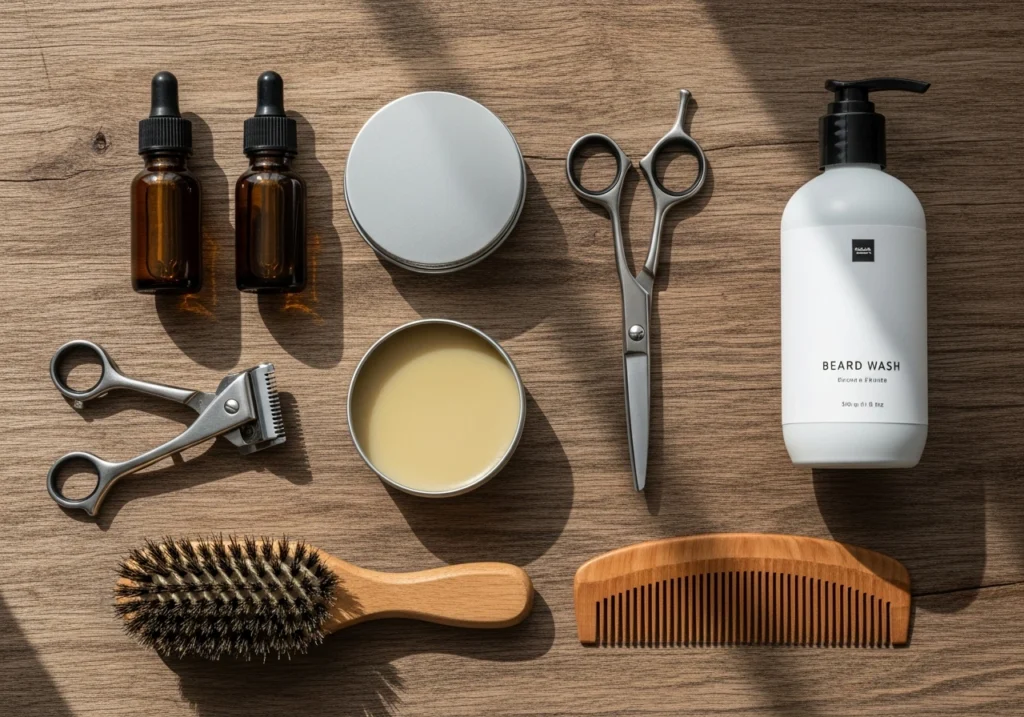
Proper products and tools transform average medium beards into exceptional ones. Quality beard oil ranks as the most essential product, providing moisture, reducing itchiness, and creating healthy shine. Application involves distributing several drops through clean, slightly damp beards daily, working from roots to ends.
Beard balm offers light to medium hold for shaping and styling. Unlike oils that focus primarily on conditioning, balms contain waxes that provide control without stiffness. This proves particularly valuable for training growth patterns and maintaining styled appearances throughout the day.
Washing beards requires specialized products rather than standard hair shampoo or body wash. Beard-specific cleansers clean effectively without stripping natural oils that keep facial hair healthy. Most men wash their beards two to three times weekly, with daily water rinsing between washing sessions.
Quality trimming tools prove essential for maintaining medium beard styles. Adjustable clippers with multiple guard lengths enable consistent trimming results. Scissors allow for detailed work around mustaches and problem areas. Precision trimmers handle edge definition along cheeks and necks. Investing in reliable tools pays dividends through years of consistent performance.
Brushes and combs serve different purposes in beard care routines. Boar bristle brushes distribute oils naturally while training hair to grow in desired directions. Wide-toothed combs detangle longer hair without breakage. Many men use brushes daily while reserving combs for post-shower detangling.
Common Mistakes to Avoid
Rushing the growth process represents one of the most common mistakes in beard cultivation. Many men abandon their efforts during the awkward transitional phases when coverage appears uneven. Committing to at least three months of growth before making major styling decisions allows for more accurate assessment of natural patterns and potential.
Over-trimming the neckline creates the appearance of a weak, undefined jawline. The proper neck boundary sits approximately one inch above the Adam’s apple when viewed from the side, or at the point where the neck curves upward to meet the jaw. Setting the line too high diminishes the beard’s flattering effects.
Neglecting moisture and conditioning leads to dry, brittle facial hair that appears unkempt regardless of styling efforts. Daily oil application and regular washing with appropriate products maintain softness and manageability essential for attractive medium beards.
Trimming too frequently prevents beards from reaching their full potential. While edge maintenance requires regular attention, reducing overall length too often keeps beards perpetually short. Establishing a consistent trimming schedule based on growth rate rather than arbitrary timelines produces better results.
Ignoring face shape when selecting styles leads to unflattering results. What appears attractive on others may not suit individual features. Taking time to assess natural facial structure and researching which styles complement those features prevents disappointing outcomes.
you may also like this:19+ Popular Beard Styles For Black Men
Conclusion
Medium beard styles offer exceptional versatility for men seeking to enhance their appearance through facial hair. The diverse options explored here demonstrate that medium length accommodates numerous preferences, face shapes, and lifestyle requirements. From classic full beards to distinctive styles like the Van Dyke and Balbo, each approach provides unique character and appeal.
Success with medium beards requires patience during growth phases, commitment to regular maintenance, and willingness to invest in quality products and tools. Understanding which styles complement individual facial features prevents common mistakes and ensures flattering results. The time invested in proper grooming pays dividends through improved appearance and increased confidence.
The right medium beard style transforms ordinary looks into memorable ones, adding instant character that reflects personal style and attention to presentation. Whether pursuing professional polish through corporate beards or expressing creativity through more distinctive options, medium length provides the perfect canvas for self-expression. Taking the thoughtful approach outlined here ensures your beard becomes an asset that enhances rather than detracts from your overall appearance.
Frequently Asked Questions
How long does it take to grow a medium beard?
Most men require six to twelve weeks to grow a proper medium beard, though individual growth rates vary significantly. Genetics, age, health, and testosterone levels all influence how quickly facial hair reaches medium length. Patience during the initial growth phase proves essential, as many experience uneven coverage initially that fills in with time.
What products are essential for maintaining medium beards?
The three essential products include quality beard oil for daily moisture and conditioning, beard-specific wash for cleaning without stripping natural oils, and beard balm for light styling hold. These basics maintain beard health and appearance effectively. Optional additions include leave-in conditioners, styling waxes for mustaches, and growth serums for those experiencing patchiness.
Which medium beard style works best for round faces?
Styles that create vertical length work best for round faces, including the Van Dyke, extended goatee, and anchor beard. These approaches add definition and elongate the face through strategic hair placement. Avoiding excessive width on the sides prevents further rounding, while maintaining length through the chin creates flattering proportions.
How often should I trim my medium beard?
Most medium beards benefit from trimming every one to two weeks to maintain length and shape. Edge maintenance along cheeks and neck requires more frequent attention, typically every two to four days depending on growth speed. Establishing a consistent schedule based on individual growth rates produces the most reliable results.
Can I style a medium beard if my growth is patchy?
Many medium beard styles work successfully with patchy growth by emphasizing areas of fullest coverage. The Van Dyke, Balbo, and extended goatee focus hair in specific zones rather than requiring complete coverage. Strategic styling, proper grooming, and patience often improve appearance significantly as patches sometimes fill in over months.