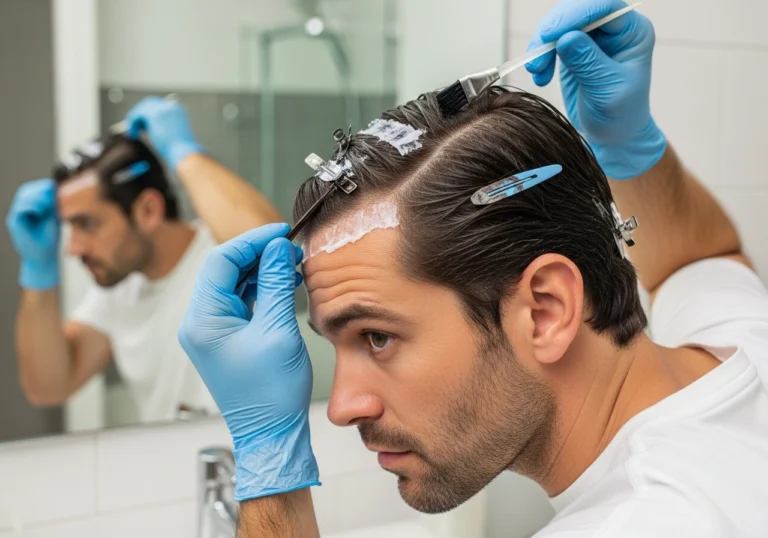

22 Mens Haircuts Thin Straight Hair
Having thin straight hair does not mean settling for limited styling options or accepting a flat, lifeless appearance. The reality is that modern barbering techniques and strategic haircut choices can transform thin straight hair into a stylish asset. Understanding which cuts complement your hair texture while creating the illusion of fullness is the foundation of looking your best.
This comprehensive guide explores 22 proven haircuts specifically designed for men with thin straight hair. Each style has been selected based on its ability to maximize volume, minimize scalp visibility, and provide practical everyday wearability. Whether you prefer classic sophistication or contemporary edge, the following haircuts offer solutions that work with your natural hair characteristics rather than against them. The key lies in choosing cuts that add dimension through layering, create strategic lift at the roots, and utilize modern texturizing techniques that prevent your hair from appearing weighed down or flat.
Understanding Thin Straight Hair Characteristics
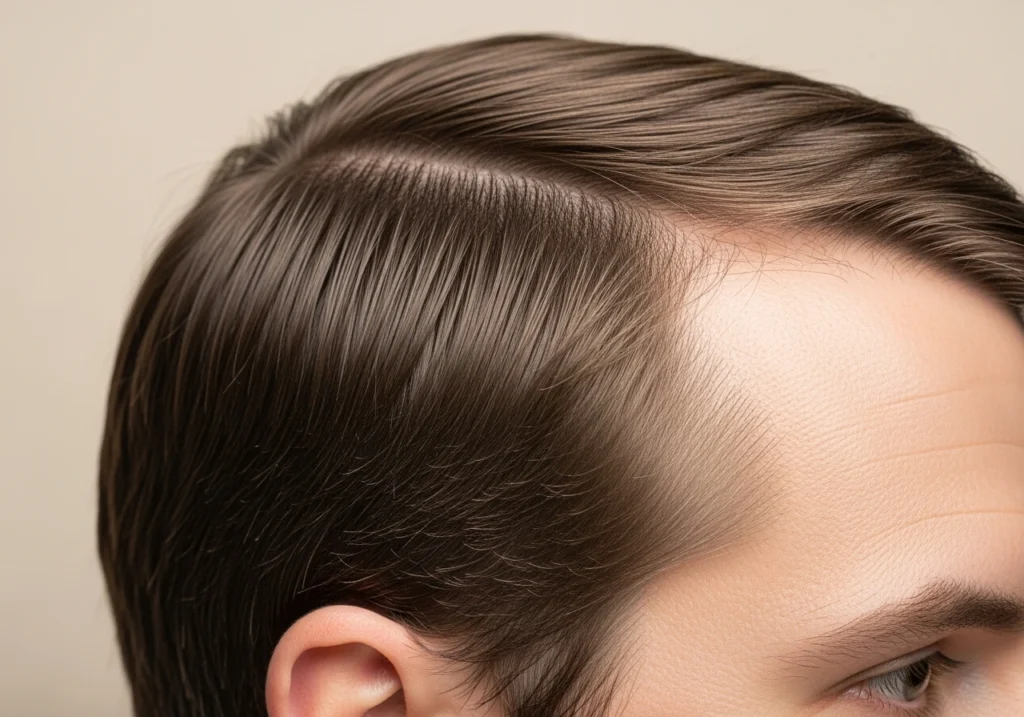
Before exploring specific haircuts, recognizing the unique properties of thin straight hair helps explain why certain styles work better than others. Thin hair refers to the density of individual strands on your scalp, while straight hair describes the growth pattern that lacks natural curl or wave. This combination creates hair that tends to lie flat against the head, showing the scalp more readily than thicker or textured hair types.
The advantages of thin straight hair include easy manageability and quick styling times. The smooth surface allows natural oils to travel down the hair shaft, creating shine without additional products. However, the challenges involve lack of natural volume, tendency to appear limp, and difficulty holding styles throughout the day. Understanding these characteristics allows you to select haircuts that strategically combat the drawbacks while emphasizing the benefits.
1 The Textured Crop
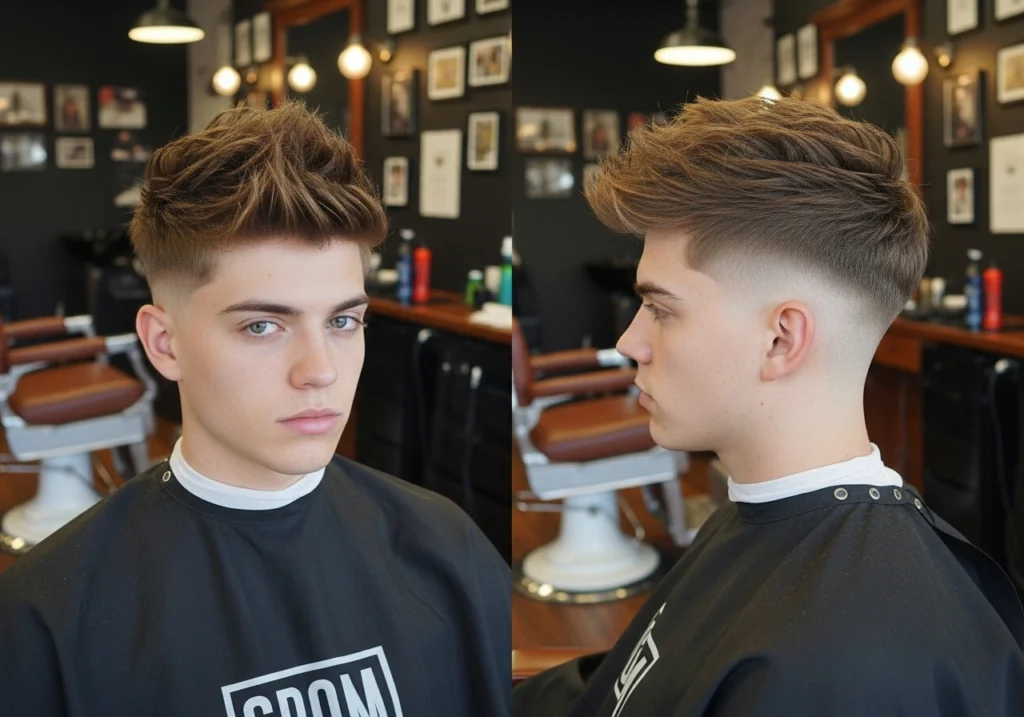
The textured crop stands as one of the most popular choices for thin straight hair because it directly addresses volume concerns while maintaining modern appeal. This haircut features short sides that transition into a slightly longer top with choppy, uneven layers that create natural movement. The beauty of the textured crop lies in its ability to make thin hair appear substantially fuller through strategic cutting techniques.
Barbers achieve this effect by using point cutting or razor techniques on the top section, which removes weight while creating texture. The fringe sits forward, providing coverage for the hairline while the layered top prevents hair from lying flat. For thin straight hair, the textured crop works exceptionally well because the shorter length reduces the weight that causes hair to fall flat, while the texture creates separation between strands that mimics the appearance of density.
Styling requires minimal effort. Apply a small amount of texturizing paste or clay to damp hair, then use your fingers to create separation and lift at the roots. The intentionally messy finish means perfection is not the goal, making this an ideal choice for men who want style without extensive grooming routines.
you may also like this:How To Look Good In Your 50s: Men’s Anti-Aging Guide
2 The Classic Crew Cut
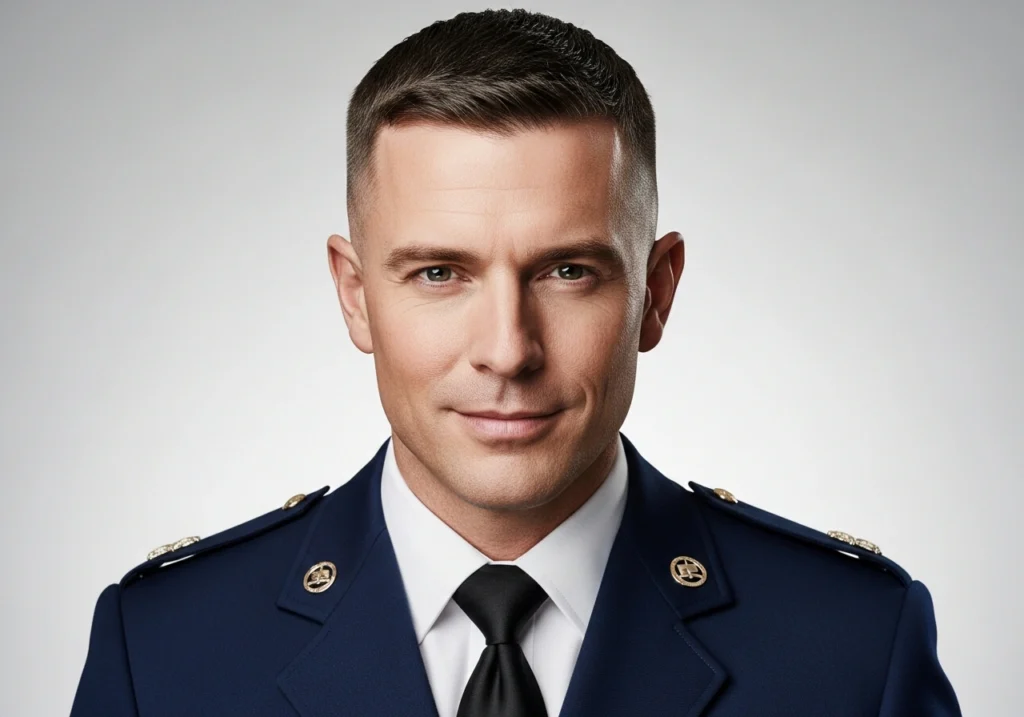
The crew cut represents timeless simplicity that works remarkably well for thin straight hair. This military-inspired style keeps the sides very short or faded while maintaining slightly more length on top. The graduated length creates a subtle visual trick where the eye perceives more hair volume because of the contrast between the cropped sides and the fuller top section.
For thin hair specifically, the crew cut minimizes scalp visibility by keeping all hair relatively short, where thinning is less noticeable. The top section can be styled with a slight forward motion or textured upward for added lift. This versatility makes the crew cut suitable for professional environments while remaining casual enough for everyday wear.
The maintenance requirements are remarkably low. A monthly trim keeps the shape intact, and styling takes less than two minutes with a small amount of lightweight pomade or styling cream. The crew cut also works across all age ranges and face shapes, making it a universally flattering option that never goes out of style.
3 The Side Part With Fade
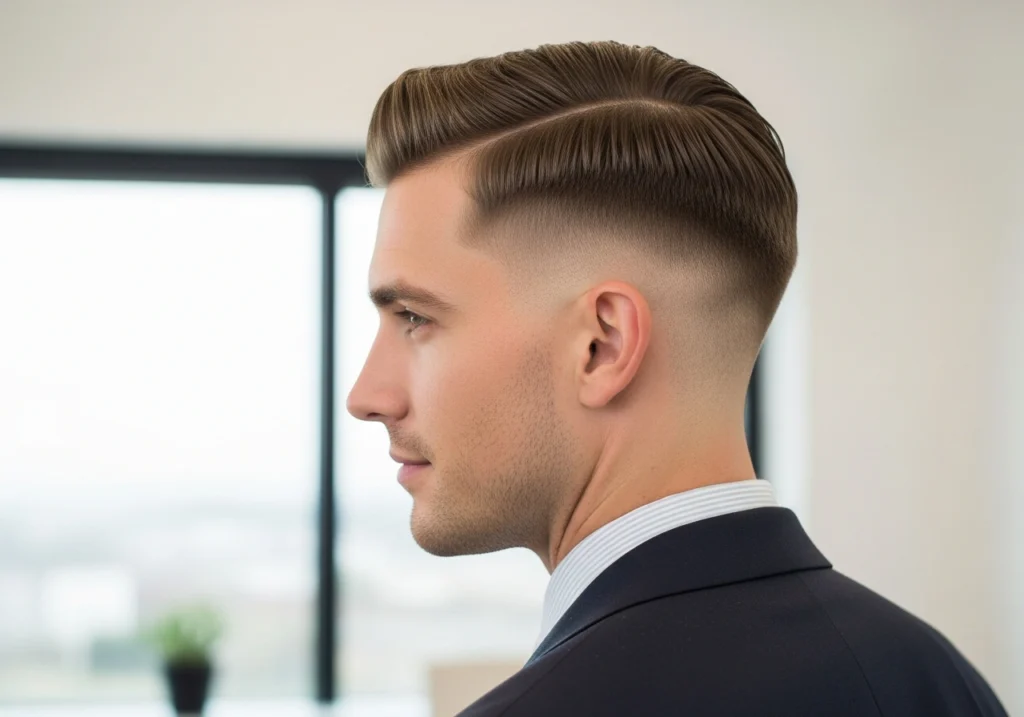
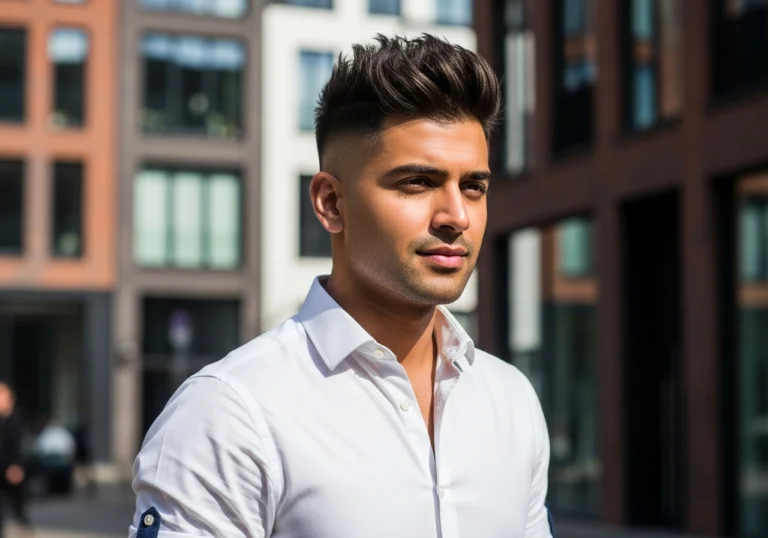
The side part haircut brings classic sophistication while strategically managing thin straight hair concerns. This style features a clearly defined part on one side, with hair combed over to create volume and coverage. The modern interpretation incorporates a fade on the sides and back, which reduces bulk in areas where hair might be thinner while drawing attention to the fuller top section.
Creating a side part on thin straight hair requires proper cutting technique. The top should be left long enough to comb over convincingly but not so long that it loses body and falls flat. Typically, two to three inches on top provides the ideal length for achieving volume while maintaining control. The fade should transition gradually to avoid harsh lines that might emphasize thinning.
Styling involves applying a volumizing mousse to damp hair, blow-drying with the nozzle directed upward to create lift at the roots, then finishing with a medium-hold pomade for definition. The side part works particularly well for professional settings and formal occasions, offering a polished appearance that commands respect.
4 The Buzz Cut
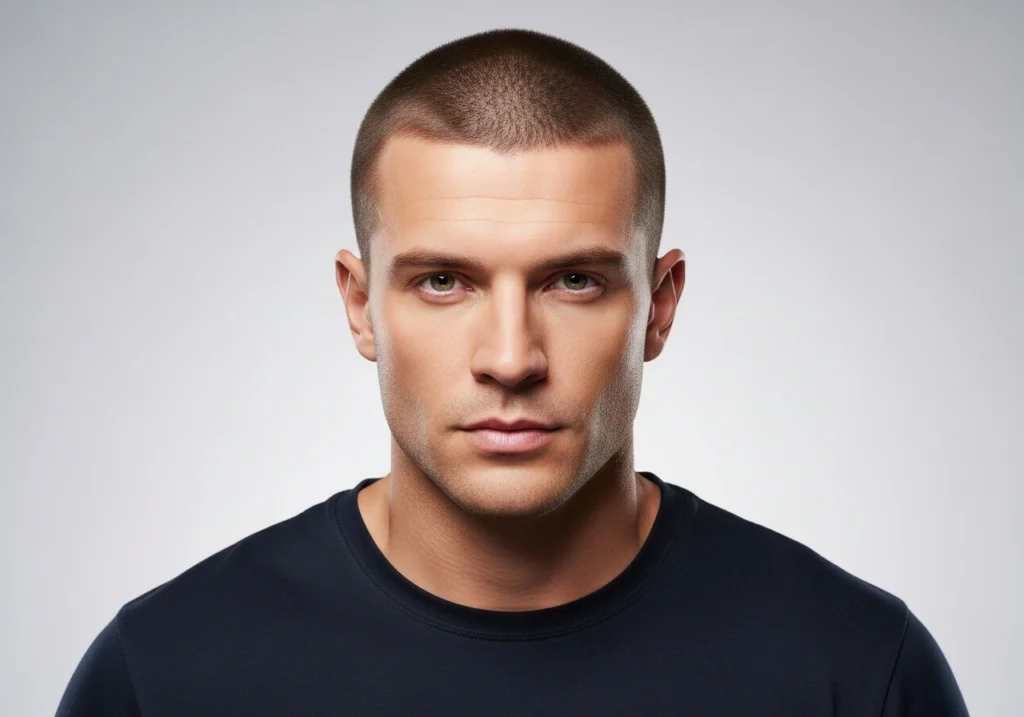
The buzz cut offers the ultimate low-maintenance solution for thin straight hair while providing a bold, confident aesthetic. This extremely short cut uses clippers with a uniform guard length across the entire head, creating a clean, even appearance that completely eliminates concerns about hair density or styling challenges.
For men experiencing moderate to advanced thinning, the buzz cut removes the visual contrast between thicker and thinner areas. The short length makes individual hair strands less visible, creating a uniform appearance that looks intentional rather than sparse. Different guard lengths allow customization, with longer guards like a number four or five providing slightly more coverage while still maintaining the buzz cut aesthetic.
The practical benefits extend beyond appearance. The buzz cut requires zero styling time, reduces grooming product expenses, and proves ideal for active lifestyles or warm climates. While initially seeming extreme, many men find the buzz cut liberating, as it removes anxiety about hair appearance while projecting strength and self-assurance.
5 The French Crop
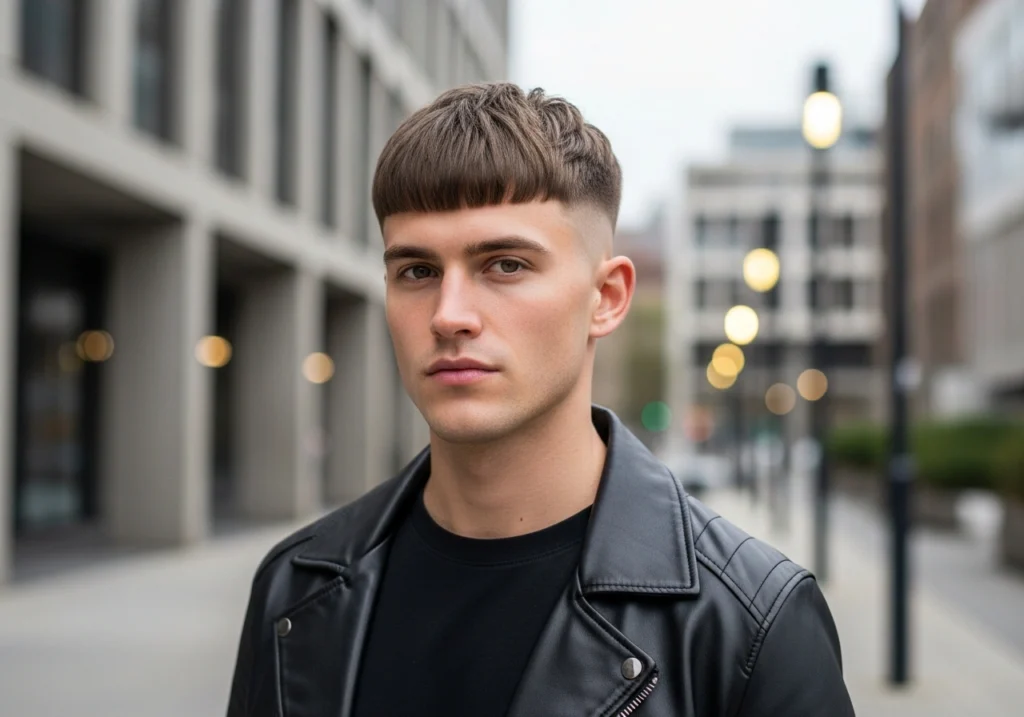
The French crop has gained significant popularity for its ability to add dimension and style to thin straight hair. Distinguished by its blunt fringe that cuts straight across the forehead and textured top, this haircut creates visual interest while providing strategic coverage for the hairline. The sides typically feature a fade or taper, keeping the silhouette clean and modern.
The blunt fringe serves a dual purpose for thin hair. It provides coverage for areas where hairline recession might be occurring while creating a strong horizontal line that draws attention away from hair density concerns. The textured top prevents the hair from appearing flat, with choppy layers adding separation and movement that mimics fuller hair.
Styling the French crop takes minimal time. After washing, apply a small amount of sea salt spray or texture powder to damp hair, then blow-dry while tousling with your fingers. The fringe should fall naturally forward, requiring only light product to keep individual pieces separated. This effortless finish makes the French crop ideal for men who want contemporary style without complex grooming routines.
6 The Ivy League Cut
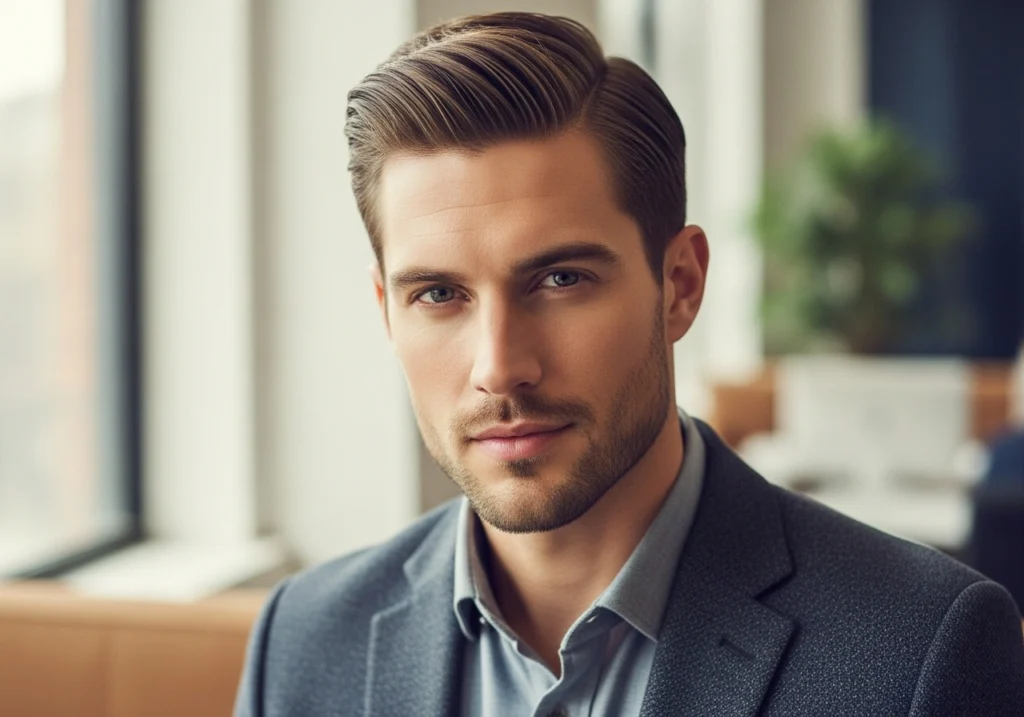
The Ivy League cut represents refined sophistication while strategically addressing thin straight hair challenges. This style extends slightly longer than a standard crew cut, allowing enough length on top to create a side part while maintaining short, tapered sides. The result is a polished look that works equally well in boardrooms and casual settings.
For thin hair, the Ivy League cut succeeds by keeping the overall length short enough to prevent limpness while providing sufficient length for styling versatility. The sides are cut progressively shorter as they move down toward the ears, creating definition without drawing attention to areas where hair might be thinner. The top section receives subtle layering to prevent a flat appearance.
Styling requires applying a lightweight styling cream to damp hair, creating a side part with a comb, then blow-drying while lifting at the roots. A small amount of pomade adds definition and hold without creating heaviness. The Ivy League cut particularly suits men with oval or rectangular face shapes, as the added height on top creates balanced proportions.
7 The Spiky Textured Cut
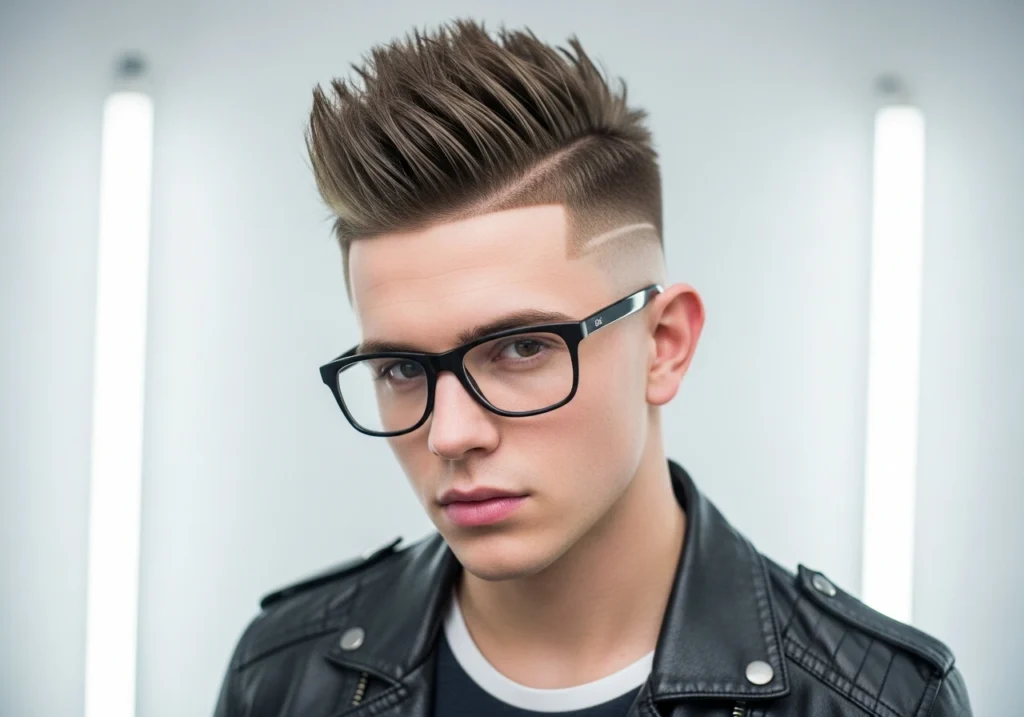
The spiky textured cut brings youthful energy while maximizing the appearance of hair volume through vertical styling. This cut features short to medium length on top with significant texturizing, allowing individual sections to be styled upward in controlled spikes. The sides typically fade or taper short, emphasizing the height and texture created on top.
For thin straight hair, the spiky cut works by creating vertical dimension that makes hair appear fuller. The texturizing removes bulk that weighs hair down while creating natural separation between strands. When styled upward, even thin hair can achieve impressive height and presence. The key lies in proper cutting technique that leaves enough length for styling while maintaining the lightness necessary for thin hair to hold an upward position.
Styling requires a texture powder or strong-hold clay. Apply the product to dry hair, then use your fingers to lift sections upward and create separation. The deliberately imperfect finish means each styling session can vary slightly, keeping the look fresh and contemporary. This cut particularly appeals to younger men or those working in creative industries where expressive personal style is valued.
8 The Slicked Back Undercut

The slicked back undercut creates dramatic contrast that works surprisingly well for certain types of thin straight hair. This bold style features very short or shaved sides and back with substantially longer hair on top that gets styled backward away from the face. The sharp contrast between the short sides and longer top creates visual interest while the sleek styling provides a polished, sophisticated appearance.
For thin straight hair to successfully pull off this style, the top section needs sufficient length and density. Men with mild thinning primarily at the temples or crown can use the longer top section to provide coverage while the slicked-back styling creates the illusion of thickness through compression and shine. The key is ensuring the top section has at least three to four inches of length.
Styling involves applying pomade or gel to damp hair, then combing everything straight back while blow-drying with the nozzle following the comb’s direction. The smooth finish and added shine from styling products make individual strands less visible while creating a cohesive, thick-looking result. This style works best for evening events, professional settings, or men who appreciate classic, refined aesthetics.
9 The Caesar Cut
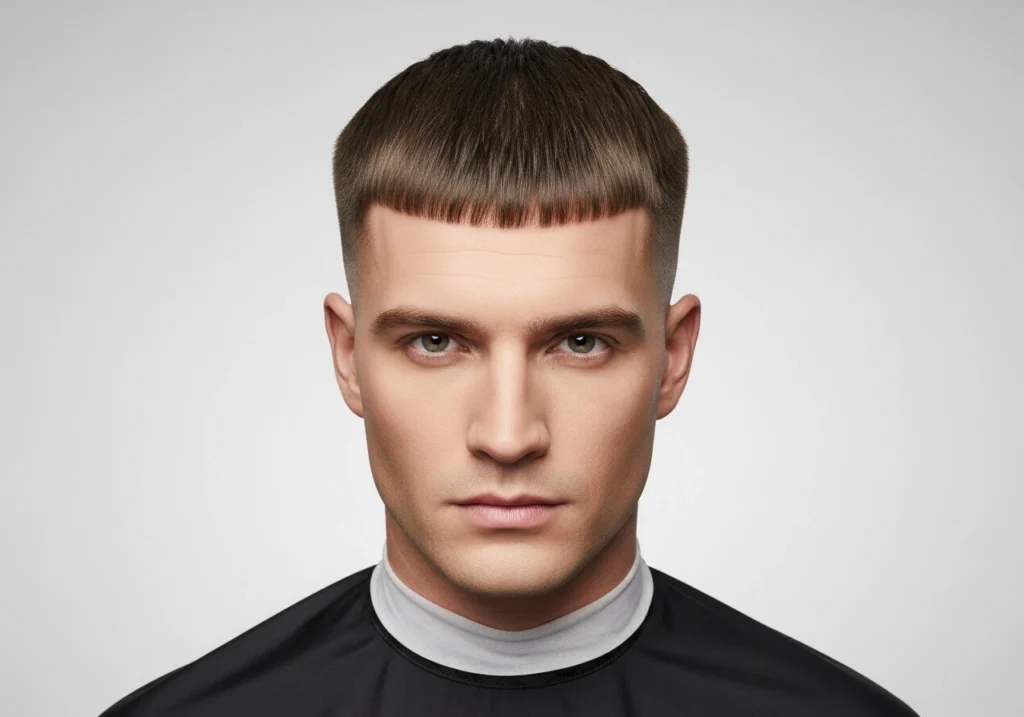
The Caesar cut offers ancient inspiration with modern functionality for thin straight hair. Named after Julius Caesar, who reportedly wore this style to conceal his receding hairline, this cut features uniformly short hair all around with a small fringe that extends forward onto the forehead. The simple, practical design makes it enduringly popular.
For thin hair, the Caesar cut excels by keeping length minimal, which prevents limpness while the forward fringe provides coverage for the hairline. The top can be slightly textured to add dimension without creating obvious layers. The sides and back blend seamlessly with the top, avoiding harsh transitions that might emphasize thinning areas.
Styling requires only a small amount of matte paste or clay. Work the product through damp hair, then use your fingers to push the fringe forward and create slight texture throughout. The Caesar cut particularly suits men with round or square face shapes, as the horizontal fringe line creates balance. The low-maintenance nature makes it ideal for active lifestyles or minimalist grooming preferences.
10 The Short Pompadour
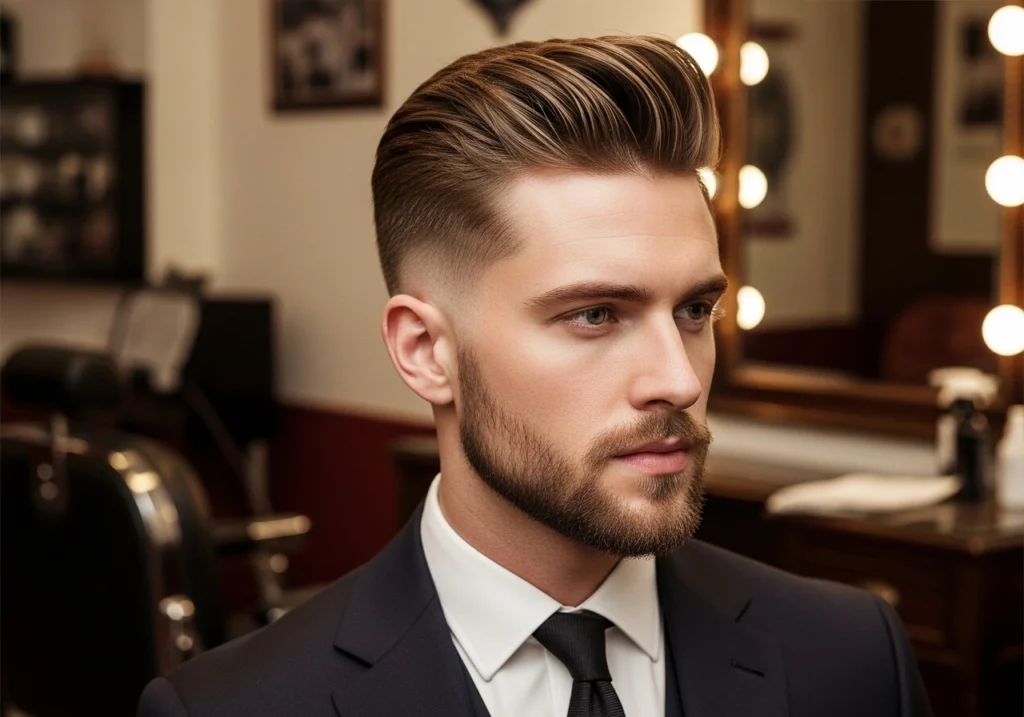
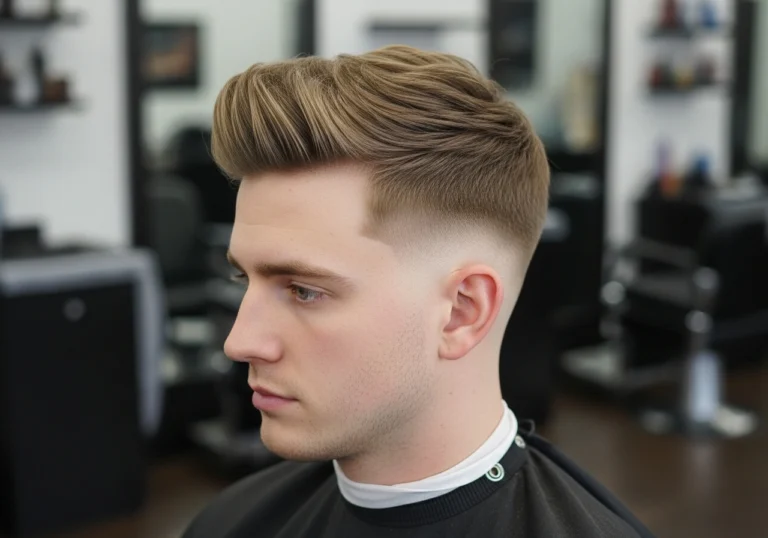
The short pompadour brings vintage glamour while strategically managing thin straight hair through volume and height. Unlike the dramatic rockabilly pompadours of the 1950s, the modern short version creates modest lift at the front while keeping overall length controlled and wearable for contemporary settings.
Creating volume with thin hair requires proper technique. The sides should be faded or cut short to minimize weight and draw attention upward. The top section receives strategic layering that removes bulk while maintaining enough length to achieve height. Typically, two to three inches on top provides the ideal balance for thin hair.
Styling begins with applying volumizing mousse to damp hair, then blow-drying with a round brush to create lift at the roots and sweep the front section backward and upward. A medium-hold pomade provides definition while maintaining flexibility. The short pompadour works particularly well for men with oval or diamond face shapes, as the added height creates flattering proportions.
11 The Messy Fringe
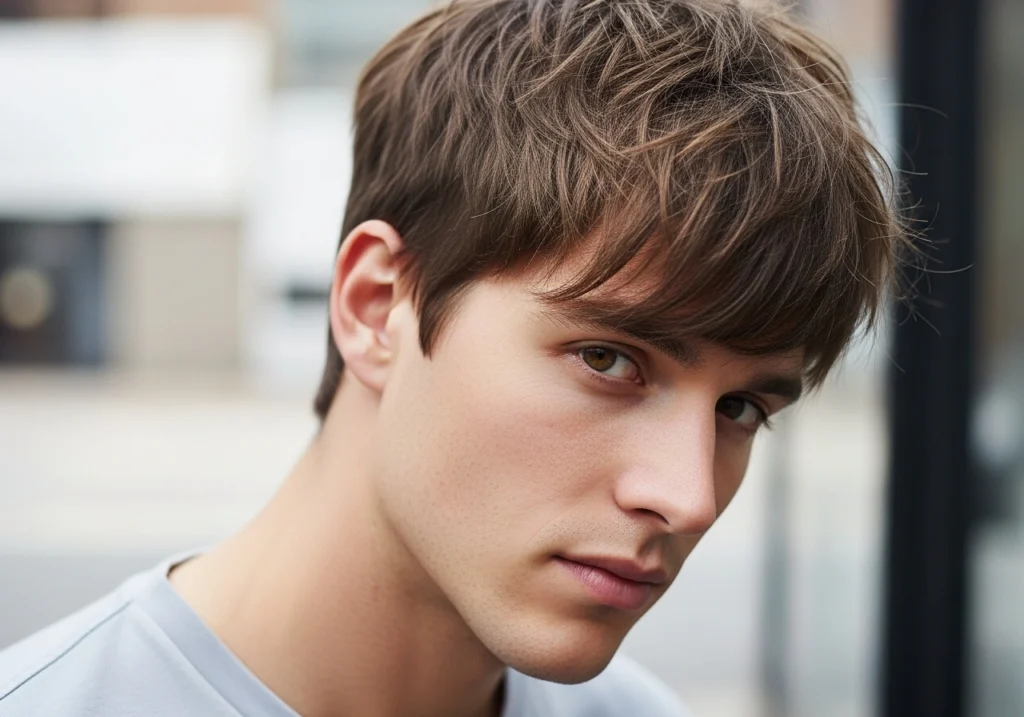
The messy fringe embraces deliberate imperfection while creating the appearance of fuller hair through strategic styling and cutting. This contemporary style features medium length on top with substantial texturizing and a forward-falling fringe that covers the forehead. The intentionally tousled appearance suggests thickness and movement that benefits thin straight hair.
The cutting technique focuses on removing weight through point cutting and razor work, which creates varied lengths that prevent hair from clumping together or lying flat. The fringe should be cut with enough length to fall naturally forward but not so long that it loses body and becomes limp. The sides are typically kept shorter with a fade or taper to emphasize the textured top.
Styling involves working a small amount of sea salt spray or texture cream through damp hair, then allowing it to air dry or using a blow-dryer while tousling with fingers. The goal is controlled chaos rather than structured precision. This relaxed approach makes the messy fringe ideal for casual environments and creative industries where personal expression is valued.
12 The High And Tight
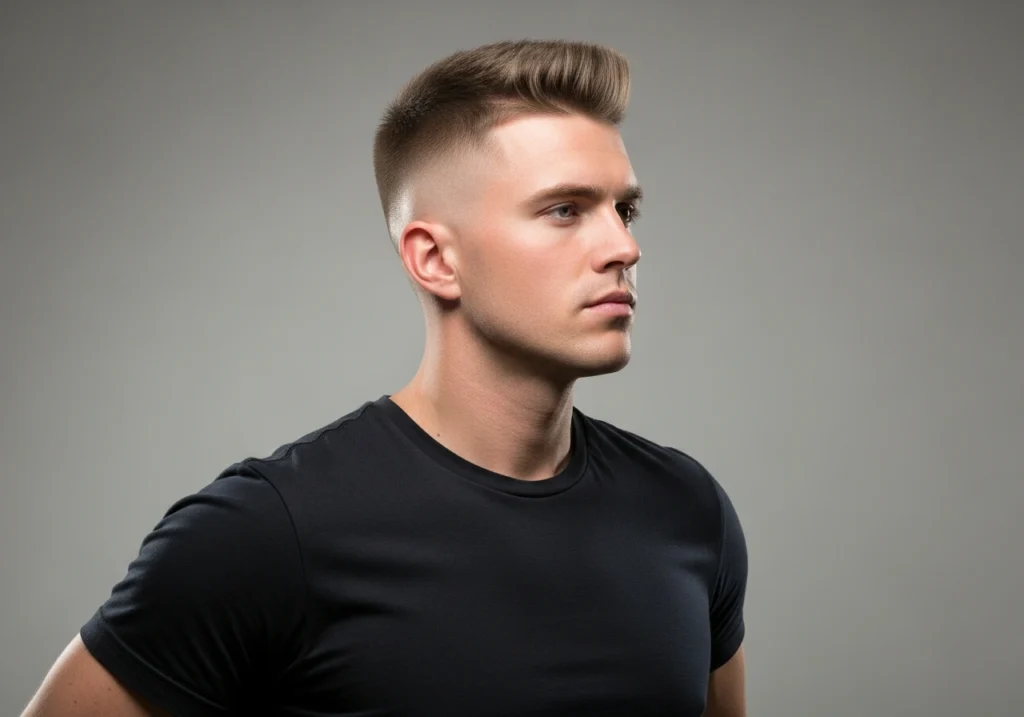
The high and tight delivers military precision while providing an effective solution for thin straight hair. This bold cut features extremely short sides and back, often shaved or cut with the shortest clipper guard, contrasting with a slightly longer top section. The dramatic difference in length creates strong visual interest while the minimal overall length eliminates concerns about hair density.
For thin hair, the high and tight works because it removes hair from areas where thinning might be most visible while keeping the top section short enough to maintain body and prevent limpness. The severe contrast draws attention to the shape of the cut rather than the characteristics of individual hair strands.
Styling requires minimal effort. A small amount of matte clay or paste worked through the top section provides control and subtle texture. The high and tight suits men who value efficiency and low maintenance while projecting confidence and decisiveness. This cut works across various professional settings, from military and law enforcement to corporate environments.
13 The Angular Fringe
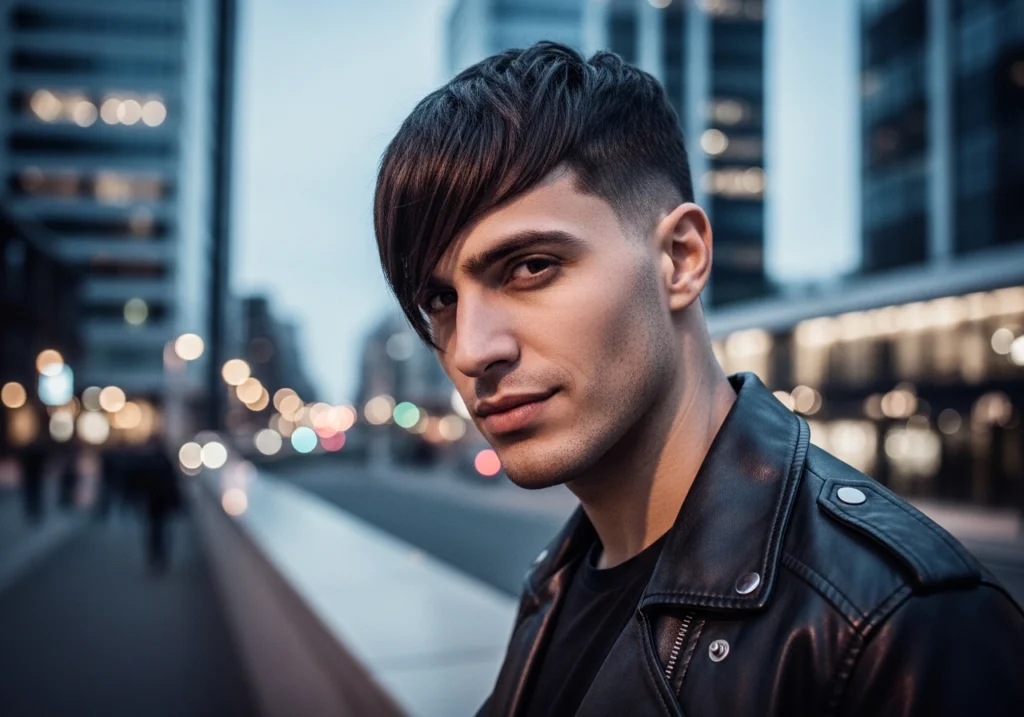
The angular fringe creates geometric interest while strategically managing thin straight hair through asymmetry and texture. This modern cut features a fringe that cuts diagonally across the forehead rather than straight across, with one side longer than the other. The top section receives texturizing to add dimension while the sides are faded or tapered.
The angled line of the fringe serves multiple purposes for thin hair. It creates visual interest that distracts from hair density concerns while providing coverage for the hairline. The asymmetry prevents the eye from settling on any single point, making thinning less noticeable. The textured top adds separation and movement that suggests fuller hair.
Styling involves applying texture paste to damp hair, then blow-drying while directing the fringe to fall diagonally across the forehead. Fingers work better than a comb for maintaining the intentionally imperfect finish. The angular fringe particularly suits younger men or those working in fashion, design, or other creative fields where distinctive personal style is appreciated.
14 The Tapered Cut

The tapered cut offers versatility and timeless appeal while addressing thin straight hair concerns through careful gradation. This classic style features hair that progressively shortens from the top toward the neckline and around the ears, creating a clean, professional silhouette. Unlike fades that create more dramatic contrast, tapers transition gradually.
For thin hair, the tapered cut works by distributing volume strategically. The longer top section can be styled with texture and lift while the tapered sides prevent bulk in areas where hair might be thinner. The gradual transition creates a cohesive appearance that looks intentional and polished.
Styling depends on the length maintained on top. Shorter tapers require only a small amount of styling cream for definition, while longer versions might incorporate blow-drying for added volume. The tapered cut suits professional environments and men who prefer classic, understated style. Regular trims every four to six weeks maintain the clean lines and gradual transitions.
15 The Faux Hawk
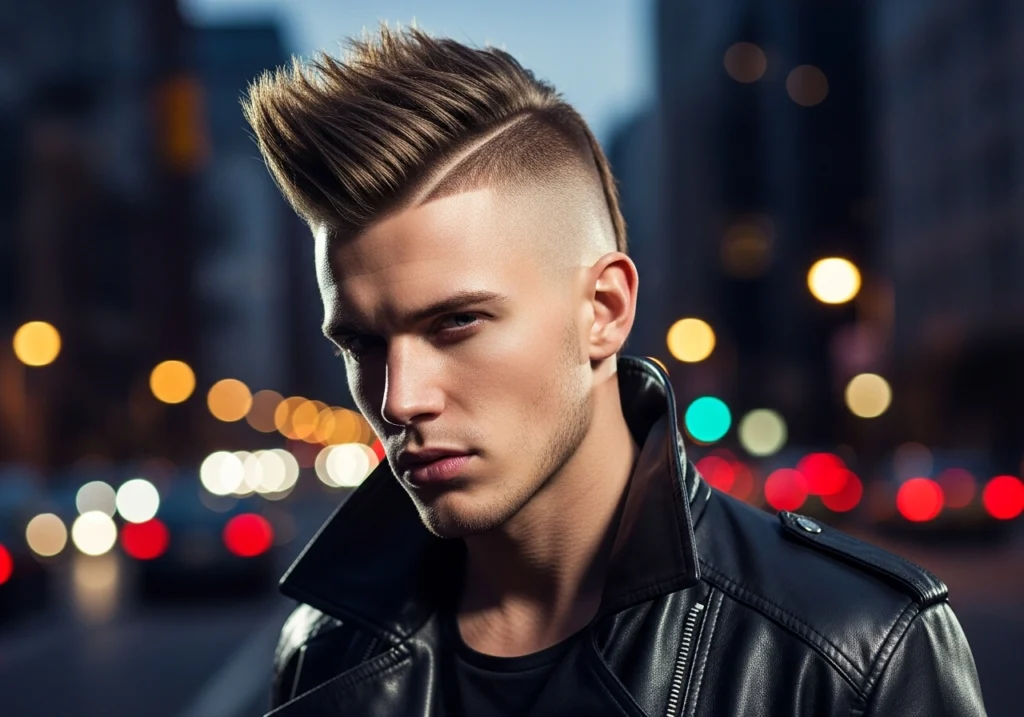
The faux hawk brings edgy style while maximizing height and volume for thin straight hair. This contemporary cut features short sides with a strip of longer hair running from the forehead to the crown that can be styled upward to create a mohawk-inspired silhouette. The toned-down version of a true mohawk maintains professional viability while offering distinctive style.
For thin hair, the faux hawk succeeds by concentrating available hair in a central strip where it creates maximum visual impact. The sides are faded or cut very short, eliminating hair from areas where thinning might be most noticeable while drawing attention to the styled center section. The vertical styling creates height that suggests volume and presence.
Styling requires a strong-hold product like texture powder or fiber. Apply to dry hair, then use fingers to lift the central section upward while pushing the sides down. The level of height can vary based on the occasion, from subtle lift for conservative environments to dramatic spikes for evening or casual settings. The faux hawk particularly appeals to men seeking bold, contemporary style.
16 The Brush Up
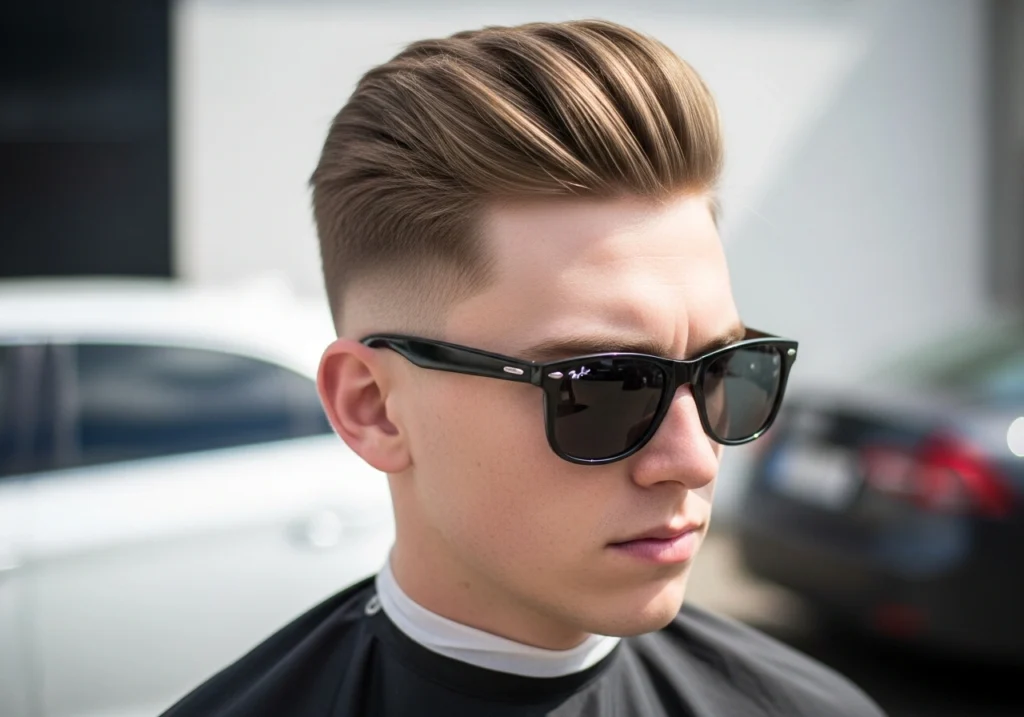
The brush up creates effortless volume while strategically managing thin straight hair through upward styling. This modern cut features short to medium length on top that gets brushed straight up and back, creating natural height and texture. The sides are typically faded or tapered short to emphasize the brushed-up top section.
For thin hair, the brush up works by utilizing gravity’s opposite direction. When styled upward, thin hair creates separation between strands that suggests greater density. The key lies in keeping the top section at an appropriate length where it can hold an upward position without becoming too heavy. Generally, two to three inches provides ideal length.
Styling involves applying sea salt spray or volumizing mousse to damp hair, then blow-drying while brushing upward with fingers or a brush. A small amount of matte clay or paste worked through the dried hair provides hold while maintaining the textured, natural appearance. The brush up suits casual and semi-formal occasions, projecting confidence and contemporary awareness.
17 The Clean Shave With Fade
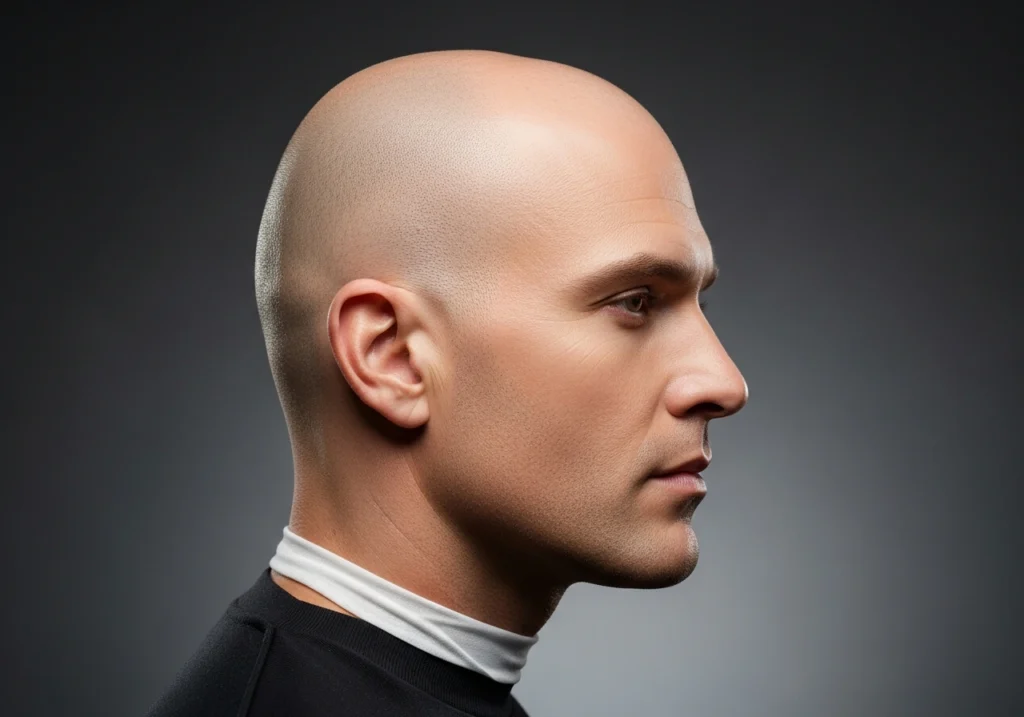
The clean shave with fade represents the ultimate solution for advanced thinning while maintaining style and sophistication. This bold choice completely removes hair from the top while incorporating a fade on the sides and back. The result is a polished, intentional appearance that eliminates concerns about hair density while projecting confidence.
The fade component distinguishes this from a simple buzz cut by creating gradual transitions that add visual interest and dimension. The fade can be low, mid, or high depending on personal preference and face shape. This attention to detail transforms a practical solution into a legitimate style choice.
Maintenance requires regular head shaving to maintain smoothness and periodic visits to a barber for fade upkeep. The clean shave works particularly well for men with strong facial features or those who wear glasses, as these elements provide visual interest and balance. While initially seeming extreme, many men discover that embracing baldness with intentional styling creates more confidence than struggling with thinning hair.
18 The Short Quiff
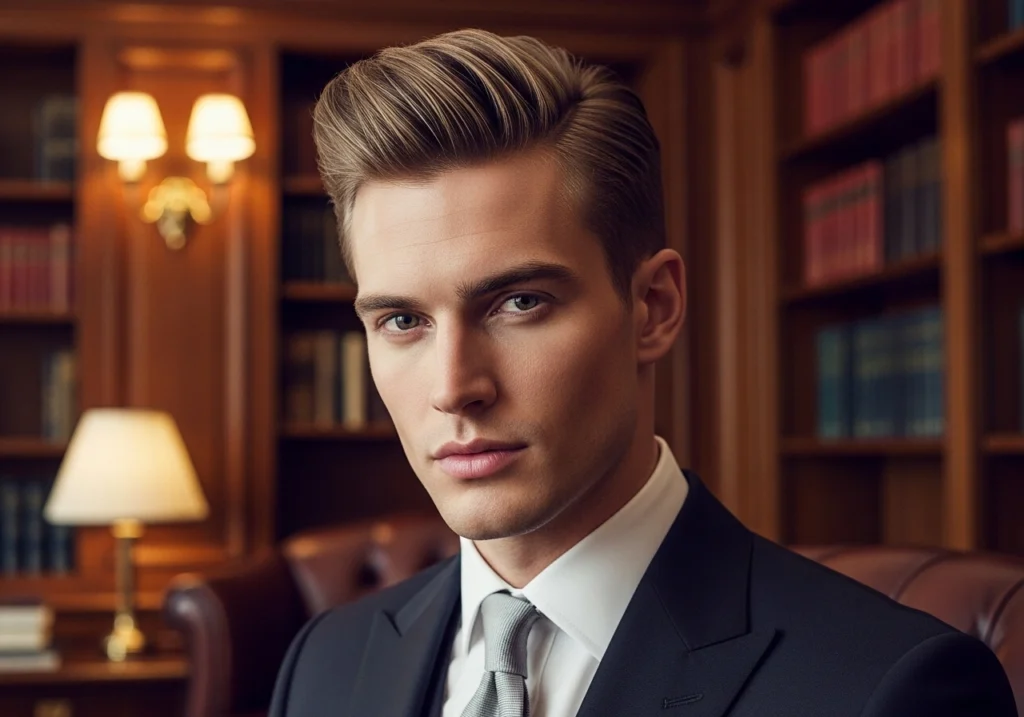
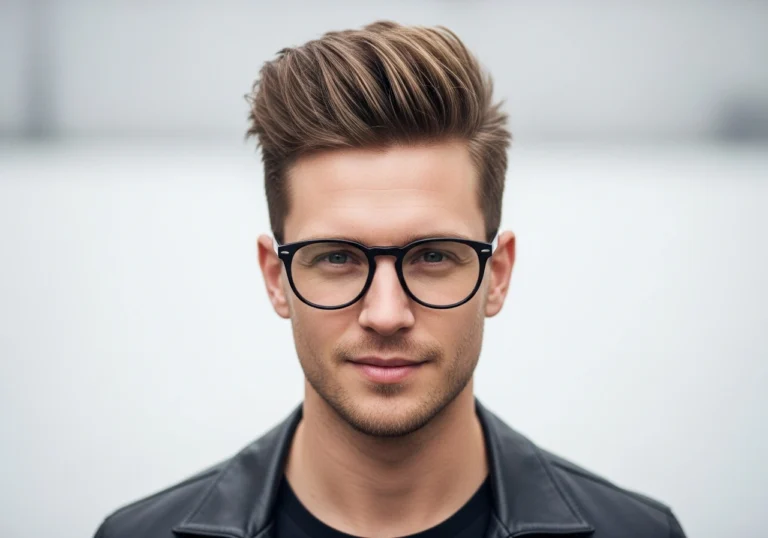
The short quiff delivers classic British style while creating volume for thin straight hair through strategic height at the front. This refined cut features short sides and back with a longer front section that gets styled upward and backward in a subtle wave. The controlled volume creates presence without appearing overdone.
For thin hair, the short quiff works by concentrating length and volume at the front where it creates maximum impact. The sides are kept short to emphasize the styled top while preventing weight that might flatten thin hair. The key is maintaining appropriate length where volume is possible without excess weight. Two to three inches on top typically provides ideal proportions.
Styling requires applying styling cream or light pomade to damp hair, then blow-drying with a brush while directing the front section upward and back. The finished look should appear polished but not stiff, with natural movement that suggests effortless style. The short quiff suits professional environments and men who appreciate classic, refined aesthetics.
19 The Disconnected Undercut
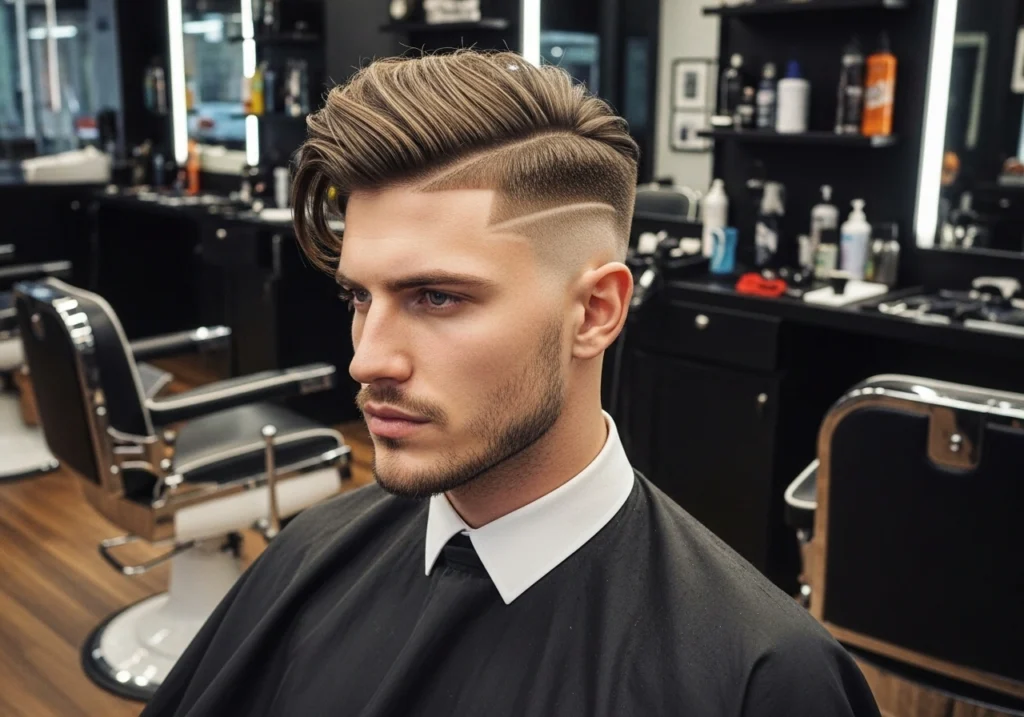
The disconnected undercut creates bold contrast through dramatic length differences that work surprisingly well for certain thin straight hair types. This modern style features very short or shaved sides with substantially longer hair on top, with no gradual transition between the two lengths. The harsh disconnect creates visual intrigue while the longer top provides styling versatility.
For thin hair to successfully pull off this style, the top section needs sufficient density to justify the longer length. Men with mild thinning can use the longer top to provide coverage and create styled volume while the extremely short sides eliminate hair from potentially thinning areas. The disconnect draws attention to the styled top section.
Styling depends on desired finish. The longer top can be slicked back, brushed up, styled to the side, or left tousled for different effects. The versatility makes this cut appealing for men who enjoy changing their look. However, the disconnected undercut requires commitment to styling, as the longer top section looks unkempt without proper product and technique.
20 The Textured Fringe

The textured fringe combines forward-falling hair with strategic layering to create movement and dimension for thin straight hair. This contemporary style features medium length on top with substantial texturizing and a fringe that falls naturally forward toward the face. The choppy, piece-separated finish suggests fullness while the forward motion provides hairline coverage.
The cutting technique focuses on creating varied lengths through point cutting, which removes bulk while establishing natural separation between strands. The fringe should be cut long enough to fall forward convincingly but not so long that it loses body. The sides are typically faded or cut short to emphasize the textured top.
Styling involves working texture paste or clay through damp hair, then either air-drying or blow-drying while tousling with fingers. The goal is natural-looking texture rather than perfect precision. This relaxed approach makes the textured fringe ideal for creative professionals and younger men who value contemporary, low-effort style.
21 The Mid Fade
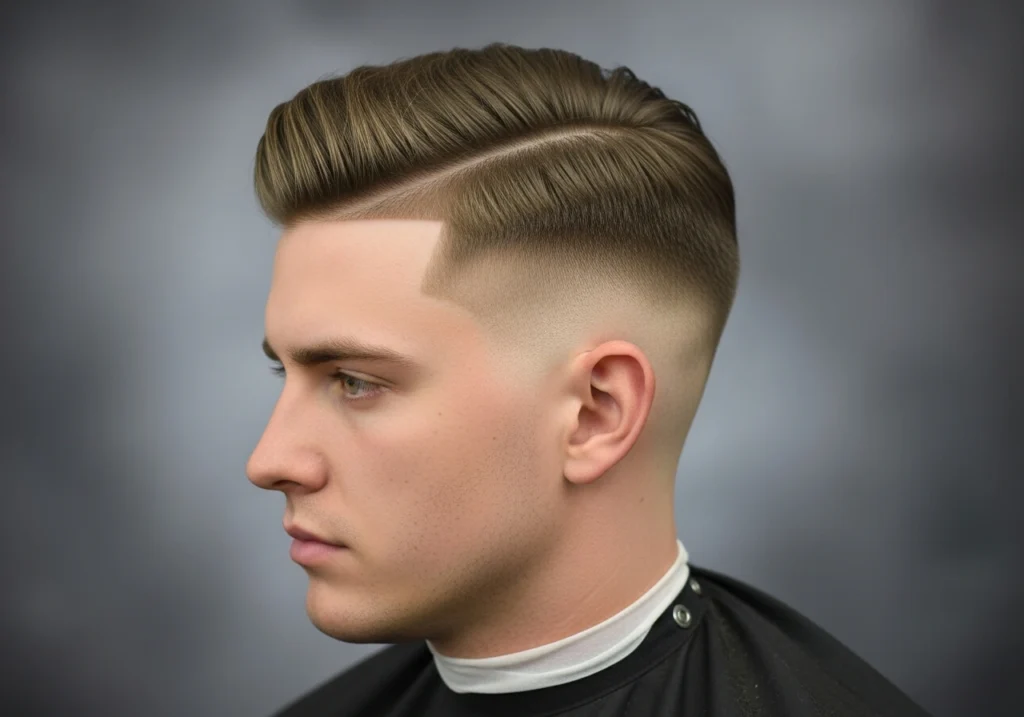
The mid fade provides balanced transitions while strategically managing thin straight hair through gradual length changes. This versatile cut features a fade that begins around the temple area, gradually transitioning from longer hair on top to shorter hair at the bottom. The mid-point starting location creates flattering proportions for most face shapes.
For thin hair, the mid fade works by removing weight from the sides while maintaining enough length on top for styling versatility. The gradual transition creates a polished appearance that looks intentional rather than patchy. The top can be styled in various ways depending on length and personal preference.
Styling depends on the length maintained on top. Shorter versions require minimal product, while longer tops might incorporate blow-drying and texturizing products for added volume. The mid fade suits professional and casual environments equally well, offering a contemporary look that works across generations and style preferences.
22 The Layered Short Cut

The layered short cut concludes our exploration with a versatile option that maximizes volume through strategic cutting technique. This style features short overall length with carefully placed layers that create dimension and movement. Unlike uniform-length cuts, the varied lengths prevent hair from lying flat while creating natural separation.
For thin straight hair, layers serve a critical function. They remove weight that causes hair to fall flat while creating the appearance of fuller hair through texture and movement. The key is requesting subtle layering rather than dramatic differences that might emphasize thinning. Skilled barbers understand how to layer thin hair effectively without creating sparse-looking results.
Styling requires only a small amount of texturizing product worked through damp or dry hair. The layers provide natural movement that requires minimal manipulation. This simplicity makes the layered short cut ideal for men seeking style without extensive grooming routines. Regular trims every six weeks maintain the shape and prevent layers from growing out in ways that lose effectiveness.
Conclusion
Thin straight hair presents unique challenges but certainly does not limit your style options. The 22 haircuts explored in this guide offer proven solutions that create volume, minimize thinning appearance, and provide versatile styling possibilities. From classic crew cuts to contemporary textured crops, each style addresses thin hair concerns through strategic length, layering, and cutting techniques.
Success with thin straight hair comes from understanding your hair’s characteristics and working with rather than against them. Choose cuts that add texture and dimension through layering. Keep length appropriate where volume is possible without excessive weight. Utilize fades and tapers to create contrast that draws attention to fuller areas. Master styling techniques that lift roots and create separation between strands.
The right products and proper maintenance extend the effectiveness of any haircut while promoting healthier hair. Remember that consistency matters more than complexity. A simple routine performed regularly produces better results than elaborate processes attempted sporadically. Regular professional trims, appropriate products, and realistic expectations combine to help you look and feel your best.
Ultimately, confidence matters more than hair density. The haircut you choose should make you feel comfortable and authentic rather than disguising who you are. Whether you opt for the bold simplicity of a buzz cut or the refined sophistication of a side part, own your choice with assurance. Thin straight hair is simply one characteristic among many that make you unique.
Frequently Asked Questions
What is the best haircut for men with very thin straight hair?
The textured crop and crew cut work exceptionally well for very thin straight hair because they keep length minimal to prevent flatness while adding texture and dimension through strategic cutting. These styles minimize scalp visibility while creating the appearance of fuller hair through separation and lift.
Should men with thin straight hair avoid long hairstyles?
Yes, longer styles generally work against thin straight hair by adding weight that causes flatness and makes thinning more obvious. Shorter cuts create volume and texture more effectively, though medium-length styles can work if properly layered and regularly maintained with appropriate styling techniques.
How often should men with thin straight hair get haircuts?
Men with thin straight hair should get professional haircuts every four to six weeks to maintain shape and prevent the cut from losing its intended form. Regular trims also eliminate split ends that make thin hair appear even thinner and more damaged.
What styling products work best for thin straight hair?
Lightweight products like texture powder, matte clay, sea salt spray, and volumizing mousse work best for thin straight hair. These products add volume, texture, and hold without the weight that causes flatness. Always start with minimal amounts and build gradually as needed.
Can blow-drying help thin straight hair look fuller?
Yes, proper blow-drying technique significantly increases volume in thin straight hair. Apply volumizing products to damp hair, then blow-dry while lifting at the roots with fingers or a brush. Direct airflow upward rather than downward, and finish with cool air to set the style and add shine.