10 Volleyball Hairstyles For Men: That Stay Put On The Court
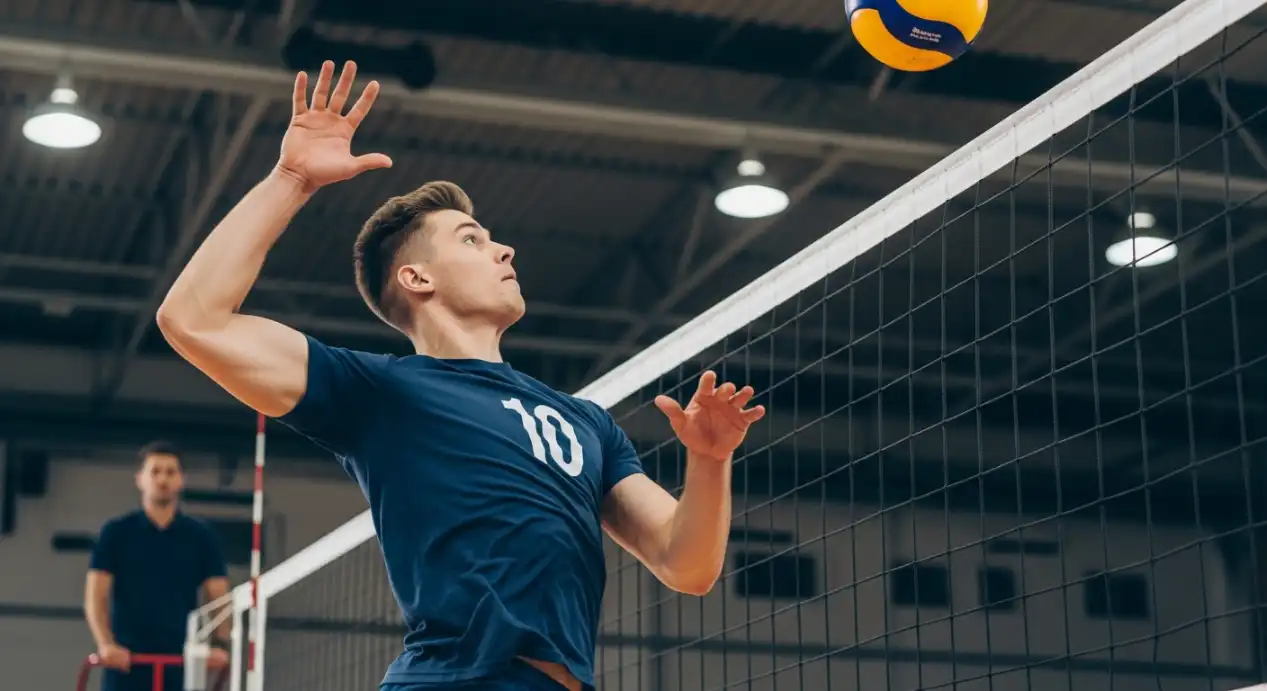
Playing volleyball requires explosive movements, quick reflexes, and complete focus on the court. The last thing any player needs during an intense rally is hair falling into their eyes or a style that becomes disheveled after the first dive. Finding the perfect volleyball hairstyle means balancing athletic performance with personal style, ensuring you look sharp while maintaining complete visual clarity throughout the match.
Male volleyball players face unique grooming challenges compared to other athletes. The sport demands constant jumping, diving, and rapid directional changes that can quickly compromise even the most carefully styled hair. Whether you’re spiking at the net, setting up a teammate, or diving for a defensive save, your hairstyle needs to withstand the physical demands of the game while keeping you comfortable and confident.
The right haircut for men in volleyball goes beyond aesthetics. It directly impacts your comfort level, concentration, and overall athletic performance. A well-chosen style eliminates distractions, manages sweat effectively, and requires minimal maintenance between plays. This comprehensive guide explores ten volleyball hairstyles for men that combine functionality with modern style, ensuring you perform at your peak while looking your best on the court.
Understanding the Requirements for Court-Ready Hairstyles
Before exploring specific styles, understanding what makes a hairstyle truly game-ready is essential. Volleyball places unique demands on your hair management strategy that differ from everyday styling needs.
Sweat management ranks among the most critical factors. During intense matches, perspiration can cause hair to stick to your forehead, obstruct vision, or drip into your eyes at crucial moments. Styles that keep hair off your face while allowing air circulation to your scalp perform best in competitive environments. The ideal cut prevents product buildup from mixing with sweat and creating uncomfortable situations during extended play.
Movement resistance is equally important. Every jump, dive, and quick lateral movement tests your hairstyle’s staying power. Cuts that rely heavily on styling products might start strong but often fail as the game progresses. The best athletic haircuts either naturally stay in place or can be secured with minimal product that won’t break down under physical stress.
Maintenance requirements between matches matter significantly. Tournament play often involves multiple games in a single day, leaving little time for extensive restyling. Practical volleyball hairstyles should require quick adjustments at most, allowing you to focus on recovery and preparation rather than spending valuable time in front of a mirror.
Finally, consider your hair type and texture. Thick hair requires different approaches than fine hair, while curly hair presents unique challenges and opportunities. The right style works with your natural hair characteristics rather than fighting against them, creating a look that’s both manageable and authentic to who you are.
1. The Classic Buzz Cut

The buzz cut represents the ultimate in low maintenance hairstyles for volleyball players. This timeless style eliminates virtually all hair-related distractions, allowing complete focus on gameplay. Military-inspired and universally practical, the buzz cut uses clippers to create uniform length across the entire head, typically ranging from a close shave to about half an inch.
For volleyball athletes, the buzz cut offers unmatched advantages. Sweat evaporates quickly from the scalp, keeping you cooler during intense rallies. There’s no hair to fall into your eyes, no need for styling products, and zero maintenance required between plays. After the match, a quick shower is all you need to be ready for your next commitment.
This style works exceptionally well for players with strong facial features and those who prefer an ultra-minimalist approach to grooming. It’s particularly popular among defensive specialists and liberos who spend significant time diving on the court. The buzz cut requires regular trims every two to three weeks to maintain its sharp appearance, but the time investment remains minimal compared to more complex styles.
Different clipper guard lengths allow for personalization. A number one guard creates an extremely short cut, while a number four provides slightly more coverage. Experiment to find the length that best suits your head shape and personal comfort level.
2. The Versatile Crew Cut
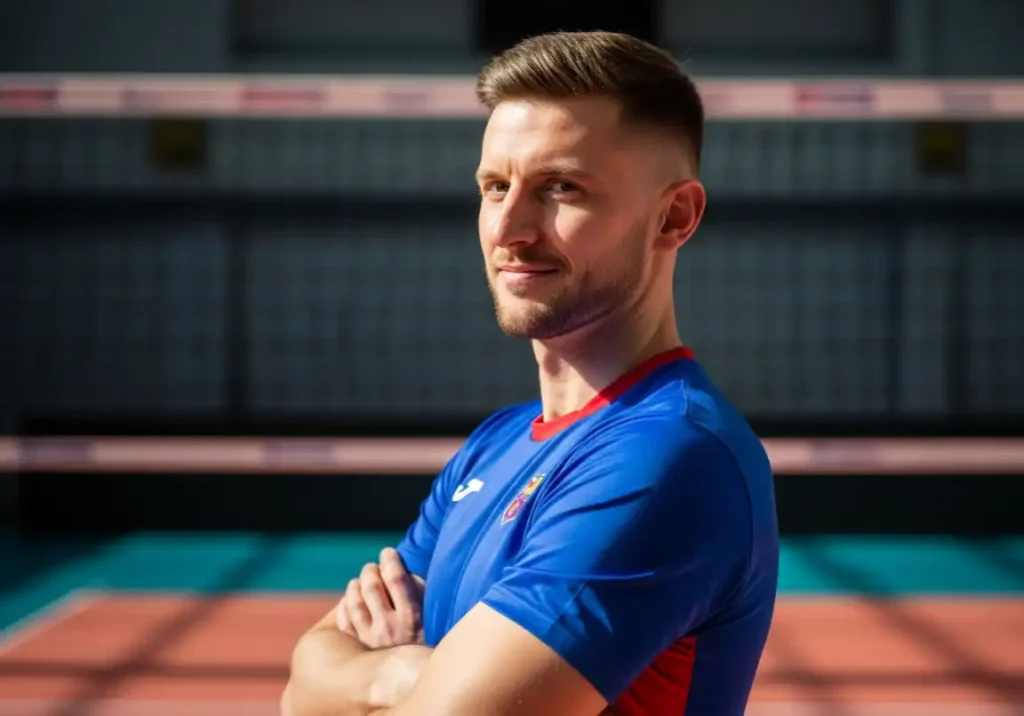
The crew cut offers slightly more length than a buzz cut while maintaining exceptional practicality for volleyball players. This classic hairstyle features short sides with marginally longer hair on top, creating subtle dimension without sacrificing functionality. The increased length on top allows for minimal styling flexibility while still keeping hair well away from the face.
What makes the crew cut ideal for volleyball is its natural staying power. The short length means hair won’t move significantly during play, yet you maintain enough coverage to define your head shape nicely. A small amount of light hold pomade can add texture to the top if desired, though most players find the cut works perfectly without any product.
The crew cut complements various face shapes and works equally well whether you have straight hair, wavy hair, or slightly curly hair. It’s particularly flattering for players with round or square faces, as the slightly longer top can help balance facial proportions. Maintenance involves haircuts every three to four weeks, making it a practical long-term choice for serious athletes.
For volleyball players who want a polished look without extensive grooming time, the crew cut strikes an ideal balance. It’s professional enough for team photos and formal events while being thoroughly practical for competitive play. Many professional volleyball players favor this style precisely because it never interferes with their performance.
3. The Modern Undercut
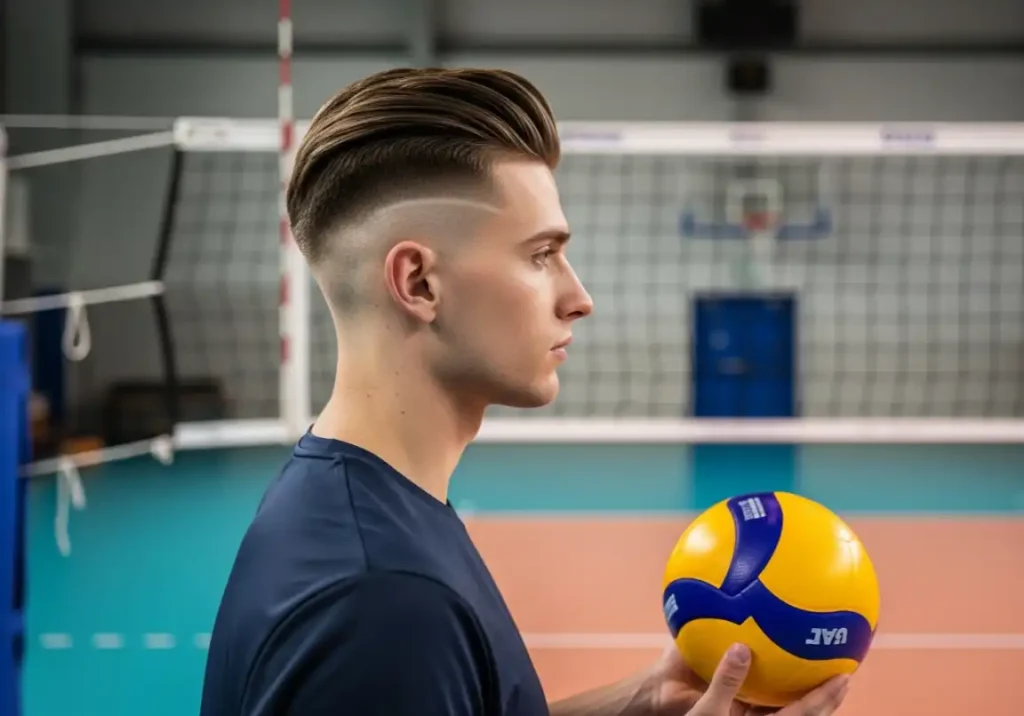
The undercut has become increasingly popular among male volleyball players seeking a more contemporary aesthetic. This style features dramatically short or shaved sides with significantly longer hair on top, creating bold contrast and visual interest. The longer top section can be styled in various ways depending on preference and occasion.
During matches, players with undercuts typically slick the top back using strong hold gel or pomade, ensuring complete visual clarity. The shaved or closely clipped sides eliminate concerns about hair falling forward, while the longer top provides styling versatility for off-court situations. This dual-purpose nature makes the undercut particularly appealing for athletes who want flexibility in their appearance.
The undercut requires more maintenance than buzz cuts or crew cuts, demanding regular trimming of the sides to maintain the sharp contrast that defines the style. The top section needs periodic cutting as well to prevent excessive length that becomes difficult to manage during play. However, many players find the extra effort worthwhile for the distinctive, modern look it provides.
Styling products play a crucial role in making the undercut work for volleyball. Water-based pomades or gels work best, as they provide strong hold without leaving residue that could mix uncomfortably with sweat. Apply product to damp hair and comb or brush the top section straight back for maximum security during games.
4. The Sharp Taper Fade

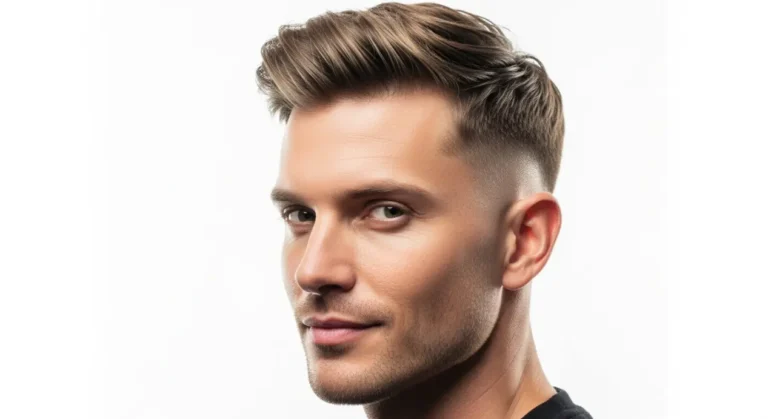
The taper fade combines professional appearance with athletic practicality. This haircut features gradually shortening hair from the top of the head down to the neckline, creating a smooth transition that looks sharp and intentional. Different fade heights allow for customization, from low fades that begin just above the ears to high fades that start well above them.
For volleyball applications, the taper fade excels at keeping the sides clean and out of the way while allowing some length on top for styling options. The gradual transition looks particularly polished, making it suitable for athletes who represent their team in various settings beyond just game day. The fade works with any hair type and complements all face shapes when properly executed.
Maintenance represents the primary consideration with taper fades. The gradual transition requires precise cutting that typically demands professional barber attention every two to three weeks. Between cuts, the fade can begin to lose its sharp definition, though it remains fully functional for volleyball purposes even as it grows out slightly.
Pairing a taper fade with a short quiff on top creates a particularly attractive combination for volleyball players. The quiff adds height and visual interest while remaining short enough to stay secure during play with minimal product. This combination has gained popularity among Olympic volleyball athletes and continues trending in competitive circuits.
5. The Athletic High and Tight
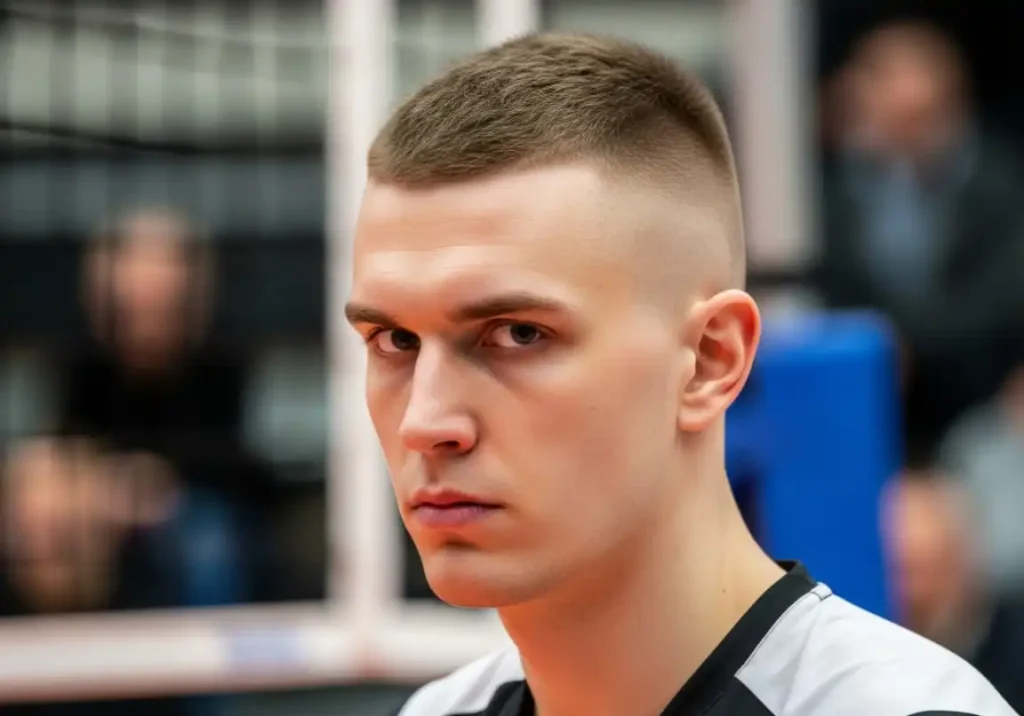
The high and tight represents peak military precision applied to athletic grooming. This extremely practical cut features very short or shaved sides extending well above the ears, with slightly longer hair remaining only on the very top of the head. The result is a clean, sharp appearance that requires virtually no maintenance during play.
Volleyball players who choose the high and tight value its uncompromising functionality. With so little hair overall, there’s nothing to fall into your eyes, no sweat management concerns, and zero need for styling products during matches. The style keeps you cool even during the most intense tournament days when multiple games challenge your endurance.
This cut works particularly well for players with oval or rectangular face shapes, as the concentration of length on top can help balance longer facial structures. It’s less suitable for round faces, where it might emphasize facial width. However, the practical benefits often outweigh aesthetic considerations for serious competitive players.
Like the buzz cut, the high and tight requires regular maintenance to look sharp. Plan for haircuts every two weeks if you want to maintain the crisp, military-inspired appearance. Many barbers who work with athletes become familiar with this cut and can execute it quickly and consistently.
6. The Sleek Slicked-Back Style
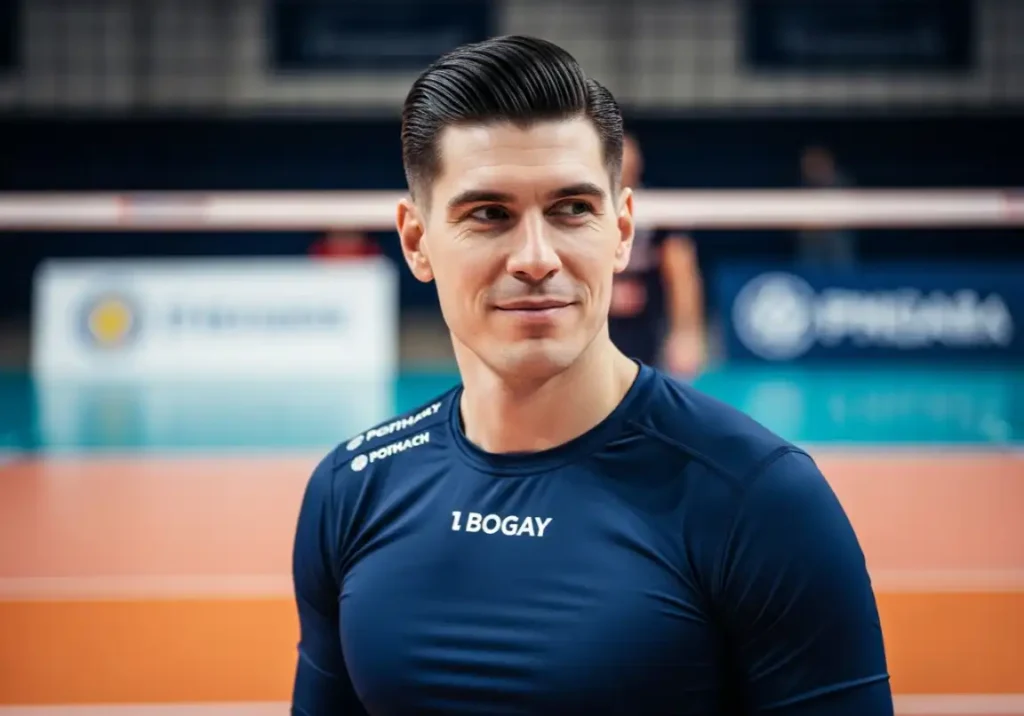
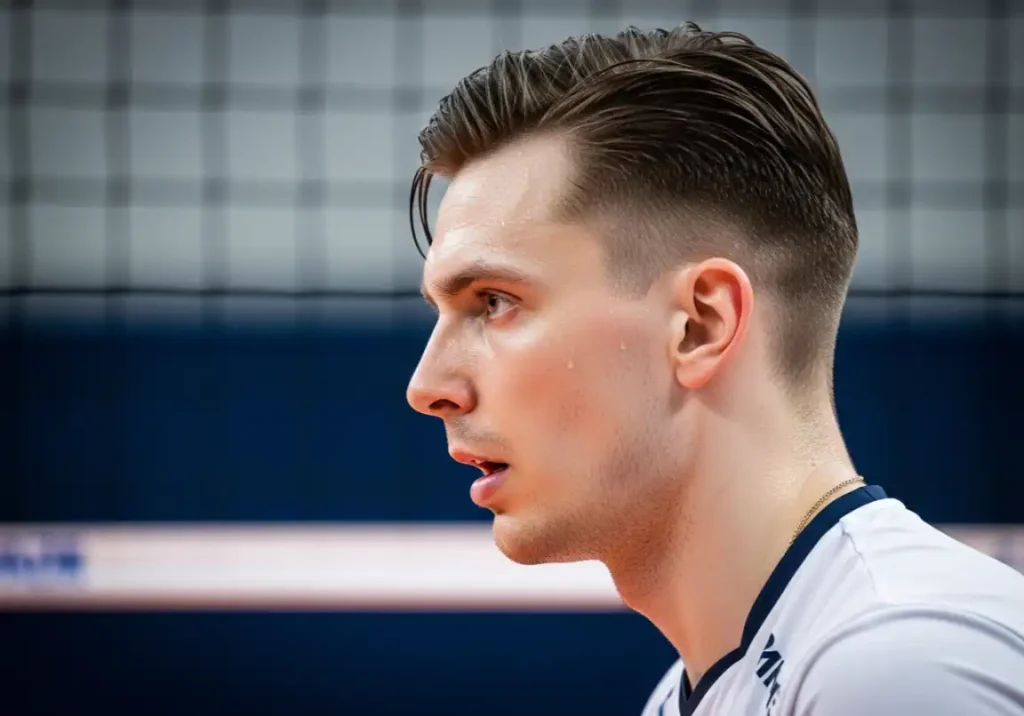
For players with slightly longer hair, the slicked-back style offers a sophisticated option that stays secure during play. This look requires hair long enough to comb backward, typically three to four inches on top, combined with shorter sides to maintain athletic practicality. The result is a polished appearance that transitions seamlessly from the court to social situations.
Creating a reliable slicked-back style for volleyball demands the right styling products. Strong hold gel or firm pomade applied to damp hair provides the security needed during intensive play. Work product through your hair evenly, then use a comb to direct everything straight back from your forehead. The sides should be short enough that they don’t require much attention, keeping focus on securing the top section.
This style has gained visibility through various professional volleyball players who appreciate its clean, mature aesthetic. It projects confidence and professionalism while remaining entirely functional for competitive play. The slicked-back look works particularly well for players with straight or wavy hair, though those with curly hair can achieve it with the right products and technique.
Maintenance involves regular trims to keep the sides short and the top at an optimal length. Between games or during tournament play, you can quickly refresh the style with a small amount of water and product reapplication, making it practical for long competition days.
7. The Textured Crop

The textured crop represents a more fashion-forward approach to volleyball hairstyles. This modern cut features relatively short length overall, typically one to two inches on top, with added texture created through point cutting or razor techniques during the haircut. The sides remain short, while the top has enough length for subtle styling flexibility.
What makes the textured crop work for volleyball is its natural, piece-y appearance that looks intentionally styled even without product. The texture prevents hair from lying flat against your head, creating visual interest while remaining short enough to stay out of your face during play. A small amount of texturizing spray or light pomade can enhance the piece-y effect, though many players wear it completely product-free during games.
This style suits players who want a more contemporary aesthetic without committing to longer hair that requires extensive management. It works well with various hair types, though it’s particularly effective on hair with natural wave or texture. Players with very straight hair might need slightly more product to achieve the desired texture.
The textured crop requires skilled cutting to achieve the right balance of length and texture. Find a barber or stylist familiar with modern men’s hairstyling techniques who can create the subtle layers and texture that make this cut work. Maintenance typically involves haircuts every four to six weeks.
8. The Practical French Crop
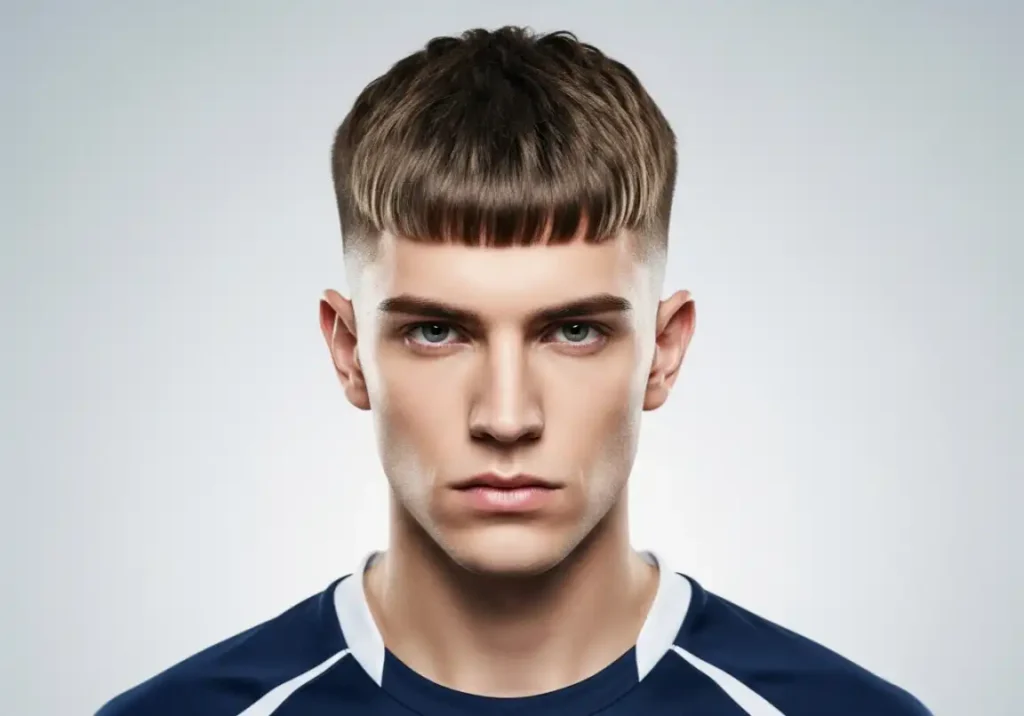
The French crop has emerged as a favorite among athletes seeking both style and substance. This cut features a short, textured top with a blunt fringe that sits forward over the forehead. The sides and back remain very short, creating clean lines and minimal maintenance requirements. For volleyball, the fringe is kept short enough that it doesn’t obstruct vision while still providing the distinctive look that defines the style.
Despite having a forward-directed fringe, the French crop works surprisingly well for volleyball when cut to appropriate length. The fringe should end well above the eyebrows, ensuring it never drops into your line of sight during play. The textured top provides subtle visual interest without requiring extensive styling time or products.
This cut flatters various face shapes and works particularly well for players with strong foreheads or those who want to add horizontal balance to longer faces. The blunt fringe creates a bold, confident appearance that stands out while remaining entirely practical for athletic purposes. It’s become popular among younger volleyball players who appreciate its modern edge.
Maintenance is straightforward, requiring haircuts every three to four weeks to keep the fringe at the proper length and the sides crisp. Between cuts, the style requires minimal upkeep, making it ideal for busy athletes balancing training, competition, and other commitments.
9. The Man Bun Option
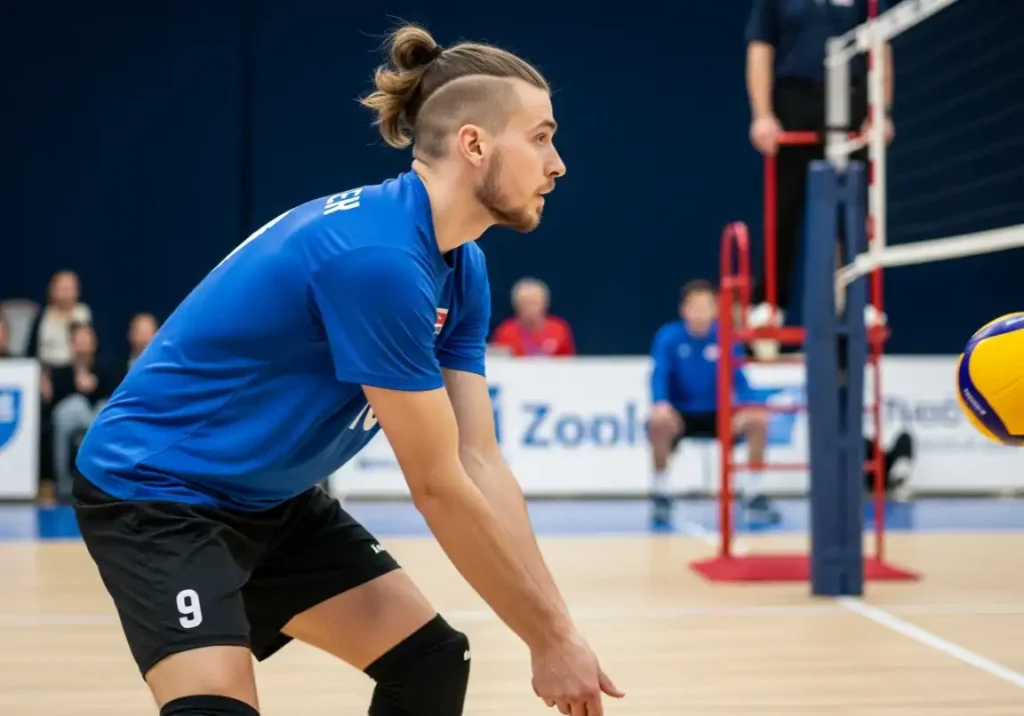
For volleyball players who prefer keeping longer hair, the man bun provides a secure, stylish solution. This approach requires several inches of length throughout the head, enough to gather hair into a bun at the crown or back of the head. When properly executed, the man bun keeps all hair completely away from the face and neck, making it surprisingly practical for intense volleyball play.
Creating a game-ready man bun starts with quality hair ties designed for athletic use. Standard hair ties can slip or break during play, so invest in products specifically made for sports. Gather your hair at your preferred height, twist it slightly as you wrap it around itself, and secure it firmly. Some players prefer high buns at the crown for maximum security, while others opt for lower buns at the nape of the neck for comfort.
The man bun has gained legitimacy in volleyball circles as more professional players adopt the style. It allows athletes to maintain longer hair while competing at the highest levels. Clean-shaven sides with a top bun create a particularly athletic aesthetic, combining the undercut concept with longer length secured in a bun.
Maintenance involves regular trimming to prevent split ends and keep the length manageable. Use quality hair products designed for men’s longer hair to maintain healthy hair that’s easier to style. Between games, you can quickly redo your bun if needed, making it practical even during tournament play with multiple matches.
10. The Short Pompadour
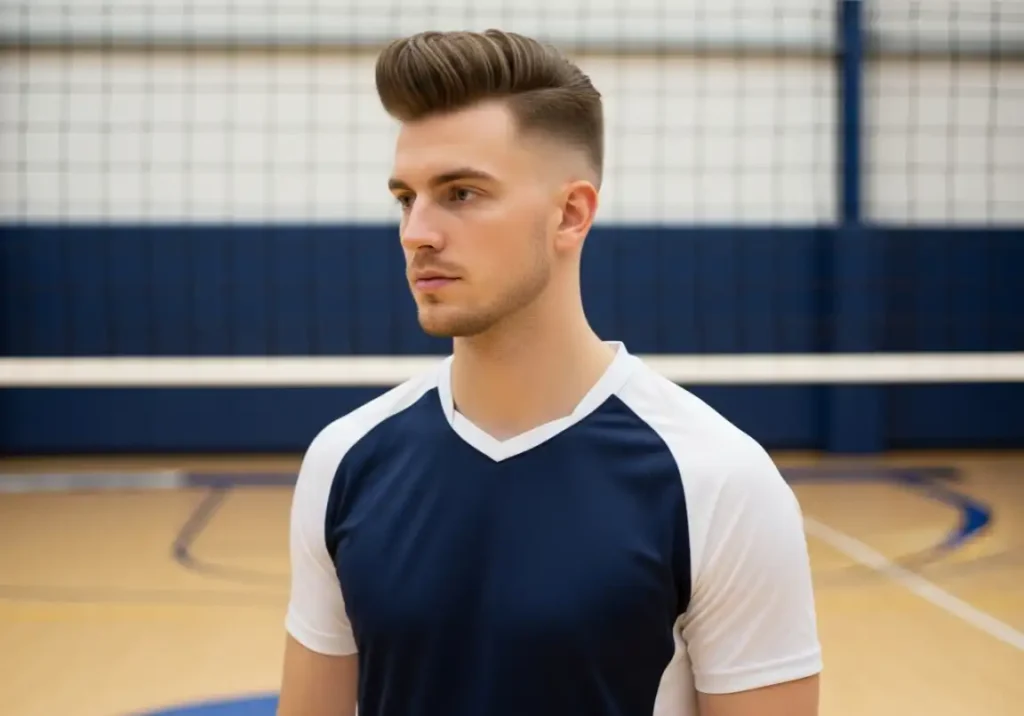
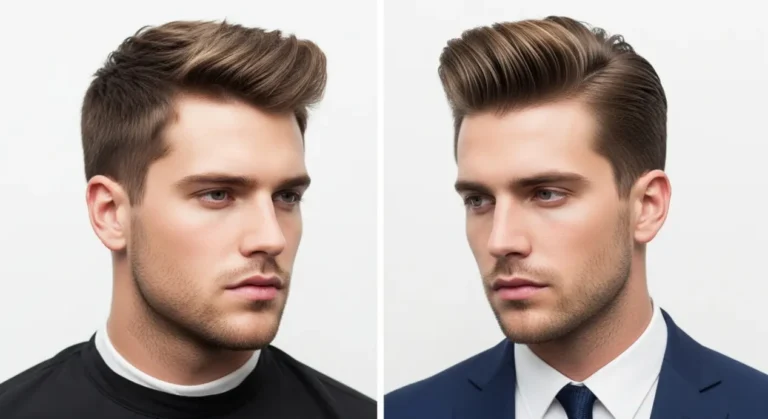
The short pompadour brings classic style into the modern volleyball context. This cut features short sides with slightly longer hair on top that’s styled upward and back, creating subtle height without excessive length. For volleyball purposes, the pompadour remains short and controlled, typically two to three inches at most on top.
Creating a court-ready pompadour requires the right combination of cut and product. The hair should be long enough to achieve slight volume when styled but short enough to stay secure during play. Apply medium hold pomade to damp hair, use your fingers or a comb to create the backward sweep and slight lift, then allow it to set. The result should feel secure and look intentional without appearing overly styled.
This style works particularly well for players with oval face shapes and straight to wavy hair. The upward styling creates the appearance of height, which can balance various facial proportions. It’s sophisticated enough for formal team events while remaining entirely functional for competitive play when properly executed.
Maintenance involves regular haircuts every three to four weeks to keep the proportions correct. The sides should remain short enough to avoid distraction, while the top needs periodic trimming to prevent excessive length that becomes difficult to style reliably for games.
Choosing Your Ideal Volleyball Hairstyle
Selecting the perfect volleyball hairstyle involves evaluating multiple factors beyond simple aesthetic preference. Start by honestly assessing your hair type and texture. Thick hair provides more styling options but requires stronger products to control. Fine hair works better with shorter cuts that don’t rely on volume or hold. Curly hair presents unique opportunities for textured styles while potentially creating challenges for very short cuts that might emphasize curl patterns you prefer to minimize.
Consider your maintenance commitment realistically. Some players enjoy regular barber visits and daily styling routines, while others prefer wash-and-go simplicity. Be honest about how much time and effort you’re willing to invest in your hair, both daily and weekly. Remember that tournament schedules can disrupt normal routines, so choose a style that remains manageable even when your schedule becomes hectic.
Your face shape significantly influences which styles will look most flattering. Oval faces work well with virtually any cut, while round faces benefit from styles that add height or vertical lines. Square faces often look best with slightly softer styles that don’t emphasize angular features. Long faces can use horizontal elements like fringes or side-parted styles to create better balance.
Finally, consider your position and playing style. Defensive specialists who spend extensive time diving might prioritize ultra-short, no-maintenance cuts like buzz cuts or high and tights. Setters and outside hitters might feel comfortable with slightly more length and styling. There’s no right answer, only what works best for your specific situation and preferences.
Essential Styling Products for Volleyball Hair
While many volleyball hairstyles work without products, having the right tools available can enhance both appearance and performance. Understanding which products work best in athletic contexts helps you make informed choices.
Pomades come in various formulations, but water-based versions work best for volleyball. They provide strong hold without creating the heavy, greasy feeling that oil-based pomades can leave. Water-based products also wash out easily, preventing buildup that can accumulate over repeated use. Apply pomade to damp hair for easier distribution and more natural-looking results.
Gels offer maximum hold for styles that need to stay absolutely secure. Modern sport gels are designed specifically for athletic use, providing strong hold that resists sweat without flaking or creating uncomfortable residue. Use gel sparingly, focusing on areas where you need the most control rather than coating all your hair.
Texturizing sprays and sea salt sprays work well for adding subtle texture and volume without heavy product feel. These work particularly well with shorter cuts like textured crops or French crops where you want piece-y definition without obvious styling product presence.
Hair ties designed for sports prove essential for longer styles. Look for products that advertise athletic use, as they’re constructed to resist slipping and breaking even when wet with sweat. Keep several on hand during tournament play so you can replace them if needed between games.
Maintaining Your Hairstyle Between Games
Proper maintenance keeps your volleyball hairstyle looking sharp and performing well throughout the competitive season. Develop a consistent routine that works with your schedule and supports your chosen style.
Regular haircuts represent the foundation of good maintenance. Schedule appointments based on your specific cut’s requirements, typically ranging from every two weeks for very short styles to every six weeks for longer cuts. Maintaining consistent timing prevents your style from growing out to the point where it becomes difficult to manage during play.
Daily washing depends on your activity level and hair type. Most volleyball players find that washing hair after practice and games keeps it healthy and manageable. However, washing too frequently can strip natural oils, particularly from longer hair. Consider using quality shampoo designed for your hair type and following with conditioner for longer styles.
Between games during tournaments, quick refreshers can restore your style without full restyling. A small amount of water combined with minimal product reapplication usually suffices for shorter cuts. Longer styles might need complete redoing, so allow time for this in your tournament schedule.
Scalp health matters more than many athletes realize. Keep your scalp clean and healthy to support strong hair growth and prevent issues like dandruff or irritation that can distract during play. If you notice any scalp problems, address them promptly before they impact your performance or comfort.
Conclusion
Finding the perfect volleyball hairstyle for men combines practical considerations with personal style preferences. The ten options explored here offer proven approaches that balance athletic functionality with visual appeal, ensuring you look confident while performing at your best. Whether you choose the ultra-practical buzz cut, the versatile crew cut, or the stylish man bun, the key is selecting a cut that works with your hair type, face shape, and lifestyle.
Remember that the best haircut is one that makes you feel confident and allows you to focus completely on your game. Volleyball demands total concentration, explosive athletic movement, and split-second decisions. Your hairstyle should support these requirements rather than creating distractions or concerns. By choosing wisely and maintaining your style properly, you ensure that hair is one less thing to worry about when you step onto the court.
Experiment with different styles during practice sessions before committing to a new look for competition. This allows you to test how the cut performs during actual volleyball movements and identify any issues before they matter. Work with a skilled barber who understands athletic hairstyles and can provide guidance based on your specific needs. With the right approach, you’ll find a volleyball hairstyle that enhances both your appearance and your game.
You may also like this post: 15 Gorgeous Curly Butterfly Haircut Styles for Men with Natural Curls
Frequently Asked Questions
What is the best hairstyle for volleyball players with thick hair?
Players with thick hair perform best with structured cuts like the crew cut, high and tight, or undercut that remove bulk from the sides while keeping manageable length on top. These styles prevent excessive volume that can become unwieldy during play. For those wanting to keep length, a man bun secured with athletic-grade hair ties effectively manages thick hair during matches. The key is working with your hair’s natural density rather than fighting against it.
How often should volleyball players get haircuts?
Haircut frequency depends on your chosen style. Buzz cuts and high and tight cuts require trimming every two to three weeks to maintain their sharp appearance. Crew cuts, undercuts, and fades typically need attention every three to four weeks. Longer styles like man buns or pompadours can extend to five to six weeks between cuts. Consistent timing prevents styles from growing out to the point where they interfere with play.
Can volleyball players have long hair?
Absolutely. Many professional volleyball players maintain longer hair successfully by securing it properly during matches. Man buns, ponytails, or braids keep longer hair completely away from the face and neck. The critical factor is using quality hair ties designed for athletic use that won’t slip or break during intensive play. Proper securing techniques ensure long hair never interferes with vision or movement on the court.
What styling products work best for volleyball hair?
Water-based pomades and sport-specific gels work best for volleyball because they provide strong hold while resisting breakdown from sweat. Avoid oil-based products that can feel heavy and greasy during play. Texturizing sprays work well for adding subtle texture without obvious product presence. Always choose products that wash out easily to prevent buildup over repeated use. Apply products to damp hair for more natural-looking results and easier distribution.
Should volleyball players avoid certain hairstyles?
Avoid styles that require constant adjustment or rely heavily on volume created through backcombing or excessive product. Very long, unsecured hair that hangs freely creates obvious distractions and can obstruct vision during crucial moments. Styles with long bangs that fall into the eyes should be modified to keep hair above the eyebrows. Extremely complex styles requiring extensive daily styling often don’t hold up well under the physical demands of volleyball and should be reconsidered for practical alternatives.